The Peninsula Tour Part 2 – Karaikudi

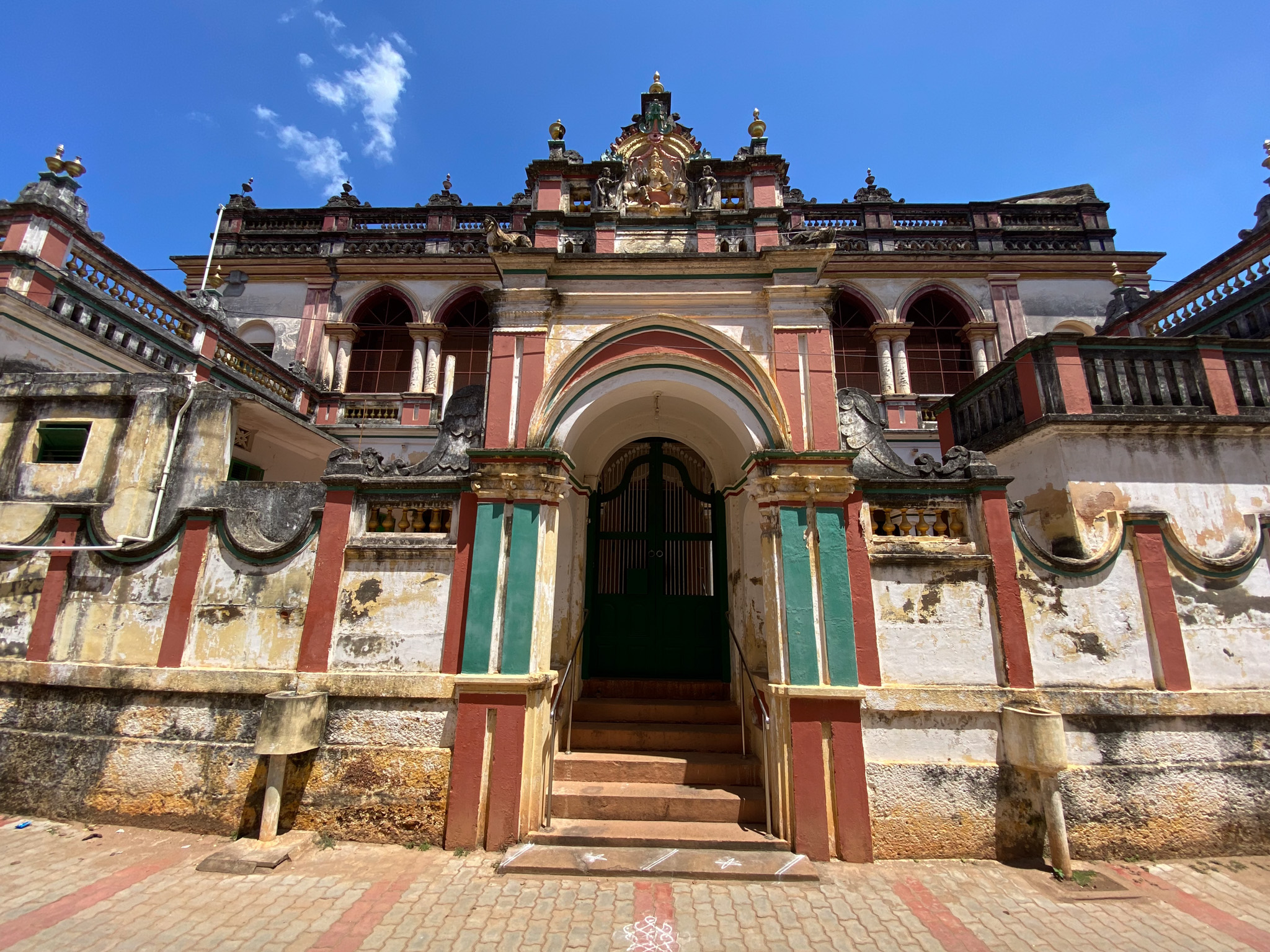
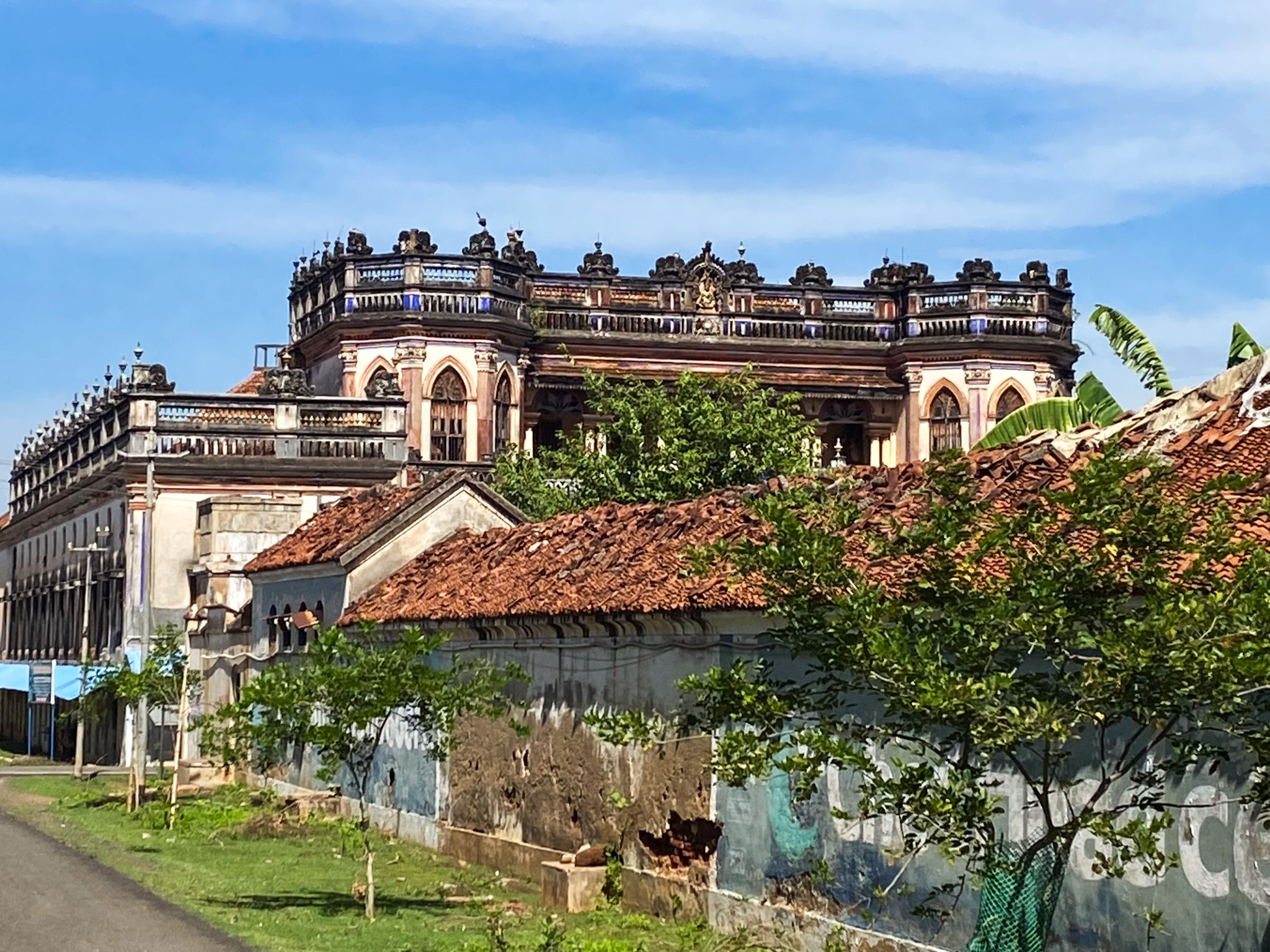
Karaikudi has been all about Chettinad food and palatial houses.

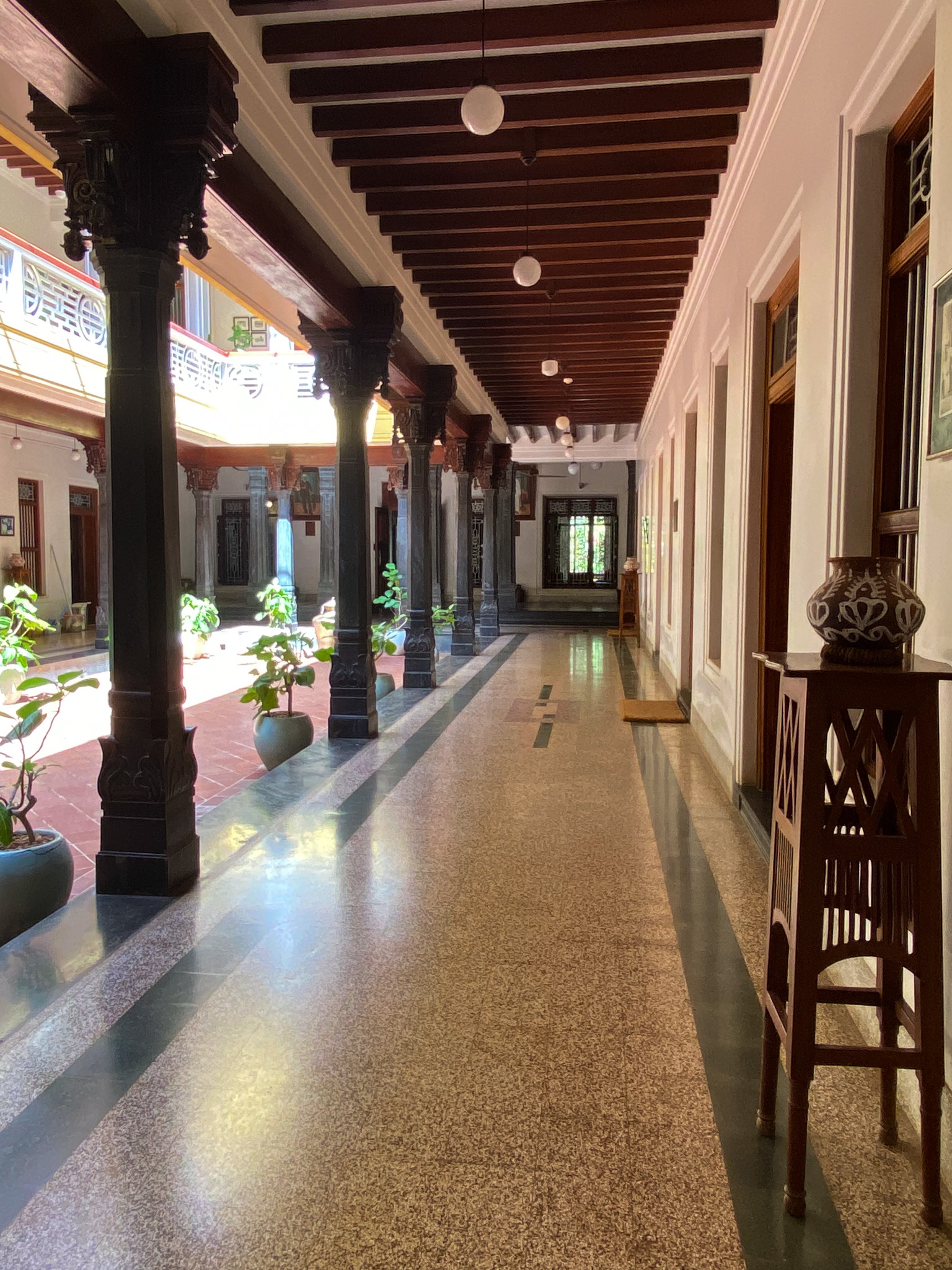
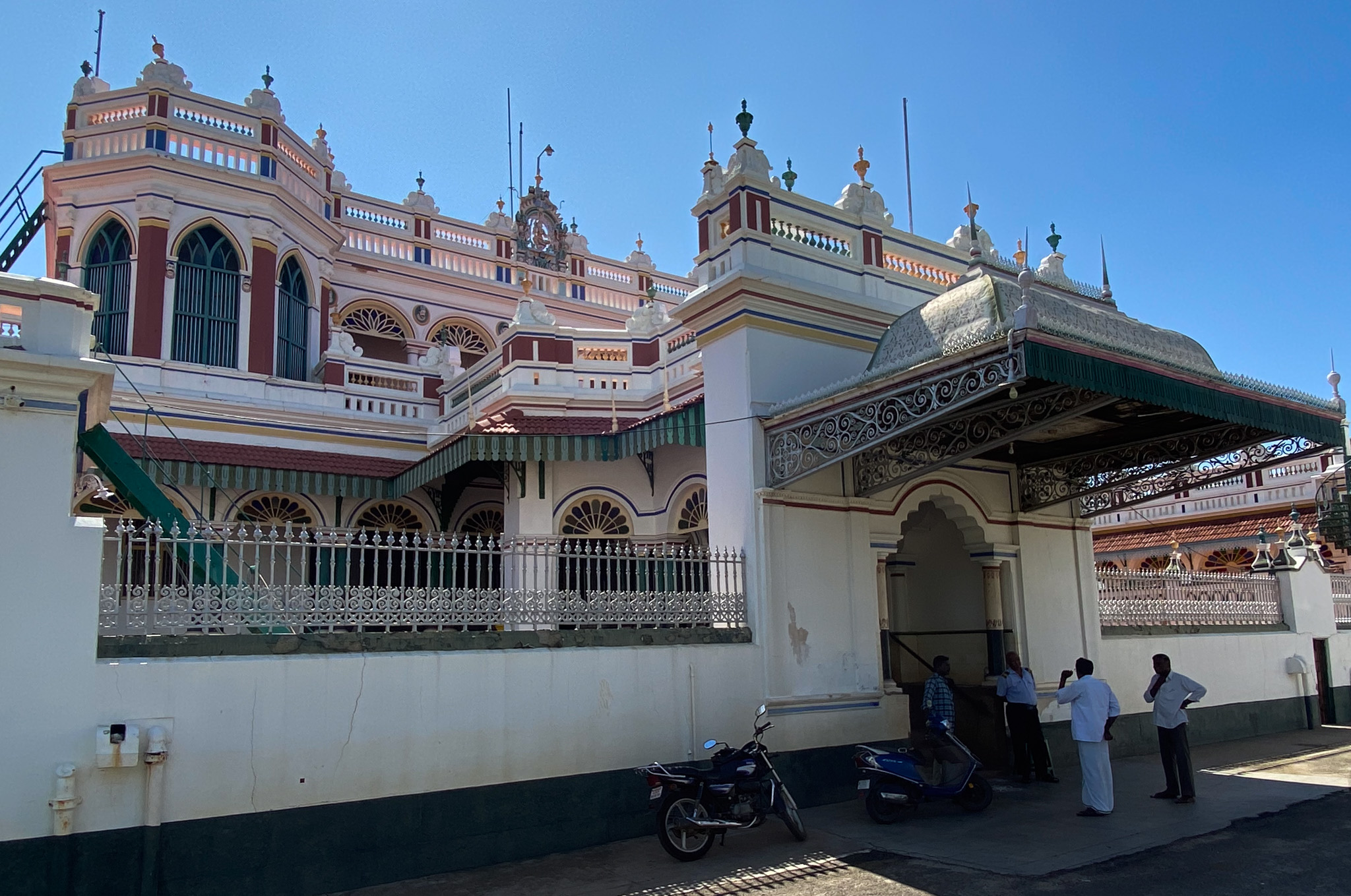
Our stay was at Visalam, which has been built in Art Deco style and was a gift from a father to his daughter on the occasion of her marriage.
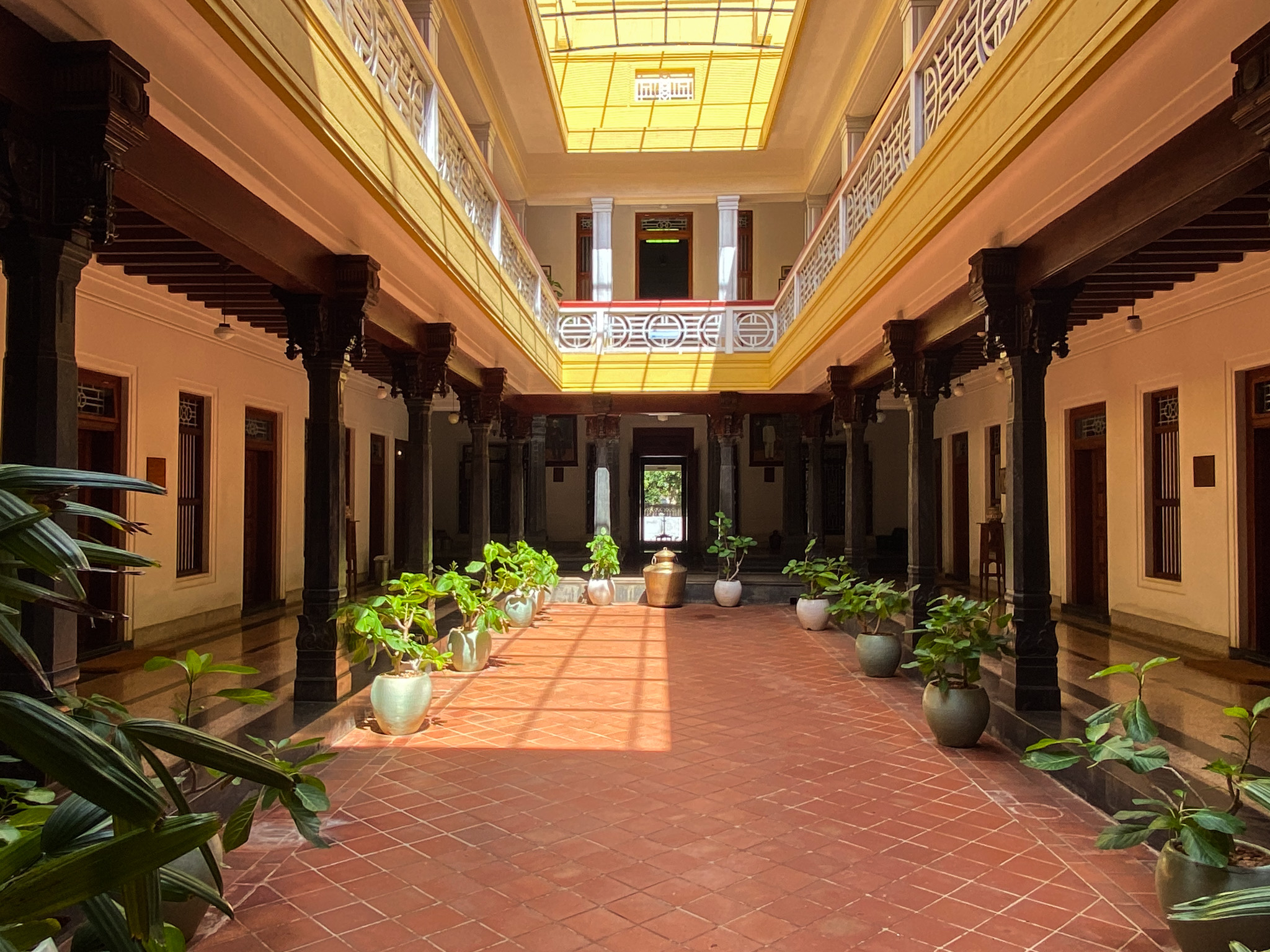
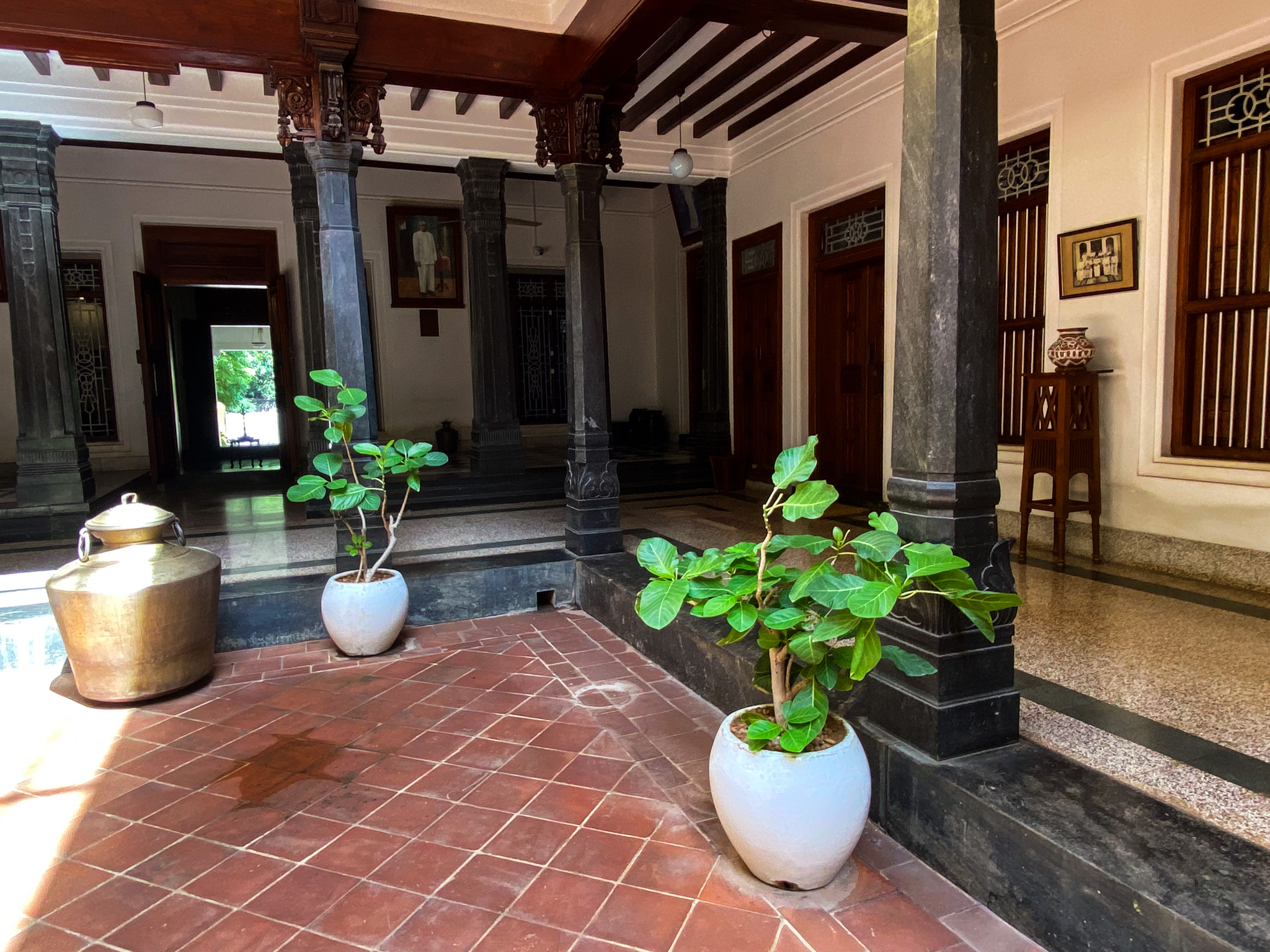
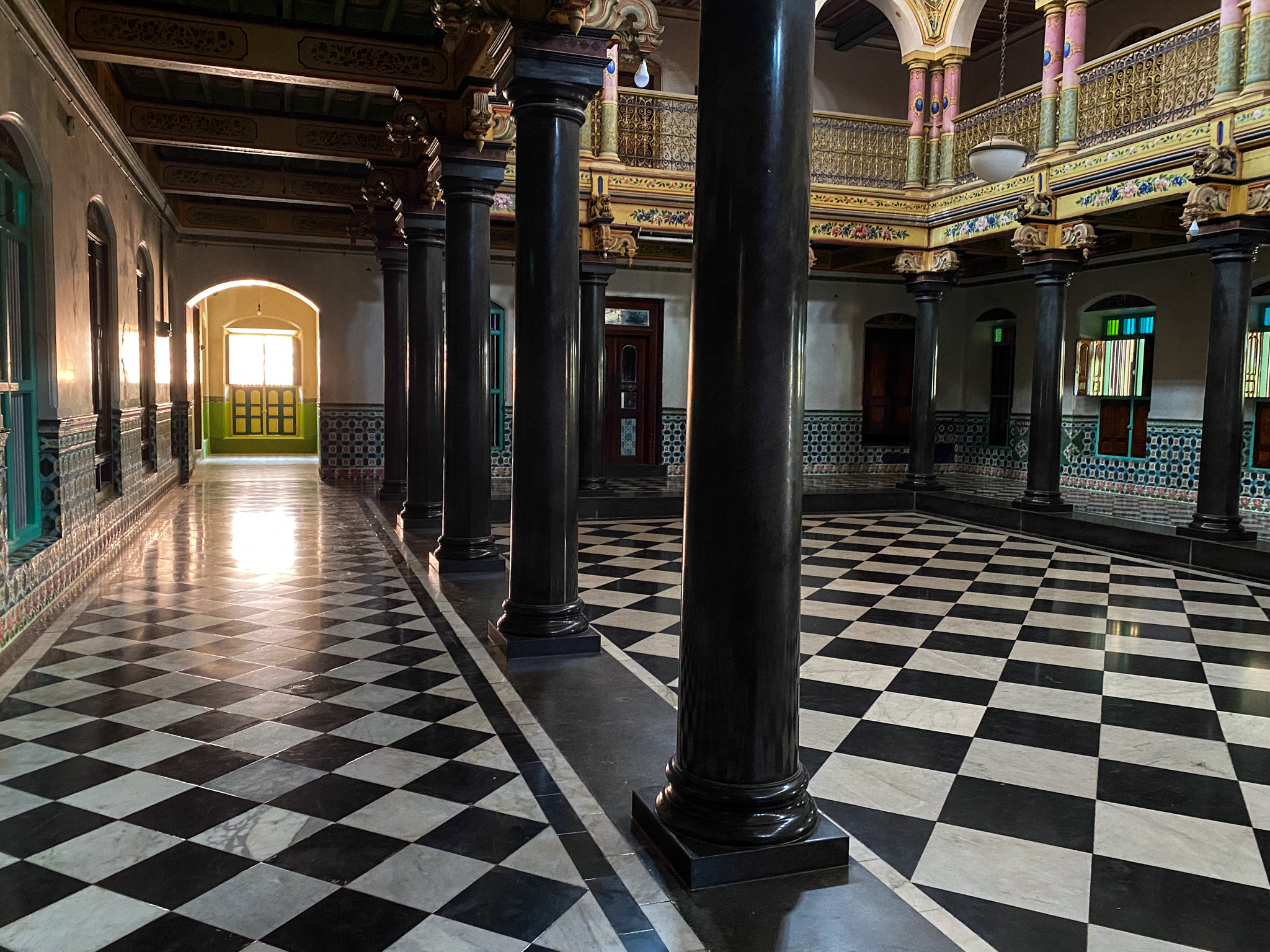
Most houses in the Chettinad are two storey structures with a central court which is sky lit. The court is flanked by 5 rooms on each side and each of these rooms leads to an inner room which is ventilated from the street side.

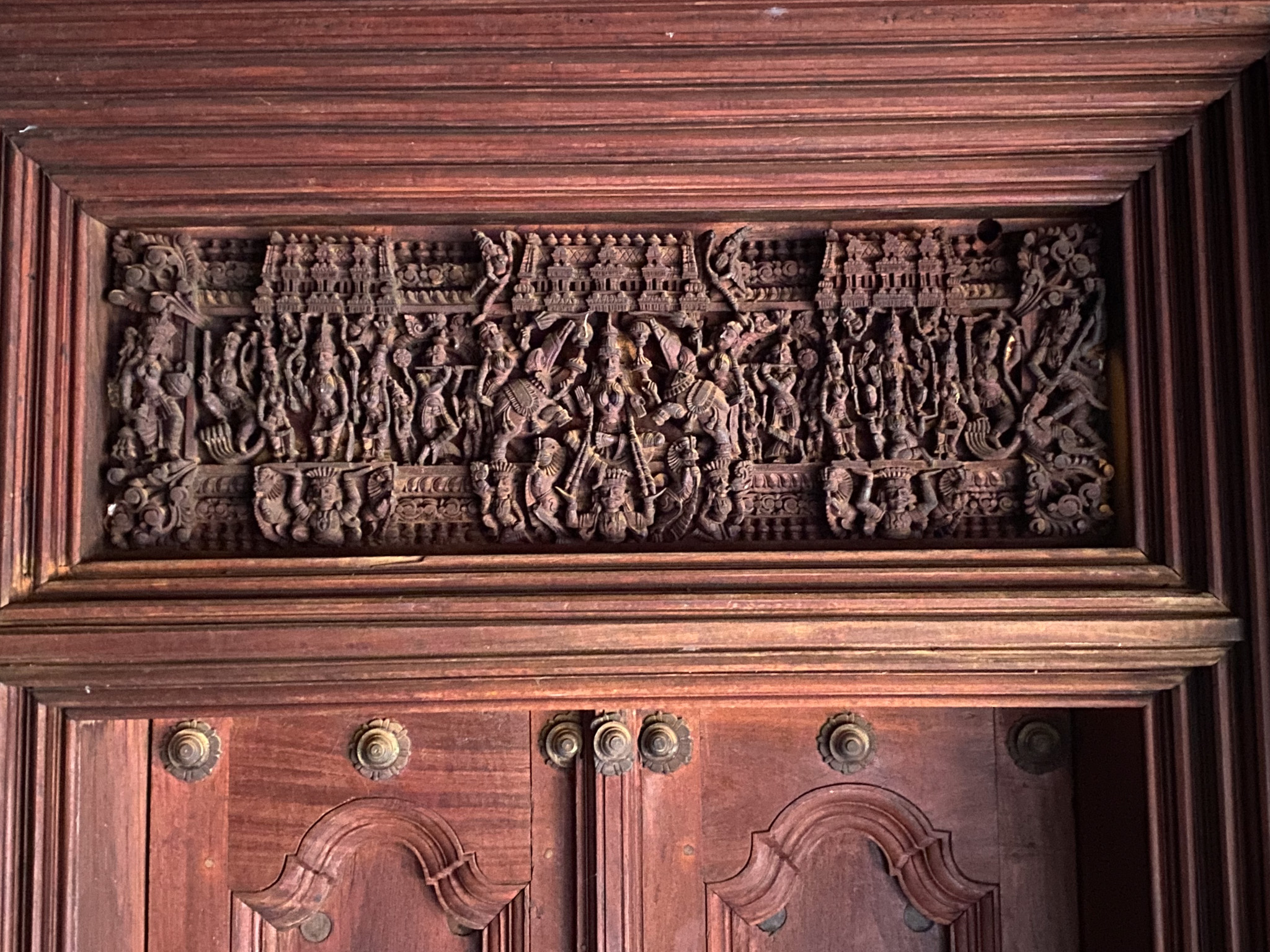
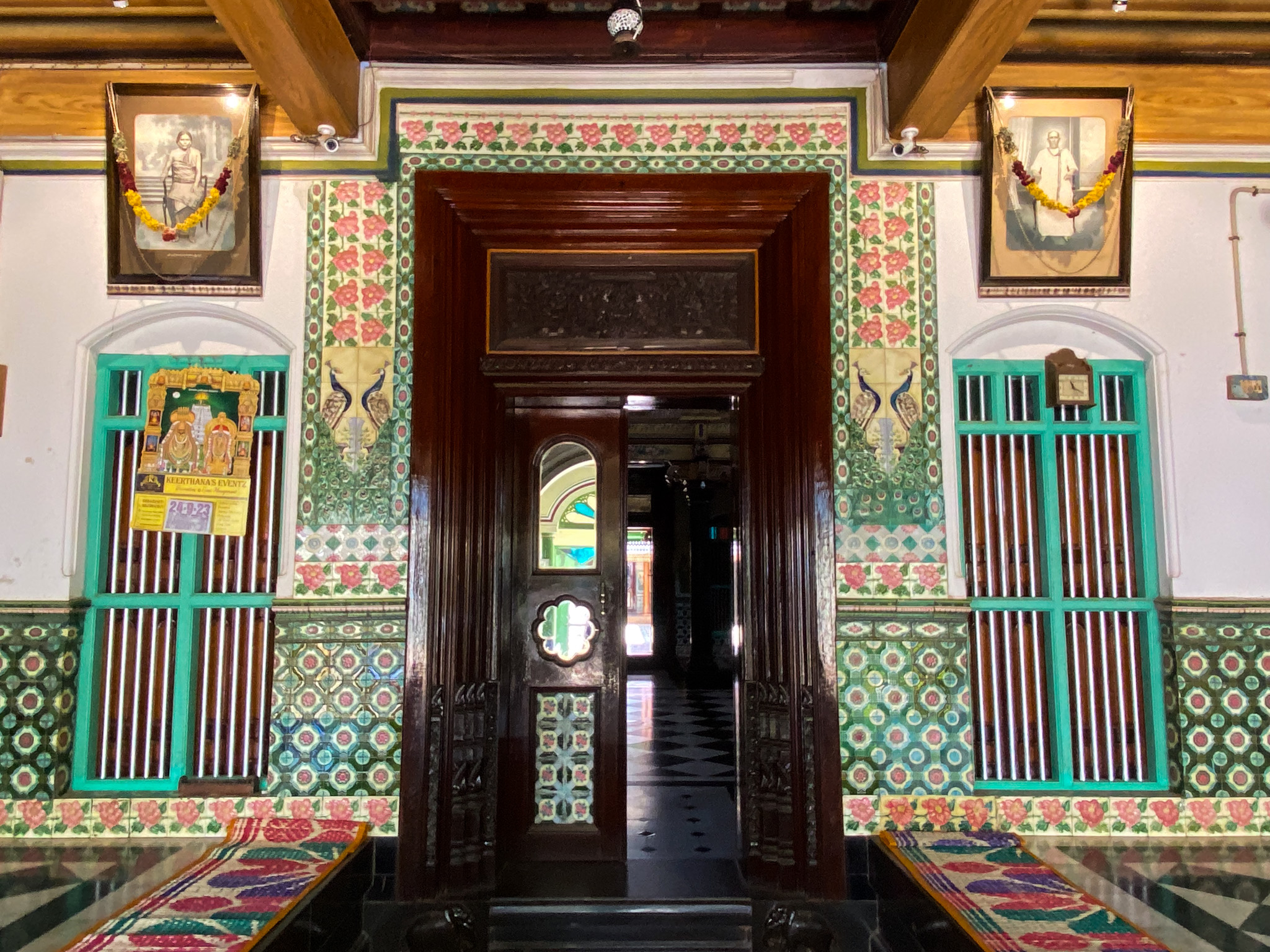
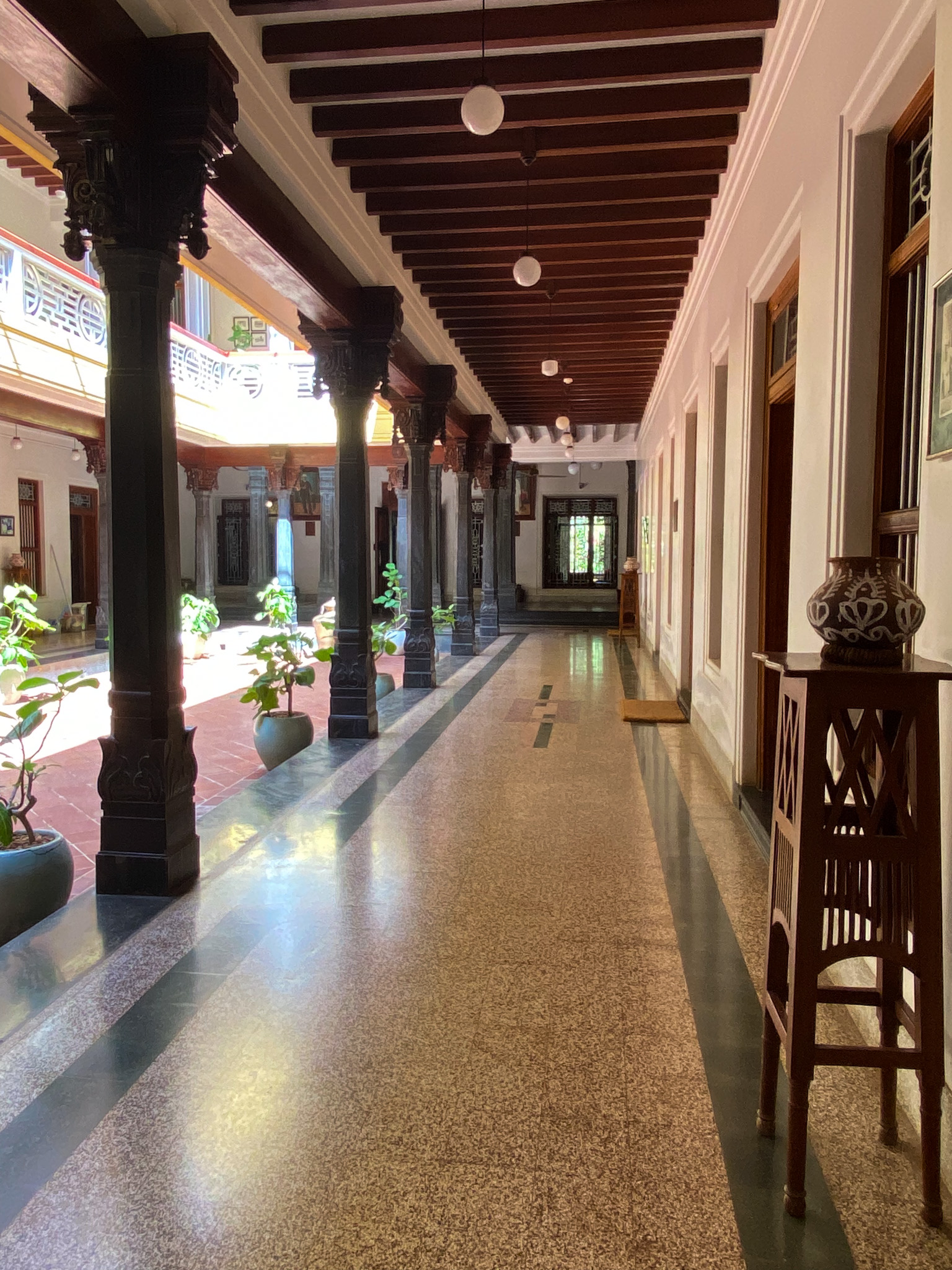
There are ornate pillars, balustrade, flooring patterns embellished doors and windows. There is a mellow quality in the court due to warm filtered light. This area used to be the hub of activity for a large family that lived there and very little time used to be spent in individual quarters. 

All houses follow the same layout, the scale varies based on the affluence and size of the family.  The Athangudi palace, the Chettinad palace, our hotel….

Most of the flooring tiles are indigenous to Chettinad- the Athangudi tiles. We visited a tile making factory.  It is difficult to imagine that this small scale industry supplies tiles as far as Malaysia and other countries in the far east!
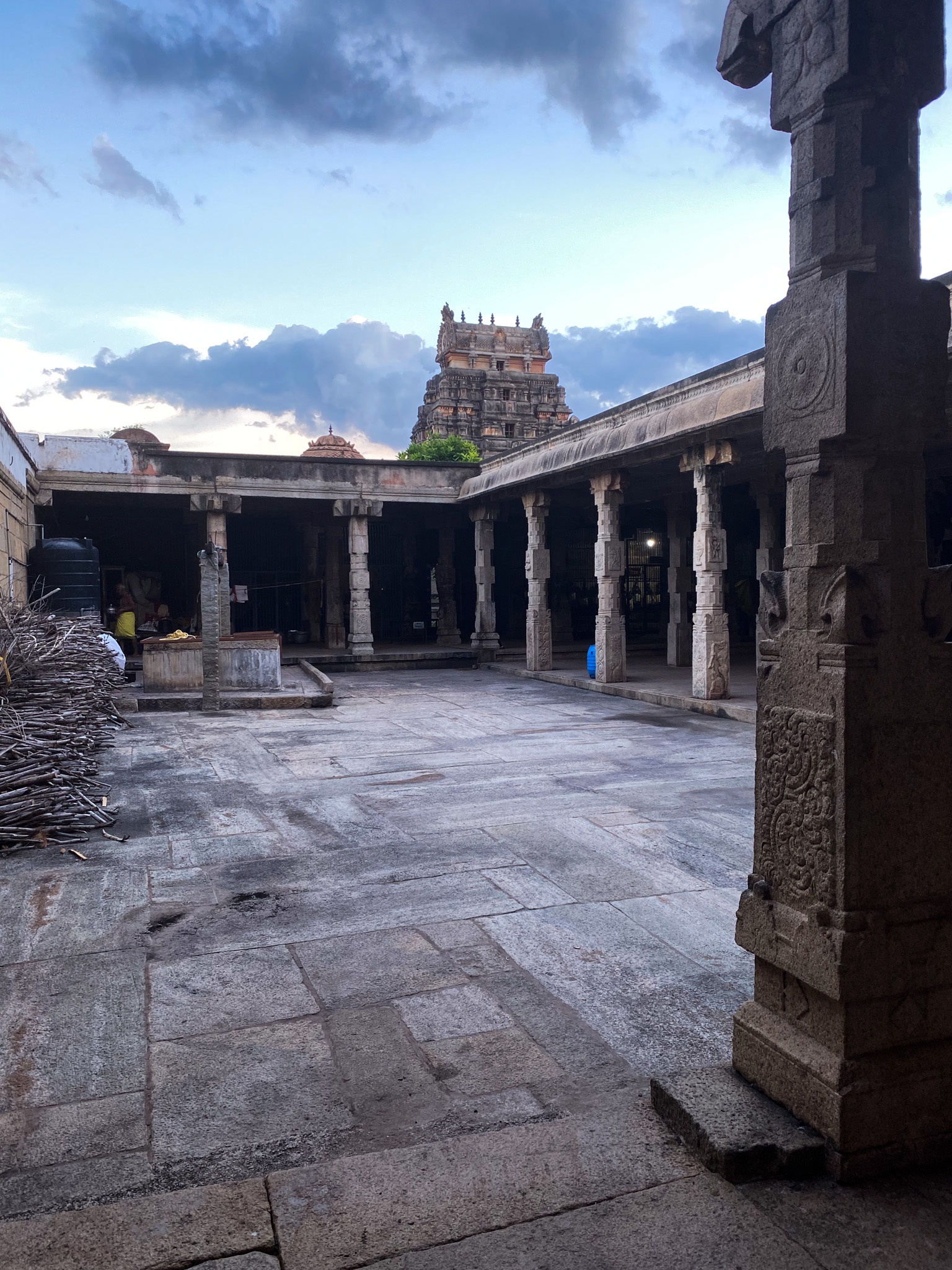
There is an ancient rock cut  Shiva  temple on the outskirts of Karaikudi called Thirumayam temple where the sanctum sanctorum has been wedged under a rock. The temple complex is at the base of the fort and is actually a part of the outer wall of the old fort.

We tried all the local cuisine and it is very different from what passes off as Chettinad food elsewhere. Very flavourful, full of mild spices and very very different, and not overly spicy, which has always been the impression. Most of the food was freshly prepared, after we placed our orders and it was absolutely yummy! 

For more pictures, please click https://photos.app.goo.gl/QNq9Yf3zKYadHWi1A
The Peninsula Tour Part 2 – Thanjavur

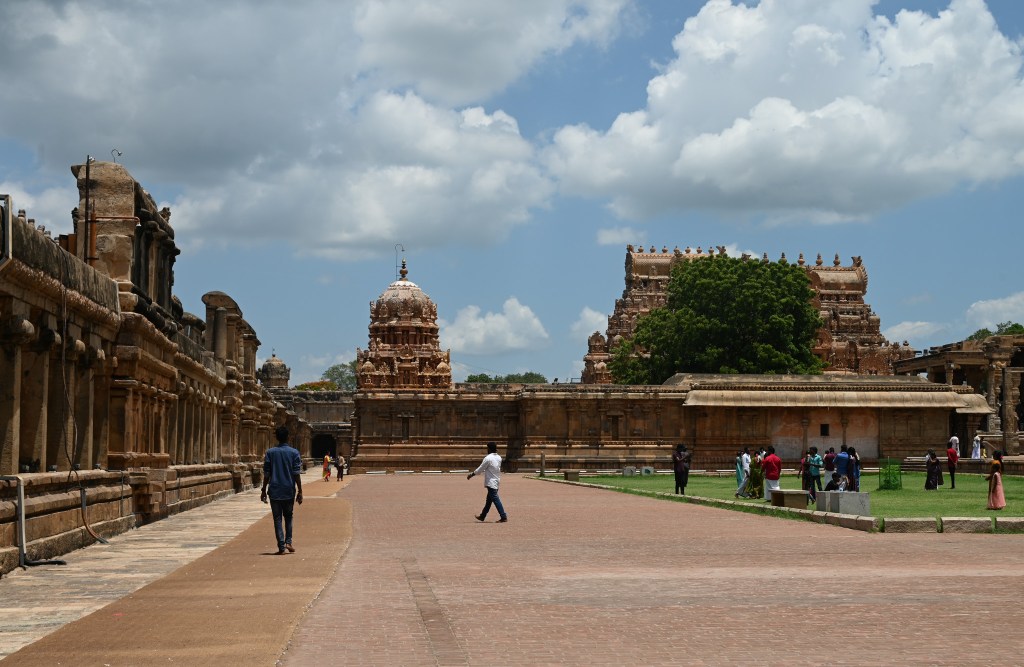
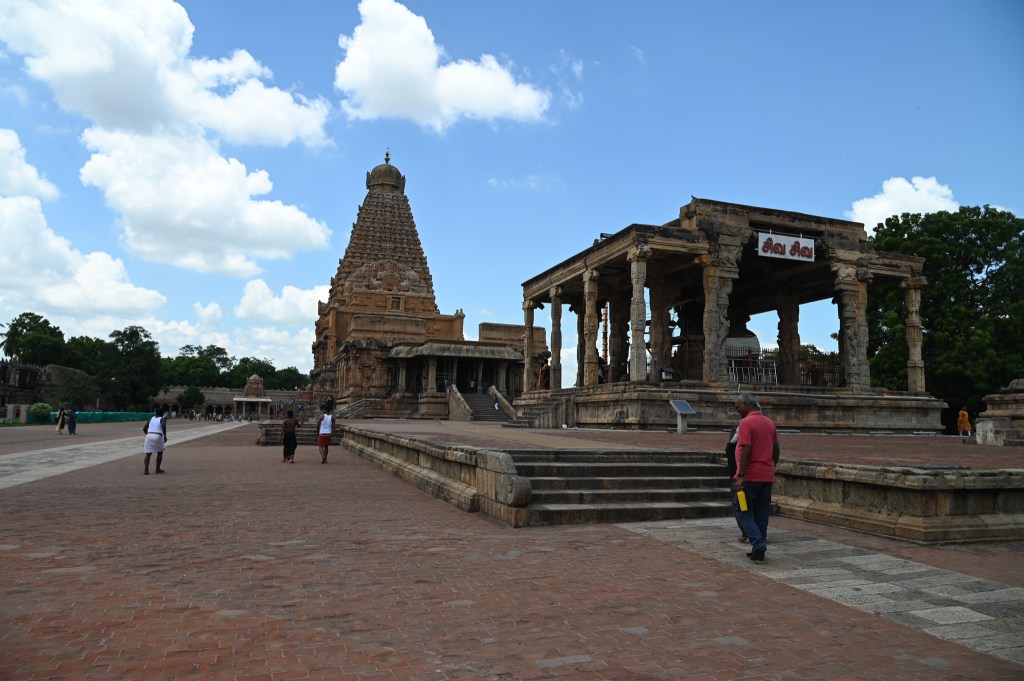
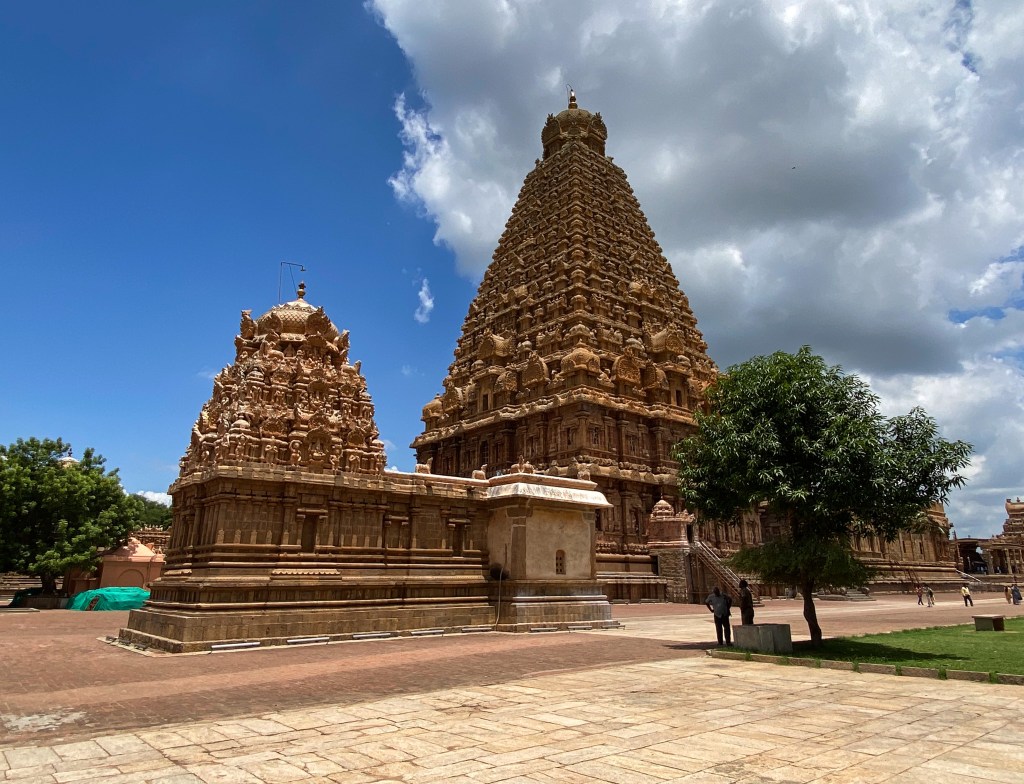
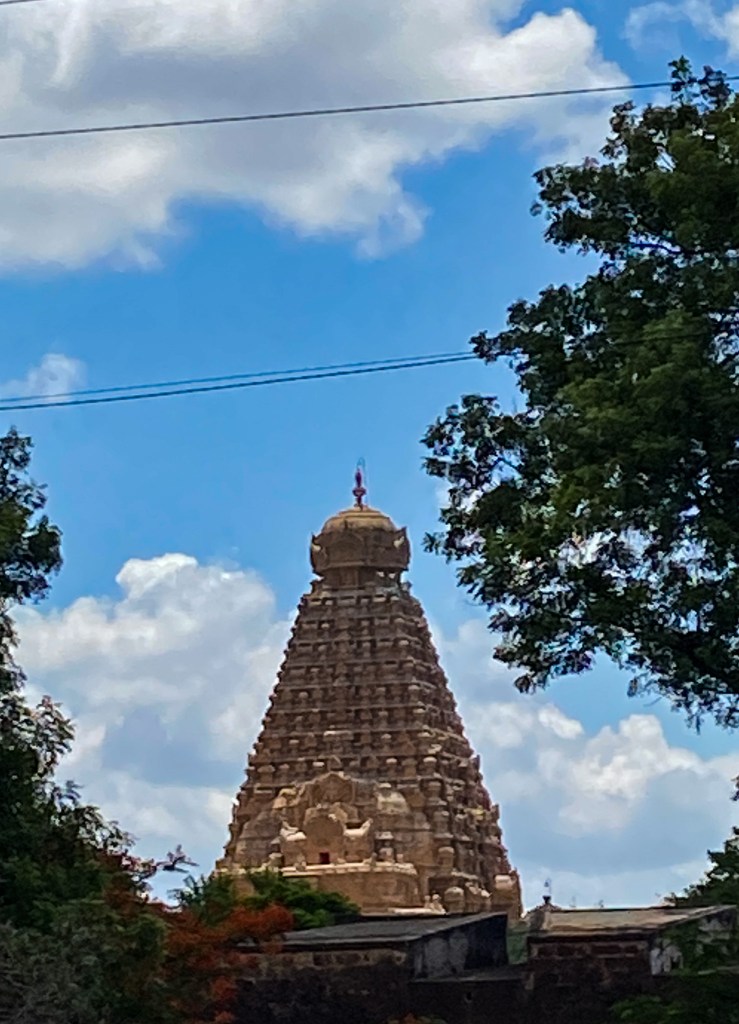
The tall and magnificent gopuram of the Brihadeesvara temple dominates the skyline and is visible well before we near the temple complex.

Our visit to Tanjore was a drive through on our way from Kumbakonam to Trichy and we had planned a halt only to visit the temple complex. 

Brihadeesvara temple, called the ‘Big Temple’, was built in the 11th century, by Chola dynasty, but saw additions, renovations and restorations over the next 1000 years. 

The Marathas of Tanjore built a fortified wall around the temple and added an entranceway, which is, today, used as the main entrance to the temple.

The temple faces east and once had a moat around it. There are barrel vaulted structures around the periphery which were added by the Marathas.

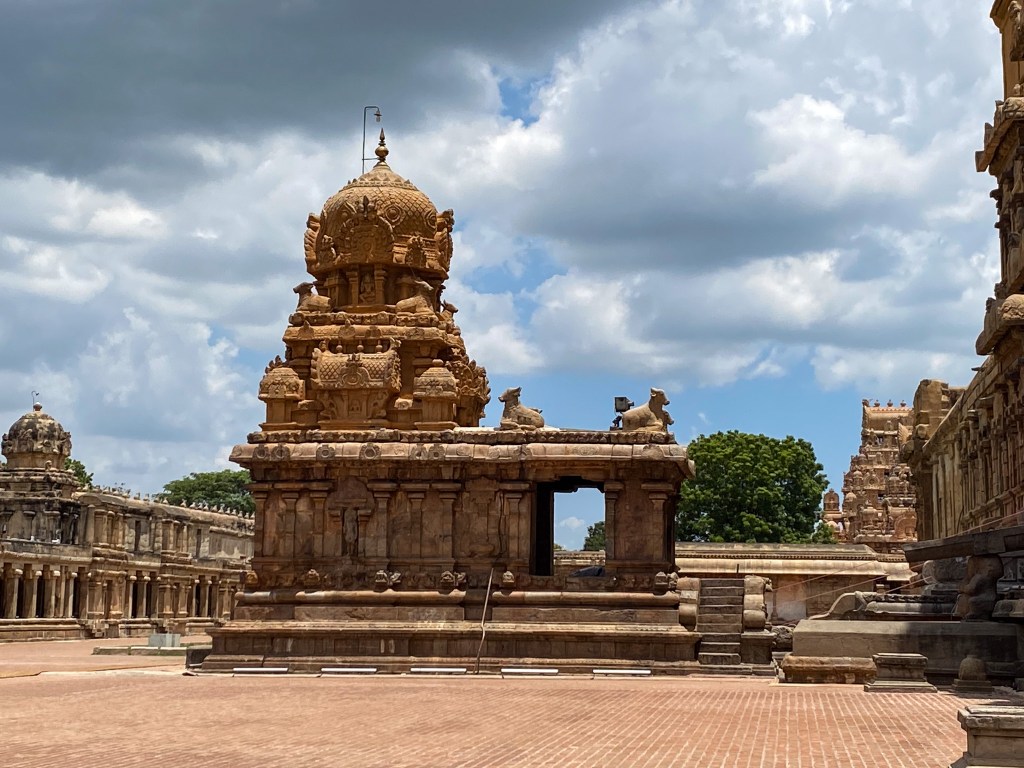
The temple complex is rectangular and has five main sections- the main sanctum with the towering gopuram, the Nandi bull hall, community hall, great gathering hall and a pavilion that connects the great hall to the sanctum. There are various smaller temples and shrines in the circumambulation area around the temple.

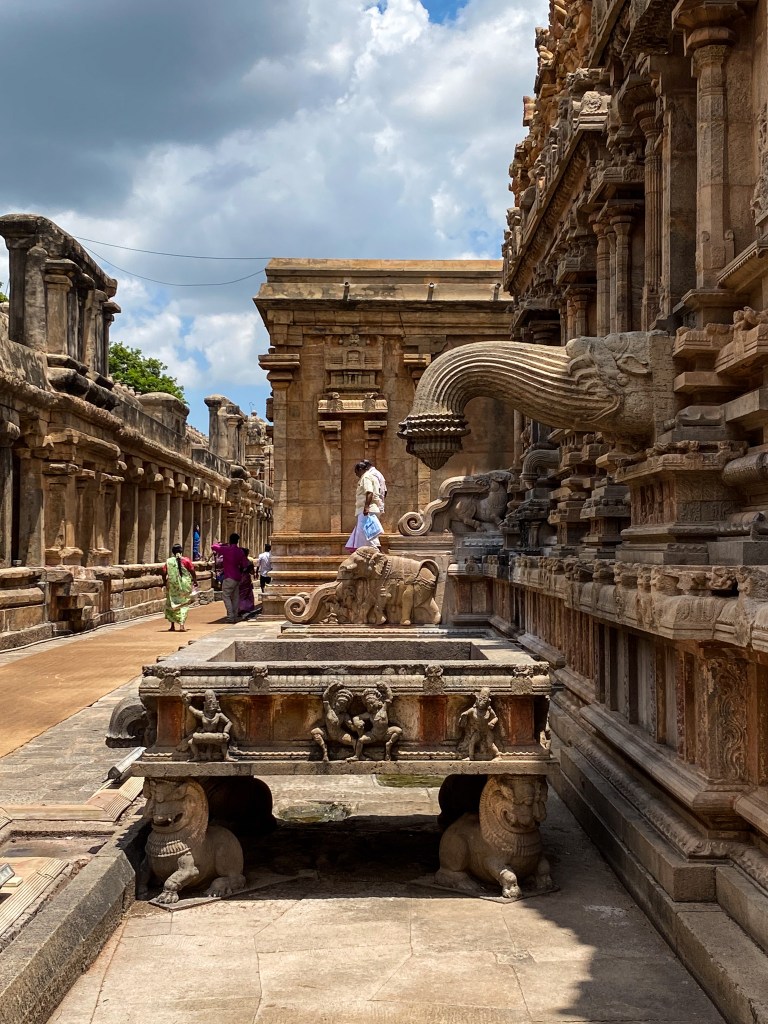
The Big Temple  is a testimony to the expertise of engineers, architects and artisans of the Chola era, to scale up and build a gopuram that has an impressive height of 208 feet. There is elaborate and detailed carving on all faces of the gopuram,  including the large single stone at the top.

The structures are all of granite and have been beautifully preserved. The complex has been deemed by UNESCO as a world heritage site and repairs and restorations are evident at various corners.

You can view more pictures here https://photos.app.goo.gl/Nyea9GF9rDv7y9S1A
The Peninsula Tour Part 2 – Pondicherry, Tranquebar, Chidambaram

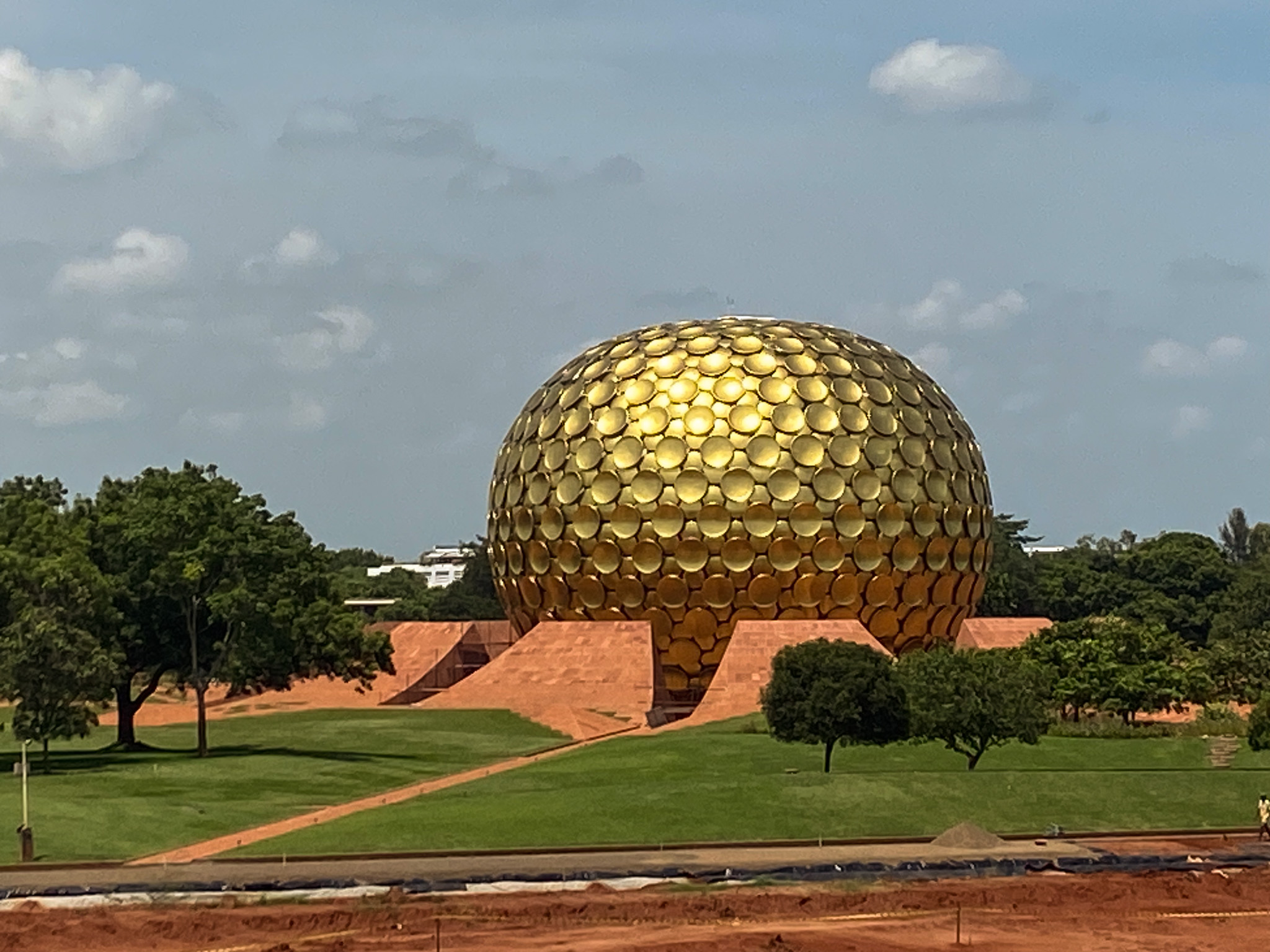
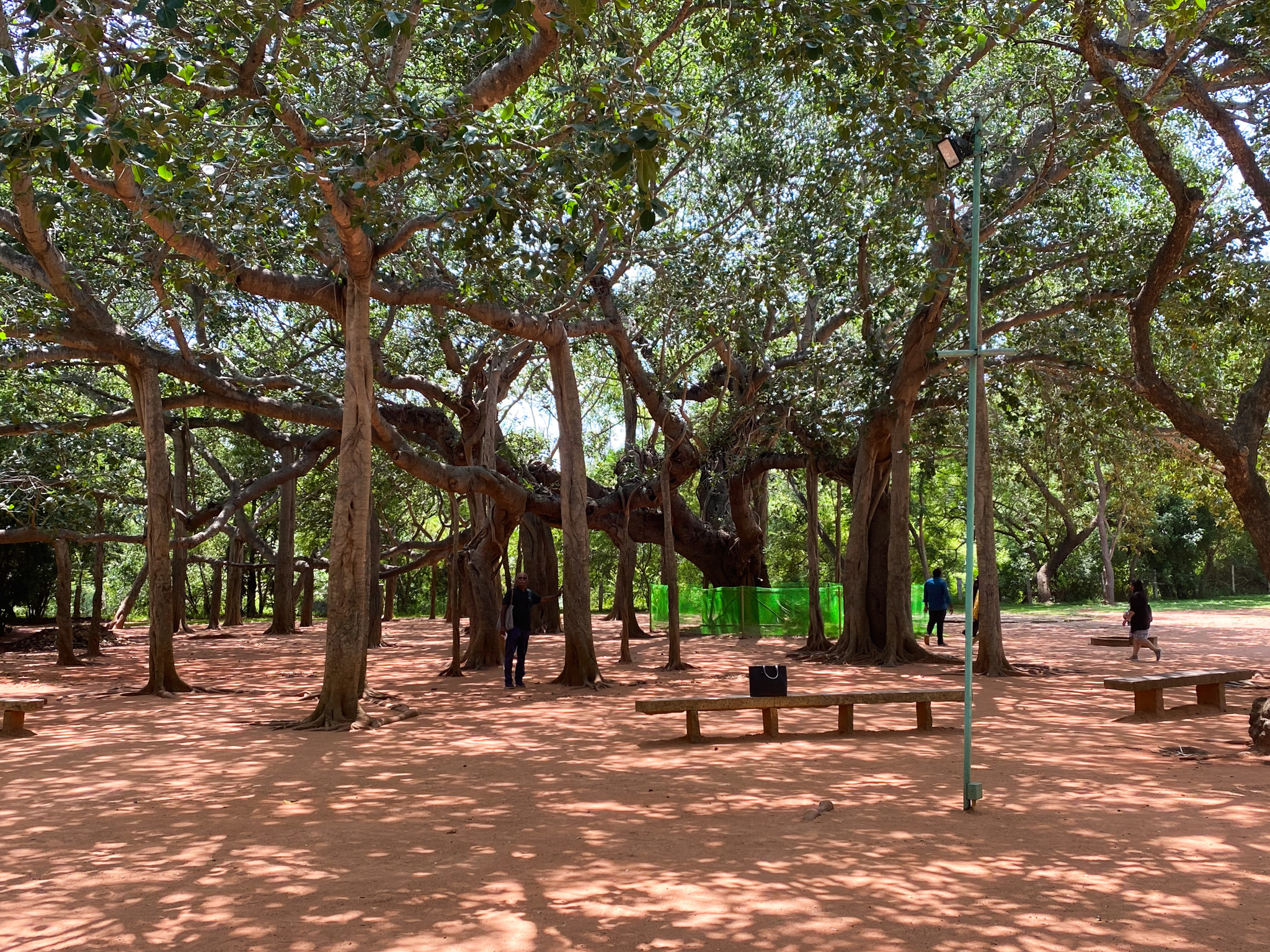
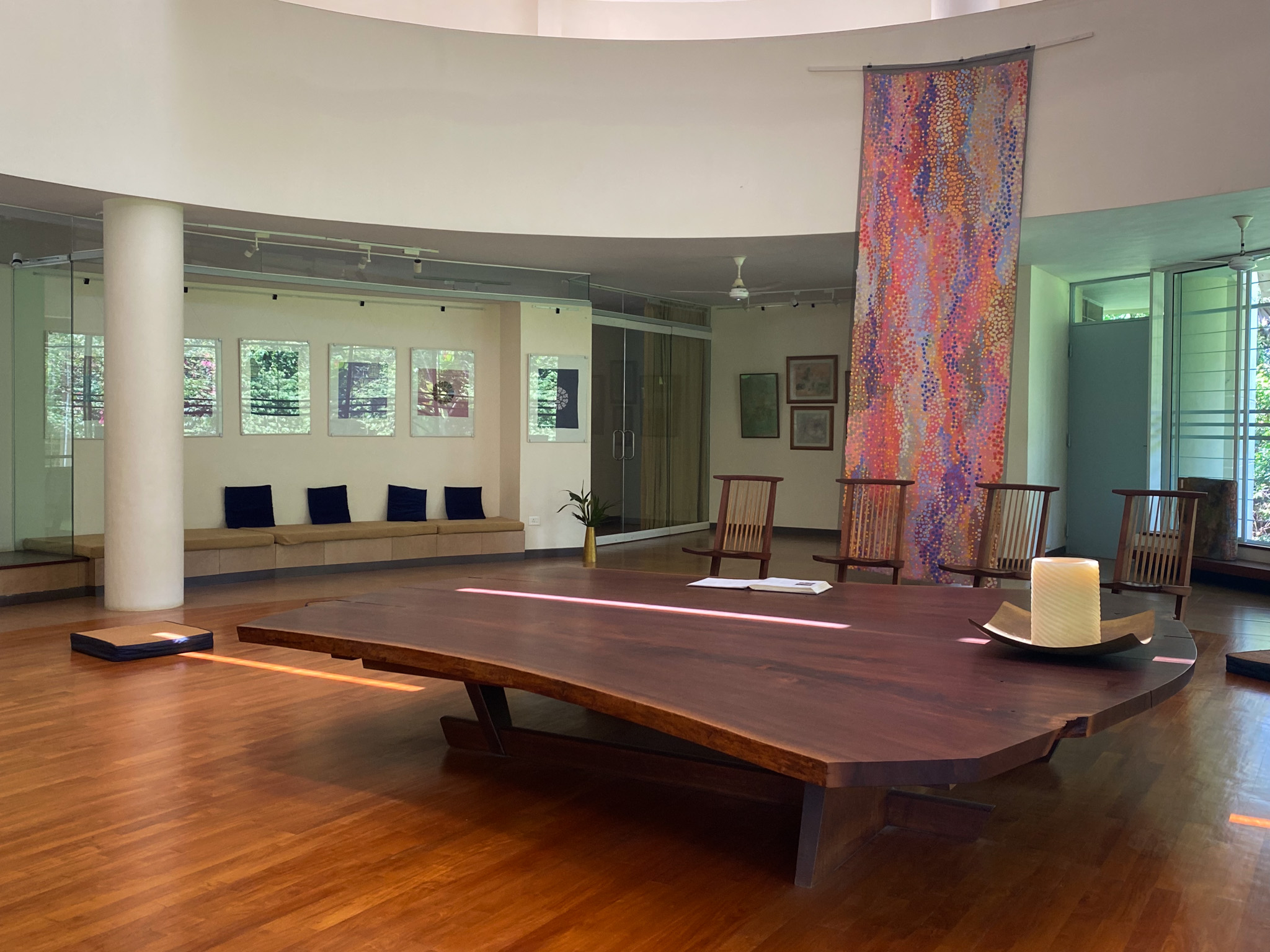
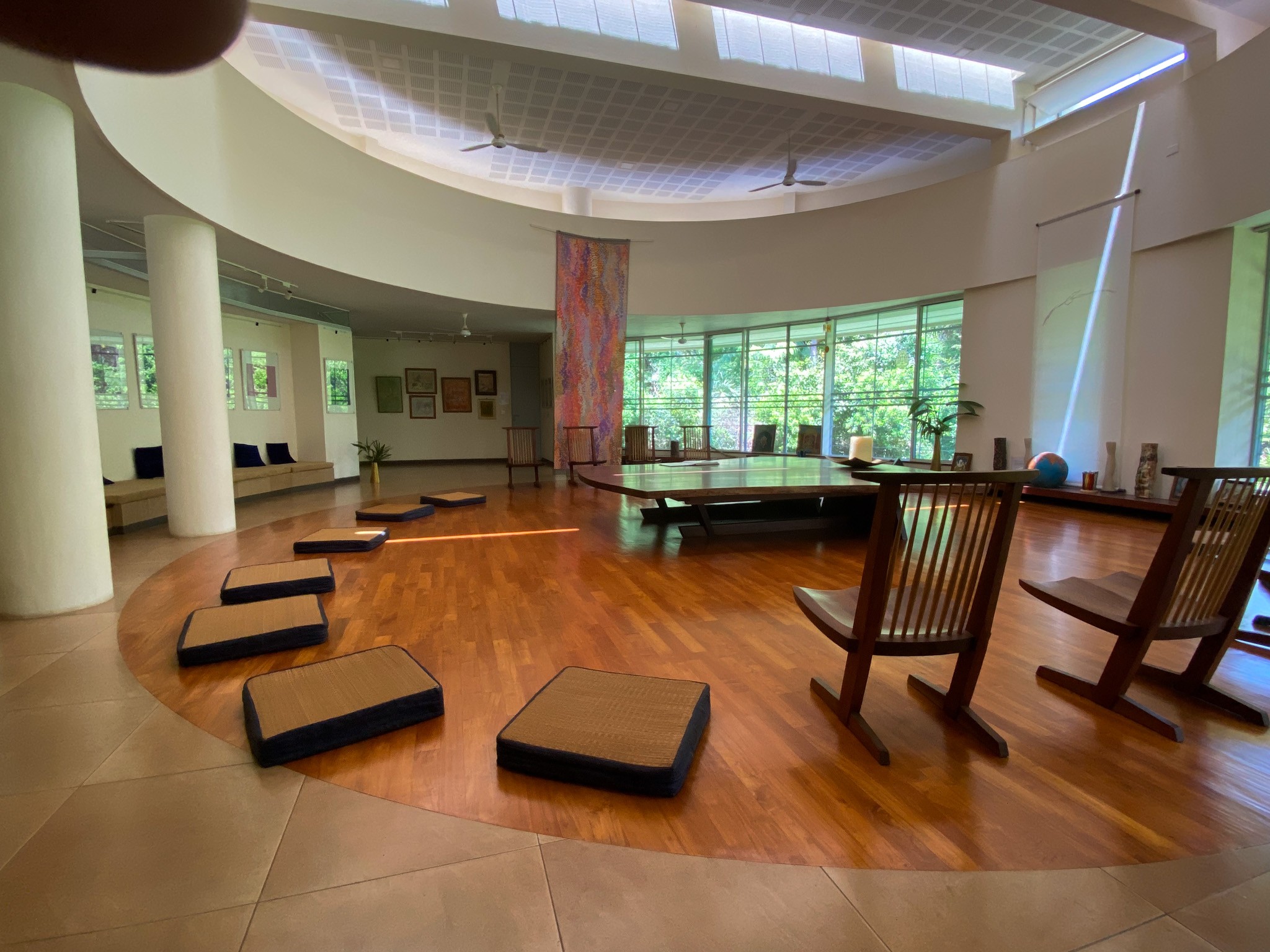
Pondicherry had been on our bucket list for a long time. We spent two days walking through the the White Town and spending over half a day visiting Auroville. It’s better to walk around White Town as parking is a pain and it feels like all the two wheelers in India holed up in Pondicherry.

Auroville was a short drive away and the walk through the place was very nice. It’s a different world out there.

While Pondicherry doesn’t take ones breath away, it is a nice place to visit.

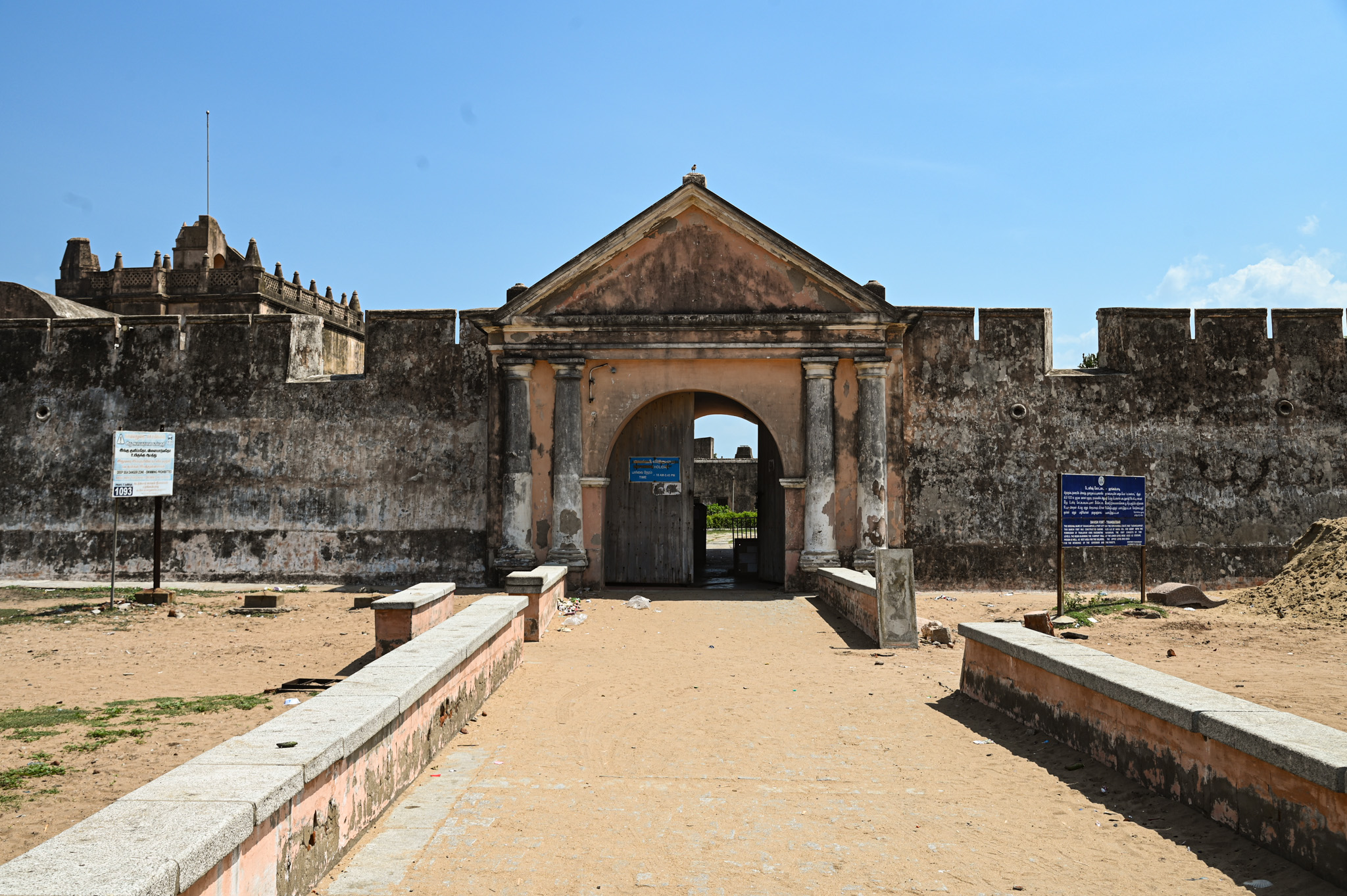
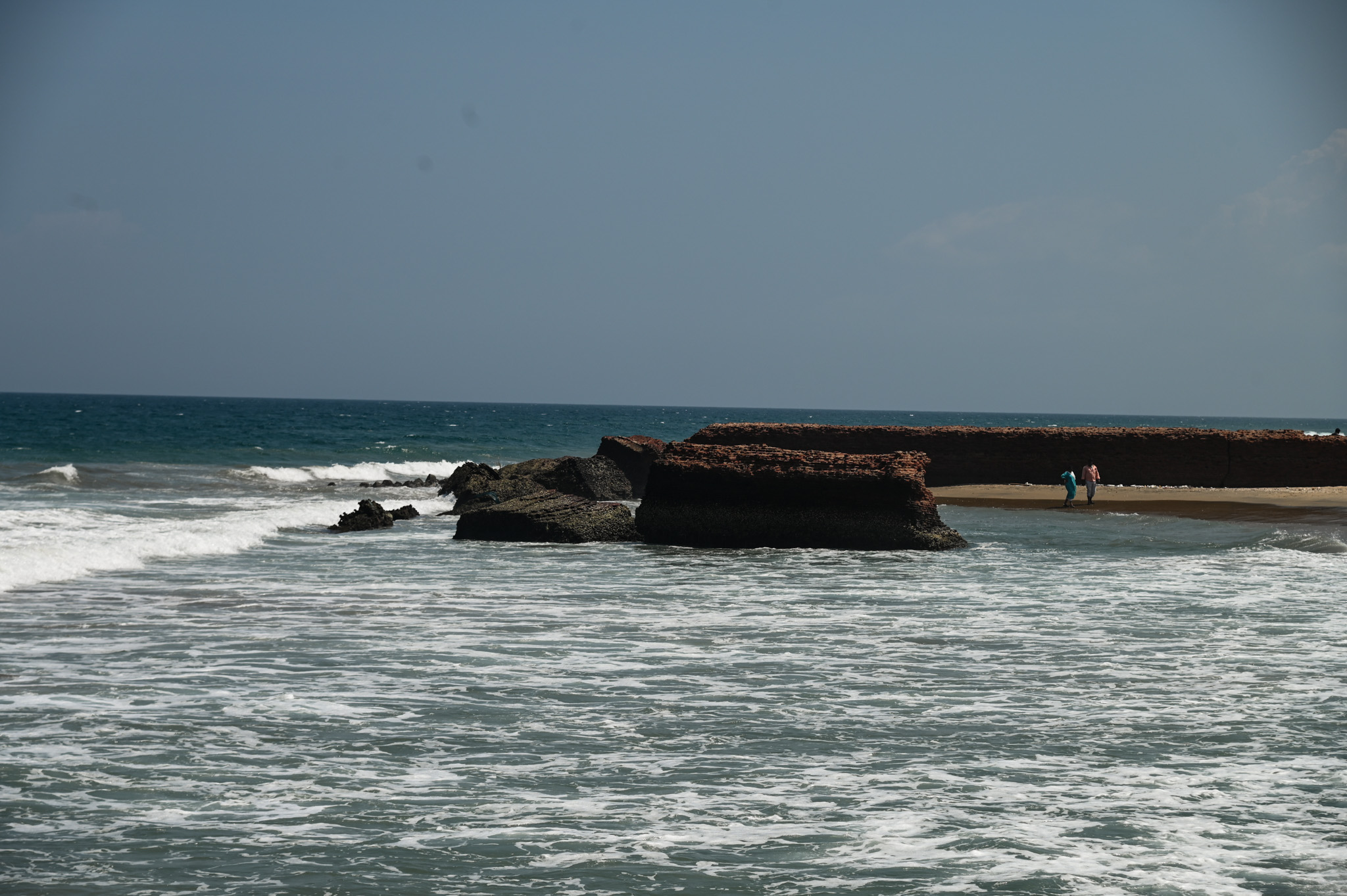
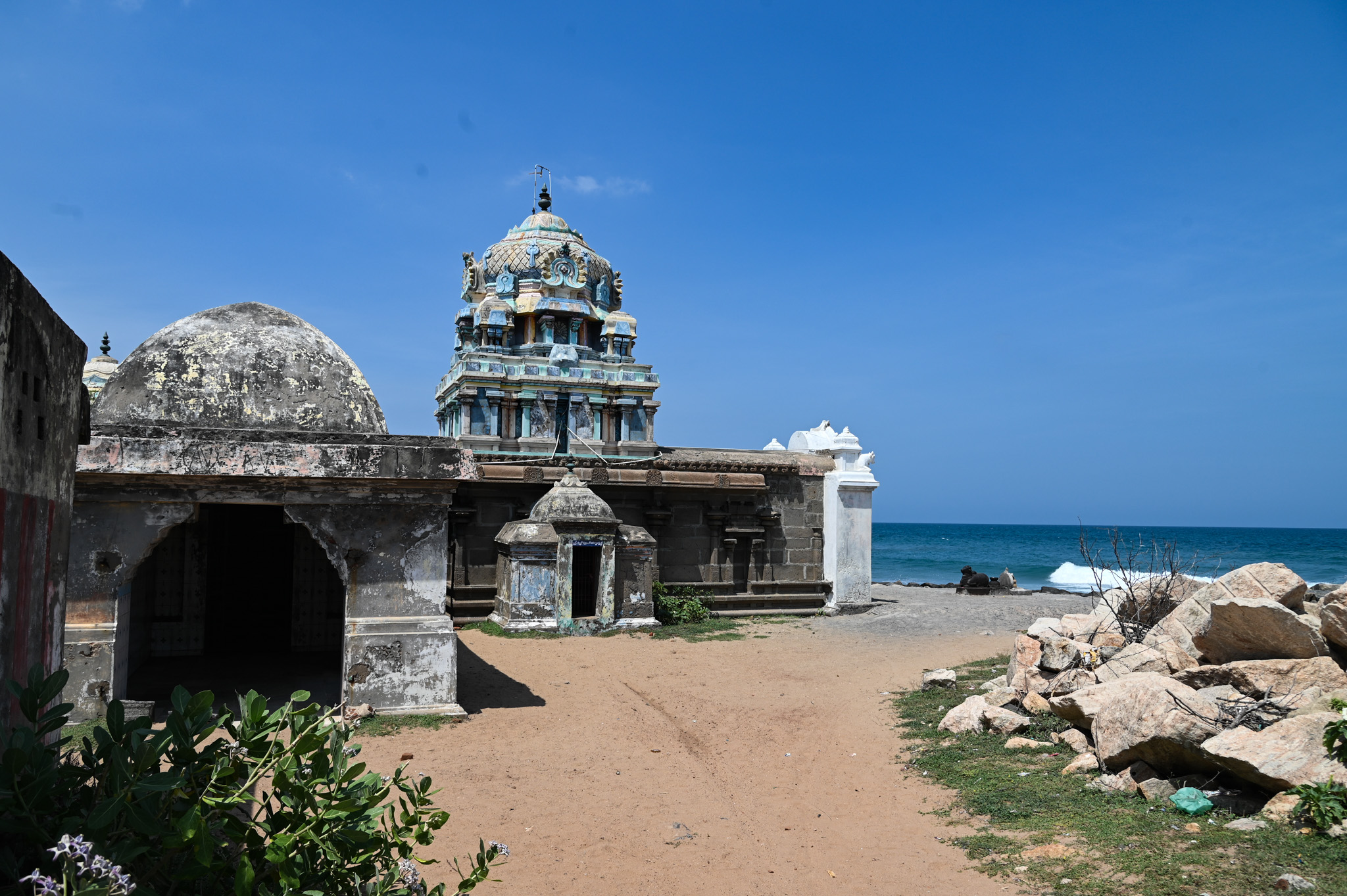
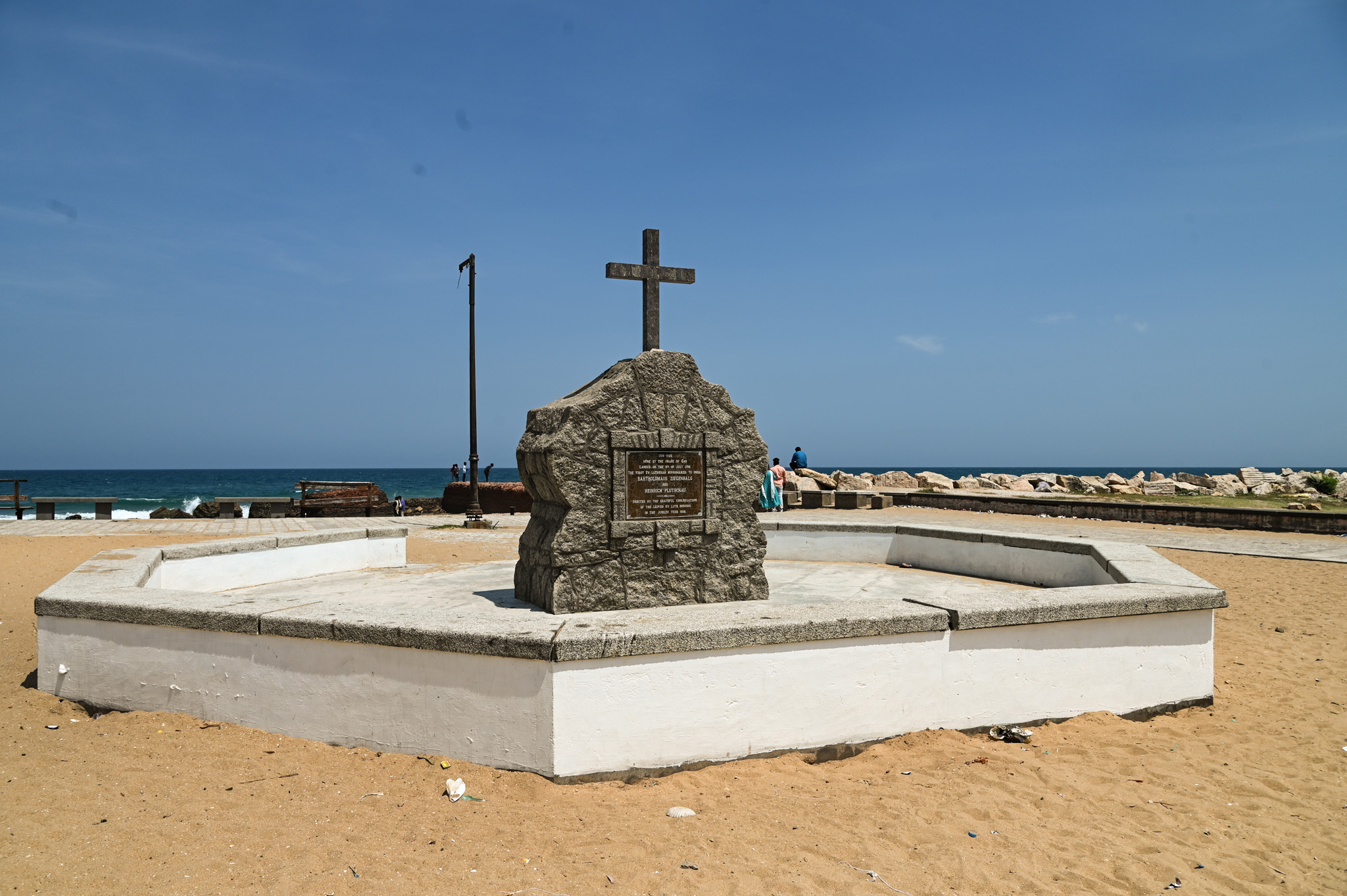
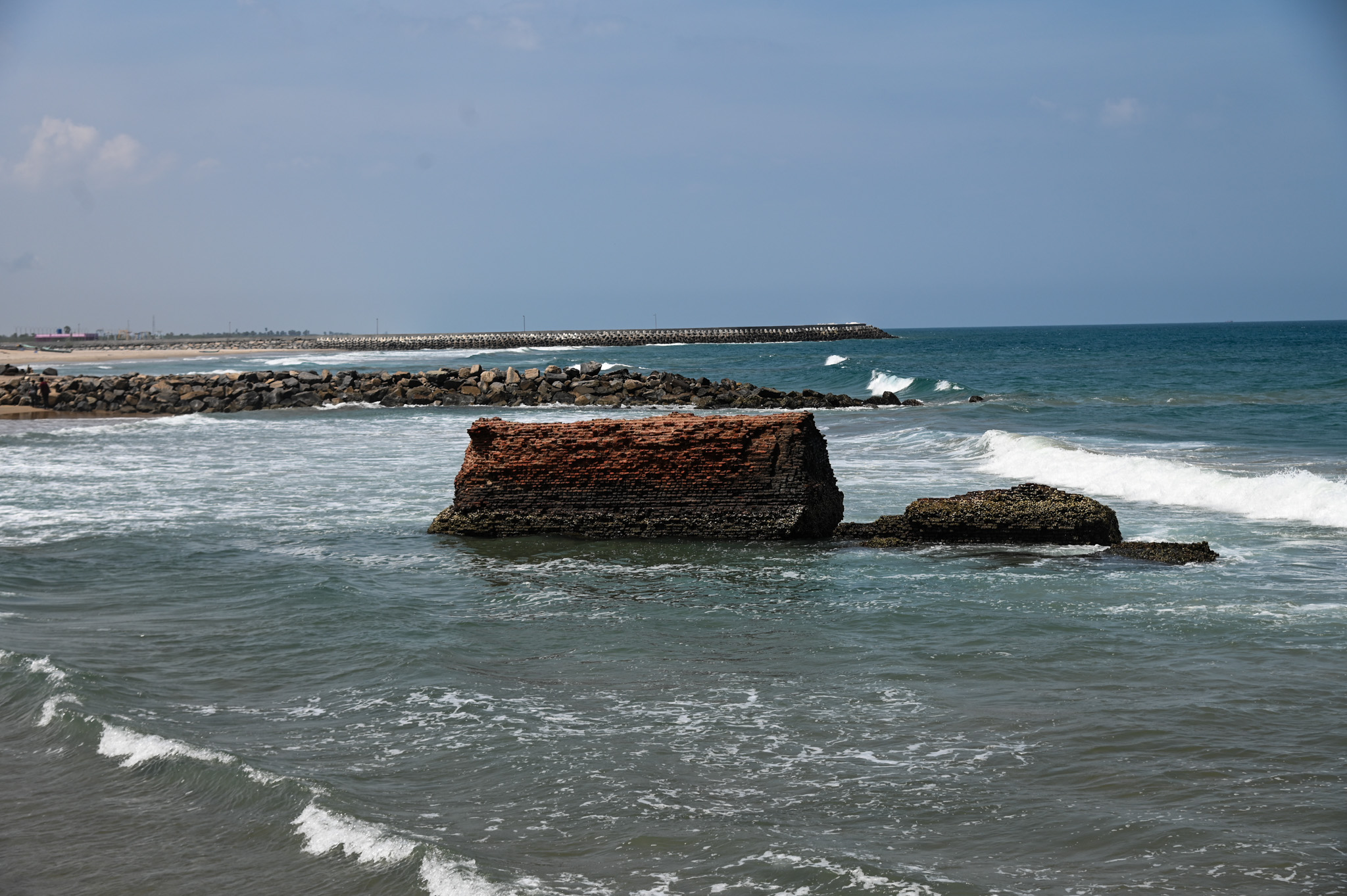
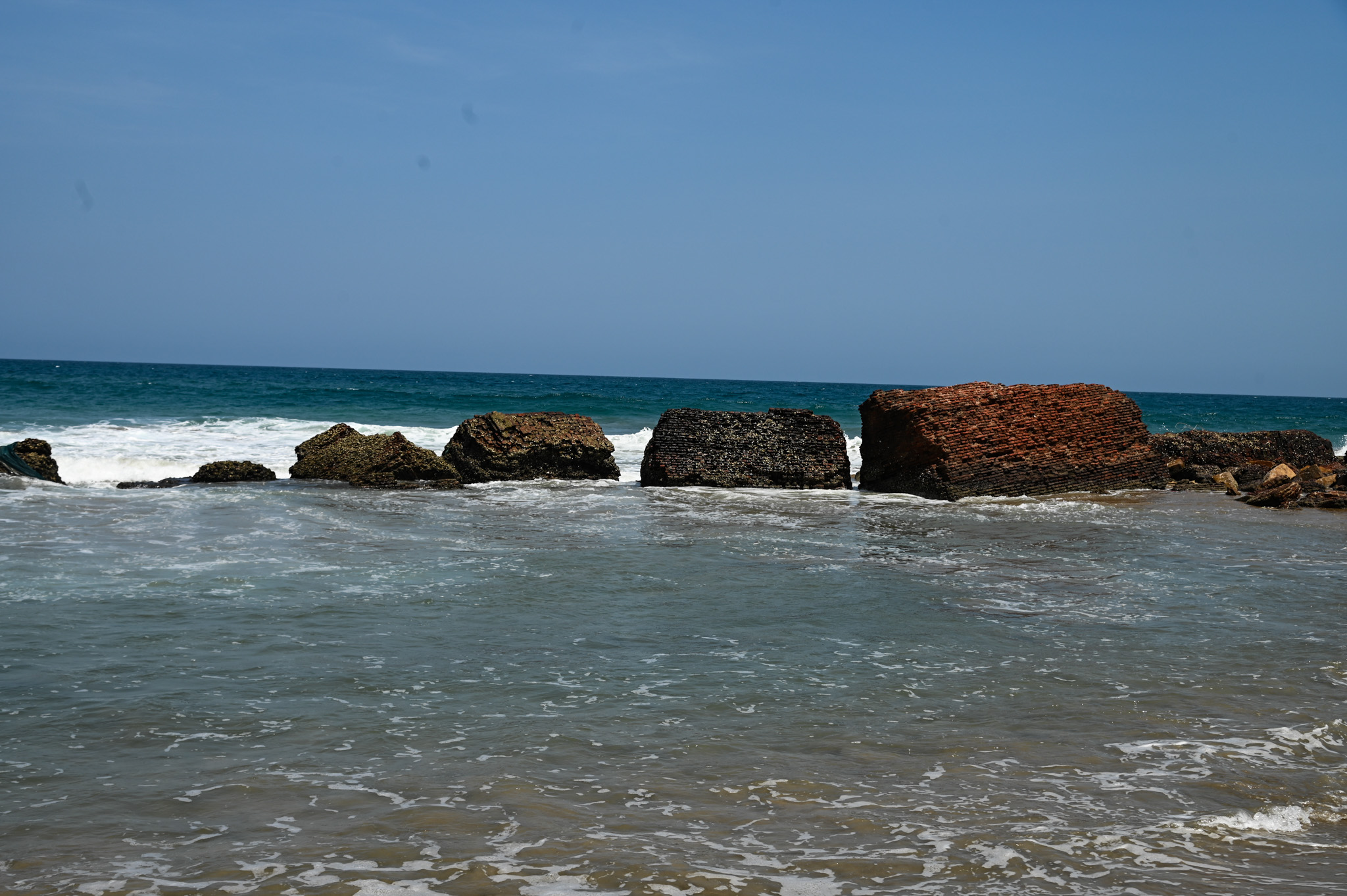
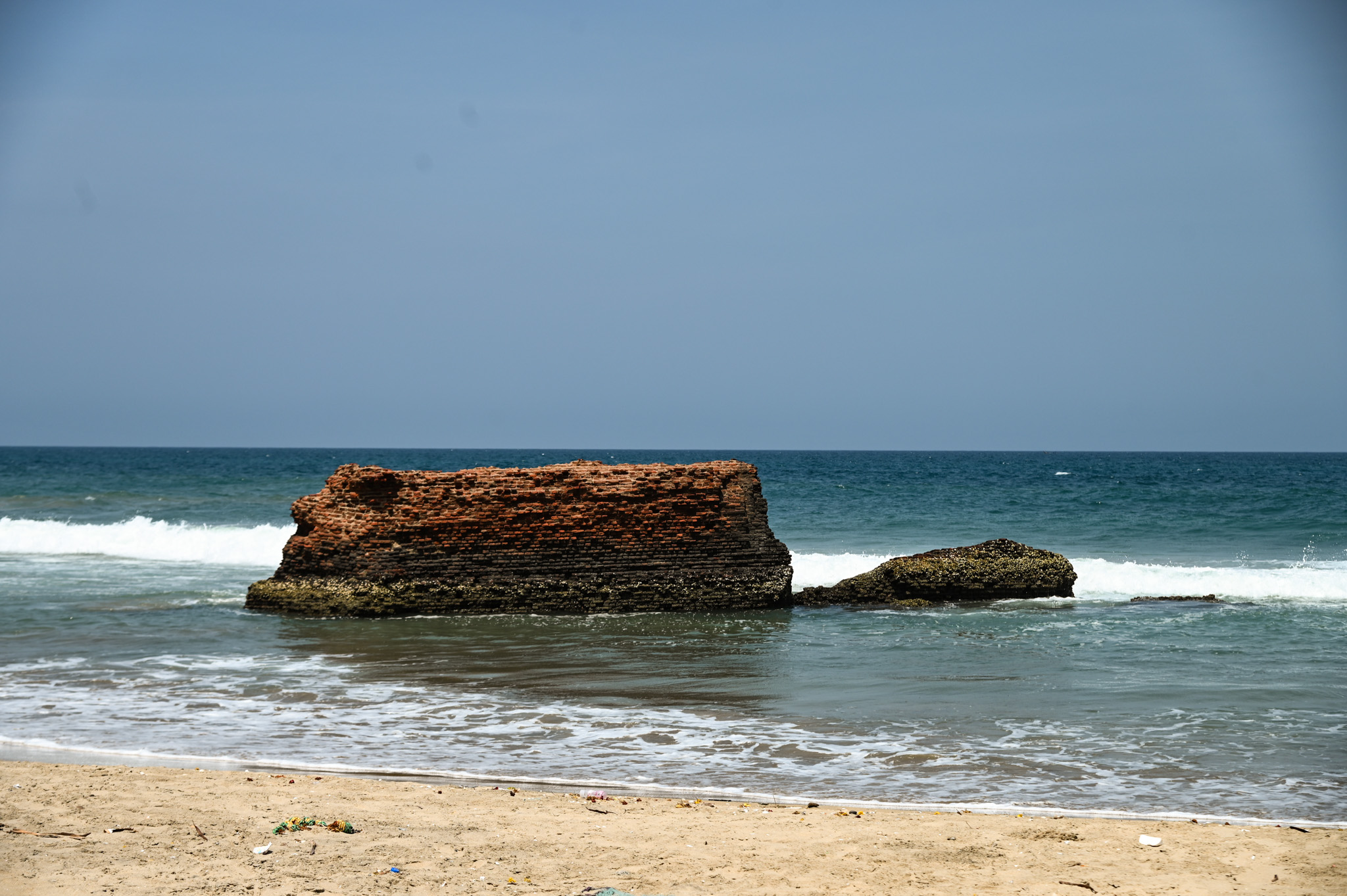
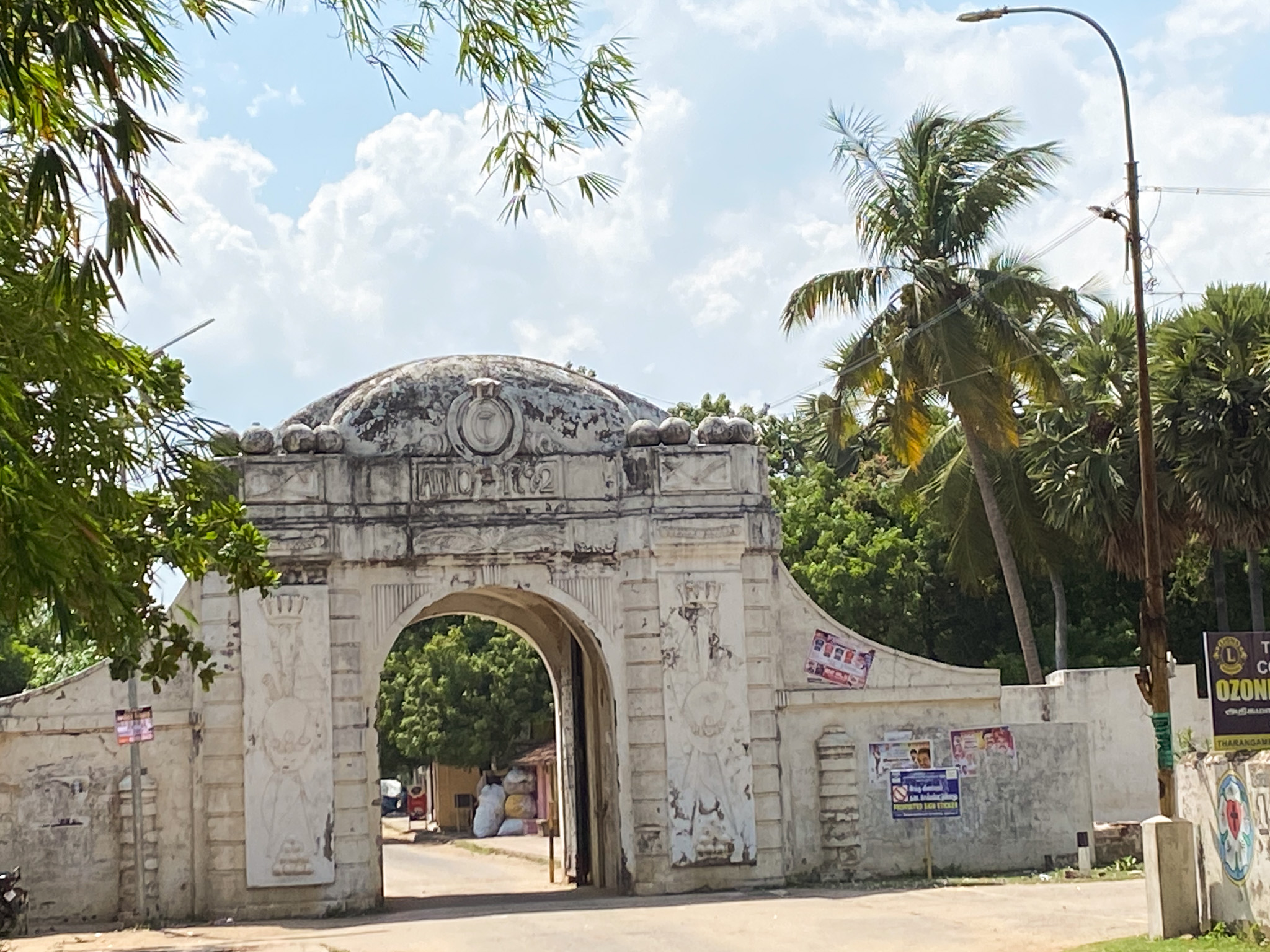
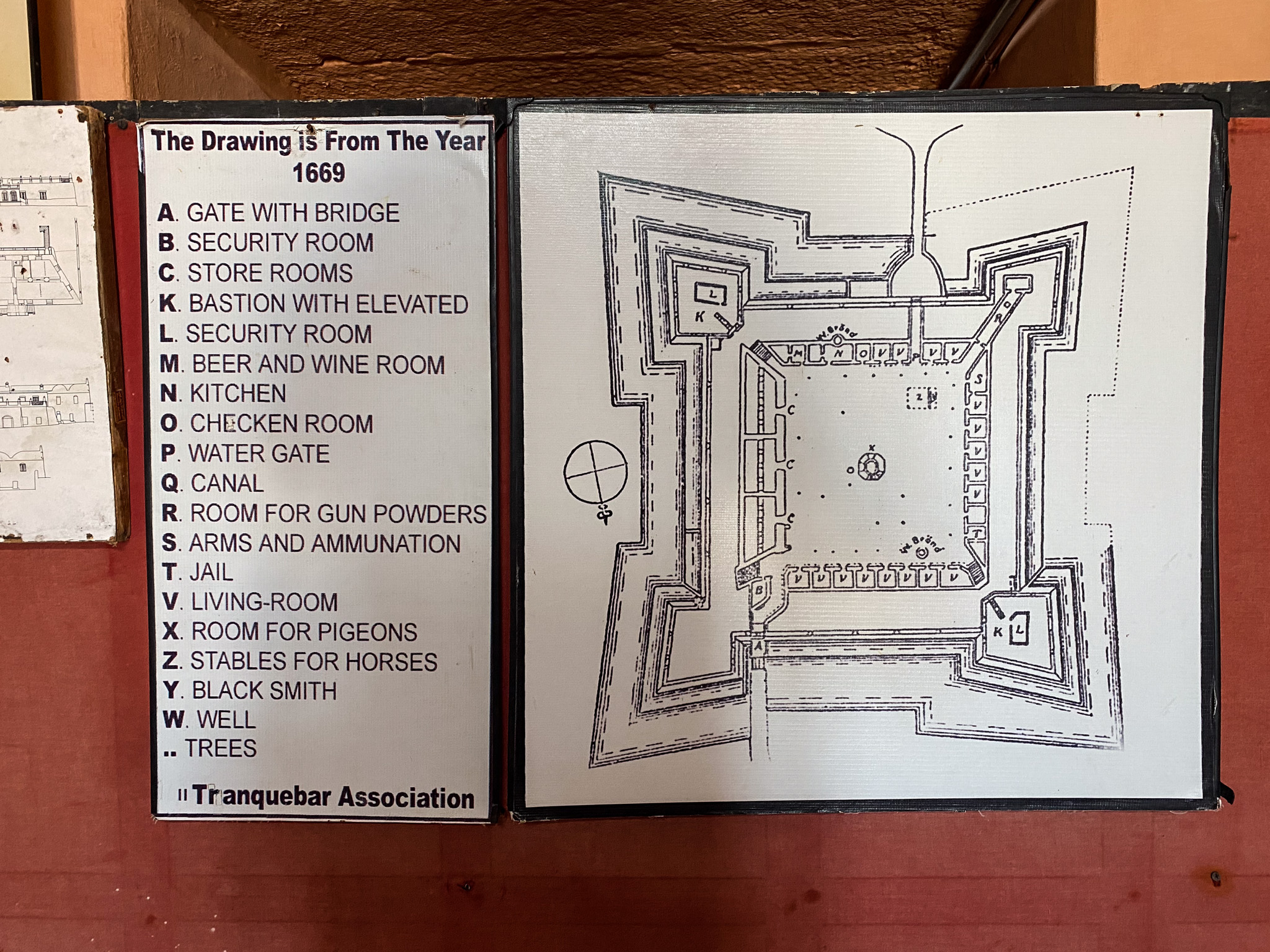
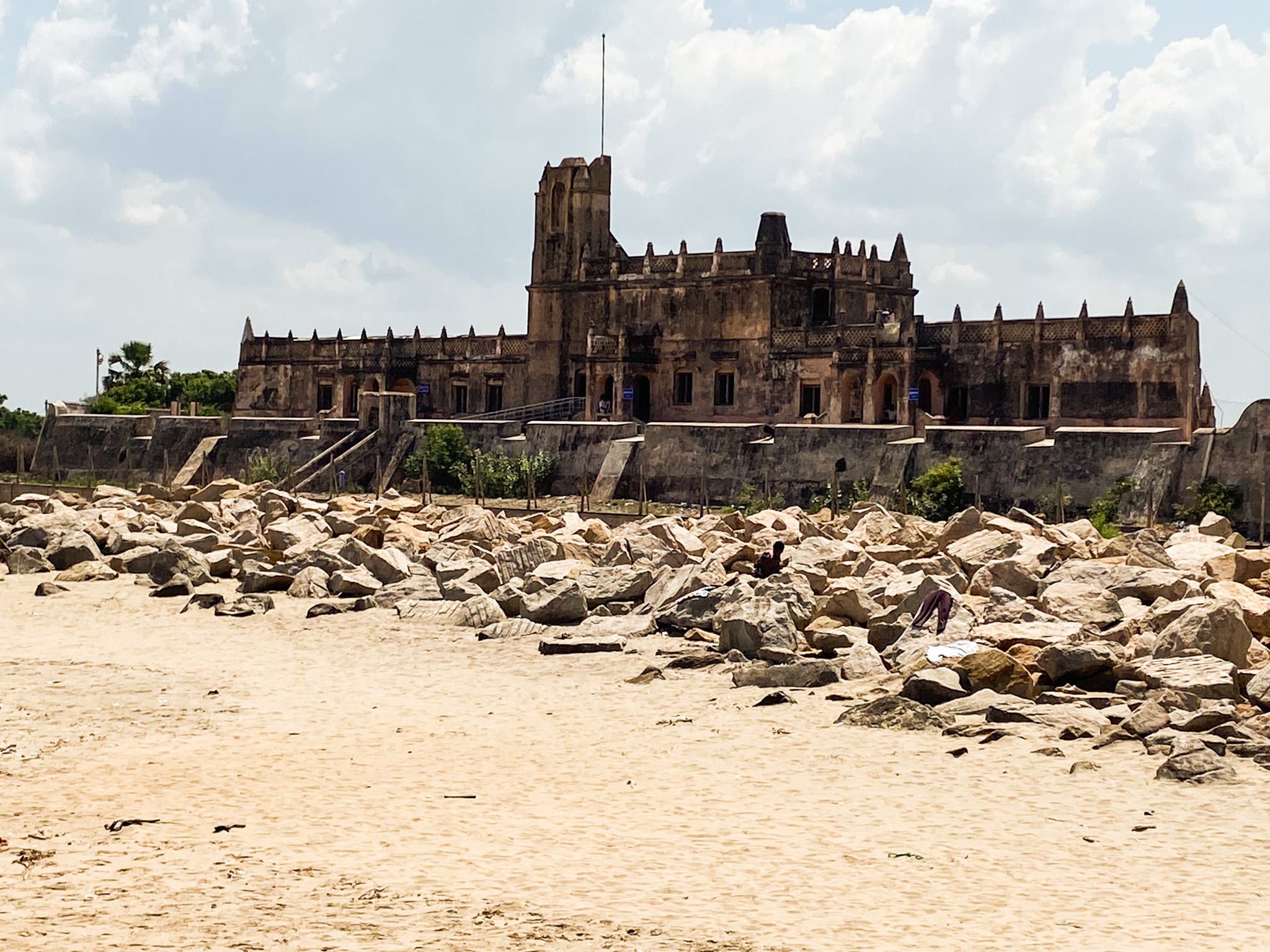
We left Pondicherry to spend a couple of hours at Tranquebar or Tarangambadi as it is now called. This was a Danish Colony dating back to the 14th century. The place has a beautiful fort called Dansborg, by the sea. The fort is largely well preserved and remnants of the fort have been built well into the shoreline. The musuem lists all the Danish ships that docked at Tranquebar.

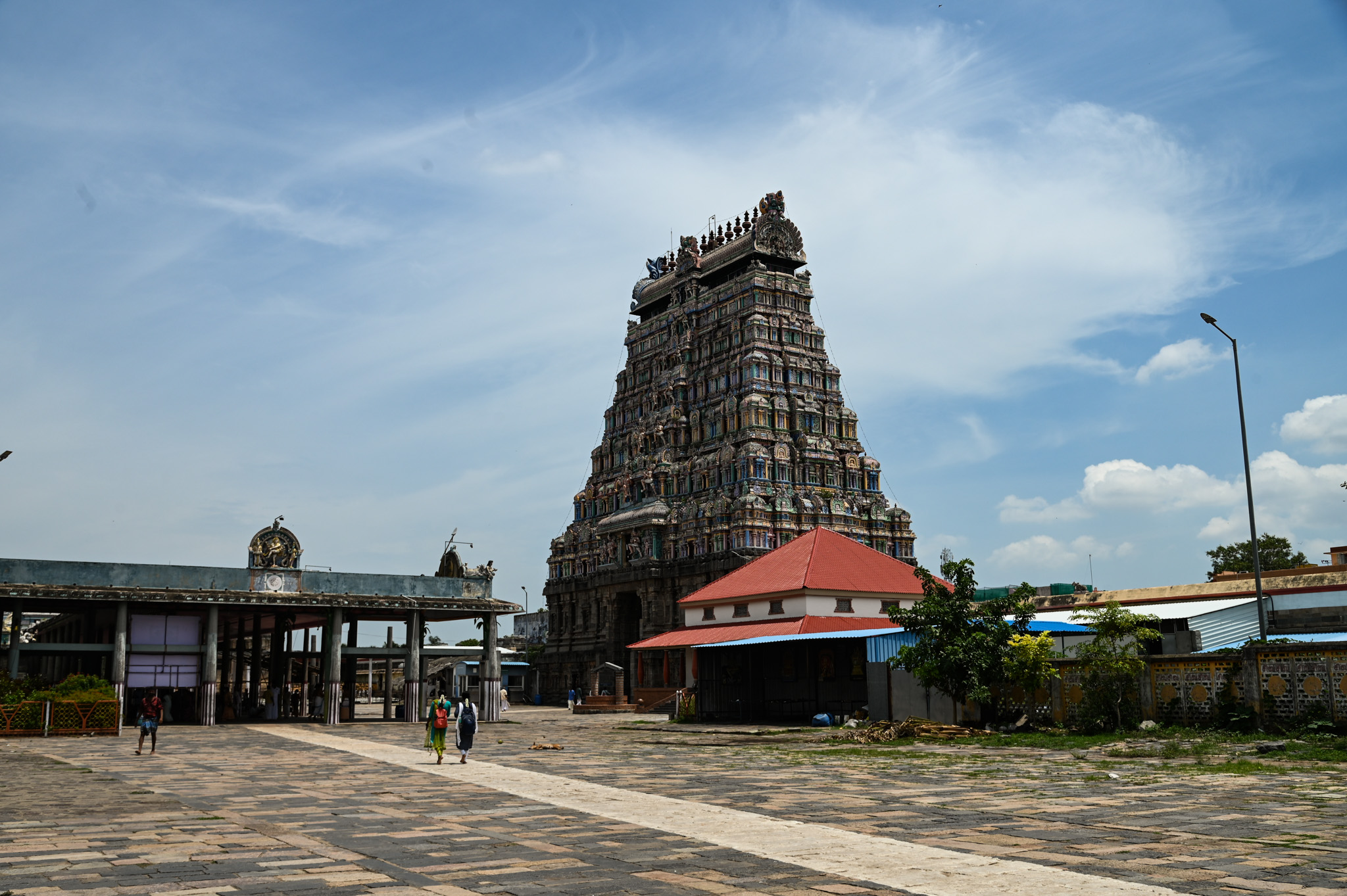
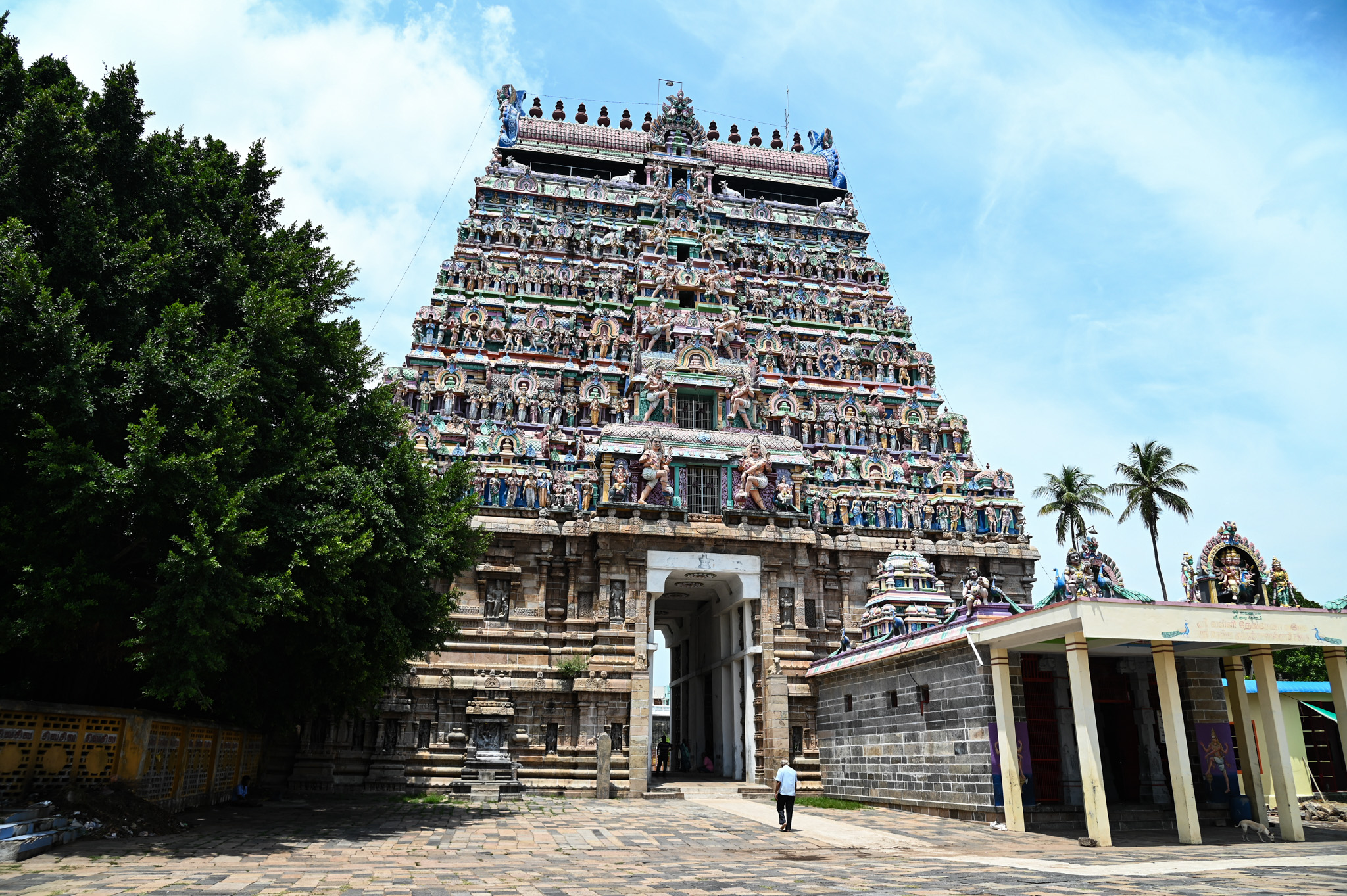
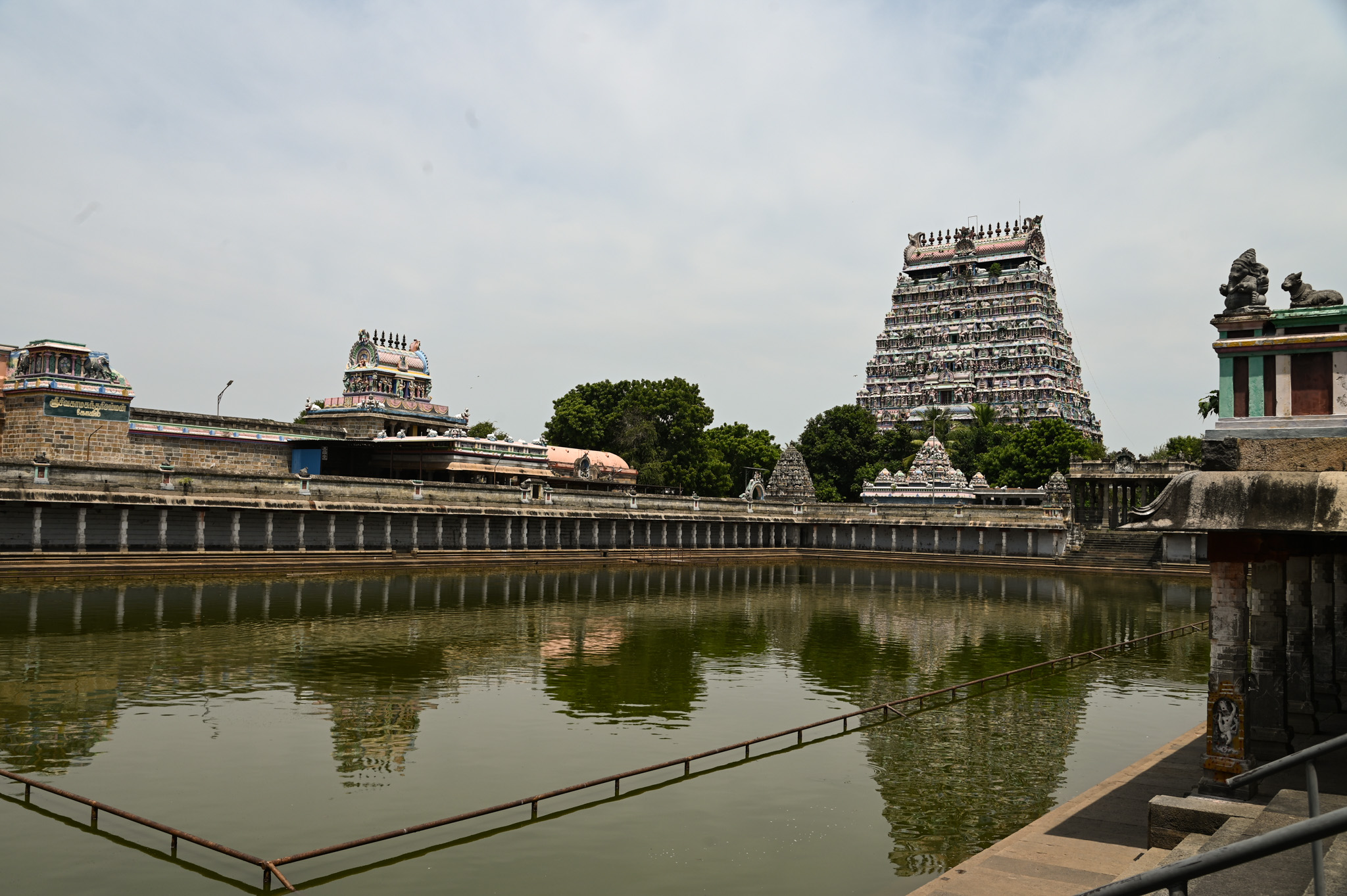
Chidambaram was another short stop that had us thoroughly enjoying the temple architecture. The temple is called the Thillai Nataraja Temple and is set in a large complex. Built in the 10th century by the Cholas, the temple has withstood the test of time. The complex houses a large pond that has its water source from the springs in the complex. The 1000 column hall is beautiful, but access is restricted.The local guide was very helping taking us around the temple.

The pictures can be viewed at https://photos.app.goo.gl/3q764wmiXs75A2NWA
The Peninsula Tour Part 2 – Mahabalipuram

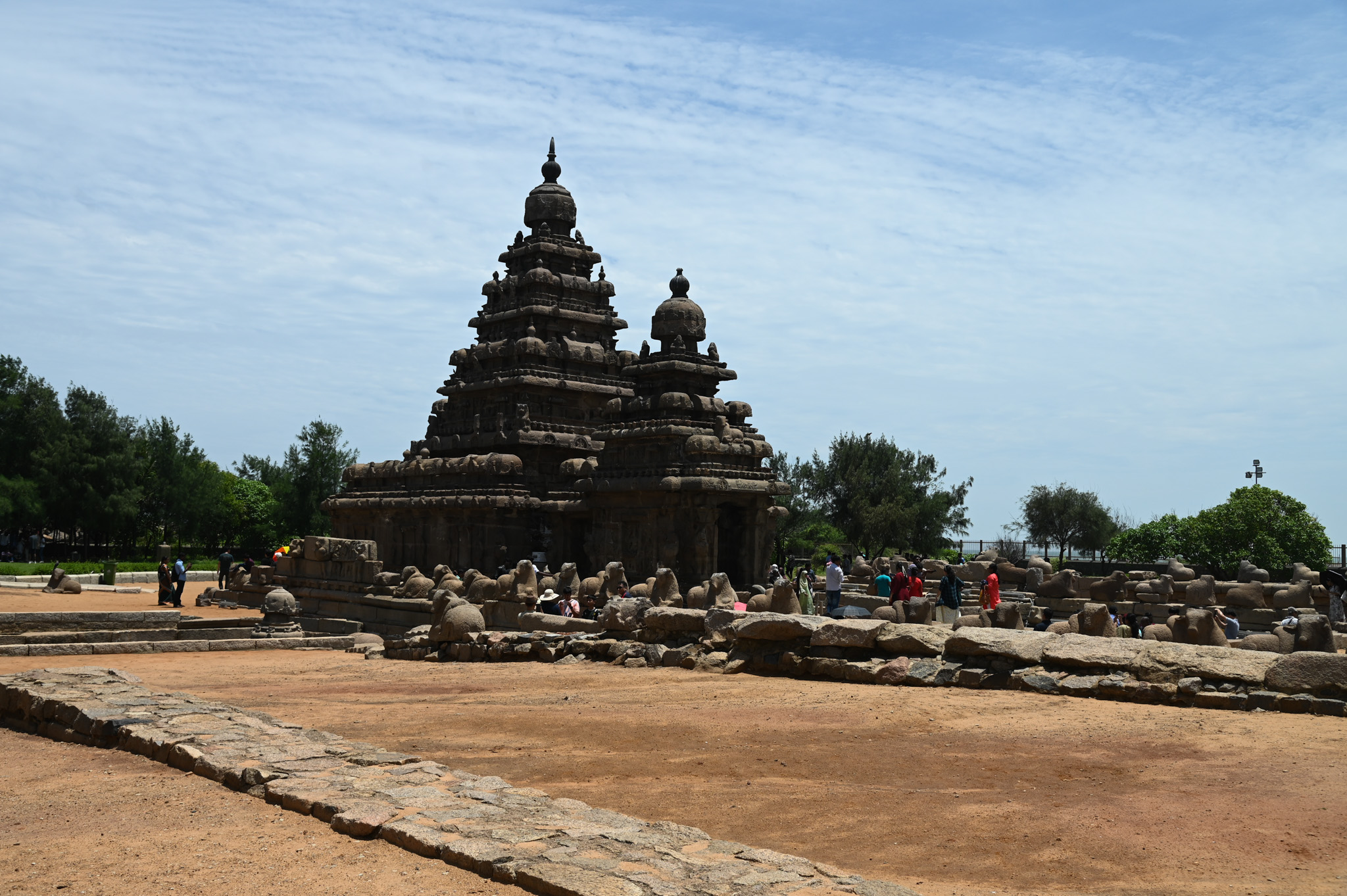
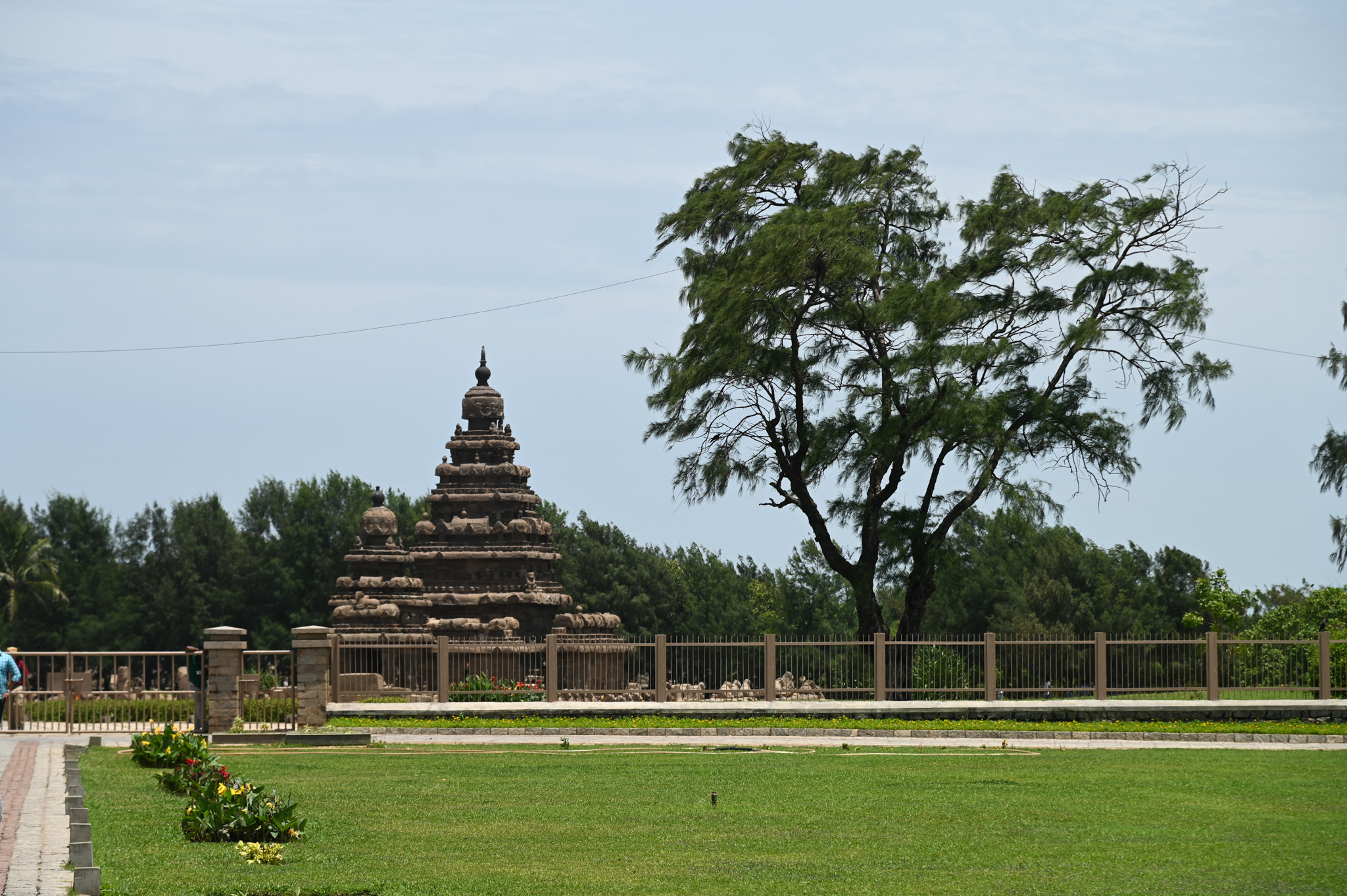
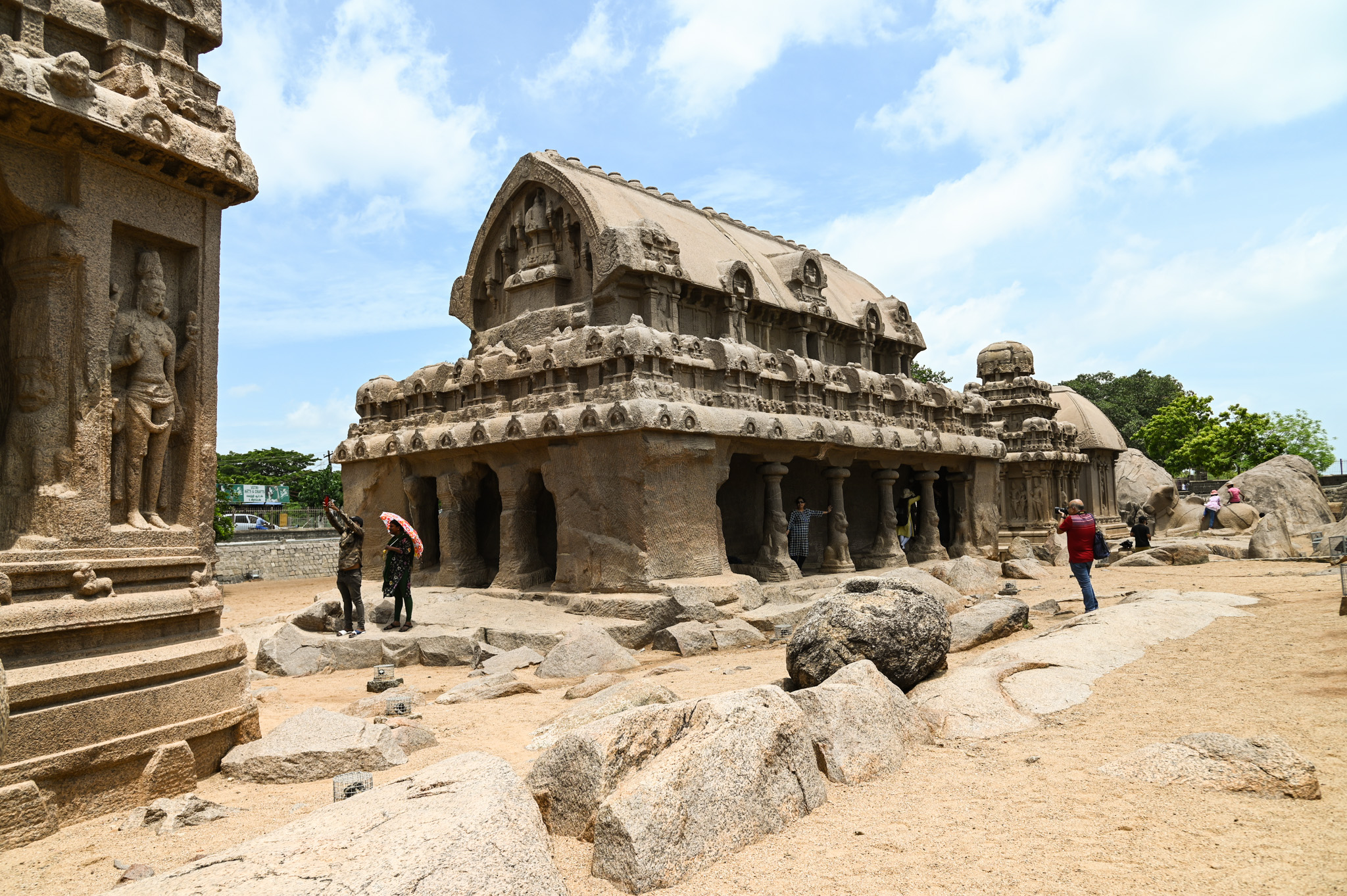
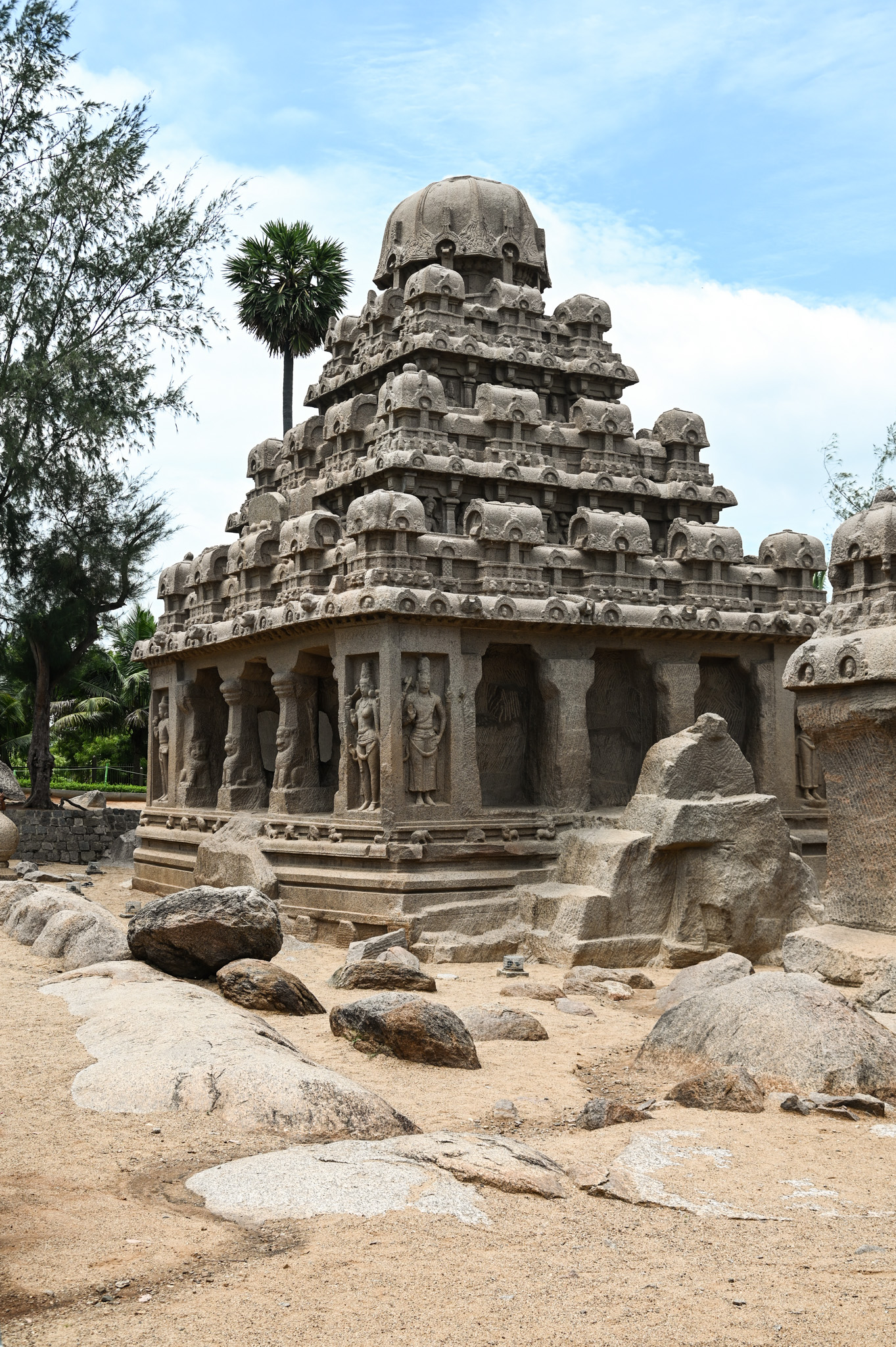
After spending a few days in Bangalore and Chennai with relatives and friends, we shifted base to Mahabalipuram. The rain that has been following us on parts of our journey decided to play spoilsport and prevent us from taking pictures of the Shore temples at sunrise and sunset. The sun scorched during the day, though.

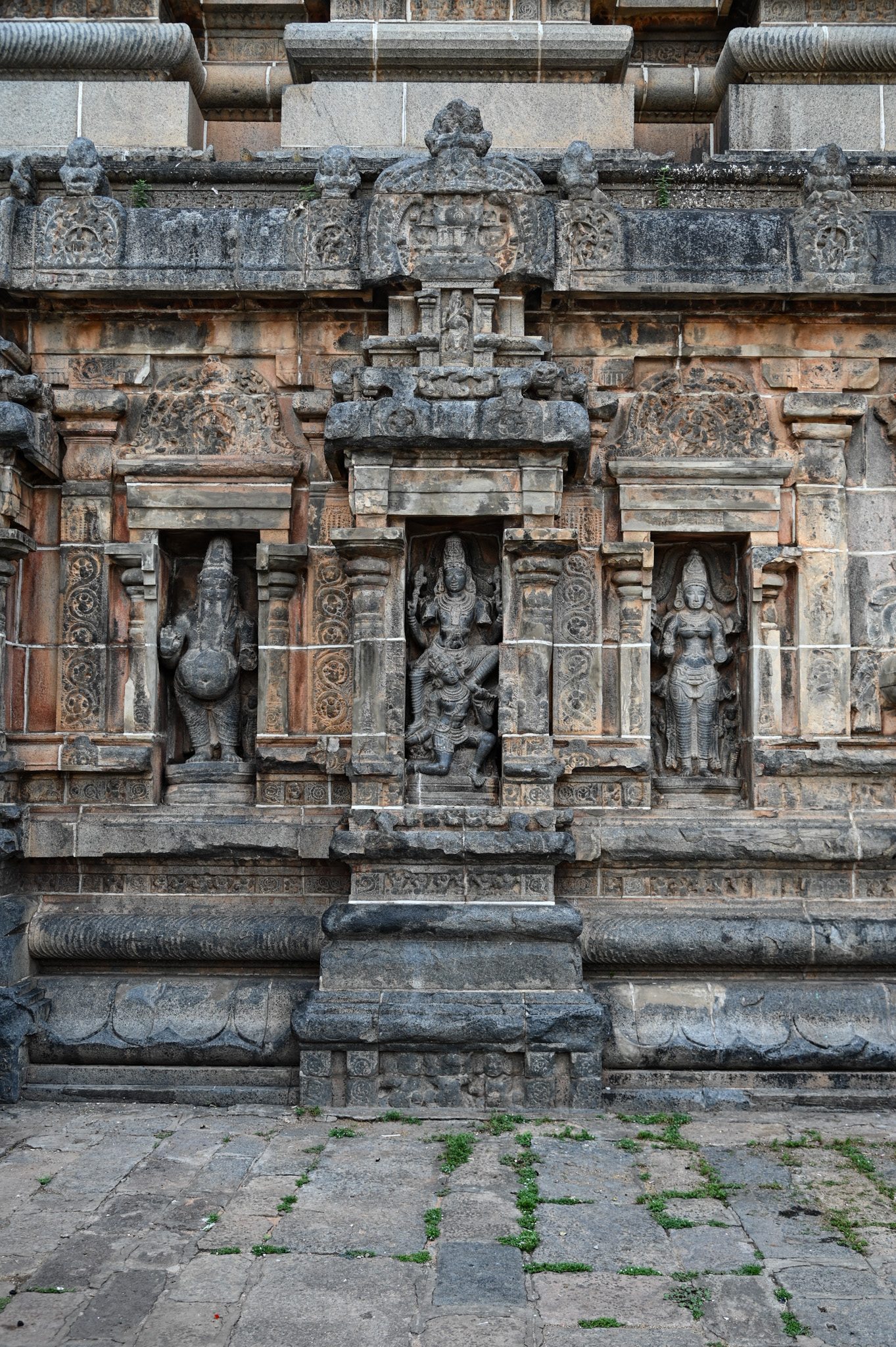
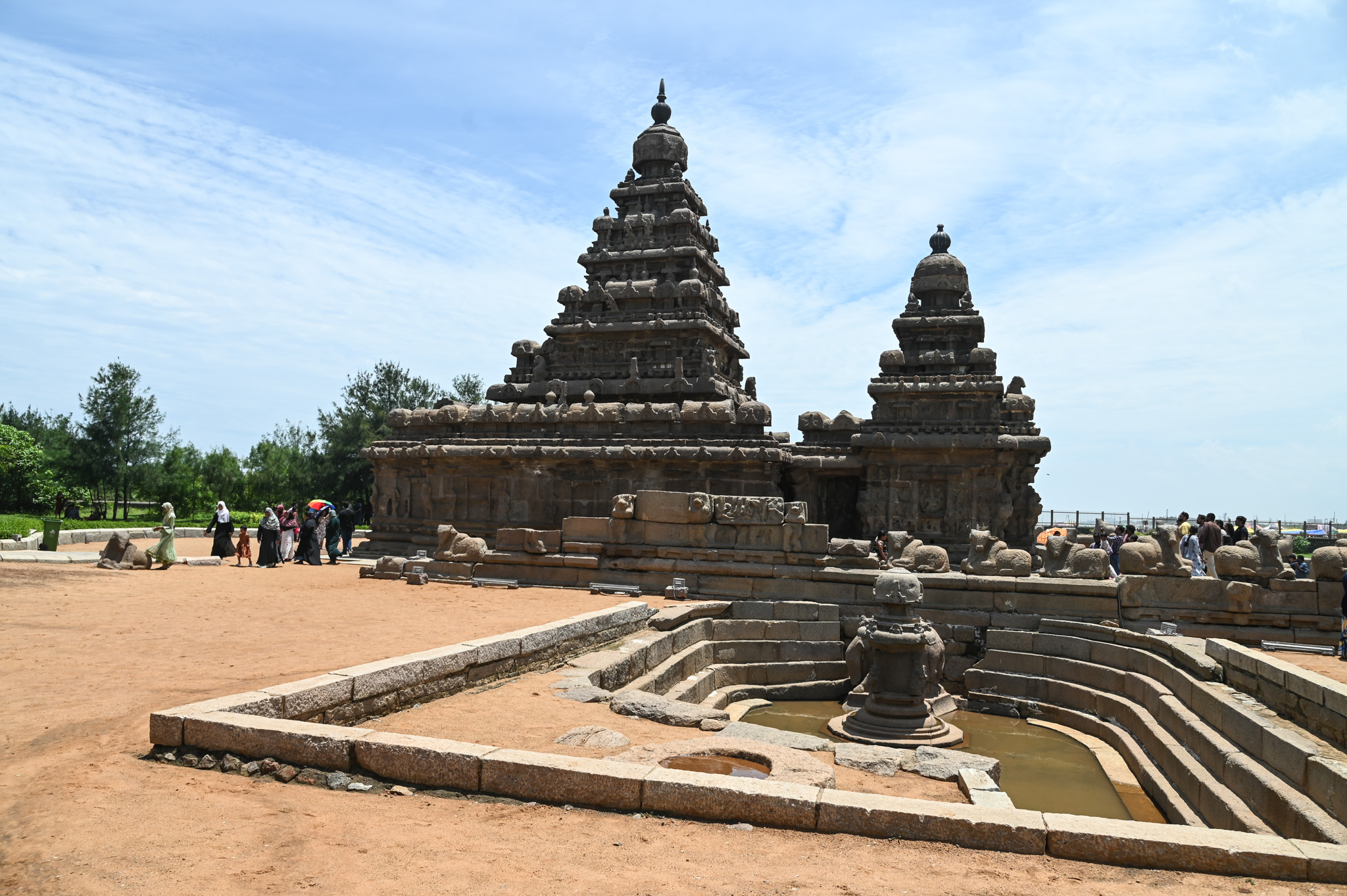
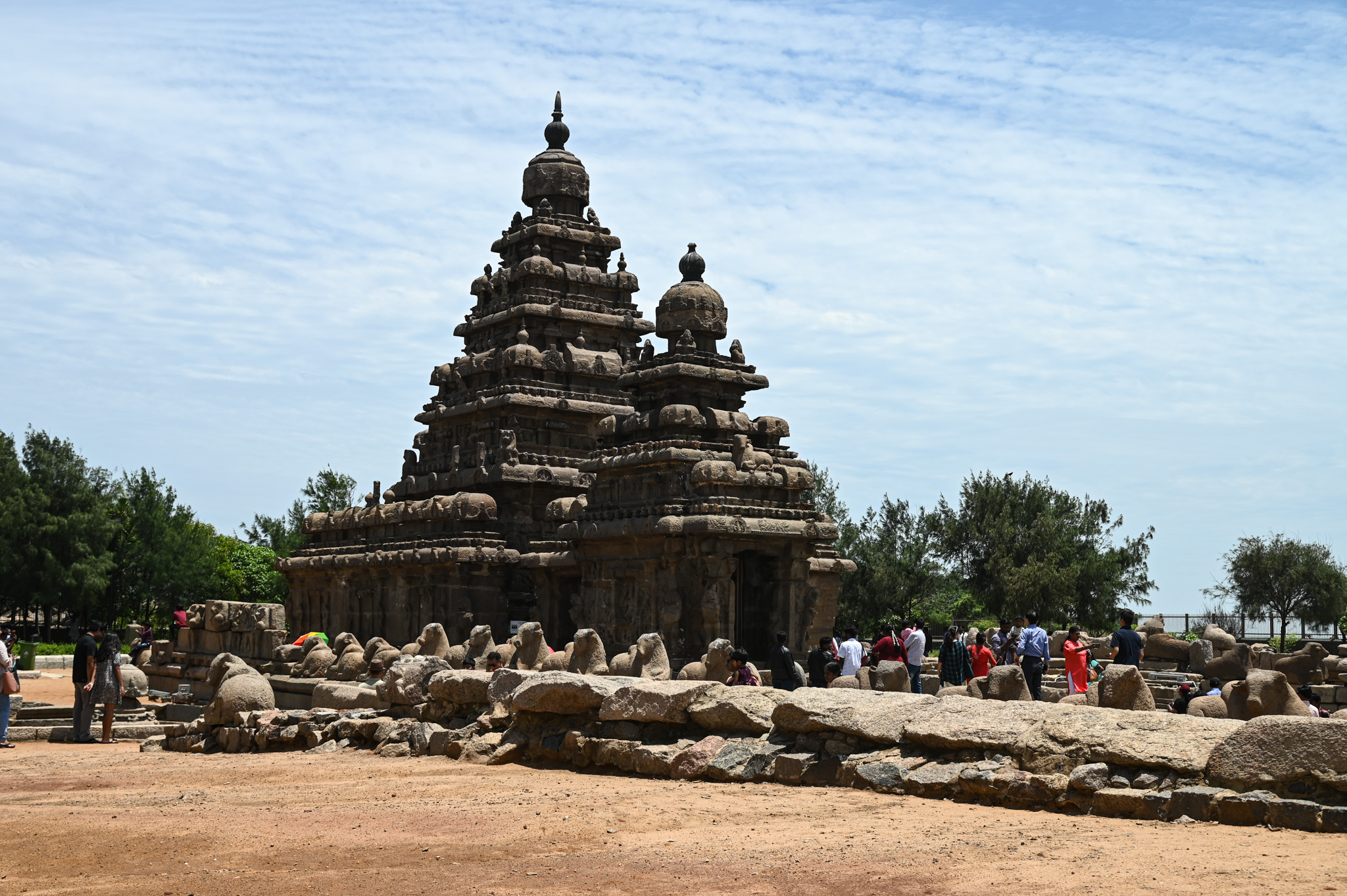
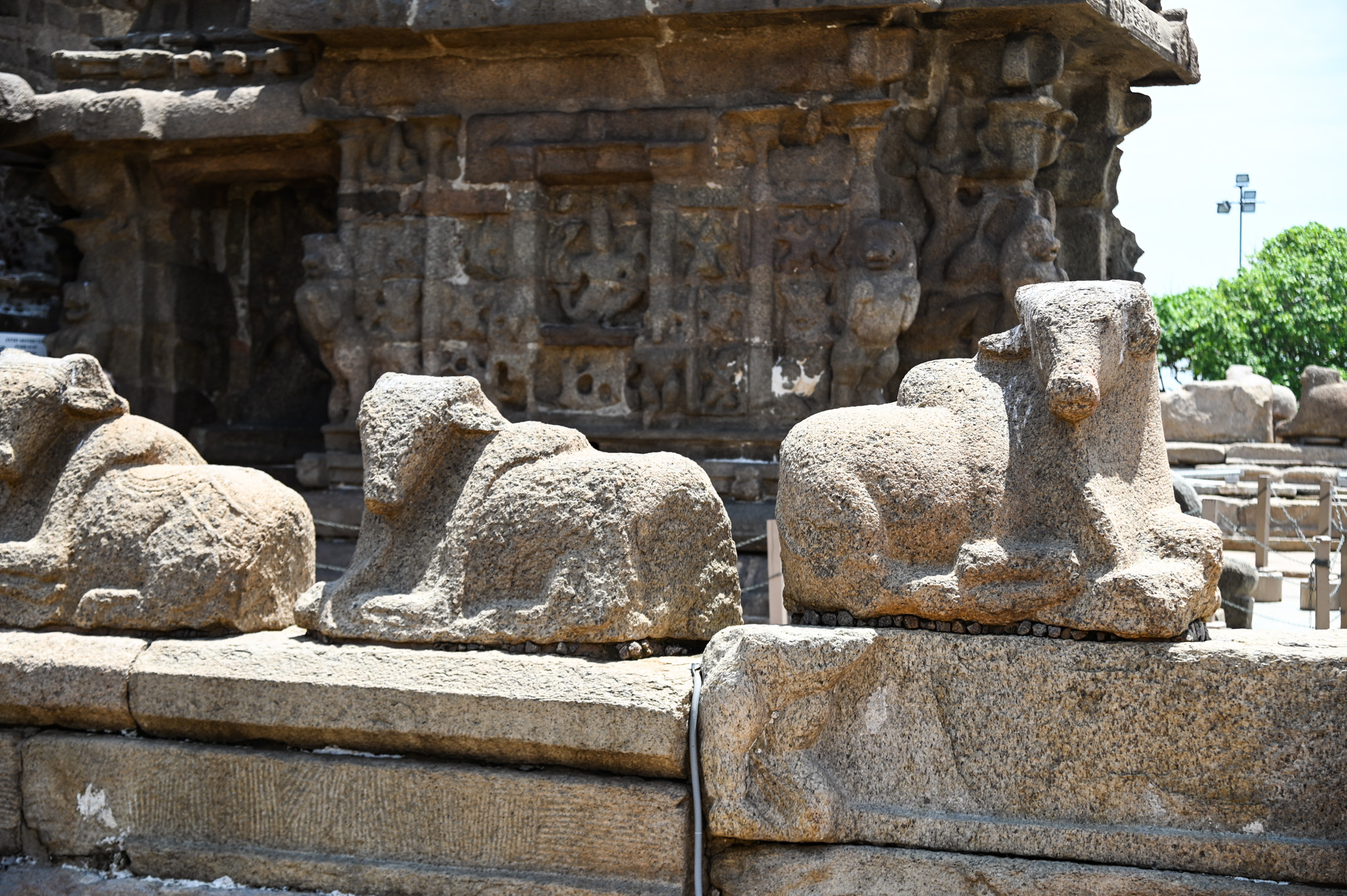
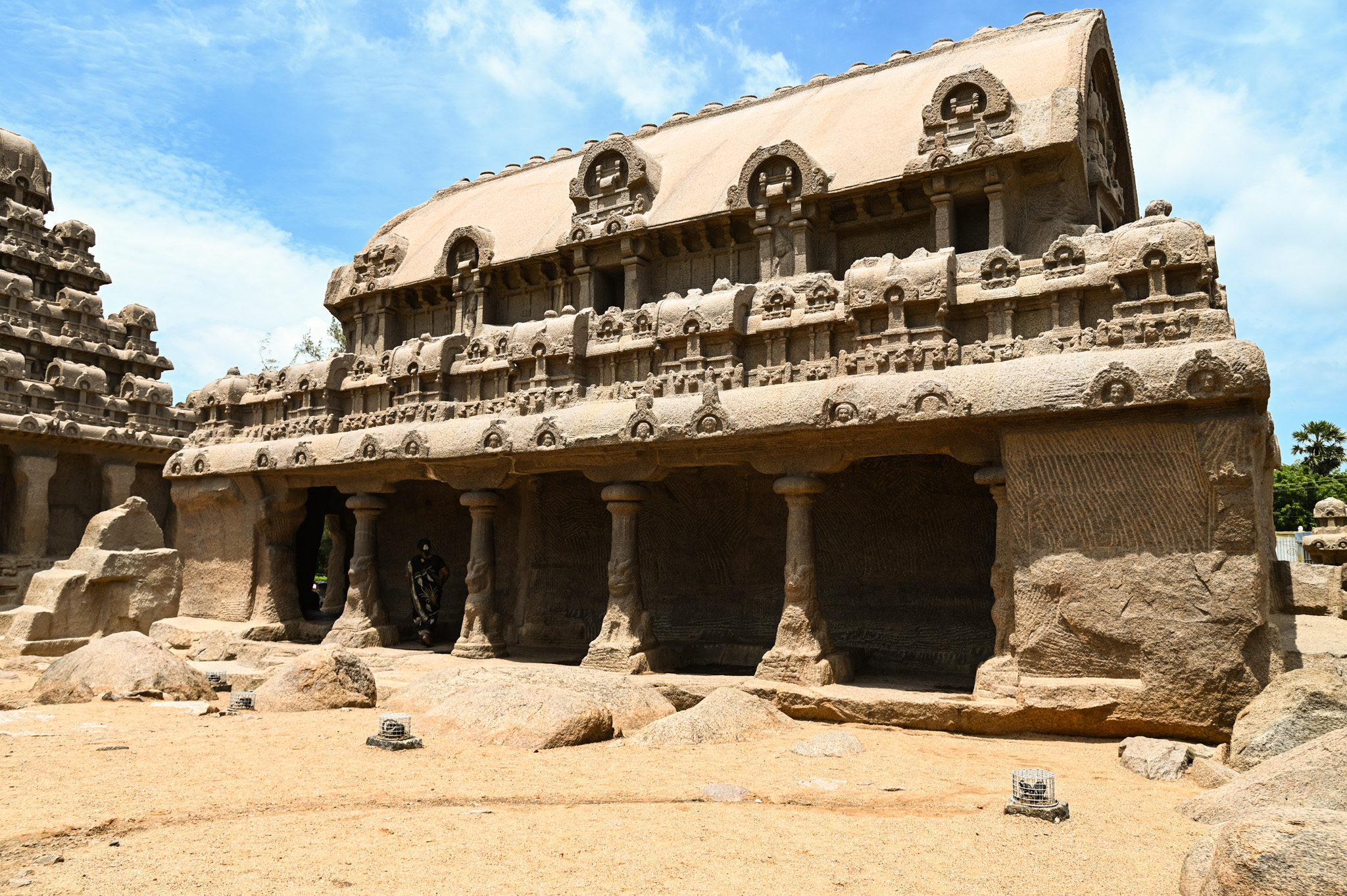
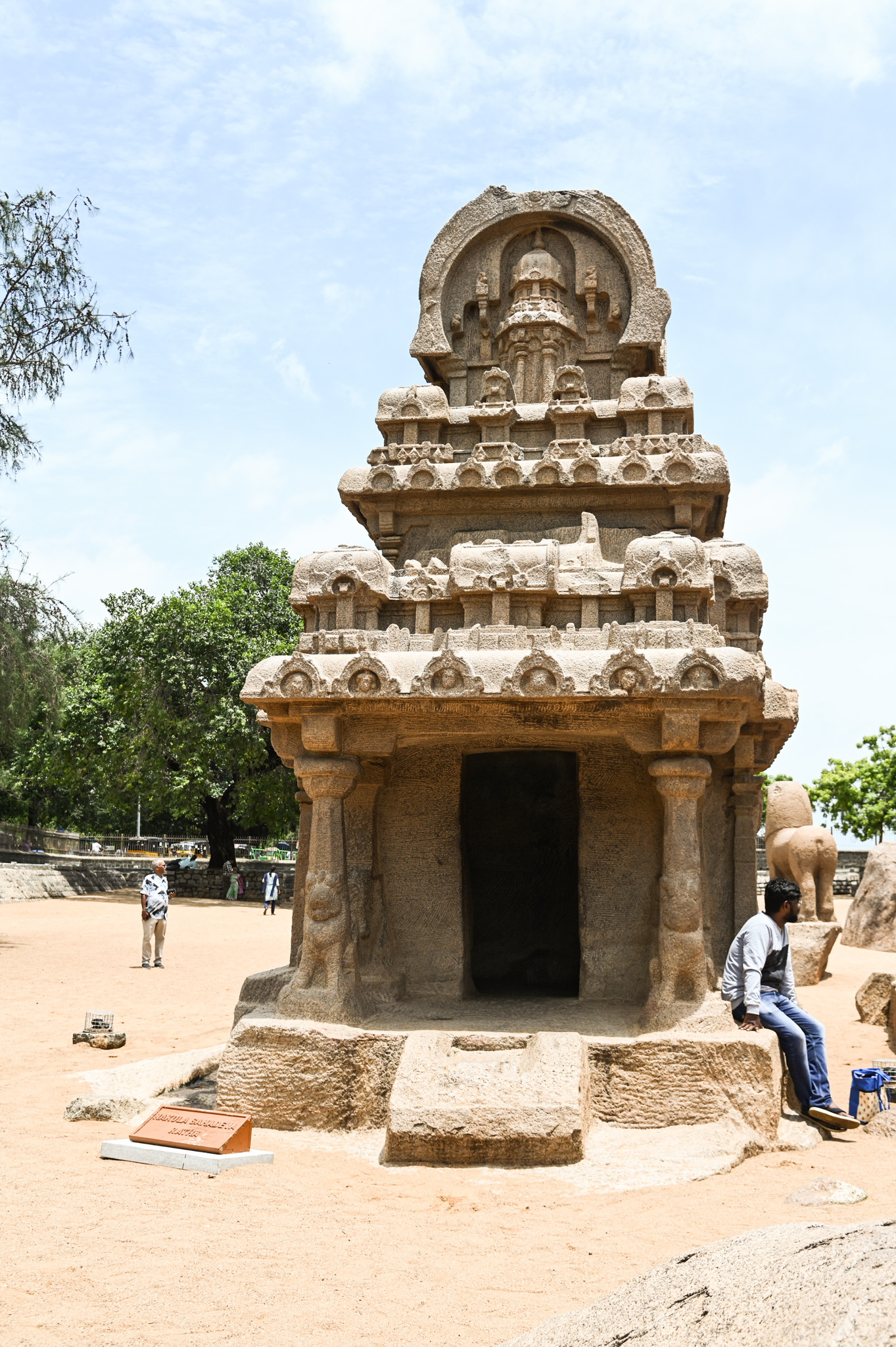
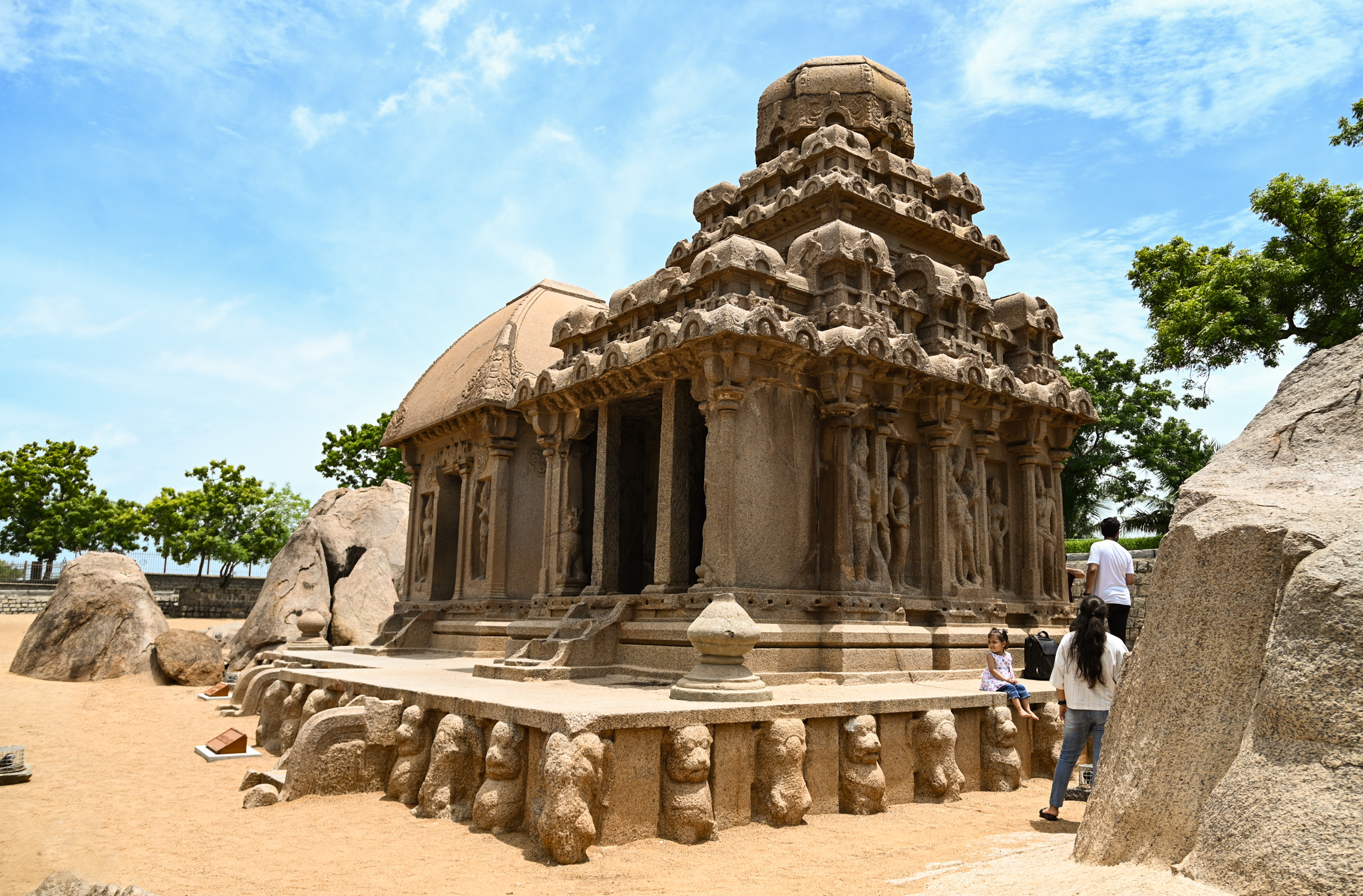
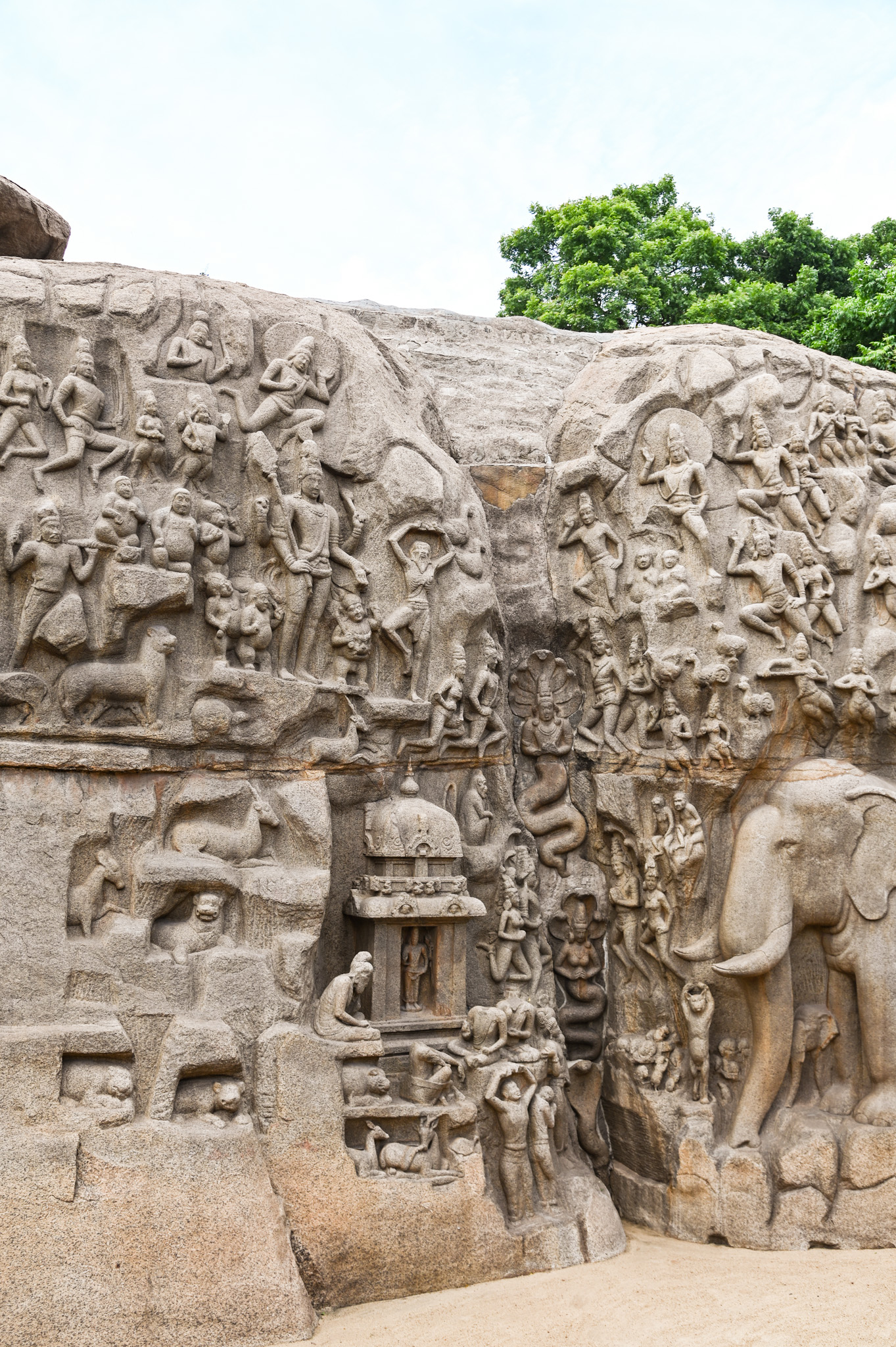
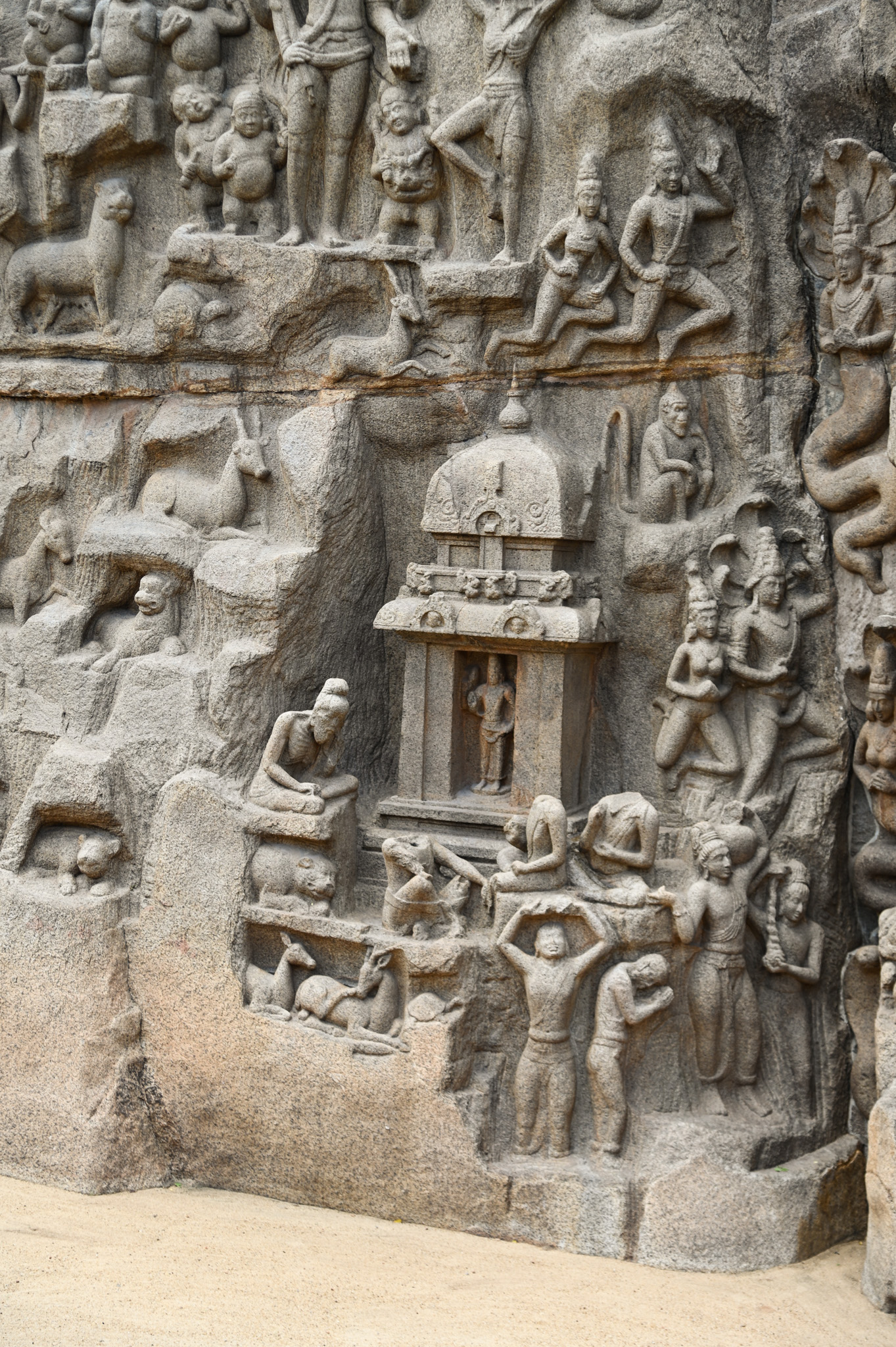
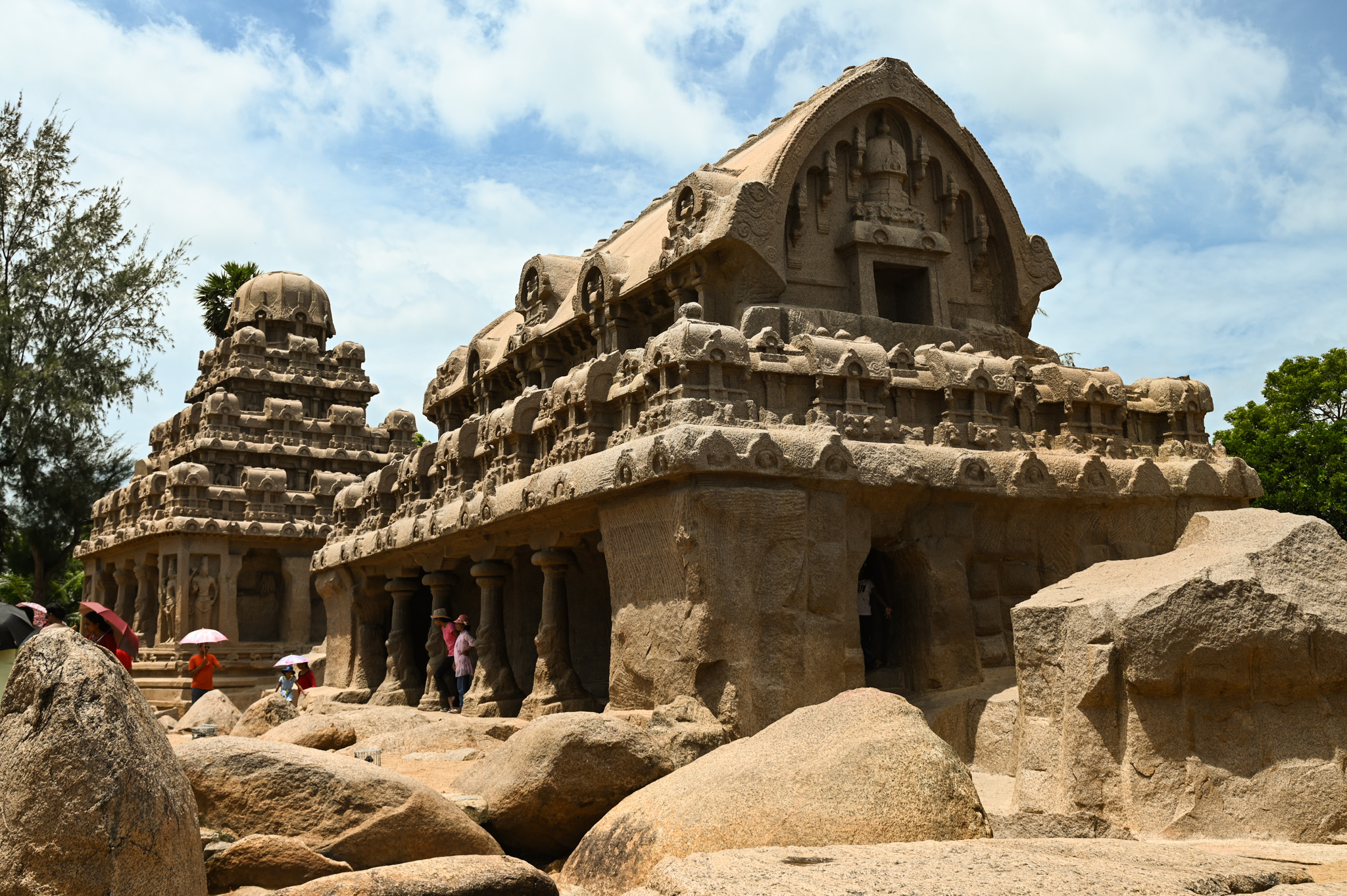
We visited the Five Rathas, the Shore temples and the Krishna Mandapam with the Descent of the Ganga. The proportions of the shore temples were superb. The sculptures are a little underwhelming especially after one has visited the Belur and Halebid temples.

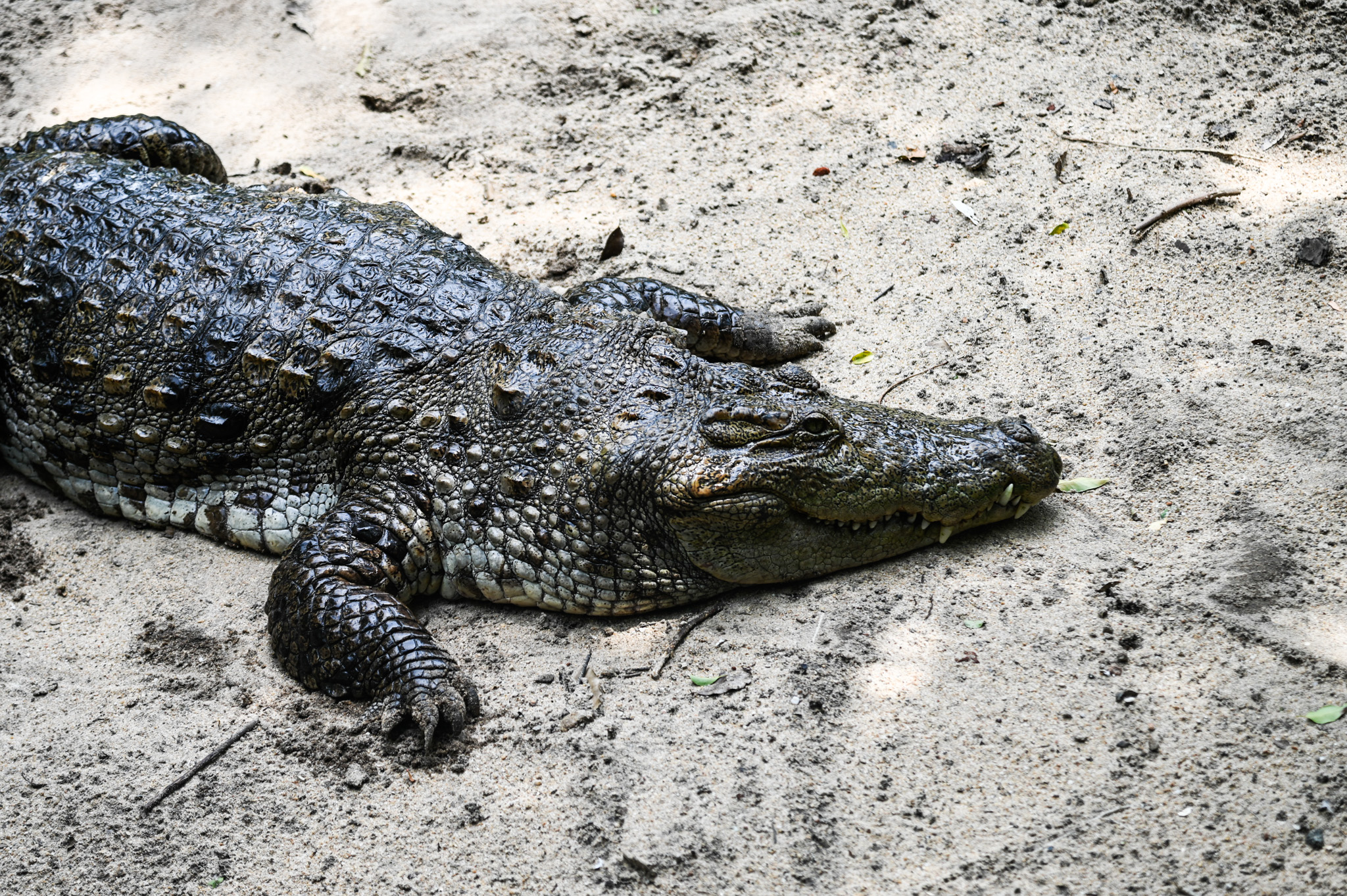
Every trip to Chennai has to include the Crocodile Park. We spent a short time there, too.

You may like to view the pictures using this link – https://photos.app.goo.gl/FpnLE8DDGn96KfS39

The Peninsula Tour Part 2 – Lepakshi

Lepakshi is a small town in the Anantapur district of Andhra Pradesh and is just a couple of hours away from Bengaluru.

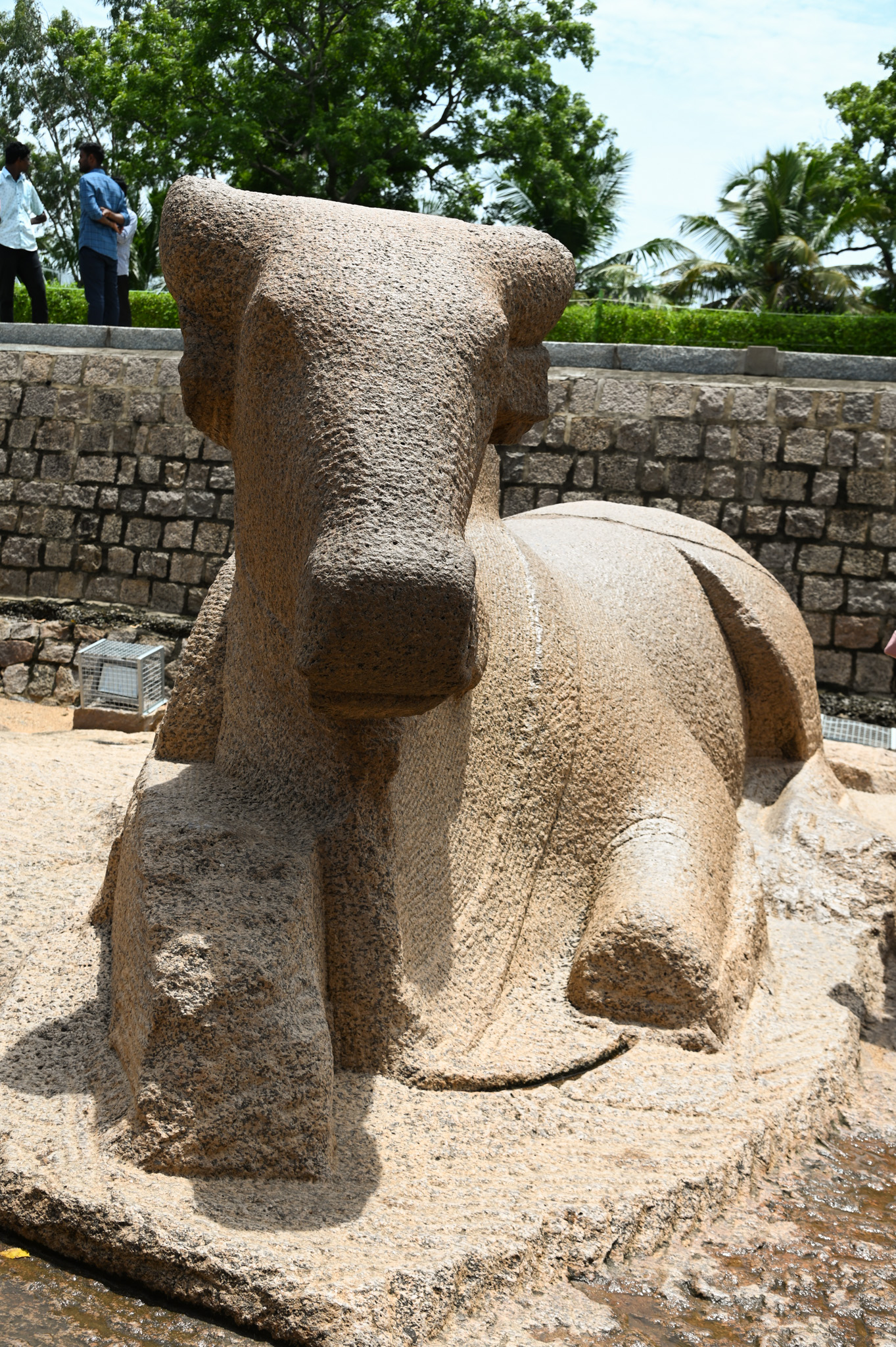
Located at the edge of Lepakshi, as you enter the town is a statue of a large Nandi bull. It is said to be the largest single stone Nandi and is carved out of a reddish granite.

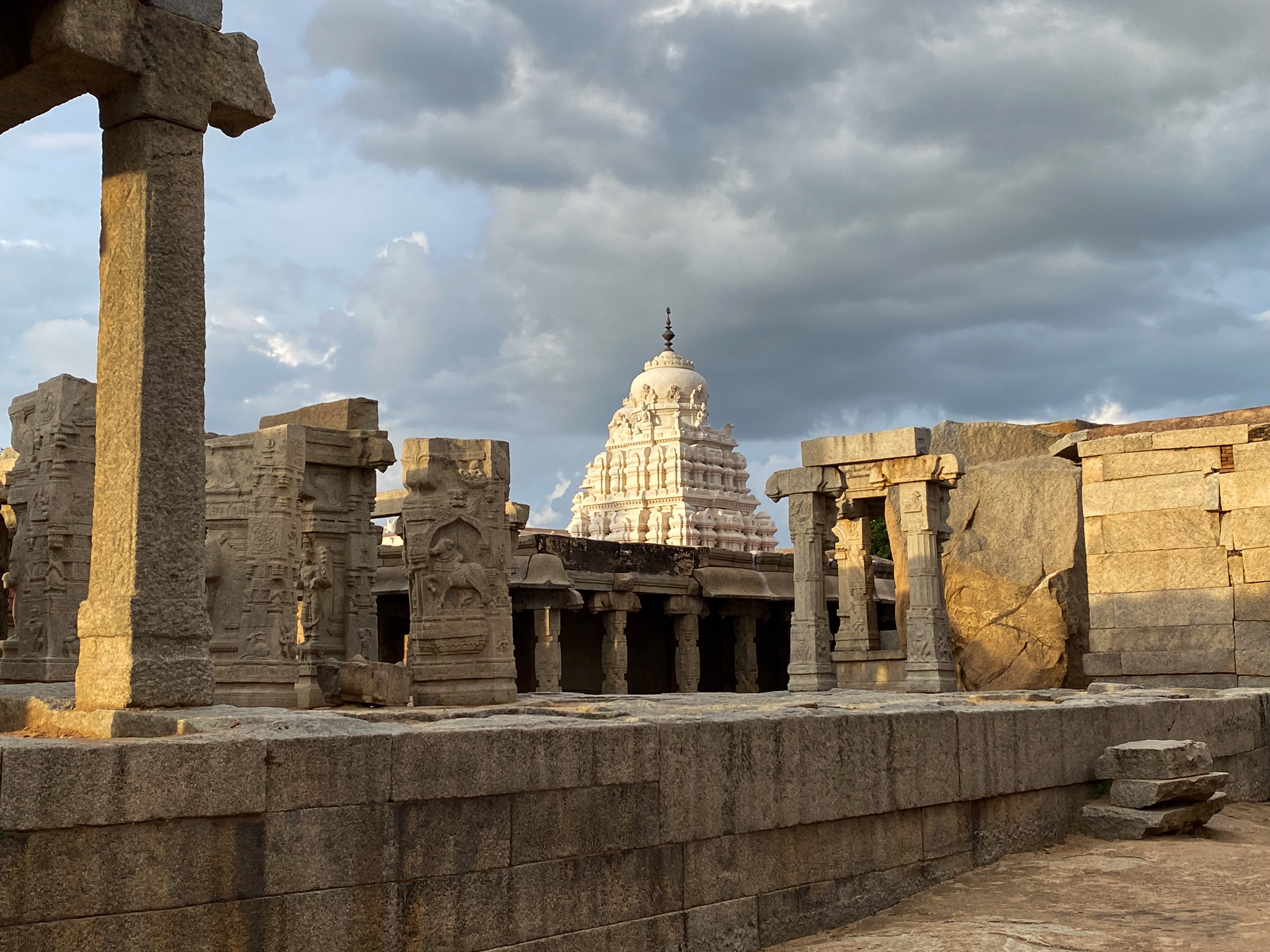
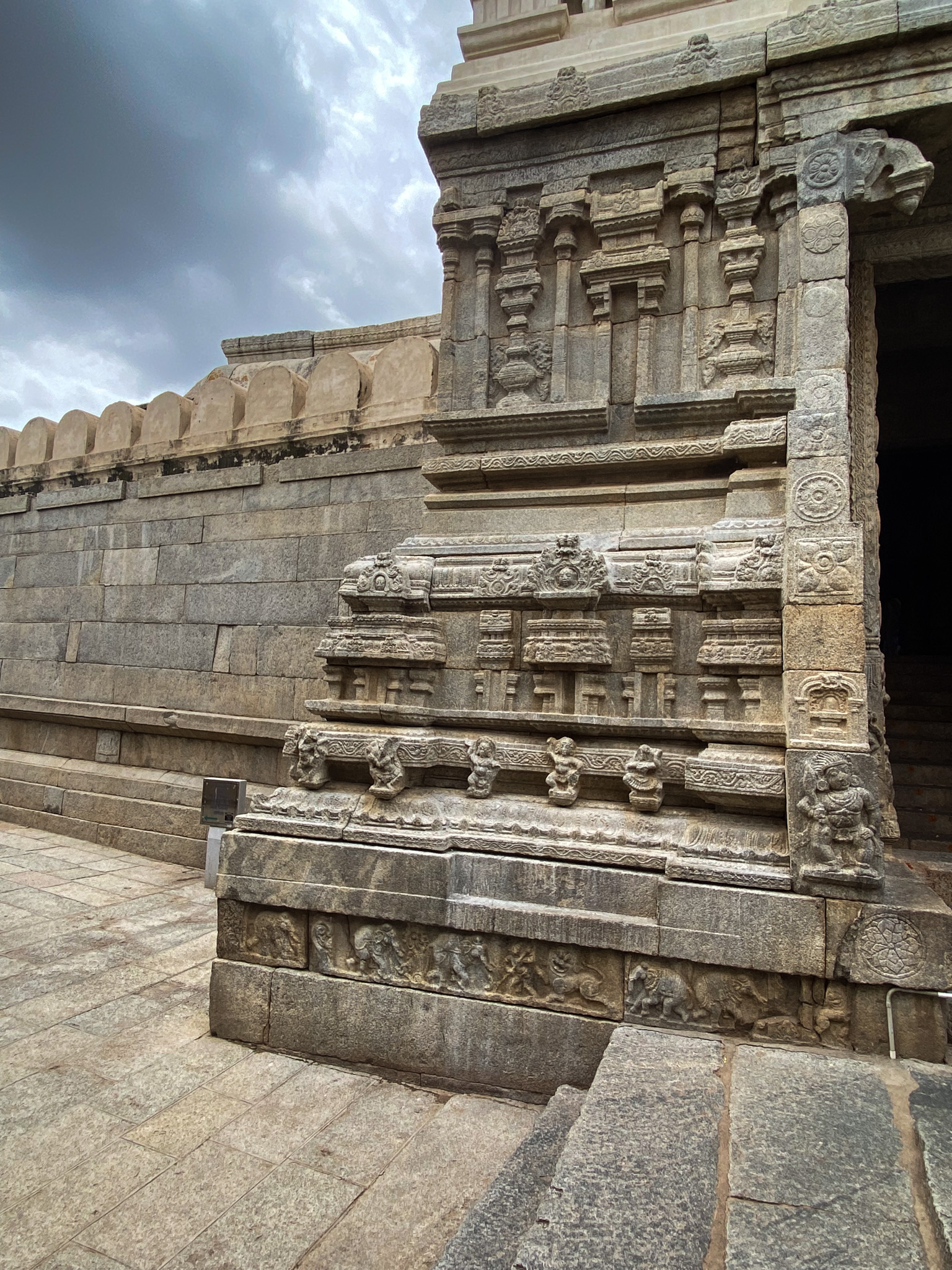
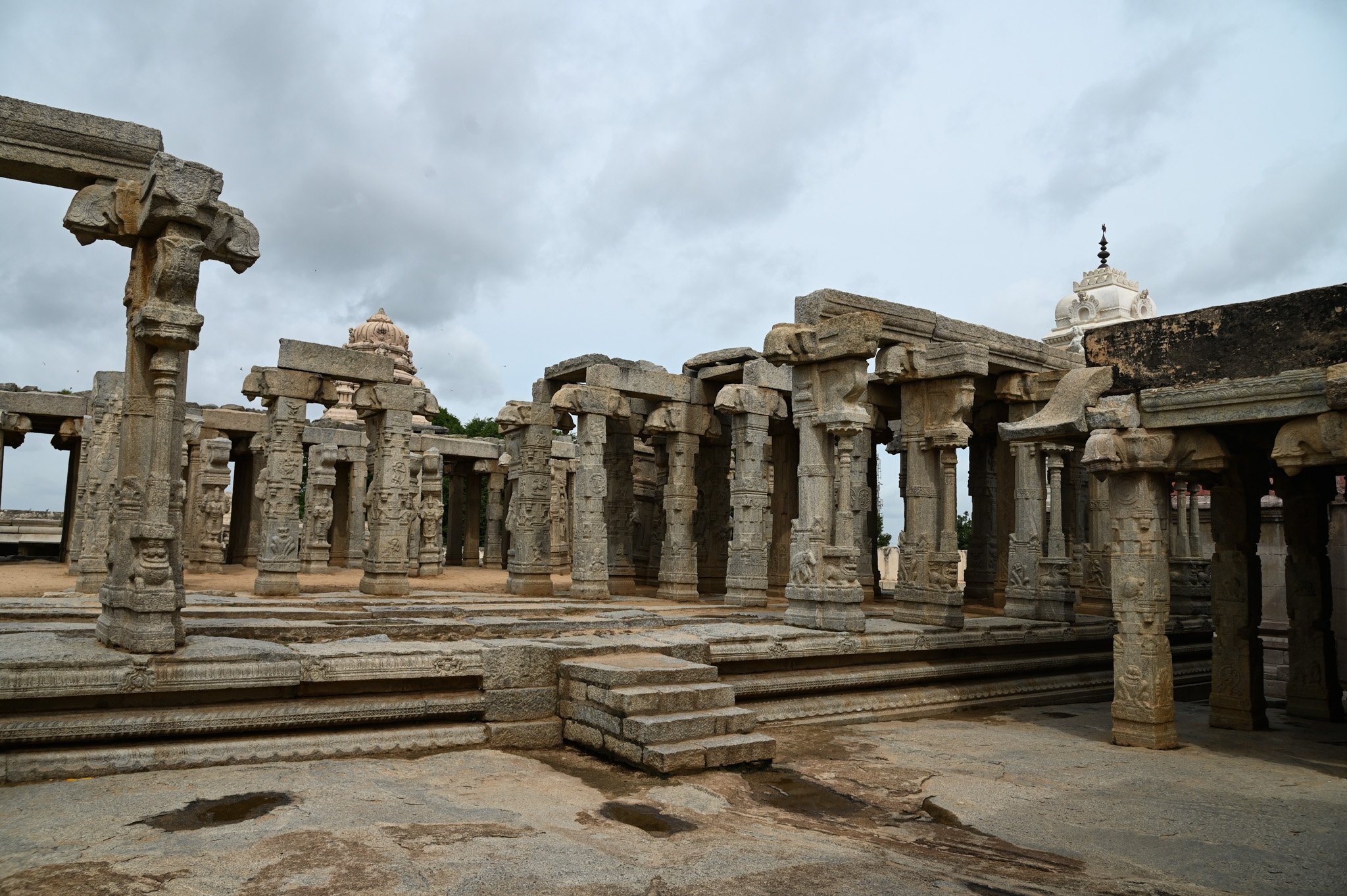
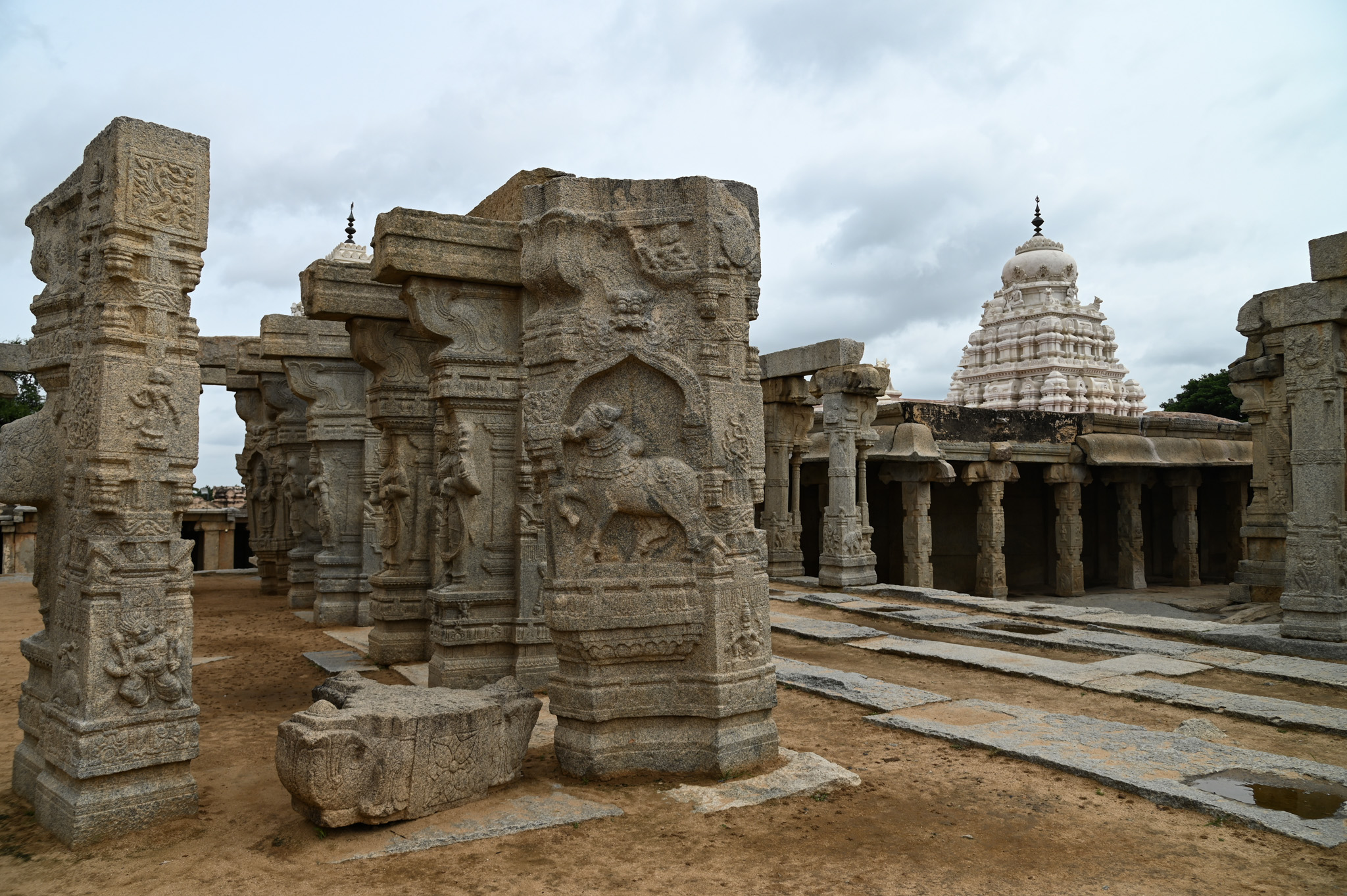
 Less than a kilometre away is the famous Veerbhadra temple of Lepakshi.  Situated on a hillock, this 16th century temple is built in the Vijayanagara style of architecture. 

The temple is used for worship even today and the sanctum Santorum has numerous deities. No photography is allowed within. 

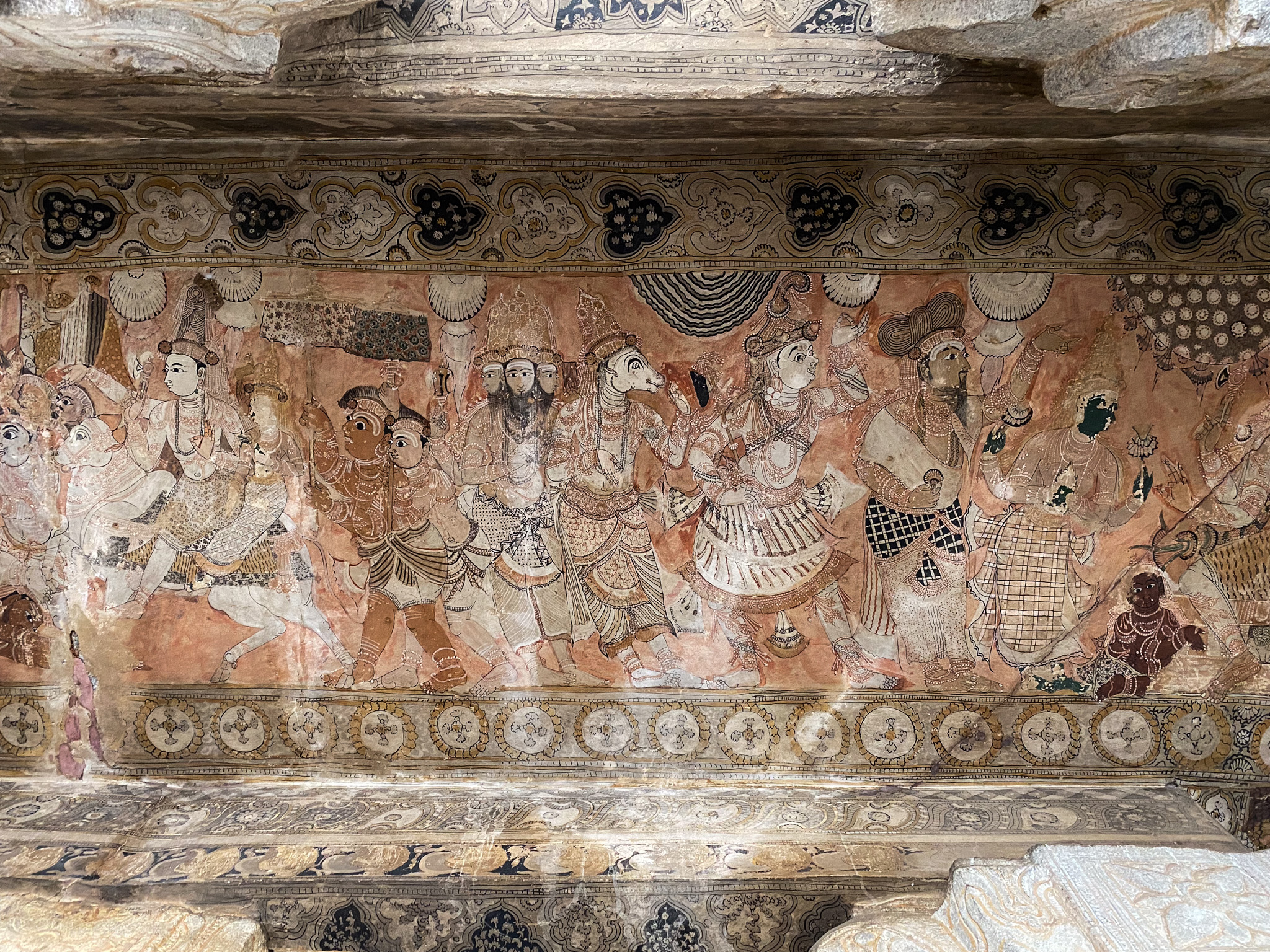
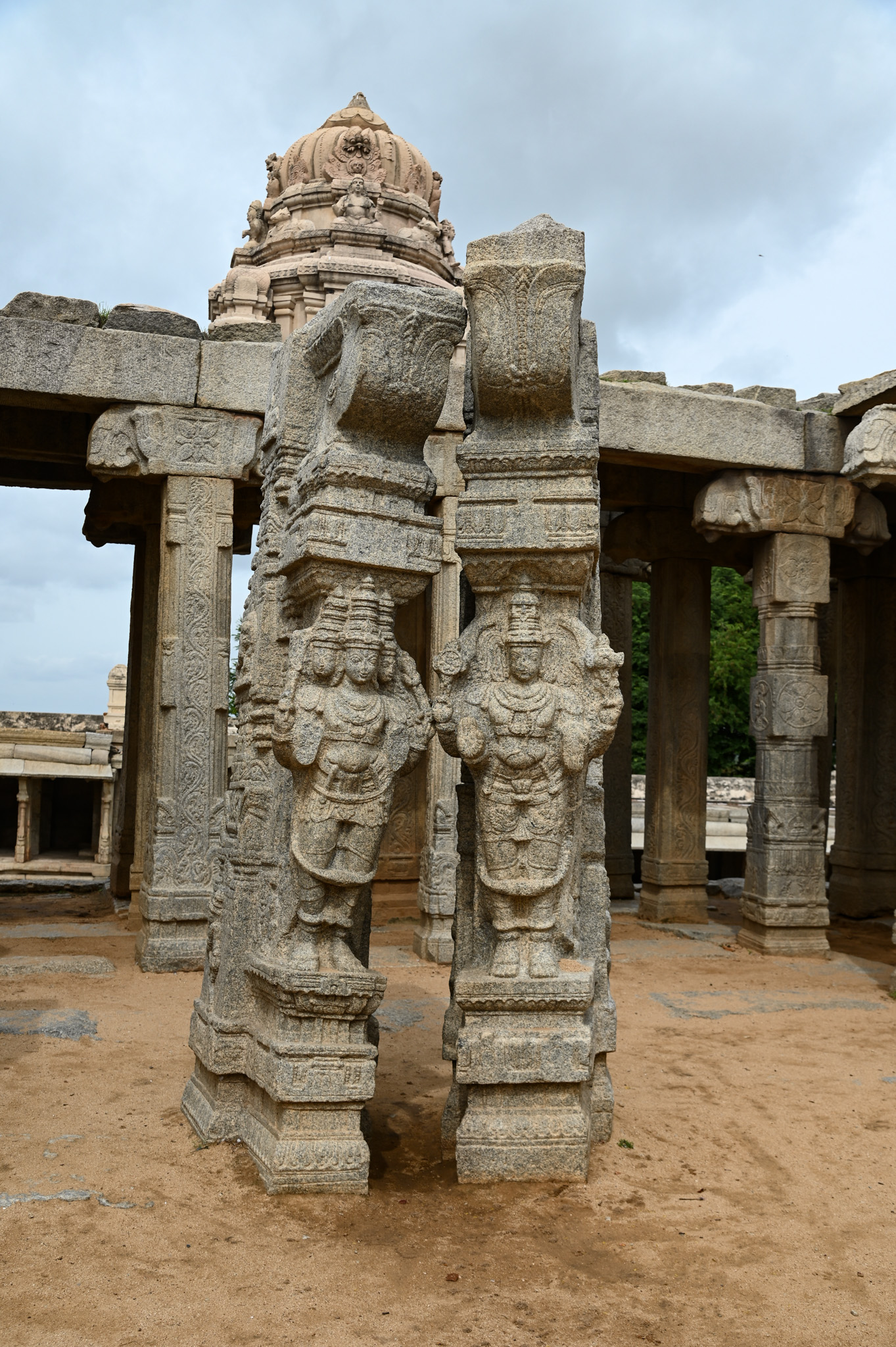
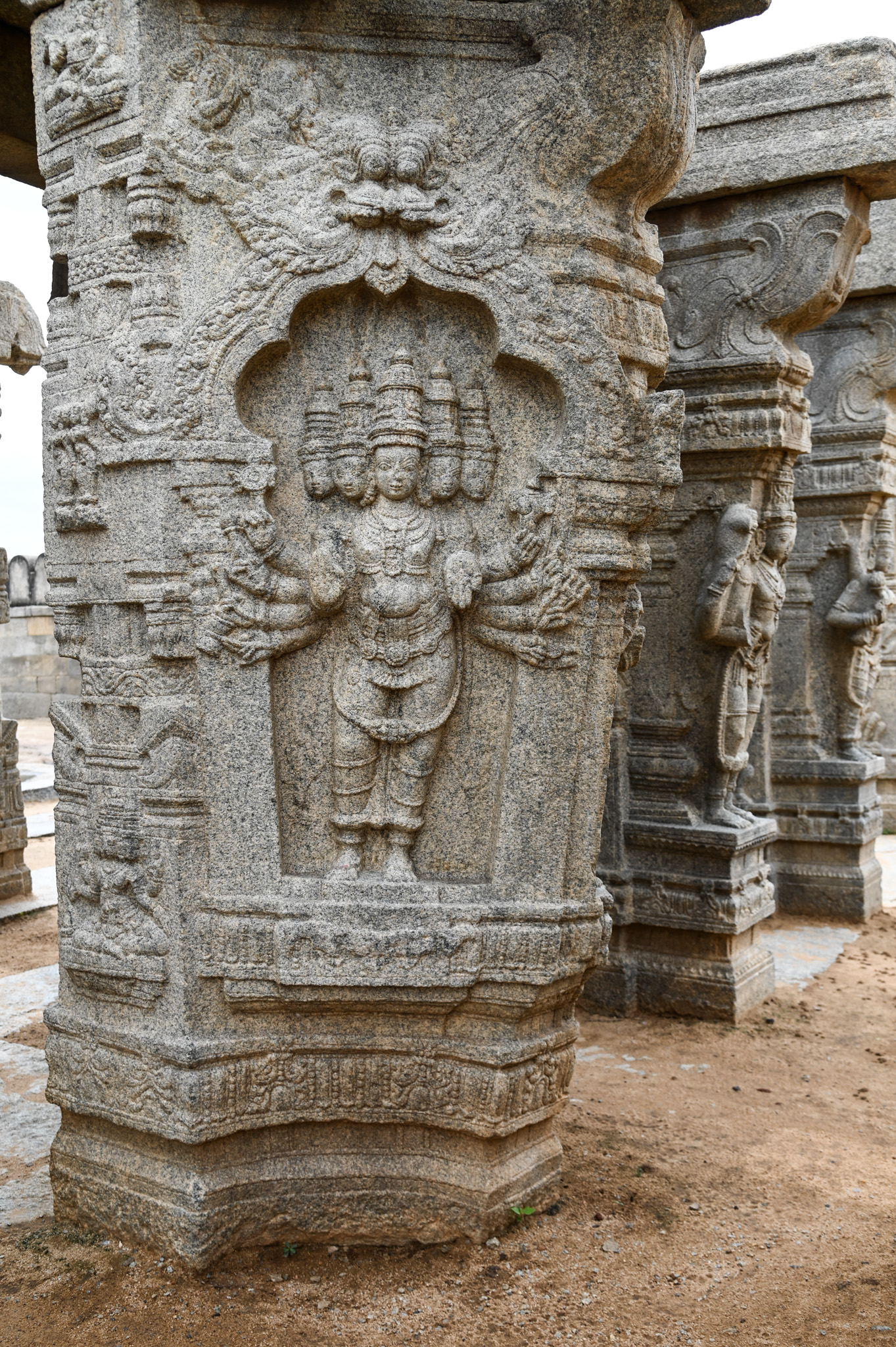
The area outside this has a profusion of carved pillars and there are murals depicting mythology on the ceiling. The colours are vivid and of vegetable and mineral dyes and most of them are intact. 

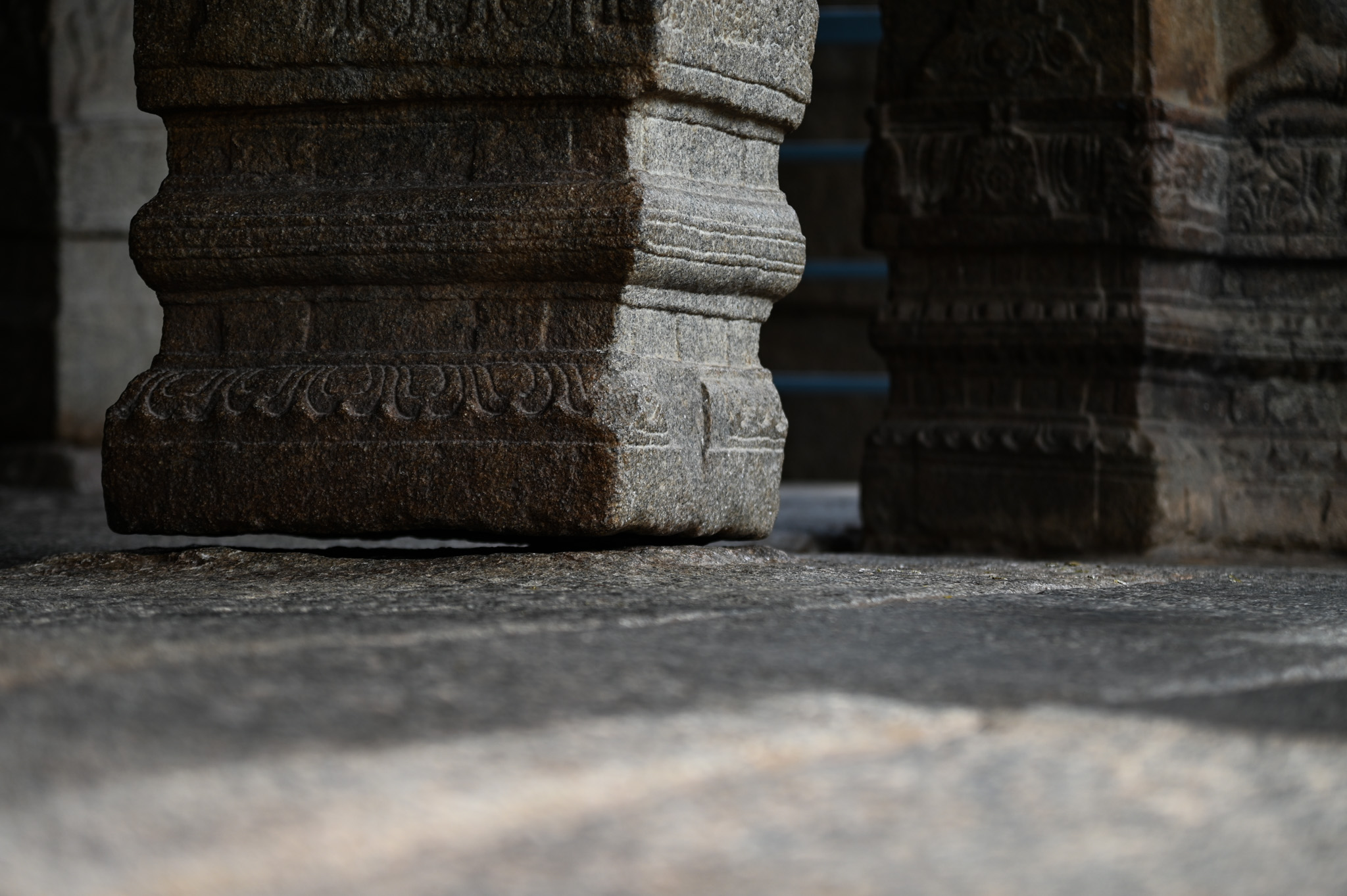
The Veerbhadra temple is famous for a hanging column and there is a clear gap between the floor and the base of the column. 

The temple is built around a series of boulders that were on the hill and they are an integral part of the area for circumambulation. 

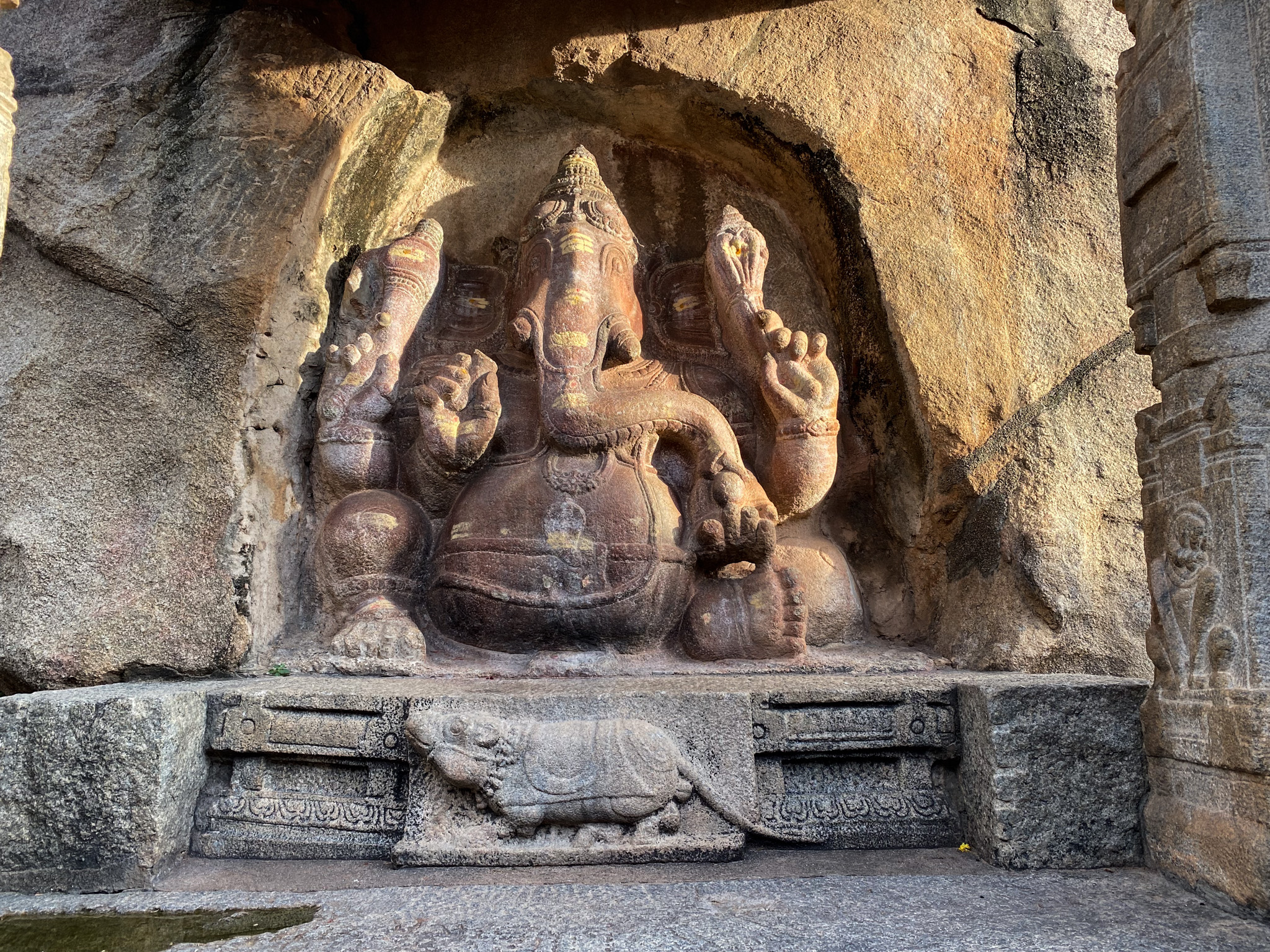
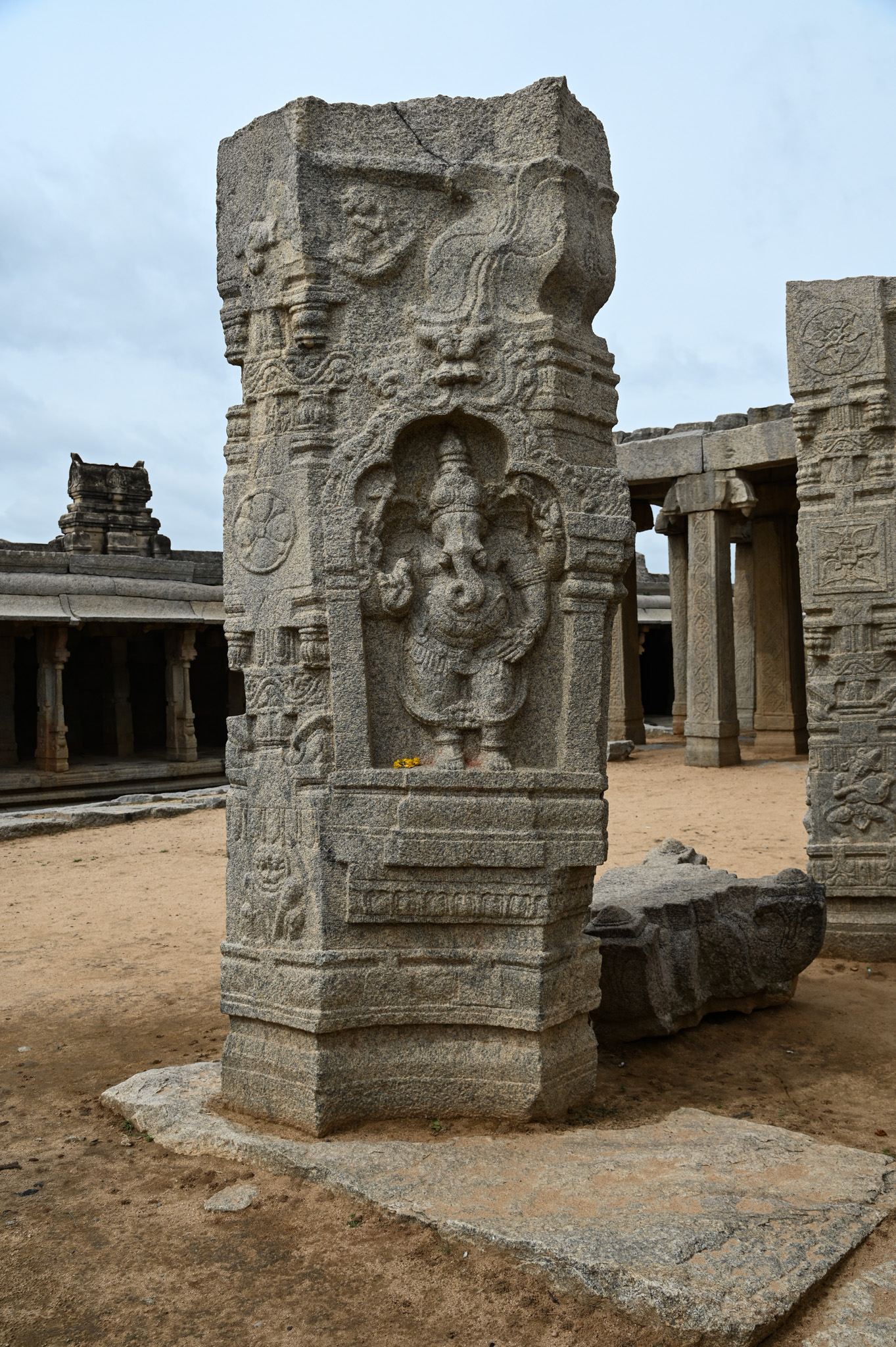
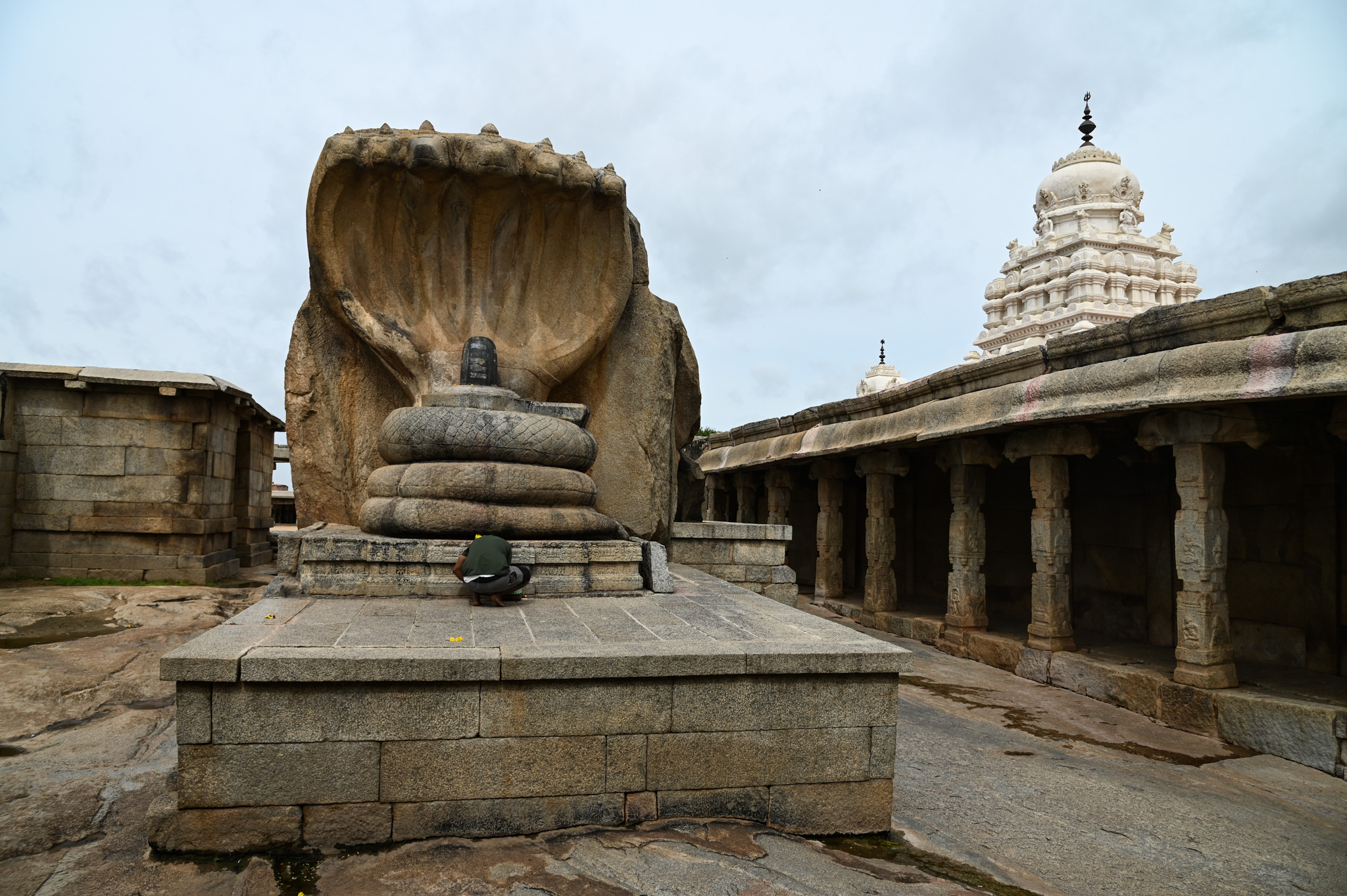
There are various deities behind the sanctum Santorum.There is a large multi hooded coiled serpent which is carved out of a boulder and provides an umbrella over a ‘Linga’.  Another corner has a large Ganesha carved out of a red granite boulder. 

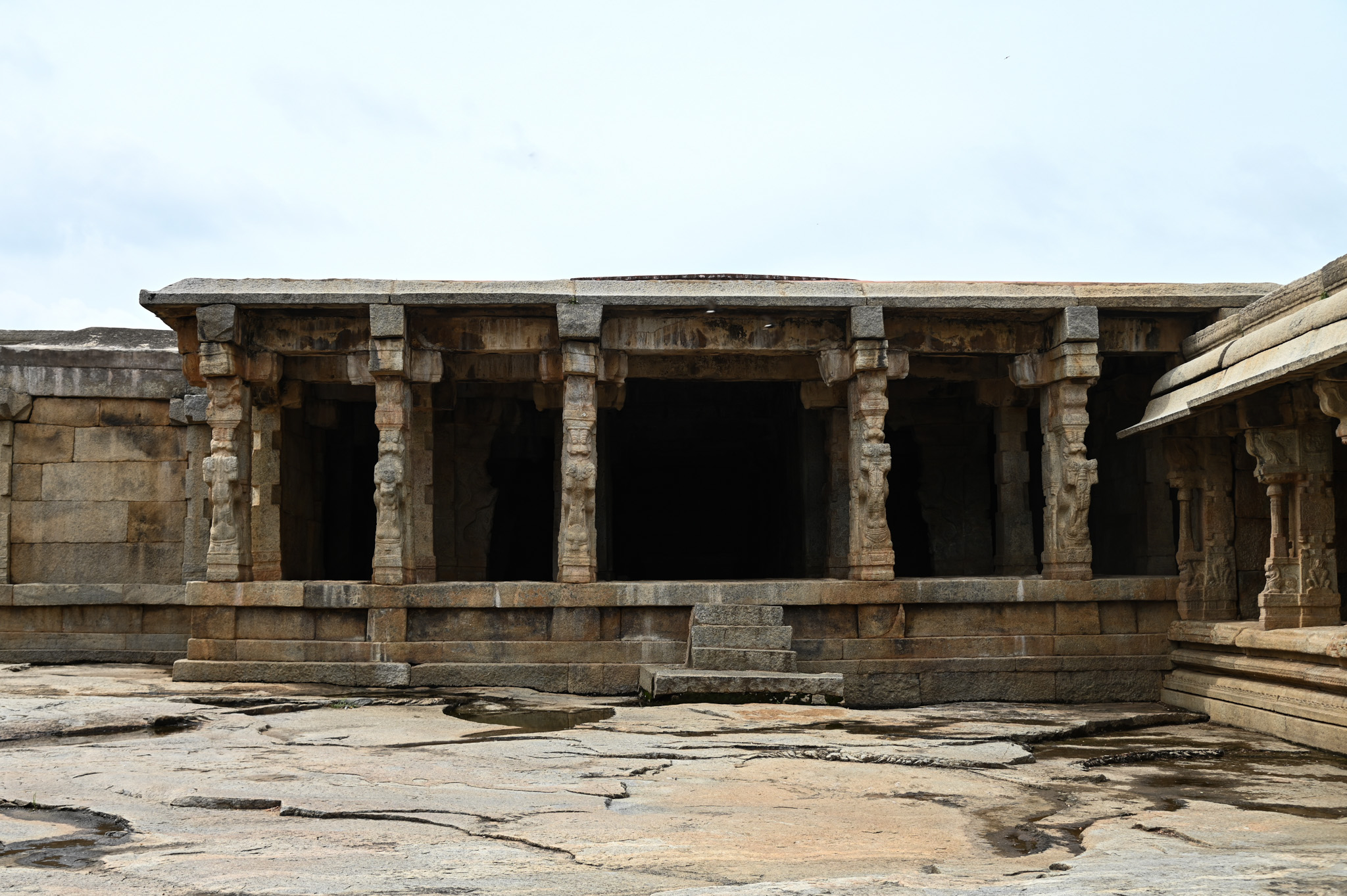
 Most of the pillars are intact and have elaborate carvings and brackets. 

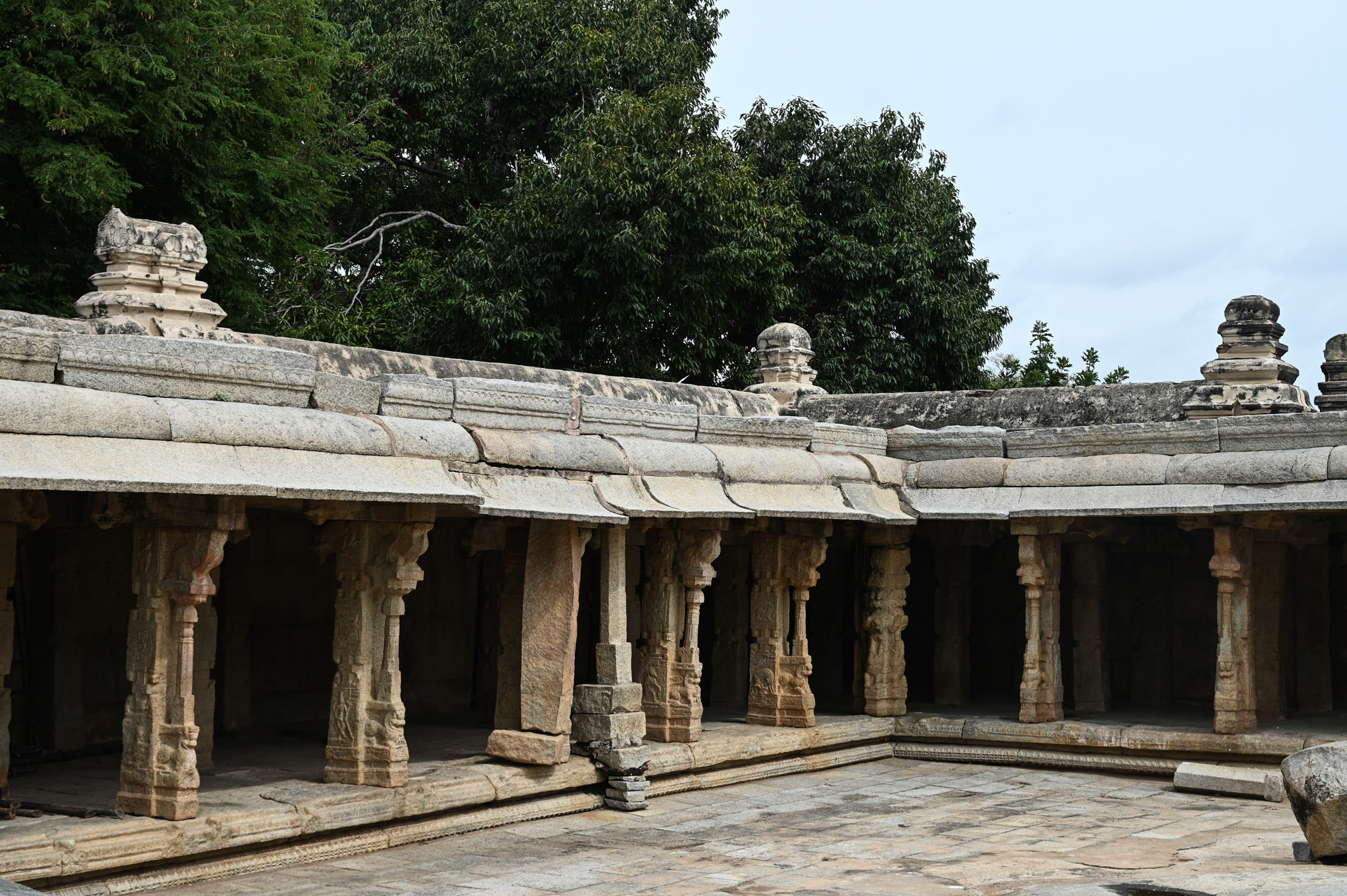
There are various pillared corridors that make up the sides of the temple and the rooms alongside are used for storage.

You may view the pictures here at https://photos.app.goo.gl/C1cCDRCCPfA7MUjUA
After breaks at Bangalore and Chennai to spend time with family, we are off to Mahabalipuram, Pondicherry and other wonderful places.

The Peninsula Tour Part 2 – Belum Caves

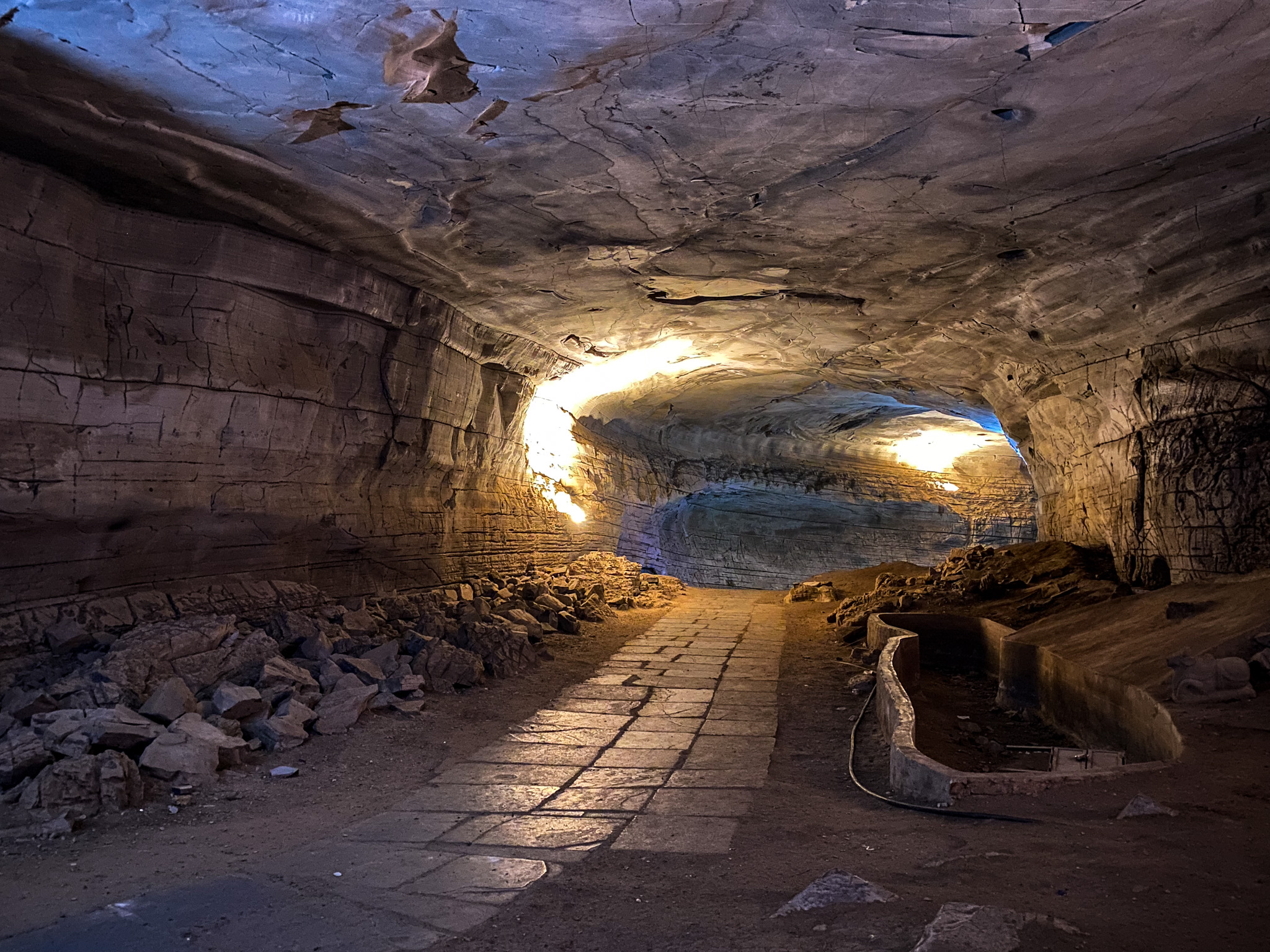
Belum caves was a detour. On our way from Gandikota to Anantapur,  we decided to check out Belum caves. 

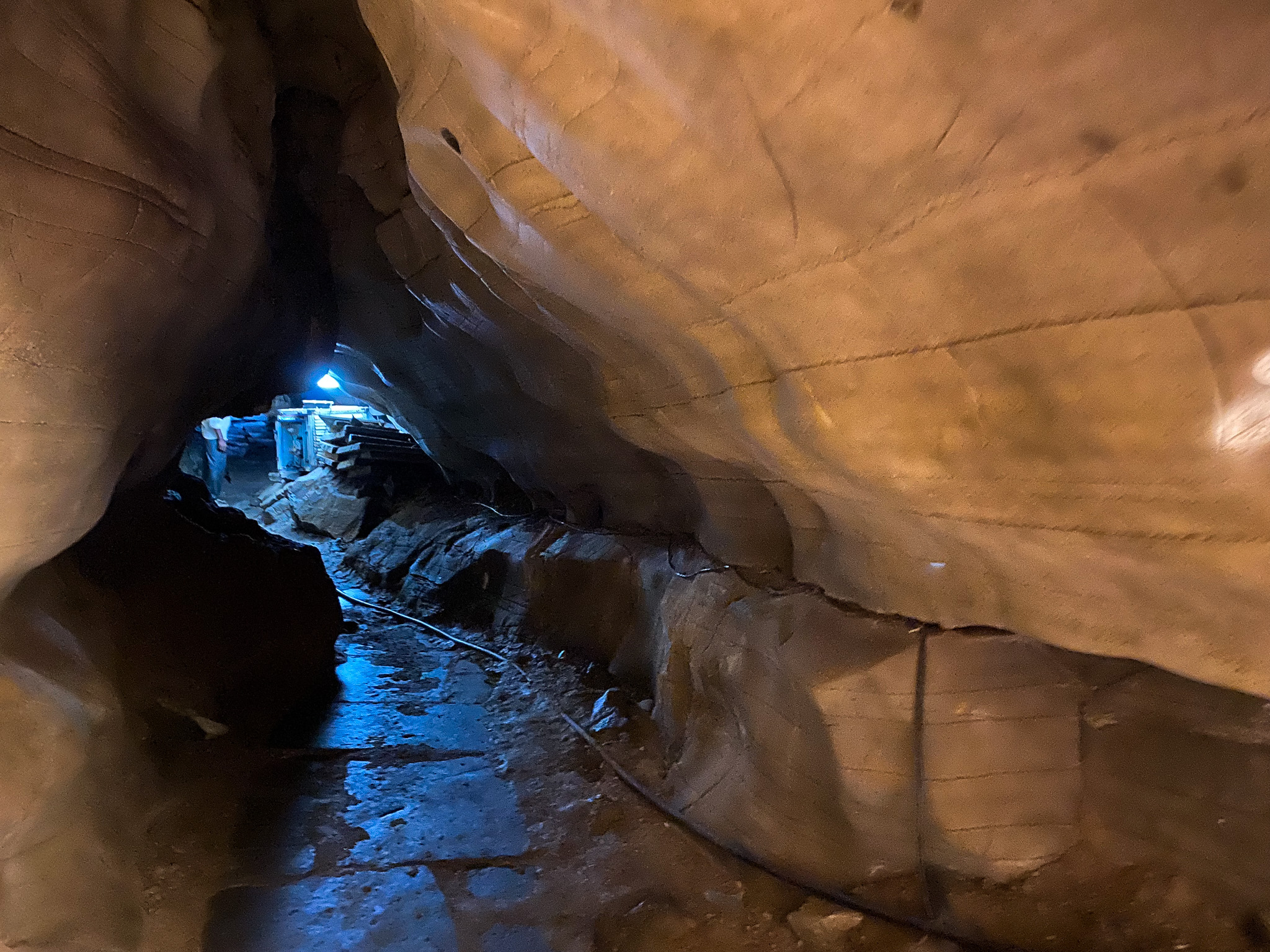
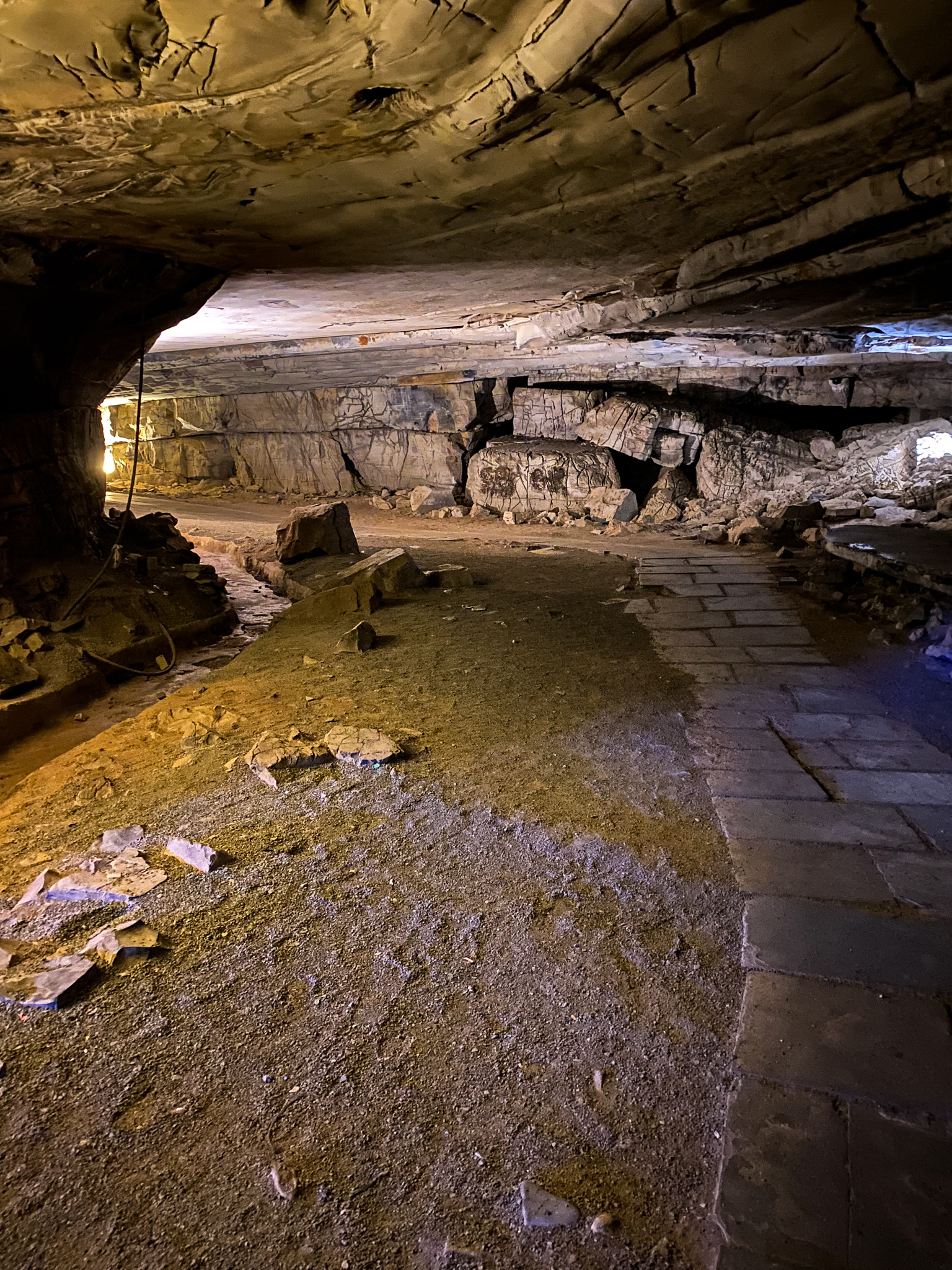
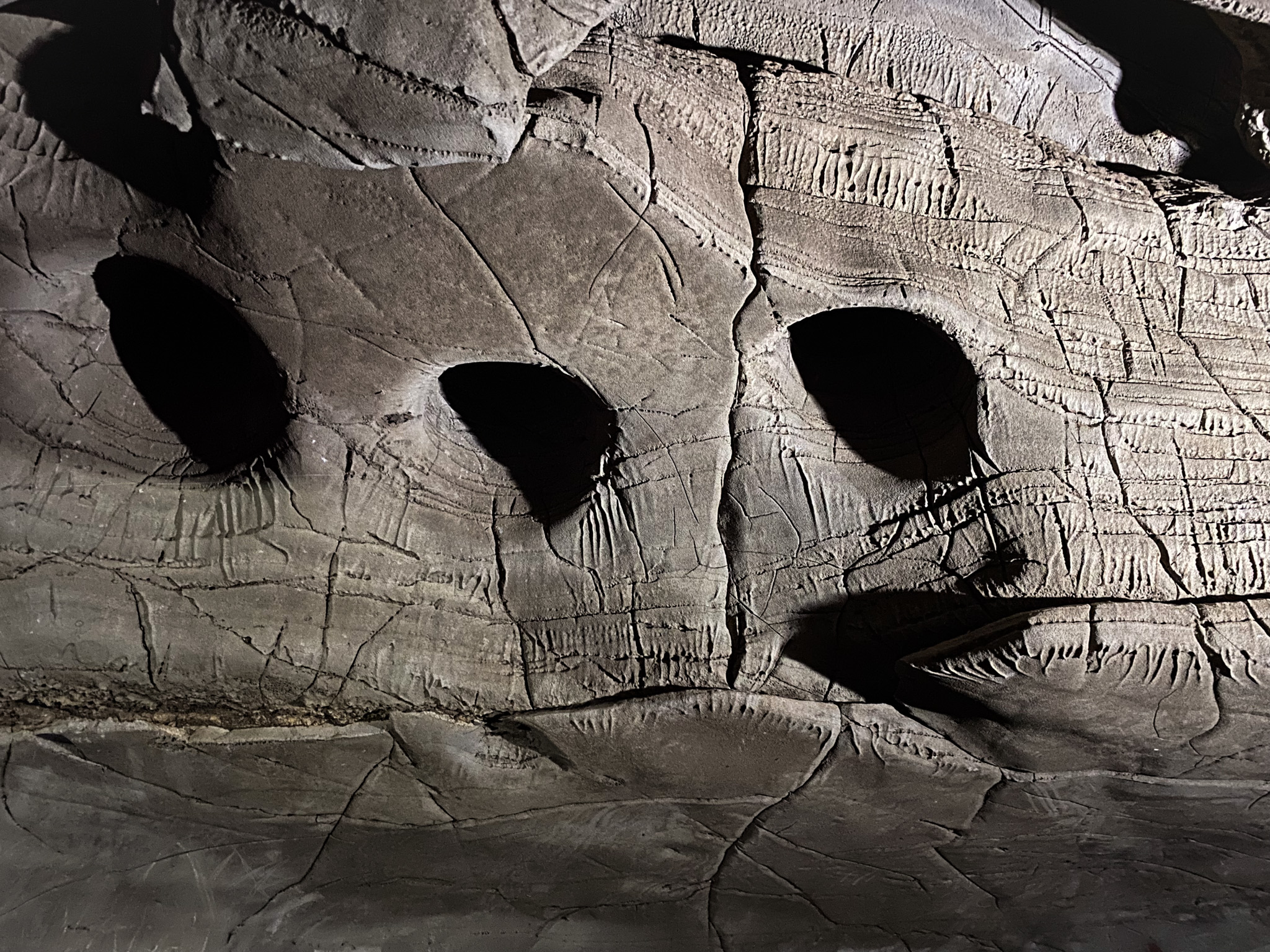
The caves were discovered in 1884 and subsequently, various German teams studied the interior of the caves. The caves are underground and the access is a small set of steps into a pit like area which also has a large skylight. From here, one enters the cave. 

The area round the entrance to the cave is surrounded by farmlands. Amidst these are  boxes with fans, which we later understood were air vents for the cave. So, while the area above ground is teeming with crops, water bodies, small structures and farmers going about their farming business, there is a whole system of passages hollowed out underground!

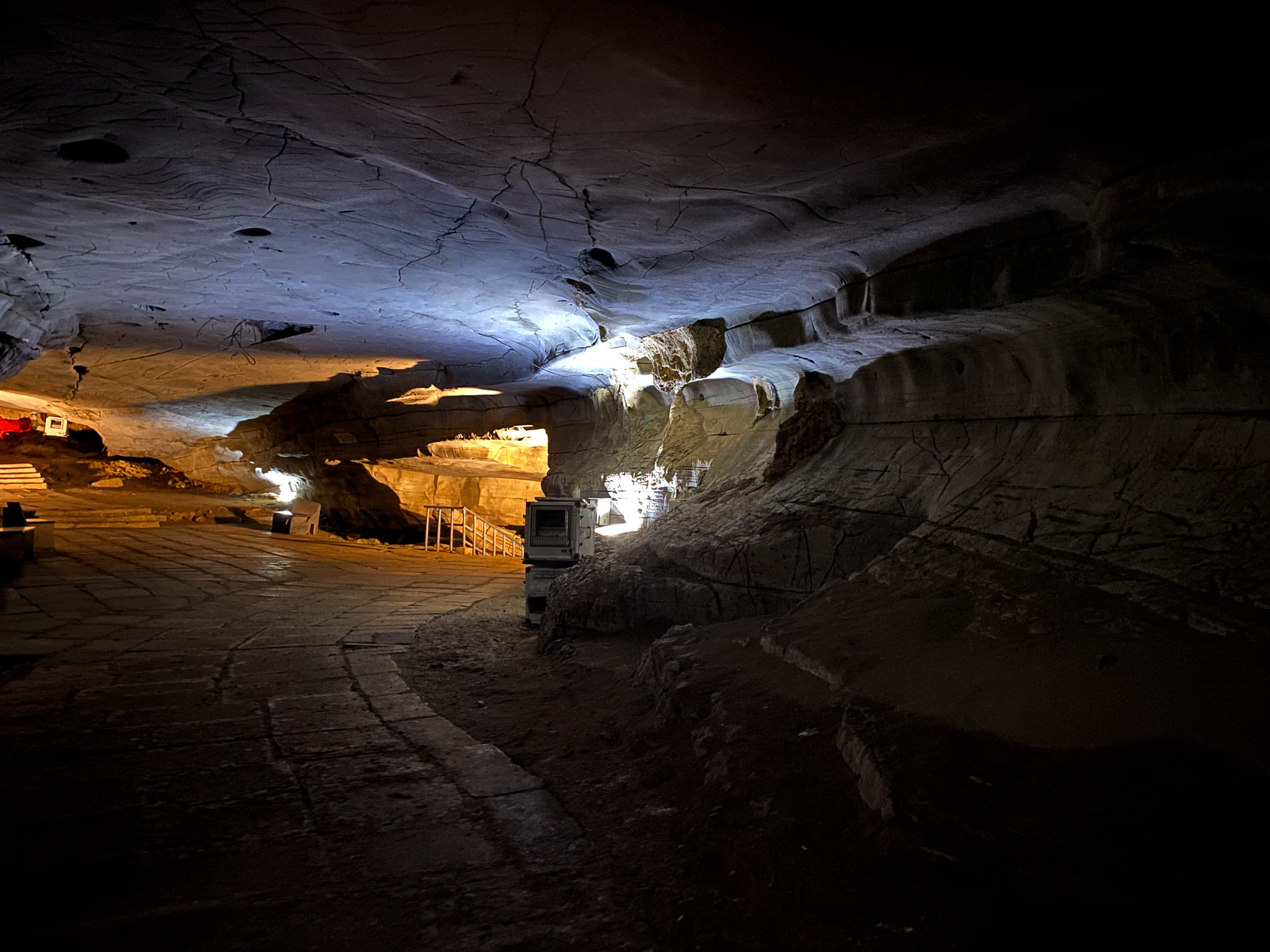
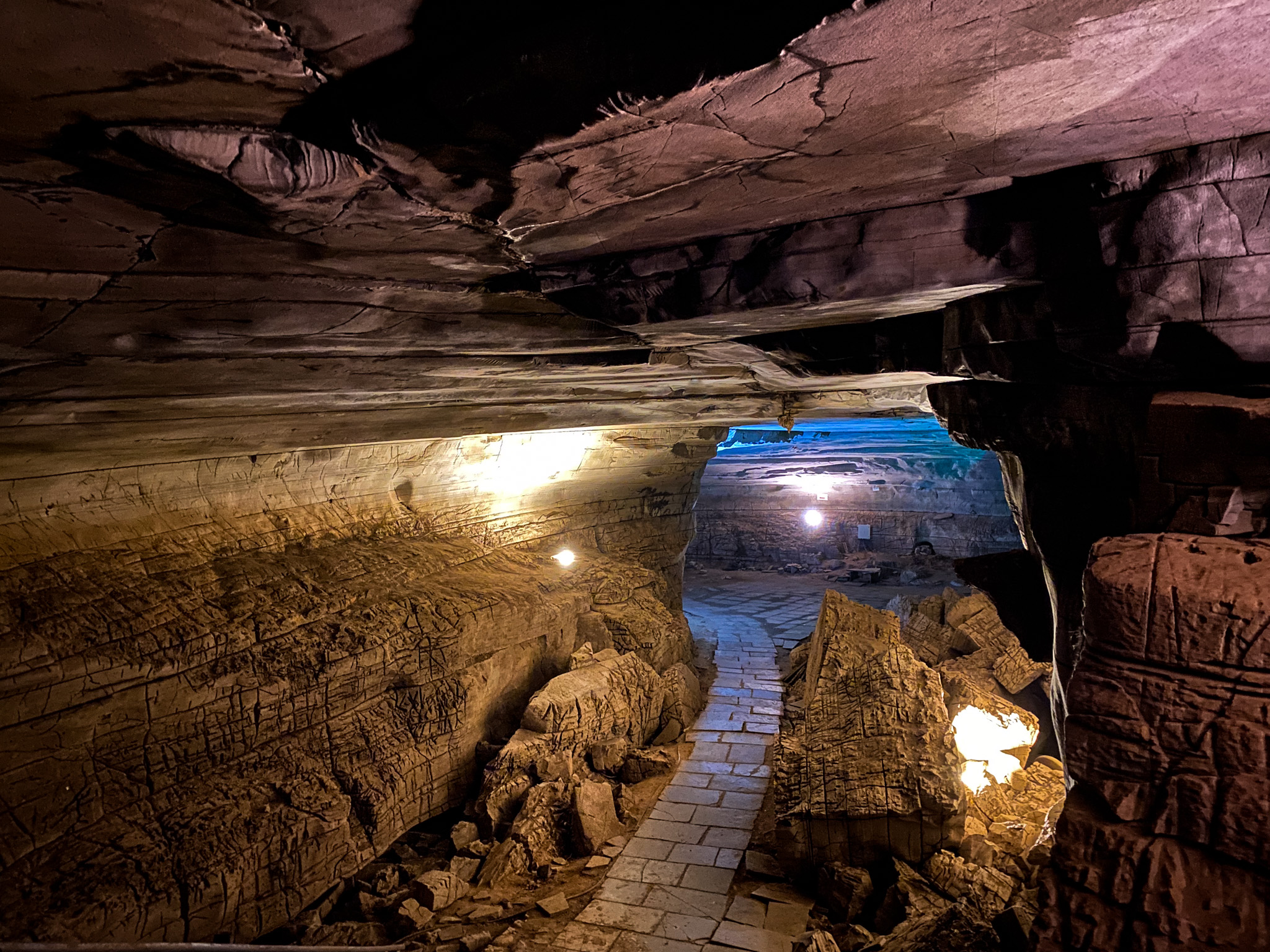
The caves are laid out like a river with many tributaries. While some of the branches are connected, many of them are dead ends. The length of the cave is about 3.5 km but only 1 km is open for viewing.

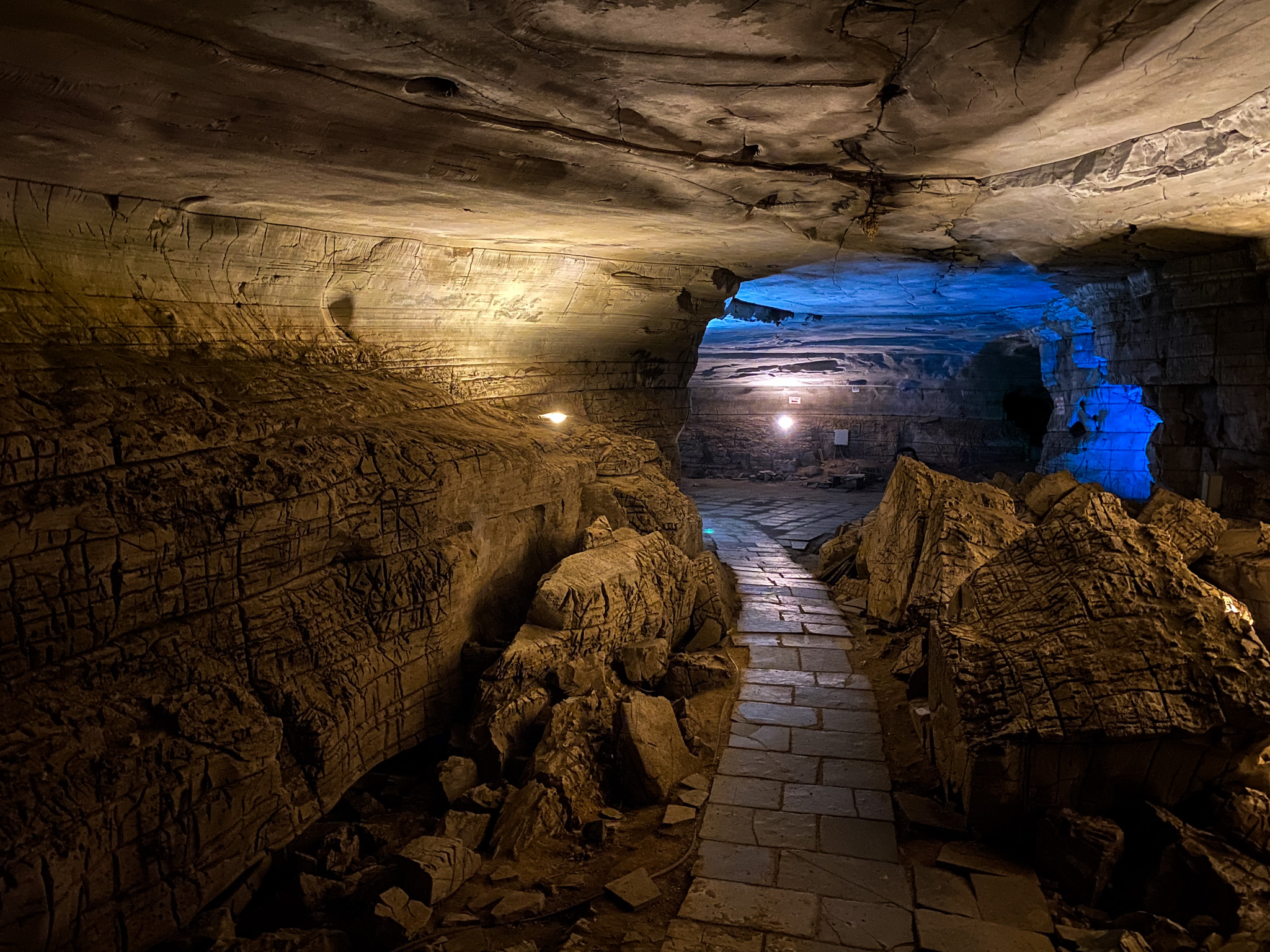
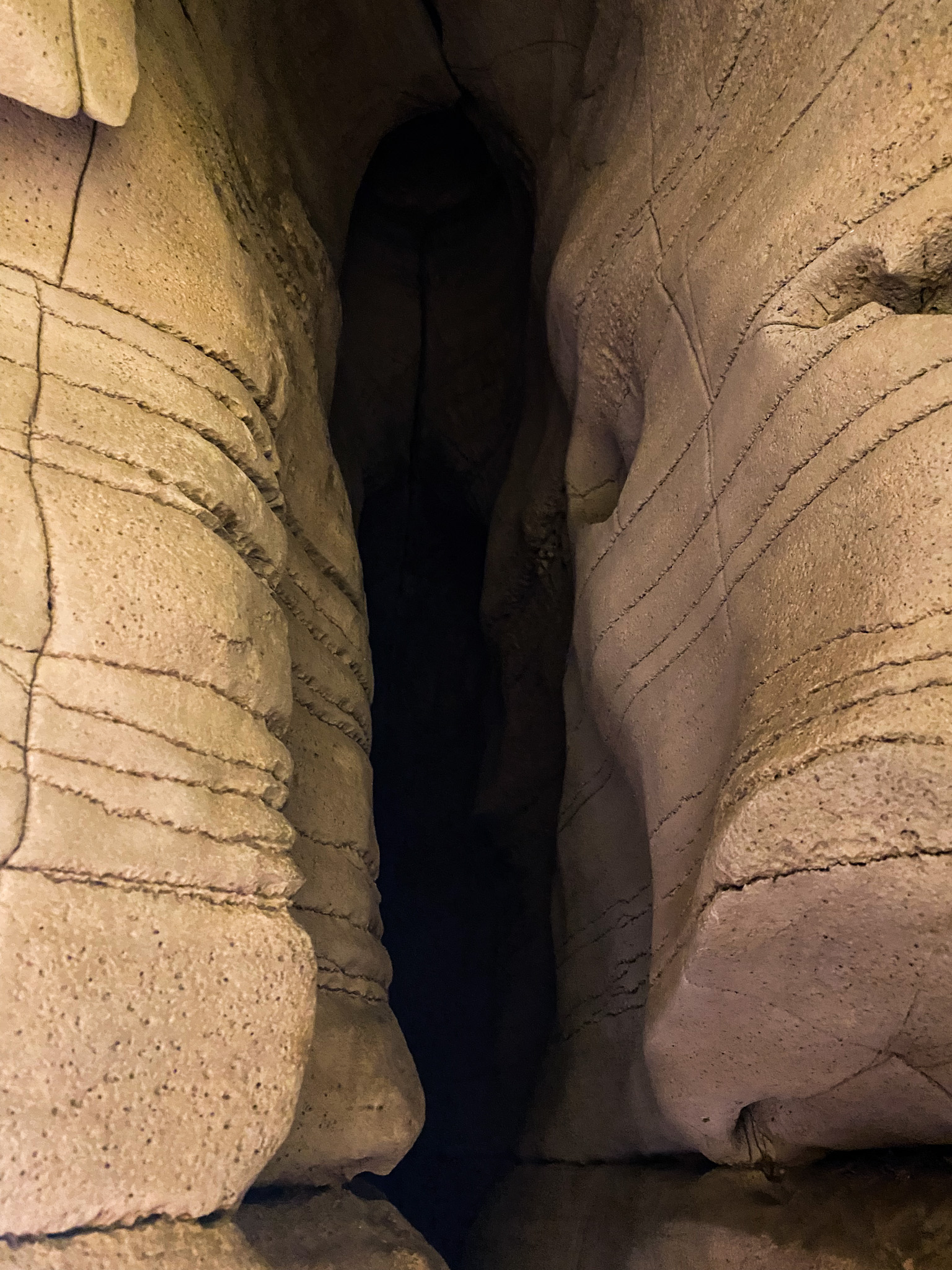
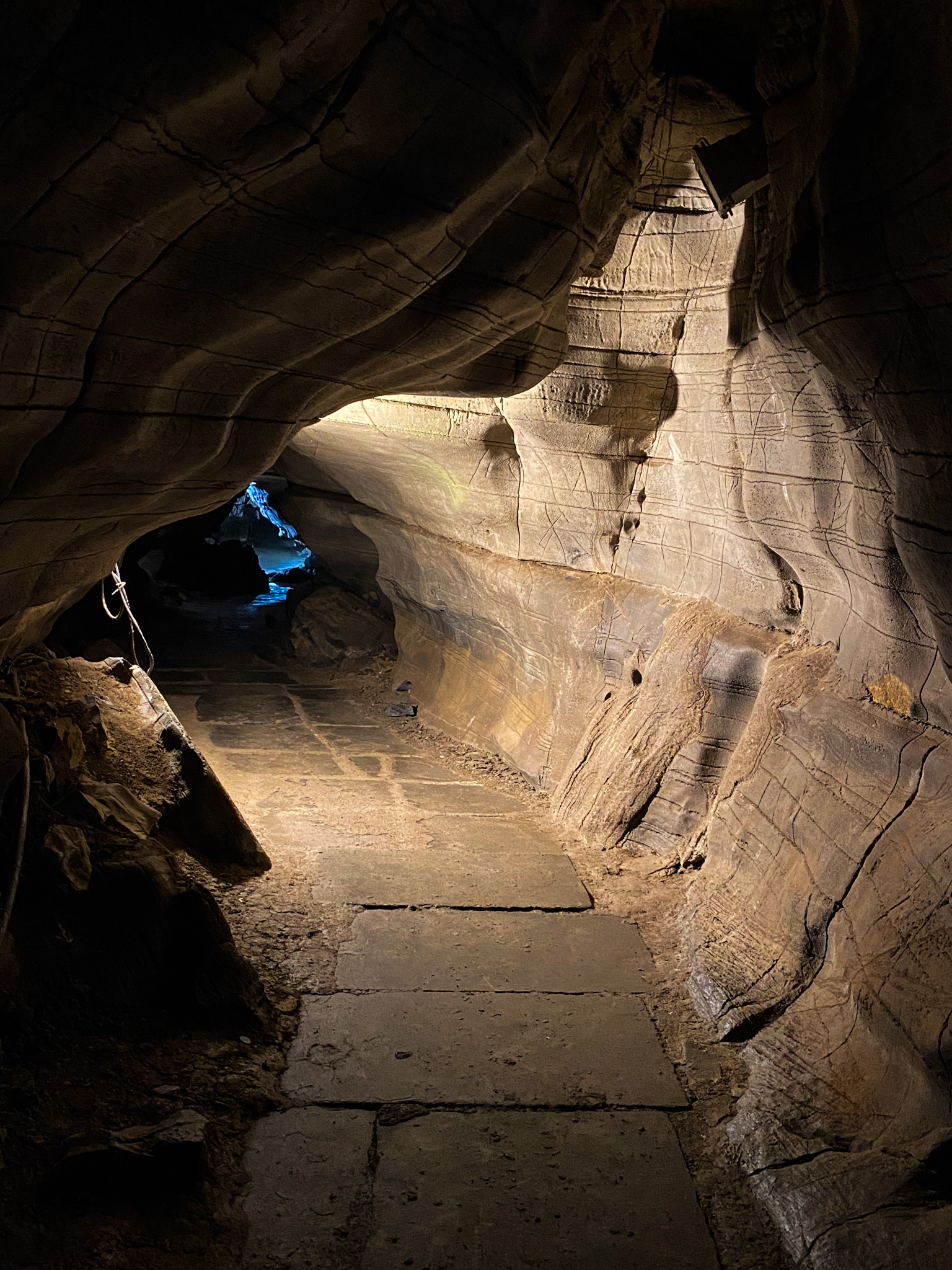
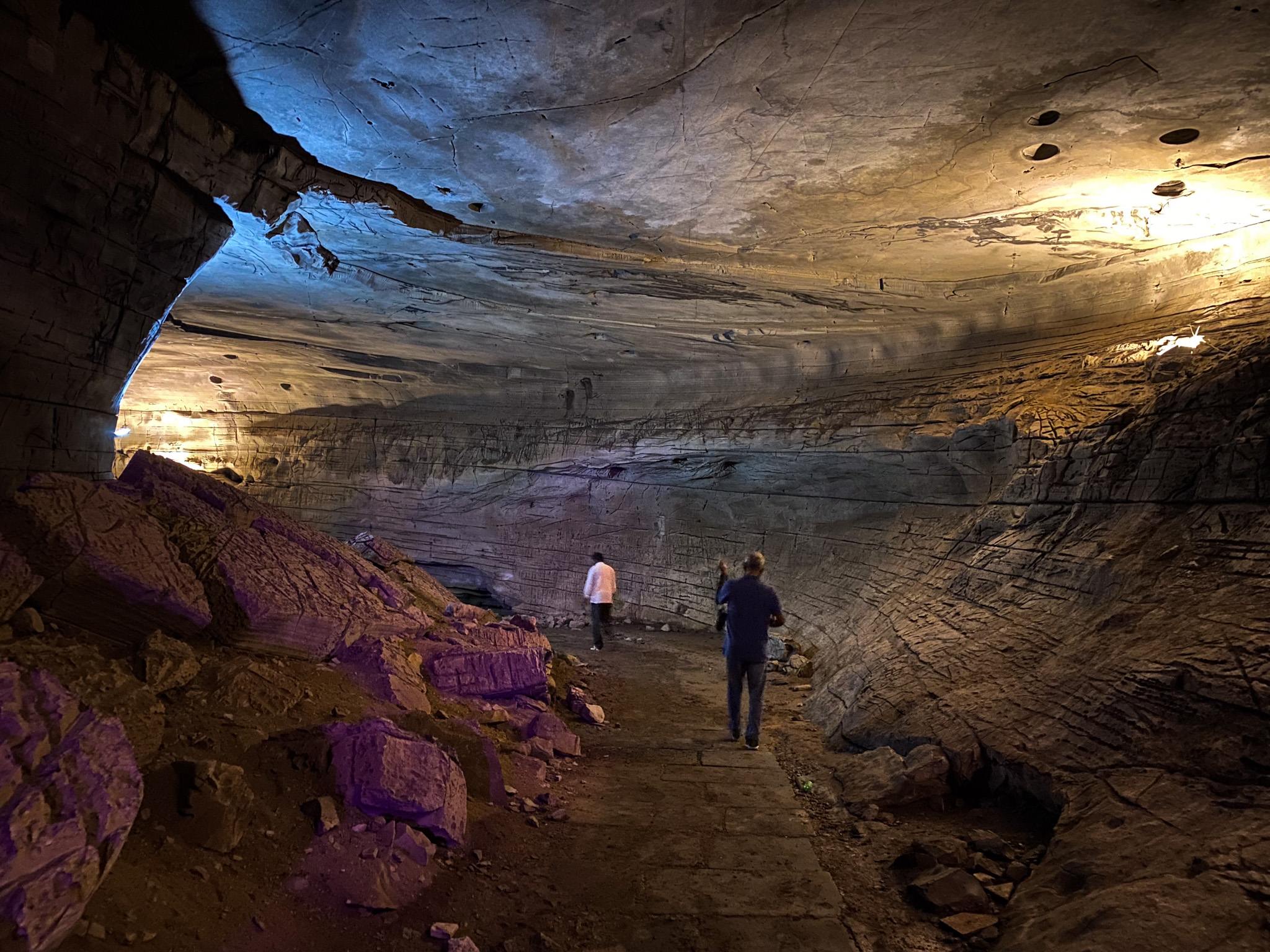
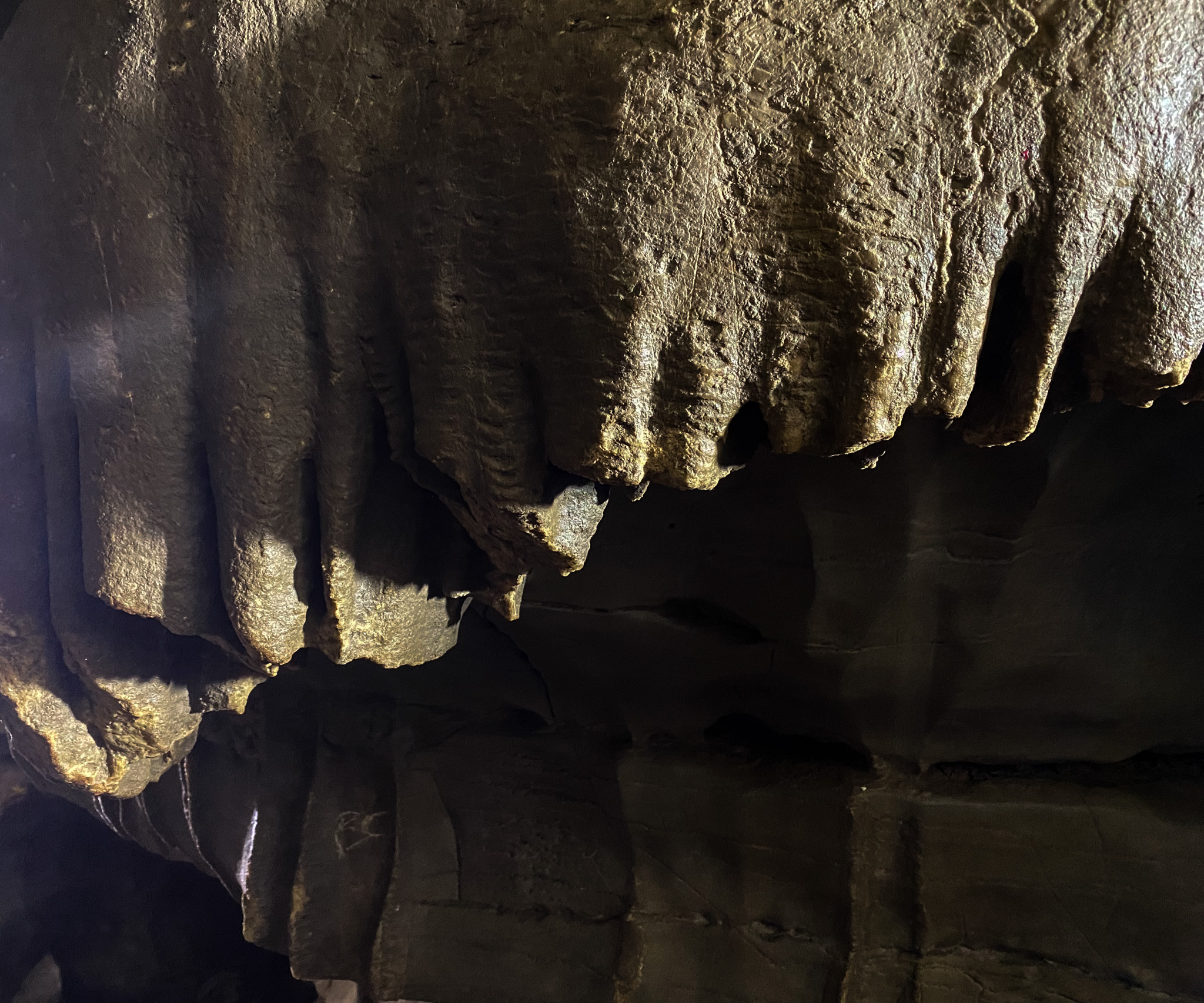
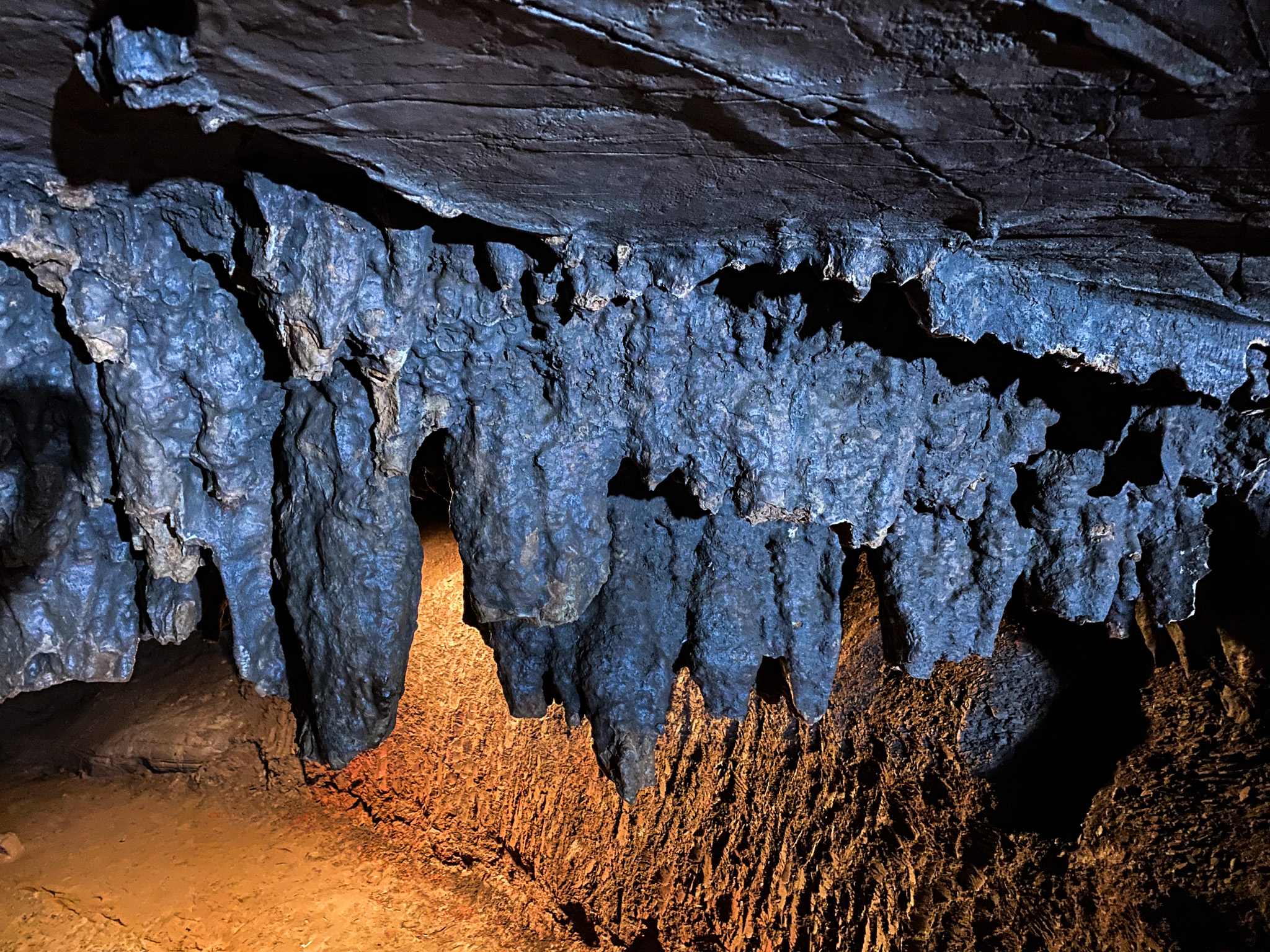
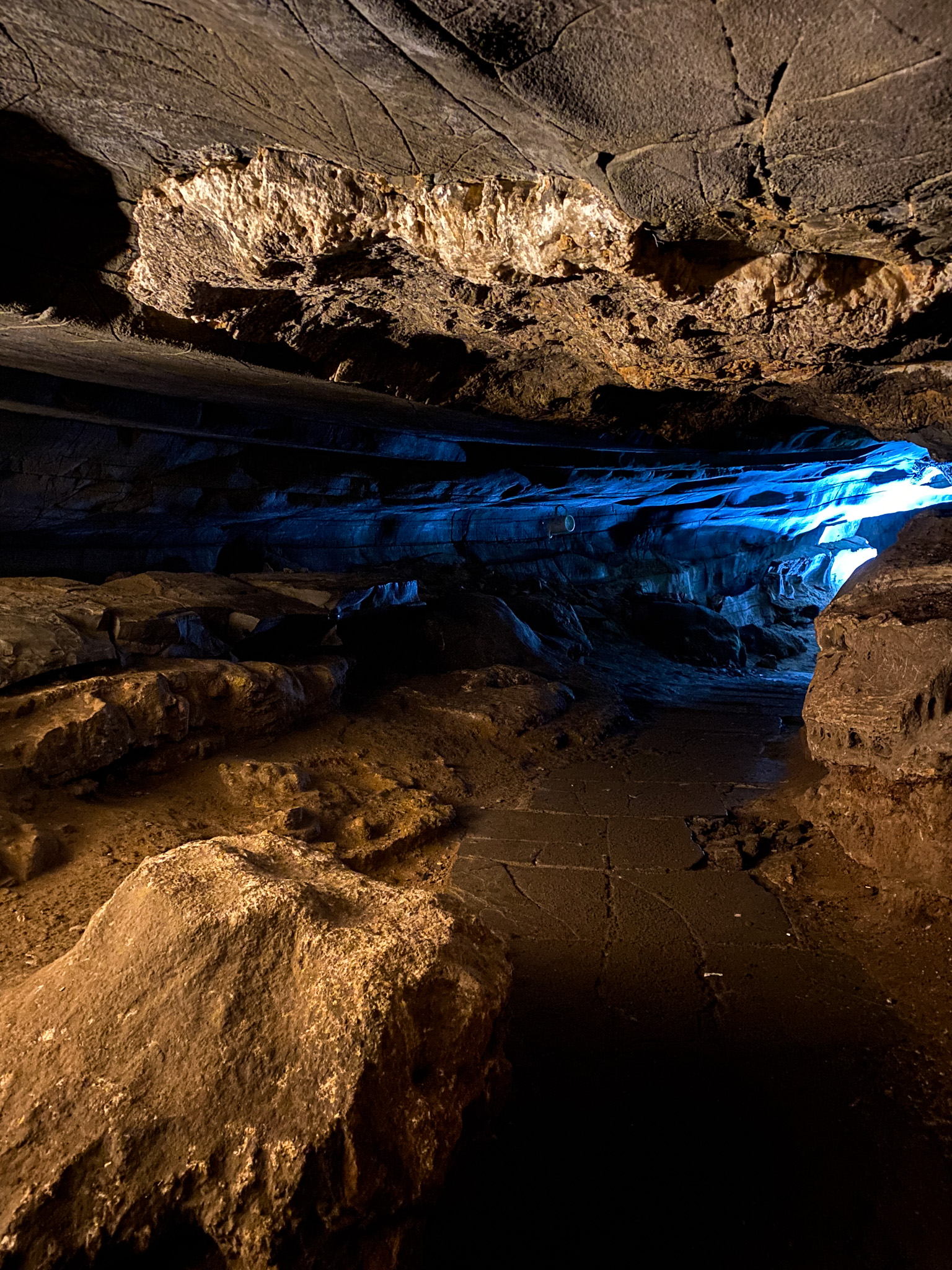
There are spectacular cavernous double height spaces which suddenly branch out into small passages where one has to bend double. There are stalagmites and stalactites which are jagged and craggy in some areas and then there are smooth well rounded walls in other dead ends.  The limestone walls have lines etched into them, caused by water. Similarly, there are swirls in the high ceilings which could have been formed over centuries by the flow of water. 

Fans are located intermittently for ventilation and there is some weird coloured lighting in various parts of the cave to  highlight some rock formations.

Guides have to accompany us into the caves as it is a complicated labyrinth and easy to lose one’s way in.

It is a fascinating place and in my book, the best we have seen , so far, on this trip!

You may find more pictures here at https://photos.app.goo.gl/iXCENUkaiDsuouPF6

Lepakshi is our next stop.

The Peninsula Tour Part 2 – Gandikota

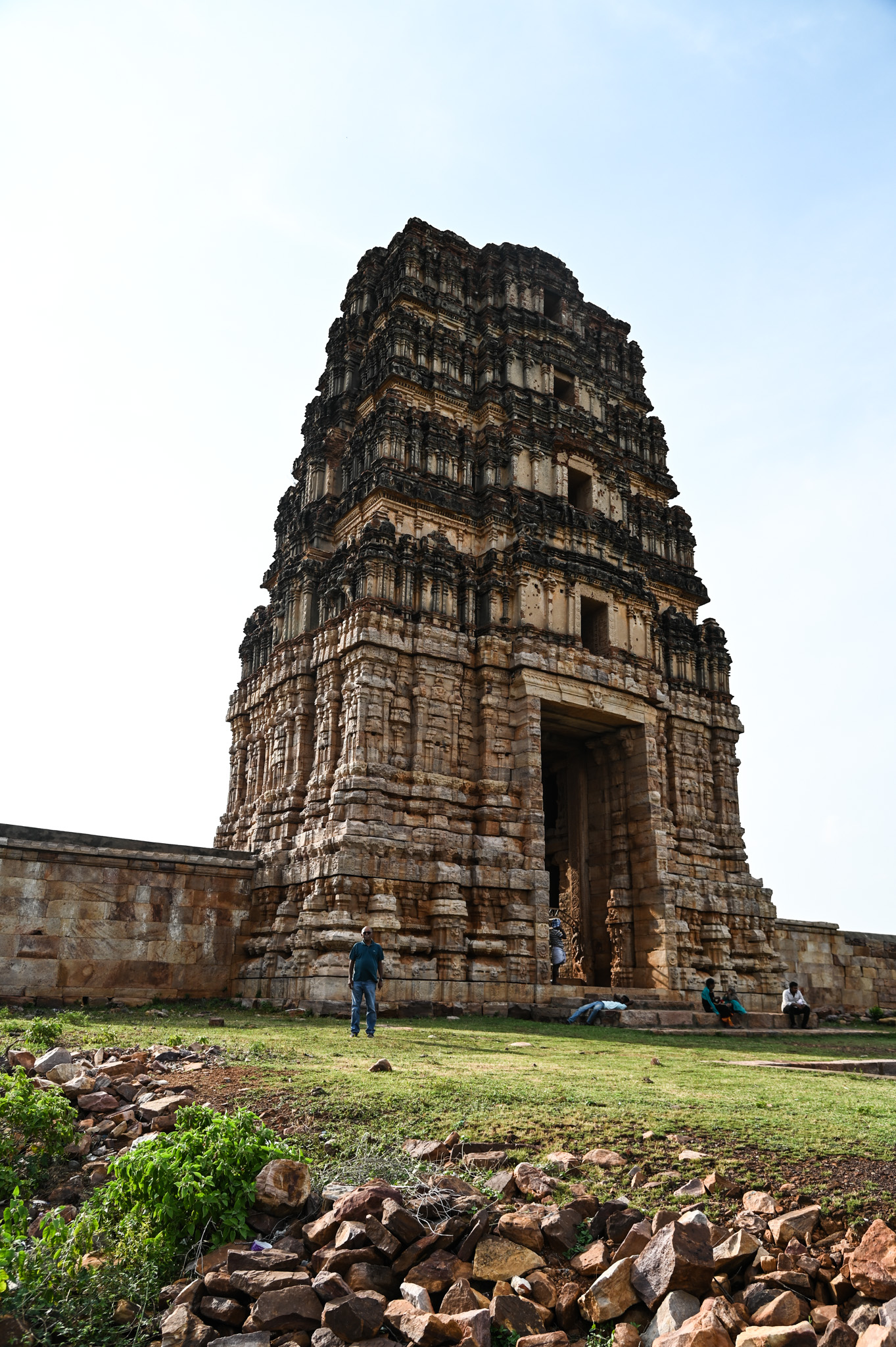
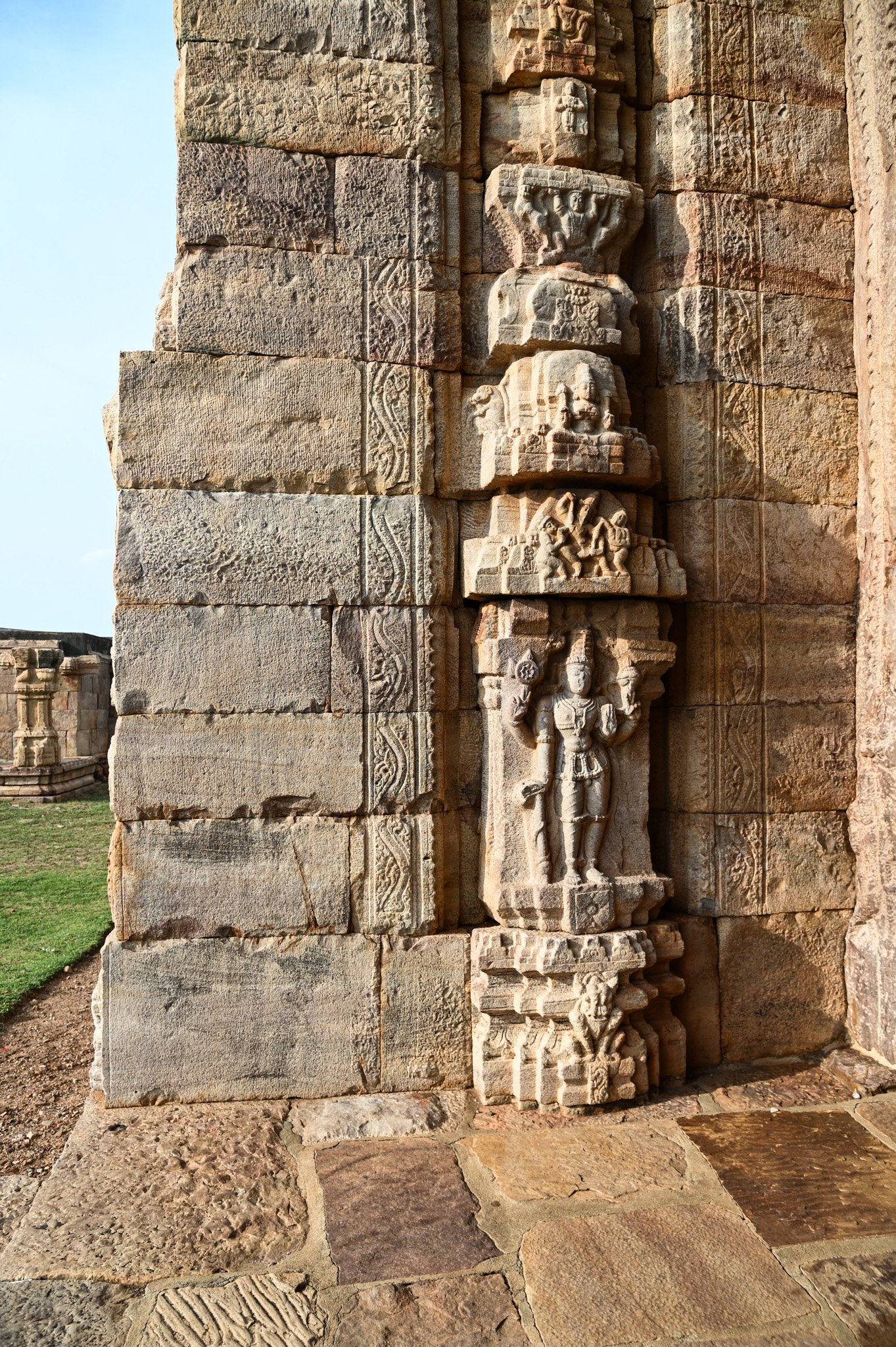
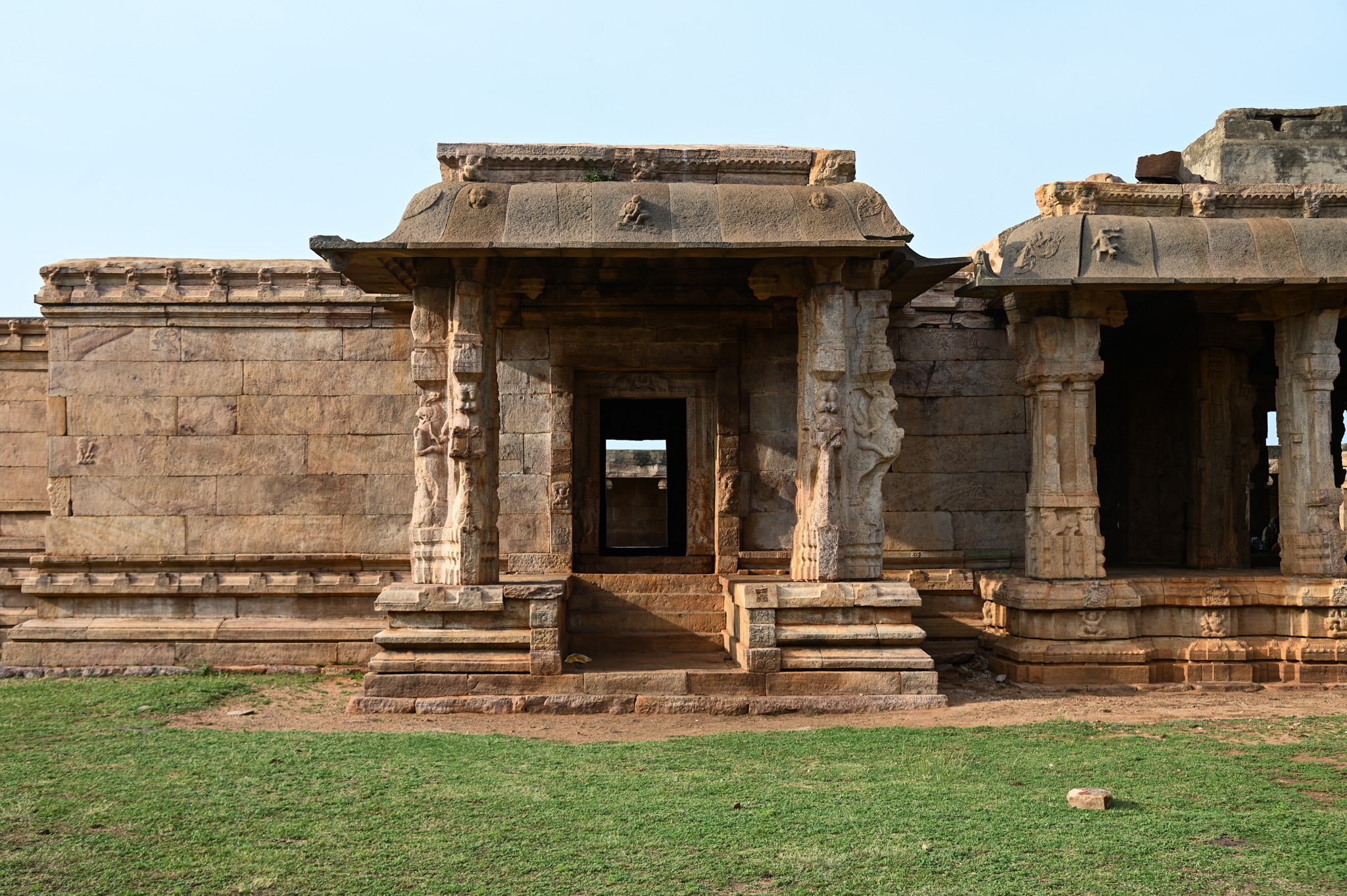
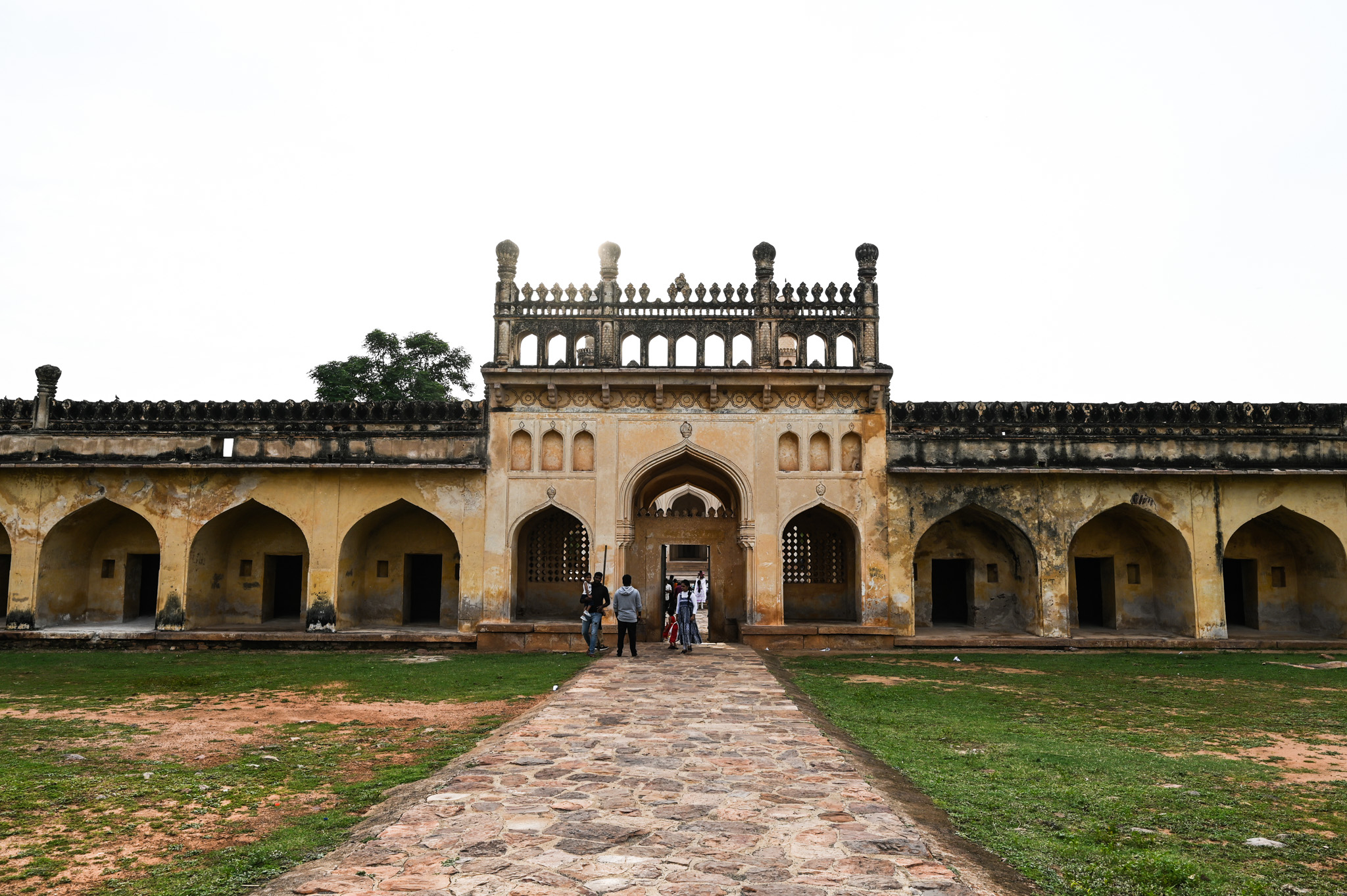
Along the Penna river in Andhra Pradesh, lies hidden, not only a gorge , but an ancient fortress, a temple complex and a mosque. 

All this, in a place called Gandikota.

It takes time and effort to reach Gandikota. The roads are good but the journey from anywhere seems long. We drove in from Hospet and it took us the better part of a day.  

There are no great eating places along the way, even in the towns that we crossed. It’s a good idea to carry some.  The drive takes us through hills formed by boulders with interspersed vegetation, farmlands and many cement factories.

Soon, we are travelling parallel to the Penna river and after a small climb, we eventually reach Gandikota.

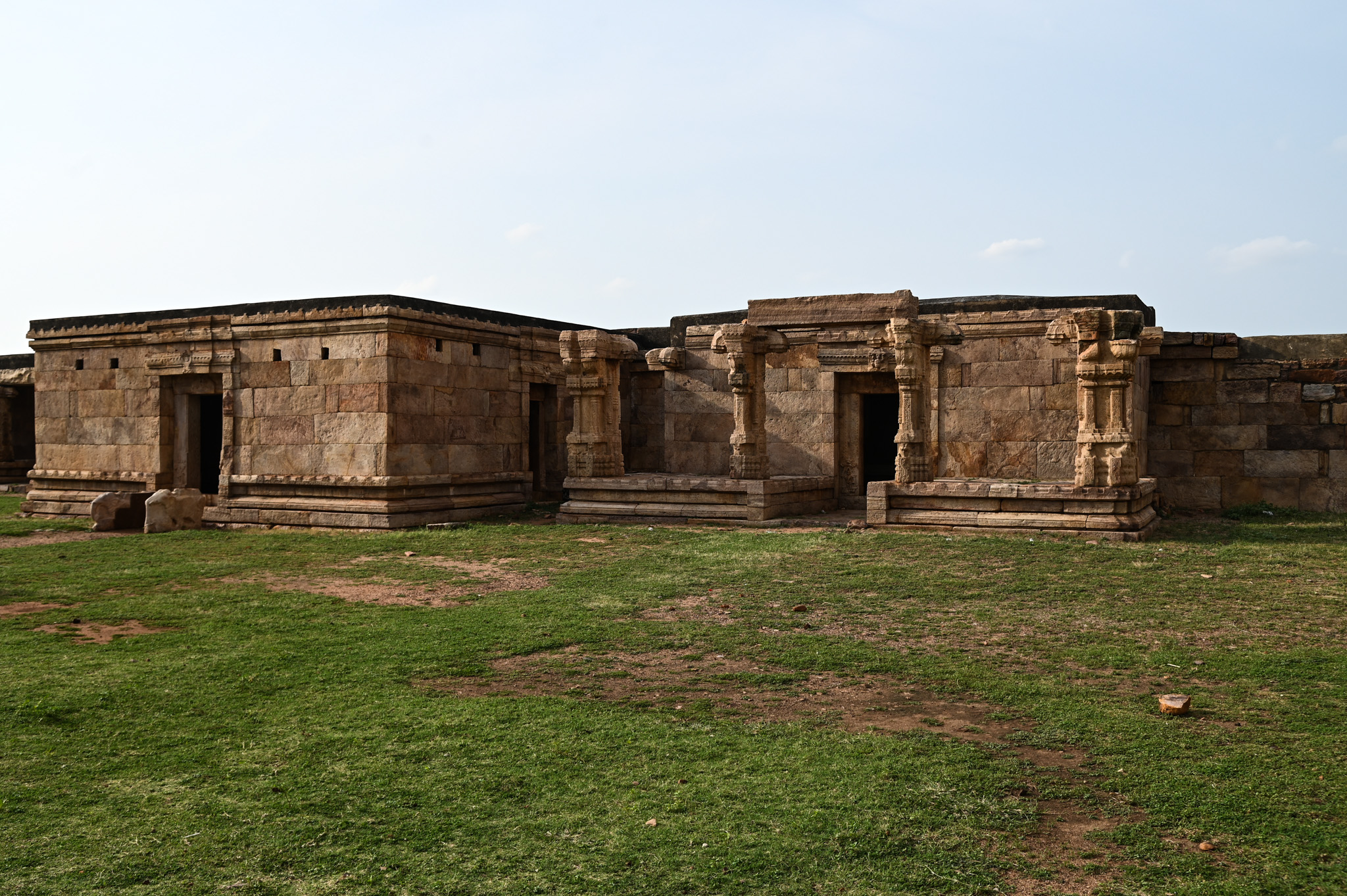
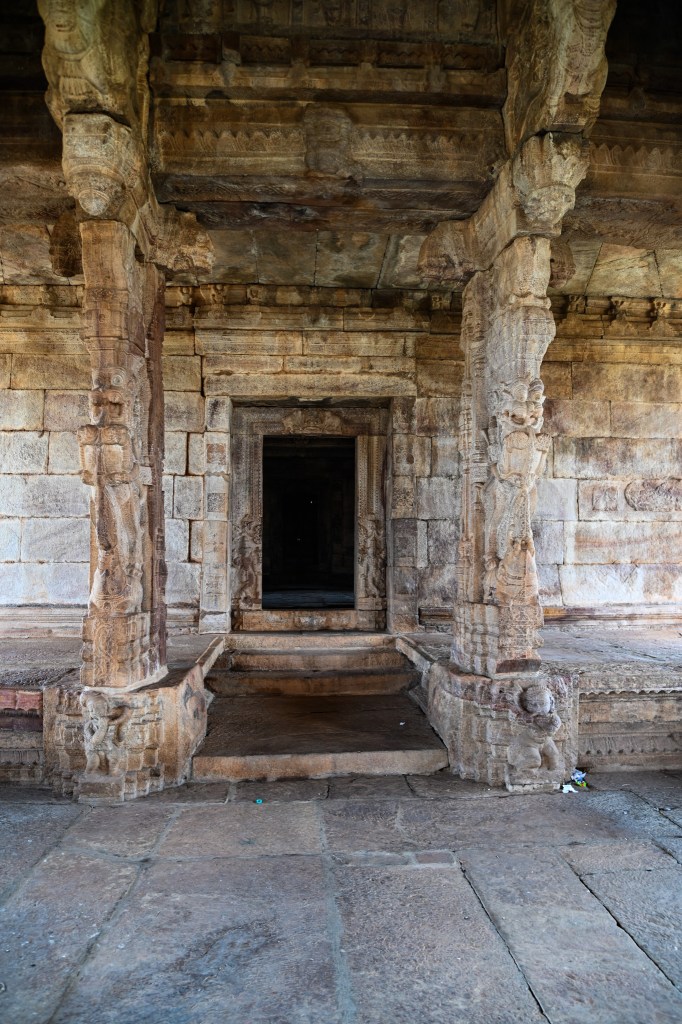
Gandikota is a tiny place with a village, a few hotels and a camp site. The village has grown around the fort which  is a large complex accessible through the village. Built between the 12th and 13th century, it’s stone walls have aged beautifully and most of them are intact.

The two temples lie within the fort, as does the mosque and other structures. The access to the view point of the gorge is also from within the fort.

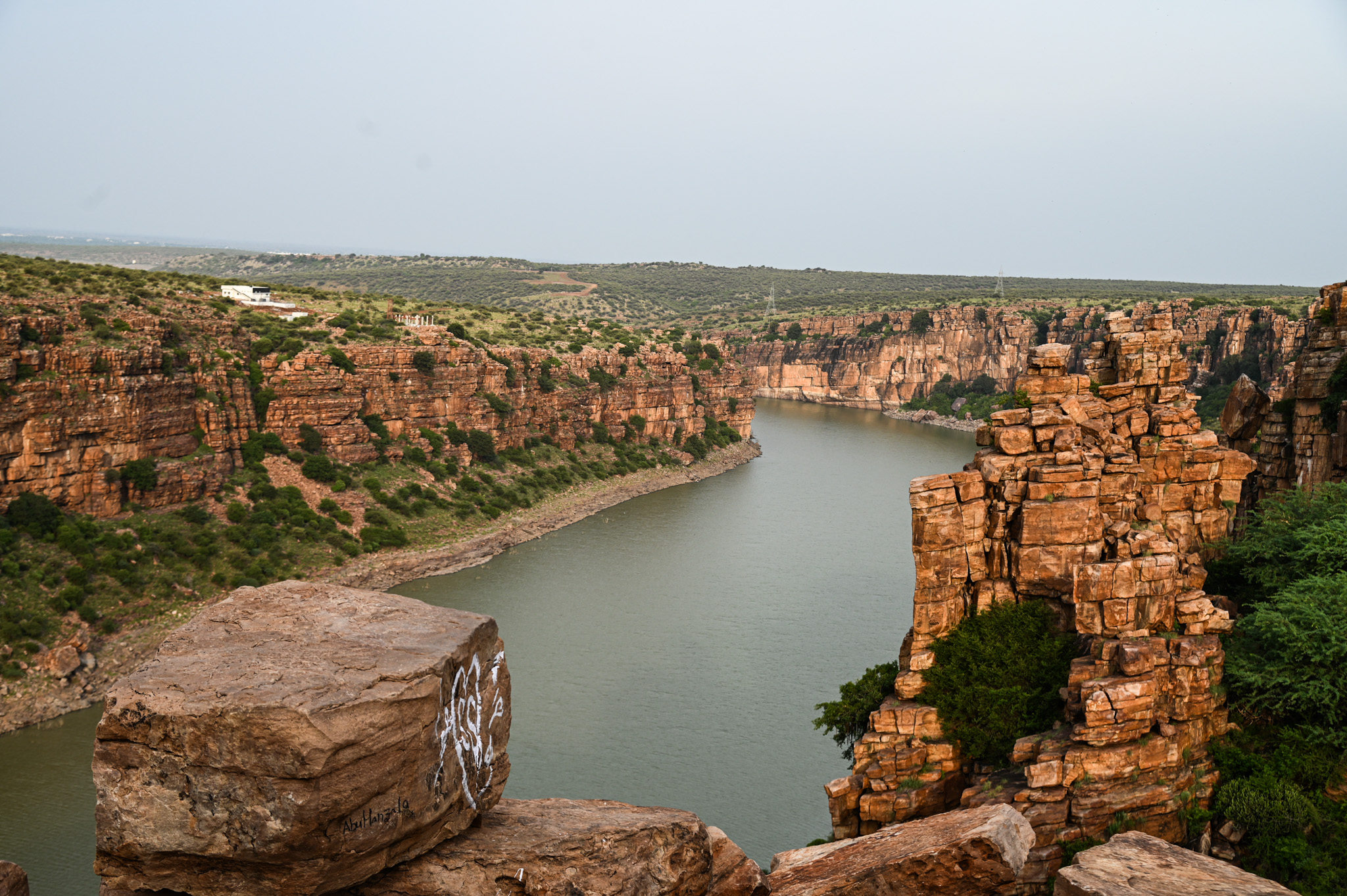
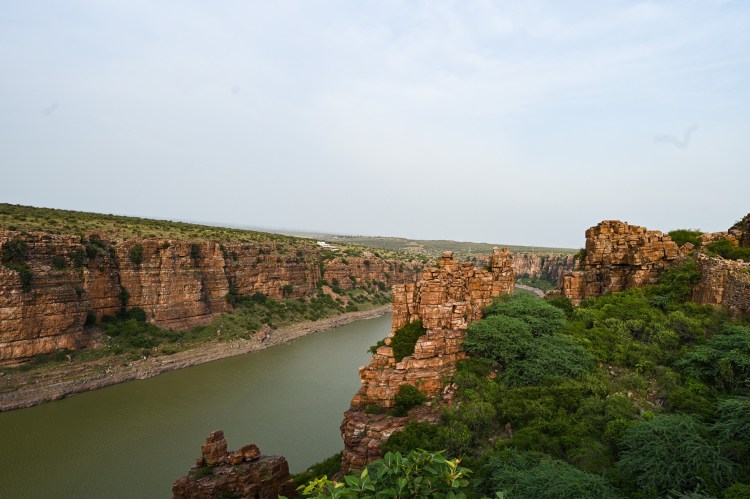
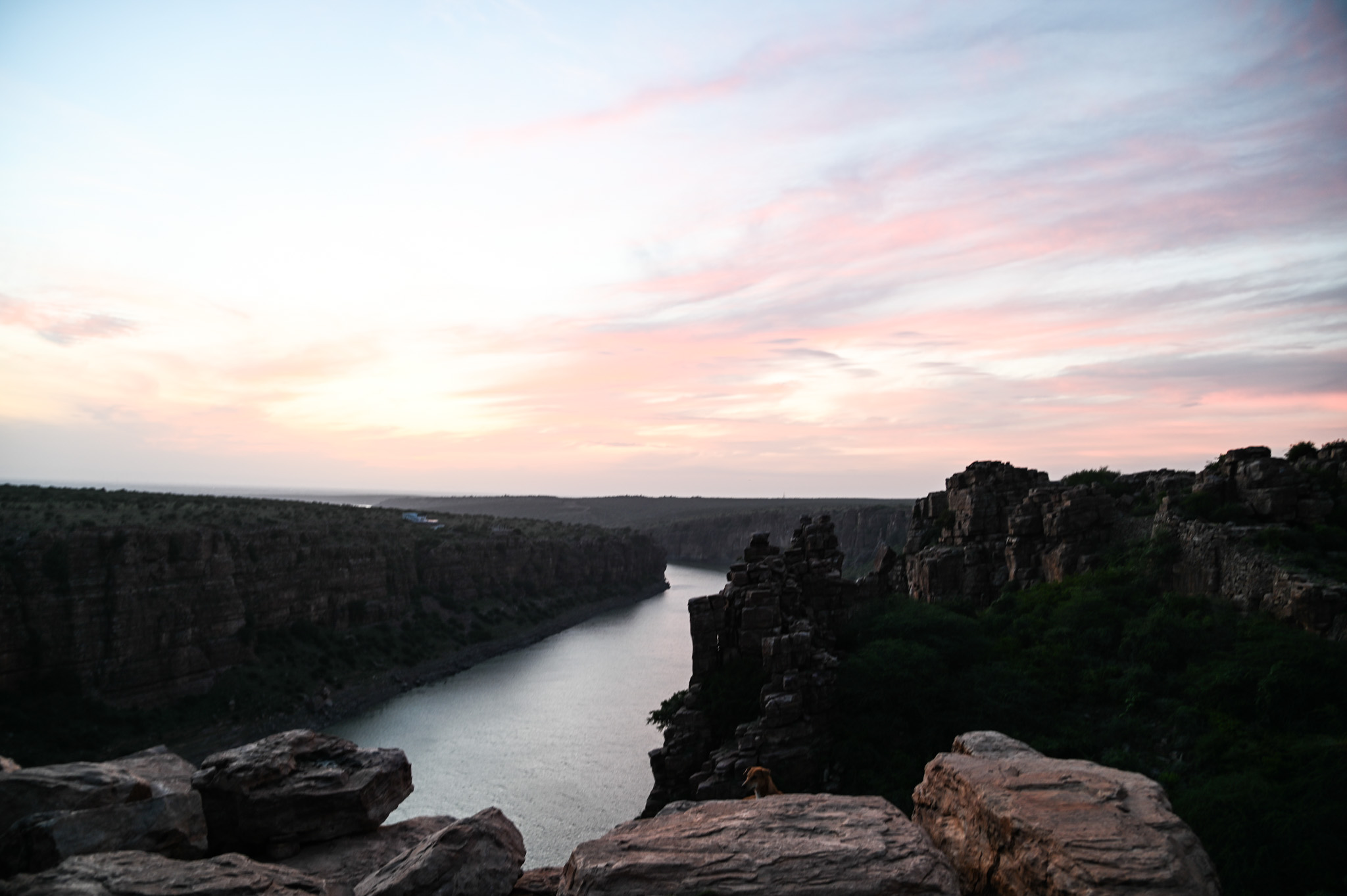
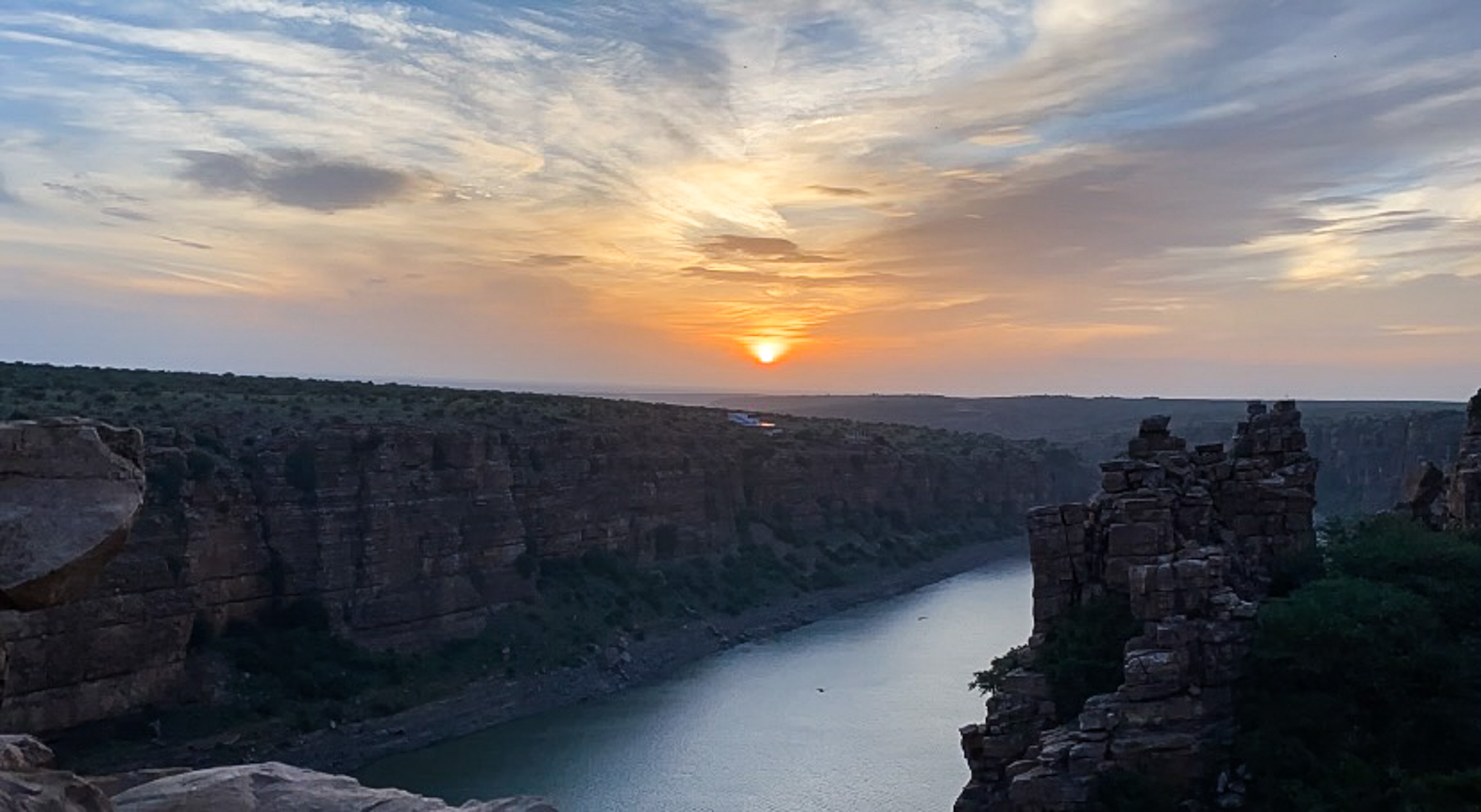
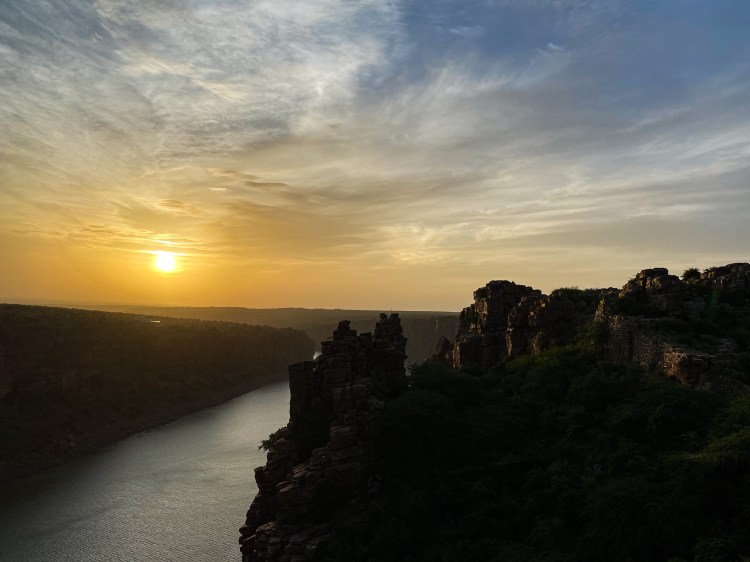
The gorge itself, is stunning and the view from the vantage point is spectacular!

The gorge is about 4 km long and about 700 m in depth and flanks the penne river. A pathway from the fort, past some boulders takes us to a small clump of boulders that overlook a bend in the river and some amazing rock formations. From this vantage point, we can see the gorge upto a bend in the river.  We reached early enough to watch the sunrise over the gorge before heading out.

More pictures are available at https://photos.app.goo.gl/9yPkGWxcQC936kty6

Next stop is Bellam Caves.

The Peninsula Tour Part 2 – Bijapur

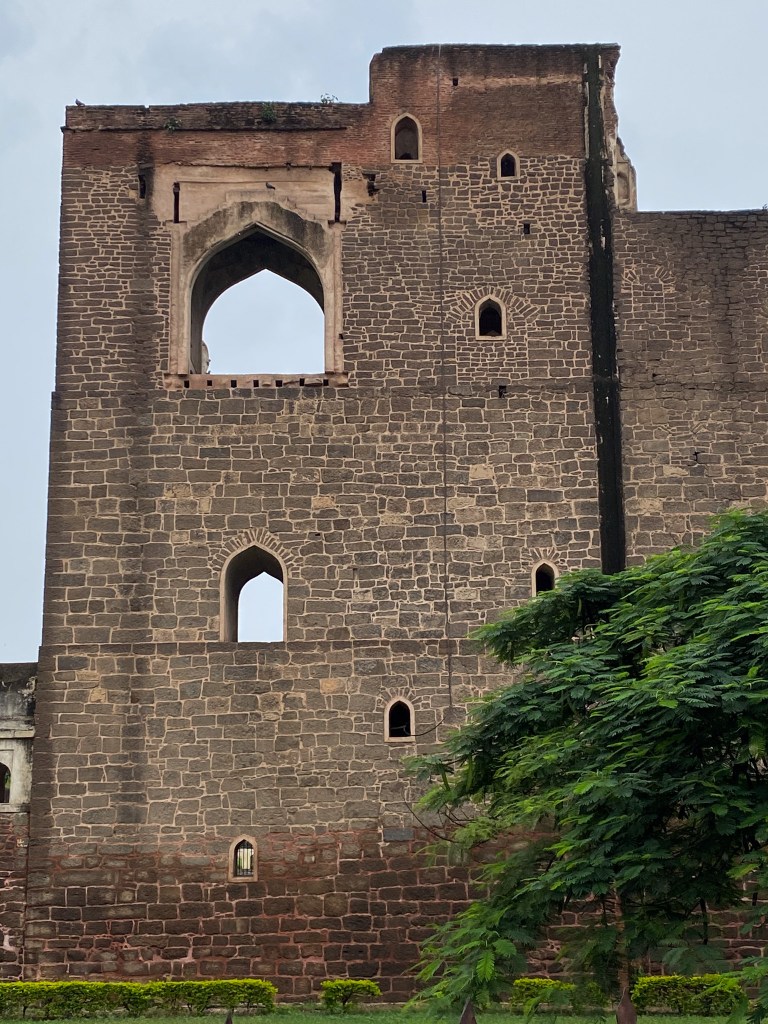
We carried the rain with us to Bijapur. It was dull and overcast and we had much rain when we went out to see the monuments. Bijapur is a walled city and parts of the wall were evident as we drove around. There are monuments scattered all over the city and some of them outside of the fort wall.

Bijapur is crowded and the traffic is chaotic. Small groups of people have conferences in the middle of the road and even at roundabouts, so one has to drive carefully.

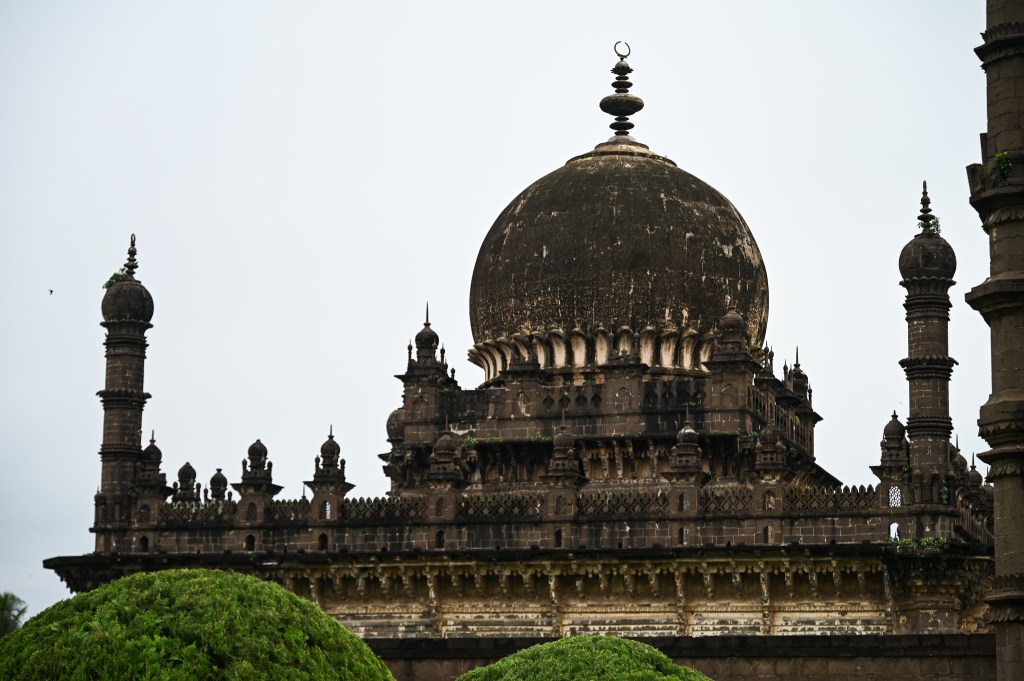
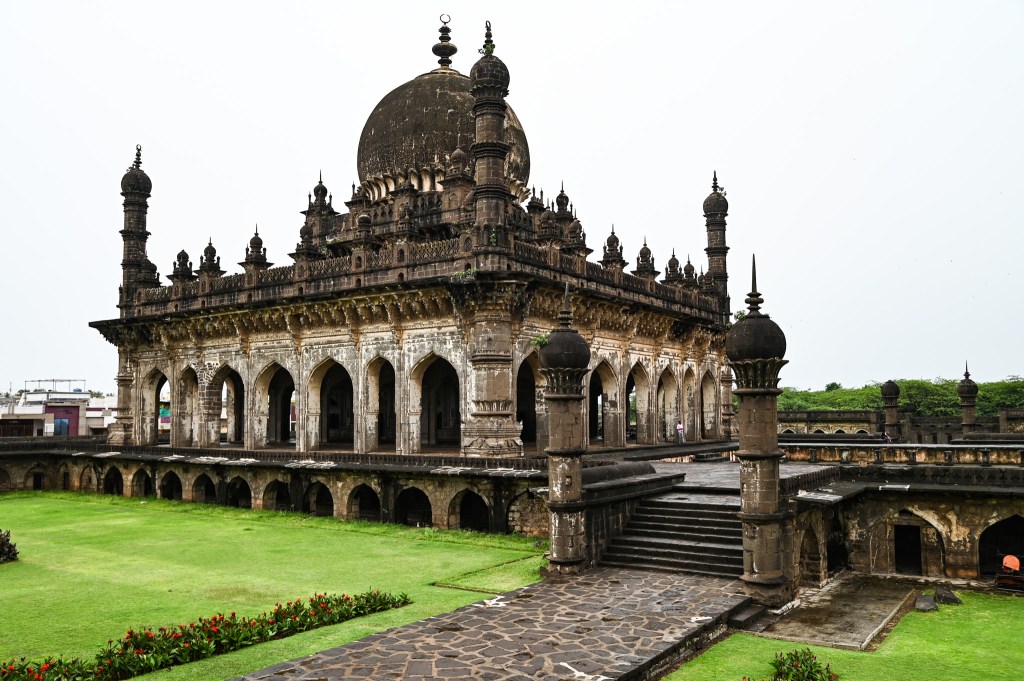
The little knowledge we had of Bijapur or Vijayapura, as it is now called, was from our history text books in school. This structures in and around the city have been built by Adil Shahi rulers over a few generations.

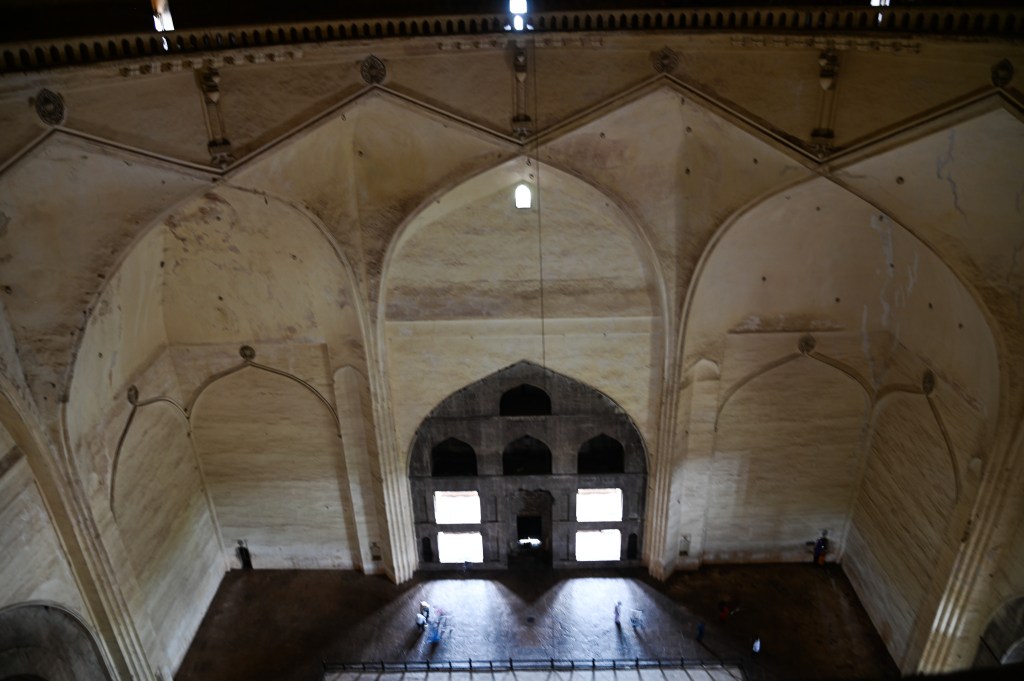
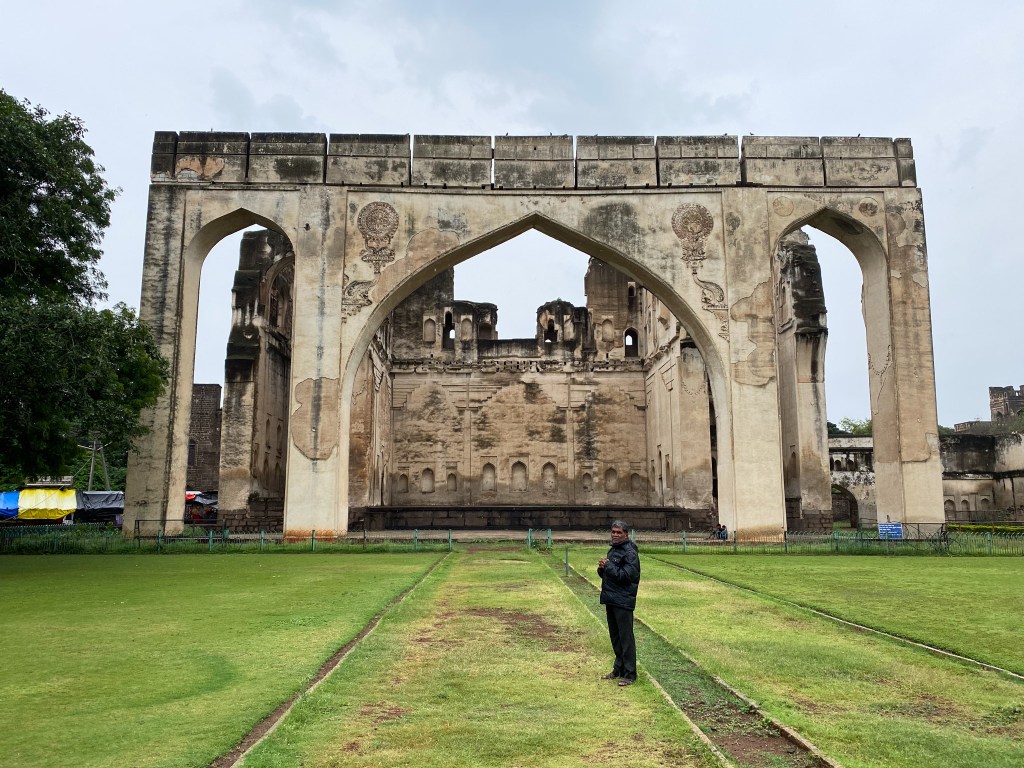
The most famous of these, the Gol Gumbaz was all we had heard of. It is a good idea to visit this monument really early and before the crowds gather to understand the acoustics within the dome area at the top of the monument. There is a direct transmission of sound across the viewing gallery at the top of the monument and even very tiny sounds carry and echo across including rustling of paper and coins jingling and soft voices being heard over a large distance. The architecture from centuries before is a sight to behold. We were told that this was the second largest single dome structure in the world. Access is only on the front side of the monument. Due to the size of the dome and the structure itself, there is a small extension built towards the rear of the monument that supports it and acts as a counterweight. There is also a mosque. We did not have access to these areas.

We then moved to see other structures around the city. This included the Bara Kaman, Ibrahim Rozha, Jodh Gumbaz and the Diwan-e-aam, the Diwan-e-khaas as well as the pond that supplies water to the city.

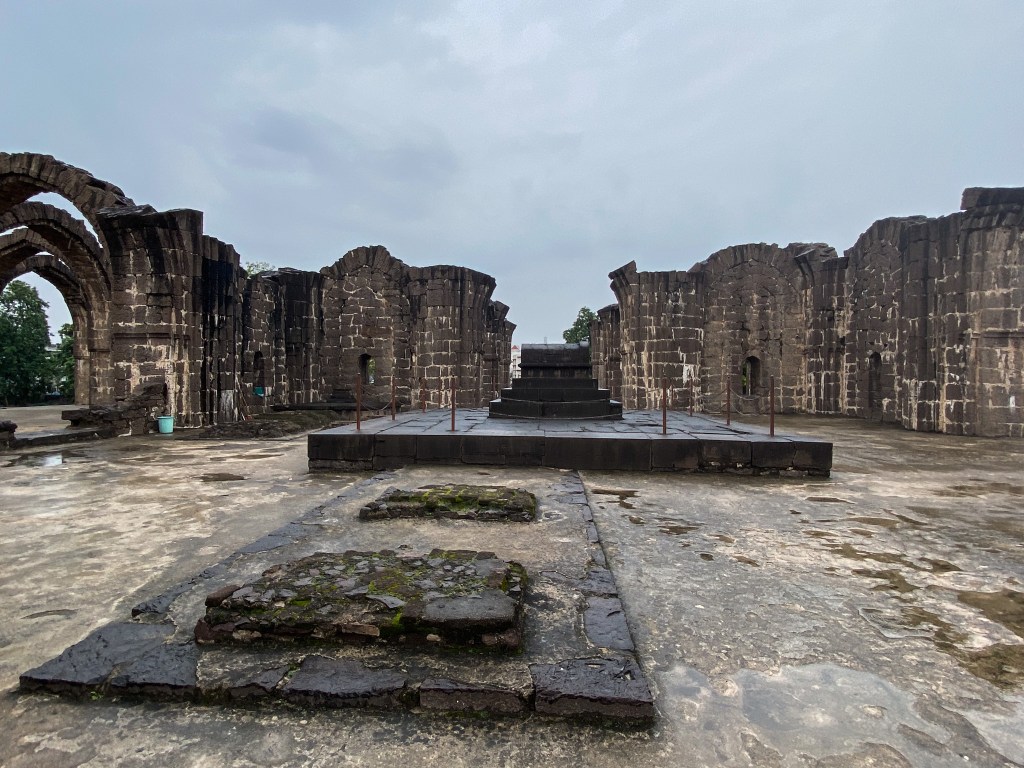
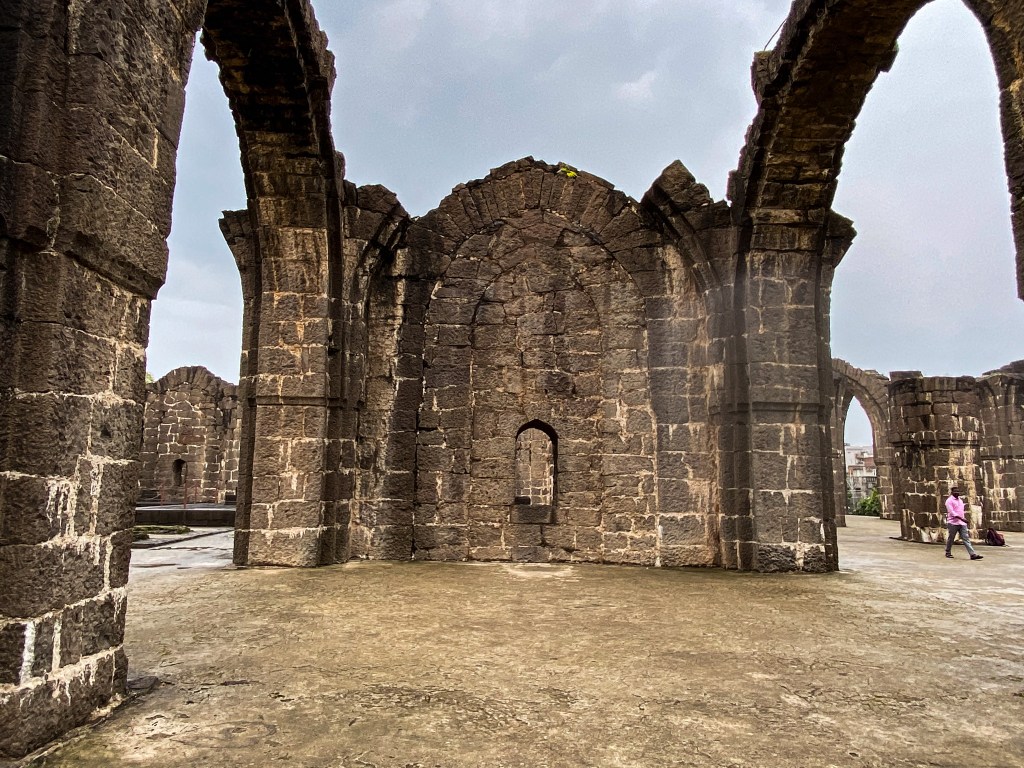
Bara Kaman which was built during the times of Ali Adilshah as a mausoleum for his wives wasn’t completed in his lifetime. After his death, he was buried below the incomplete structure alongside his wives. It has a concentric set of 12 arches, hence the name.

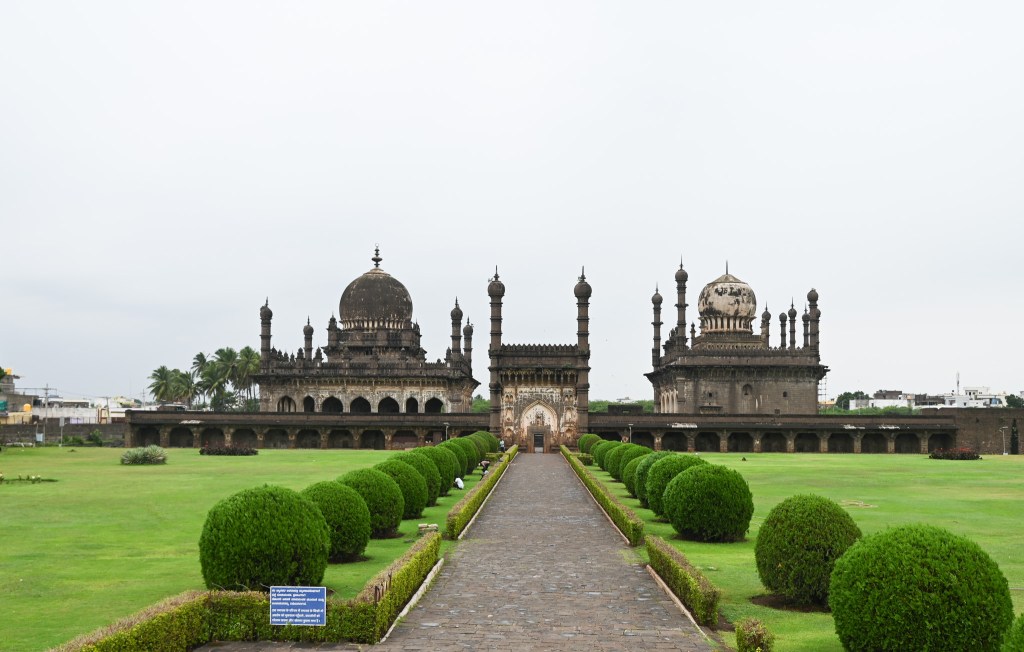
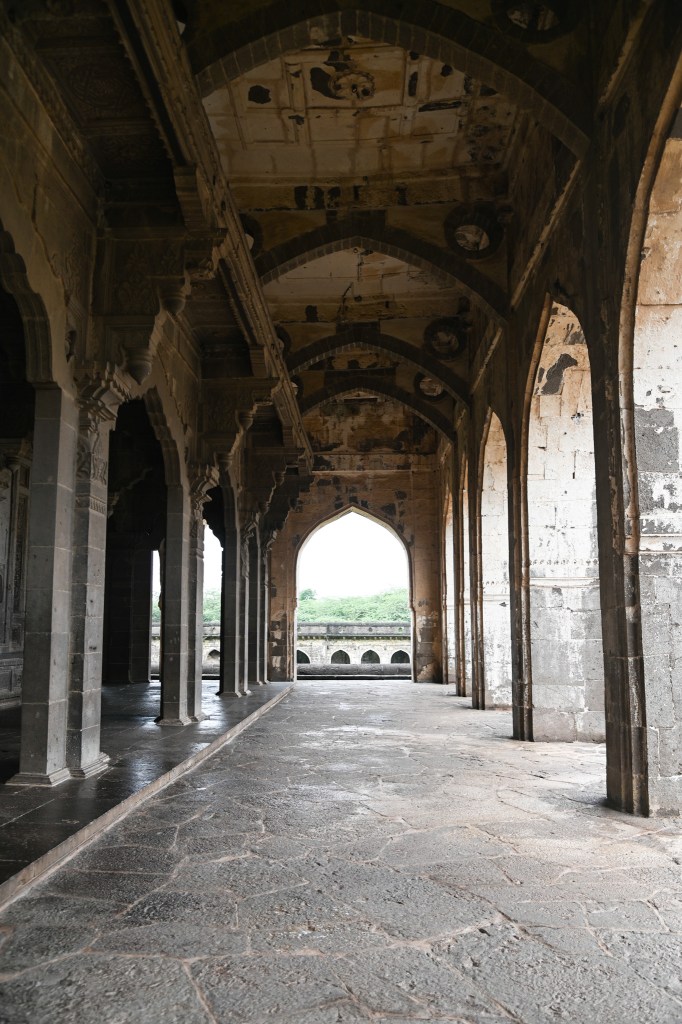
The complex called Ibrahim Roza is vast and has a mosque and mausoleum facing each other. There is evidence of architectural intervention in later years to additionally support arches that were threatening to fall. Intricate jaalis and carvings are evident on the walls of the mausoleum. There are out buildings such as stables for horses and elephants as also the workmen who constructed the monument.

Our next stop is Gandikota after an overnight halt at Hospet.

Here are a few links to the photos

https://photos.app.goo.gl/Ym1wdXG3Rx2ezUqu8

https://photos.app.goo.gl/V1Qy36UMWaEs6nkM9

The Peninsula Tour Part 2 – Naldurg Fort

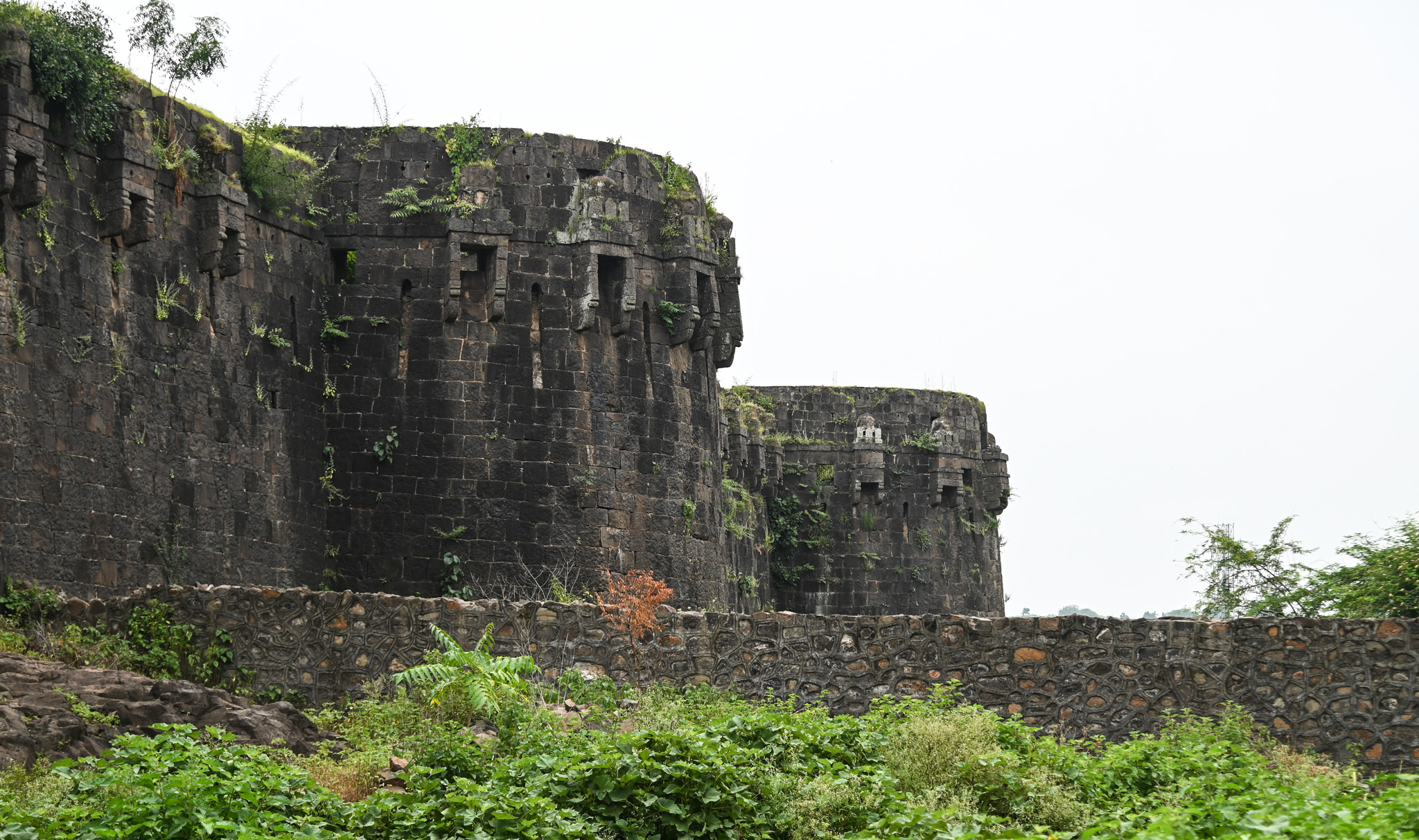
Naldurg fort is visible from the highway between Solapur and Hyderabad. It was not on our route map, but we decided to go anyway.

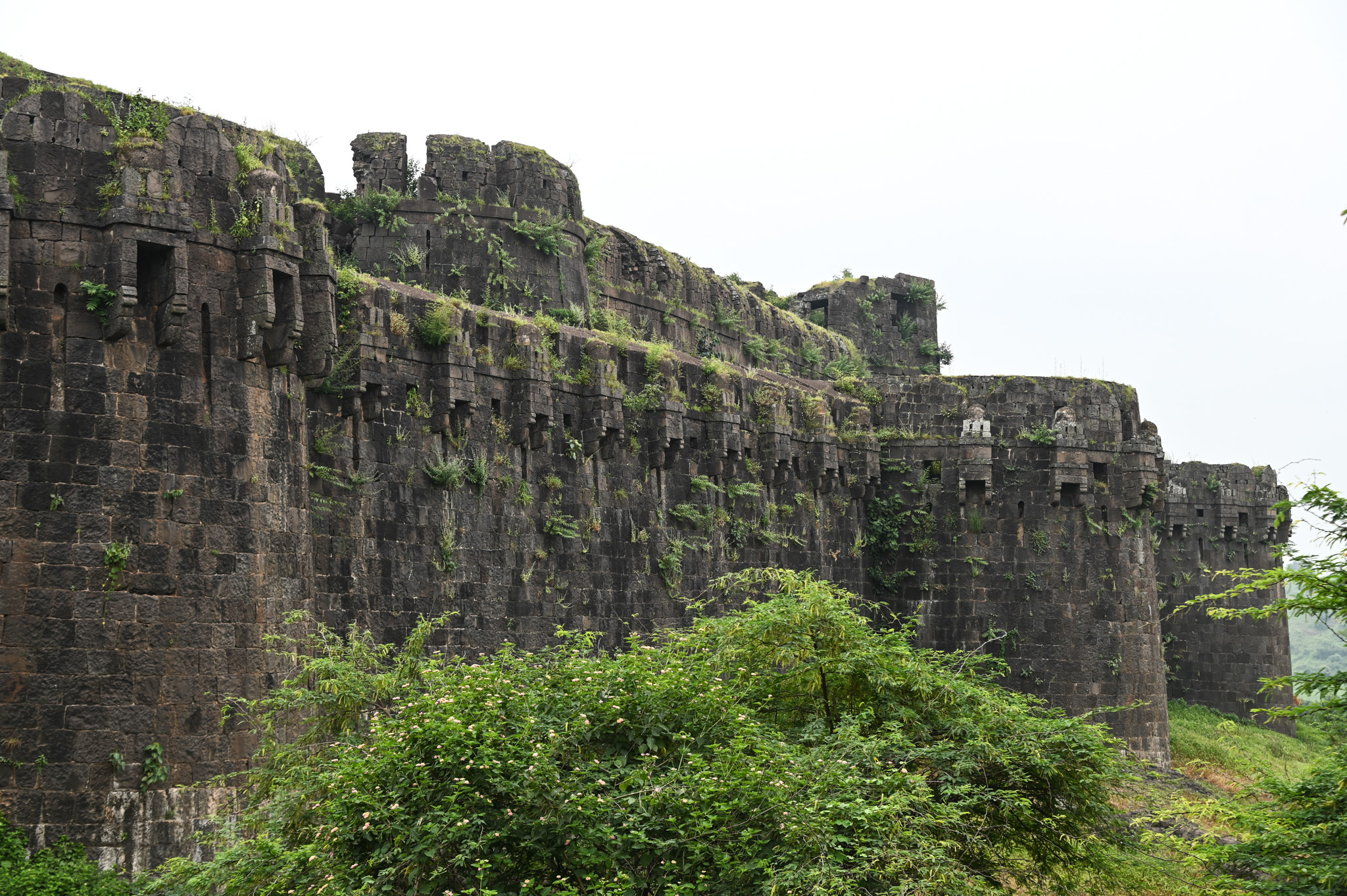
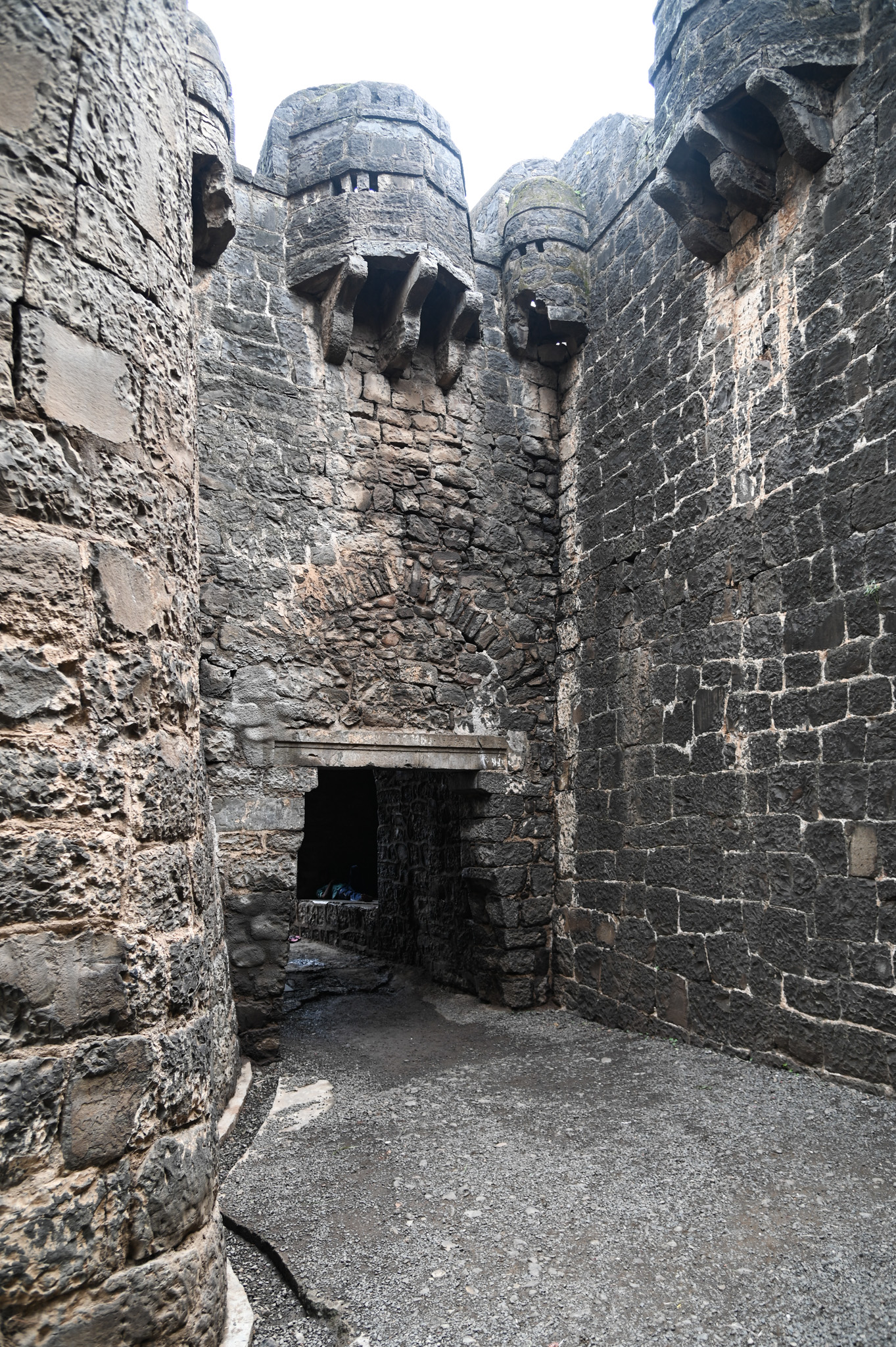
About an hour from Solapur and after a small detour, the parking lot and entry way to the fort lies along side a beautiful fort wall with bastions and ramparts intact . Tiny openings are visible close to the ramparts which probably served as lookouts.

It is believed that the fort was built by Nalaraja ( hence the name) and parts of it were completed by Adilshahi kings and was built over 300 and more years.

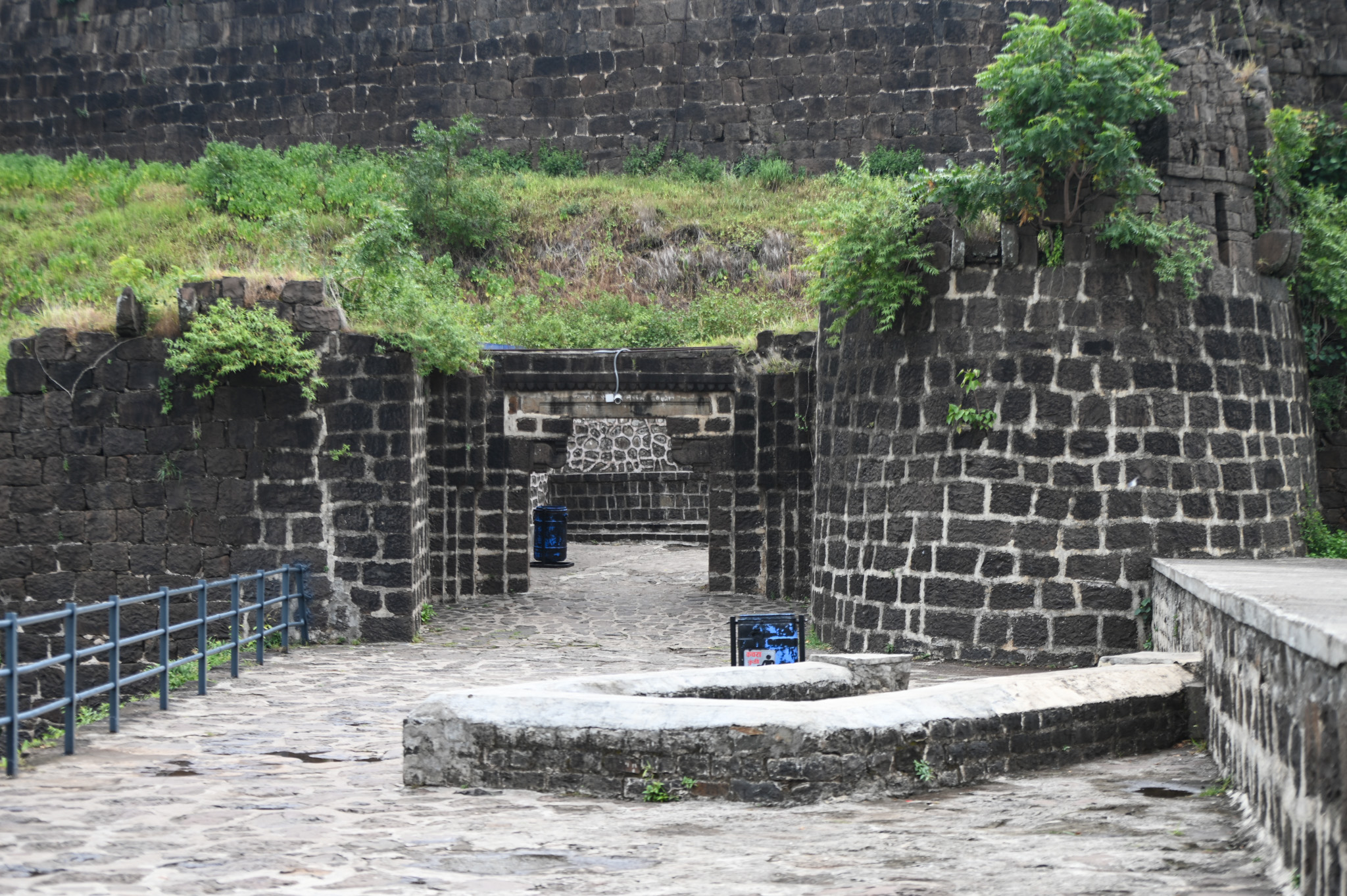
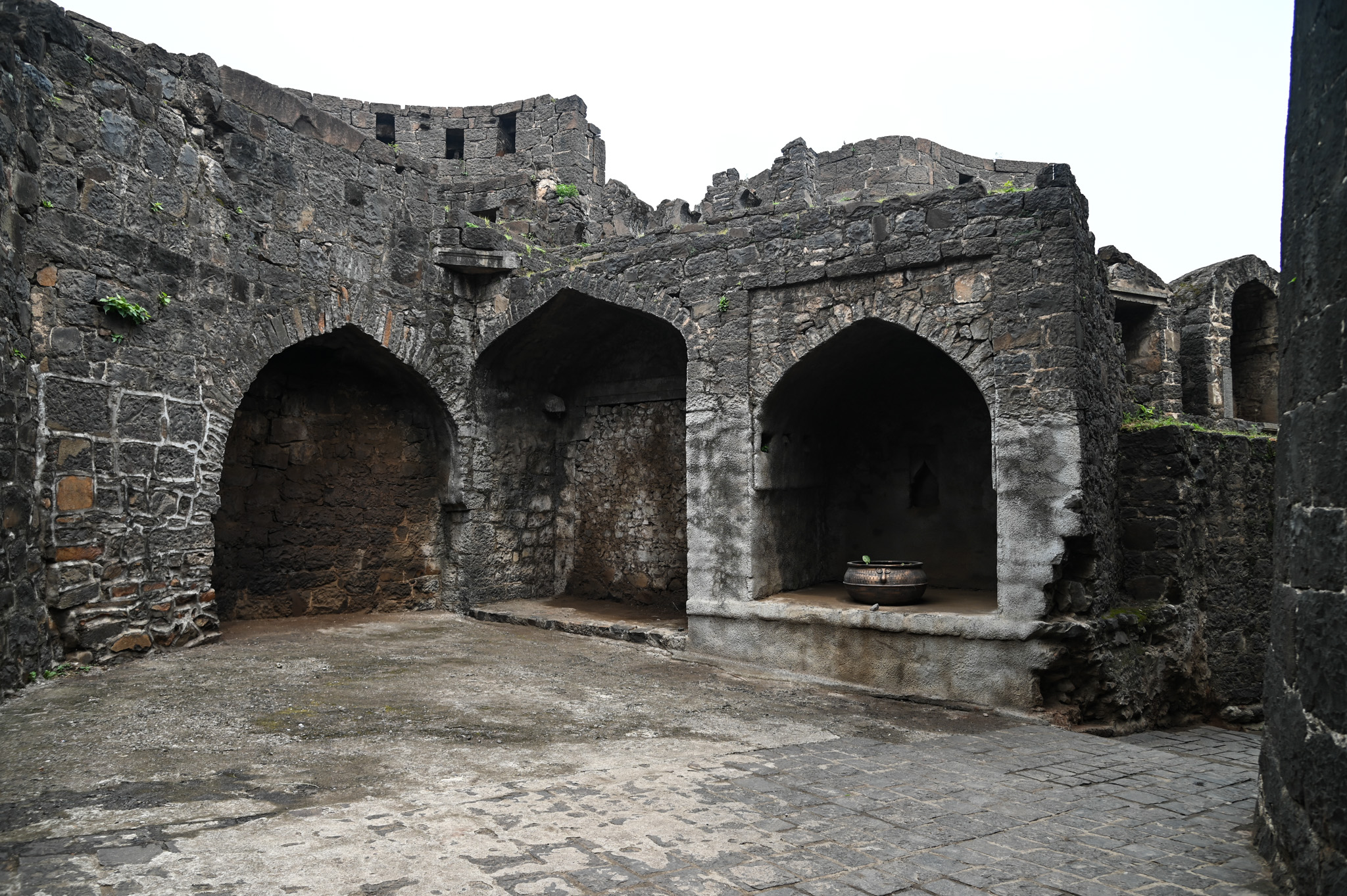
The entrance is through a narrow pathway and after a couple of zigzags, we entered into a large open space. Most of the smaller areas within the fort are accessible through is space. There is a jail and a mosque like structure. There is a structure comprising of a broad flight of steps culminating in a bastion, which, I presume served as a watch tower, as it overlooks the valley. There is a large lake formed by a dam which is accessible from various places within the fort complex, where boating happens. 

The fort is well known for Pani Mahal which is named after a cascade formed by the dam. Sadly, we did not witness this, as there was insufficient water. 

There is a breach in the fort wall and alongside the opening, the fort walls have collapsed. The width of the fort walls is so evident at this breach. 

I need to mention that photography within the fort with a camera is not permitted. We had to procure special permissions to do so. Mobile camera photos are absolutely okay!

All in all, the detour was really worth it!

For the album, please click the link provided. https://photos.app.goo.gl/bmjq9SryRNtnPEnp9

The Peninsula Tour – Part 2

After a lot of planning, we restart our Peninsula tour. The route is a bit different from the previously planned one.

The tour will start from Mumbai and make its way through Bijapur, Gandikota, Lepakshi, Bengaluru, Chennai and then down the East coast to Rameswaram, Kanyakumari, Kollam, Idukki, Allapuzha, Kochi, Kozhikode before it winds through Kabini, Hassan, Chitradurga onwards back home to Mumbai. The map below traces our proposed route.

We expect to cover this over a period of two months.

The tour starts tomorrow, and we are very excited as we head to see new places, enjoy the sights, sites, history and architecture as well as meet lots of friends and relatives along the way.

Watch this space for updates and pictures.