The Peninsula Tour – Guruvayur

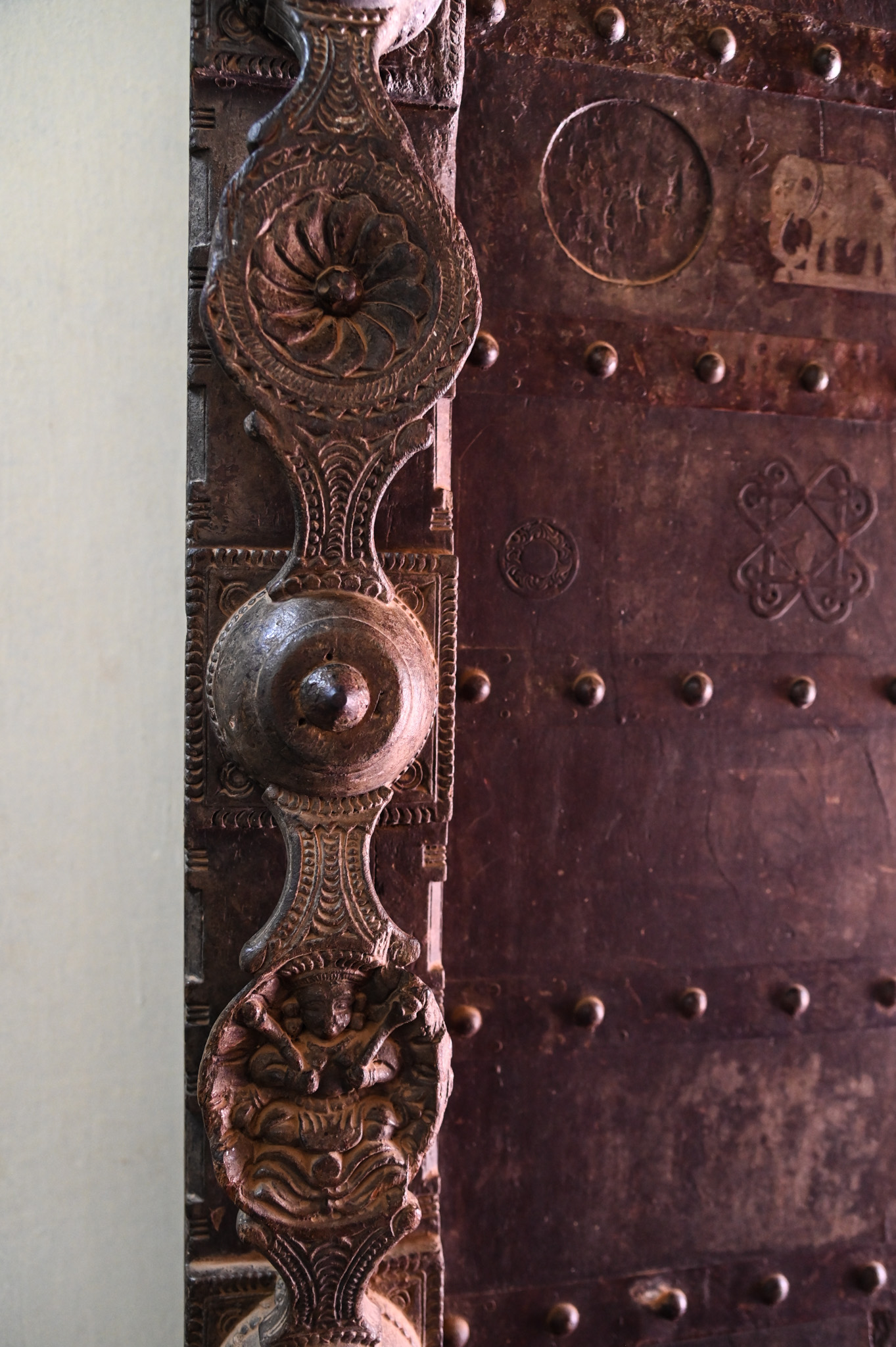
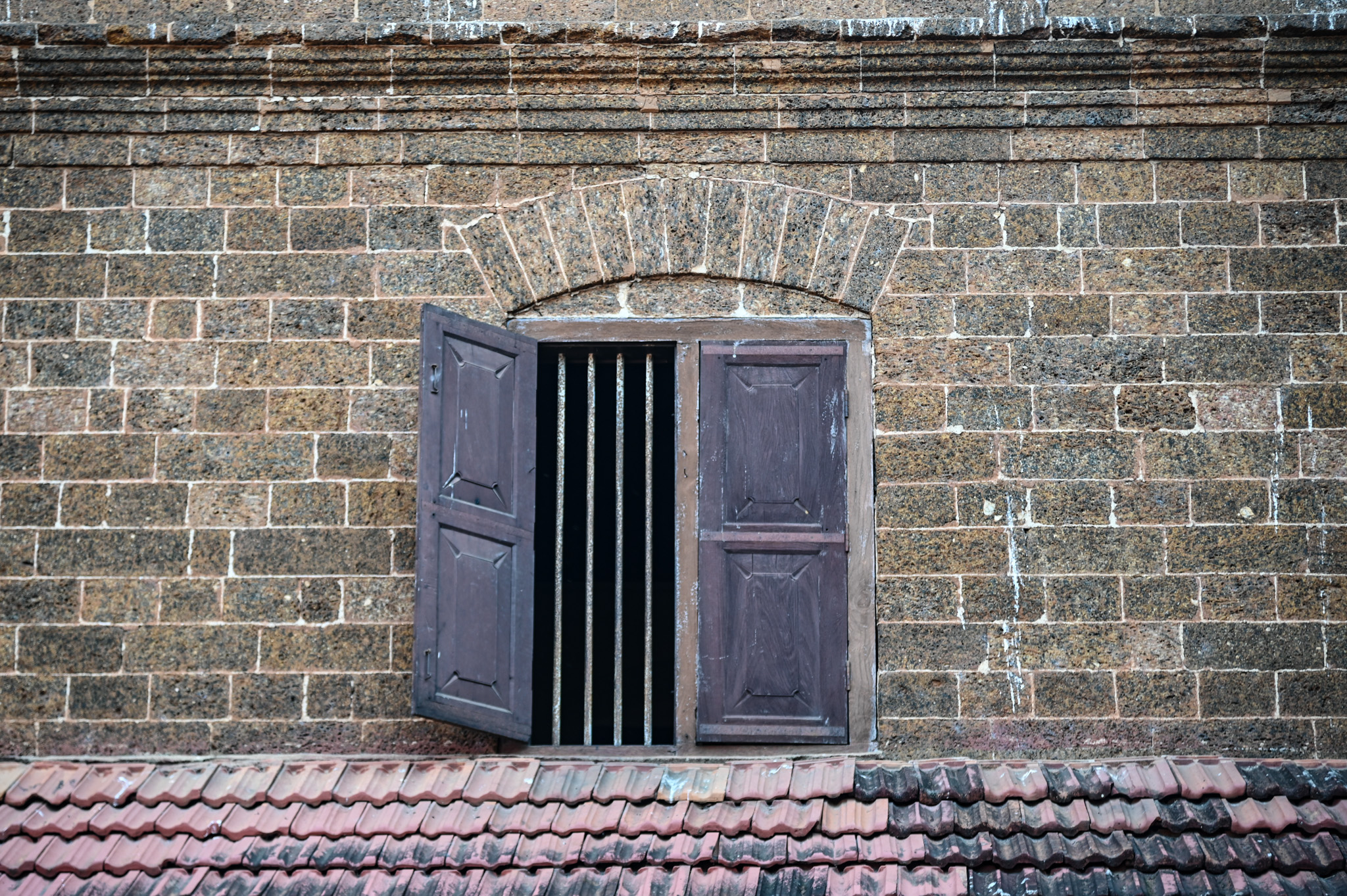
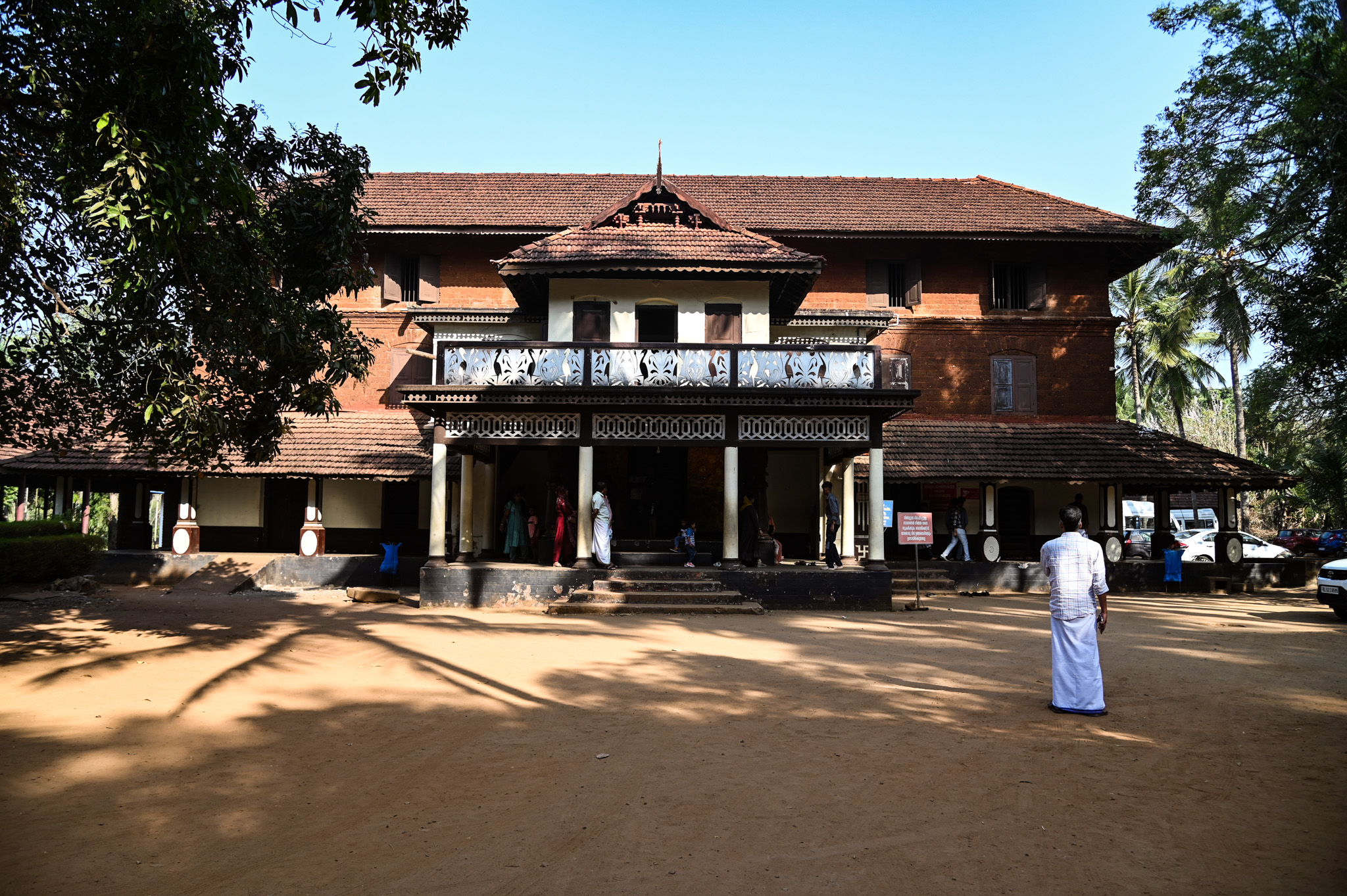
Guruvayur is my hometown or native place as we called it all those years ago. This is where my parents, brother and I came every year during the summer vacations and spent a good two months at the ancestral home. My Ammuma stayed there alone before we descended there for the holidays. We were joined by my cousins from Calicut and Delhi, and it was a great time in a house full of children and adults. We spent time playing with the local children and enjoyed the food and daily visits to the Guruvayur temple. For those who don’t know, the house was also where Lakshmi and I spent our honeymoon after our wedding 35 years ago.

As we grew older, our visits became fewer and shorter. It is now an annual pilgrimage where we spend a day or two in a hotel in Guruvayur and visit the house that is locked; just to rekindle our childhood memories. We did spend some time at the house this time as well.

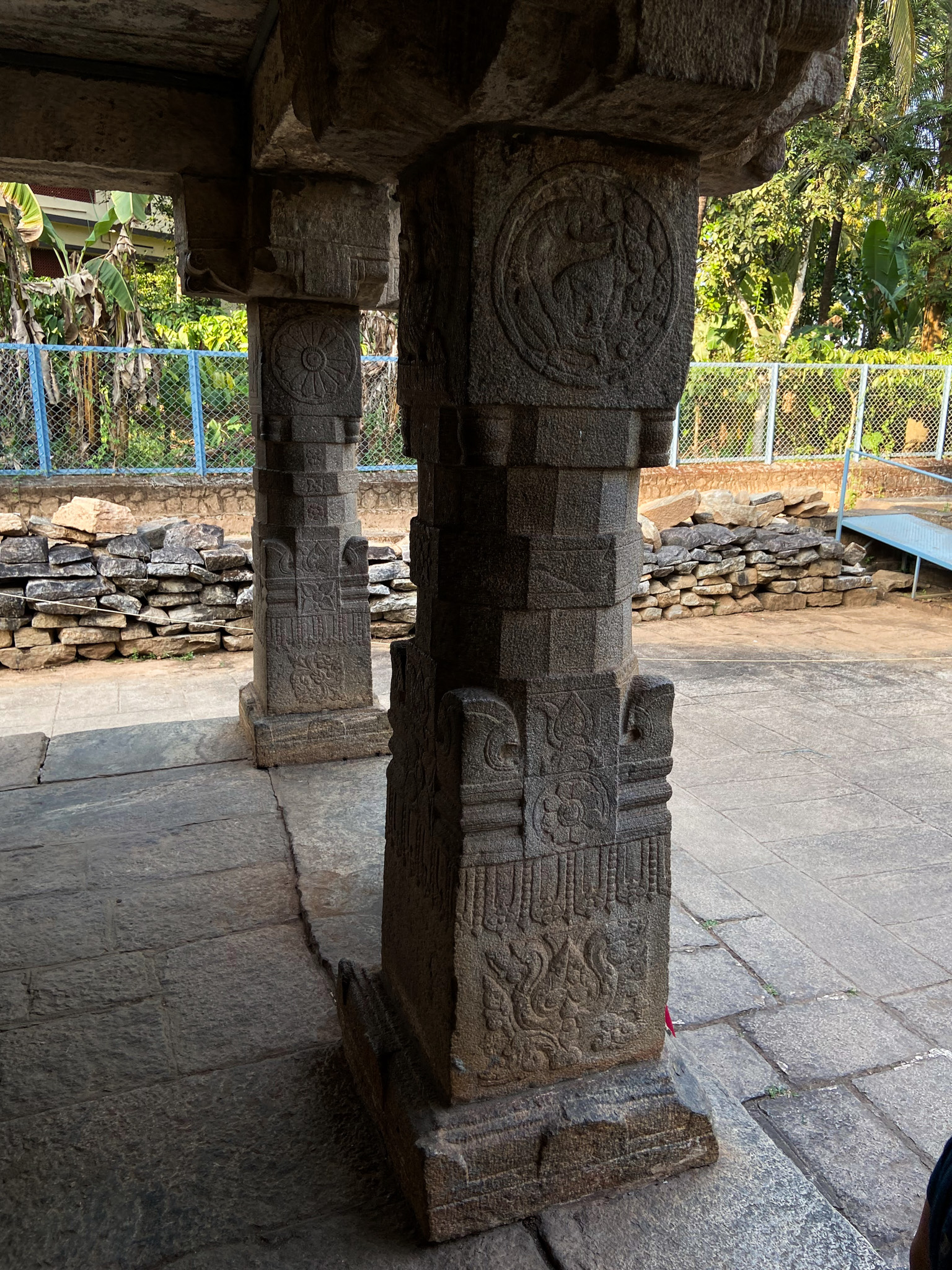
This time, it was a little different. My family, friends and relatives landed up in Guruvayur for a very special occasion. Nearly 3 decades ago, my mother, Kalyani, had booked a Pooja at the Guruvayur temple. It is called the Udayasthamana Pooja. This Pooja is conducted every alternate day has a waiting list that currently goes up to the year 2050. Earlier, the Pooja was conducted for one booking each time. Today, 5 bookings are completed in one day to reduce the overall wait time. A few months ago, we were informed that our turn is coming up soon. We sought a date of February 10, 2023. This tour of ours was planned around this date.

My brother, Rohit and his son, Advaith were with us to participate in this Pooja our mother had booked with the hope that she would witness it. As a kid, my mother and I would move to a lodge close to the temple for 2-3 days as she completed a promise of attending all the Poojas conducted at the temple on those days. The Udayasthamana Pooja we attended was also our completion of what she did all those years ago.

The Pooja starts off at 2.30 AM in the morning and go on till 11.30 PM in the evening. We were very fortunate that our friends, Hari and Neeraja, Jayant and Roopal, and Lakshmi’s cousins, Karthik and Pooja attended with their son, Karan. We had the opportunity to meet the Mel Shanti or Chief Priest of the temple and seek his blessings. Given the rush at the temple these days, we were fortunate to get a ringside view of all the Poojas as well get very close to the Seeveli functions when the idol of Guruvayurappan is taken around the temple. Rohit has been making it a point to attend the Seeveli and if possible, the Krishnattam Kali every time he is at the temple. He did that the day before and after the Pooja.

We also got to spend some time with my cousins Sreekumar and Vivek and their wives, Sandhya and Vinitha before and after the day of the Pooja.

We decided to pause our Peninsula Tour for a brief period. We are headed back to Mumbai for a short period as we address a matter that needs our attention. Jayant and Roopal, who have been with us from Wayanad have continued on to Thattekad, Varkala and Thiruvanthapuram and Lakshmi’s cousins, Ravi and Malini, who were to join us from Thiruvanthapuram to Madurai have also planned to continue with their plans.

A big thank you to all of you for following us on this platform and for your encouragement as we have undertaken this journey. Lakshmi and I have enjoyed this so much that we are itching to restart our journey.

As we head back, we have already started replanning the second phase of the trip and the direction we will head when we recommence.
The Peninsula Tour – Nelliyampathy

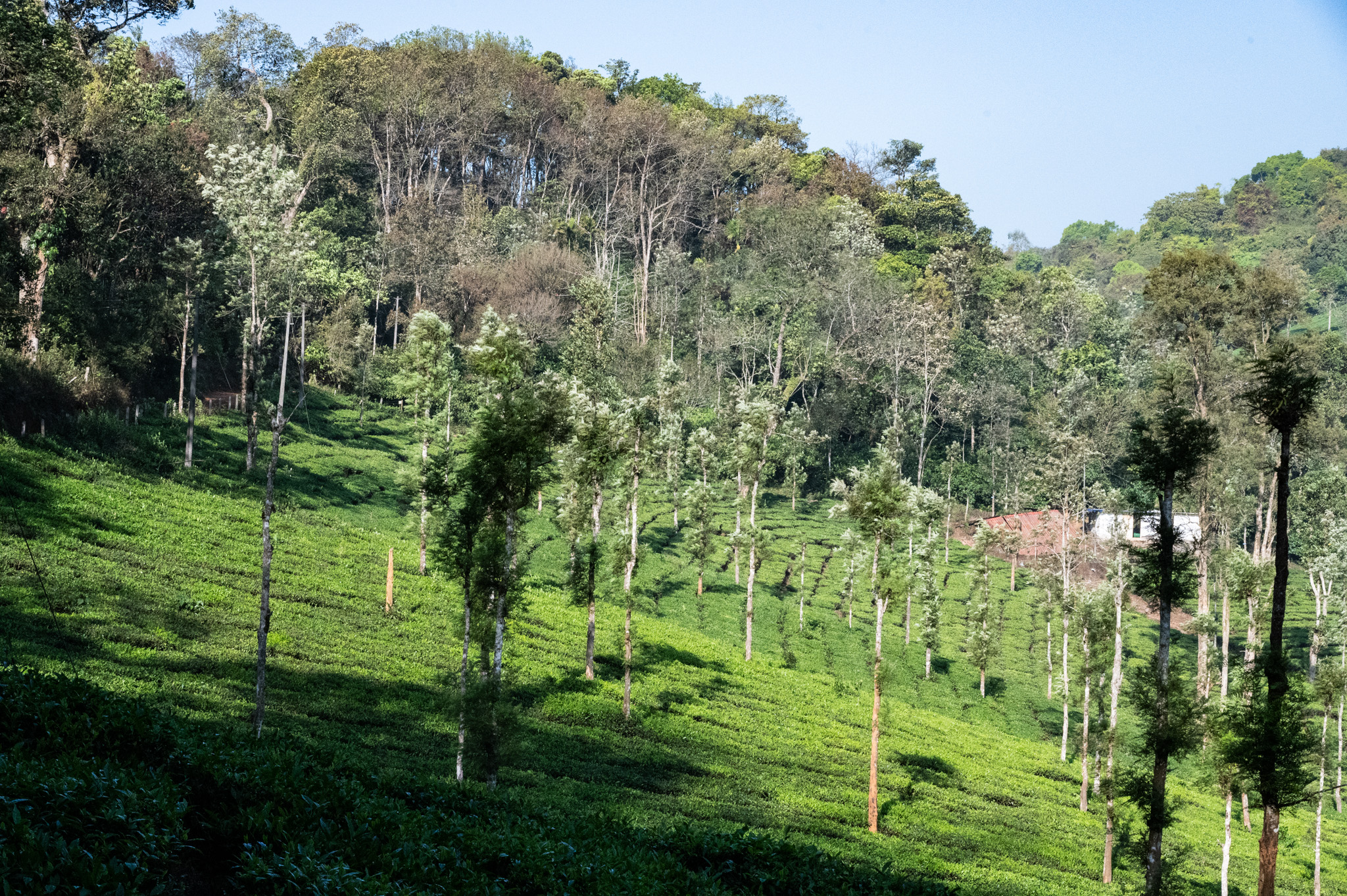
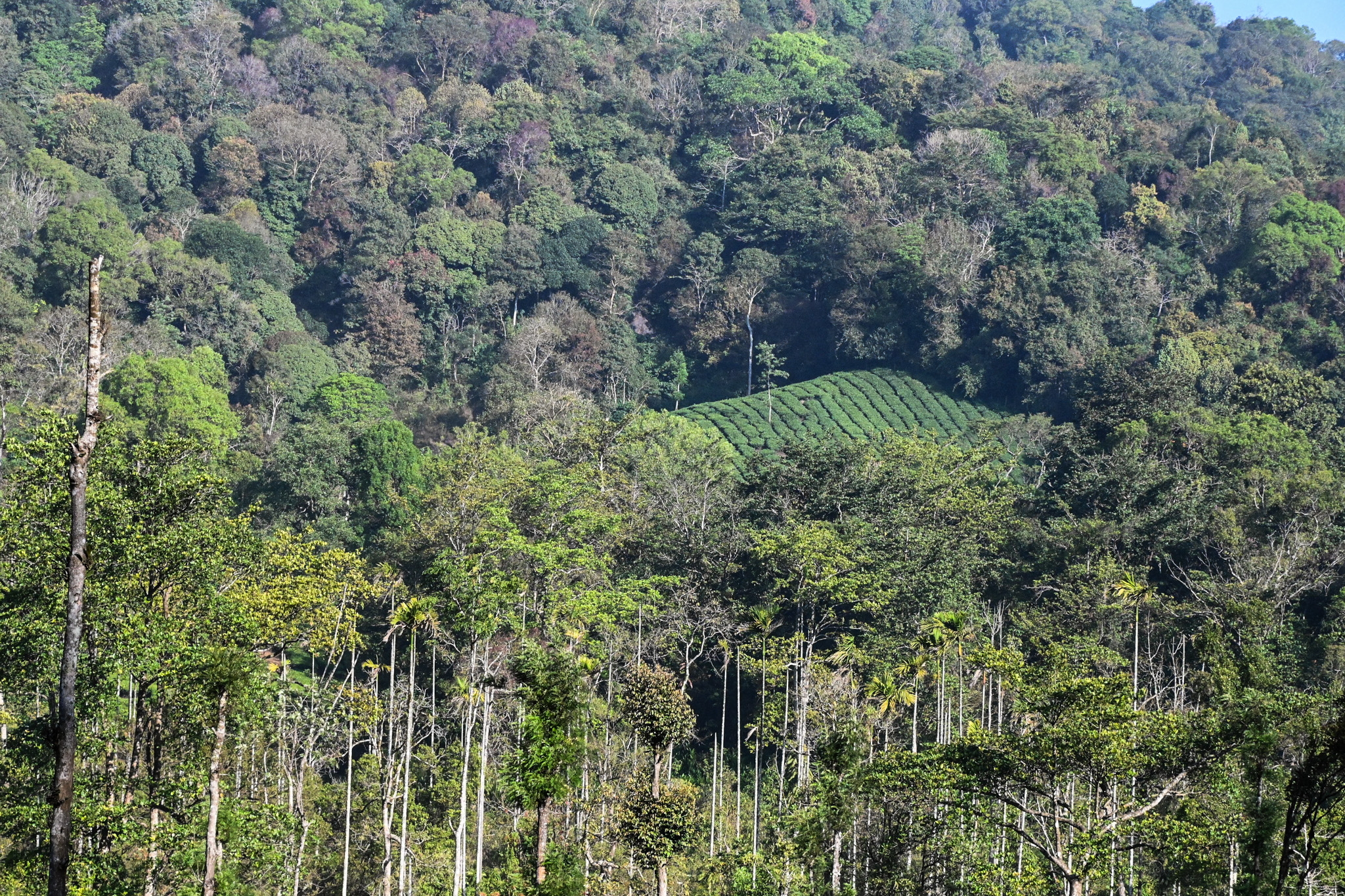
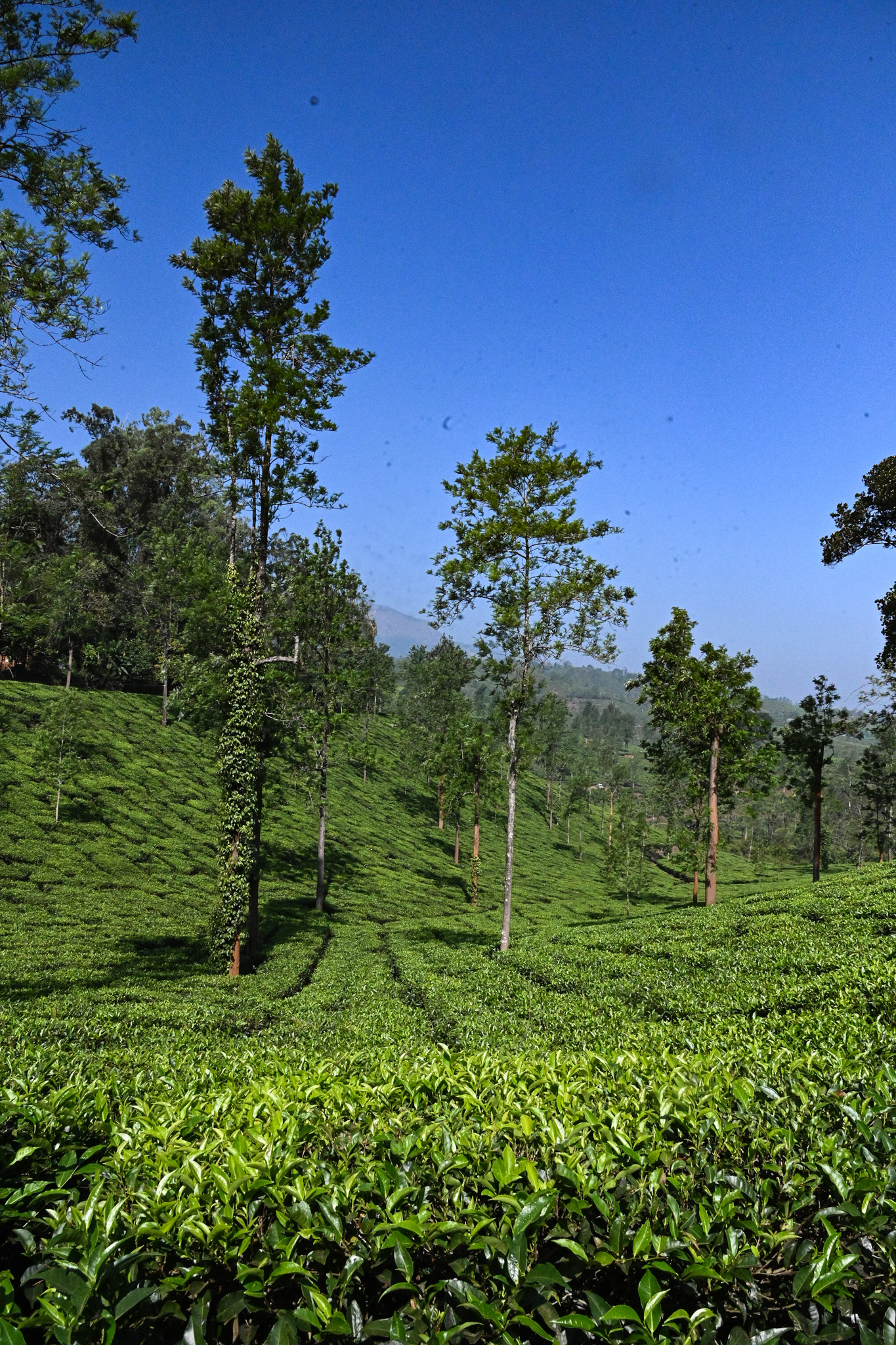
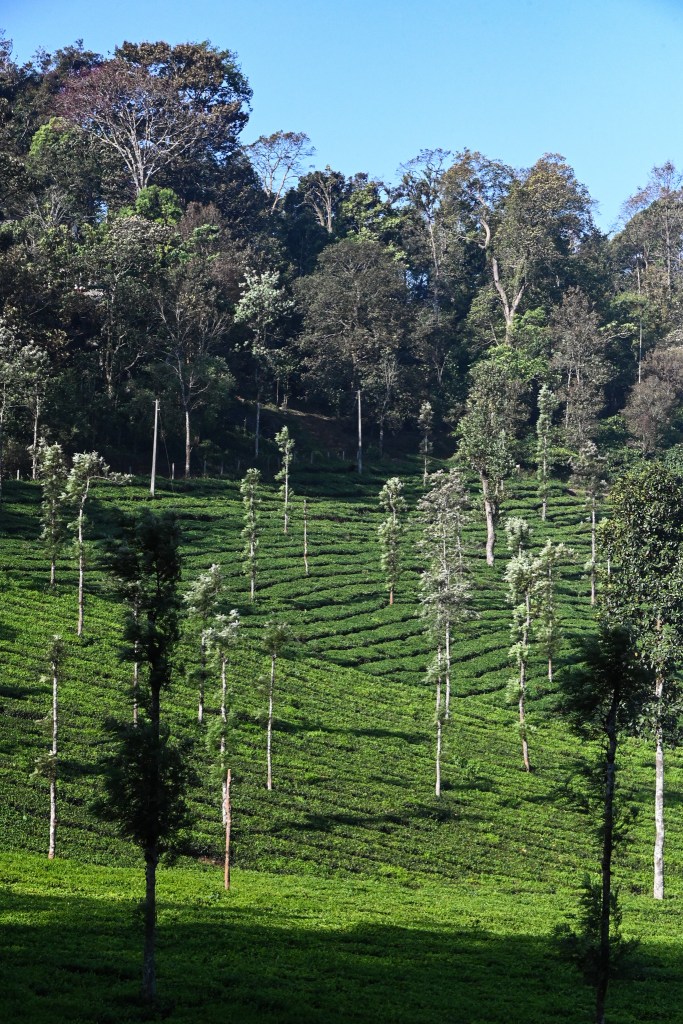
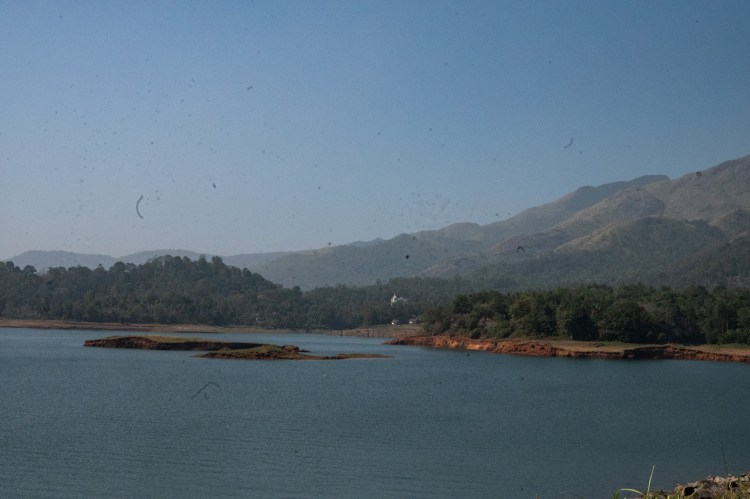
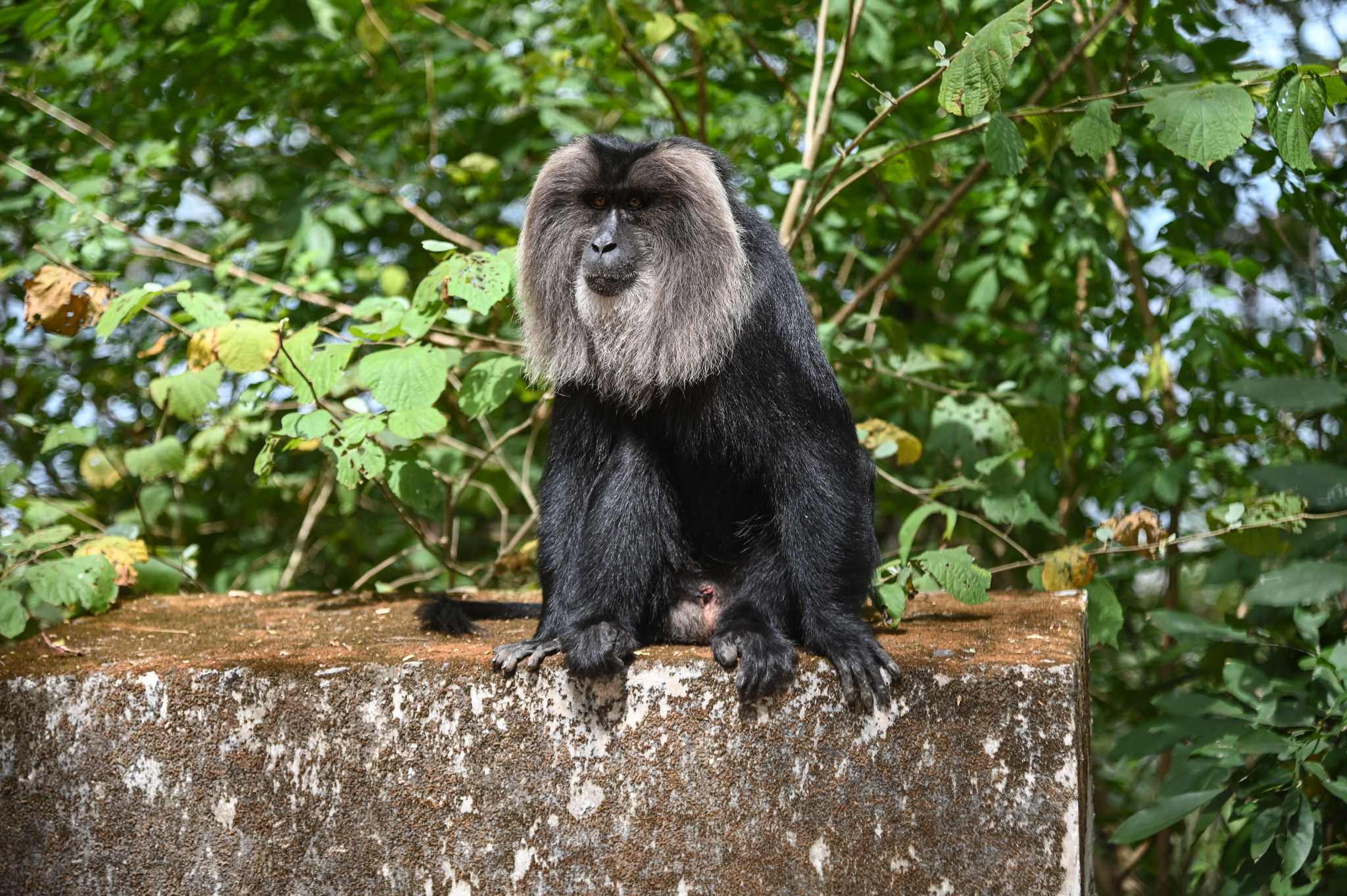
After a wonderful time in Palakkad, we headed to Nelliyampathy, deep in the forest with lots of tea estates in the surrounding areas. The drive from Palakkad took us through some beautiful paddy fields that seemed to extend to the horizon and up to the Pothundy Dam in Nenmara. A short walk up leads you to the top of the dam. The view of the surroundings is stunning. A few minutes from the dam is the Forest Checkpost that leads us to Nelliyampathy. It was a 24 km drive through a beautiful ghat that had quite a few view points where one could stop the car and enjoy the sights. A Lion tailed macaque sat on the roadside and stared us down.

The resort we stayed at, Vanya by Citrine is nestled in the middle of the forest. The access is through a village and tea estates, culminating in a dirt road , access to which requires one to unlock a chain, the key to which is hidden in a tree nearby. The final few kilometres to our resort required off roading.

A trip into the forest and hilltops, which, for most part was off roading took us to various view points, from which we could see neighbouring towns, an adjoining tiger reserve and even a bit of Pollachi and Valparai in Tamil Nadu. It was a clear day and we could see seven layers of hills. On our way back a Gaur decided to stare us down, before we could reach the hotel.

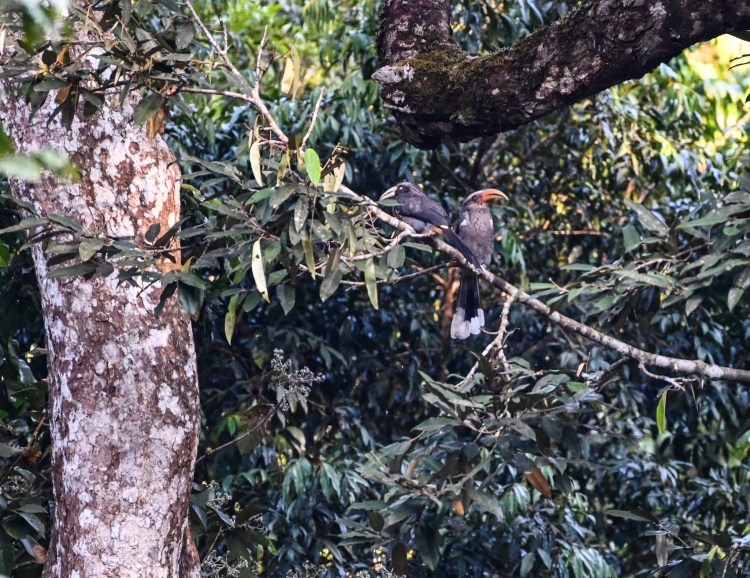
We were woken up by the whistling of the Malabar Whistling Thrush, a beautiful bird. We also spotted a pair of hornbills. We left the resort with a resolve to visit after the rains in October.

Guruvayur, my hometown, is our next destination. The Udayasthamana Pooja that my mother had booked nearly 3 decades ago will be performed on Feb 10th.

Here’s the link to the photos – https://photos.app.goo.gl/kK87DnZEuHz3H7DT8

Peninsula Tour- A Fort, A Mana and Paddy fields

 In the heart of Palakkad, lies a fort.  

It is not known, as to when the fort was originally built. Hyder Ali found its location strategic and captured the fort in the 1700’s.  The fort, as it stands today, has been rebuilt by Hyder Ali.

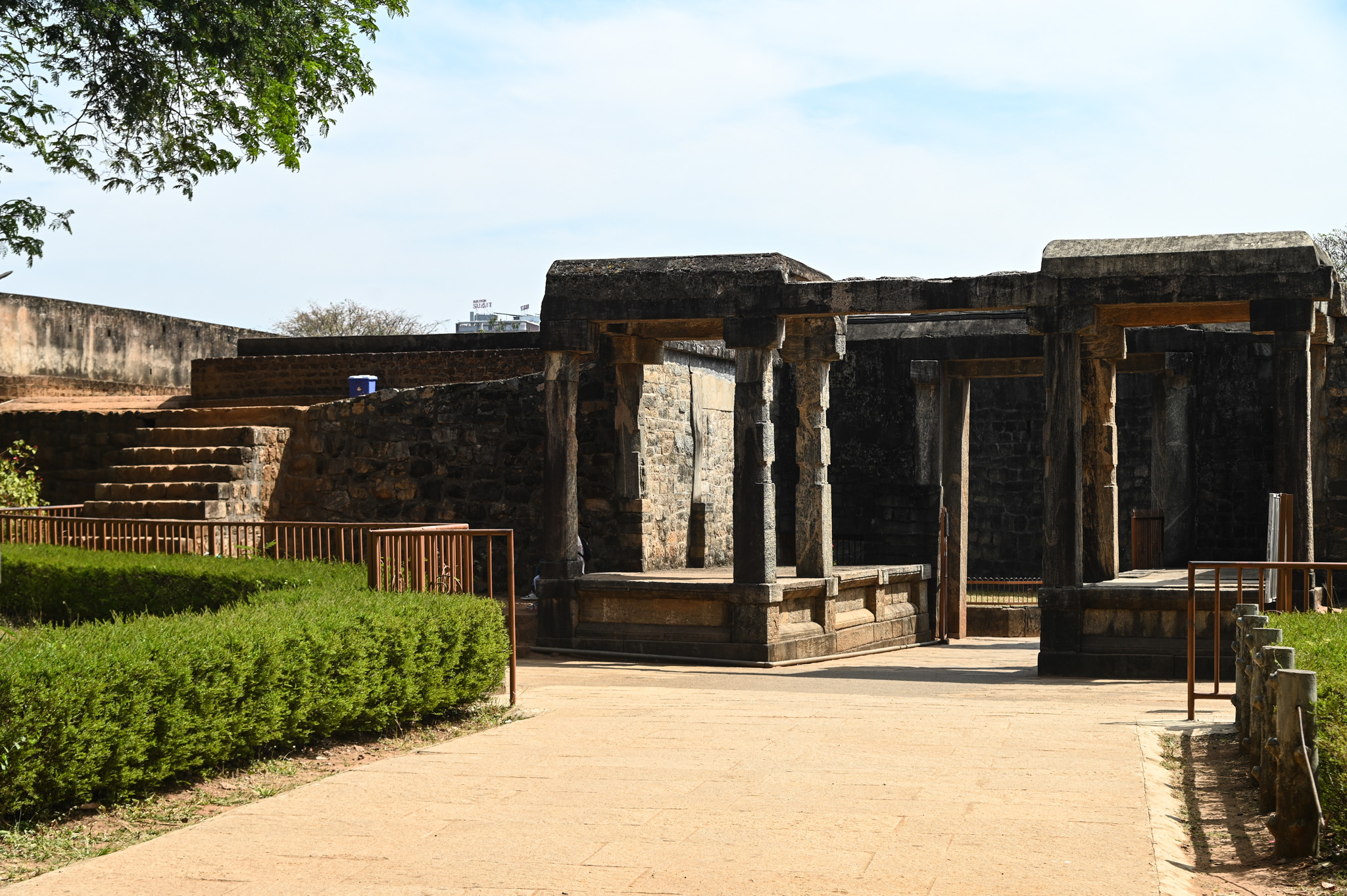
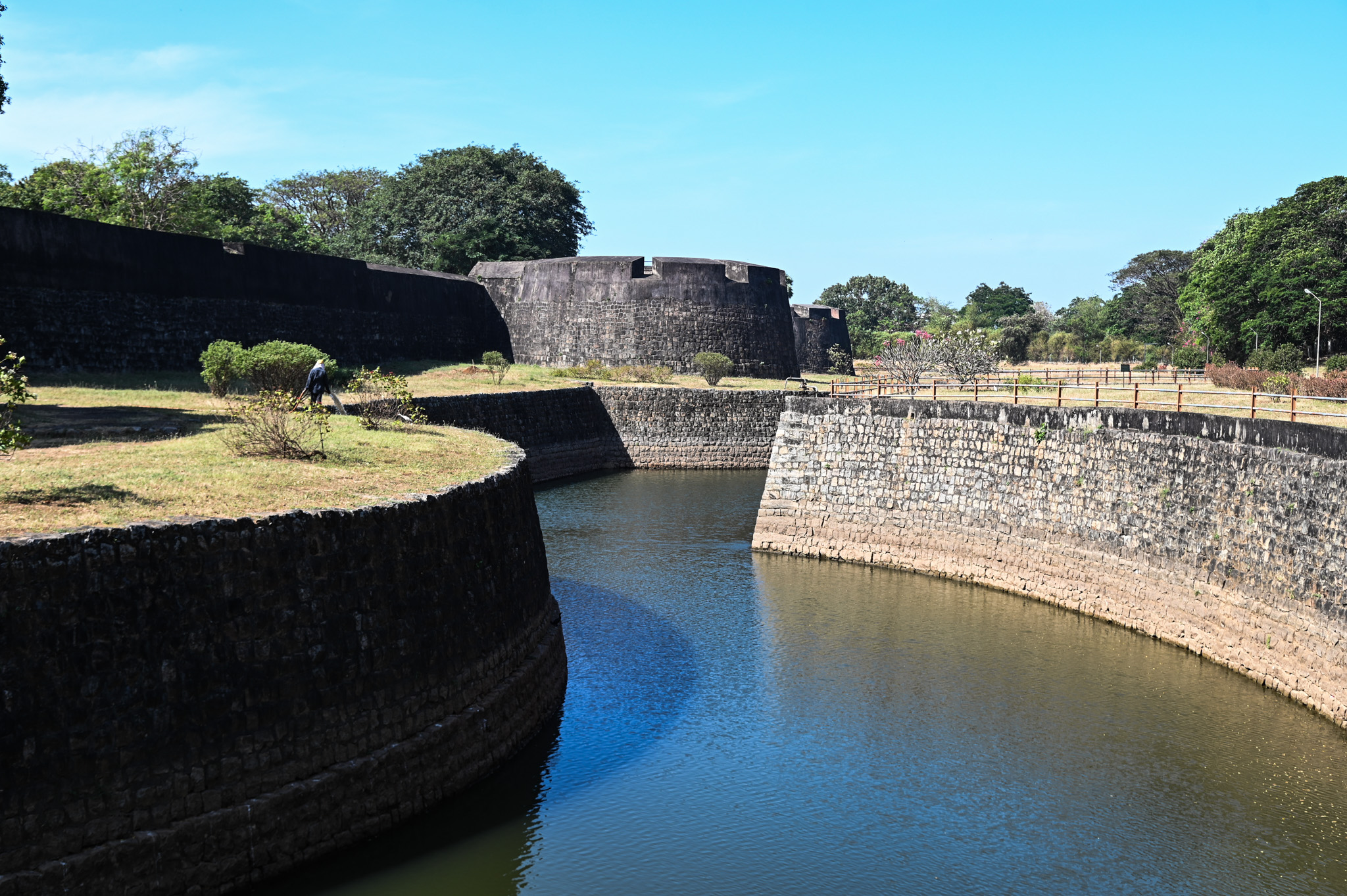
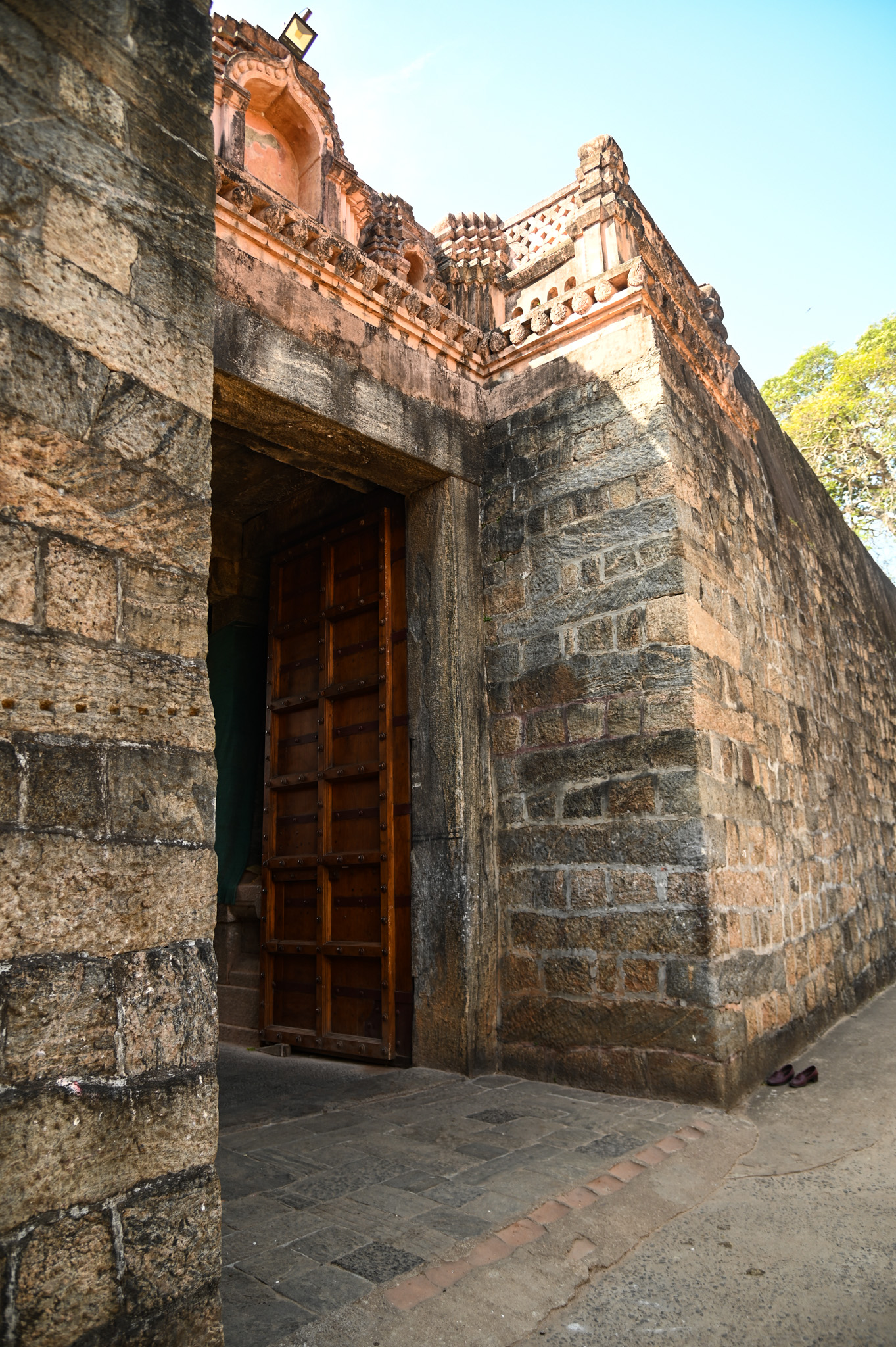
The well preserved monument is accessible through a walkway, where a drawbridge over a moat once existed.  The fort is square with bastions and ramparts  that encircle a large garden in the centre, which is now used for exhibitions and public gatherings.

The original walls of laterite blocks and stone are intact and have weathered and aged beautifully. There are signs of restoration in the watch towers which have been undertaken by the Archaeological Survey of India.  There is a small temple within and is used for worship even today.

Varikkasseri Mana- (Mana means house in Malayalam) is a 1000 year old home built in the Kerala style of architecture.  It belonged to  a Namboodari family and today, some  of the descendants  who are a part of a trust maintain the Mana. I believe that a number of famous Malayalam movies have been filmed on the property.

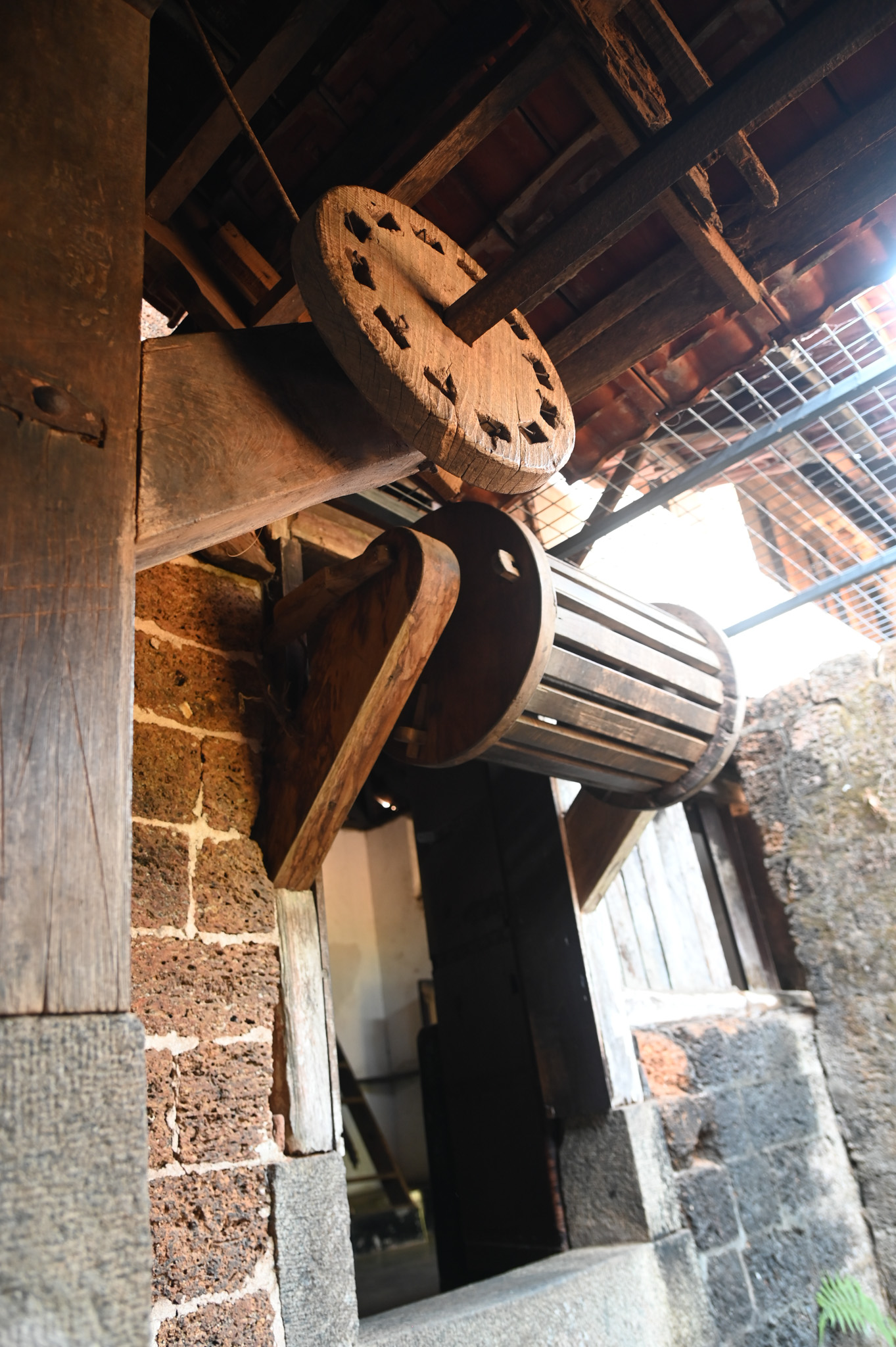
There is a gate house, which is an entry to a Naalukattu  -a house where a courtyard is created alongside 4 sections. There are murals  depicting mythology at the entrance- these are dated between 15th and 19th centuries.   Construction is largely of Laterite blocks  which are exposed , although there is lime plaster in some of the internal and external walls.  The laterite blocks are intact and even today, there is little chipping or erosion. The columns are of wood with intricate carving on the capitals.  There are interlocking wooden members to lock doors and wooden shutters with vertical bars, with hooks and eyes to close them, make up windows. Reminds me of my grandpa’s house in Chennai.

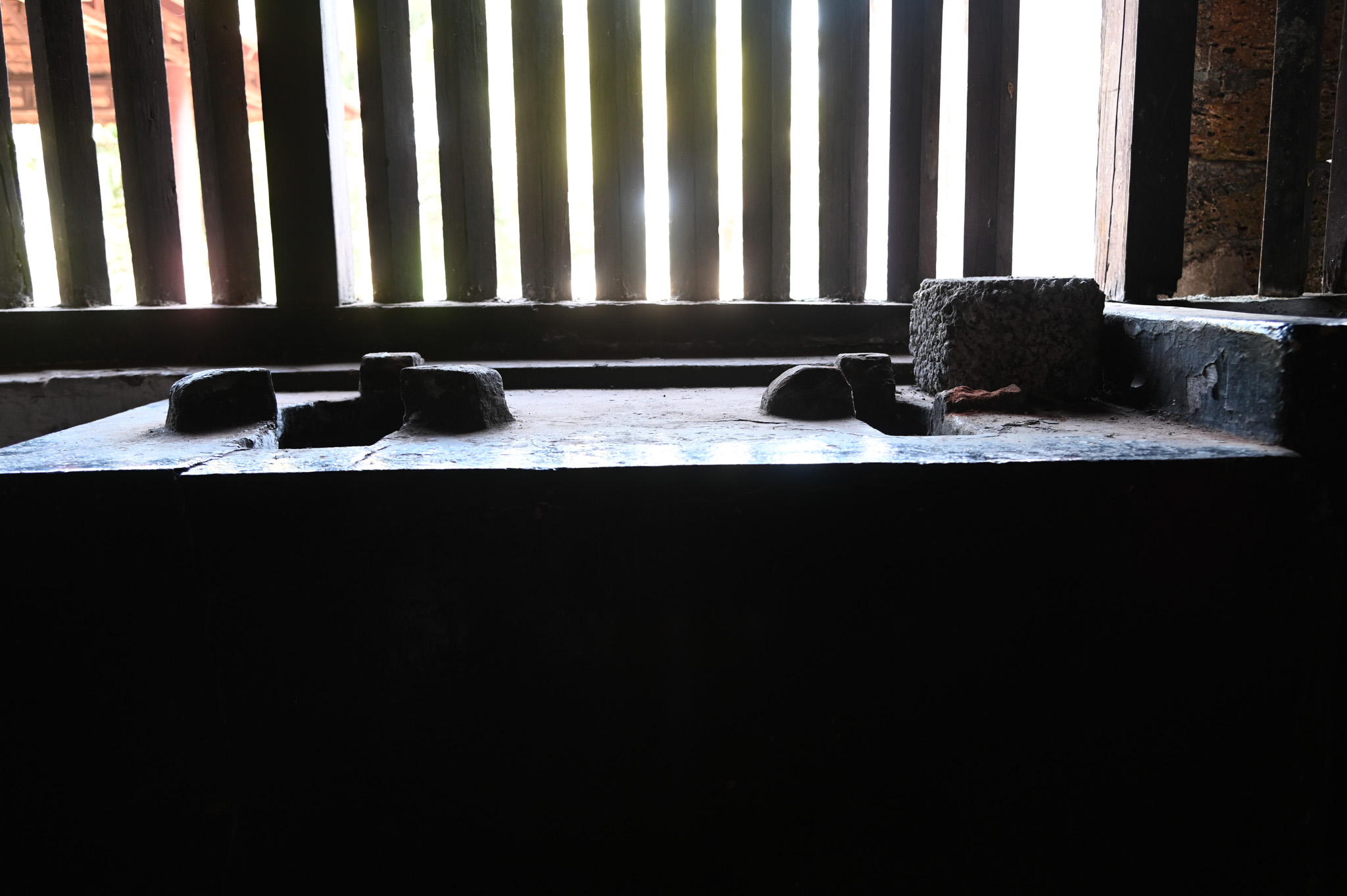
There are two kitchens- one with a countertop and housing to place firewood. Small lugs come out of the counter to seat vessels. There is a window that connects to a well. Water for cooking was directly accessible through this window.

The other kitchen has similar housing for vessels but of a much larger size and located on the floor. Some walls of this room are completely defaced by graffiti.  Wooden  slats on the windows of the kitchen and adjoining pantry and other associated rooms, allow entry of light and were, probably,  smoke extractors.

The Mana is clearly a popular spot for visitors and it is crowded over weekends. It was difficult to photograph with so many people milling around.

https://photos.app.goo.gl/FGENt1uN6MhaKCDr5

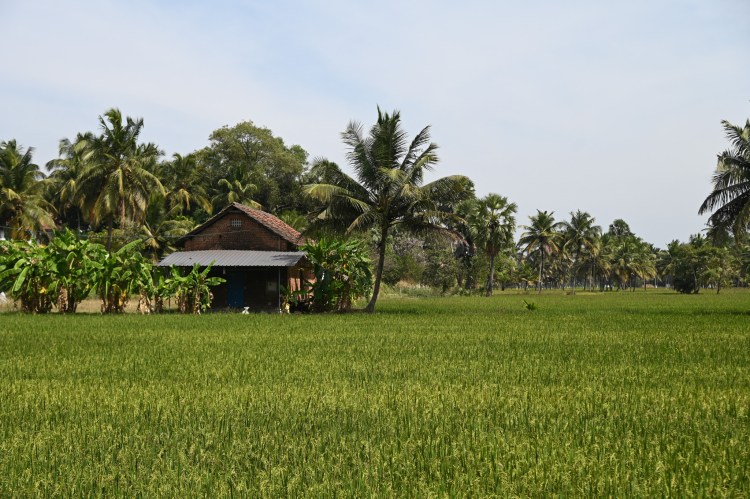
Our stay at Palakkad was alongside Malampuzha dam and we  drove past  and stopped at paddy fields during our stay. I have gone berserk photographing these. Ranjit had to make stops every time we drove past one.

There are hundreds of shades of green  and as far as the eye can see. There are coconut plantations with small houses within,  small water channels with ibises and egrets,  and in the distance, there are hills. I have  created a whole album just for the paddy fields and I could not get enough of the view.

Here is a link to my madness….

https://photos.app.goo.gl/KkfbczS4ErEoaZKj7

Peninsula tour- Chasing trains in Nilambur

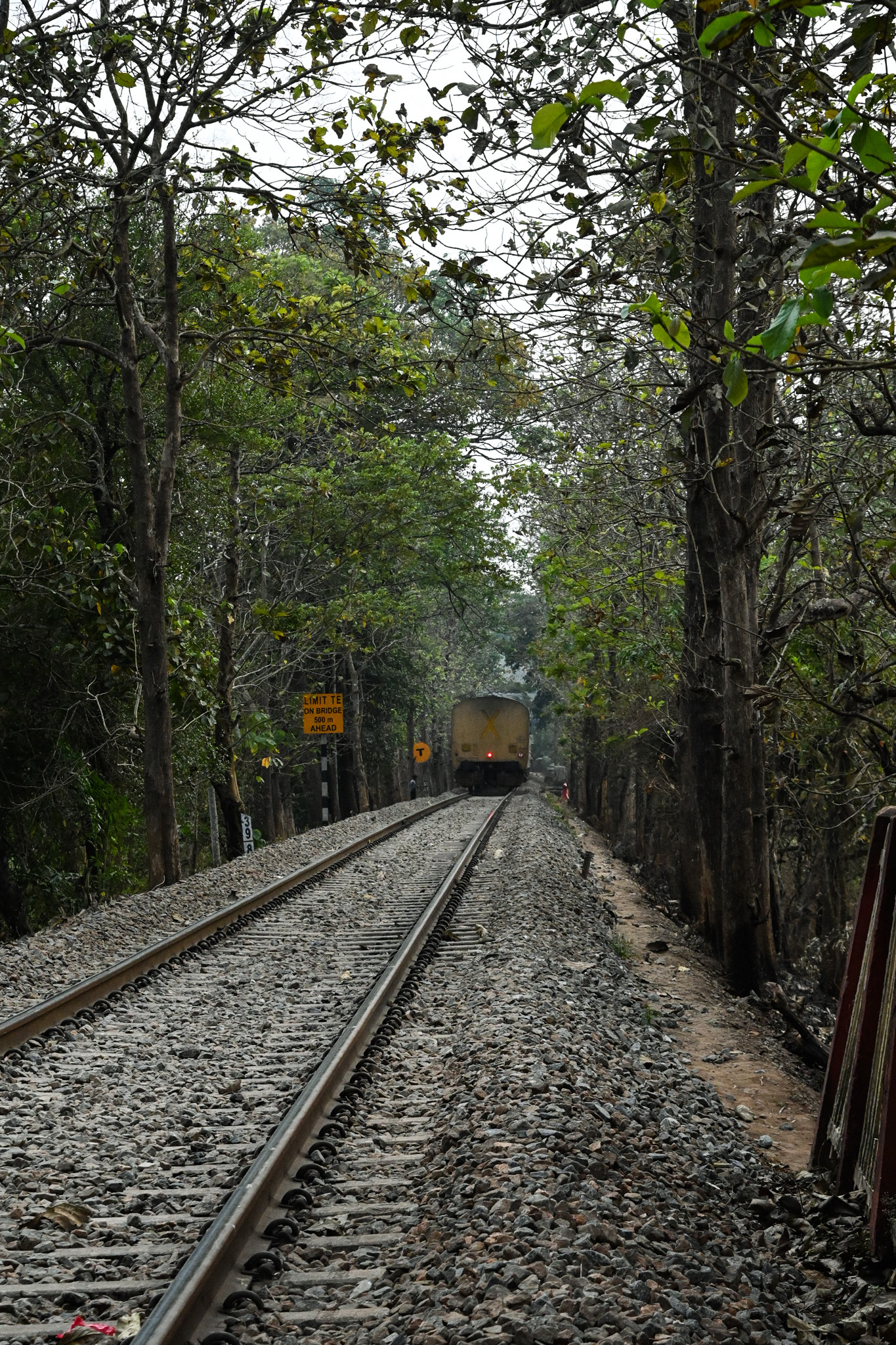
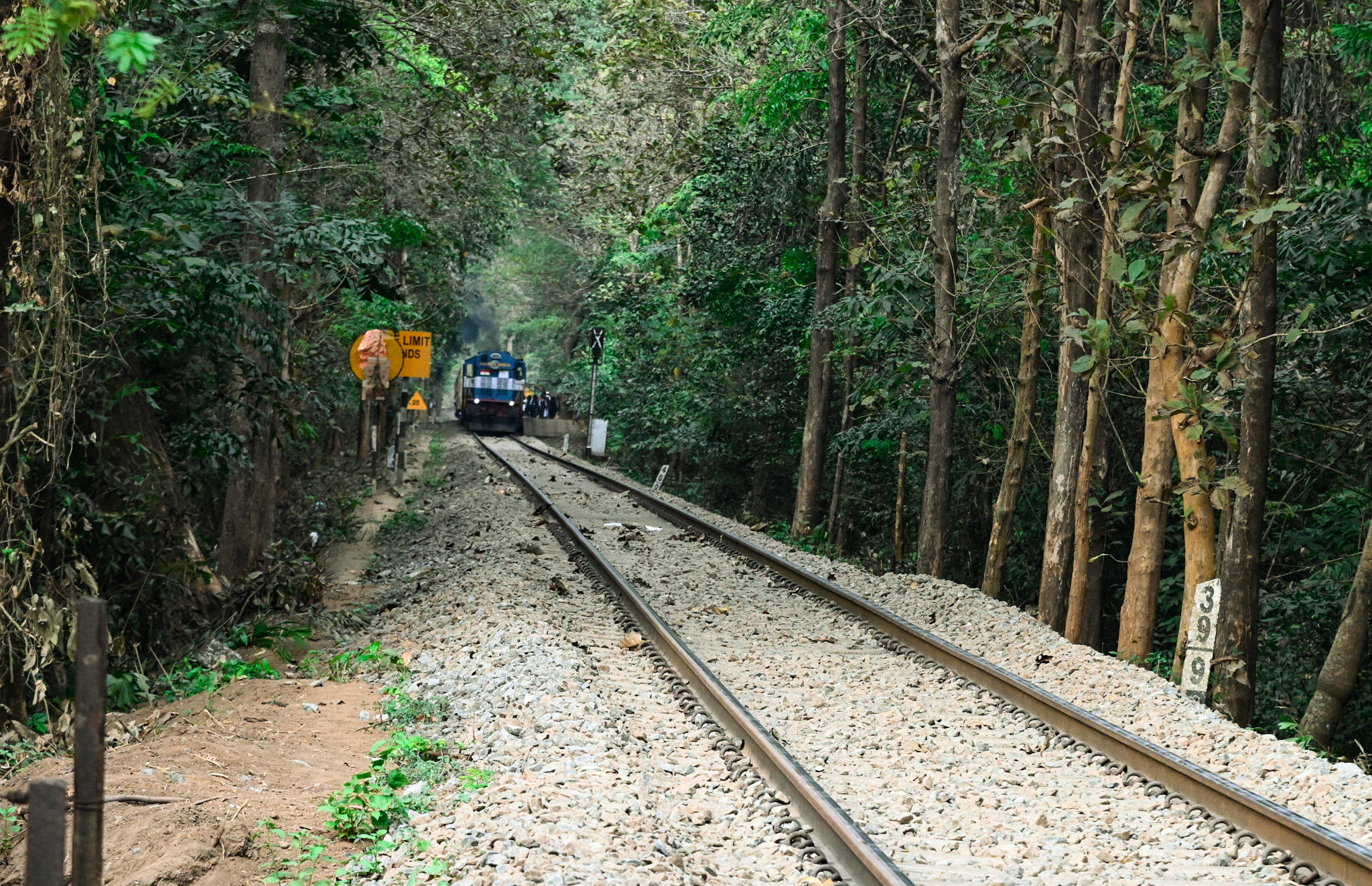
It was a short overnight stay at Nilambur- a small sleepy municipality close to the Nilgiris range of the Western Ghats.  To chase trains and walk in a beautiful teak forest.

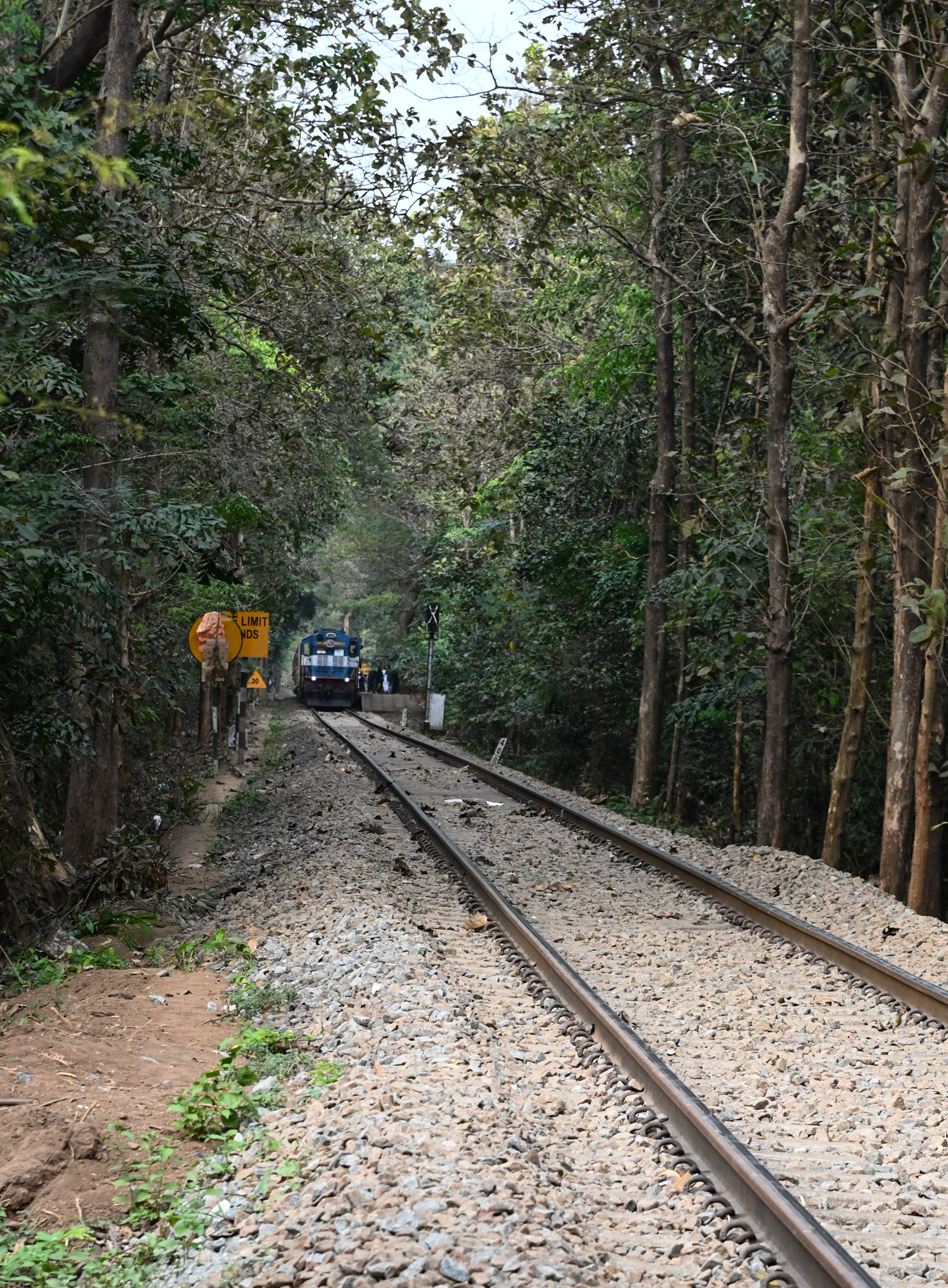
The British constructed a metre guage line  to move teak logs from Nilambur to Shornur and from thereon to UK via Kozhikode. This has since been converted to a broad gauge line. Deemed to be one of the most beautiful railway lines of India, it runs past timber forests, dense vegetation and alongside and across rivers during its short journey of about 65 km.

Thick vegetation grows close to the track and extends into the station platforms. The platforms are low and covered by tree canopies and often have columnar roots from neighbouring trees overhanging into the station.

The sight of a train emerging from within the canopy of trees and pulling into and away from the station is simply superb!

Our strategy was to chase trains and be sufficiently ahead to photograph the train as it pulled into or left the station.  We managed this over 3 stations.

The best time of the year to photograph the stations  is probably just after the monsoons in Kerala, when it is green and overgrown and everything looks newly washed. We should have postponed this for later in the year.

Nilambur has also one of the oldest teak plantations in the world and the oldest living teak tree.

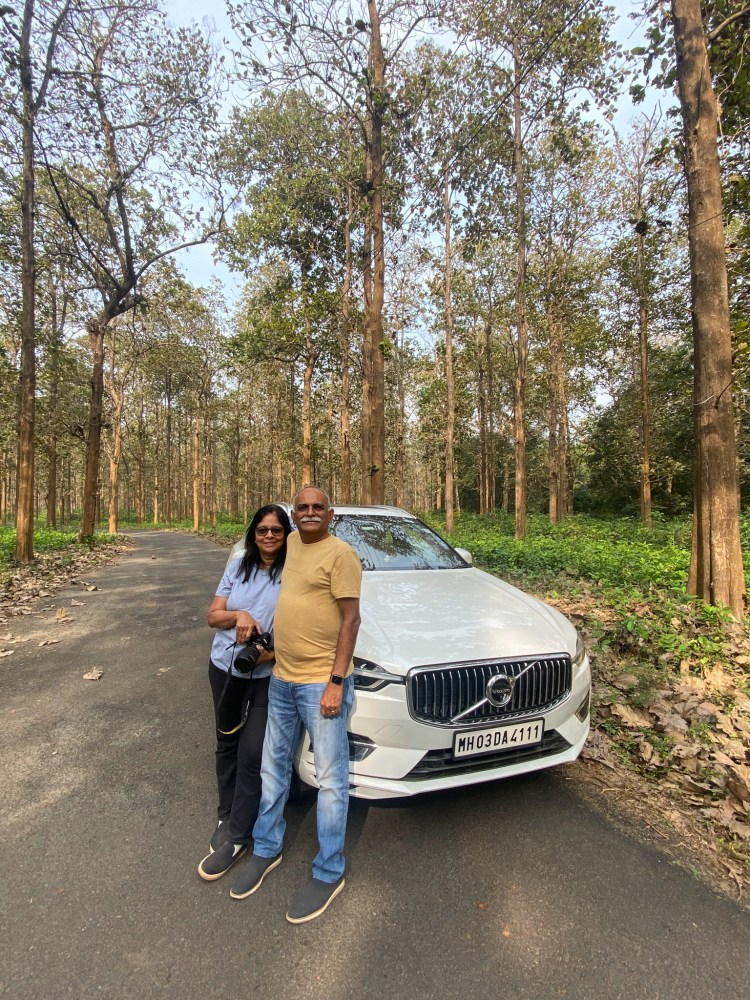
Jayant took this pic- us, in one of the forests at Nilambur. :).

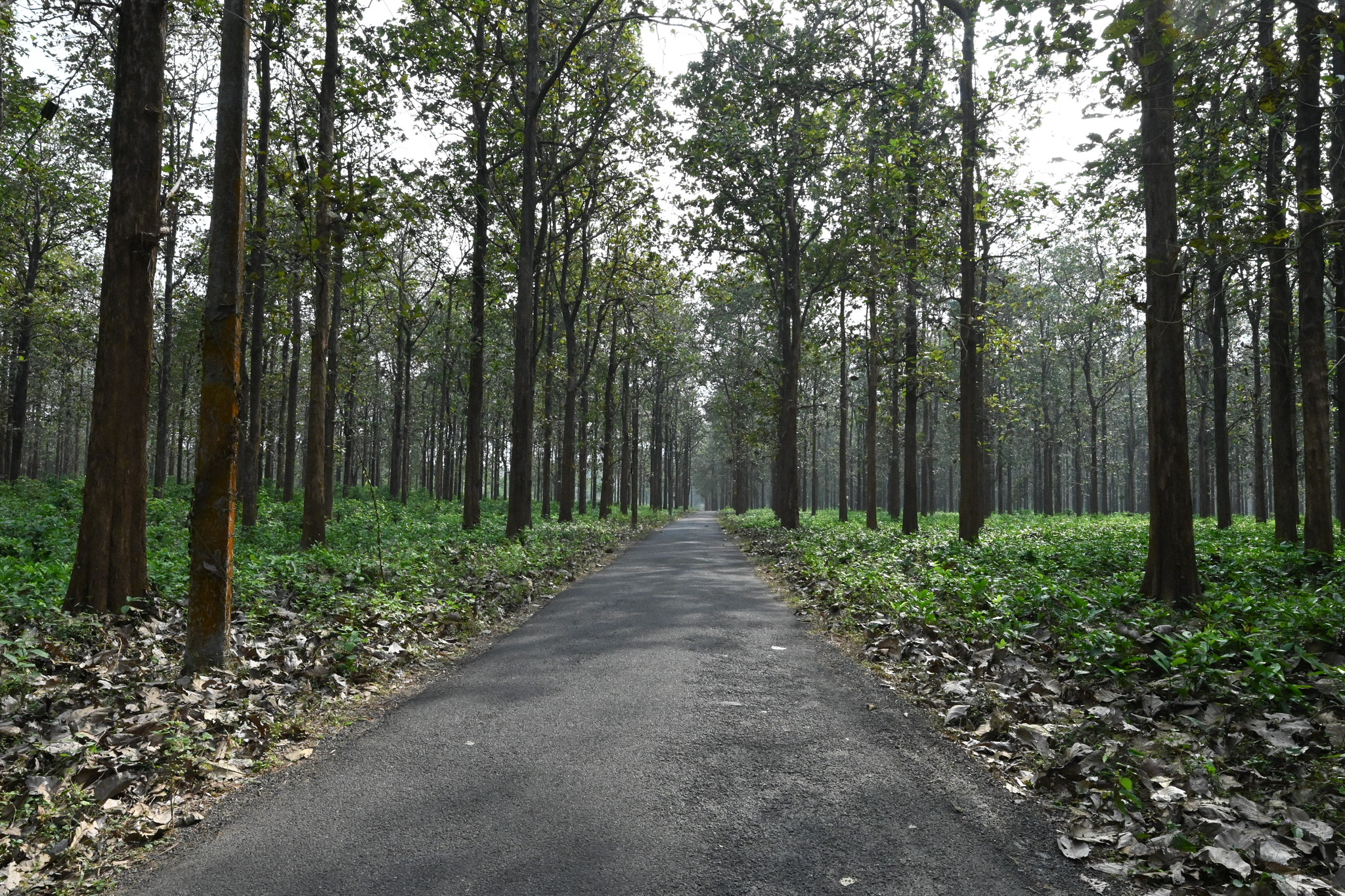
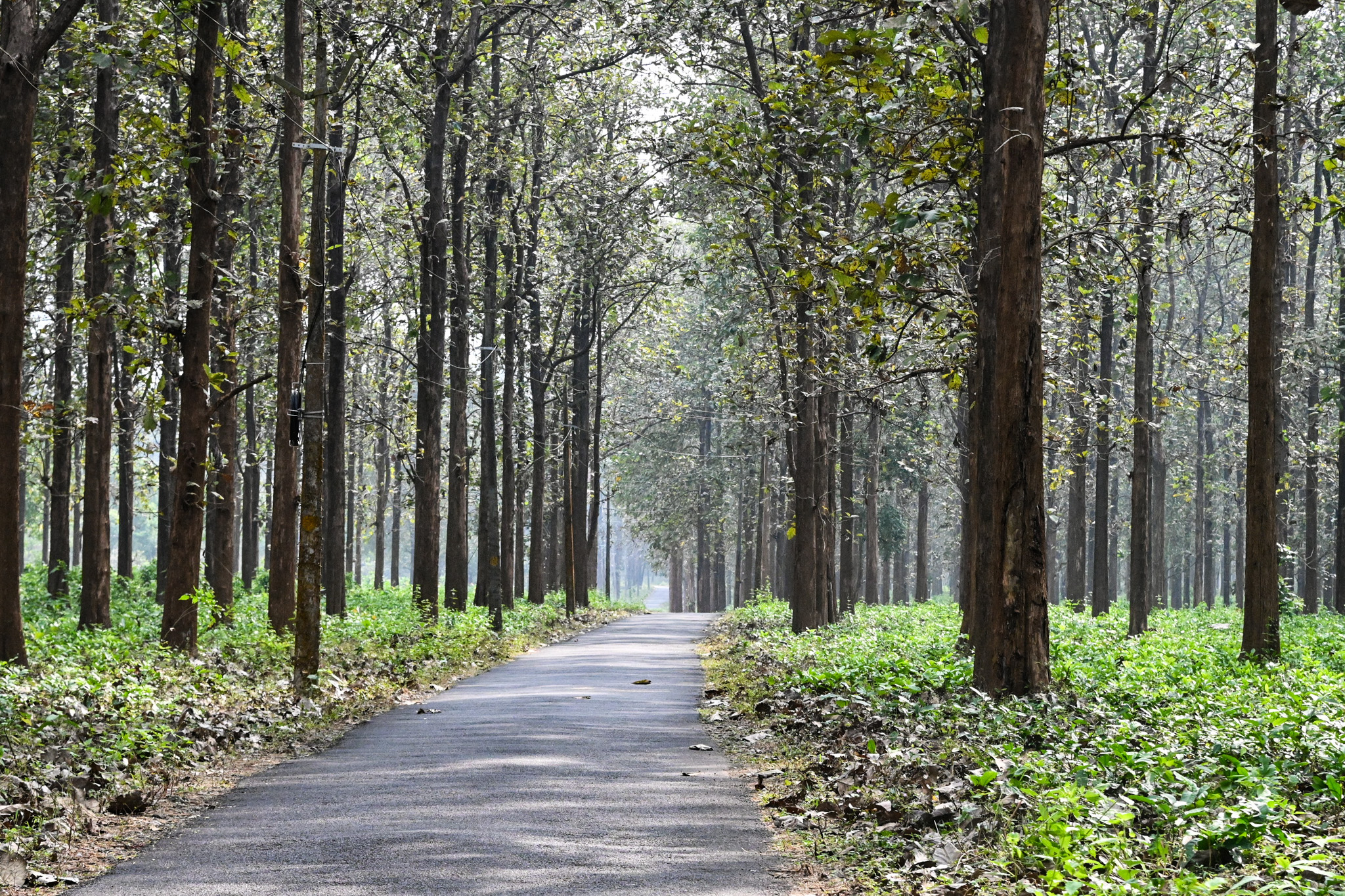
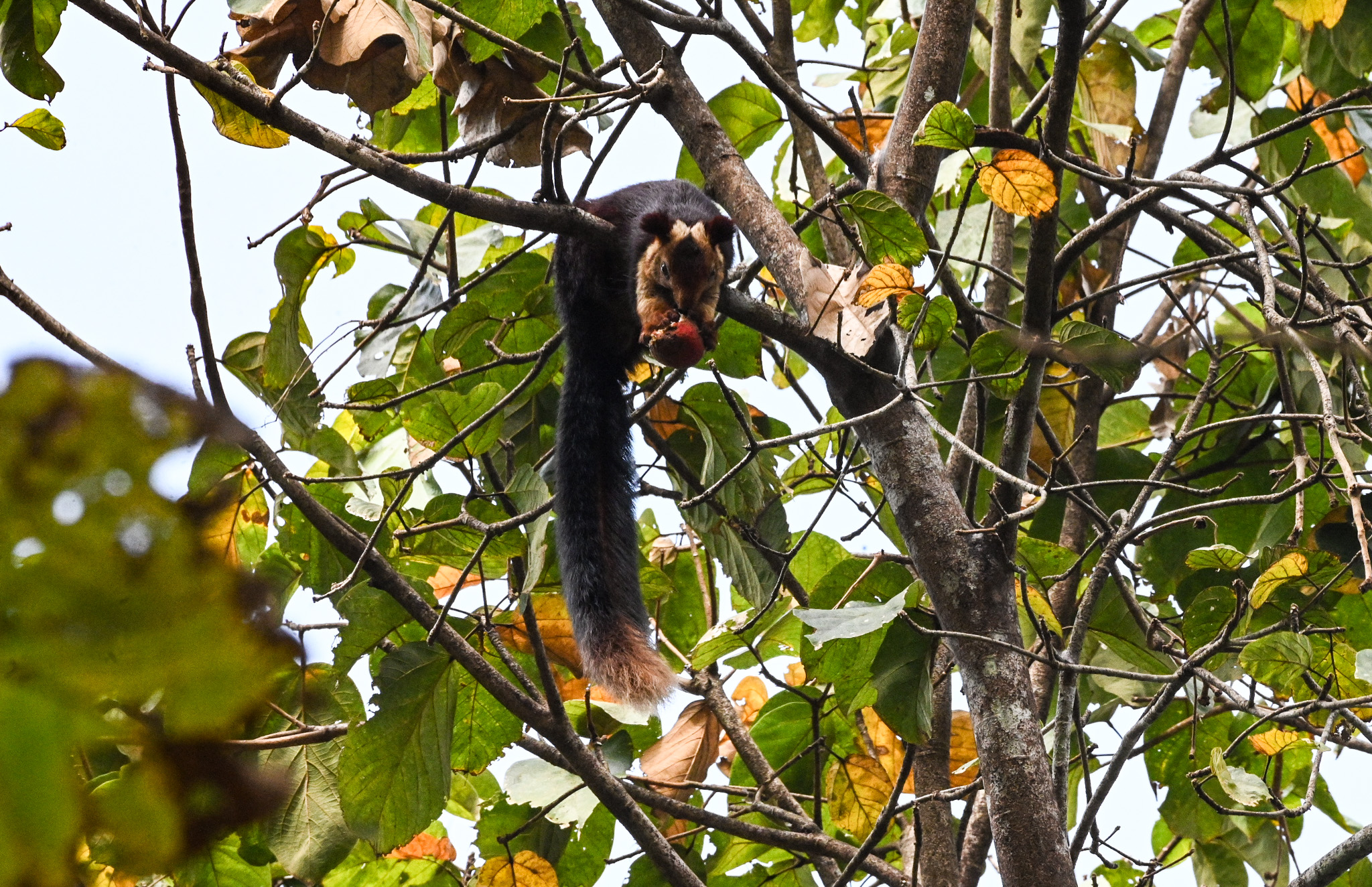
There are tall trees that flank a dirt road and the floor of the forest is green and dappled in the sunlight. Teeming with birds, Malabar squirrels and other fauna, it is filled with sounds of bird and animal calls. The only other sound is the rustling of leaves and there is an incredible sense of peace in the forest. Numbered  and neatly arranged logs are in one corner of the forest and further on is a river, beyond which entry is restricted. Plastic is not allowed in the forest and there is not a bit of garbage in sight. The forest guards that we met, are truly proud of their environs and make sure that there is no littering.

I am attaching a short clip of our drive through this forest.

During this peninsula tour, we have driven through many forests. Nothing compares to this one! We have to do this again. We will be back!

Here’s the link to the photographs – https://photos.app.goo.gl/2N95BeWaB6m1RQ9D8

Peninsula Tour – Kozhikode

The drive from Wayanad to Kozhikode starts with a set of 9 hair pin bends. The roads in Kerala are mostly two lane, but extremely good; however, the driving is crazy!

Kozhikode is a city that we have fond memories of. I have lots of relatives in Kozhikode and this trip gave me the opportunity to visit all of them. My parents lived here briefly.

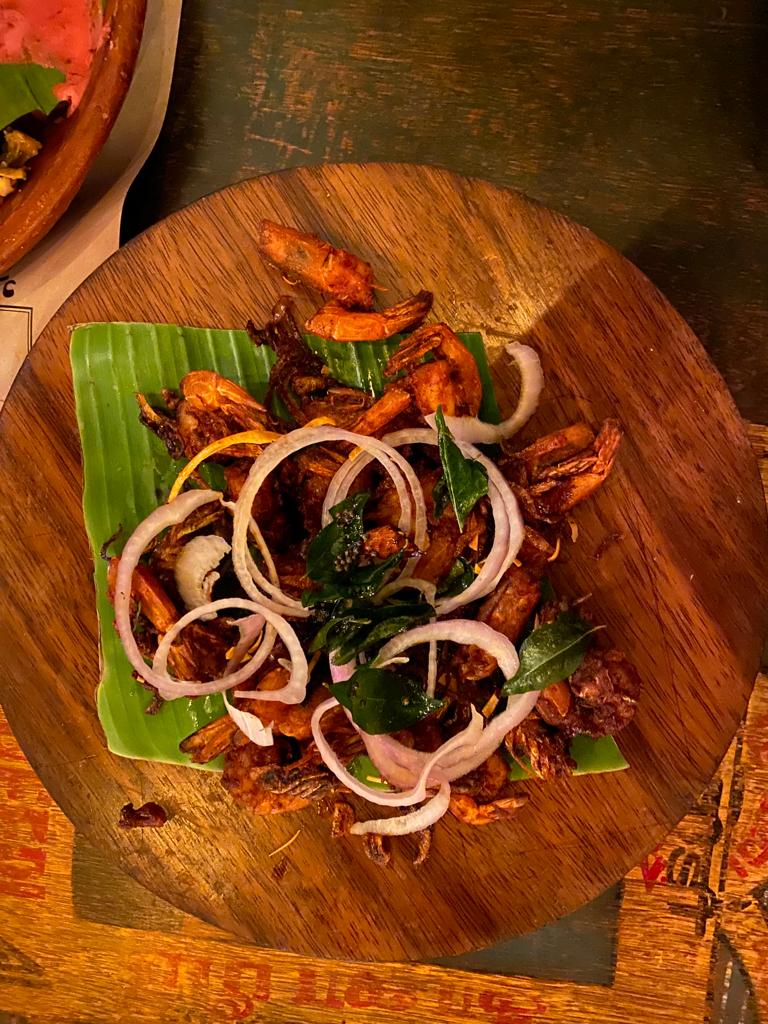
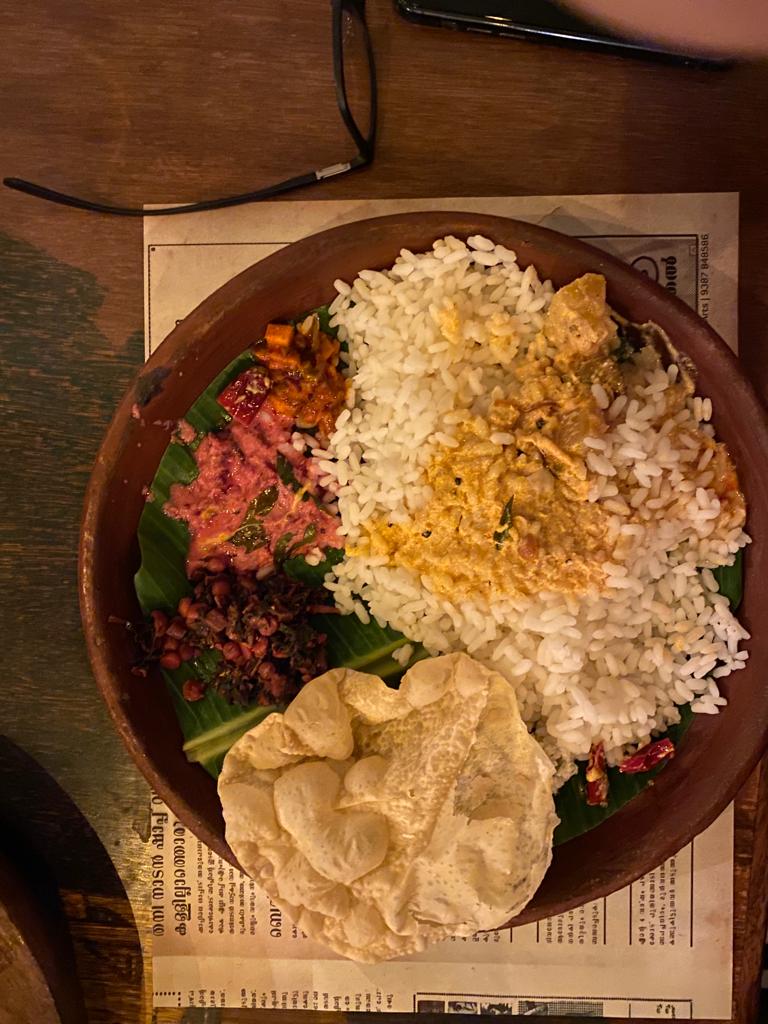
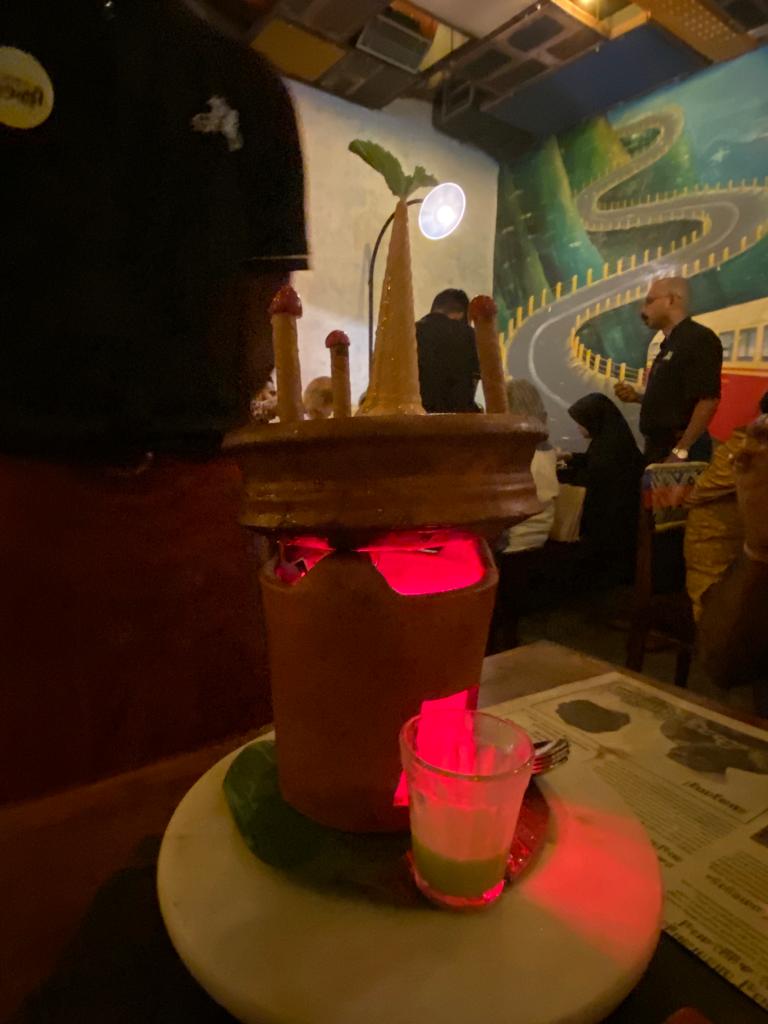
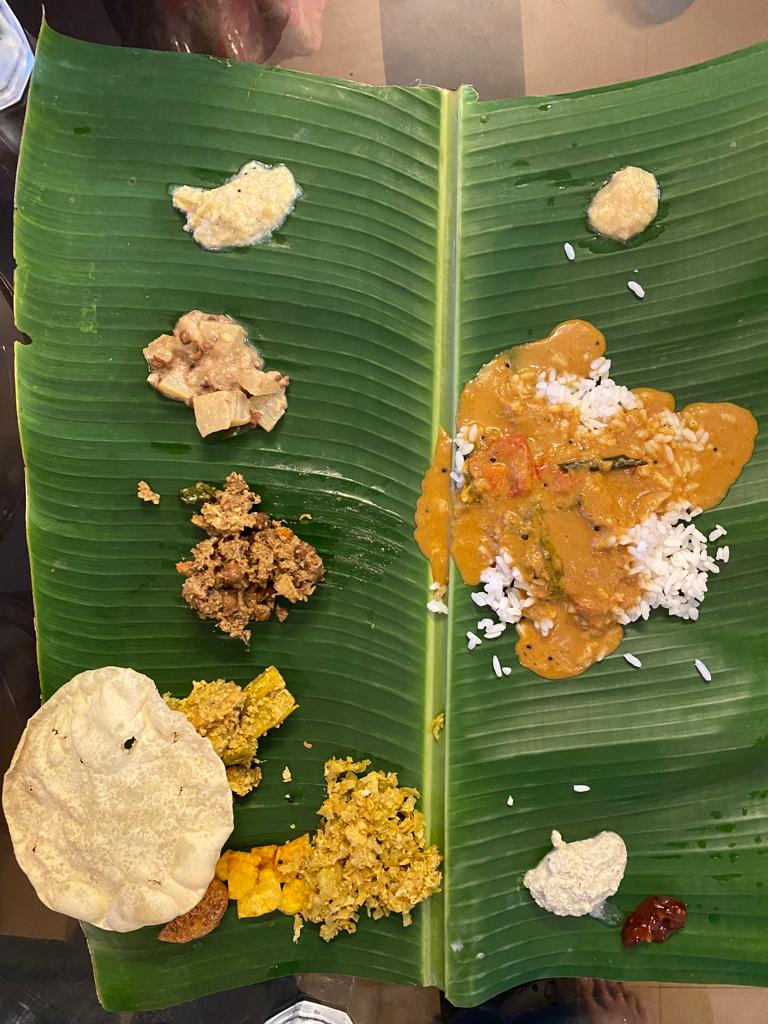
Kozhikode is well known for its food scene. Between Jayant, Roopal and us, we ate at all the popular restaurants including, Paragon, Sagar, Rehmath and The Shaap. While the others kept up to their promise of great food, The Shaap was different in the way they presented the food. Our meals arrived in a clay plate, or Chettichor, and so did our dessert. Chettichor is a rice plate served with all the accompaniments served in one plate. One can get more helpings of the curries and rice. We looked around to find food being served after a short performance at other tables. Our cravings for good beef dishes were also satisfied in Kozhikode. To our surprise, the restaurants were full at lunch and dinner times, even during the week.

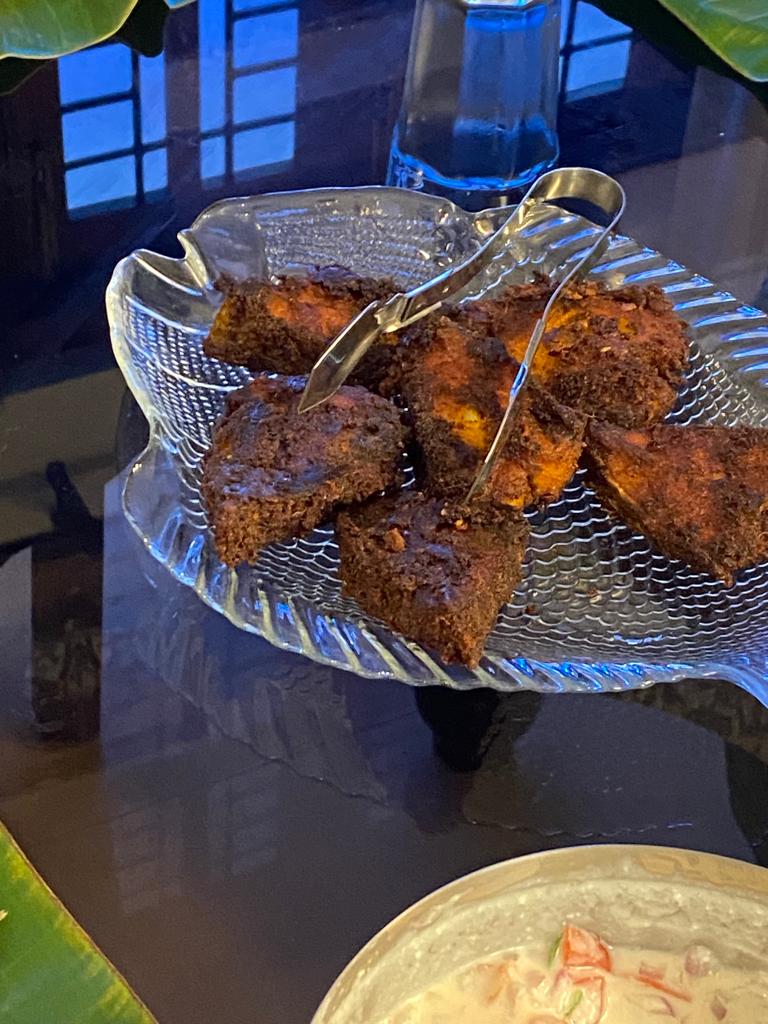
We had a proper sadhya, accompanied by fish and chicken, at my cousin Rajeev’s place. The home cooked meal was a welcome change after nearly a month on the road. Laxmi thoroughly enjoyed the curd rice our cousin Usha made to satisfy her need for comfort food! It was fun to meet all our relatives during this trip, many of whom we were meeting after several years.

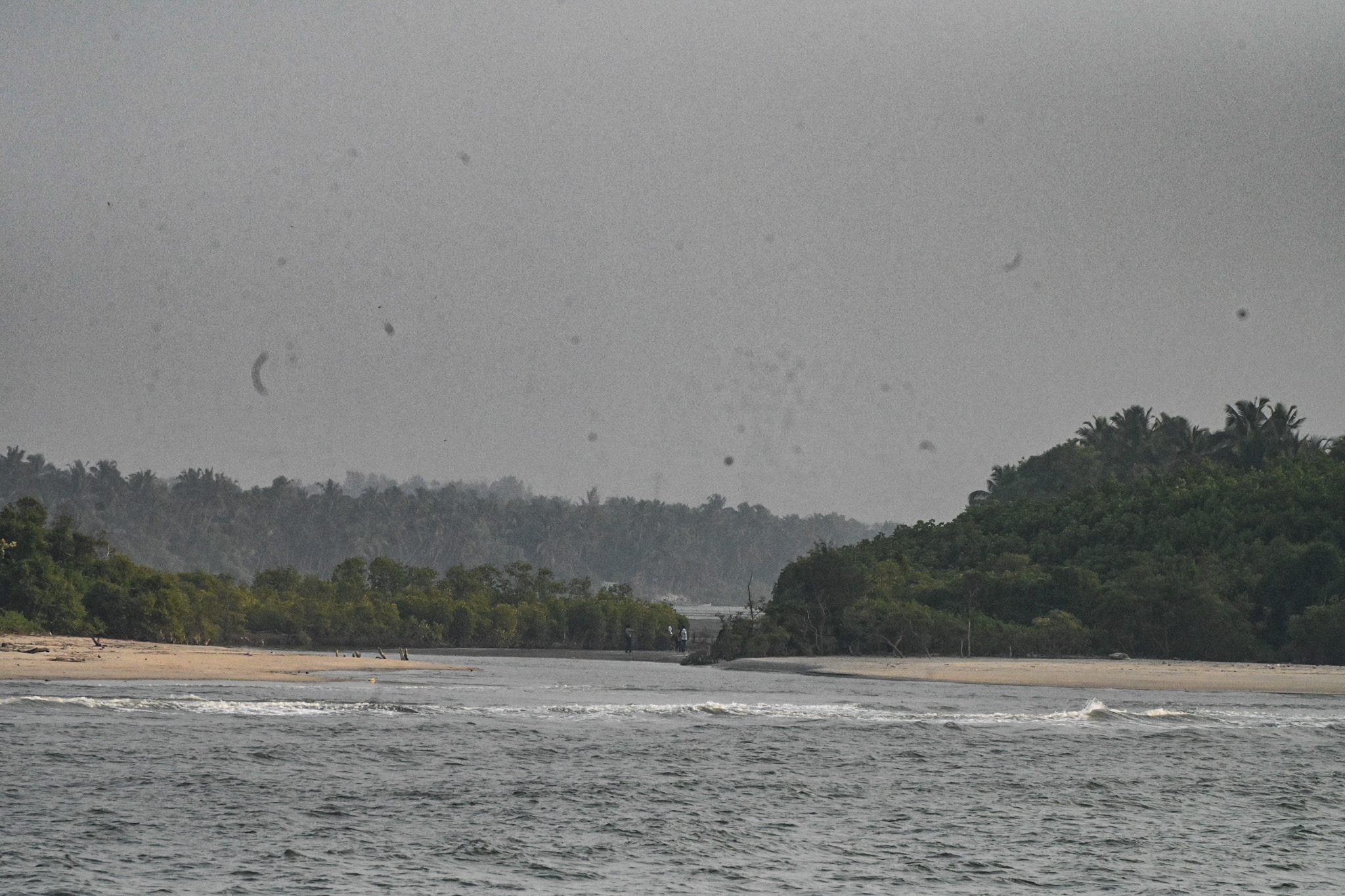
Roopal and Jayant managed to visit a few temples in town. We visited the Kadalundi Bird Sanctuary as well as the Sand Banks. The high tide prevented us from viewing all the Sand Banks, but the estuary was very beautiful. I have published a separate thread on Kadalundi that you may have read.

It’s been a great few days in Kozhikode and it’s now on to Nilambur to visit the teak forest and the beautiful train stations.

Peninsula Tour- Kadalundi Bird Sanctuary

It is thanks to Ranjit’s cousins, Raj and Jaya, that we visited the Kadalundi Bird Sanctuary.

The bird sanctuary, on the outskirts of Kozhikode, spreads over a cluster of islands in the Kadalundi river close to the estuary meeting the Arabian Sea. To reach the first of the cluster, vehicles park on the mainland and there is a foot overbridge across the river.

Most of the islands have small homes for the local fishermen and a few enterprising folks run boat services on the river into the sanctuary.

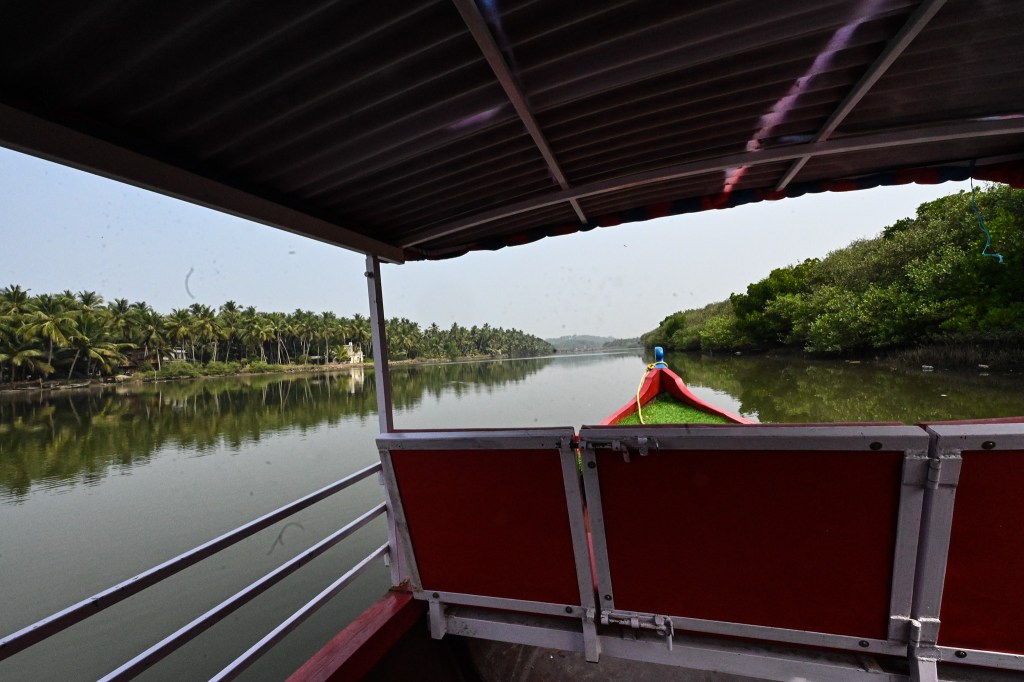
It is an interesting enterprise that Mr. Baburaj, who is a part of Island Tourism, has conceptualised. Visitors can do a boatride on the river, almost upto the mouth of the sea and can closely bird watch, enjoy the ride and return to base. Thereon, along the banks of the river, a wholesome meal is provided and can be enjoyed within the sanctuary.

The boats can seat 12-15 persons and since the waters are shallow, the boatman uses a long bamboo pole to manouevre the boat. The waters are calm and shallow and that helps nervous passengers like me. The islands are connected by bridges with openings for boats to go through and oyster fishing and fishing happen near the bridges and in the shallows.

Some of the islands are actually mangroves that are conserved and many of them have tunnel like inlets and the boat rows into the cluster and we can see the mangrove at very close quarters. There is a cool, stunning green space that one rows through.

There are many species of indigenous birds and more than 60 species of migratory birds that visit the sanctuary, December being the best time of year to see all of them.

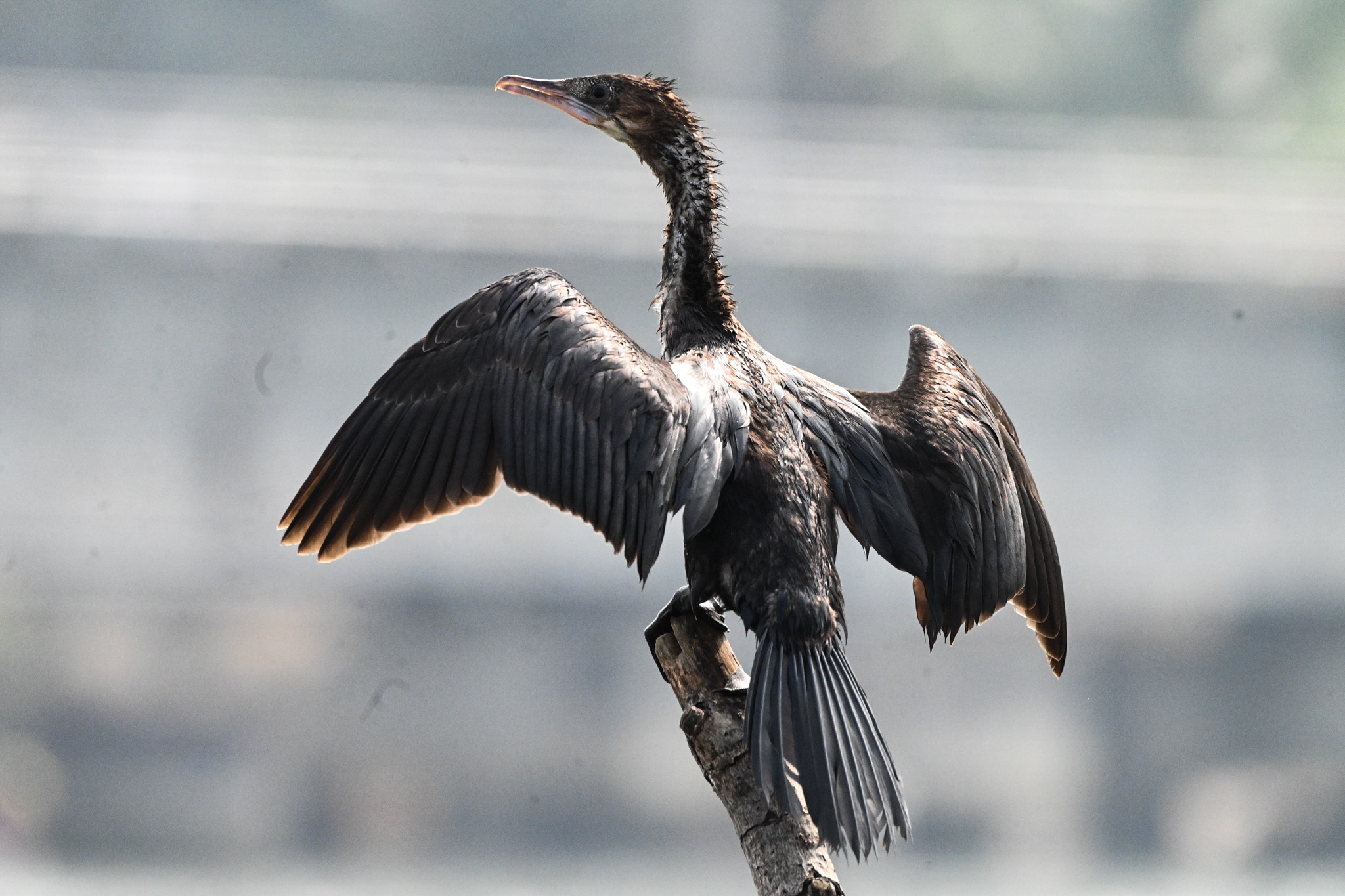
There are herons, ibises, kingfishers, egrets and many many more birds and if we moor the boat at a reasonable distance, we can observe these birds wading and sifting through the shallows for tiny fish. There are sandbanks that are spots for the birds to rest between meals and also stumps of trees on which the ocassional cormorant dries out its wings. And the shallow waters have speckled jellyfish, that just casually float past, on account of a gentle current.

There are many more bird pics in the album, the link to which is here…..

https://photos.app.goo.gl/E4LhSM3x53qgkEdX8

Peninsula tour- Wayanad

This is Wayanad.


It is incredibly green! It is undulating, with winding roads and forest land and many, many hills and valleys and lakes and smaller water bodies. And in the mornings, when the sun hits the slopes of the tea estates, it is breath-taking!


It also crowded and contrary to the concept of a hill station, it is very, very hot by mid-morning. There are souvenir shops, eating places , tea museums, honey museums, areas of historic interest and there is chaotic development around these structures.
We drove in from Coorg, through forest land and we were hoping that elephants would cross. No such luck! Wayanad is also where we have caught up with our friends, Jayant and Roopal.


We stayed at Abad Brookside, which is accessible through a dirt road that winds around tea estates. The access is from a forest road that is common for a number of hotel properties and difficult to negotiate. I wonder how this road holds up in the monsoon.


We visited a couple of dams in the outskirts of Wayanad. The Banasura Sagar dam is the largest earthen dam in India and the second largest in Asia- it is difficult to imagine that such a large dam has been made of compacted stone and tamped earth. The dam’s reservoir has small islands and there are boat rides that tourists can go on, around these islands. There is a long walkway above the dam which offers stunning views of both the reservoir and the gardens.


Most of the lakes are surrounded by hills and there are narrow promenades around the lakes that are tree lined and habitat for many species of birds. Eagle eye Roopal helped us spot all of these and also a Malabar squirrel.


Wayanad has a few Jain monuments of historical and archaeological importance. Sultan Battery, a town and municipality, in Wayanad town is home to a small Jain temple, that has been built in the traditional Vijayanagar style of architecture. Dating back to the 13th century, it is believed that Tipu Sultan used the spaces in the temple as an armoury.


We visited Edakkal on day 1 at Wayanad, but I have saved this bit for last.


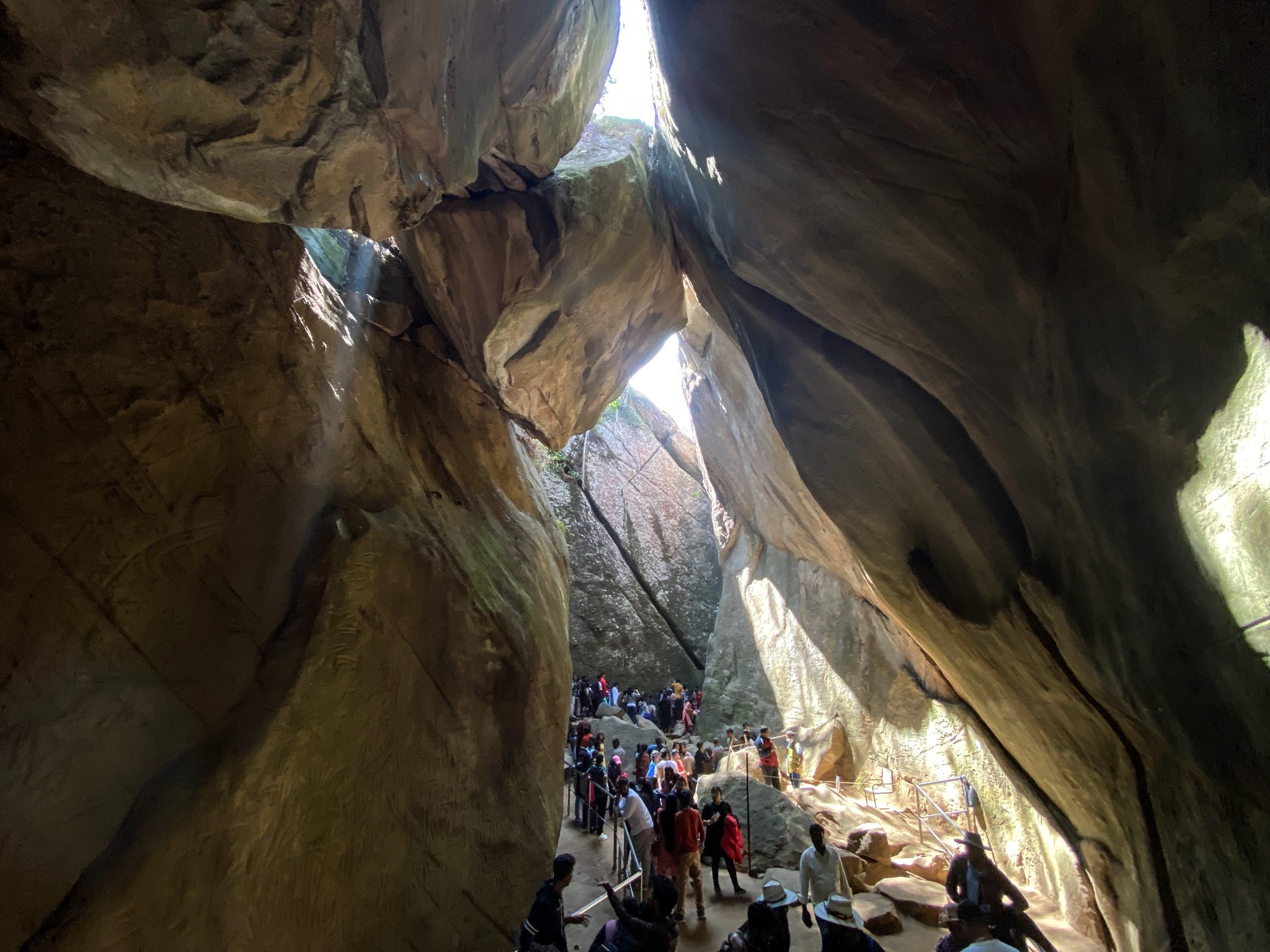
Edakkal caves are made up of two caves, located approximately 25-30 km from Kalpetta in Wayanad. The caves are at an elevation of 4000 ft and accessible via steep slopes, impossible looking ramps and close to 450 uneven stone steps.


Cave 1 is a gateway to cave 2 and has bats; many of them.


Cave 2 is something else! It is more like a pile of large rocks that almost close at the top but with gaps that allow for shafts of light that illuminate the floor of the cave and the walls.


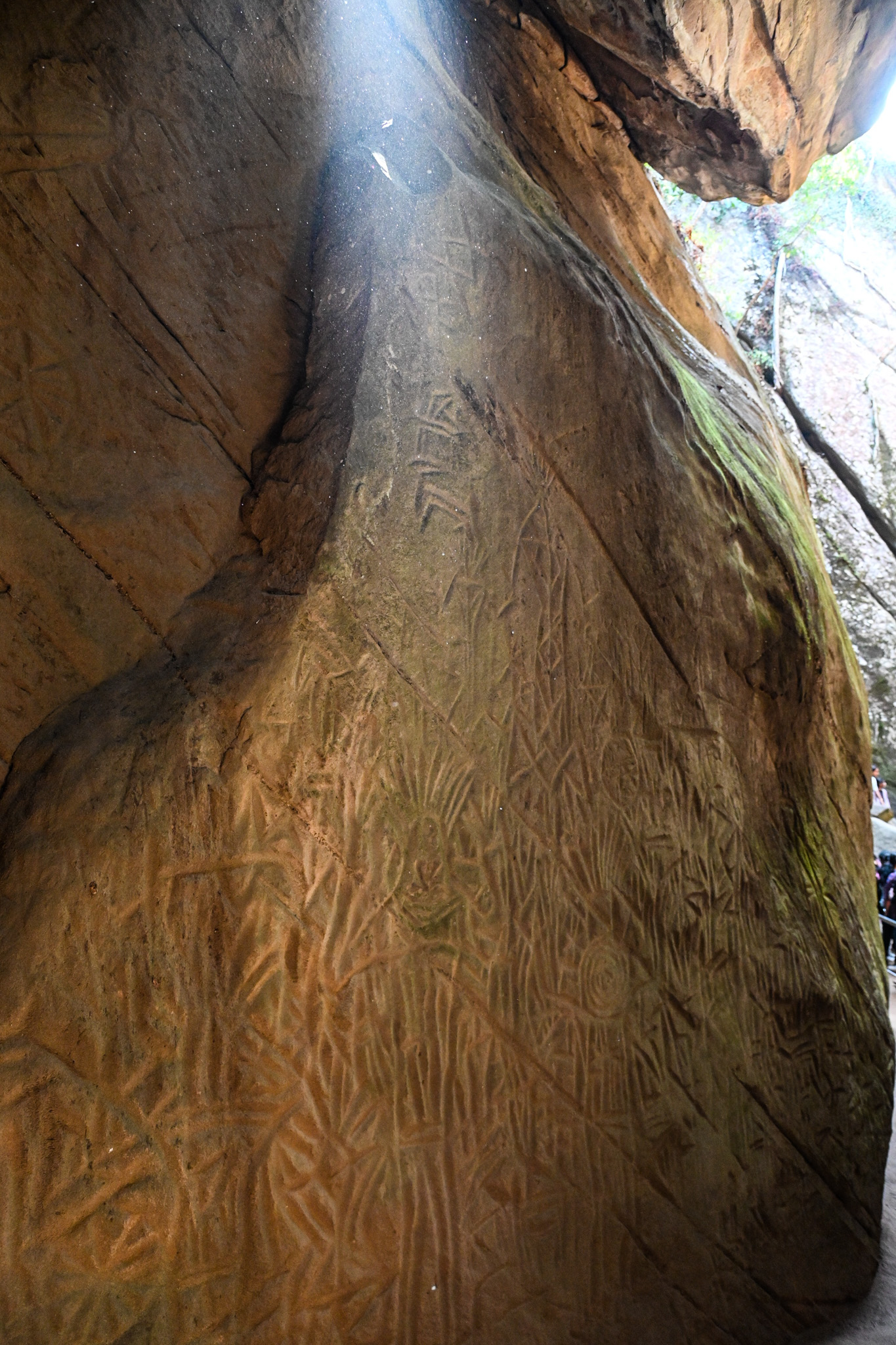
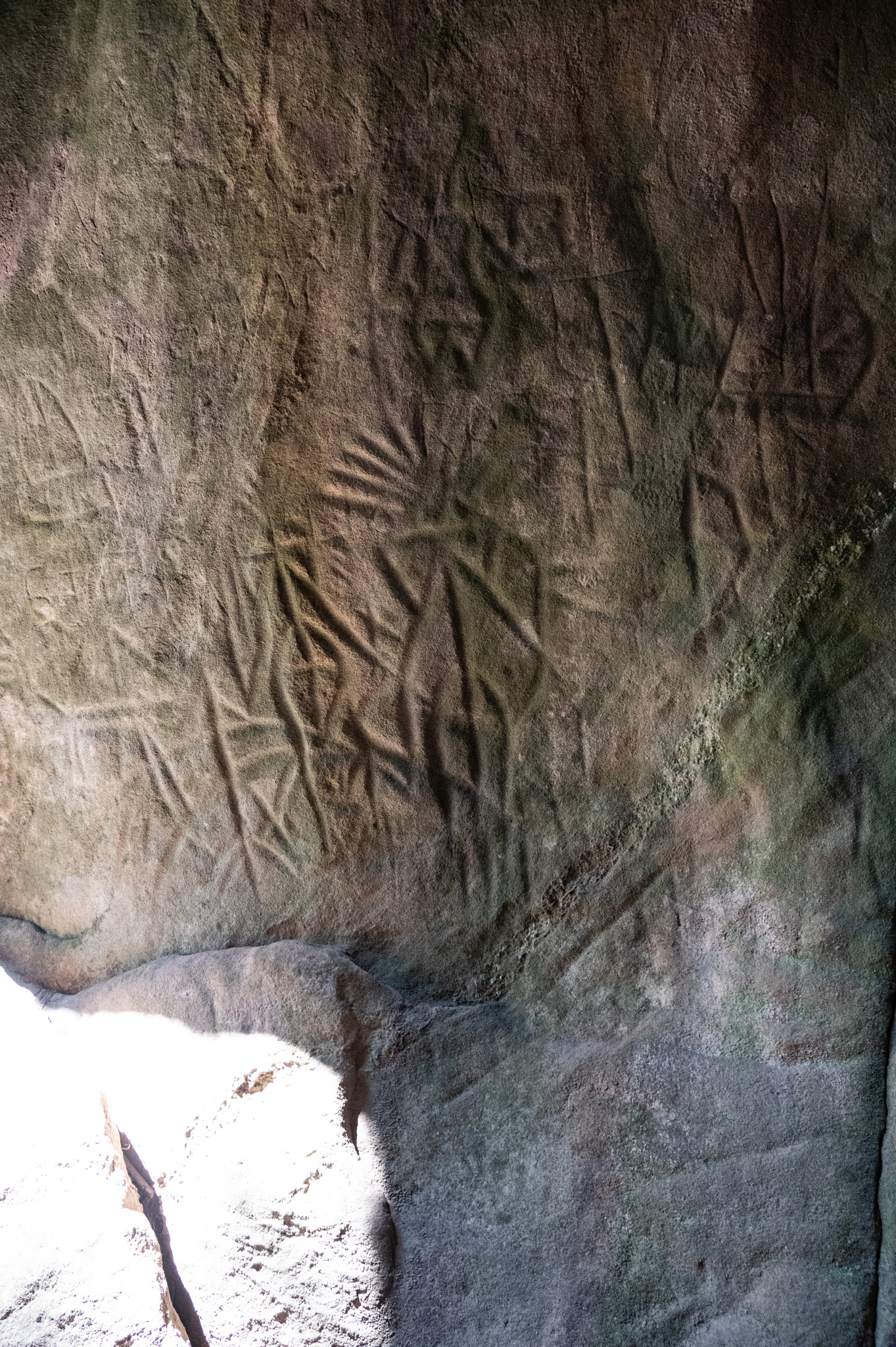
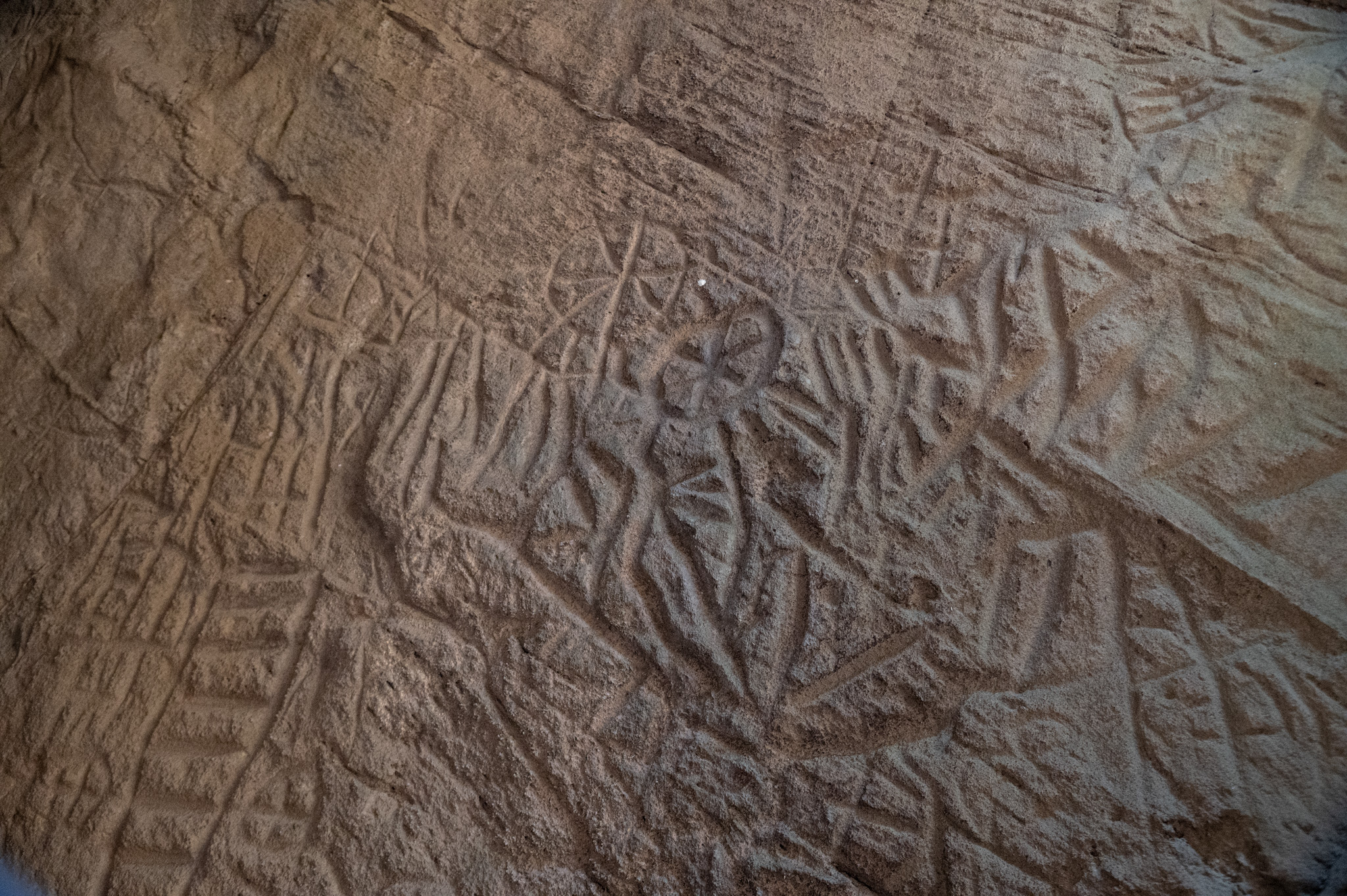
And there are petroglyphs! ( Petroglyphs are prehistoric rock carvings made by picking on the surface with stone chisels/prehistoric tools) We saw them on almost all the surfaces of the cave. Deemed to be 6000-8000 years old, the carvings represent human figures, animals, tools, geometric shapes and symbols that have yet to be deciphered.


Now, that I’m reading up on petroglyphs in India, I have come to know that there are many such illustrations, as close to Mumbai as Guhagar.


Ticking off on my fingers……
Dolmens of Hirebenekal!
Cave paintings around Hampi!
Petroglyphs of Edakkal!
This trip has been incredible so far!

Here’s the link to the photos – https://photos.app.goo.gl/fJU46b766LhDR3yo8

See you in Kozhikode!

The Peninsula Tour – Udupi

It is a stone’s throw from Manipal ( where we stayed) to Udupi. And a complete contrast. Manipal has grown into a mini city around the campus, with malls, eating places etc. According to friends and family who studied there, none of the pictures had any recognisable and familiar places, since even as late as the 90’s.

Turn around the corner and there is Udupi. There are broad roads that turn around the corner into narrow lanes, urban scapes lie alongside coconut plantations. There are small houses adjoining large open areas where cultivation happens or laterite blocks are being made. The traffic is chaotic- there are many many cops who stand around and admire the problem.

There is a famous Krishna Temple that we visited. It is a sprawling complex with many small shrines that surround the main one. It is quaint and old and extremely well managed, considering the hordes of worshippers.

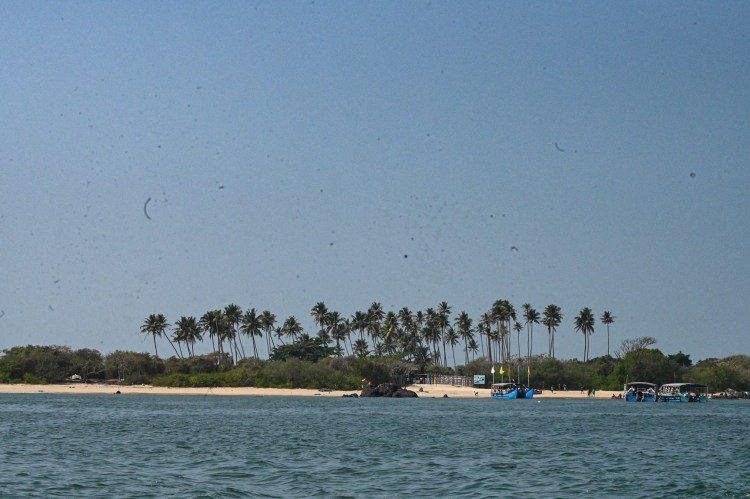
Then, there is St. Marys Island. Located 8-9 km off the coast of Malpe beach, it is accessible by boats that continuously shuttle between the mainland and the island. When you think of St. Mary’s, you think pristine beach, blue green waters, coconut palms and very stunning and unique rock formations. The island is a conserved area and no food and plastic are allowed within. There are arrangements to stash our belongings and also a single refreshment outlet run by the authorities.

The island (not more than 500 m across and about 100 m in width) has a small landing beach. The land slopes upwards and the centre of the island is at an elevation. It is believed to have been a part of Madagascar and the rift happened in the Cretaceous period.

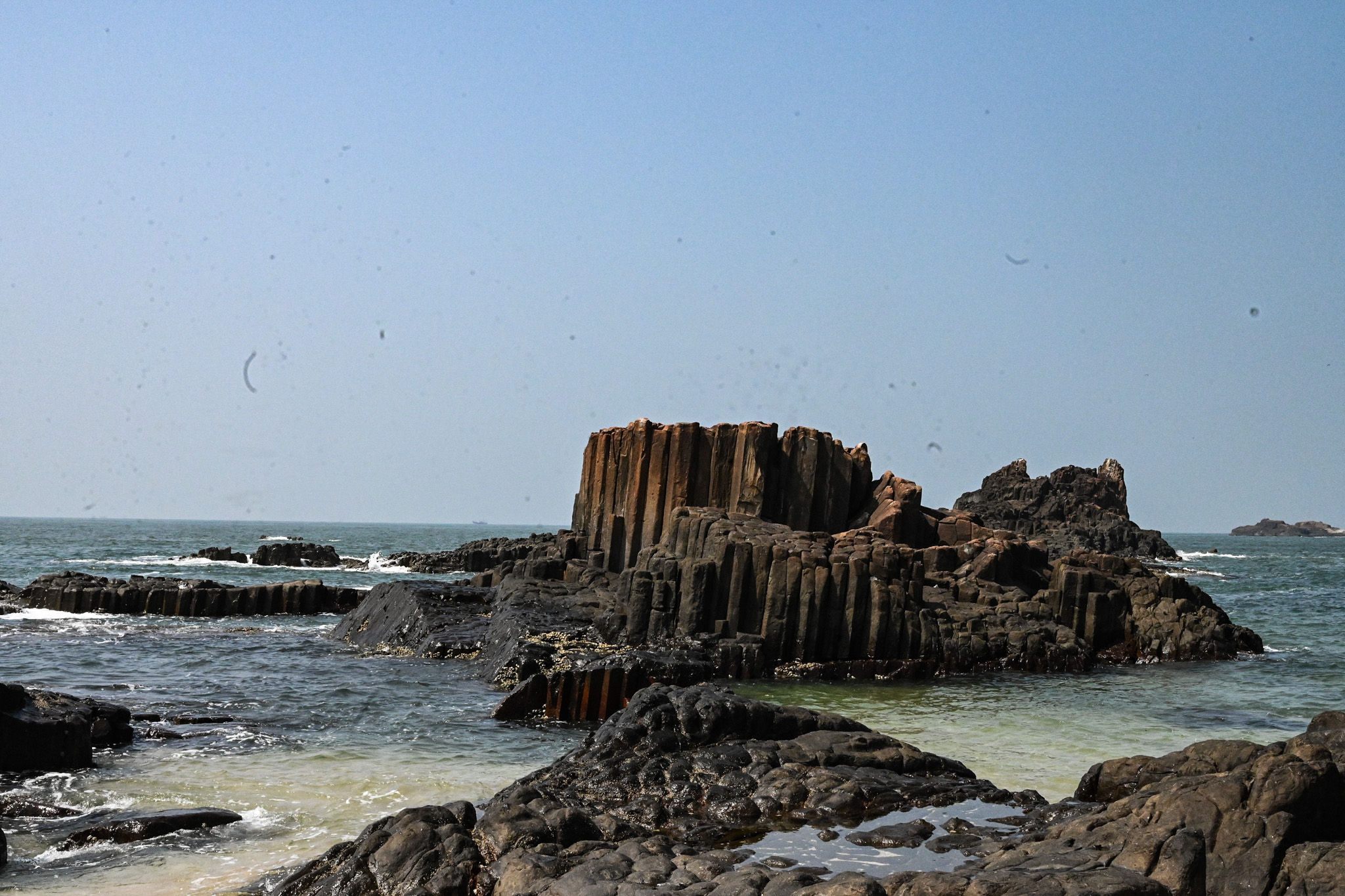
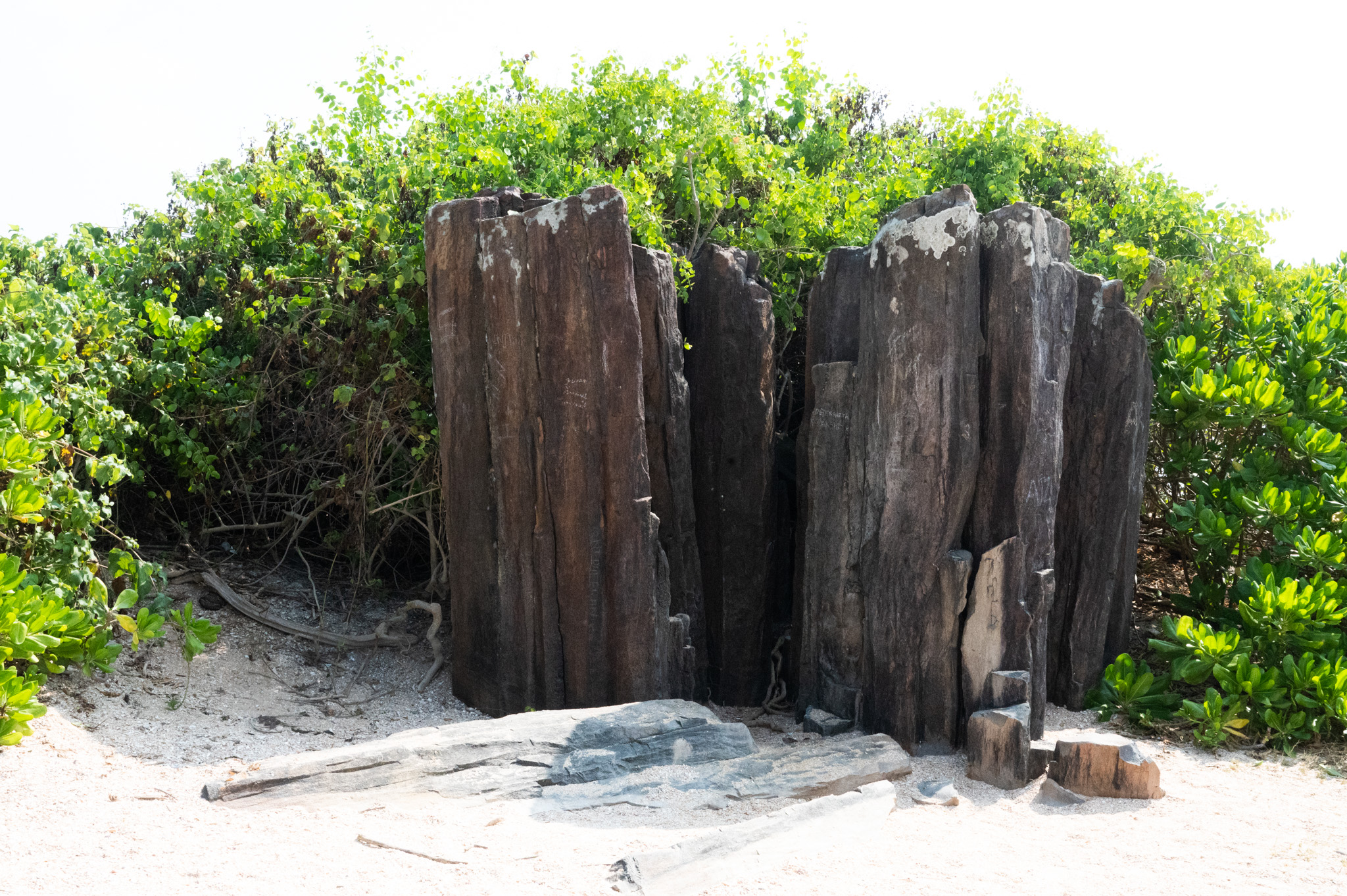
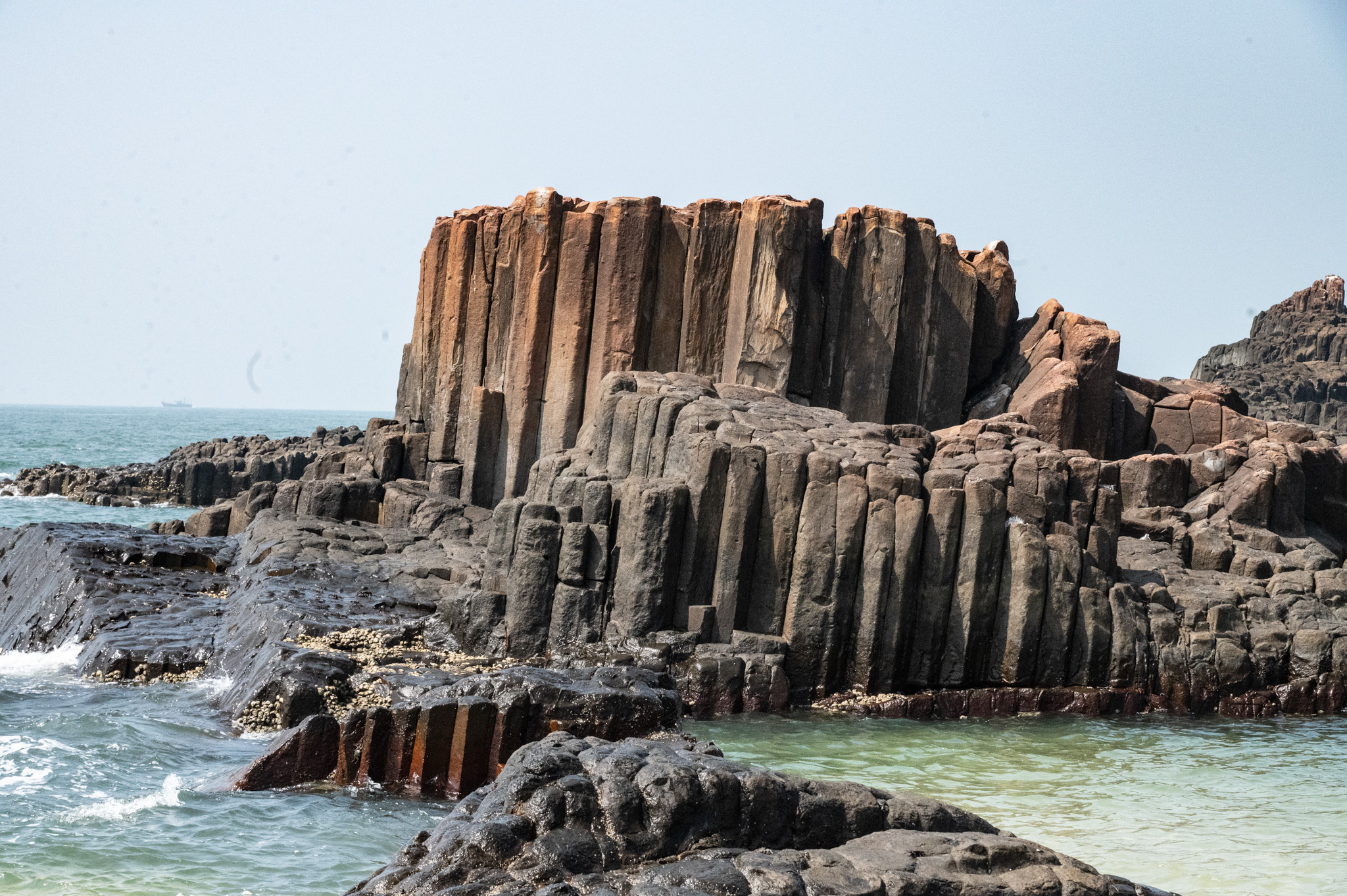
What is unique about St. Mary’s is unique basalt formations which are very similar to the rock formations of the Giants Causeway in Ireland. There are hexagonal shaped rocks that have split into columns and of varying heights throughout the island. Some of the polygonal rocks form a horizontal mosiac on a plateau above the columns and the largest formation is approximately 6-7 metres high. Incredibly stunning and the visit was completely worthwhile despite a high tide and a slightly choppy crossing.

Ranjit had set his sights on lunch at Thimmappa’s Fish Hotel, but a snaking queue, which was a testimony to its popularity, made him change his mind.

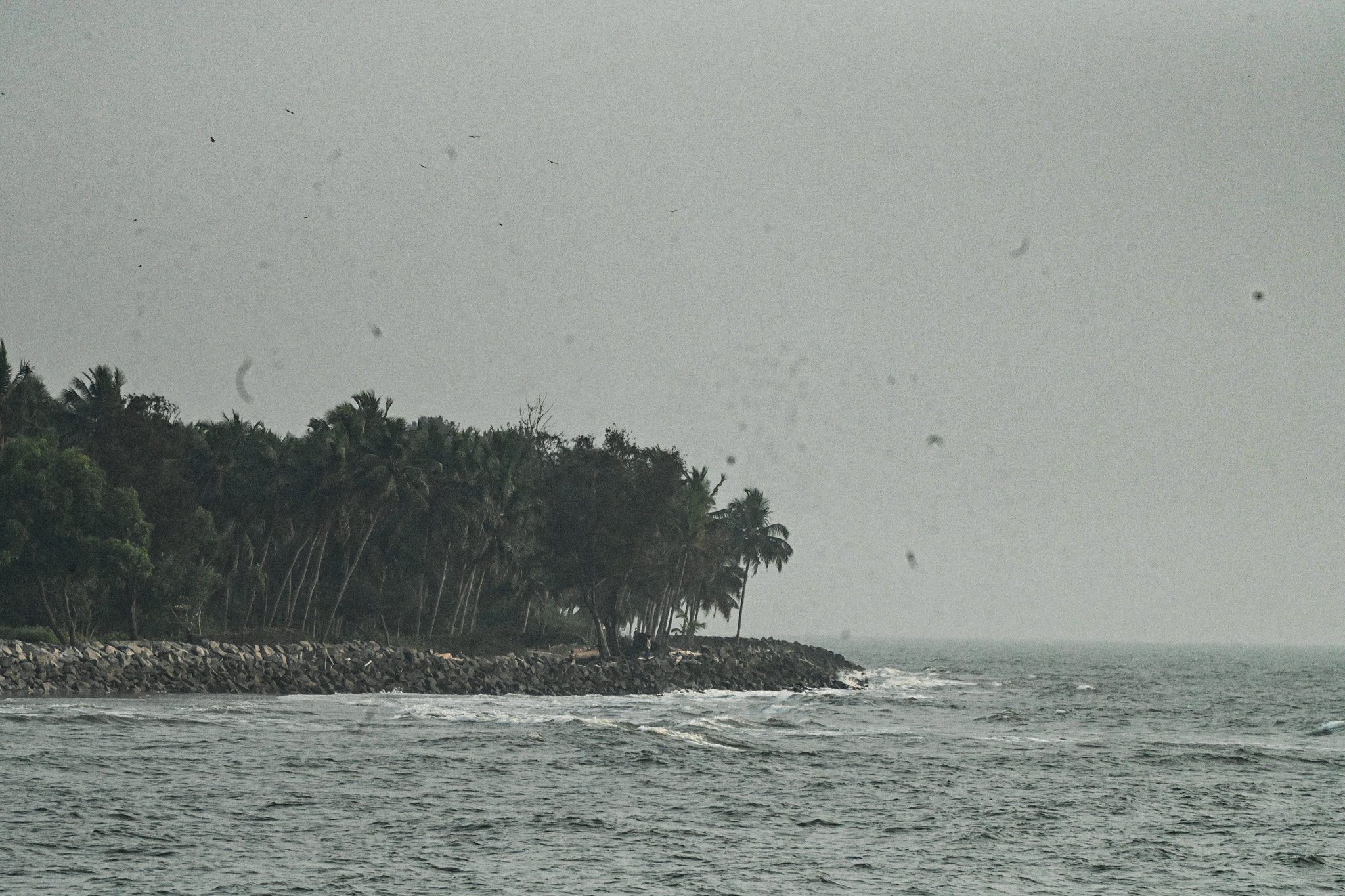
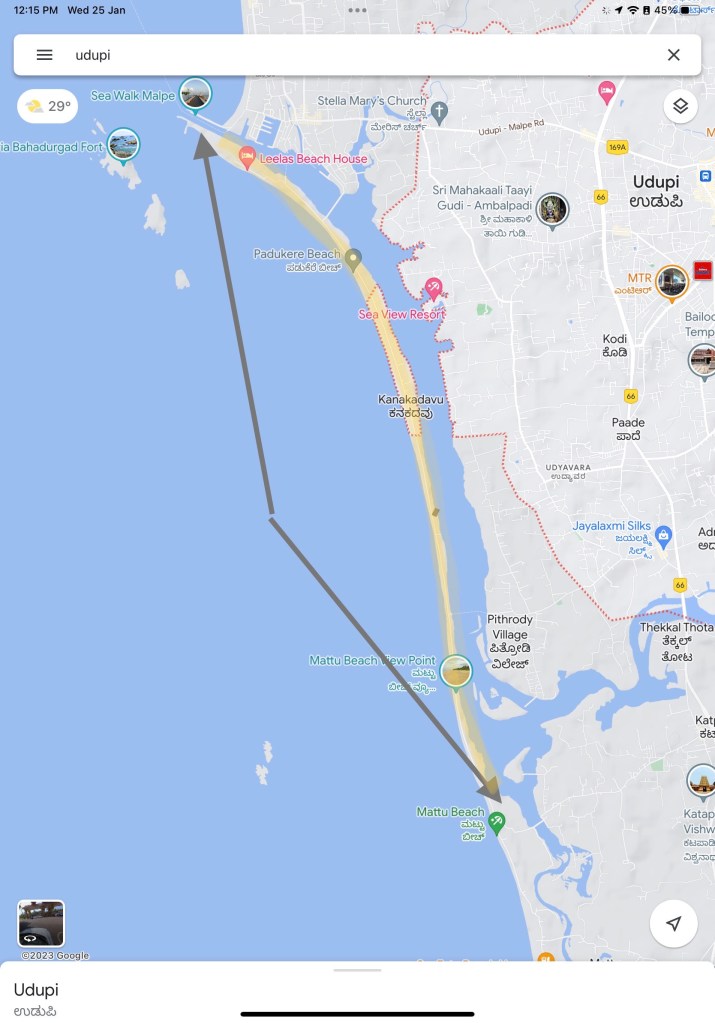
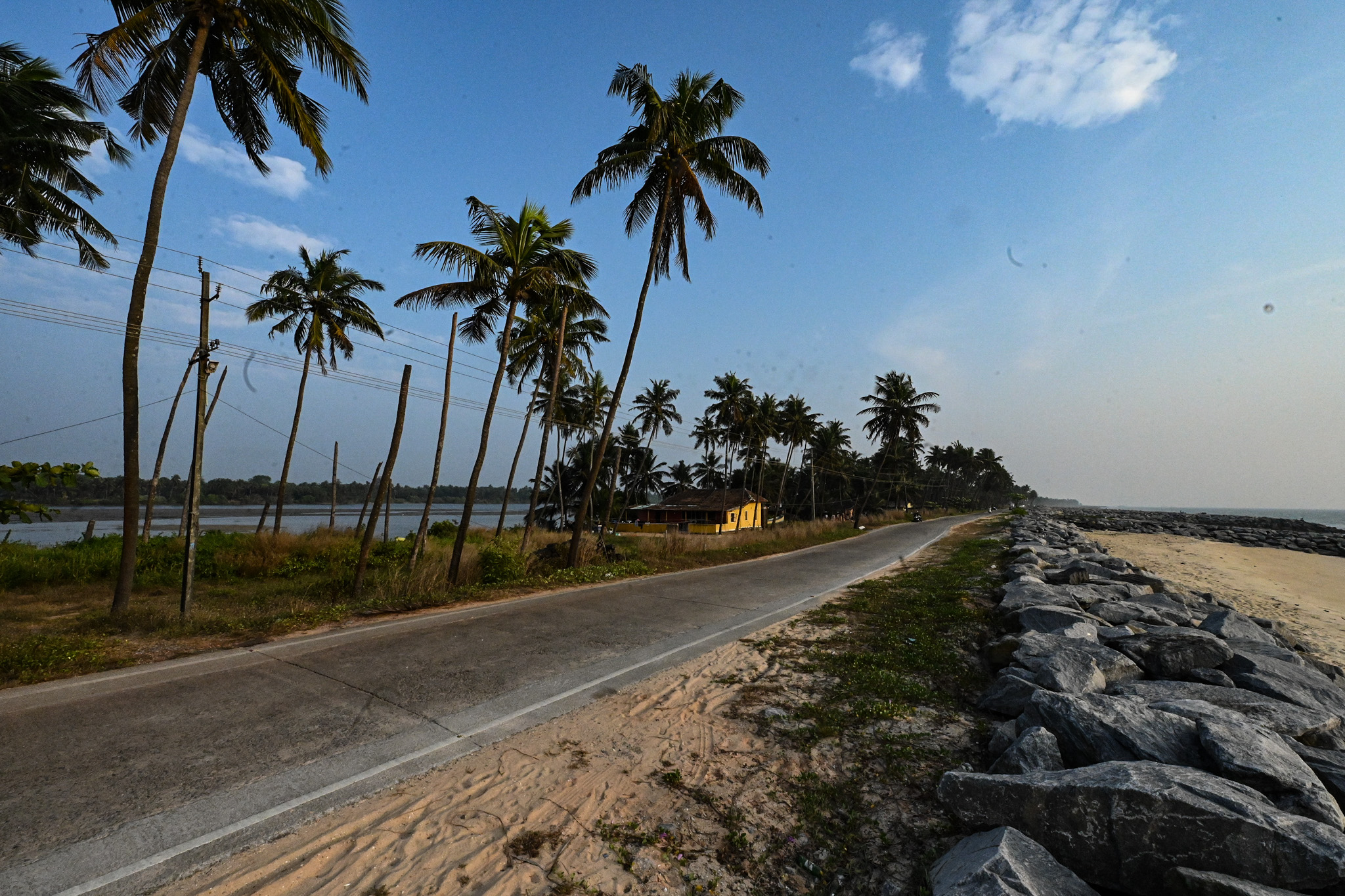
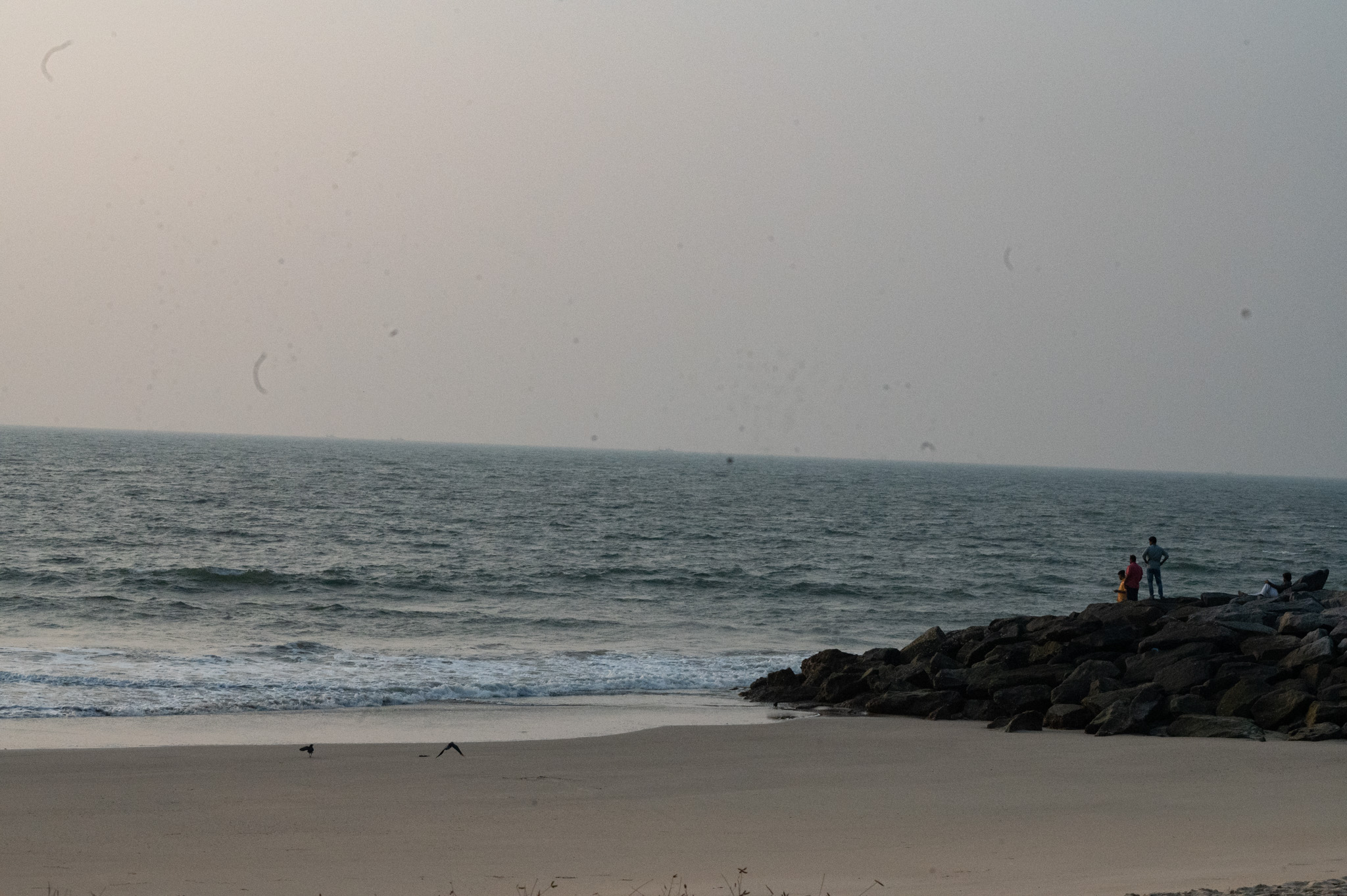
The evening took us to another unique place. There is a narrow strip of land , 8-9 km long from Malpe beach to Mattu beach and about 300 m at its widest. I measured this on Google earth, thanks to Shrinath who is my all knowing Google. It is unique in the fact that there is a river that runs between the mainland and this strip on one side. On the other side is the Arabian sea. The narrow strip is divided by a road along the length, with fishing villages alongside the river side and beaches on the other. There are large stone berms to contain erosion and between these berms are beautiful tiny coves. We drove up to almost the end (Mattu beach). There are not many people around and the drive itself is superb, with various points at which one can see the river and sea at the same time. I have tried to get both in the same frame, though it would make for better and stunning drone pictures.

That was Udupi.

Here’s a link to the pictures – https://photos.app.goo.gl/VFpsHjepTnHJmNhN6

Our next destination is Coorg and onwards to Wayanad. Fingers crossed that we see wildlife!

Peninsula Tour – Goa -Karnataka coast

The road trip continues. From Hampi, it was Goa. To attend a wedding and rest and recover.

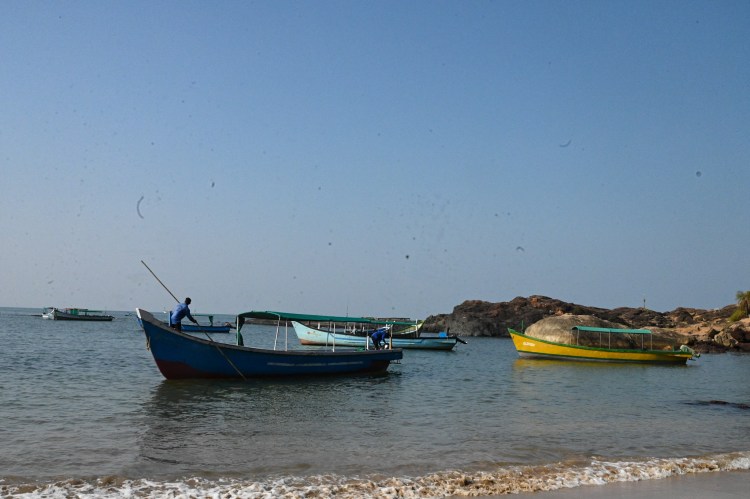
We drove down from Goa to Gokarna, via Karwar and Yana. Reached Karwar at noon and we were disinclined to get on the beach. It’s been hotter than we anticipated. We proceeded towards Yana. As the road to Yana curves upwards, there a a stunning panoramic view of the beach.

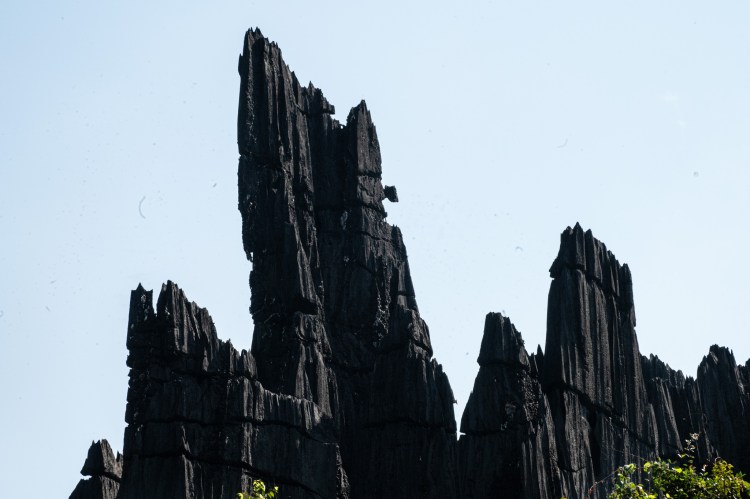
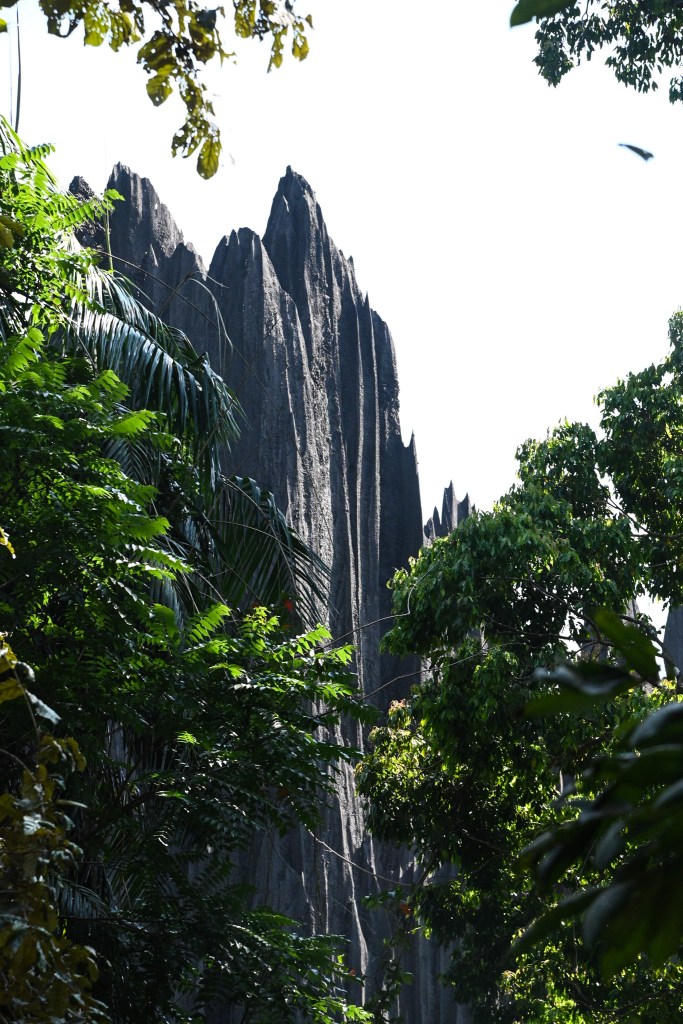
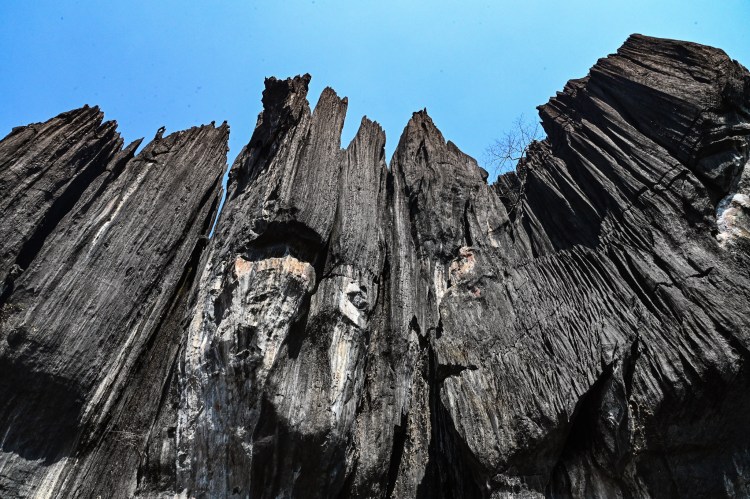
It takes a couple of hours to reach Yana. The road winds through lovely forest land and turn into dirt roads, especially closer to the destination. It was great to drive in the off-road mode. After bad roads and some trekking, we reached the rocks. Pitch black in colour, the rock and caves are made of karst limestone. There are two distinct peaks and one of them has a temple and caves. The rocks look like large jagged bits of coal and are approximately 400 ft tall.

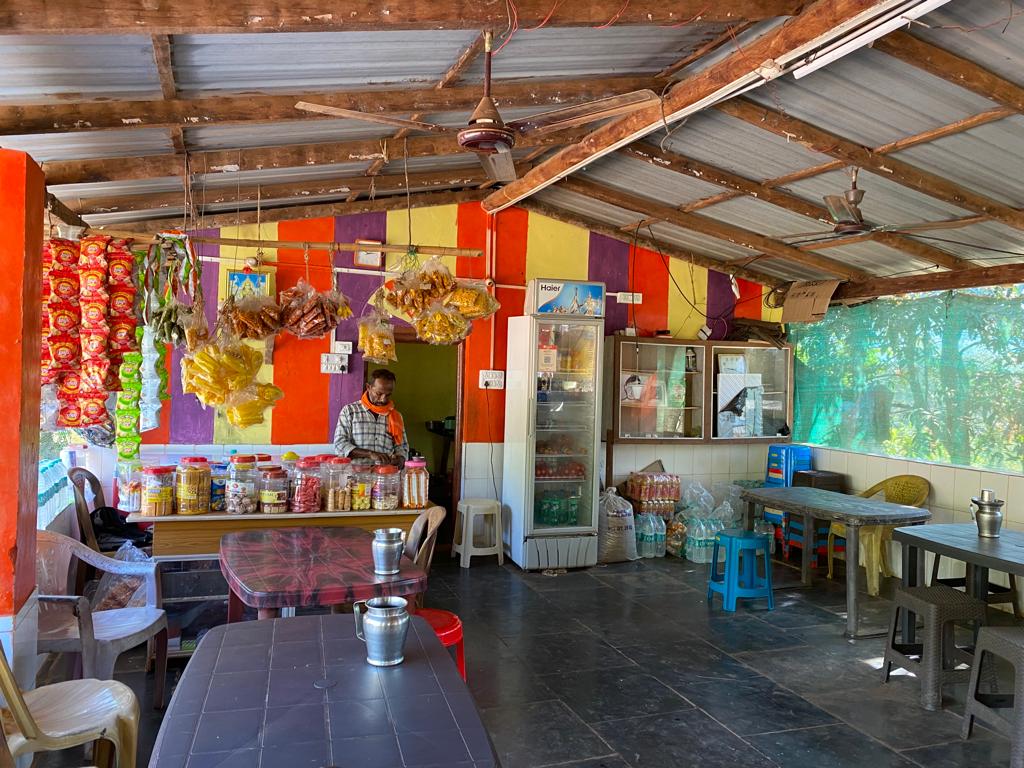
It may be a good idea to carry food and water for a trip to Yana. There are some basic stalls which have chips and soft drinks, but eating facilities are thin on the ground and pretty basic. We had a very tasty porotta curry meal at a very small roadside stall about 19 km from Yana, next to the Achave Police Post.

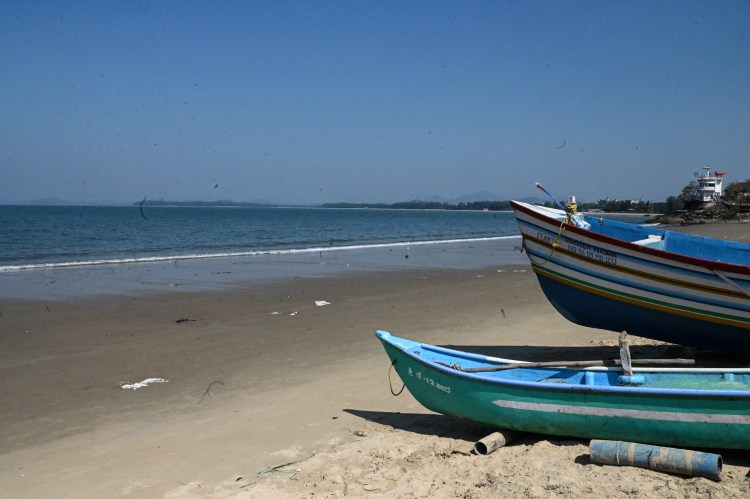
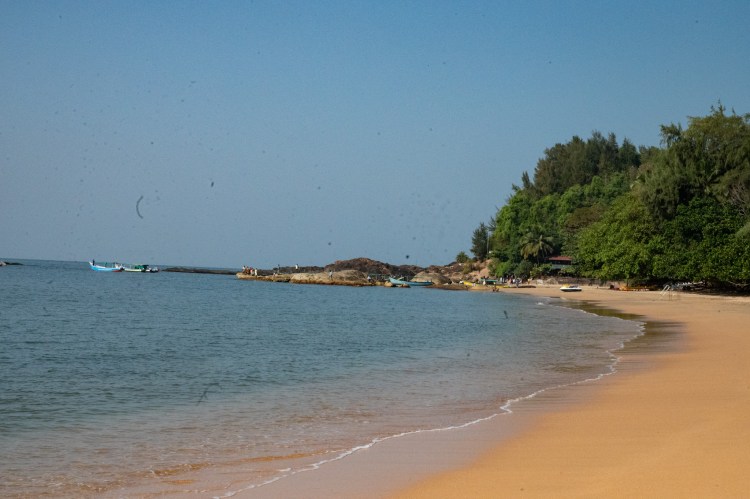
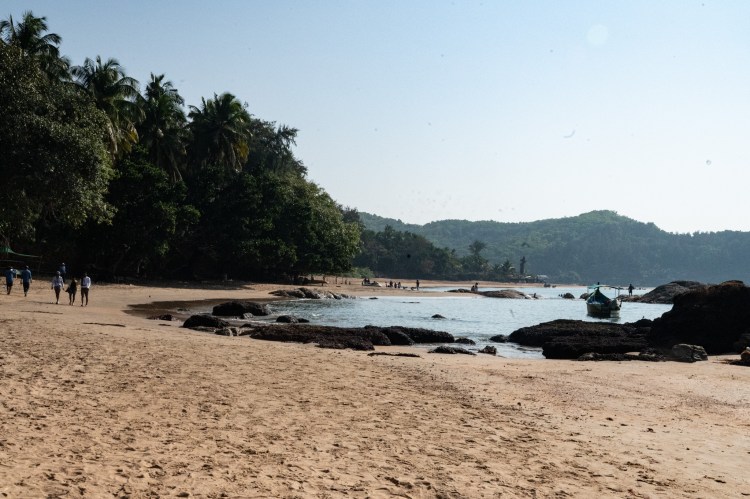
Gokarna is about beautiful beaches. Each cove has a beach named separately. Very clean and well maintained. Rocky pools dot the area closer to the shore. The shoreline has small eateries and a few sellers of odds and ends including braiding hair with beads.

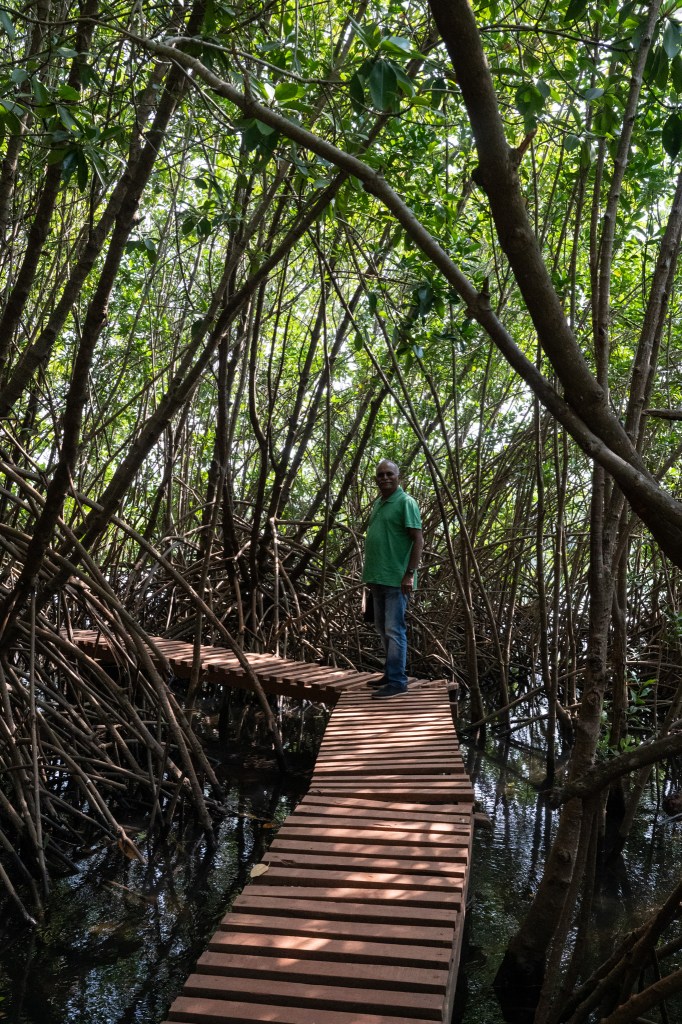
Between Gokarna and Murudeshwar, lies Honnavar, along the banks of Sharavati and close to the estuary. Here, there are mangroves that have been preserved beautifully. A long boardwalk has been built around the mangroves, dotted with information about the flora and fauna that exist there.

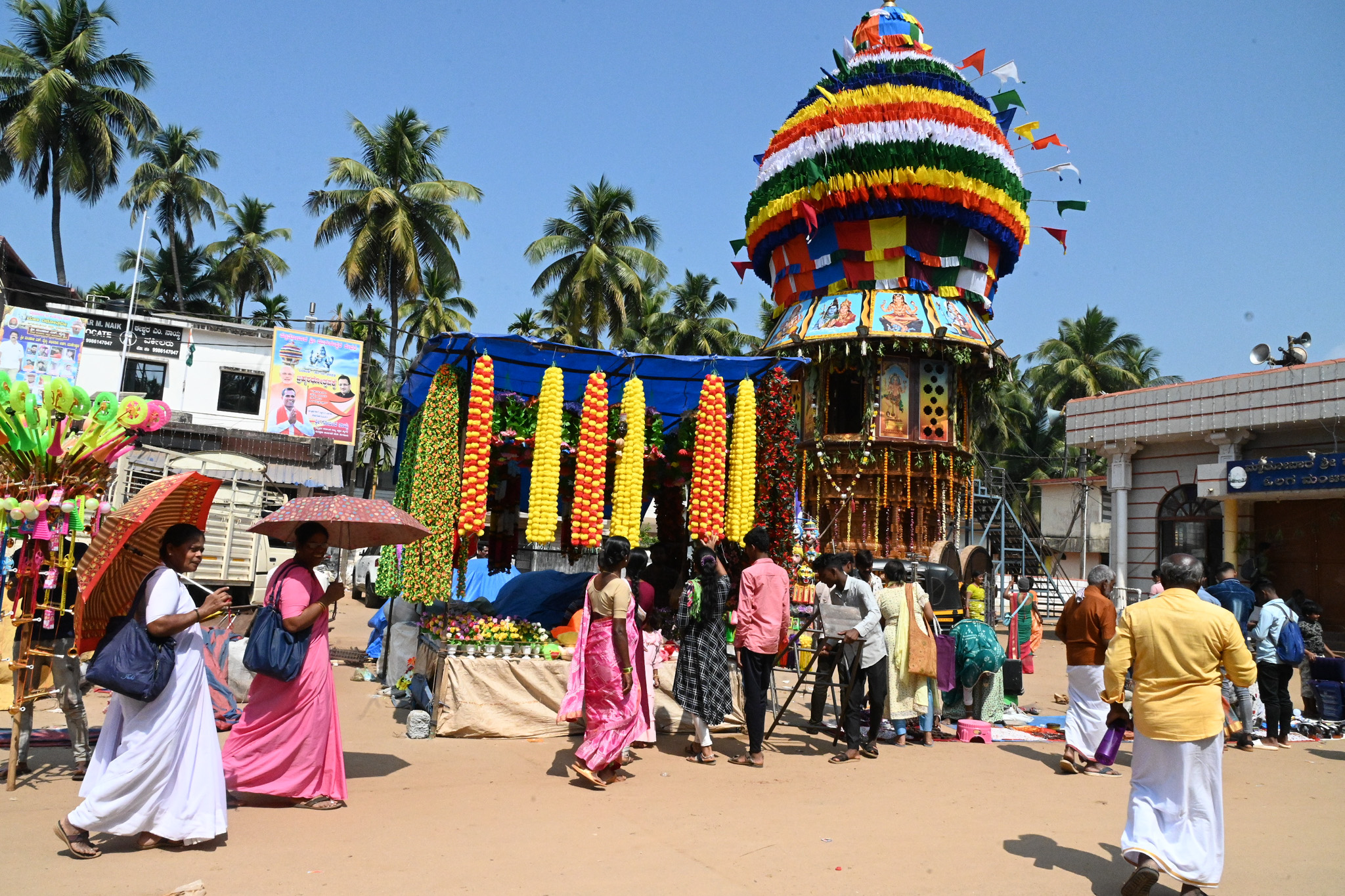
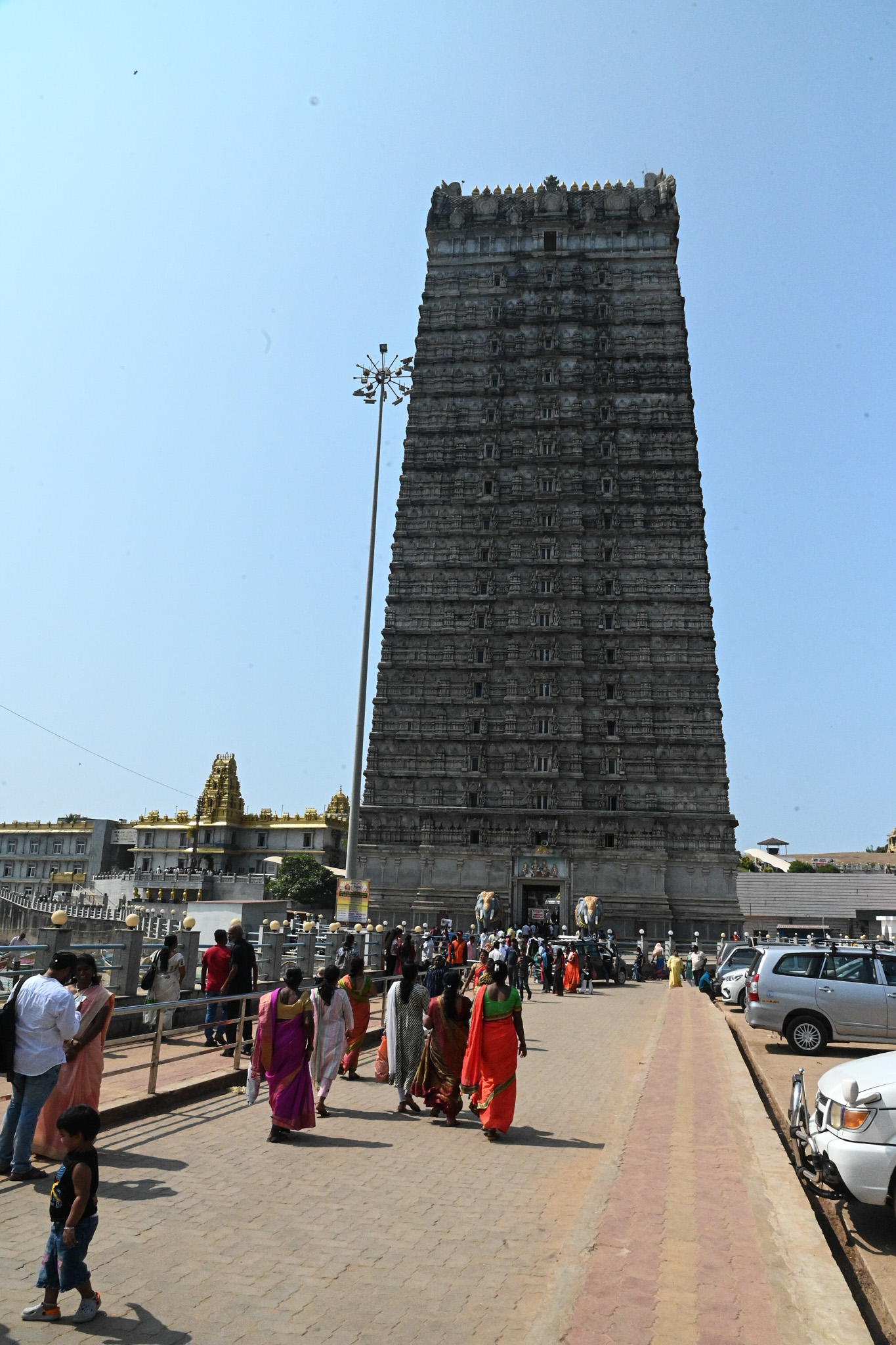
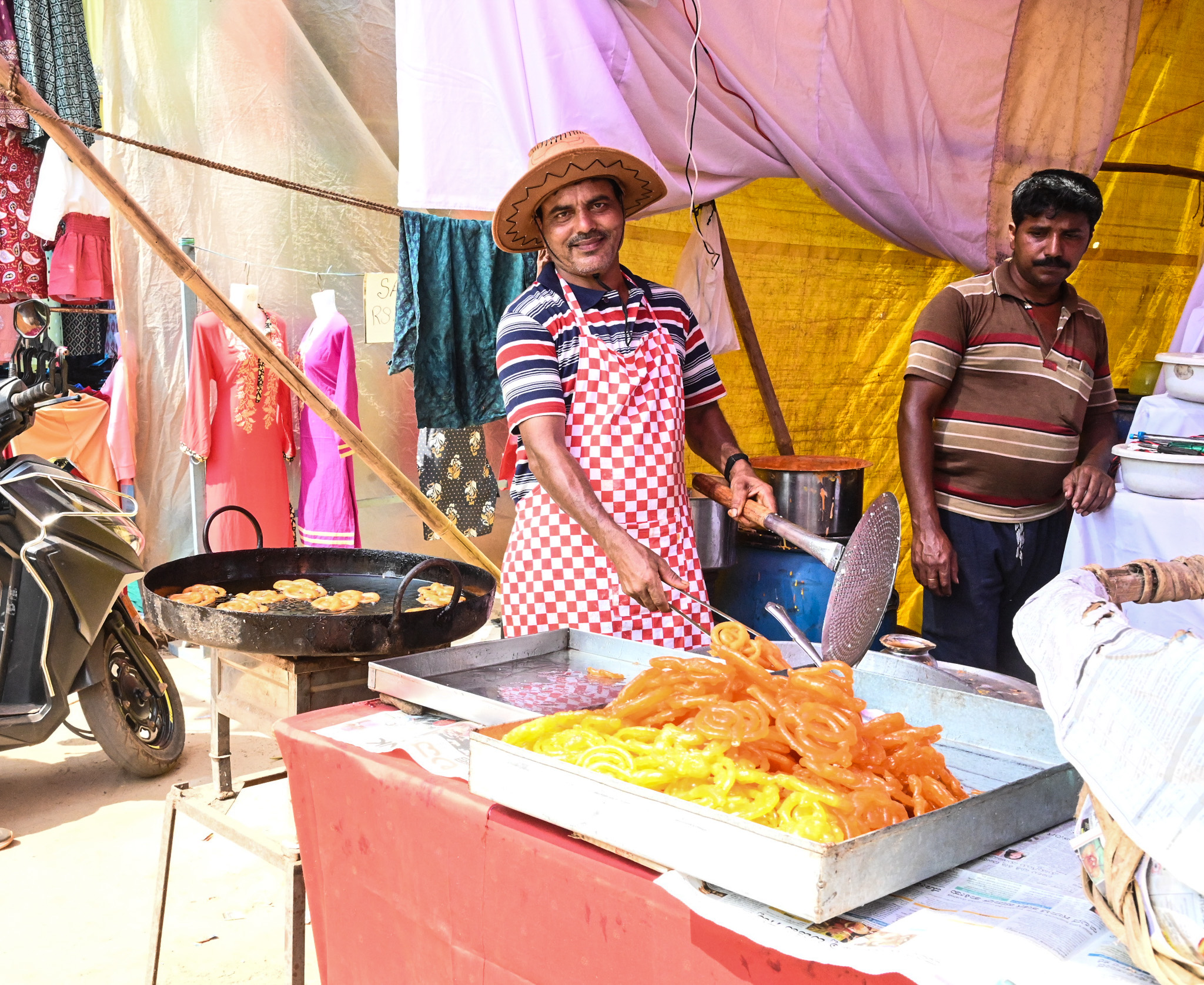
In contrast, Murudeshwar is a crowded temple town. The gopuram of the temple and the Shiva statue dominate the landscape. We landed up in the middle of a jatra and that entailed walking through a village fair. Very crowded, very noisy and very very colourful. There is so much happening on the beaches. Water sports, para sailing, jet skiing and even zorbing.

Give us Gokarna any day.

Here’s the link to the pictures – https://photos.app.goo.gl/VFpsHjepTnHJmNhN6

Next stop, Udupi.

The Peninsula Tour – Hampi

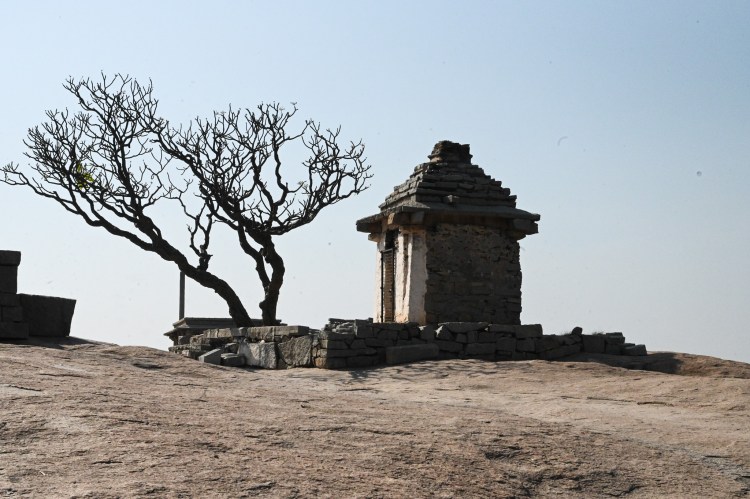
Next stop is Hampi. We are staying in the neighbouring area of Hospet. Even as we drive in we see monuments scattered all over the place. Some of them are simple pavilions, while others are elaborate temple like structures. This is true of Hospet, Hampi, Anegundi, Hirebenakal and every other place we visited.

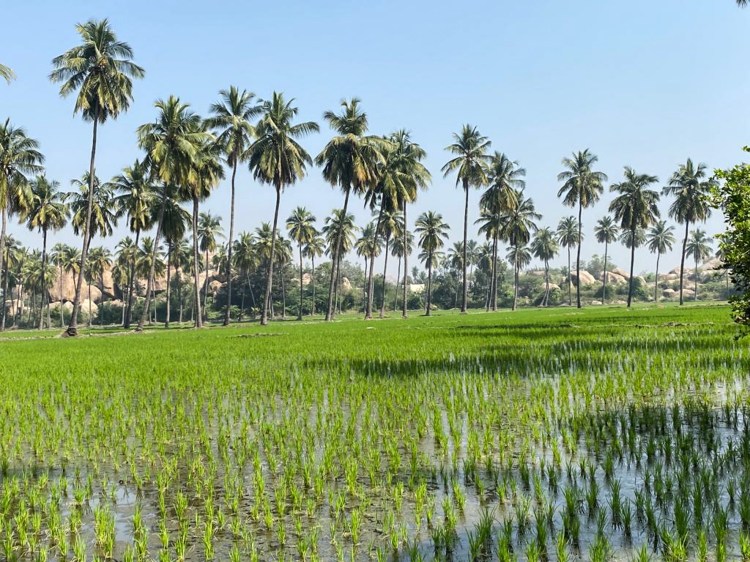
Hampi has hills everywhere. comprised of delicately and well balanced rocks and boulders of all sizes, shapes and colour! Some of the formations are quite stunning. Between these hills, roads that connect towns are flanked by very very green paddy fields and coconut trees.

We checked in and immediately left to view the Archaeological Museum. The Museum was superb.

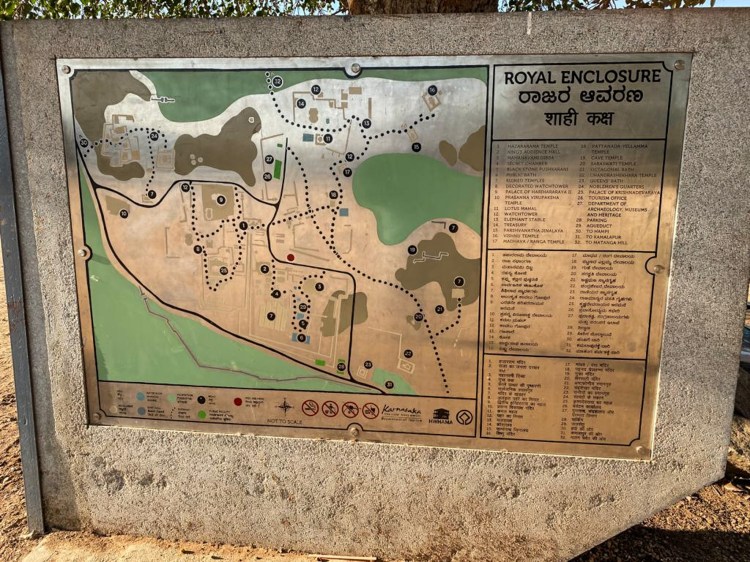
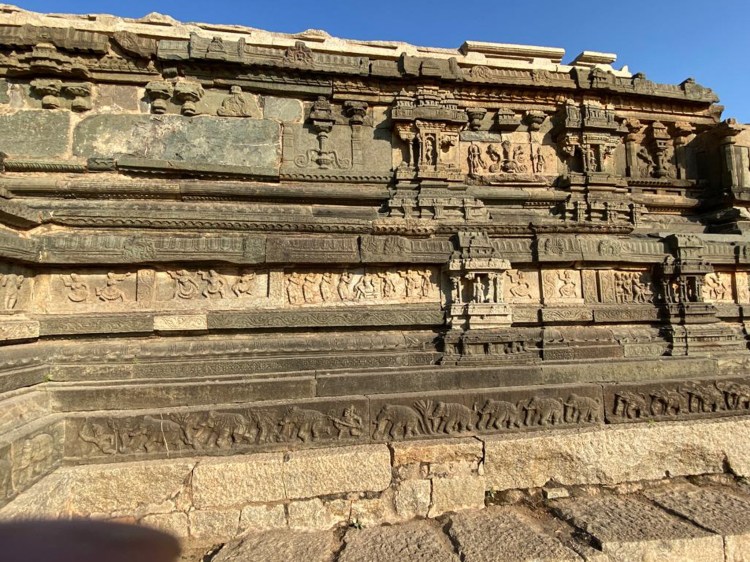
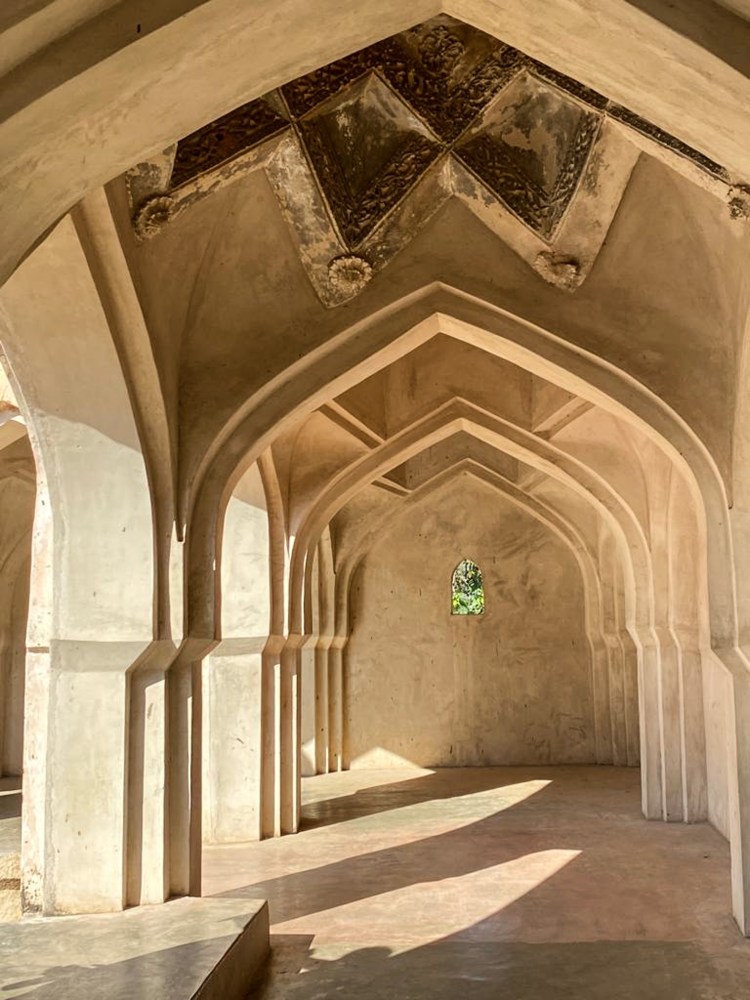
We visited an elaborate complex near the museum. Queen’s Bath, Hazara Rama, Elephant Stables, Zanana Enclosure, Stepped Well and the Royal Enclosure. There are massive high platforms built like ziggurats where the king held court, or entertained and rewarded his subjects. The superstructure, believed to be of sandalwood was completely gutted and all that is evident is the housing to locate pillars to suppport the roof. There is also evidence of a complex waterway and reservoirs, stables, queens quarters etc. Most of the structures that are near the queens quarters have an Islamic architectural influence.
We were invited to visit the ancestral home of Krishna Devaraya in Anegundi. The house has been restored by its current occupant, Shri Krishna Devaraya, a direct descendent of the late ruler. The restoration was very painstakingly done over several years and is very beautiful. Our conversation with Shri Devaraya was very engaging.

We then visited Onake Kindi that had a couple of caves. Here we saw cave paintings from the neolithic area. The once in a life time opportunity to see a cave painting was like a thrill that we cannot explain.

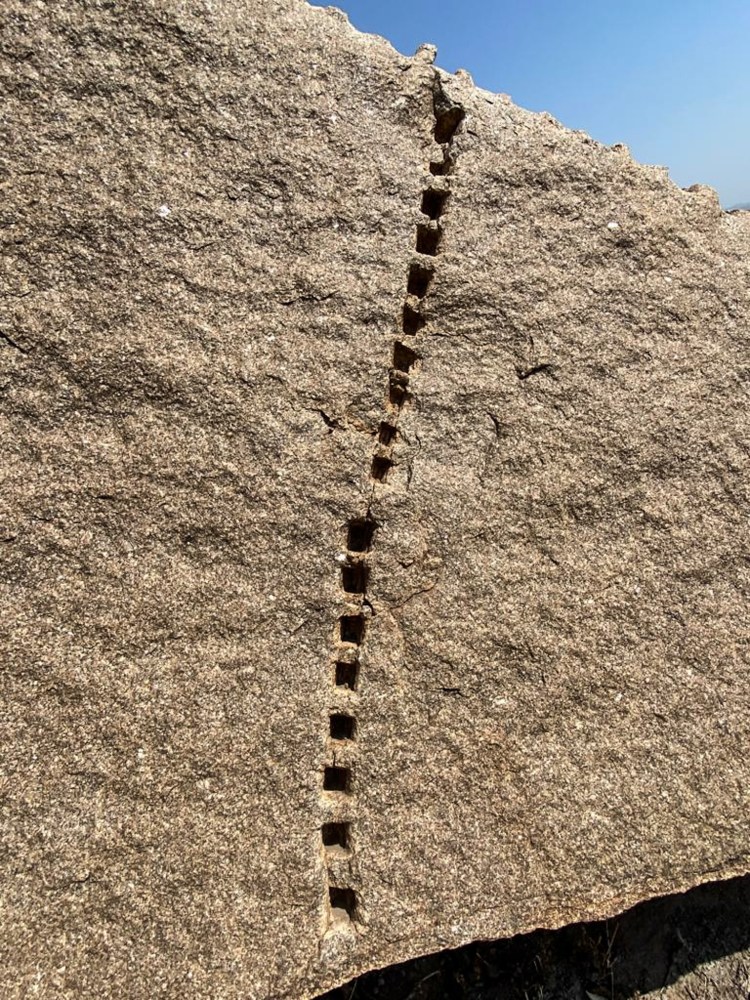
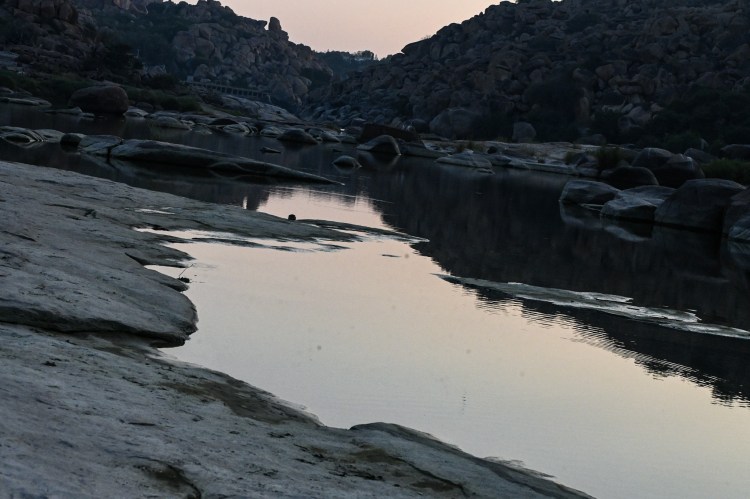
A very interesting spot is the remains of an old stone bridge across the Tungabhadra river. There are stone columns on either banks but the midsection is missing. the supports of the bridge have been buttressed with stone that has been housed into the vertical members. The rocks have been cut by creating a series of housings with wedges and splitting them with water. I am posting a picture of this below. Along the banks of the river there are interesting rock formations and various places from which the sunset looks spectacular. There are also landing sites along the banks for coracles, which are used for crossing.

We were told that there were more cave paintings and Dolmens that we could see at Hirebenakal. An early morning start led us to the base of a hillock accessible through paddy fields from where we started our climb. Our first stop was to see the cave paintings. Here one could see the entire canvas, clear in some places and faded due to to weather and water in other places. Climbing a little higher, the sight before us by surprise. There were several Dolmens all over. We were the only visitors at the site. The place is known to have sloth bears and leopards, but barring droppings and some pug marks, we didn’t come across any animals. We have a separate blog on the Dolmens and cave paintings that can be accessible here –
Hampi- Dolmens and Cave paintings

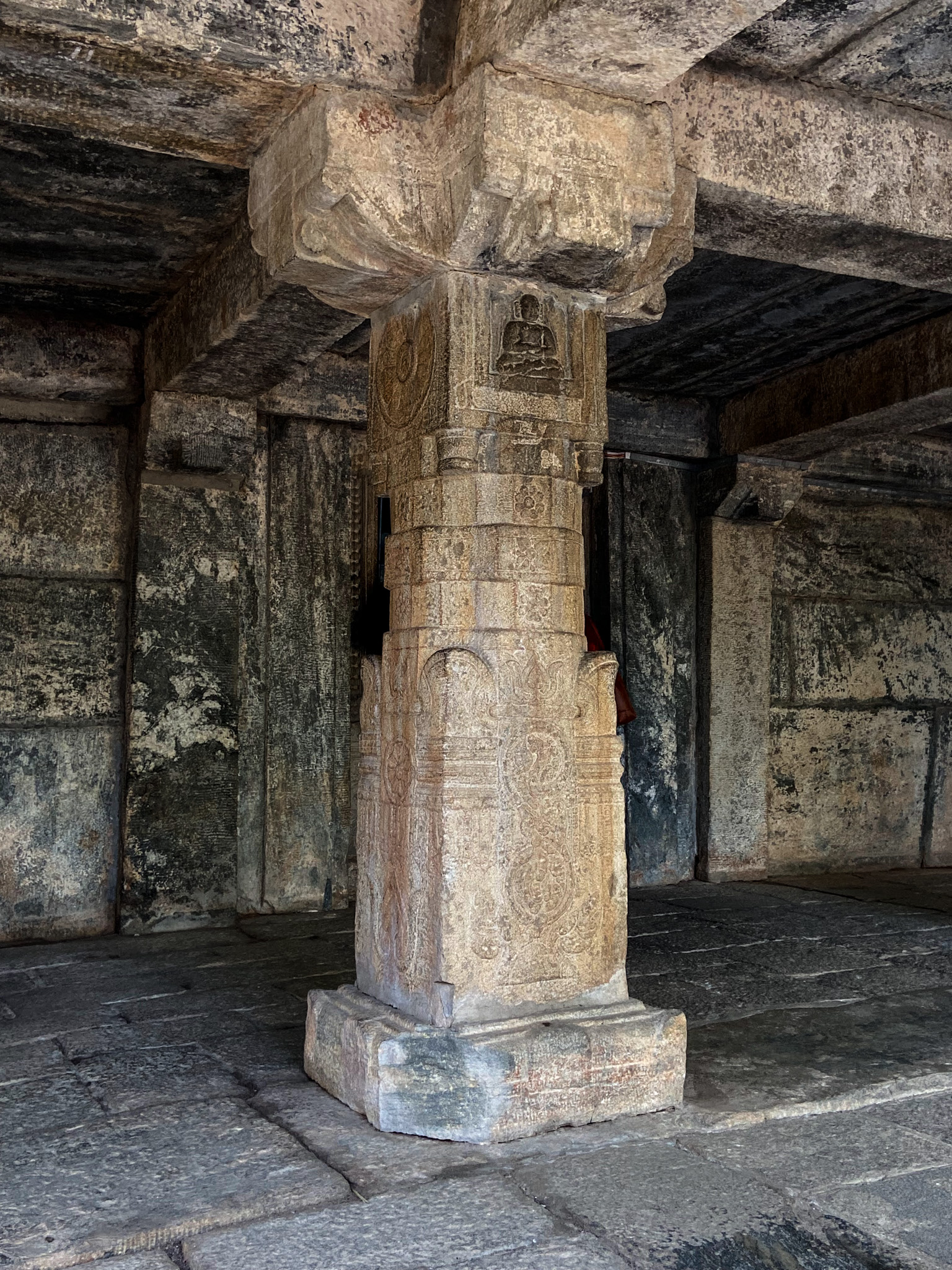
We then visited the Vijaya Vittala temple complex. While we were not allowed to listen to the musical columns, we did manage to get some pictures here. As in Badami and Patadakkal, we witnessed the scale models that the builders created before they actually created the main structures. The engineering design, the precision with which the structures are built leaves one wondering about the knowledge that existed centuries ago.

On our last day at Hampi, we were fortunate to see a recently excavated swimming pool close to the ancient Bhojanalaya. We visited the Virupaksha Temple complex and saw the Sasivekalu Ganesha, the Kadalekalu Ganesha, Hemakunta Hill temples, Lakshmi Narasimha Temple, Badavilinga temple etc.. A blog on the temples is accessible here – https://wide-angles.in/2023/01/17/the-temples-of-hampi/

Several people made our visit to Hampi memorable. Chetan Shivaprasad, an architect in Hospet, took a day off to spend with us along with his father and son. Vijay Bellare, a young architect passionate about local architecture and a brilliant photographer, is the one who took us to see the Dolmens and cave paintings. His enthusiasm is amazing and we wish him success. We also enjoyed the company of our friends, Srinath and Mohan, and their friends, Bharti, Anupama and Nagaraj. New friends and a lot more that we are yet to see in Hampi will see us visiting Hampi in the near future.