The temples of Hampi

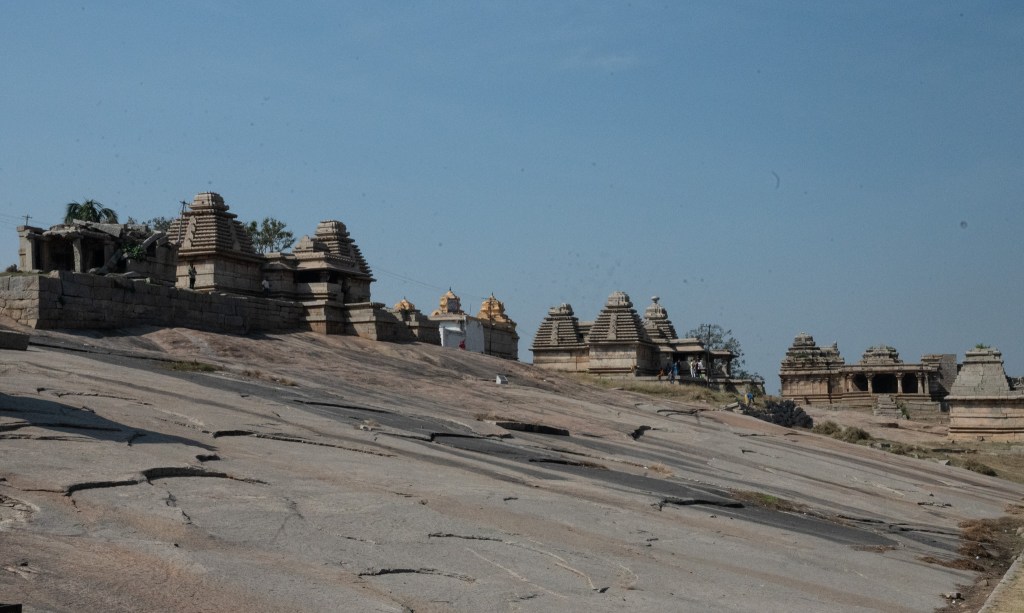
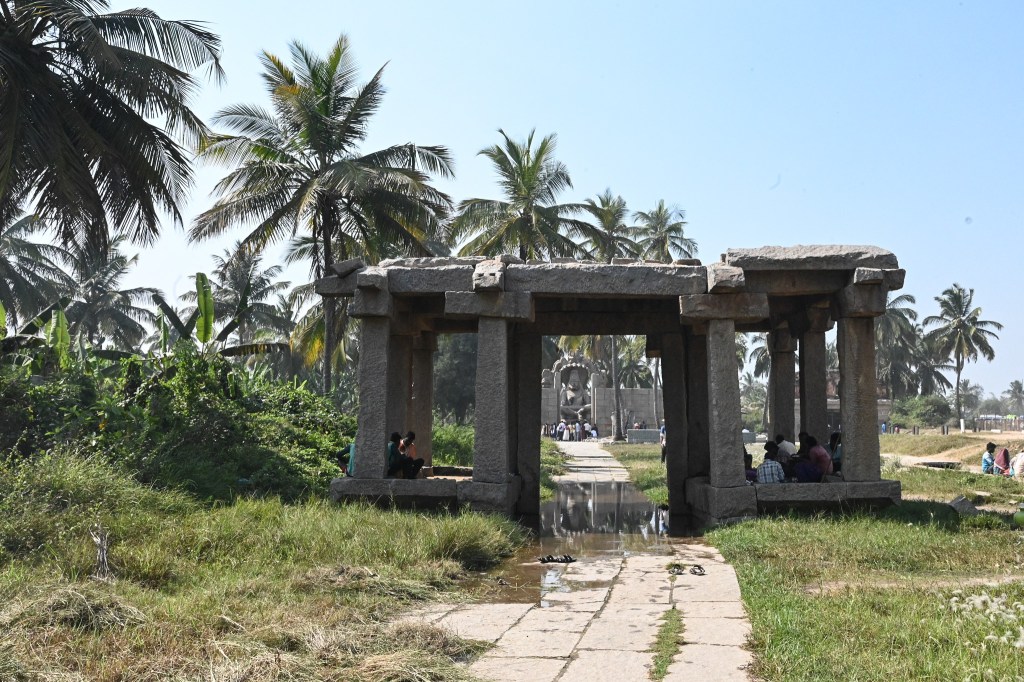
There are ancient temples everywhere in Hampi and its neighbourhood.

The temples are not isolated structures for worship alone, but have ancilliary spaces and various out buildings that served different purposes, such as accomodation for travellers, stables, ponds and tanks, dancing halls etc. There is evidence of linear market stalls alongside large chariotways that lead up to the temples. Stables are planned with quarters for the horsemen at the upper level.

There is a lot to see and absorb and the 3 days and we have managed to see and absorb only two temples with a reasonable amount of detail

The first one is the Vijaya Vitthala temple complex. Located near the banks of the Tungabhadra river, the temple was built in the 16th century by King Devaraya II of the Vijaynagara empire. There were various additions made to the complex by King Krishnadevaraya during his reign and most of the complex, as we see today, has been attributed him.
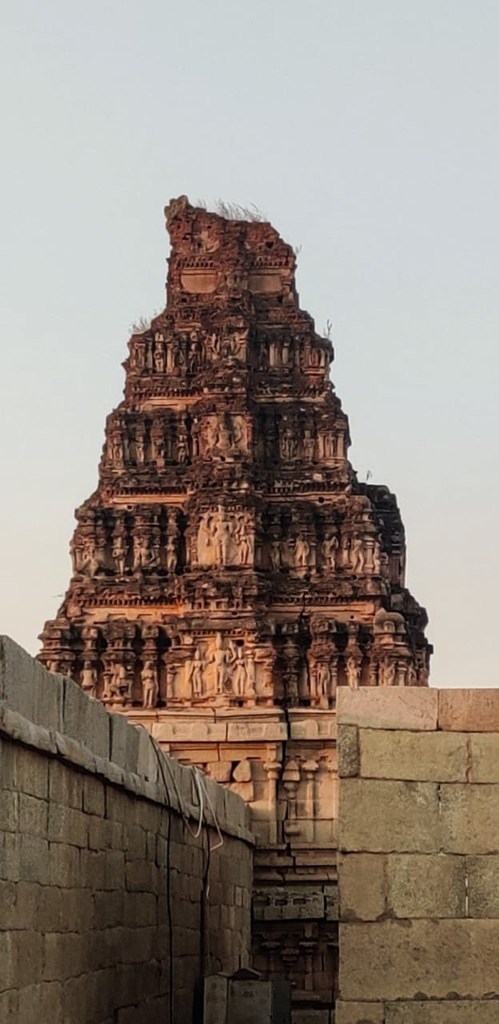
The temple complex has various pillared halls, shrines and pavilions, all elaborately carved, depicting various mythological characters and incidents and also scenes from life as they knew it.

The stone chariot in the courtyard, which is a quintessential component of every Karnataka tourist publication, is actually a shrine to Garuda. Another unique feature are the musical pillars of the Ranga Mantapa, which play the musical notes of SaReGaMaPa, when tapped gently. Since the roof has caved in this area, we could not access the Mantapa and try this first hand.
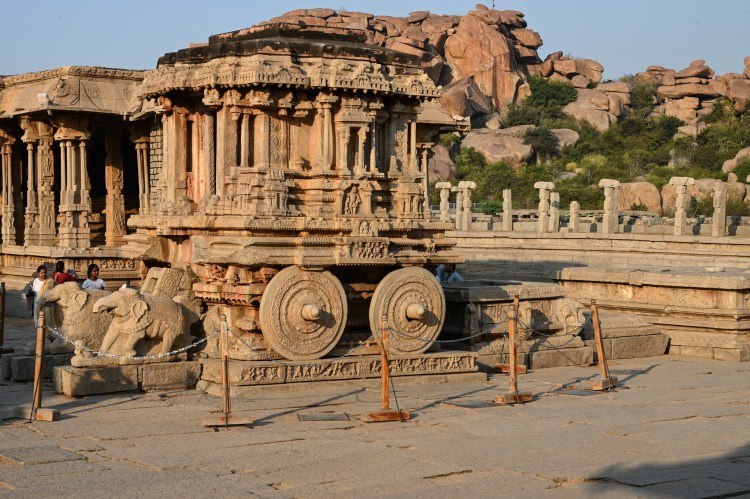
There is so much evidence of the thinking that has gone into the design of the strucutre, integration of brackets, roof members, the build of the gopuram- all in stone, brick and lime.
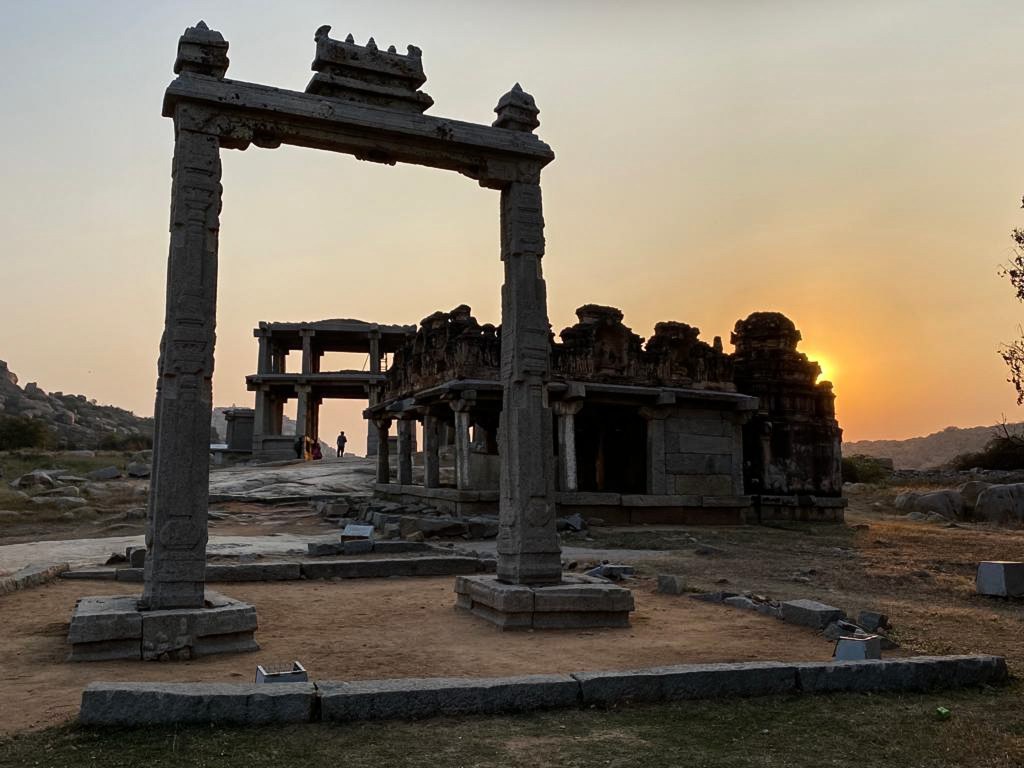
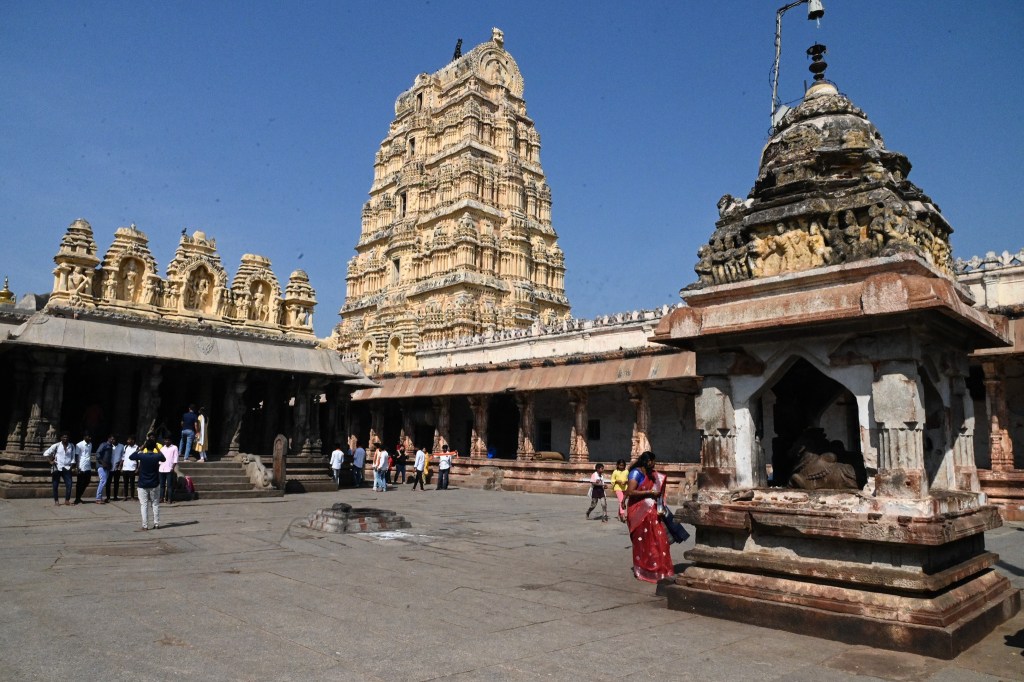
The second temple complex is the Virupaksha Temple, which is also on the banks of the Tungabhadra. One of the main features of the temple is the 500 year old mural on the ceiling of the Ranga Mantapa, reflecting folklore, mythological characters and incidents. Much of the original colours and depictions are intact.
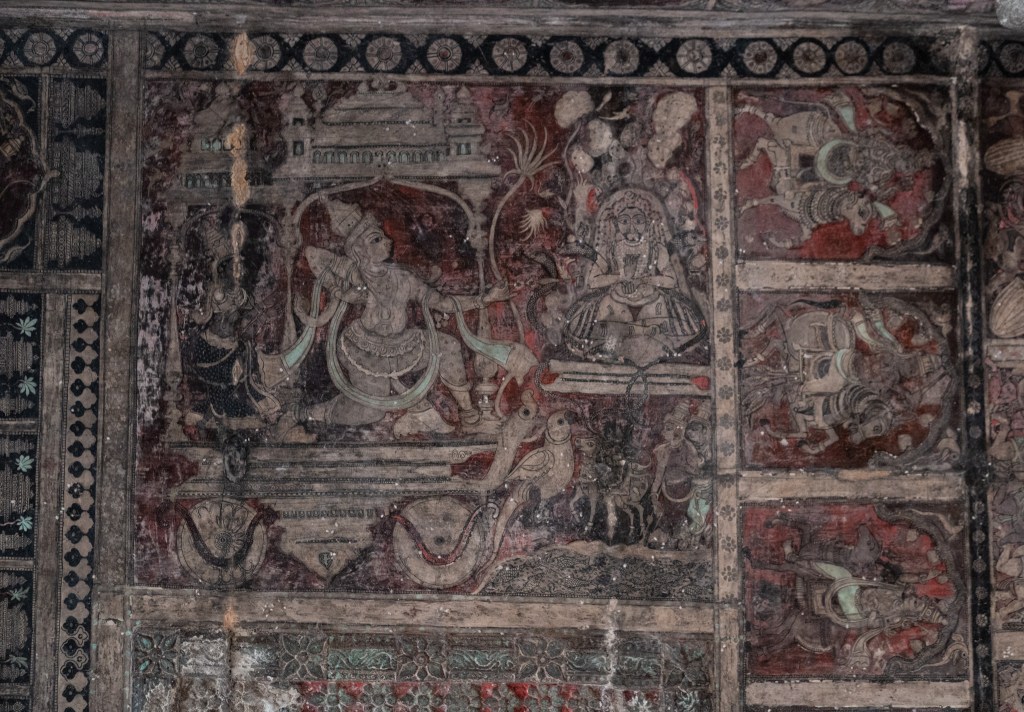
Here are links to more photos –

https://photos.app.goo.gl/FcWHRoyqovc3jCLu9

https://photos.app.goo.gl/dZ5opfQApfCG7kzW8

There are many buildings and smaller temples around the main Virupaksha temple. I could go on endlessly. Maybe, over the next few blogs…..
Hampi- Dolmens and Cave paintings

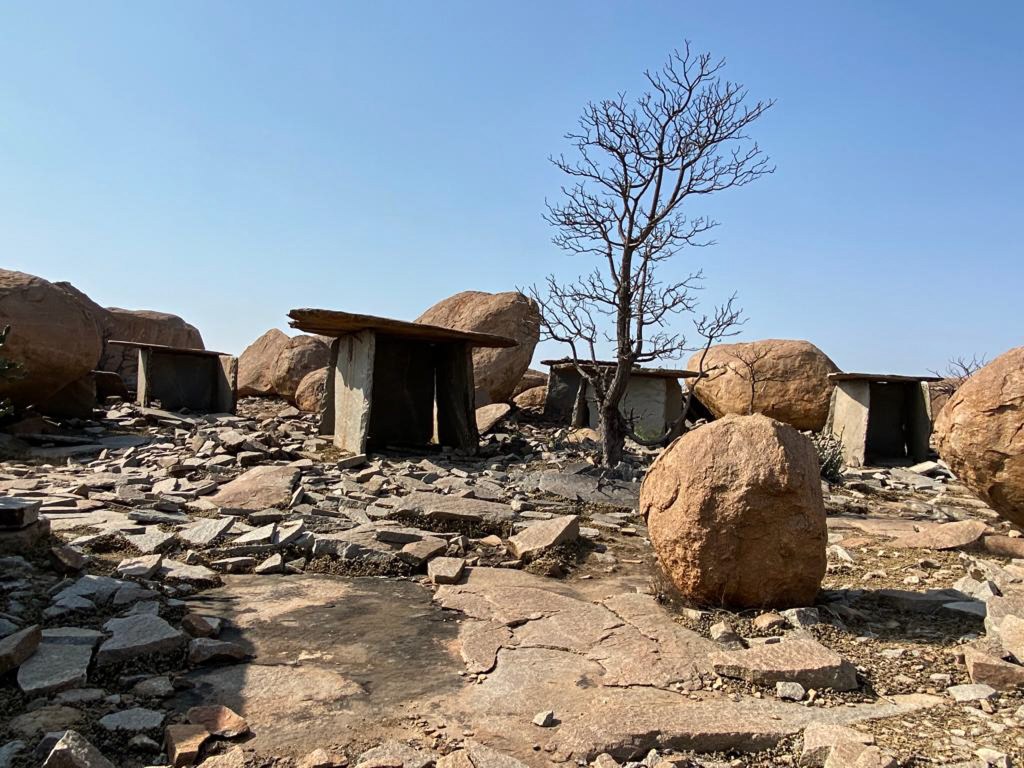
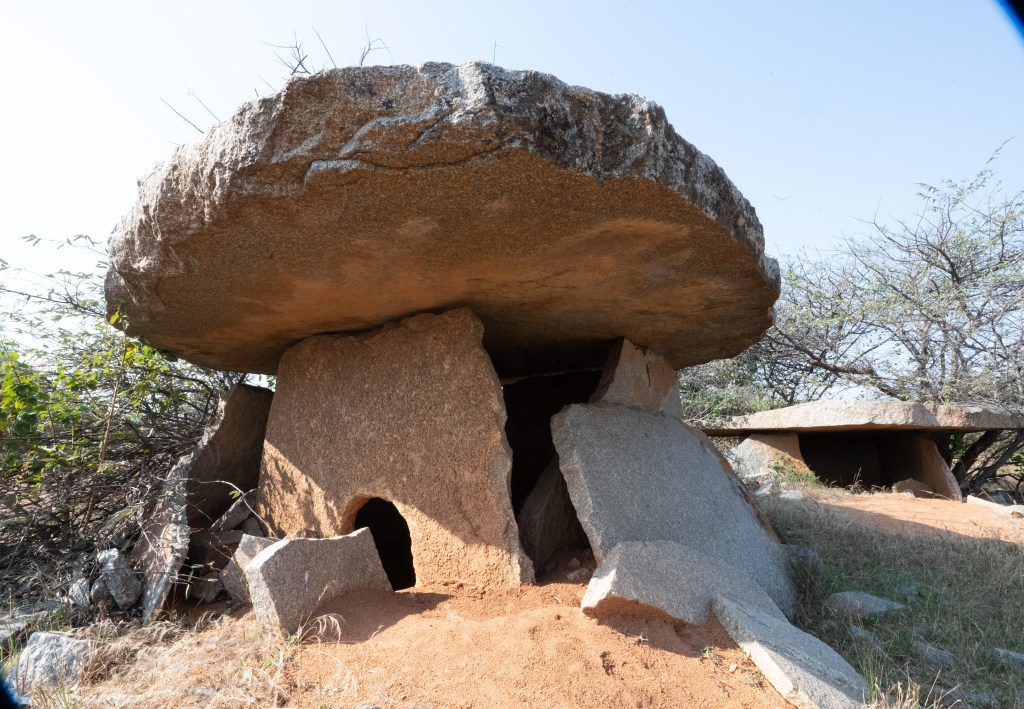
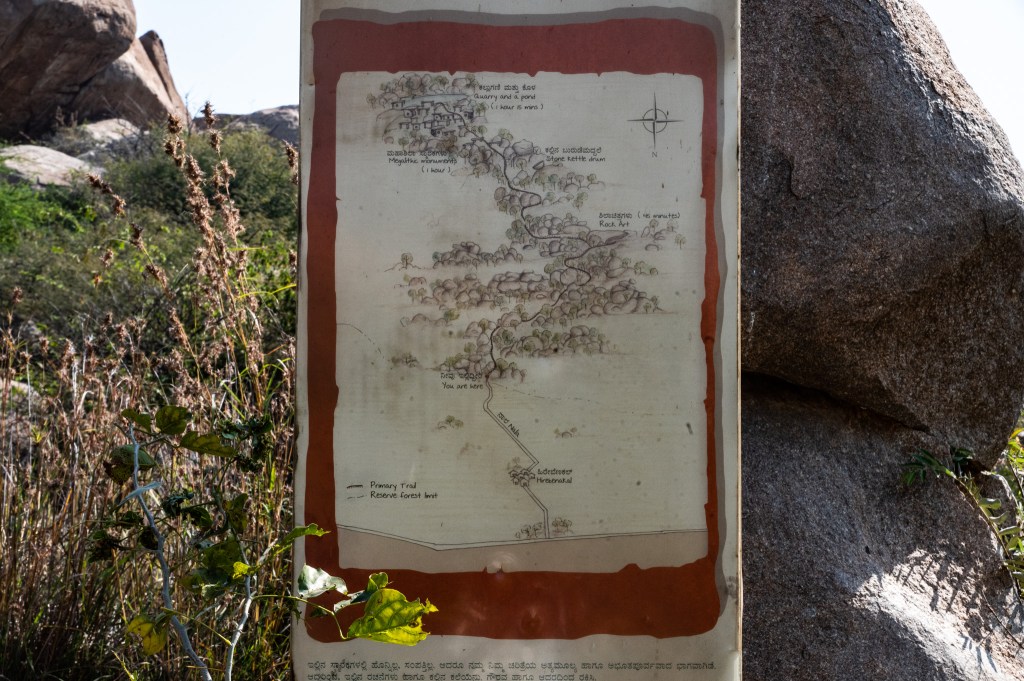
Dolmens, considered to be megalithic tombs, abound the area of Hirebenakal, near Hampi.

Dolmens were used to commemorate the dead and it is believed that ceremonies were also conducted around them. I had first learnt of Dolmens from the comics of Asterix ( I think it was Asterix and the Golden Sickle), and associated them with Gaul and that part of the world. Never knew there were dolmens in India.

After a trek of approximately 2 km up rocky terrain, we turned round the corner and into an area that is completely filled with dolmens, some of which are partially buried. There is a vague feeling of being in a ghost town and walking through quiet empty streets lined with abandoned houses.

The Dolmens are about 3 Metres high and roughly 2.5 mts square on the ground. They are covered on 2 or 3 sides with stone slabs with a horizontal portal like slab above. At a considerable height near the dolmens is a rock cut in the shape of a drum. Was this used as a part of the burial ritual? Were the slabs cut near the site, or were they transported? Were any rituals conducted? No tombs have been unearthed. There are no answers yet.

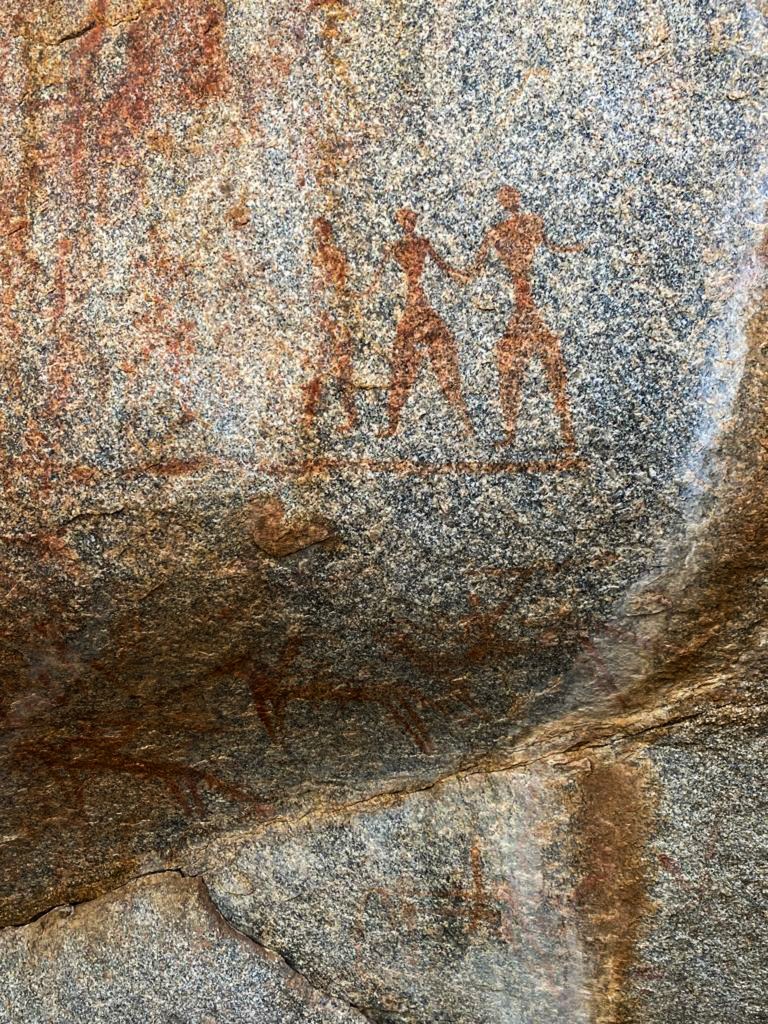
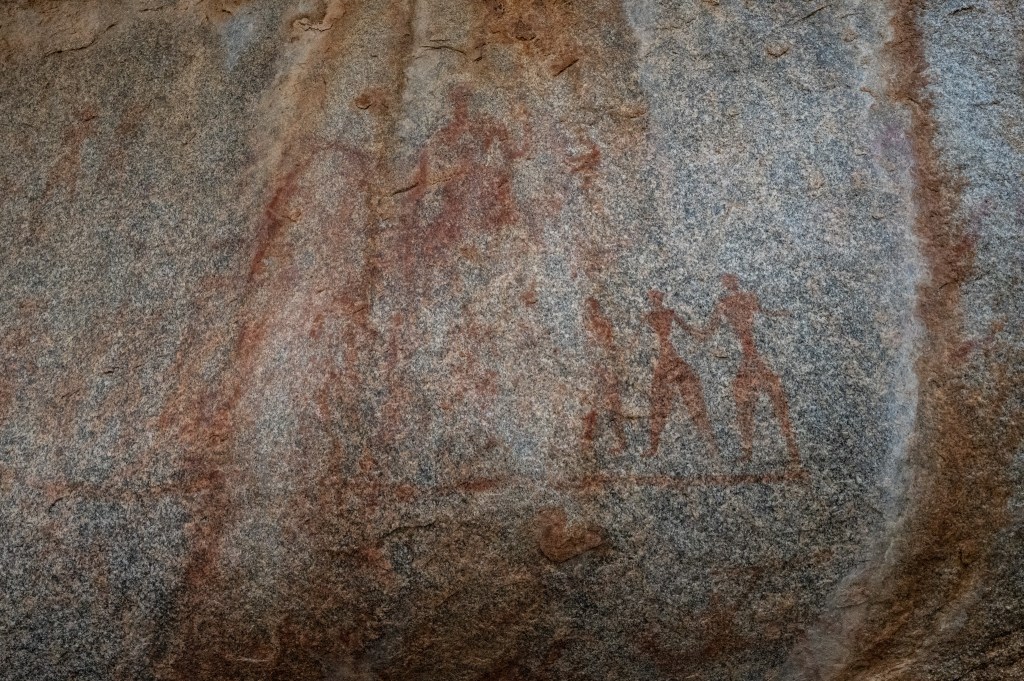
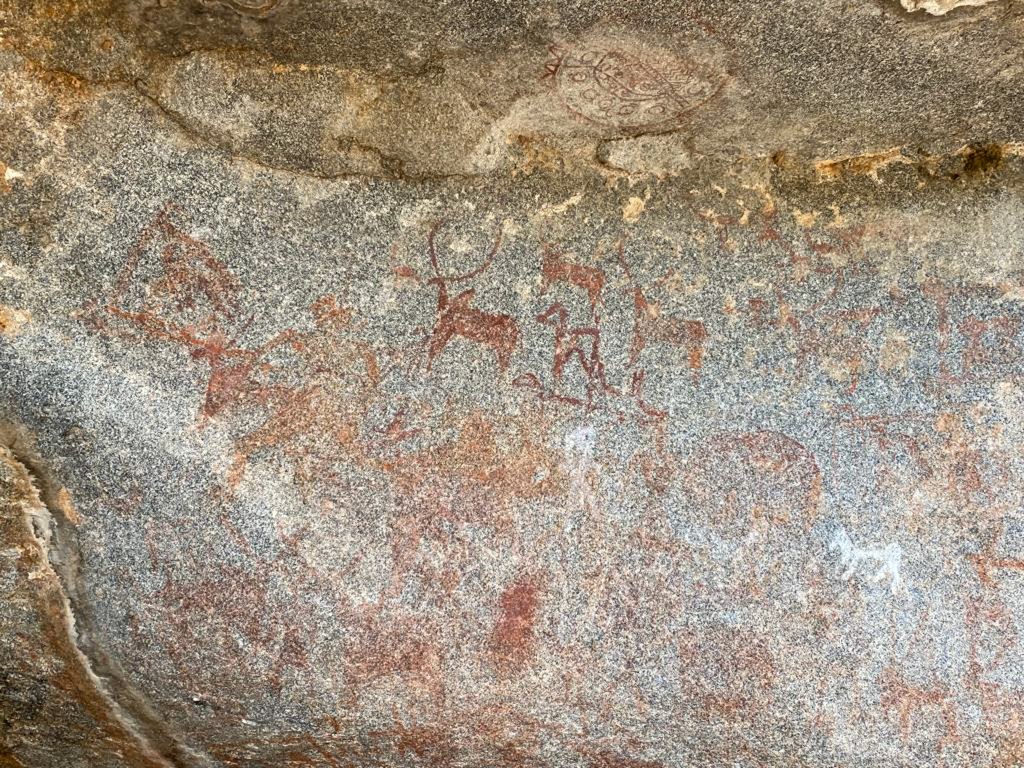
Evidence of the neolithic era exists all across the hill. Halfway up, a detour leads us to caves with extremely well preserved ancient cave paintings. They are well within the cave or on the underside and hence, are well preserved from the elements. A few have faded, probably on account of weathering. Red ochre in colour, they depict animals such as deer, men and women, hunting scenes and various geometric shapes.

Onake Kindi, near Anegundi is another site where we saw cave paintings. Set within a private property where cultivation of date palms is happening, we trekked upto a plateau with two hills. Both had caves facing each other and both had beautiful paintings depicting similar characters. Most of these illustrations are on the underside of the cave roof. It is a glorious feeling to lie down in a cave and look at illustrations that are more than 3000 years old.

The Peninsula Tour – Badami, Aihole, Pattadakkal

After good roads through a national highway and three state highways, we have established basecamp at Badami. Aihole and Pattadakkal are neighbouring villages and the three days that we set aside to visit are more than adequate.

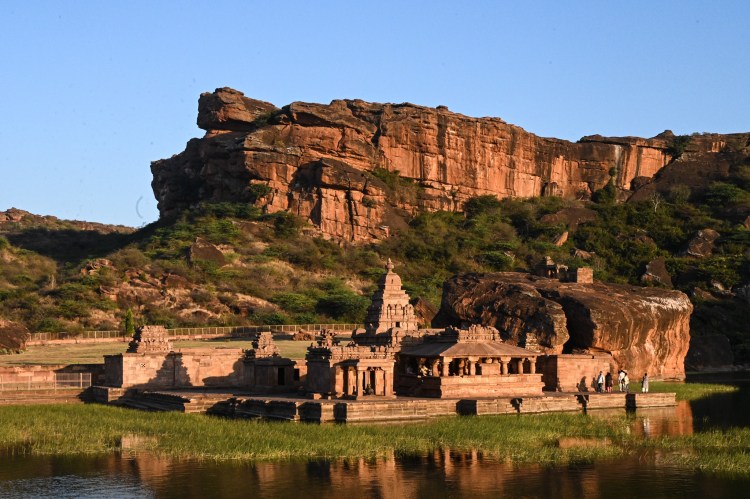
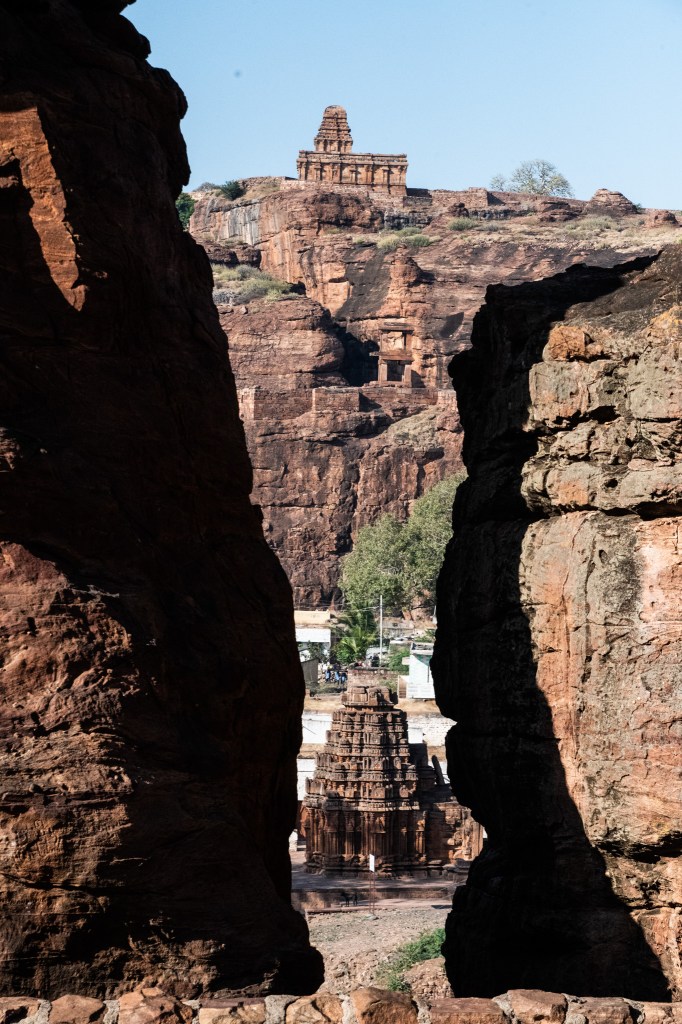
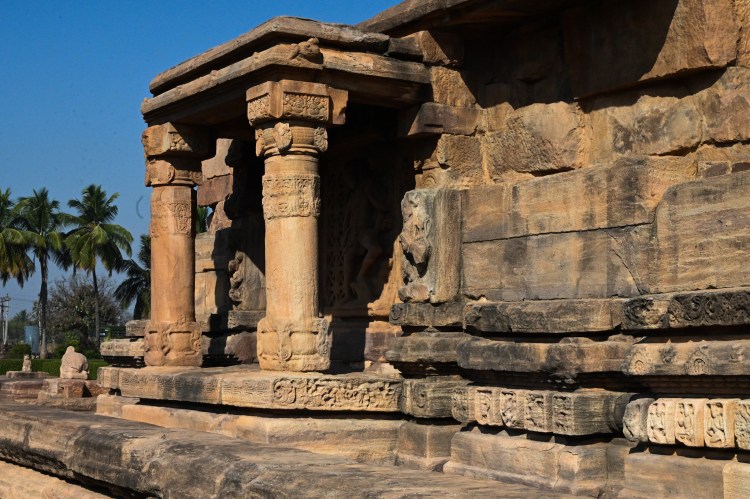
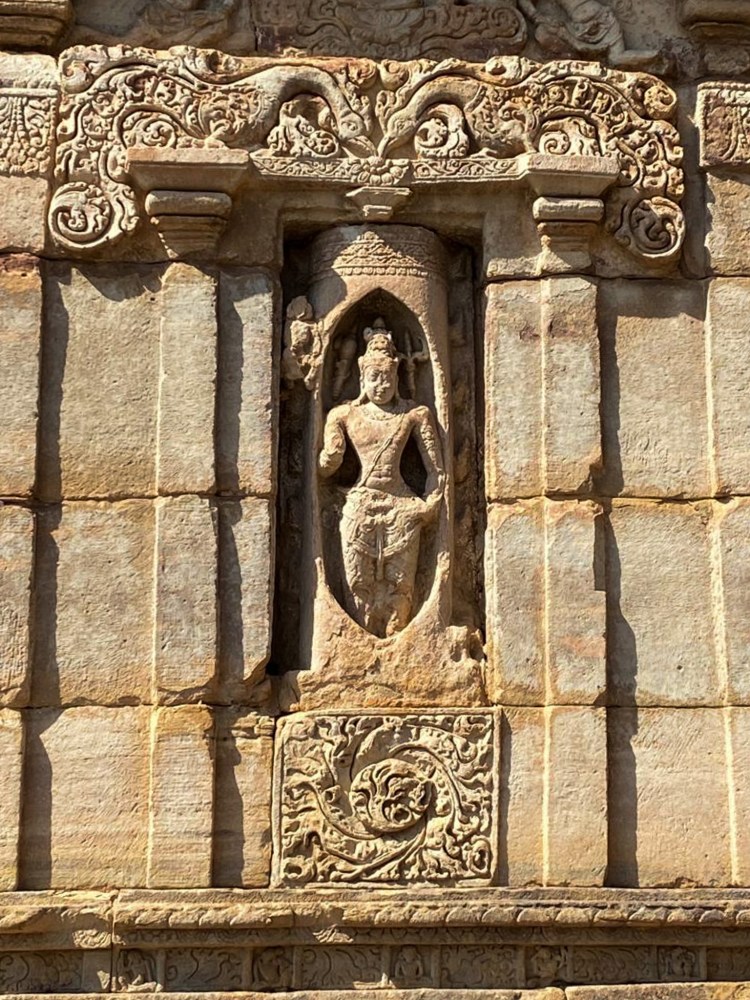
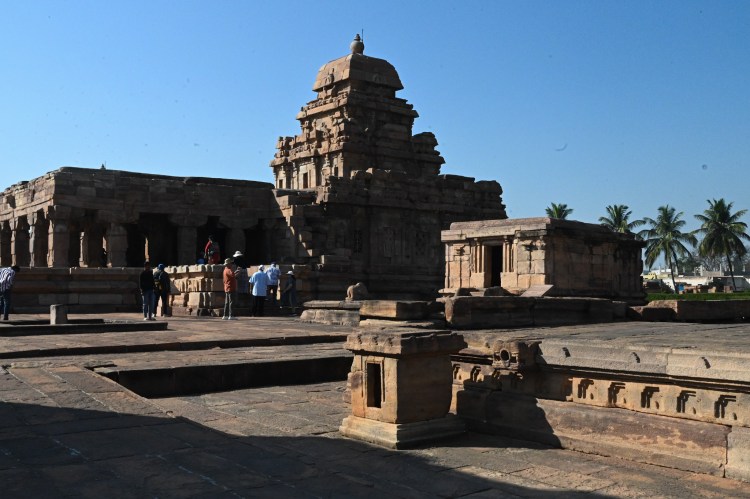
Pattadakal and Badami are UNESCO Heritage Sites. Pattadakkal is beautifully situated along the banks of Malaprabha river. Built of sandstone between the 6th to 9th century AD, quarried from the neighbouring hill, and subject to years of flooding and weathering the stone has aged beautifully and there are so many colours to them. Clearly, the artisans who built the temple, made models before the final structure. There are many scale model like structures on the site, and it all culminates in the final temple structures, with complex shikaras that reflect both the Dravidian, Jain and Buddhist architecture.

In all three locations, there are masonry markers indicating locations of where beams or roof members would have fitted and there is evidence of iron dowels used to anchor the stone blocks.

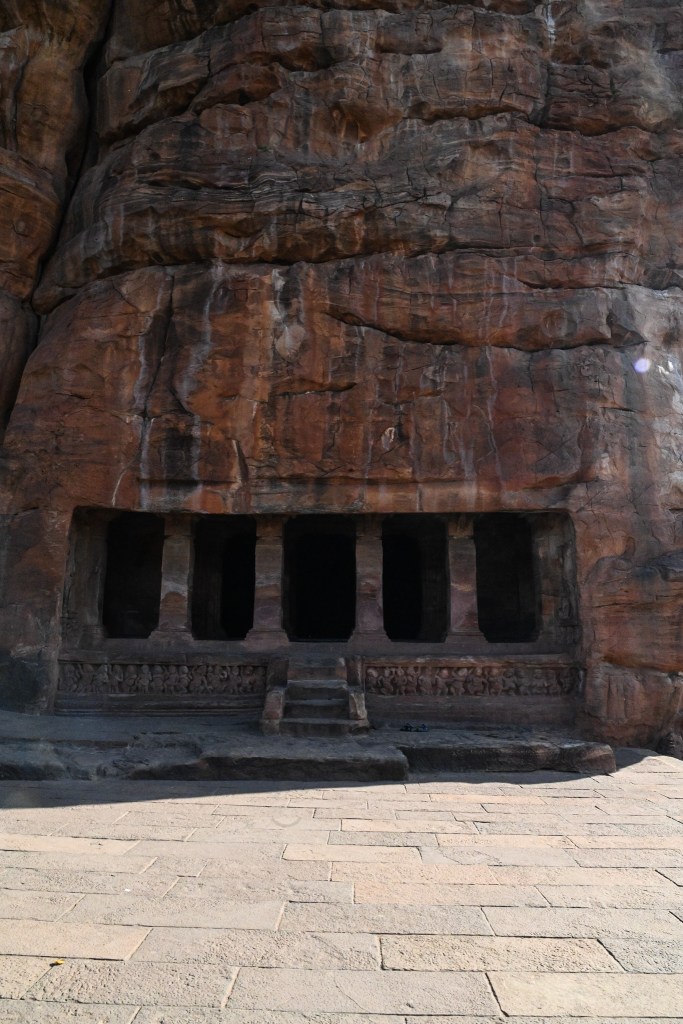
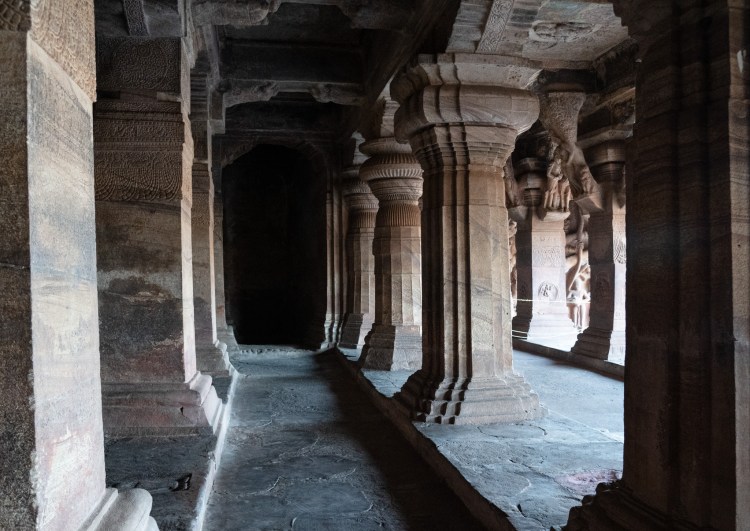
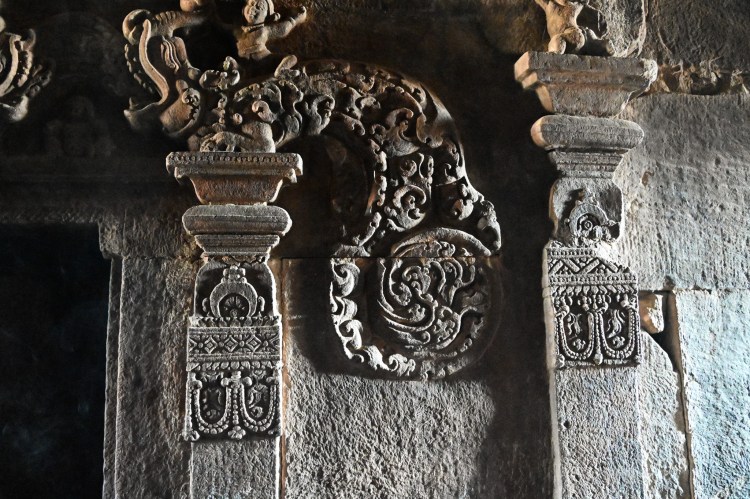
Badami has the rock cut cave temples. I think it is sheer genius to have been able to estimate the extent of rock to be carved out and supported on a few pillars and still have the mountain standing intact, above ones head. For centuries! The pillars are not just chunks of rock but have been carved down, beautifully. And the vegetable dyes, used to paint the murals are intact in places.

The archaeological museum is worth a visit. Very informative and a great setting along the Agastya lake.

We have attached a few of the pictures we took.

Our next stop is Hampi….

The Peninsula Tour

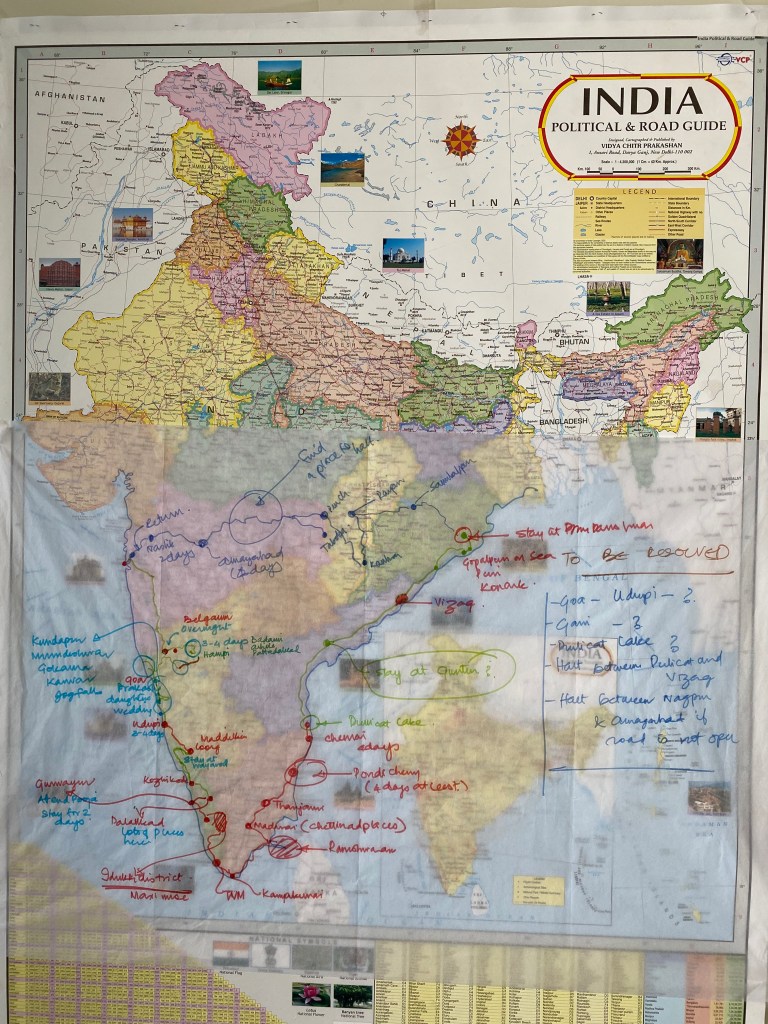
In a few days, we are starting on what has acquired the title of “Peninsula Tour”. We are driving through 9 states and for most part, along the coast of the Indian Peninsula and taking the long way home. A really really long way home.


The trip is expected to cover about 10,000 km and we expect to complete it over a period of 4 months. The drive will cover 9 states, multiple terrains, wildlife sanctuaries, historical monuments, beaches, temples, architecture and will also be about exploring food and cuisines.

D day is the 7th of January, 2023. There is a broad schedule in place; a lot of it is amorphous. We are excited, and our enthusiasm has been infectious. A whole lot of friends and family are joining us for various sectors. In effect, it is a hop on-hop off tour! Our vehicle being the ” tour bus” or part of the convoy.

Here’s how our plan started taking shape before we moved to a spreadsheet that now has a lot more detail.

We will try and chronicle this as well as we can.

First stop Badami!

Watch this space…………

Vocational Education

Introduction

On an average, India sees 12 Million people become job eligible each year. Most of these people, if they work, find jobs in the unorganised sector. A small number goes through Vocational Education programmes sponsored by the government or through private coaching centres. In the early days, vocational training covered technical professions such as turning, fitting, electricals and electronics etc., or largely, manufacturing or trade related. Now, with the significant increase in services domains, vocational programs cover IT and IT services, consumer and retail, hotel and tourism, etc..

Why Vocational Education?

The key difference between Academic courses and Vocational courses is the that the academic courses see a significant number of hours spent in the classroom while vocational courses require a significant number of hours to be spent in the on the job or practical training. A key fact is that a vocationally trained person is trained to perform a very specific type of work, whereas an academically trained person is trained to be more well-rounded, if one can say that.

An important aspect of vocational training is the apprenticeship or on the job training. This, in my view, is a challenge that impacts the quality of trained persons we bring to the job.

Another point to note is that that vocational education is very dependent on the market capacity to absorb trained persons. As an example, one may see more focus on services courses as compared to tradesman courses given the demand. This needs to be constantly evaluated.

The measure of success of a vocational program is the competency measured at the end of the course. This is a critical aspect as the persons undergoing the course have to be productive in their jobs immediately.

Some of the courses offered today include –

  • Veterinary Medicine and Agriculture.
  • Architecture and Construction
  • Science
  • Computer Science and IT
  • Business Management
  • Art and Craft
  • Education
  • Engineering
  • Health Science
  • Humanities
  • Law
  • Personal Care and Fitness
  • Media Studies
  • Social science
  • Hospitality and Travel

Vocational Education in India

In India, the Central Govt defines the vocational education training and provides funding. There are about 9000 schools imparting 150 vocational courses of two-year duration in several disciplines. It caters to about 1 Million students countrywide. The National Institute of Open Schooling (NIOS), a GOI initiative offers about 80 courses and 0.6 Million students are enrolled. The gap between the number of people eligible for employment as a whole is significantly higher than the ones being imparted training and the gap increases each year.

The National Vocational Educational Qualification Framework (NVEQF) is the government’s initiative to address the quality of the students passing out of the courses. We will need to understand the details. The plan is to create a unified framework that allows the recognition of the courses, quality and qualifications at a national level.

The COVID Pandemic in India

By the time this post is published, a lot of action on the COVID pandemic will be underway. However, some things will not go away and we will need to take a hard look at each of the parameters that affected our response to the pandemic.

If you recollect the events of December 26, 2004 and the aftermath, you will remember how unprepared we were in the aftermath of the event. Since then, our NDRF teams have worked tirelessly to address our preparedness before, during and after cyclones and similar events. I am sure they are still updating their manuals every time a cyclone hits as each event is an opportunity to improve our responses for the next event.

Any Disaster response system evaluates, based on a Risk evaluation model, all possible disaster scenarios. These include epidemics as well. While it is conceivable that such a devastation would not have been foreseen, it is almost certain that biological attacks that are localised to cities will have been prepared for. The extrapolation of that scenario to a nationwide pandemic will have been definitely been done when COVID hit us in 2020.

The plans would have envisaged the human tragedy that was to unravel with the crowded hospitals, the strain on the infrastructure, the impact on transport and communications systems, shortage of medical supplies, food supplies, potential looting, Communication plans to stakeholders and the public, etc.. For the purposes of this blog, let us stick to the medical response. The varying severity of the first attack across the country provided a great opportunity for us to evaluate the strain on our infrastructure and how stretched it could get. We knew the breakpoints, too. We had time to use the experience to build an extensive plan to address the next outbreak. If we did, and even if we did not anticipate the ferocity of the current wave, we would be better prepared. I am sure the NDRF is ready.

The question then is, why have we not called this a National Disaster and have the NDRF coordinate the response? Would the coordination for various critical materials and infrastructure not been better? Would we not have a transparent system that captured data accurately and put down demands for resources? Wouldn’t government departments be better utilised to support this response. Wouldn’t our communications to the people and the world be better coordinated?

I would love to hear your views.

What people need?

We often hear that people need food, shelter and clothing to survive. While a few of us are privileged to have this need met over generations, others may not be so lucky. The middle class in India has grown in the past 20 odd years, but there is a significant number that continue to struggle to achieve the bare minimum needed to survive. Our effort here is to look for ways to improve people’s lives in a sustainable such that they can fend for themselves and achieve the basic needs of food, shelter and clothing.

There are several organisations that support people in a variety of ways. There are those that focus on the child, its care, education and growth. There are others that work with adults in terms of providing basic skills that enable them to take on jobs. There are yet others who work on other dimensions of the problem. Is this all happening at the urban level, or are there initiatives at the rural level that help avoid or reduce migration to cities?

Why are we doing this?

We have been supporting several causes in India over the years. We are constantly provided with progress on the children or adults we support. A well oiled machinery then taps you every few weeks to fund something or the other, support a surgery etc.. Our donor information is now available to every agency that is looking to tap us on the shoulder for donations. We need to be able to distinguish between the genuine and the fake.

How do we help people in an environment where every person you talk to is involved in some sort of social work? What should our priorities be? What existing support infrastructure should we leverage? What should we create anew? How do we bridge initiatives to build an environment that can be as well connected and coordinated as possible? Is the focus the rural environment or is it the urban setting? What would that blueprint look like?

We are seeking views from experts in the field who can work with us to clear the misconceptions we may have; we believe we have many, help us build a blueprint that we can work with over the next few months.

All comments and feedback are welcome.