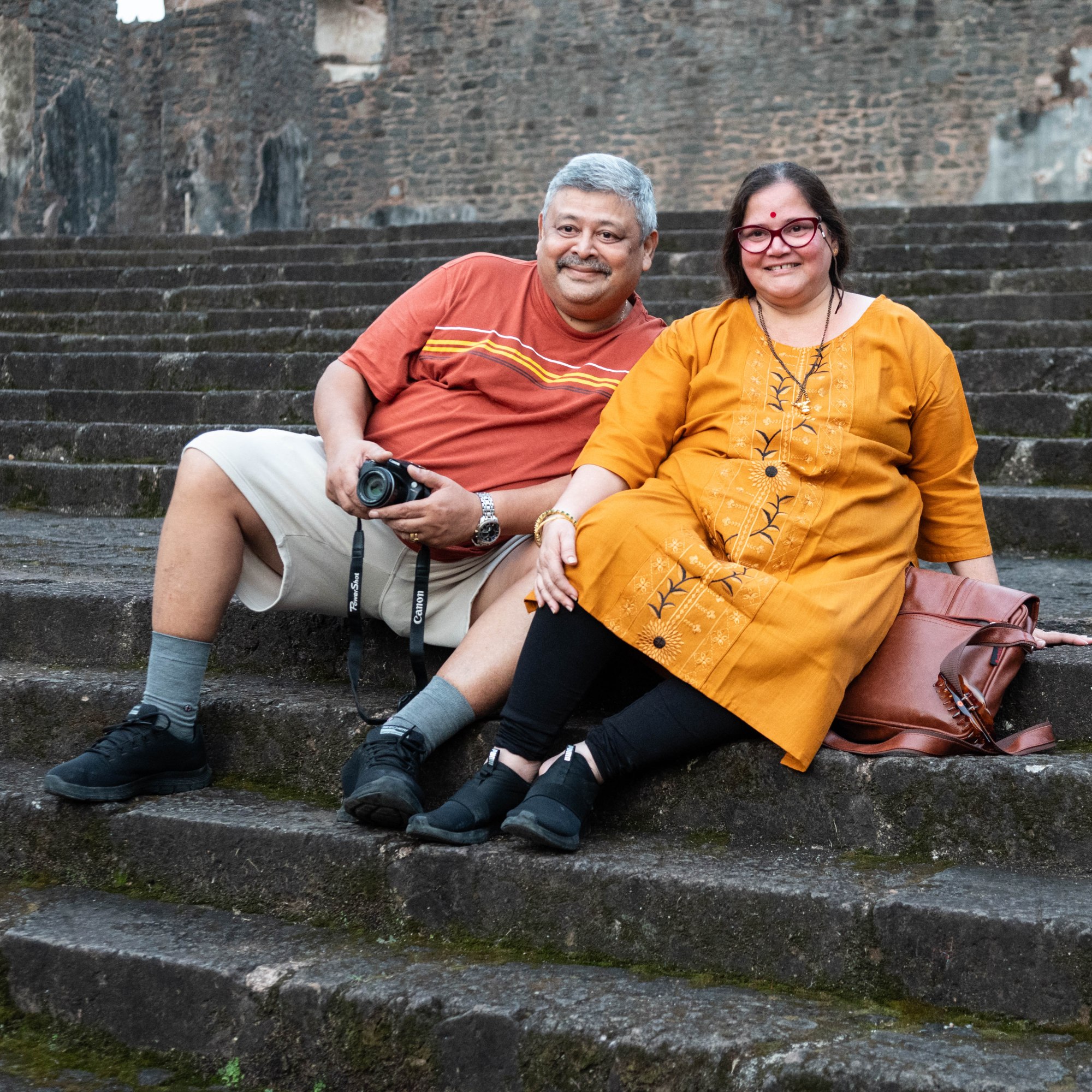
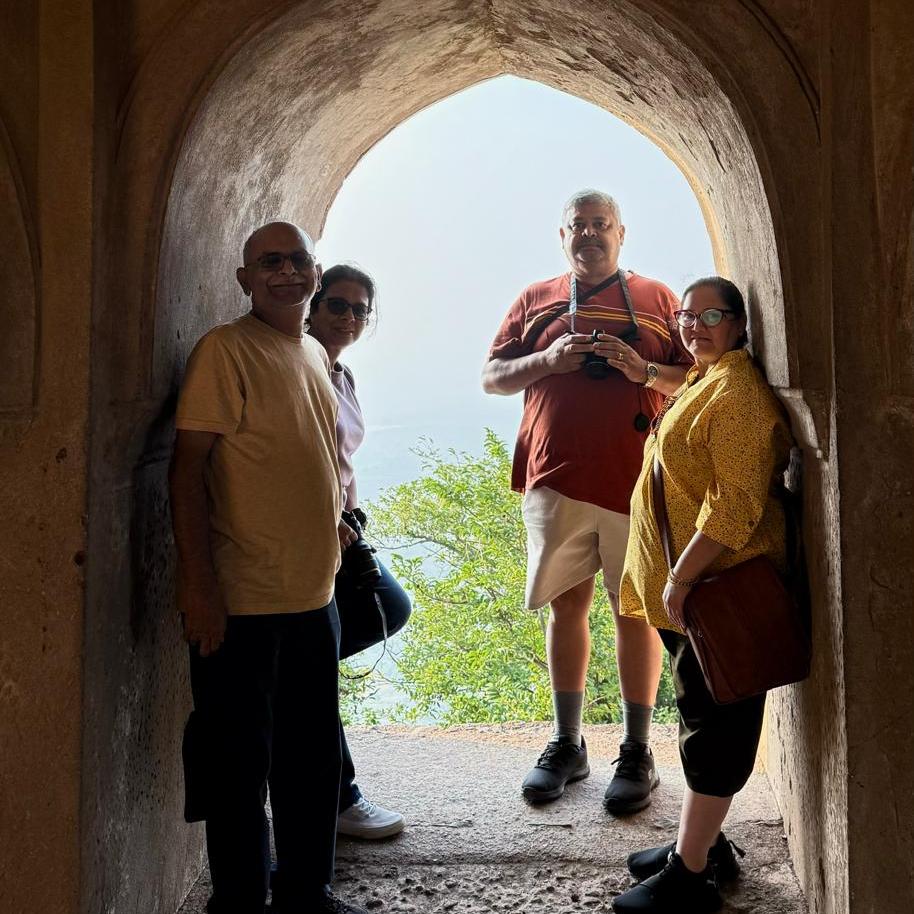
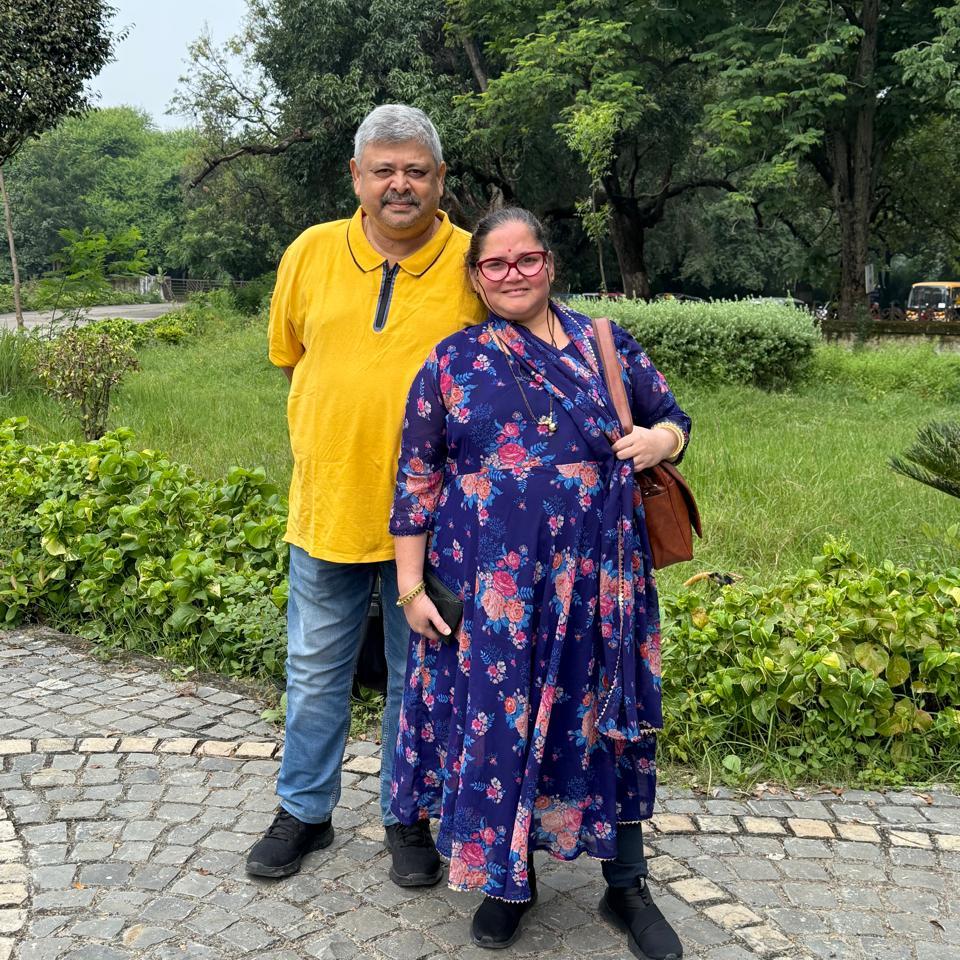
Ranthambhore Again!

It has been a while since we returned from our MP Tour. The withdrawal symptoms are severe; so this short trip in sweltering heat to Ranthambhore for 3 days is a welcome change. Landing in Jaipur in the evening, the heat wasn’t as bad as we expected. The following morning, as we went towards Ranthambhore, the temperature went up to 47 degrees centigrade. Our stay was at Fateh’s Retreat, the first time we were staying at this property, conveniently located close to the main gate. It’s a quaint little property with a nice restaurant and cafe.

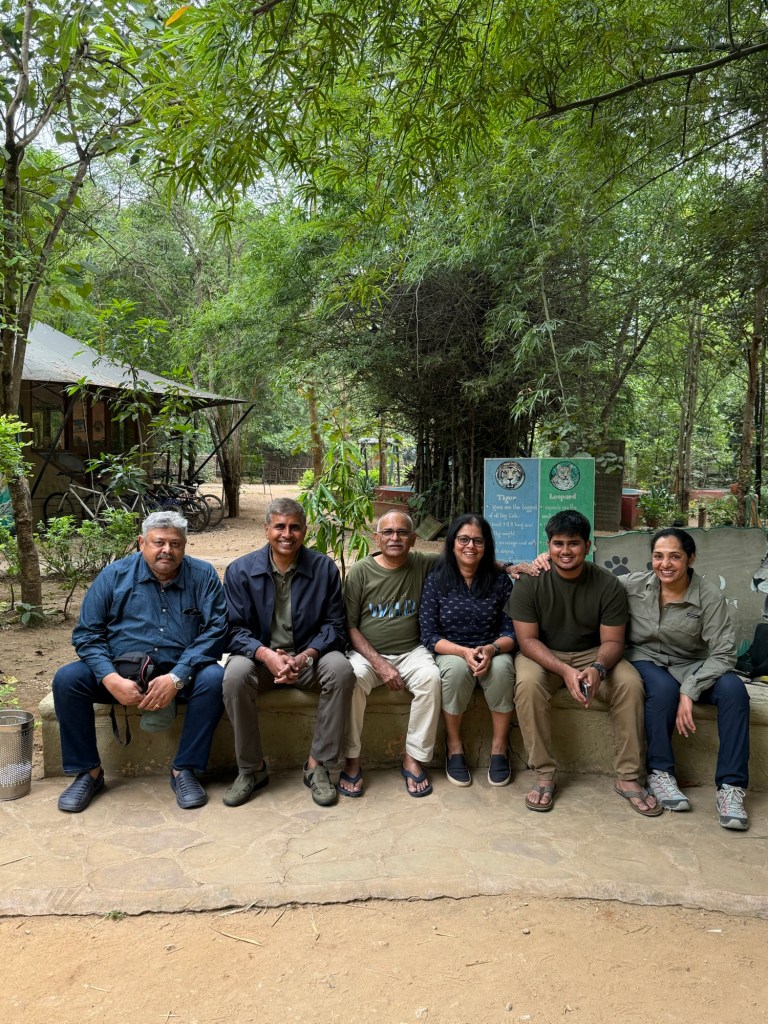
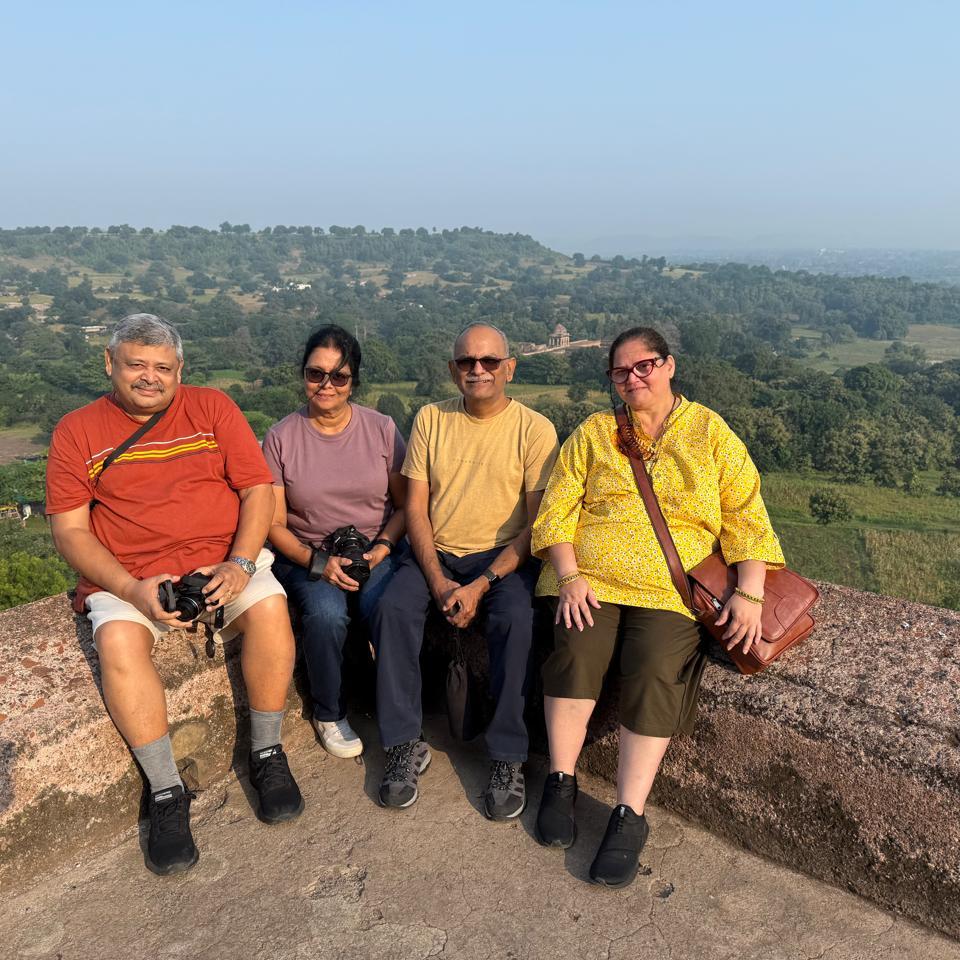
We had 6 safaris booked this time and excitement was high given the number of tiger sightings reported in this park over the past few months. With 10 folks raring to go, it was going to be fun. In fact, all 10 of us have been on safaris together for many years now.

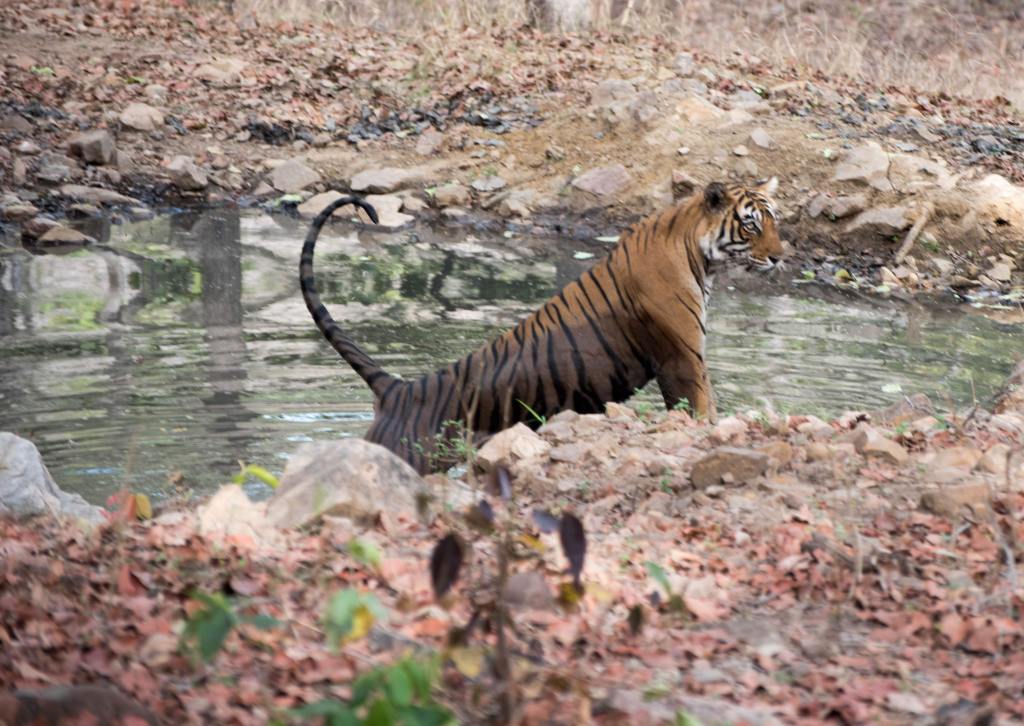
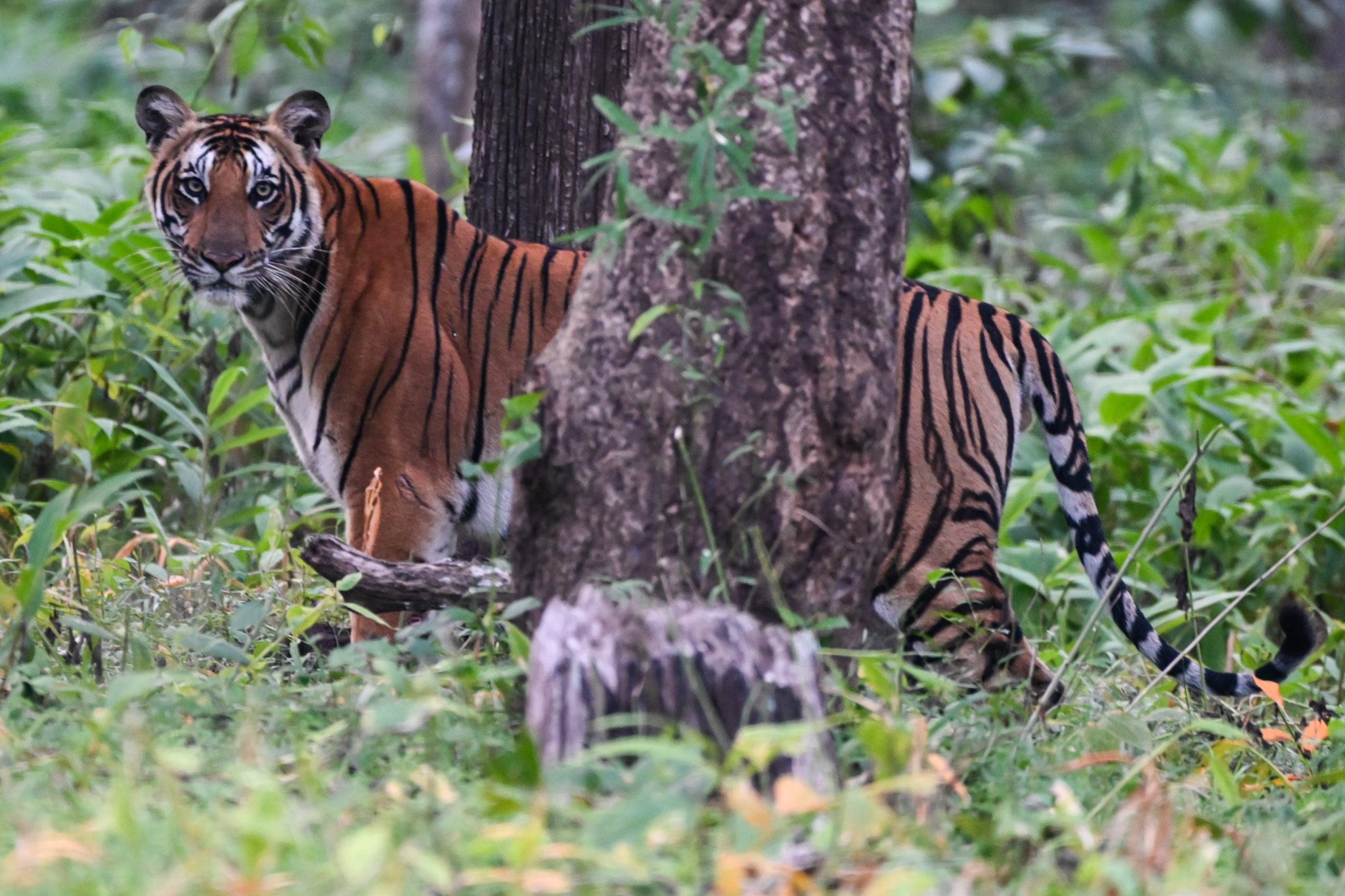
Between our two jeeps, we covered the key Zones from 1 to 6. Over the next 3 days we were able to sight 12 different tigers. Zone 2 and 3 turned out to be the zones where we had our best sightings. This is where we will spend most of our time.

Zones 2 and 3 are probably the most beautiful, scenic zones of Ranthambhore National Park.

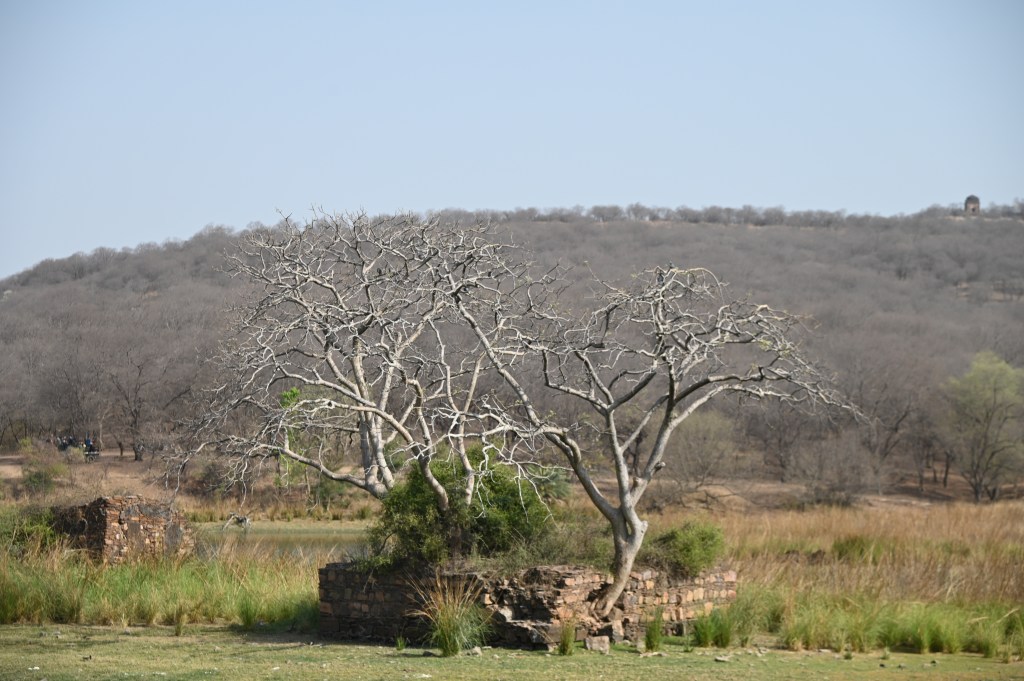
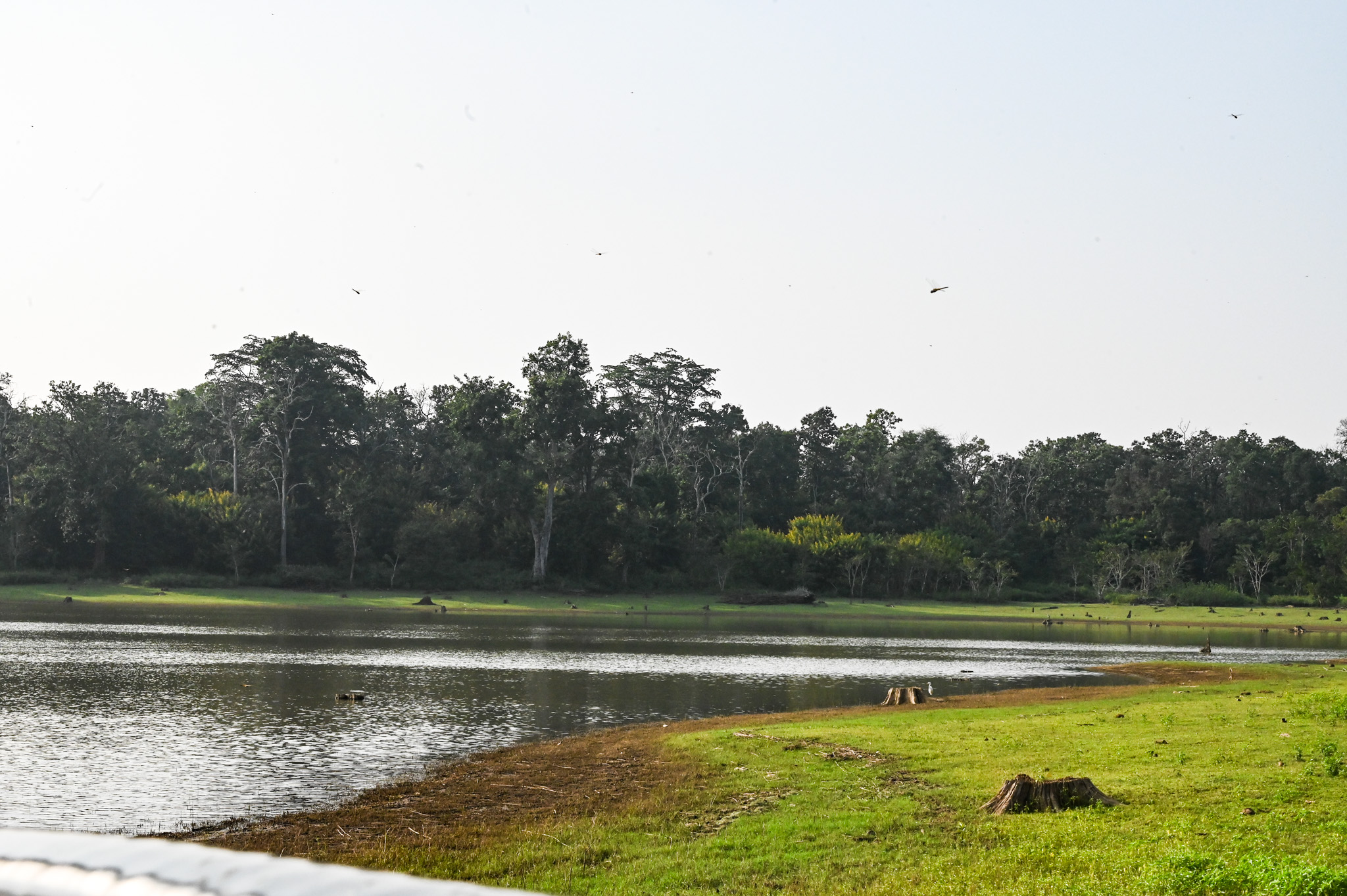
Zone 3, with Rajbagh Lake in the background and the history surrounding the tigers that ruled the lake, the excitement is palpable. We weren’t to be disappointed. As we entered the large entrance to Zone 3, we remembered our encounter with Arrowhead many years ago walking from Jogi Mahal, close to 100 metres from the gate, to the lake. Since then, we have seen Arrowhead many more times, but this memory is etched deep.
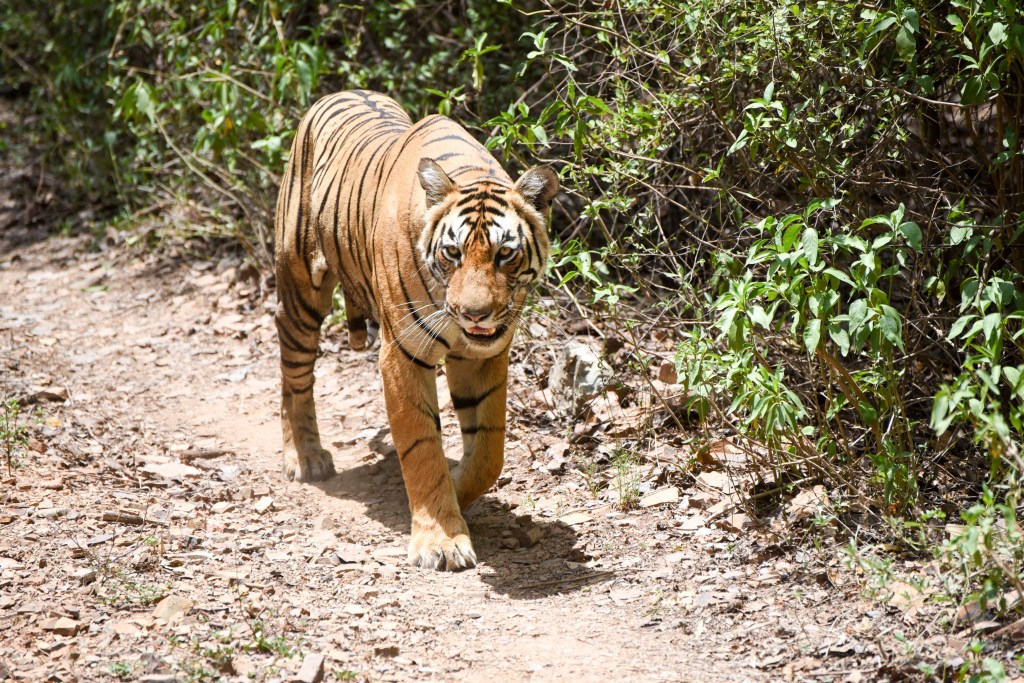
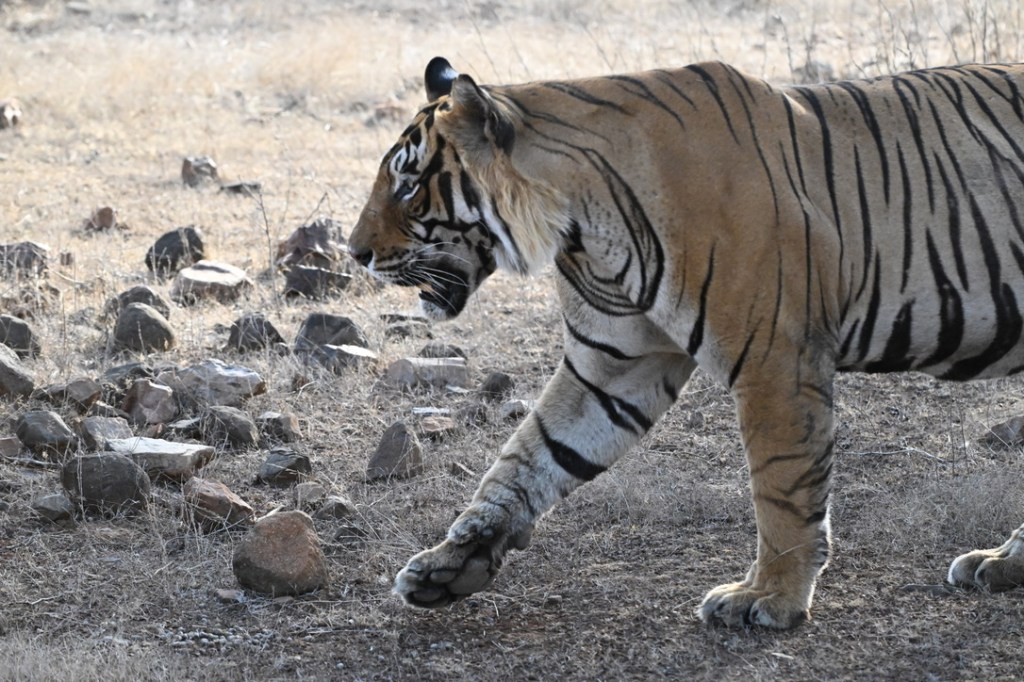
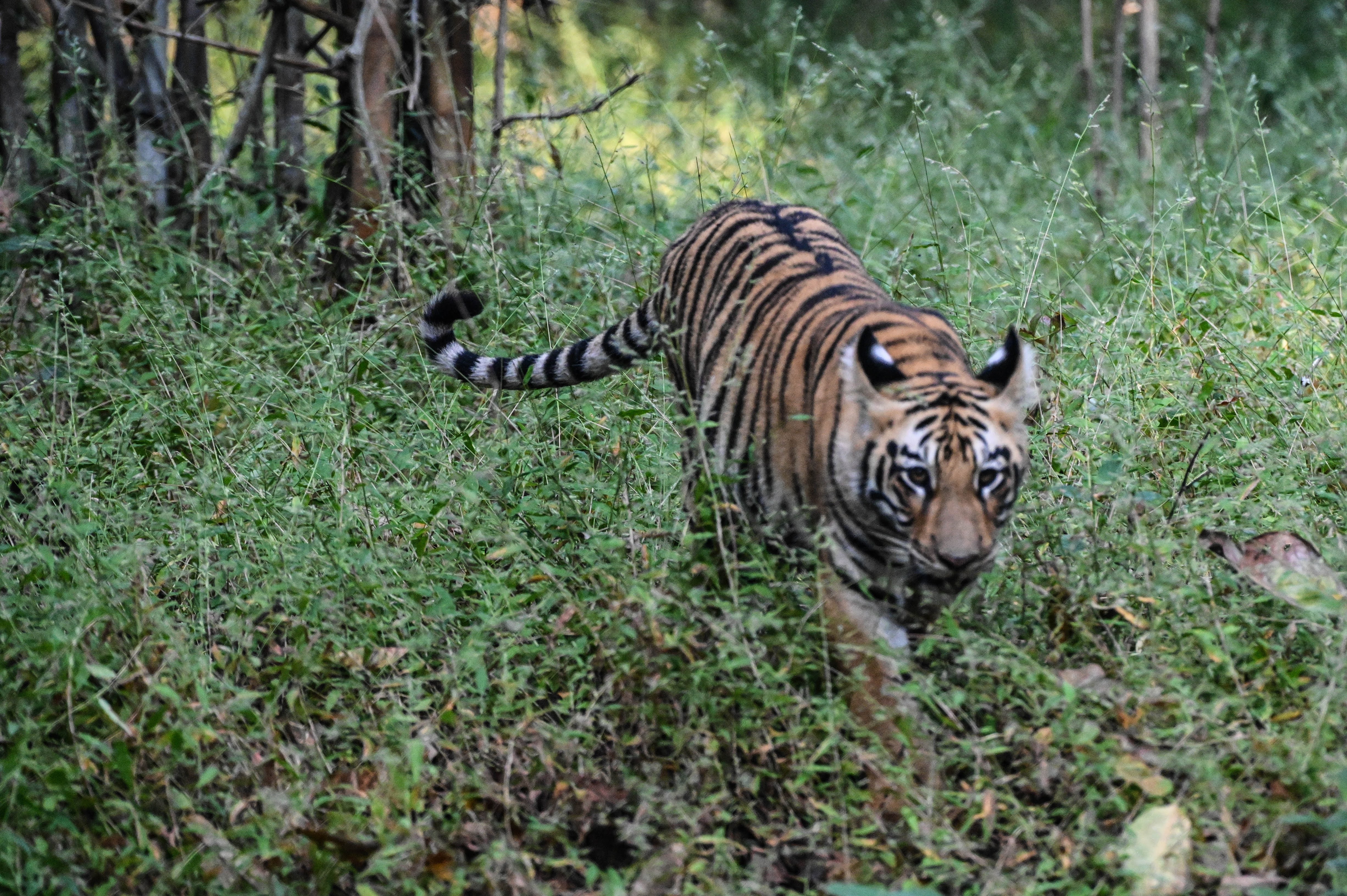
As our jeep made the short drive to the lake, Ridhhi’s 3 cubs sauntered on to the jeep track. The male cub walked towards the lake, while the two female cubs inspected their surroundings with the flehmen response. Flehmen response is when an animal raises its nose in the air, with mouth open to facilitate pheromone detection.

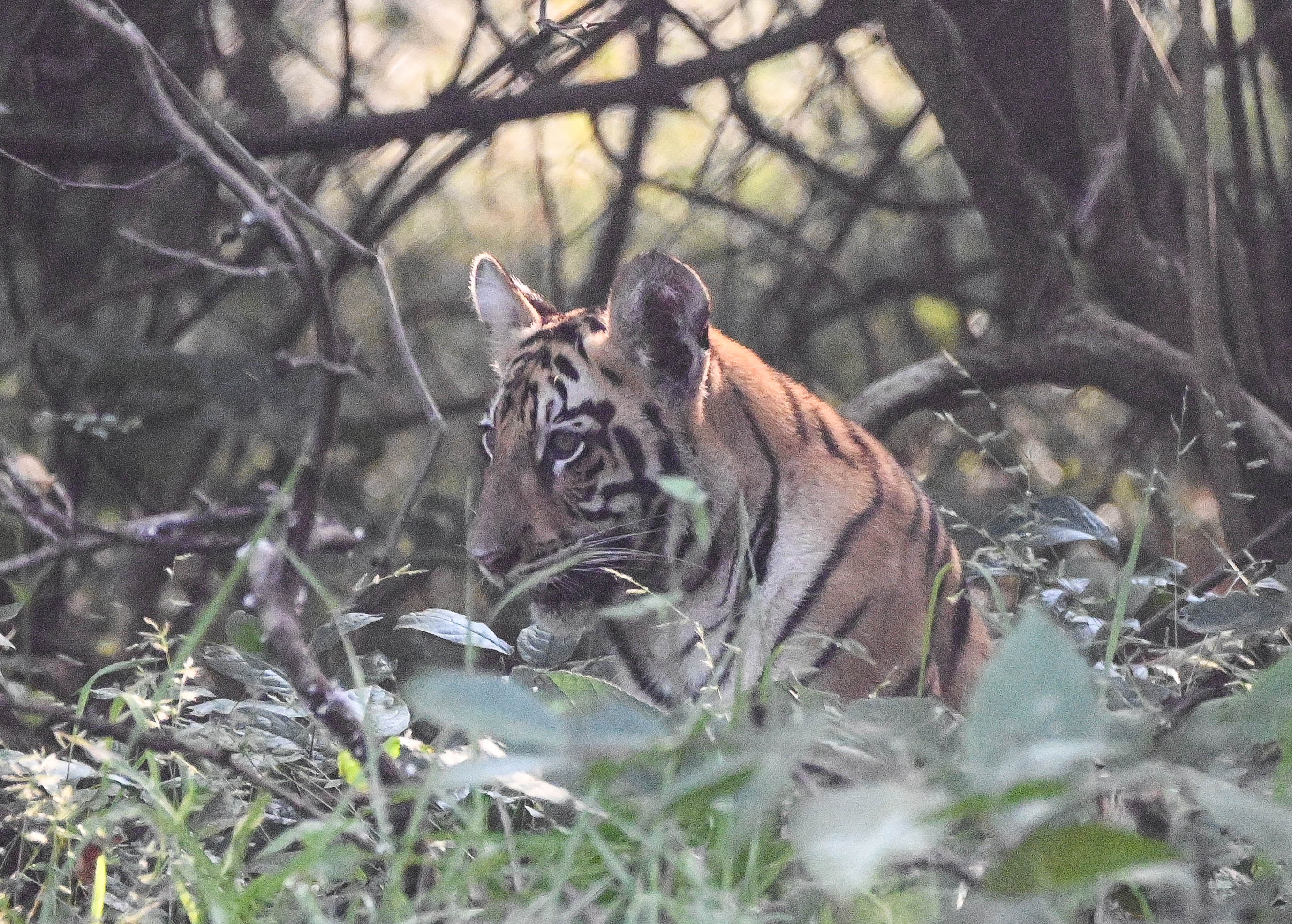
We spent a significant time with these cubs before decide to go off the road and head to the lake. As we made our way towards the lake, we were expecting to see Riddhi with her cubs in some time. We were in for a surprise, though. There was Arrowhead walking towards us along the lake’s shoreline. Unexpected, because Arrowhead is Riddhi’s mother, has 3 more cubs of her own and is not expected to be so close to Riddhi’s territory. Arrowhead continued to walk into the grass before she walked on the thin strip of land to the structure in the middle of the lake. As she rested there, we made our way back towards the gate to see Riddhi’s male cub walking in the grass next to the jeep path and then sitting in the grsss looking us directly in the eye. Heading back to the lake, we saw a tiger sitting across the lake. This had to be one of Arrowhead’s cubs. Scanning the shoreline, we saw two more cubs sitting under a tree close by. As we deliberated our next move, Arrowhead had decided to resume her slow walk, this time towards her cubs. We headed in the direction of the cubs passing by the beautiful Malik Lake. We were now close to the cubs. We spent time watching and following the cubs before we decided to move along and head back to Riddhi’s cubs. We were on way when we saw Riddhi walking alone. We now were following Riddhi before she decided to leave the road and move further into the forest. We made our way to the gate after an afternoon of non stop tiger sighting. Our afternoon was not going to end without a twist. As we made our way towards the hotel, Sultana was walking on the rocks next to the main road. She soon disappeared from our view into Zone 2 and we headed back to our hotel just couldn’t believe that we had spent an entire afternoon with tigers.
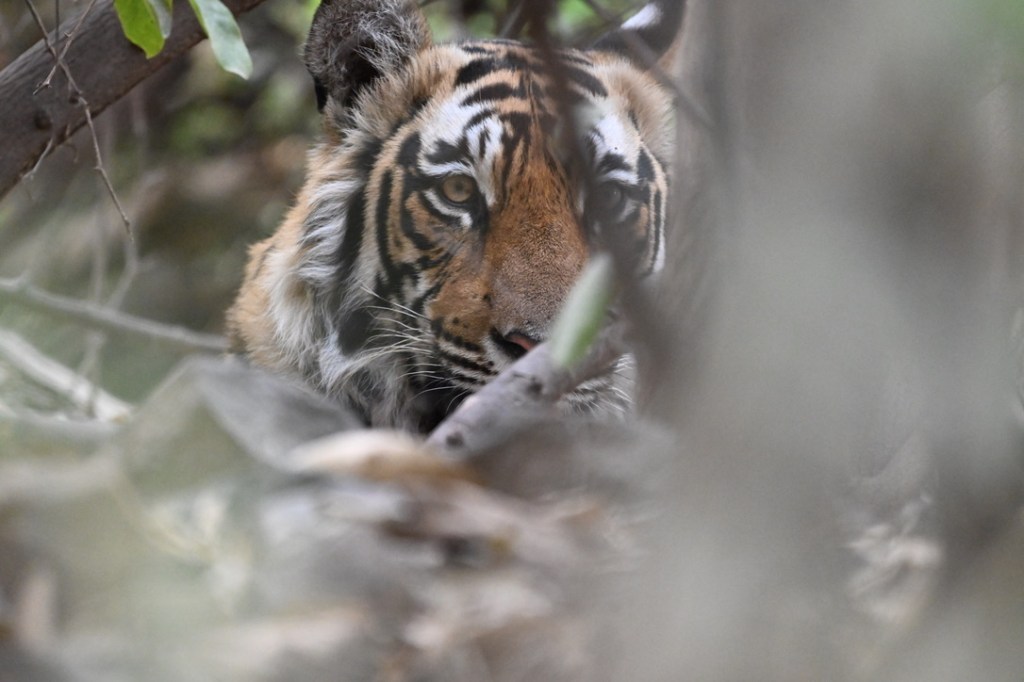
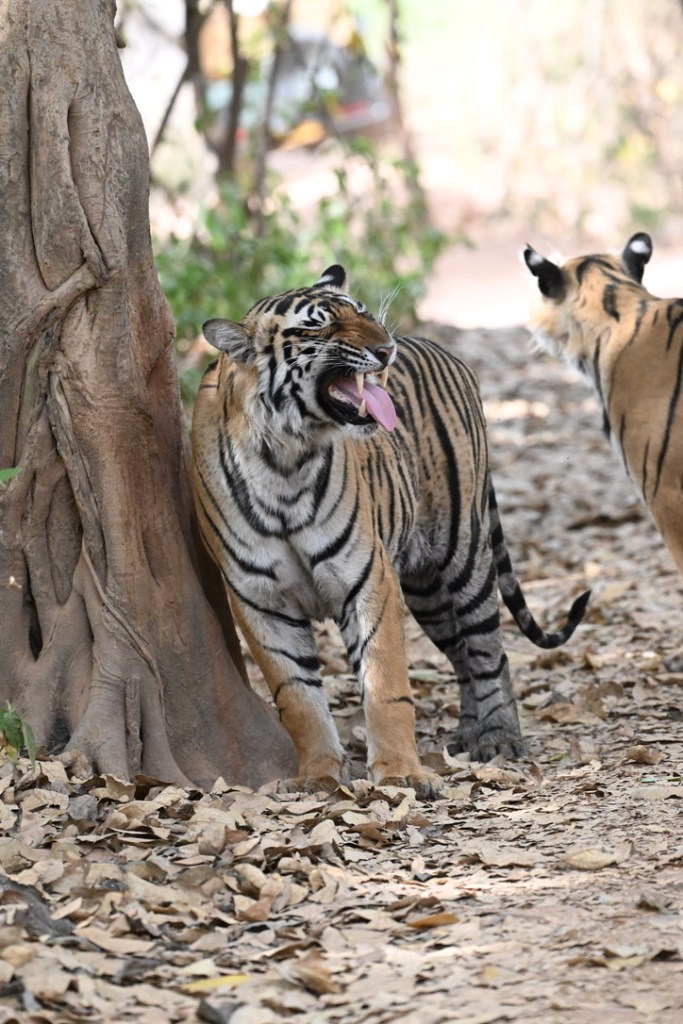
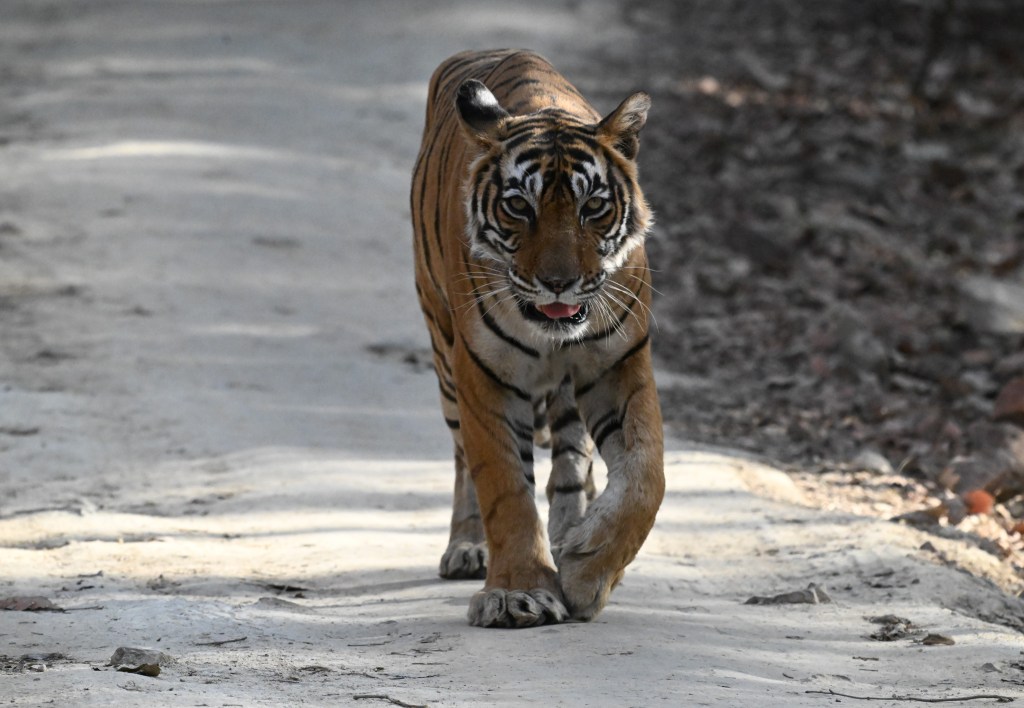
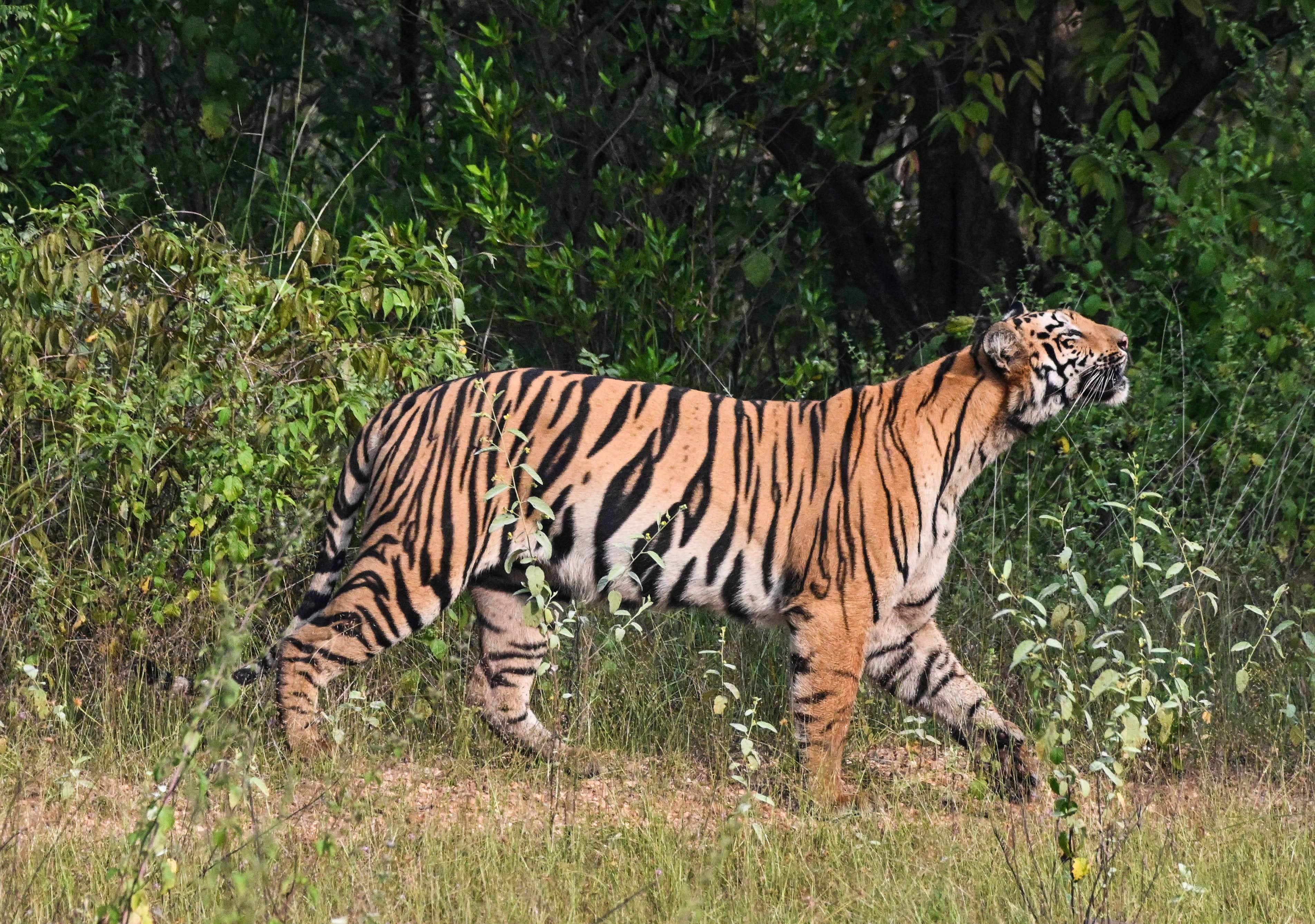
Our forays into the other Zones were rewarding as well. We saw Noor, a 16 year old tiger and probably the oldest female tiger in Ranthambhore in Zone 6. We tracked her pug marks and saw her walking on the track to the chain link that separates Zones 6 and 1. Noor is Sultana’s mother and one of the most beautiful tigers that one will see. Zone 5 was where we saw a the male T121, a tiger we hadn’t seen in the past. The top of the hill our jeep climbed to was a small plateau that sloped gently down to a stream. As we reached the top, we saw a tiger making its way to the water. We followed T121 to the water where he rested for a while. He then got up and walked across the stream to climb the rocky face and walked on the ledge before disappearing from view. This was a beautiful experience.

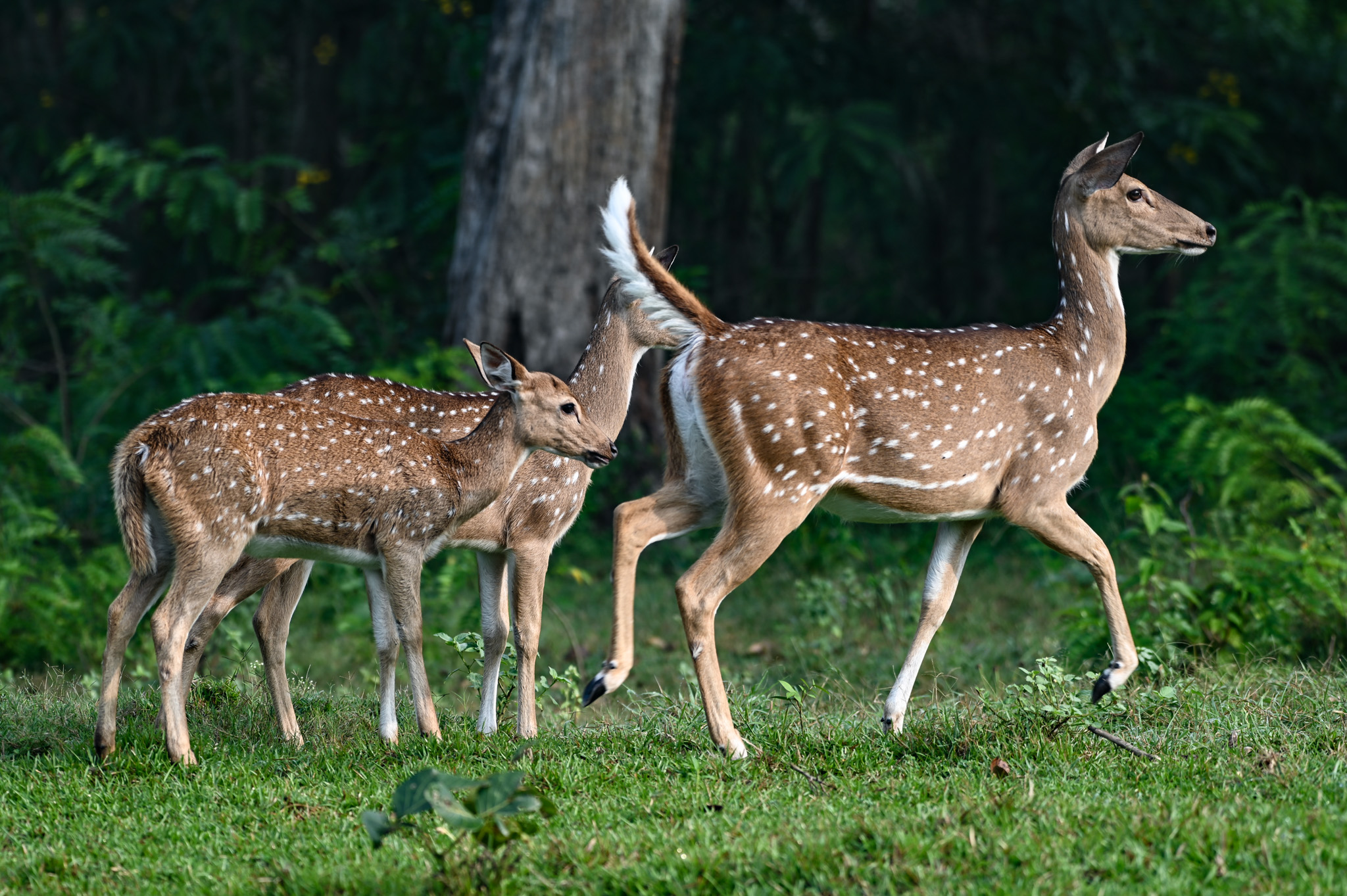
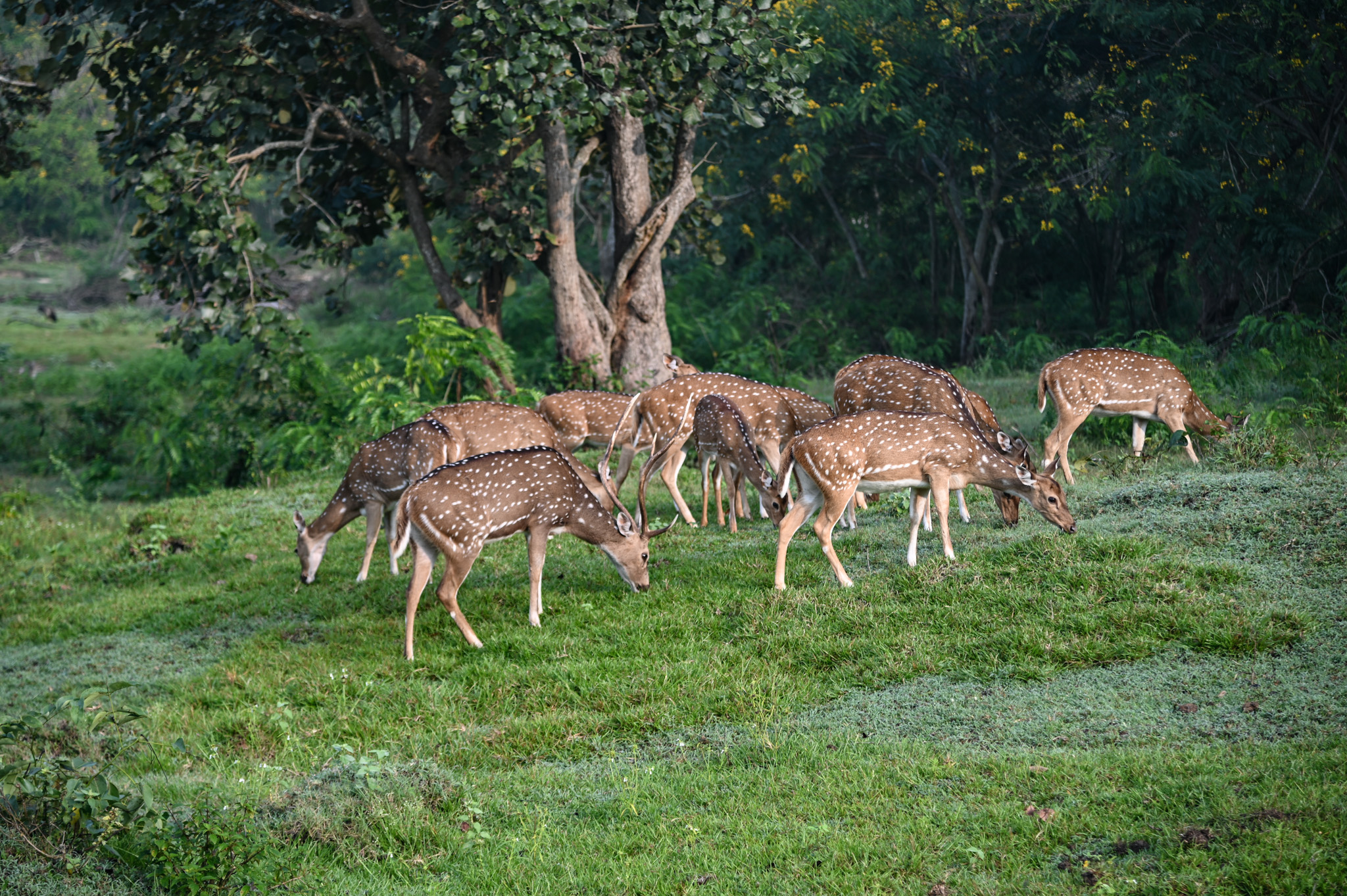
We have been travelling to Ranthambore for more than 25 years and over a period of time we have come to realise that the animals have become accustomed to jeeps and crowds and the chaos during a sighting. Deer do not scuttle out of the way anymore. Similarly, tigers walk past nonchalantly. Just as it happened to us. Noor was completely comfortable following our jeep and in most of our photographs, we see her looking directly into the camera. It was the same, during our afternoon at Zone 3, with Riddhi and cubs. Or, it is the complete confidence of owning the territory and the ability to react to any untoward situation.
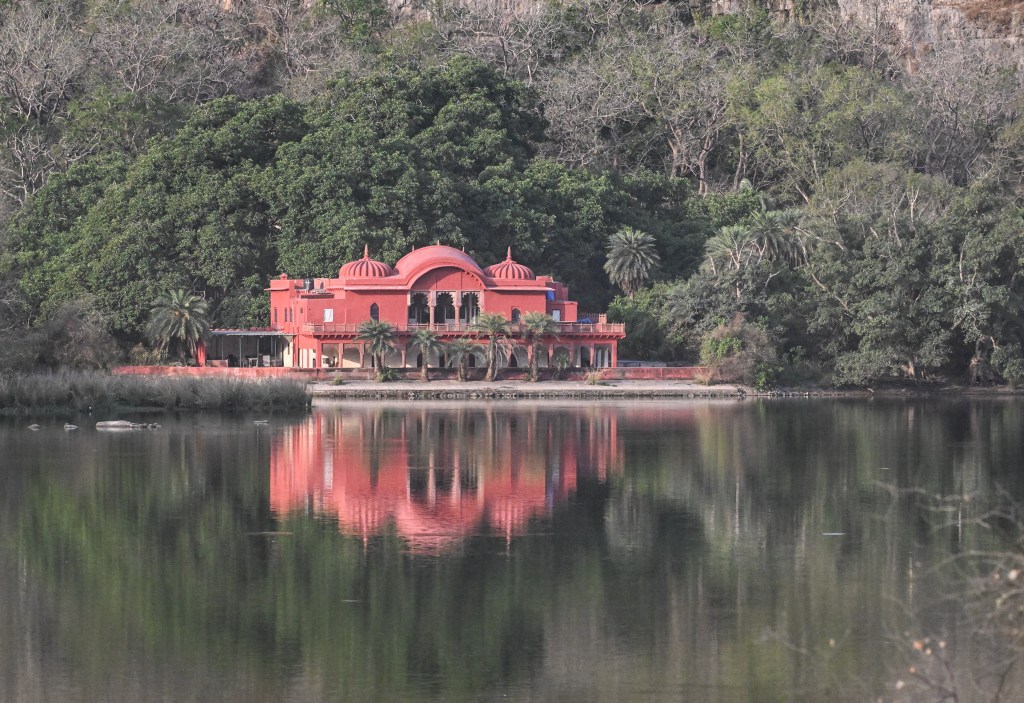
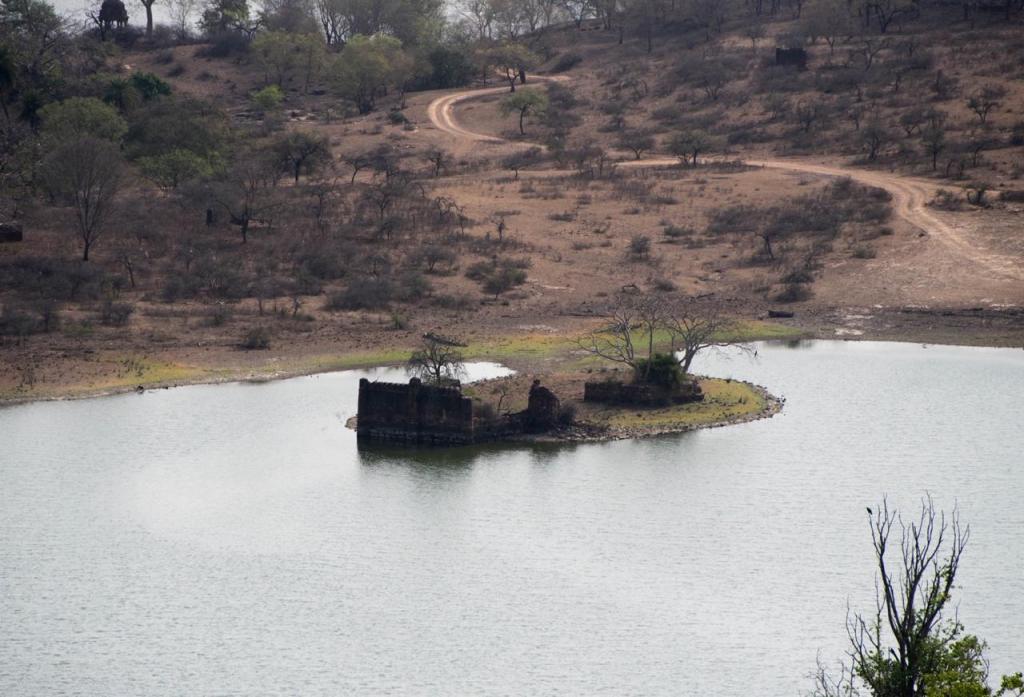
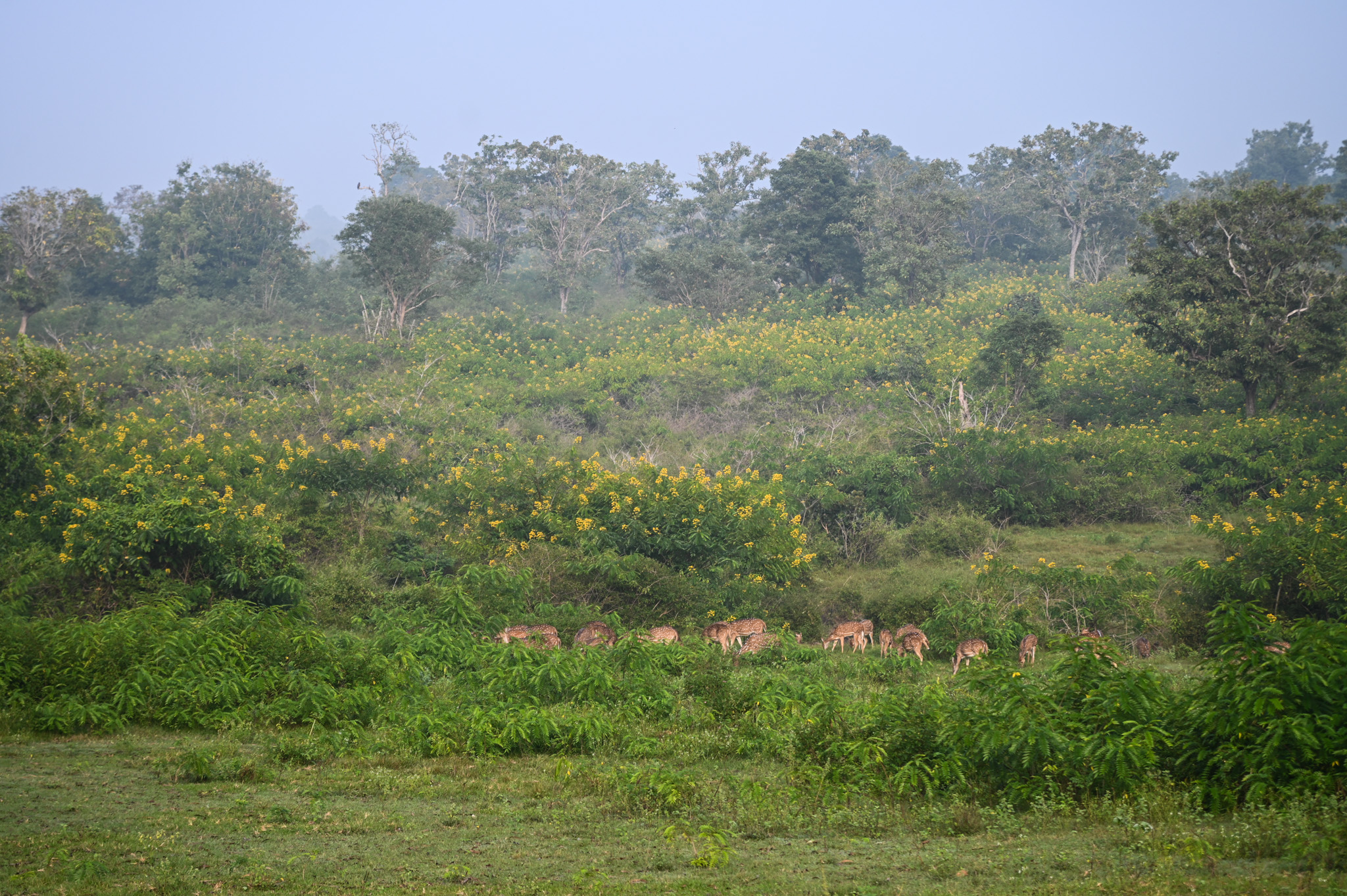
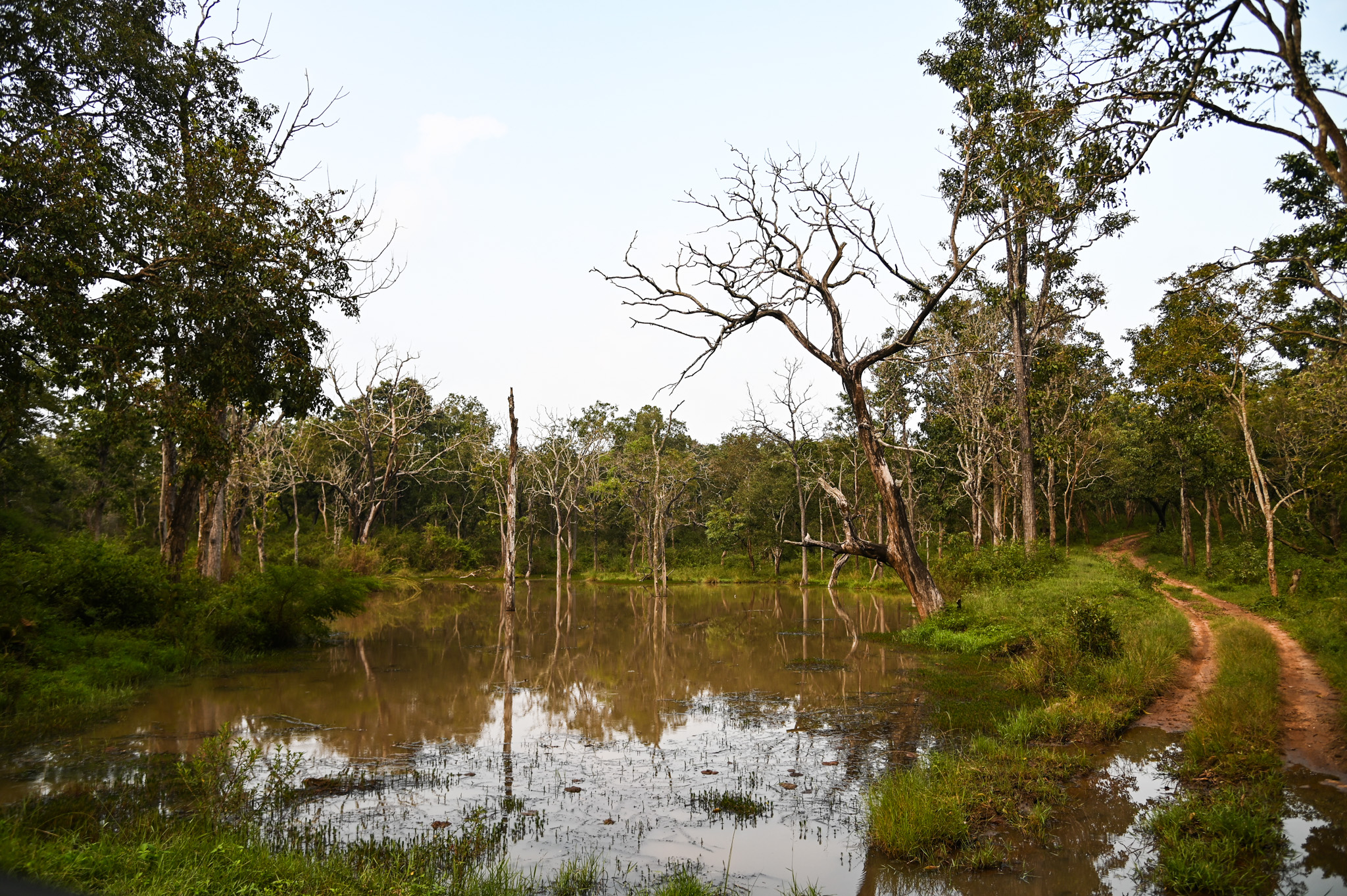
Ranthambore forest is beautiful and old. With hills, gateways, old fort walls, columnar roots growing out of them, sporadic “Chatris” (where there are pictures of resting tigers), the lakes, open grasslands, the forest beckons every year. We are already looking forward to the next trip.
The MP Tour – Part 3

Kanha, Pench, Tadoba

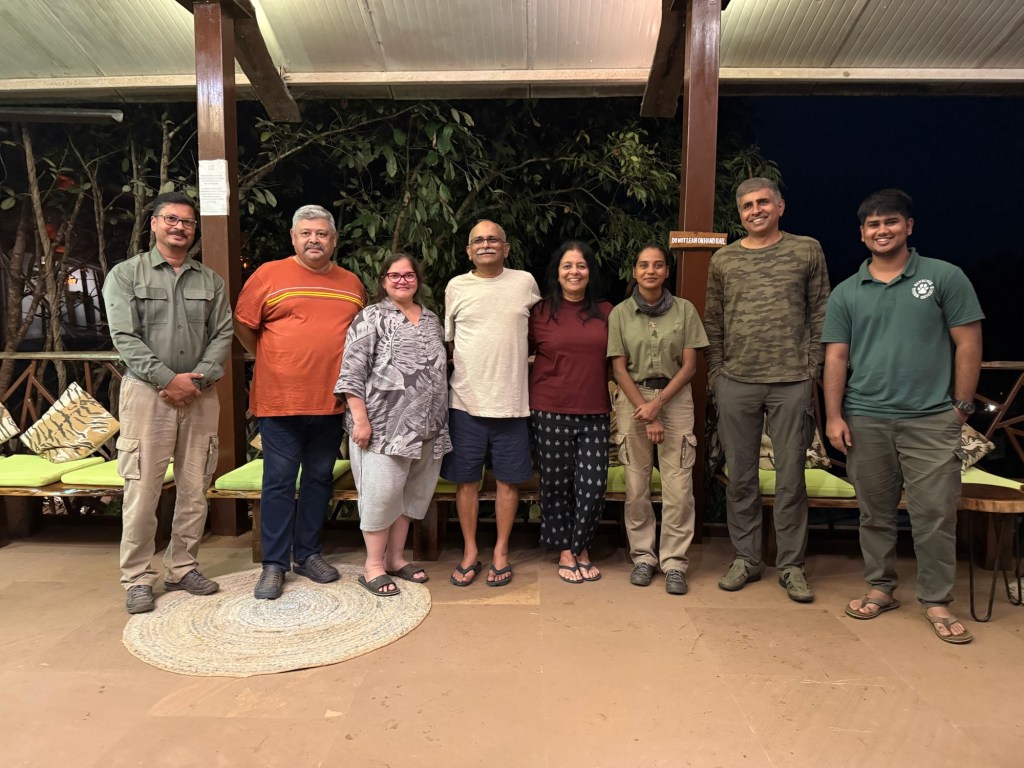
Our first stop was Kanha where we stayed at the Kanha Jungle Camp. Our friends, Hari, Sangita our nephew, Advaith, joined us there. This was also Archana and Sandeep’s first ever jungle safari. The Jungle Camp is set at the edge of the forest. It is a large wooded property with well spaced cottages that give us a preview of the forest. There are monkeys on the property and we wake up to the sound of birds. There is a central social space and dining hall. Here, there are maps of the Park, information about local flora and fauna and the local tribal Gond art . We also met the team. Supriya, a naturalist accompanied us on all safaris and she had a wealth of information to share. She also had installed illustrations of the insects and butterflies that were a part of the jungle lodge campus.

img_1900

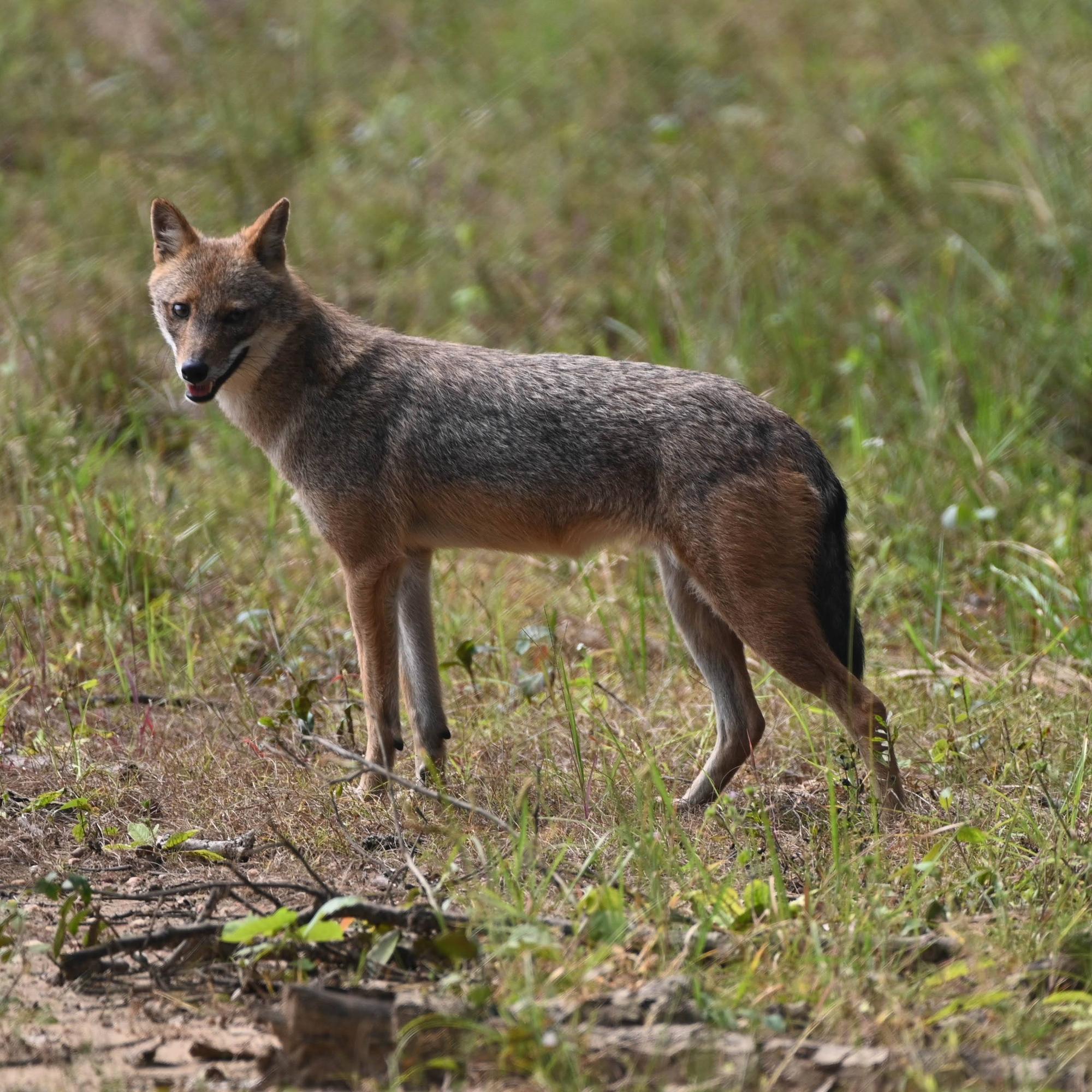
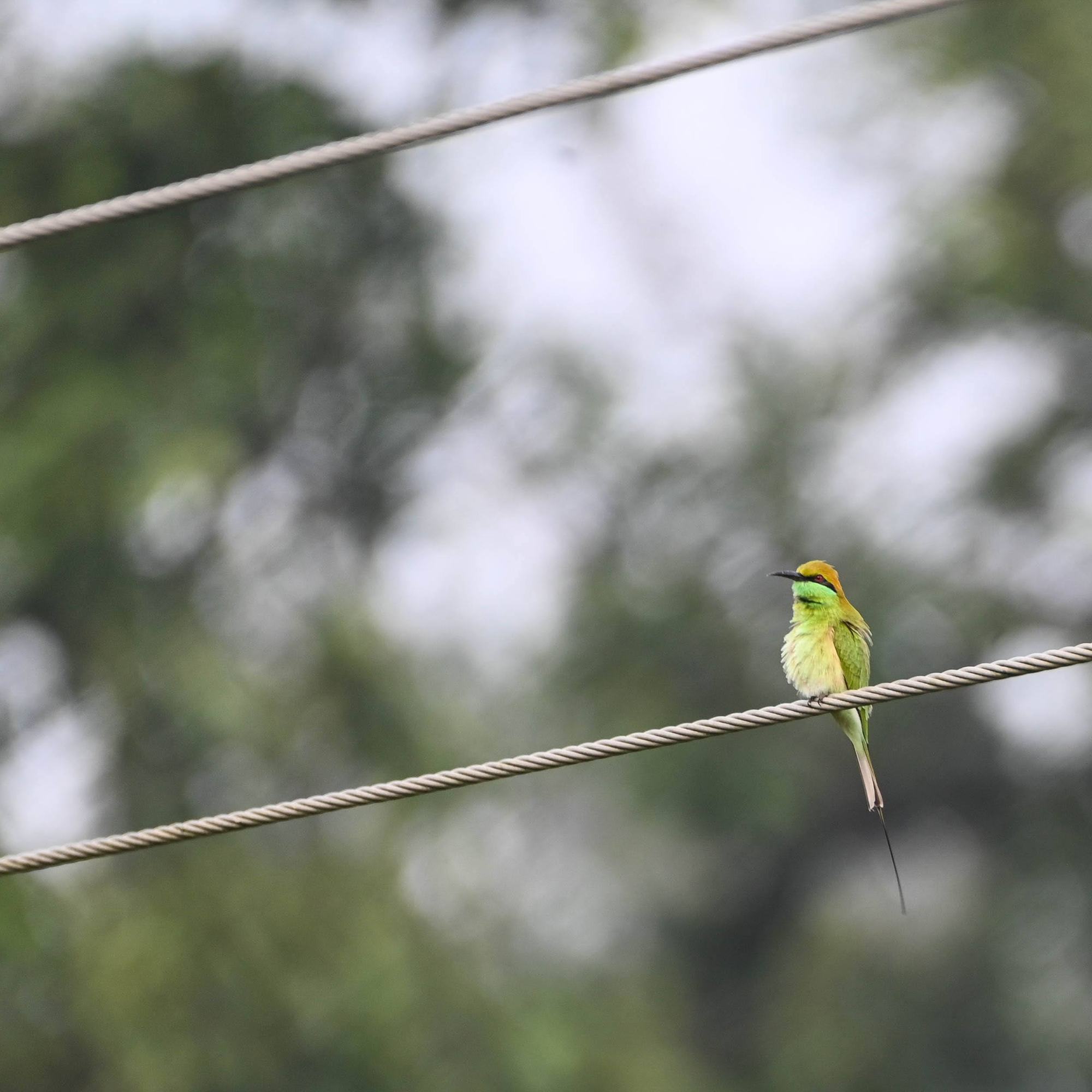
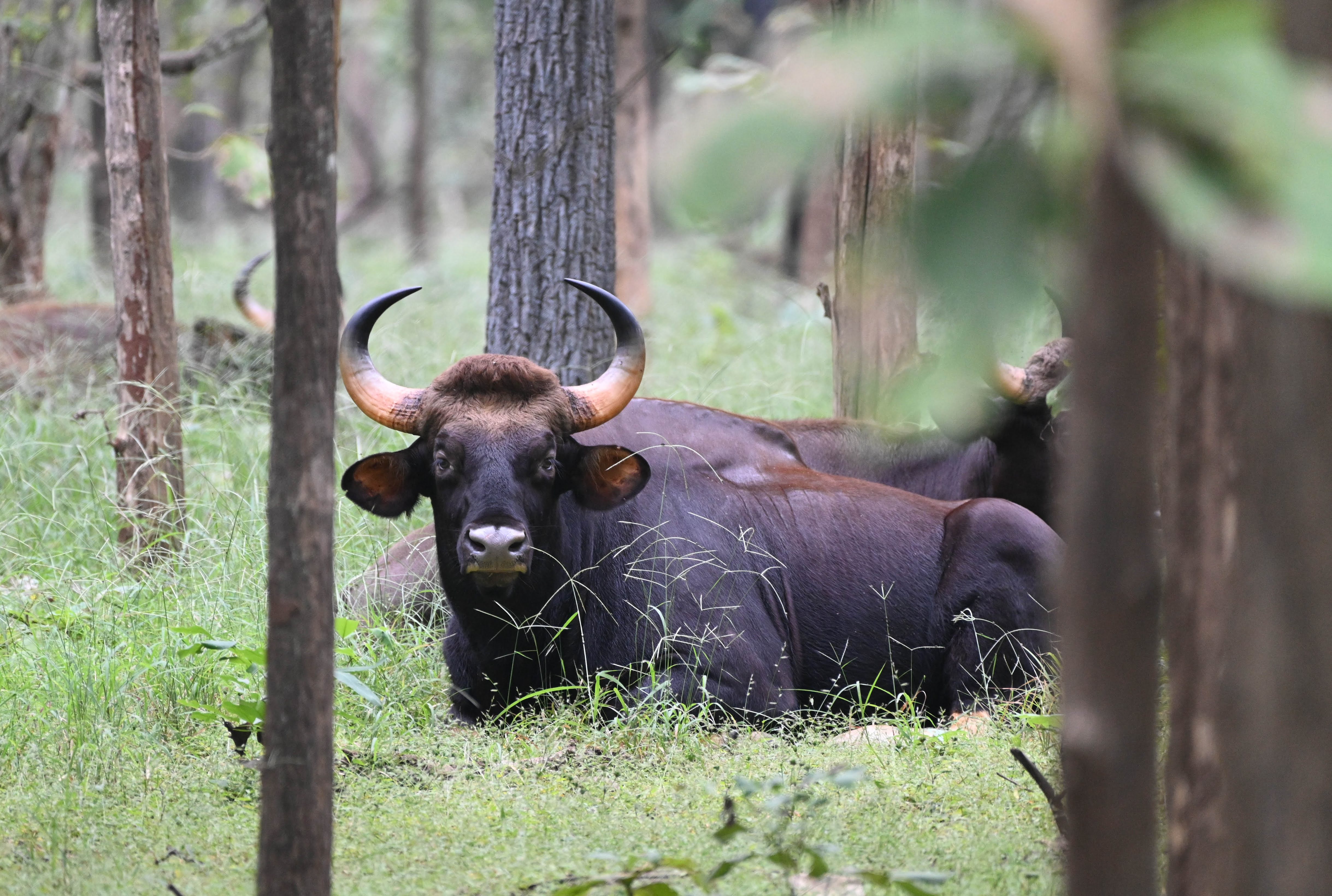
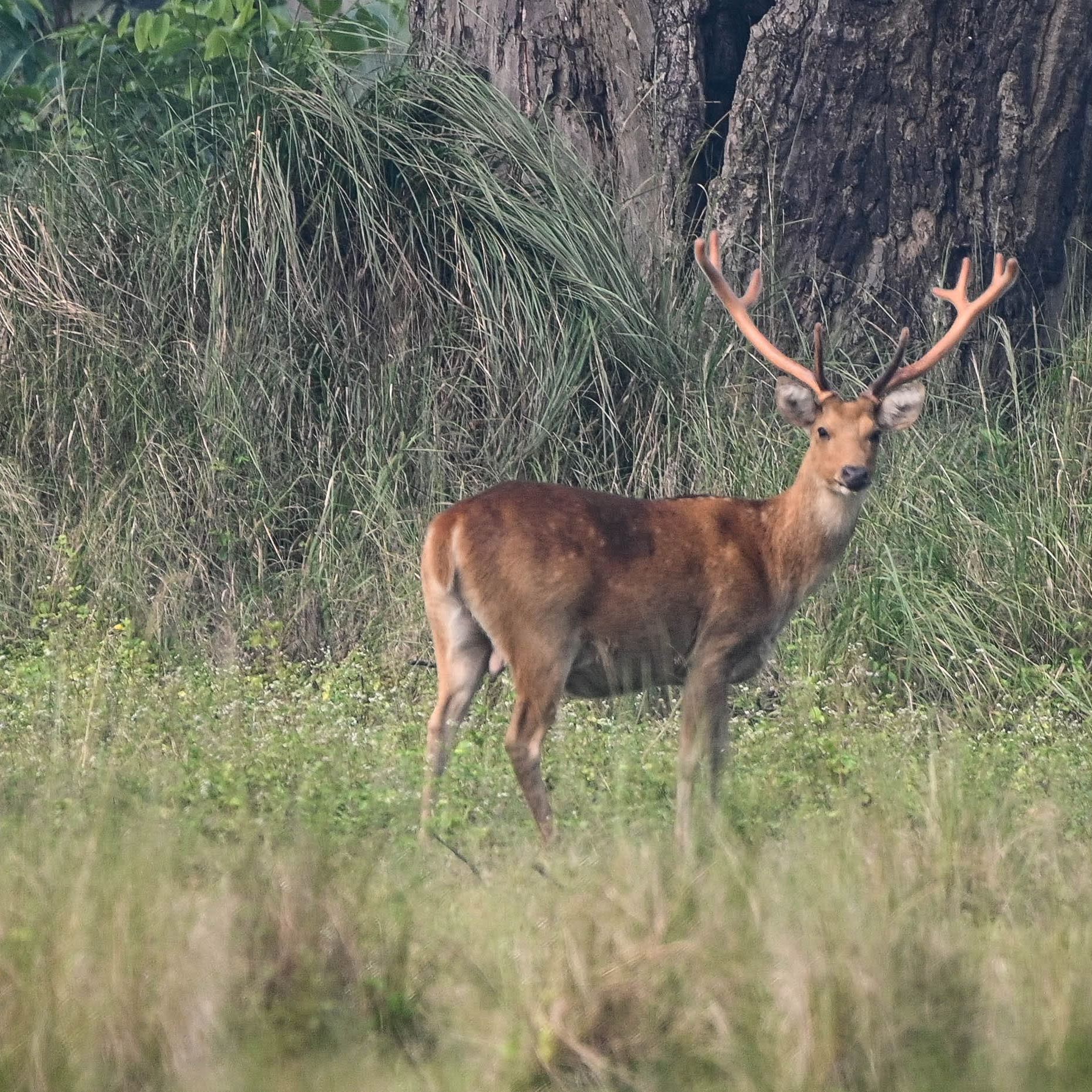
We had 4 safaris in Kanha. Kanha is a beautiful forest that is a combination of Sal trees and vast meadows. We saw the Barasingha, one of the only places in India one sees this family of deer. Sandeep and Archana had beginners luck as theirs was the only jeep that spotted the tiger. We did see a lot of colourful birds, jackals, the wild dog and gaur.

Kanha has a museum within the park and an archway made up of antlers, which is unique and beautiful. The arch itself is about 15 feet tall and perhaps another 15 feet across at the base. It is difficult to estimate the number of antlers that went into making this sculpture. We stopped for a break and got some pictures.

We drove to Pench, with plans to stop for lunch on the way. Sadly, there were no rest stops and lunch was a makeshift affair, comprising of our theplas and samosas from a rare dhaba.

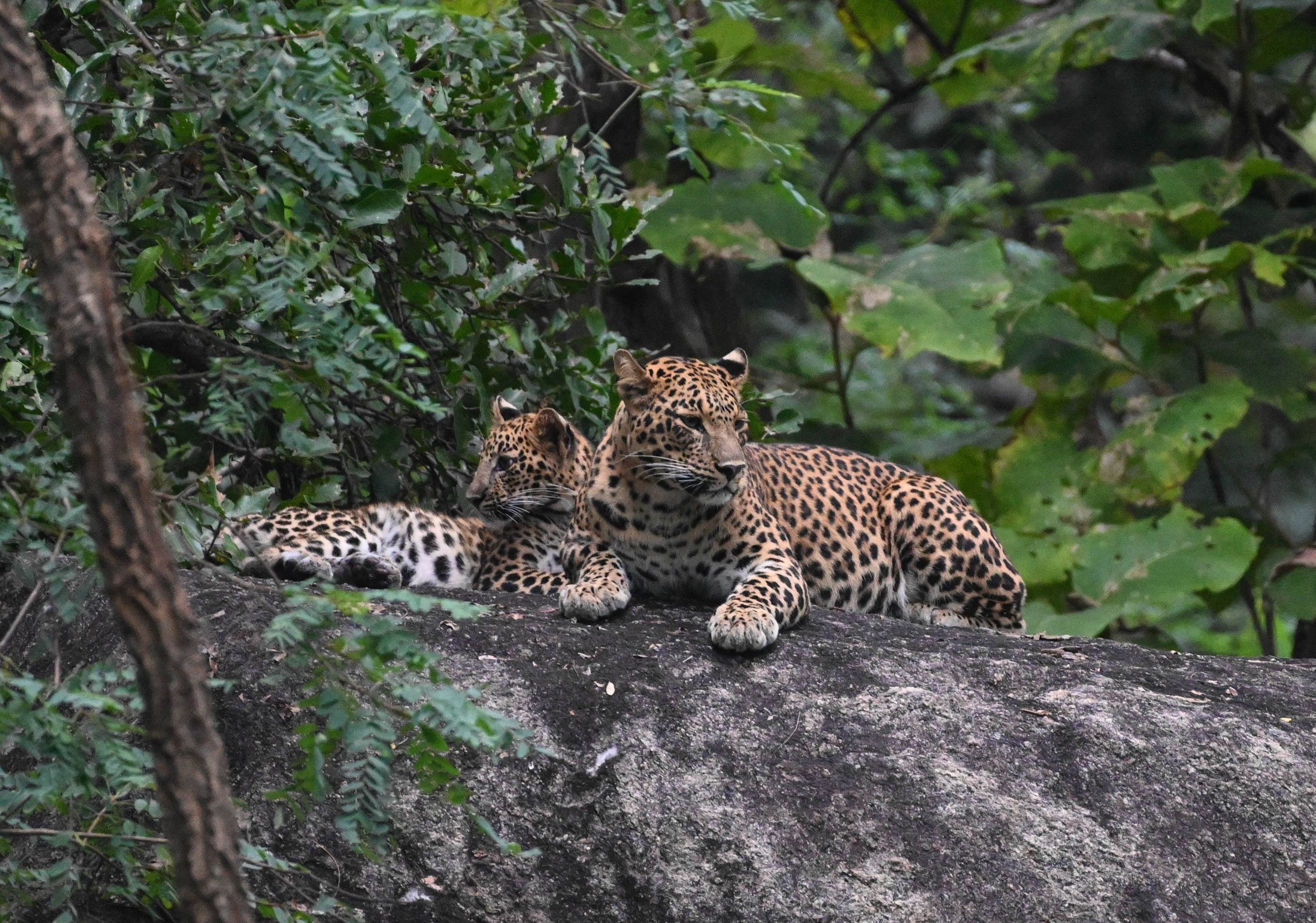
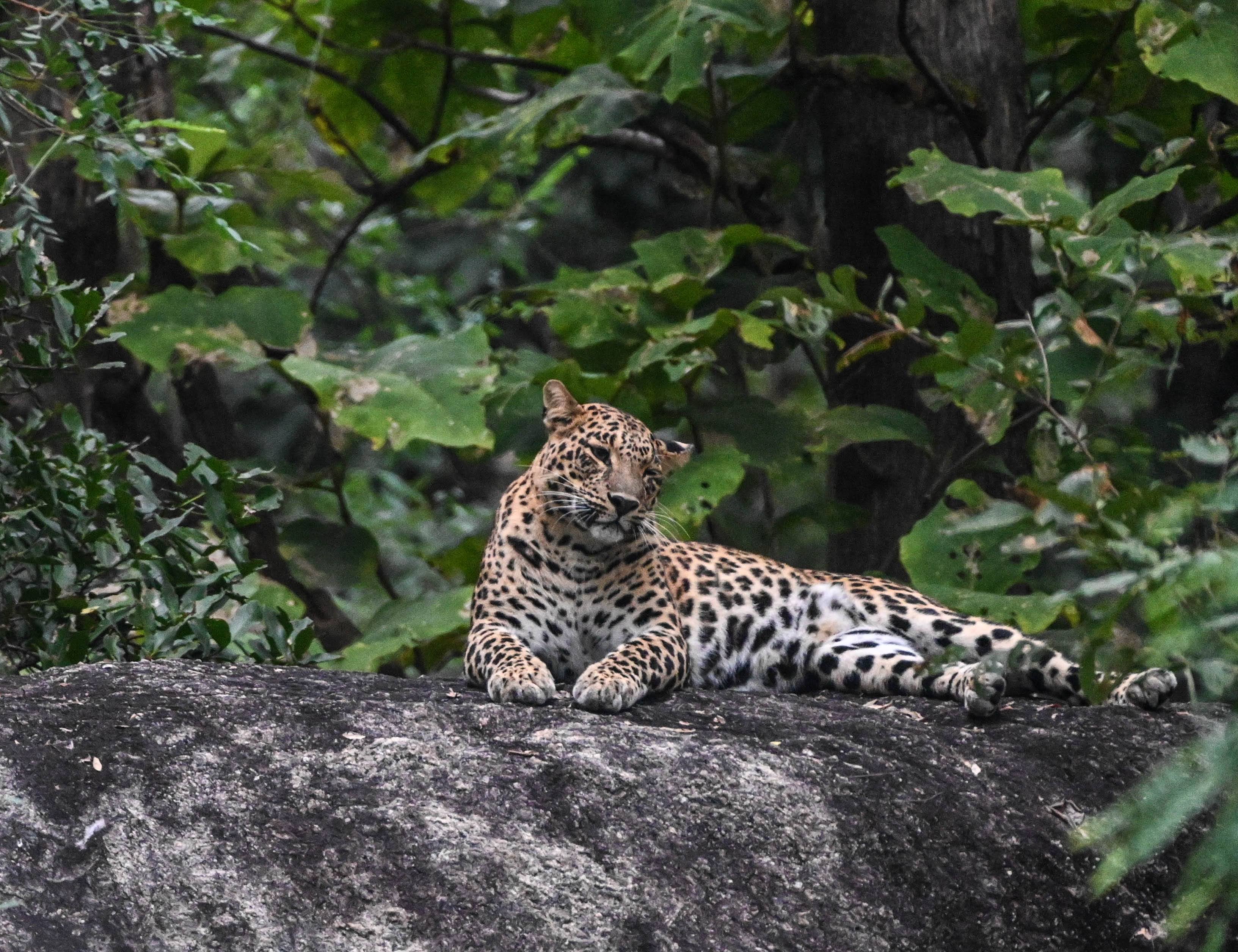
We stayed at the Pench Jungle Camp there. Pench was beautiful after the rains, so were the tigers in Pench. The highlight of our Pench trip was the endless time we spent watching a leopard and its cub playing on a rock in a clearing in the woods. It was simply awesome. Pench is also where Shankar and Deepika joined us on their way back from Panna.

Our friends left Pench to head back to Bangalore while we drove down to Tadoba.

img_1945

Ranjit and Nandita who run Svasara, the resort we stay at welcomed us as we started the final sector of our safari trip. Tadoba didn’t disappoint as we saw tigers in the Core and Buffer zones. Choti Tara with her two beautiful cubs was by the side of the road. We also saw Veera roaring as she walked around the jungle searching for her mate.

After a marathon 13 safaris in the three forest reserves, we headed back to Mumbai with an overnight halt at Aurangabad.

Hope you enjoy the pictures shared in these links below –

https://photos.app.goo.gl/2QruY5PfZjXMuj2J8

https://photos.app.goo.gl/QhpU66XxFvzTSjaB8

This trip was fun. First timers, Archana and Sandeep, seemed to have enjoyed it as well. We seemed to have got better and more efficient at packing for such trips and have triggered more friends who are now keen to join us on the road in the future. We look forward to the next trip.

The MP Tour – Part 2

Bhimbetka, Pachmarhi, Jabalpur

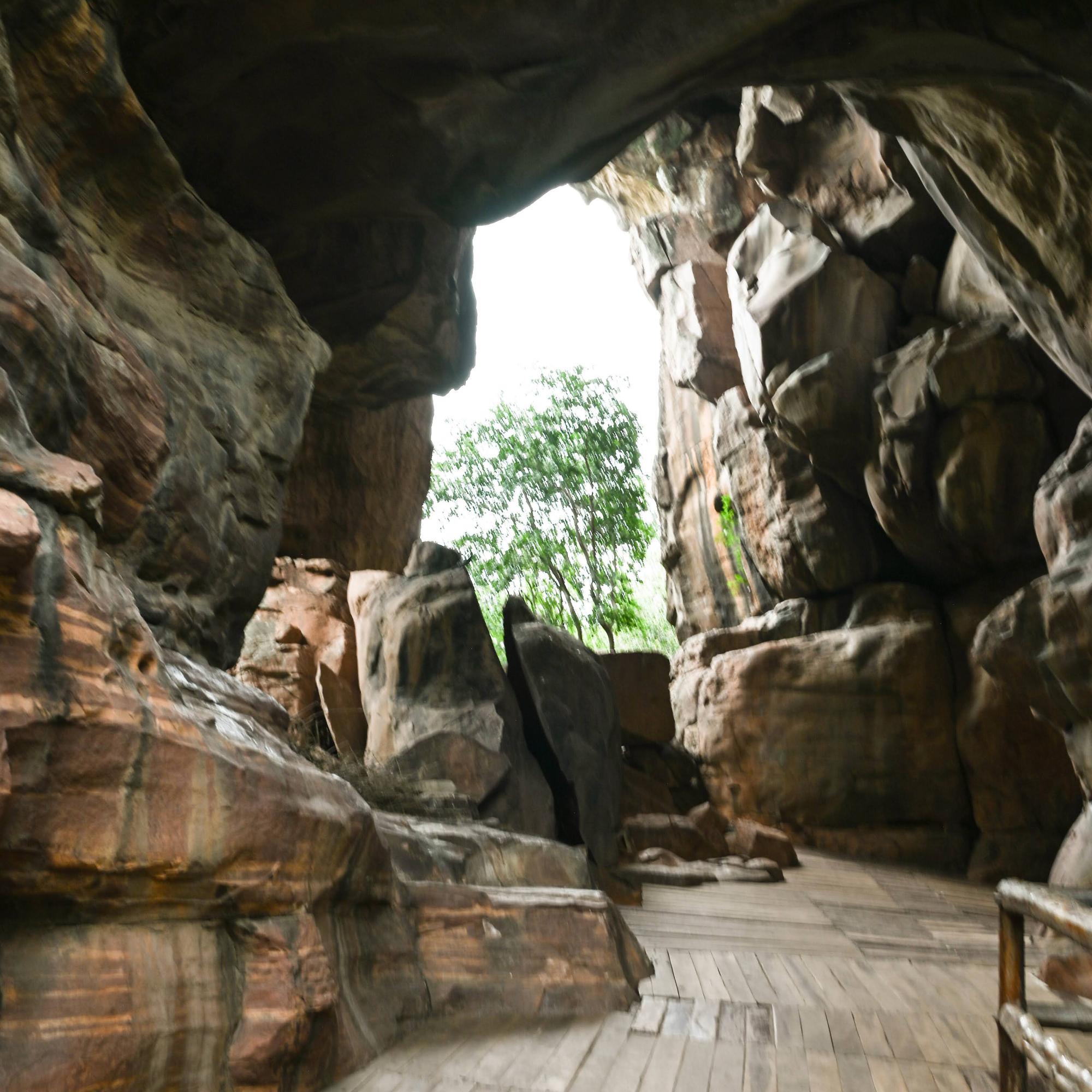
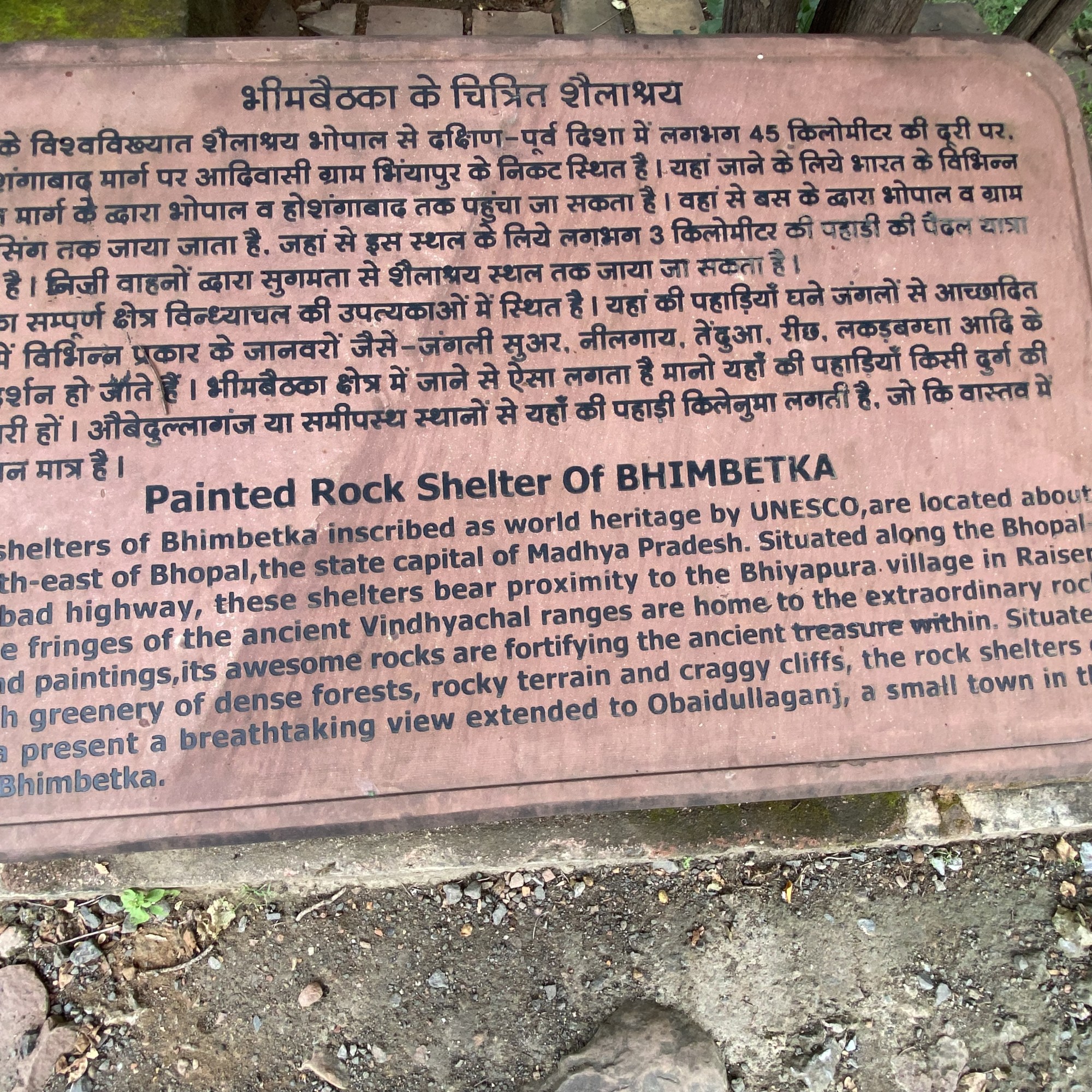
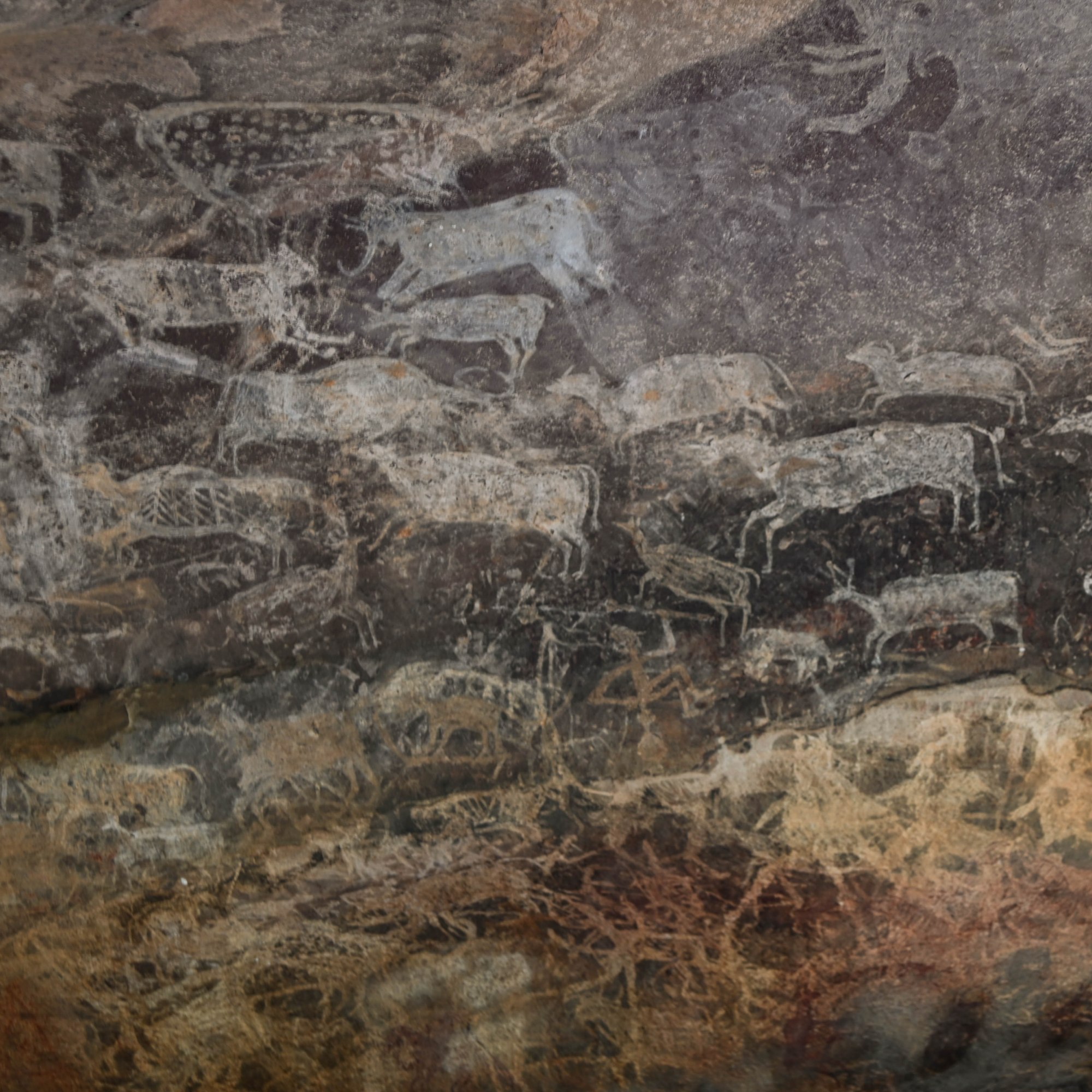
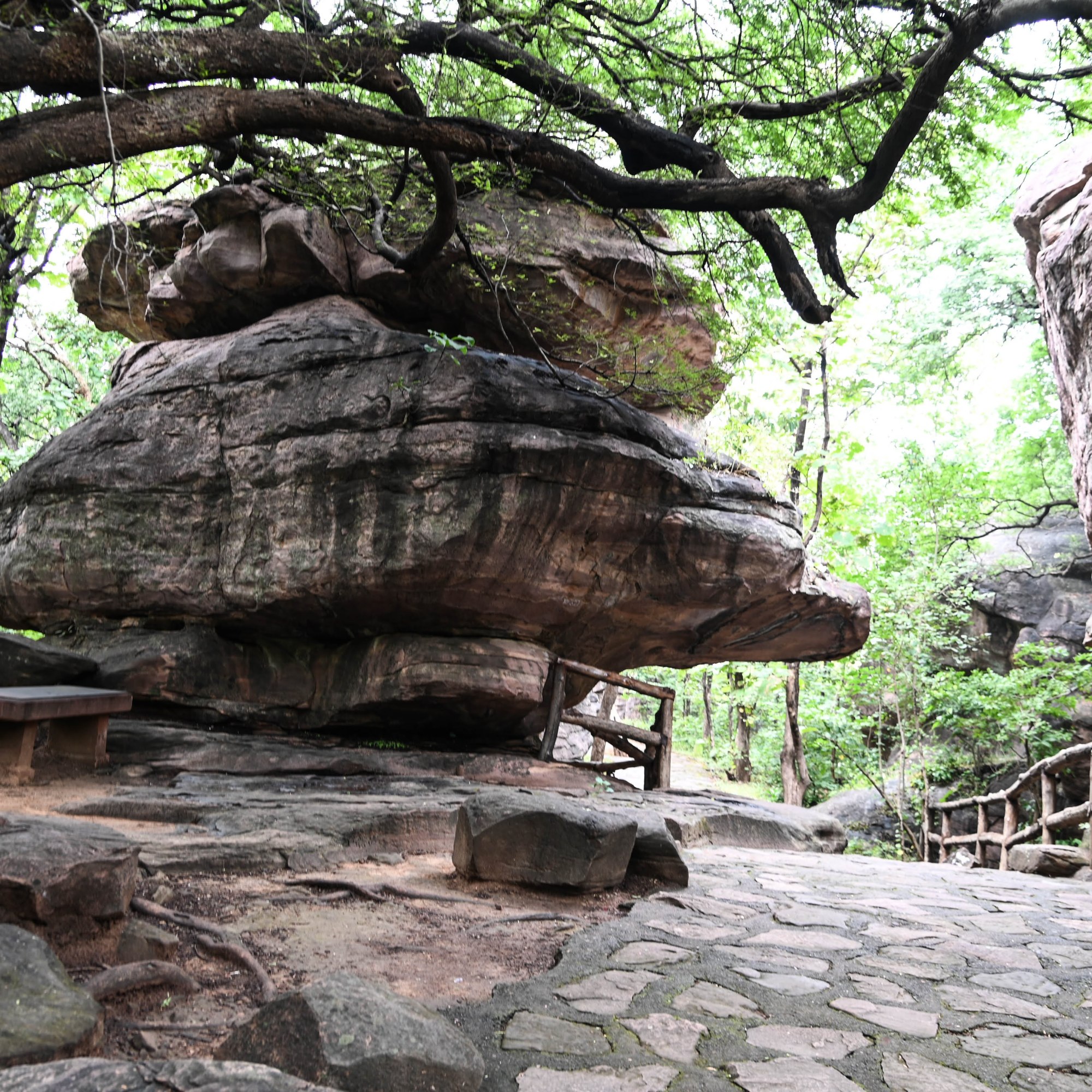
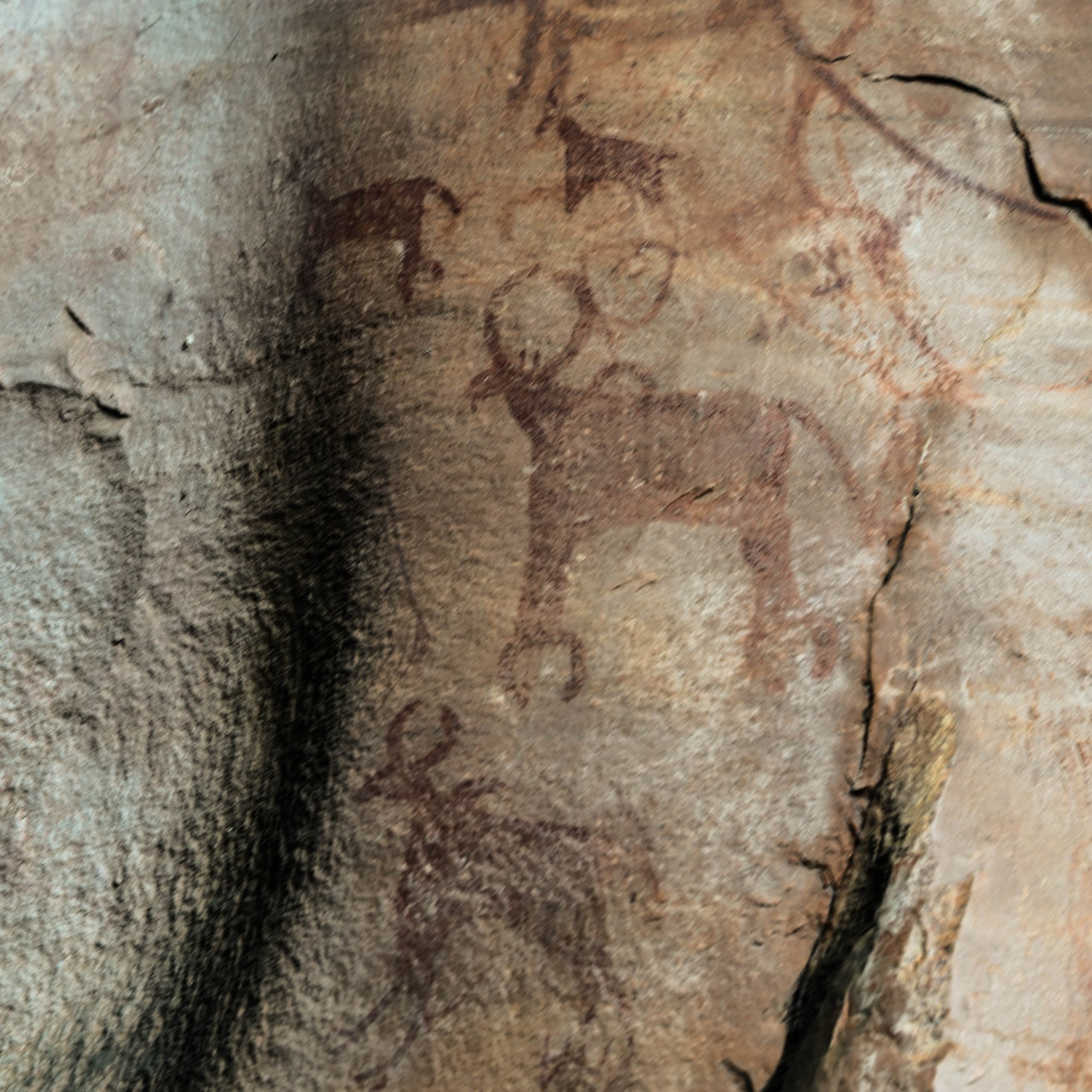
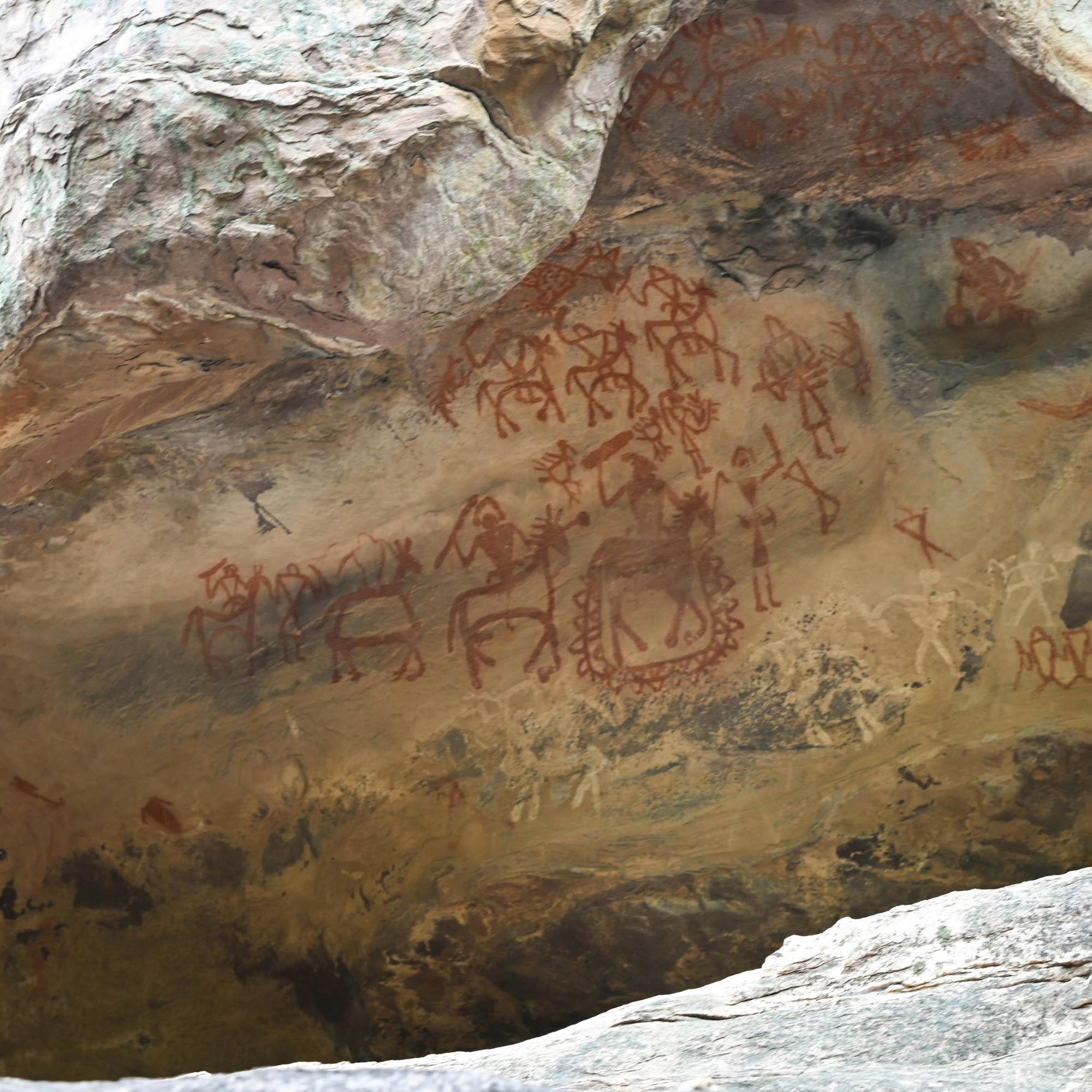
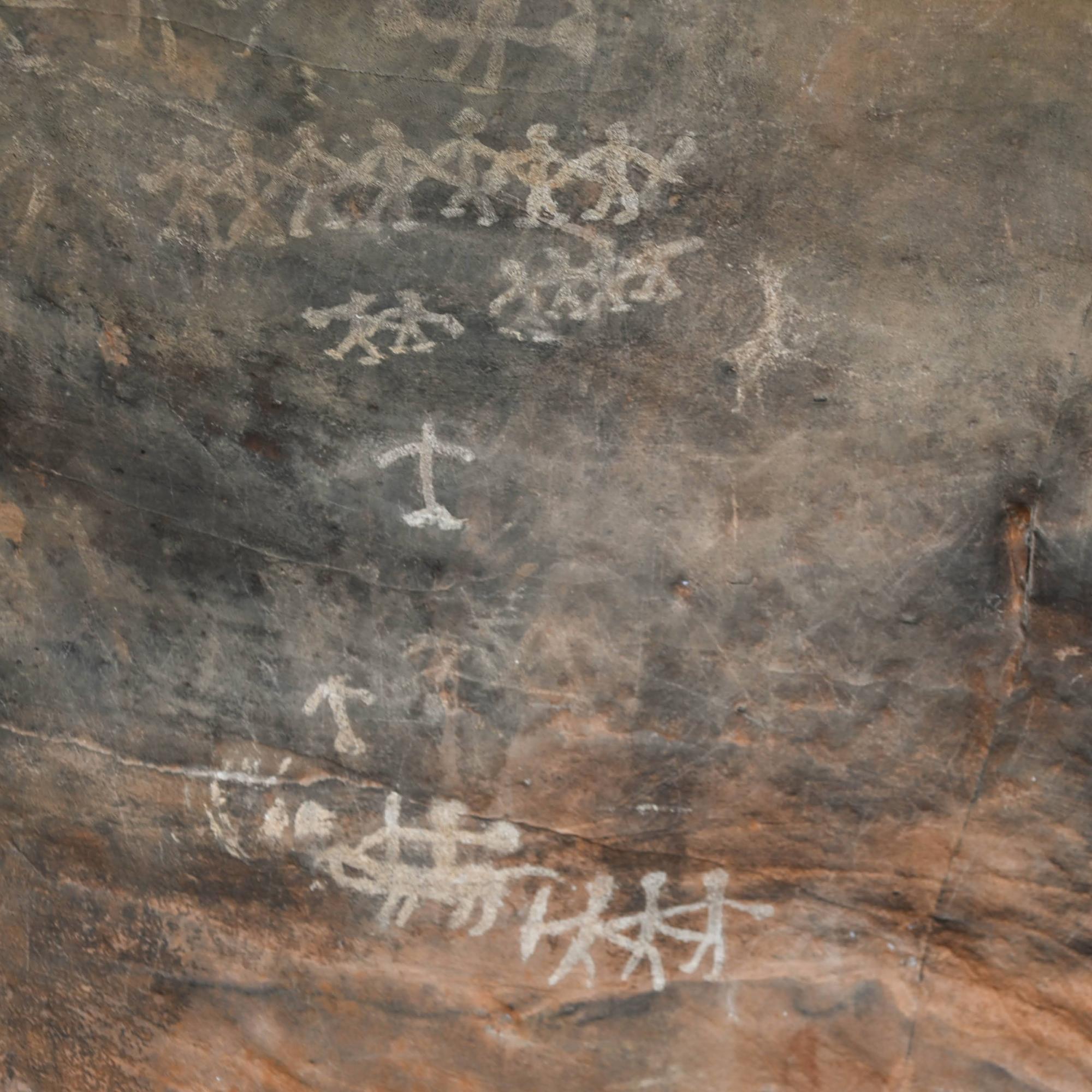
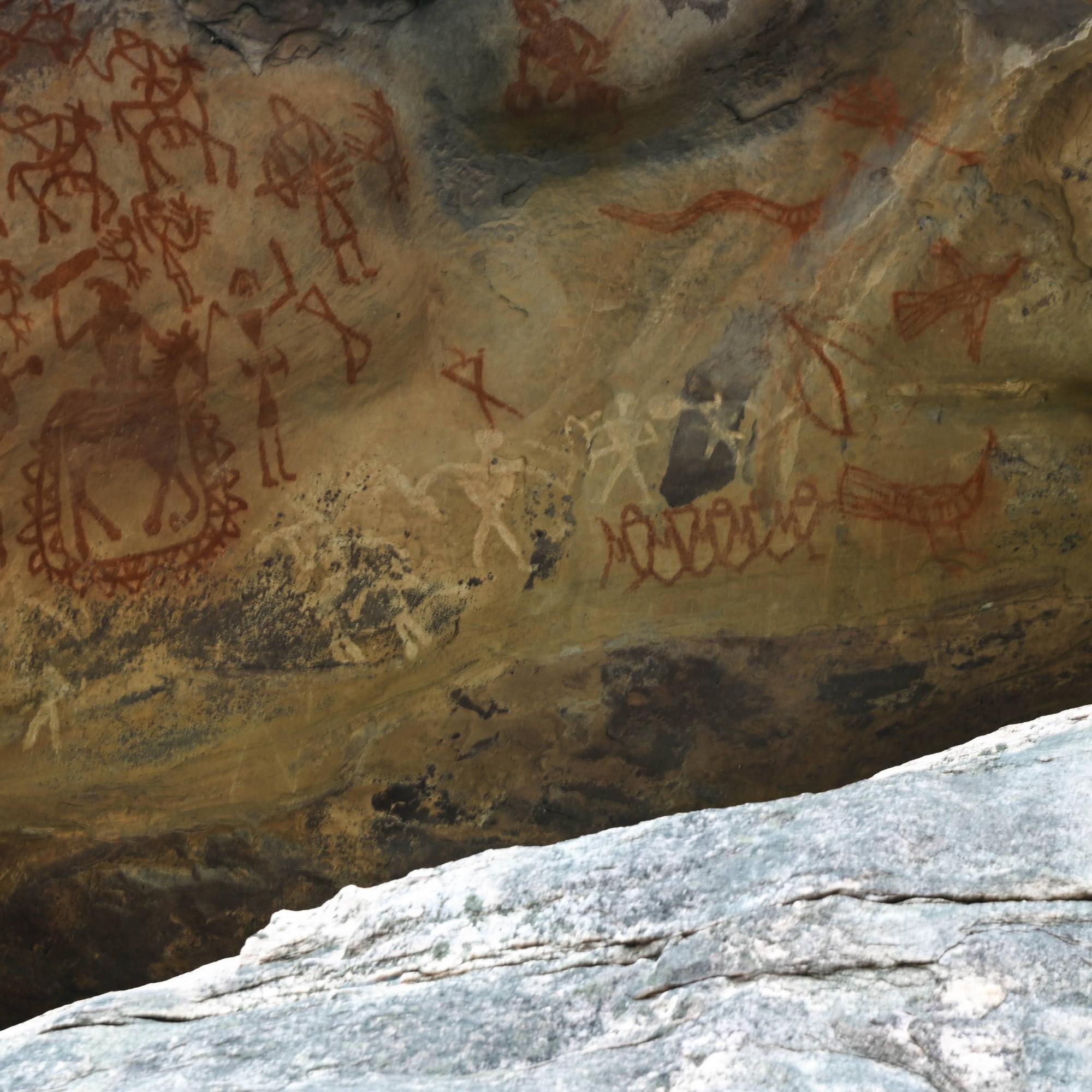
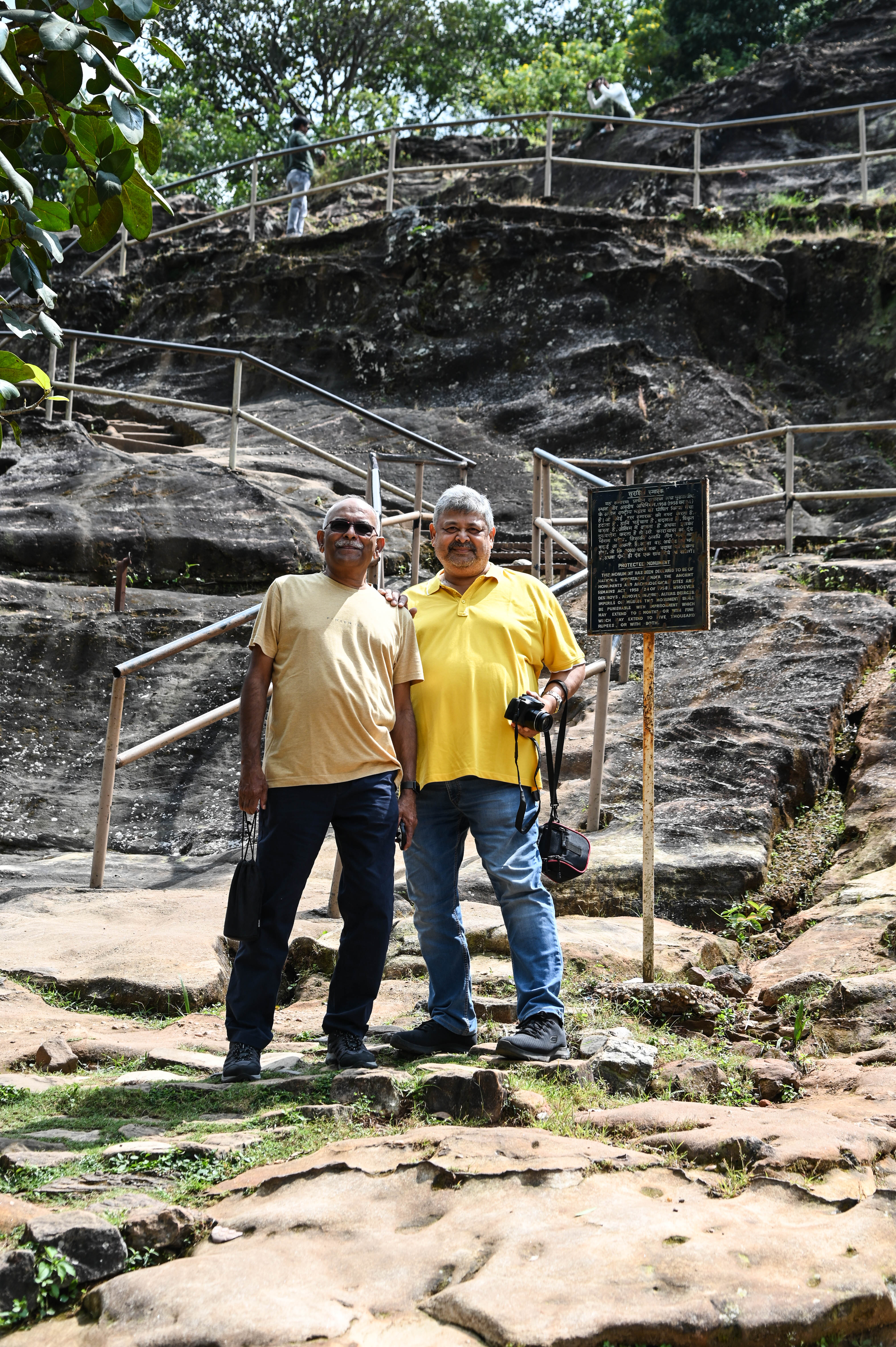
Bhopal was an overnight stay. On our way to Pachmari, we took a diversion and visited the Bhimbetka rock shelters. Bhimbetka boasts of cave paintings from the Paleolithic and Mesolithic eras. The paintings on the rock surfaces depict human settlements ,agriculture and culture. Some of the paintings are prehistoric with depiction of hunting, warriors on horseback, from the Stone Age. The ‘Zoo Rock’ is one significant shelter in which there is an army of horses, peacocks, deer and other animals are painted. Bhimbetka is known to be the oldest known rock art in India. We had access to a limited number of caves and after a couple of hours, we proceeded to Pachmarhi.

https://photos.app.goo.gl/SNvRe2wuuUAHVscY8

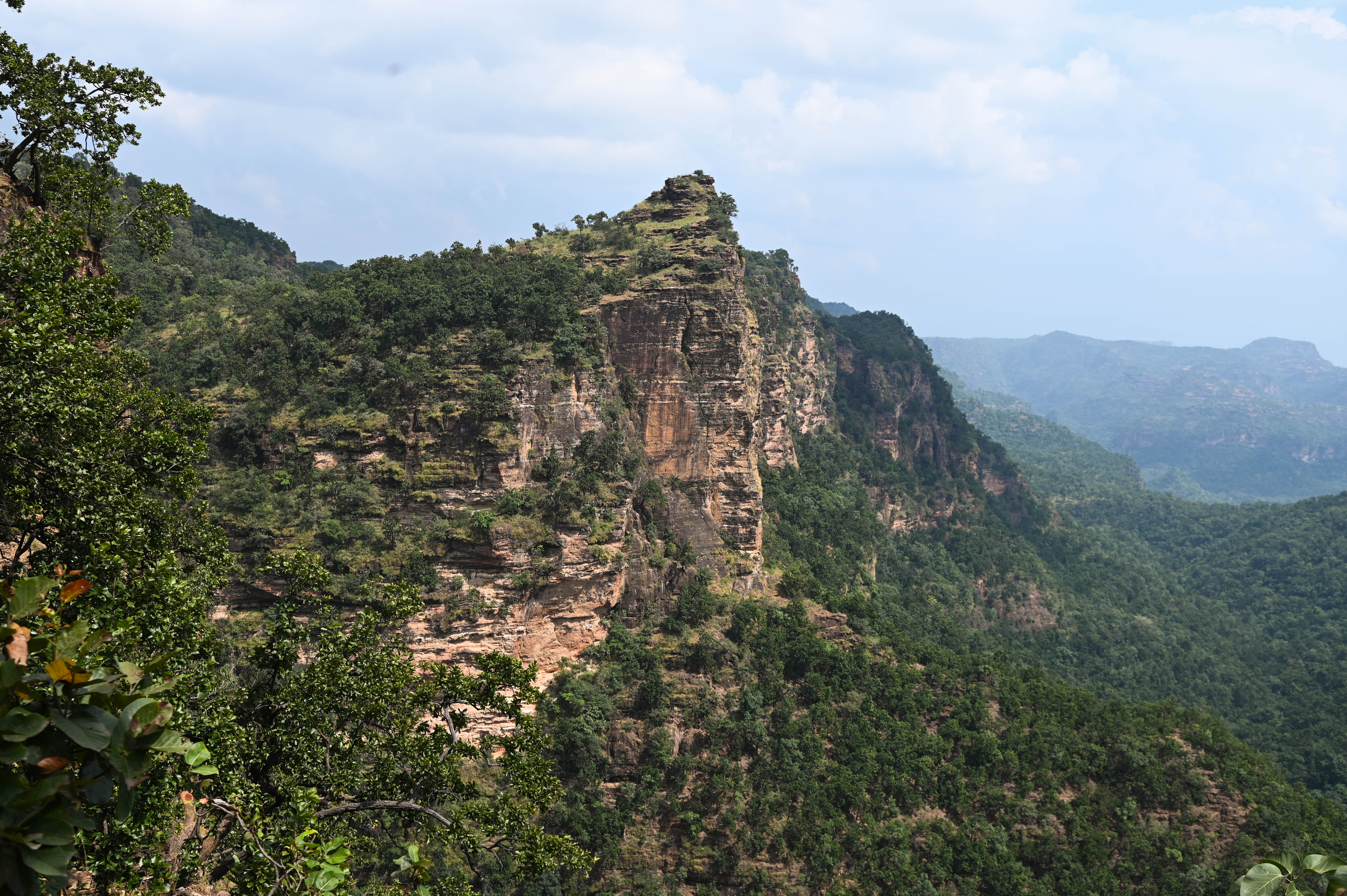
Pachmarhi is a hill station, located alongside and at the edge of the Satpura tiger reserve. The road into Pachmarhi is a ghat road and is green, winding and beautiful! We skirted the forest for 35-40 kilometres and our eyes were peeled towards the landscape in the hope of spotting wildlife!

We entered Pachmarhi through a Cantonment area ( AEC) and stayed at the MP tourism facility which is a large property built in the colonial style. It was overcast and rainy and we spent our time visiting various lookout points and also the Pandav caves. A big part of our stay and the best part was the drive through the hills on the outskirts , again, in the hope of seeing wildlife. We did not spot any animal, but the drive itself was time well spent.

Our Pachmarhi album is here – https://photos.app.goo.gl/Pj8HmJc87XuQv8nt7

Our penultimate stop before we hit the national parks was Jabalpur. We reached after noon, from Pachmarhi and decided to spend the day at the hotel, unwinding. The next day was a quintessential trip to Dhuadar falls and Marble rocks.

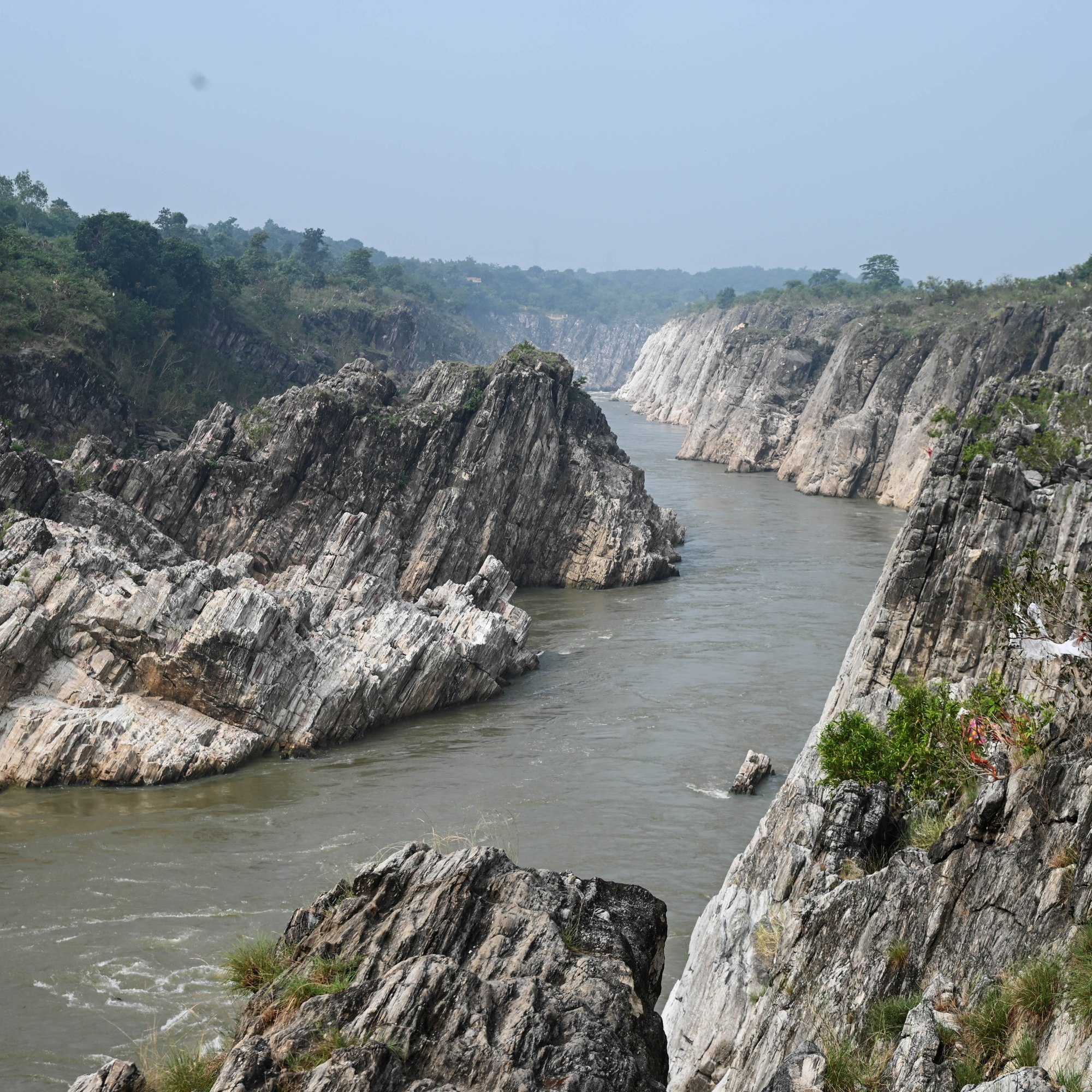
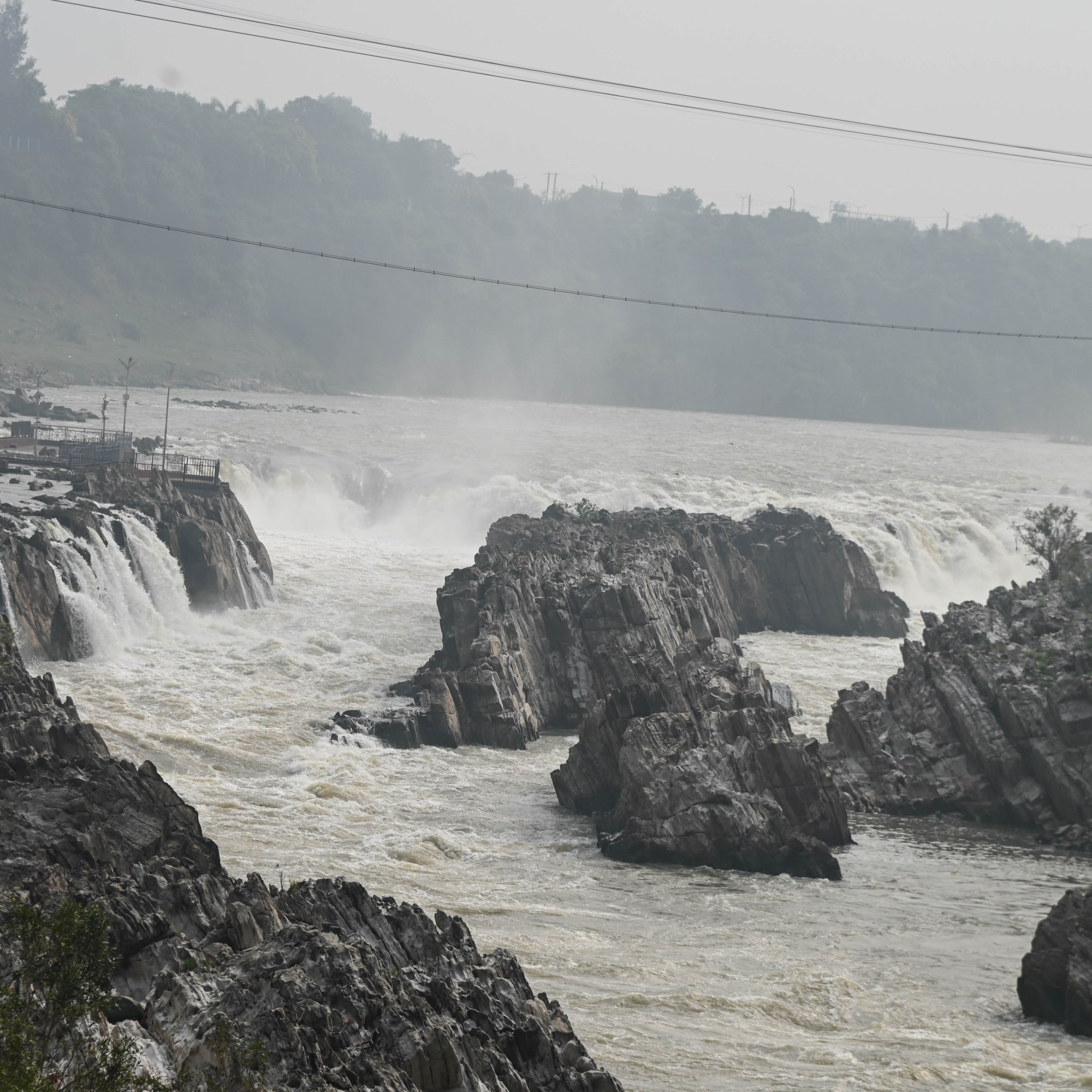
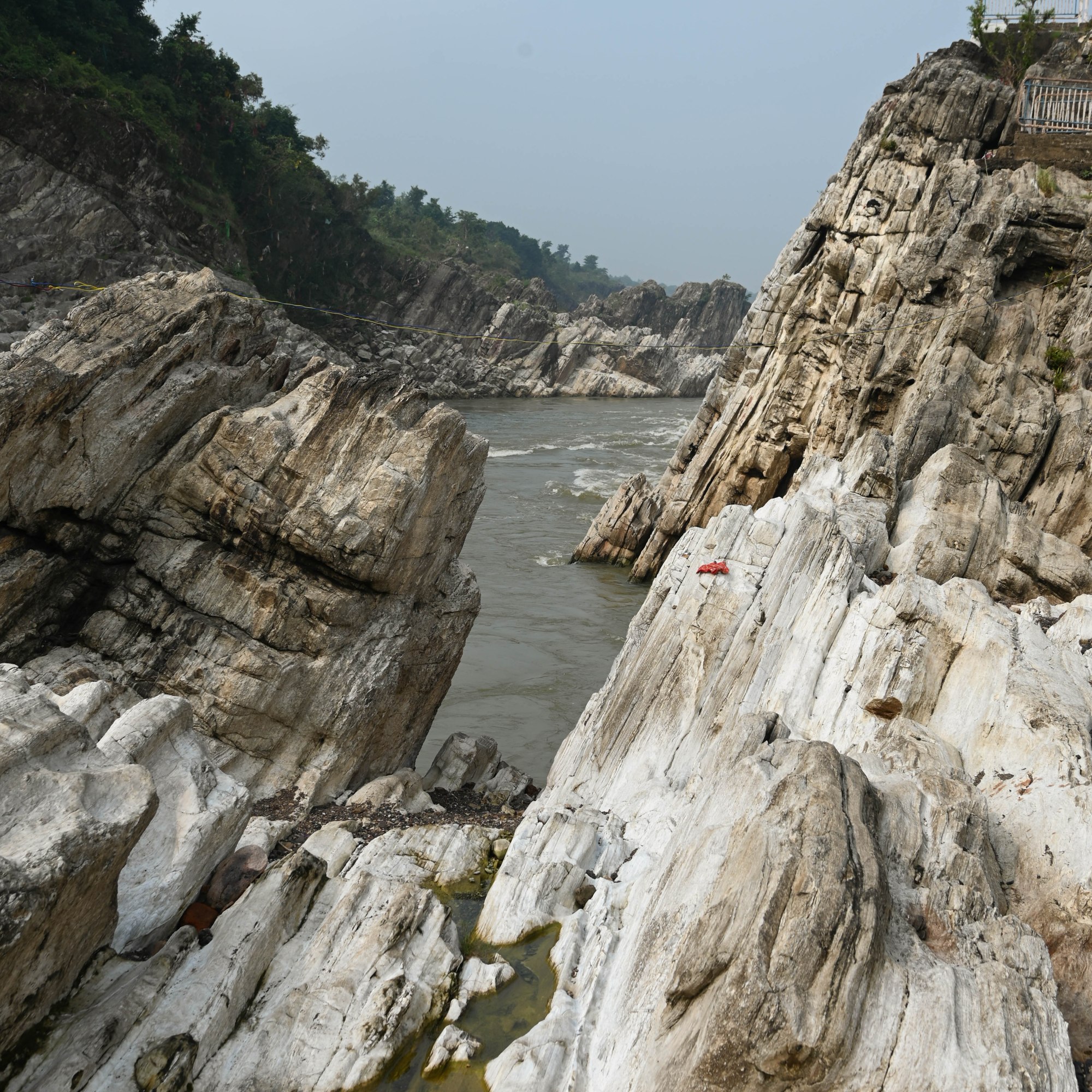
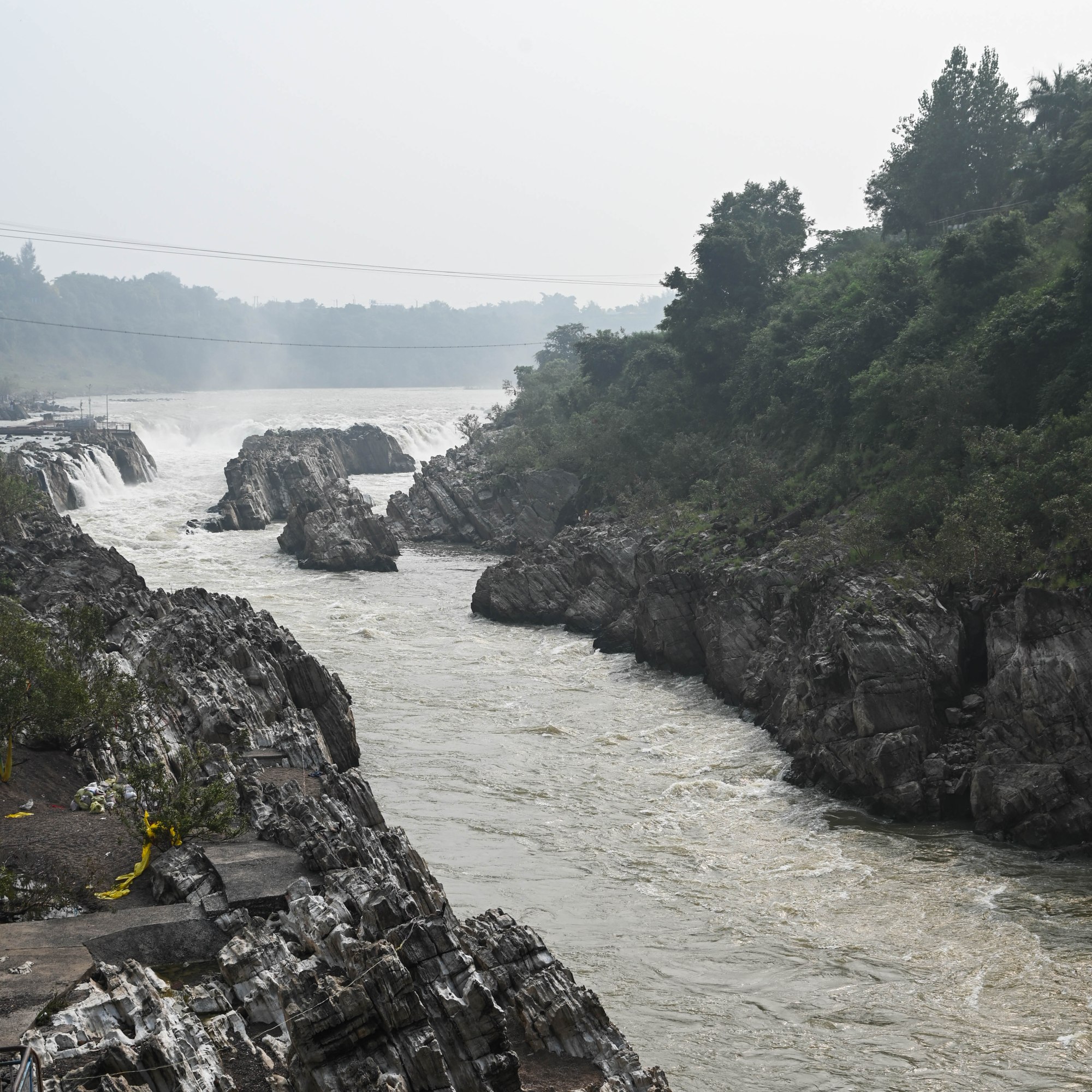
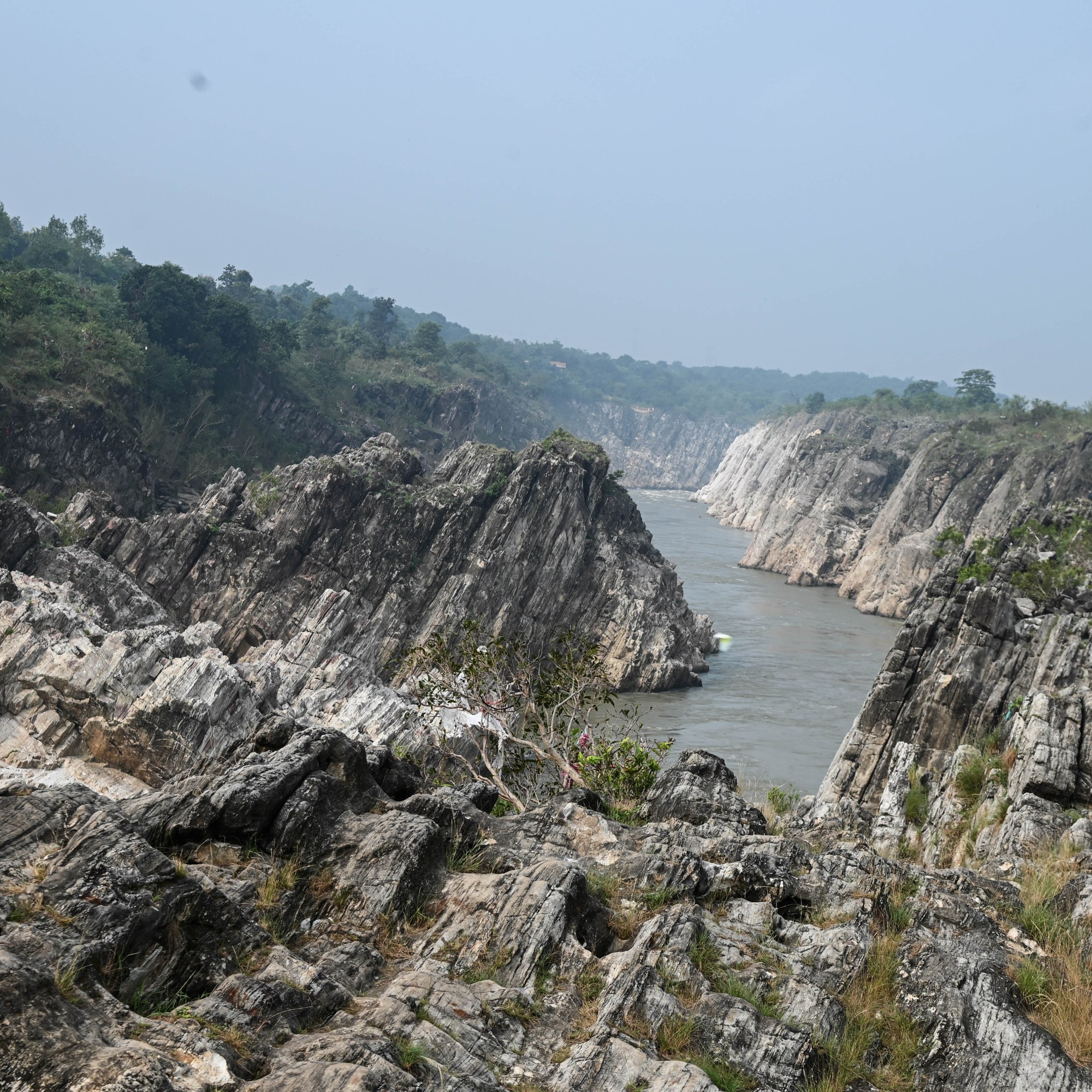
The falls are stunning, but better still is the narrow gorge into which the river flows with beautiful inclined rock formations in marble straddling the river. The river itself is fast flowing near the falls, with small eddies and swift currents. There are vantage points that have been thoughtfully located alongside the falls and along the river that allow for us to enjoy the vista.

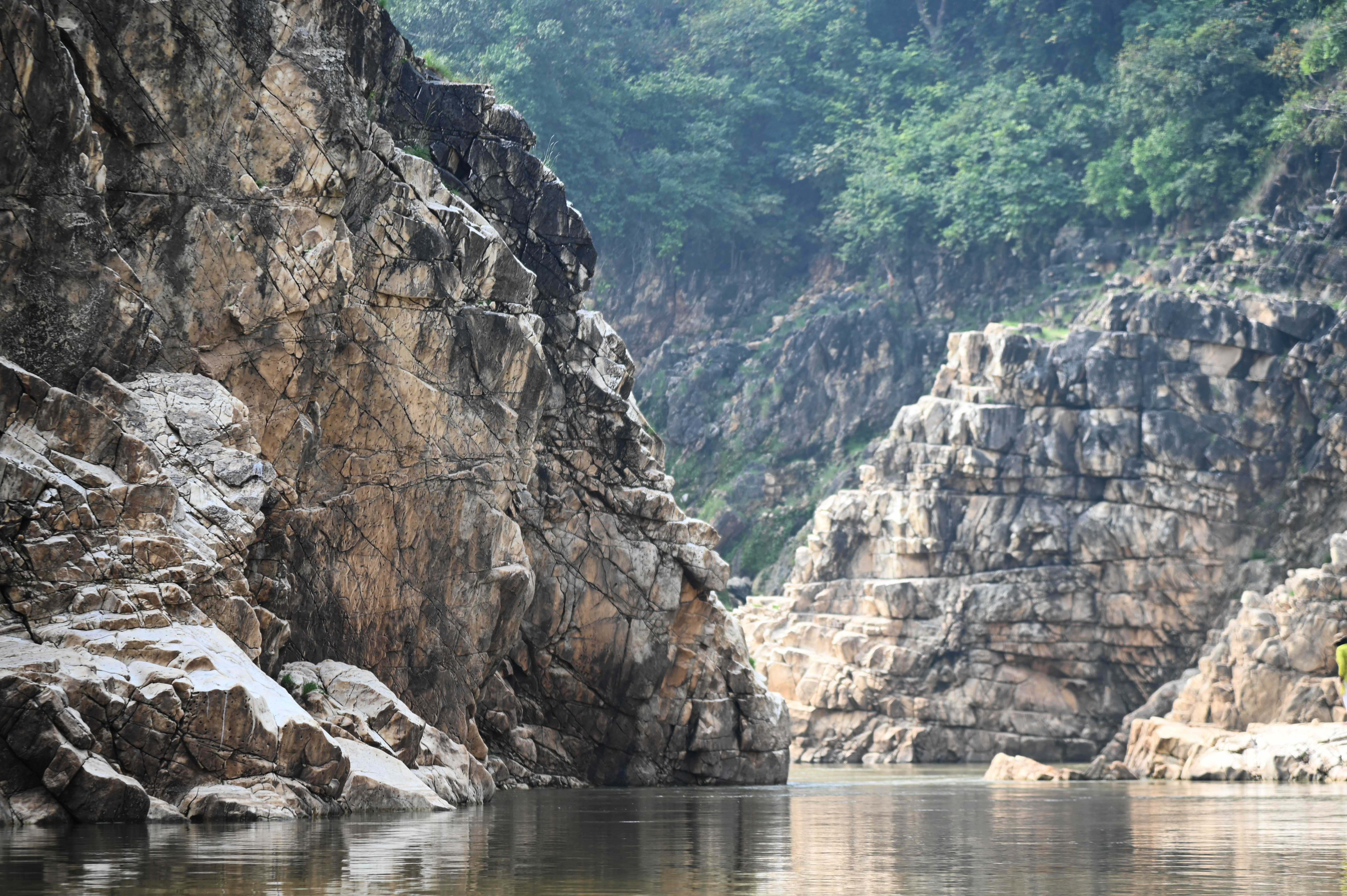
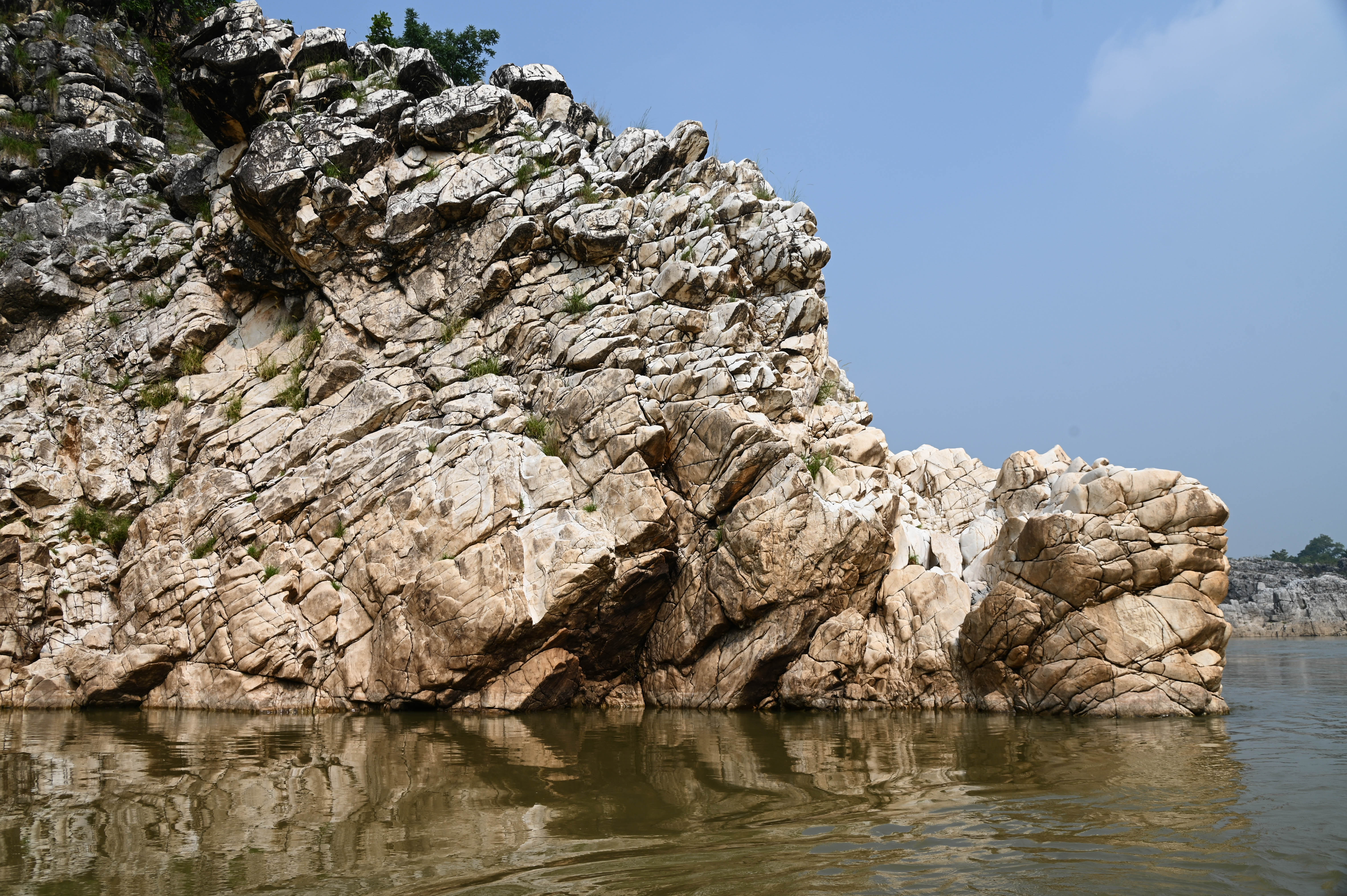
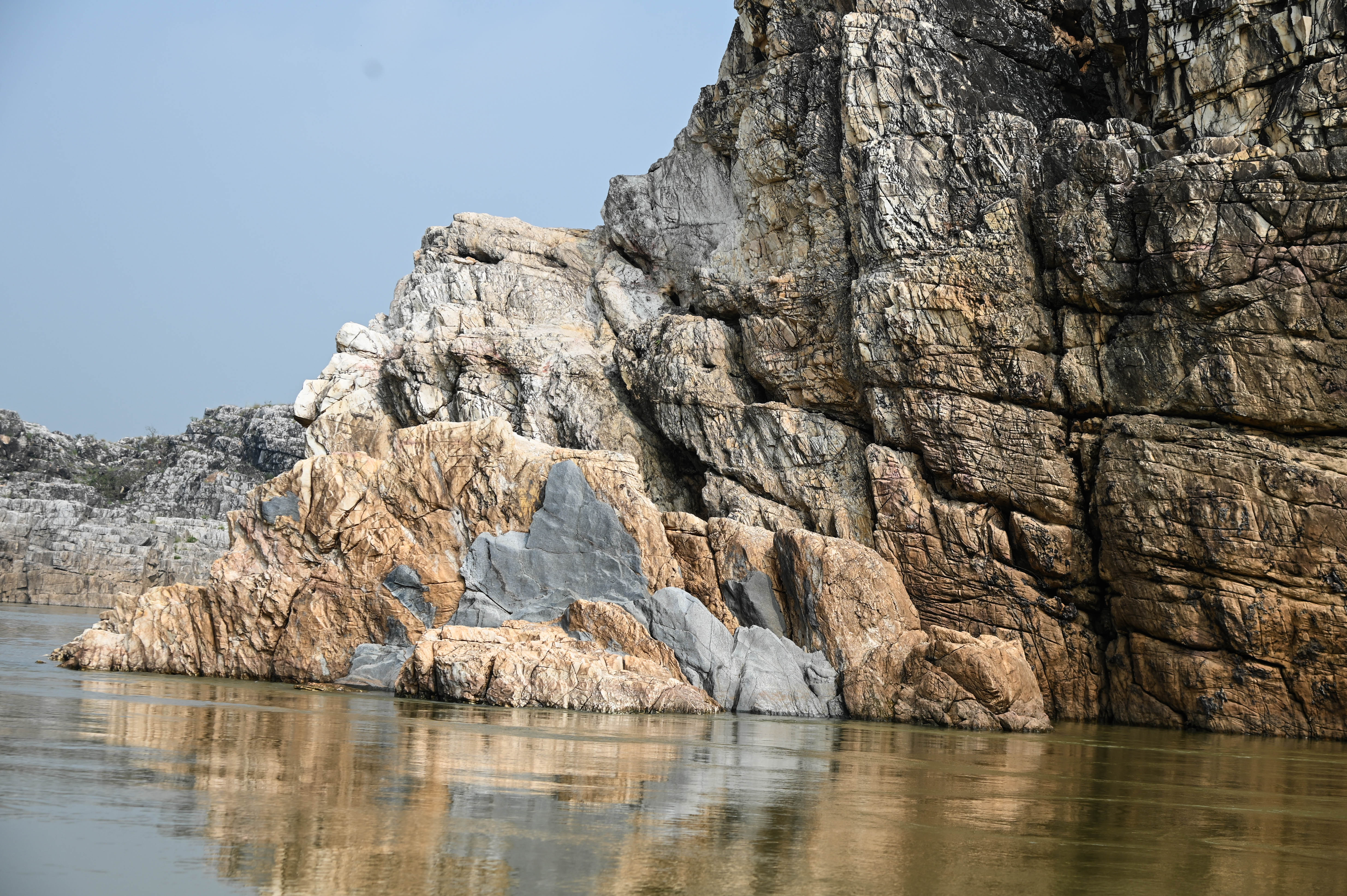
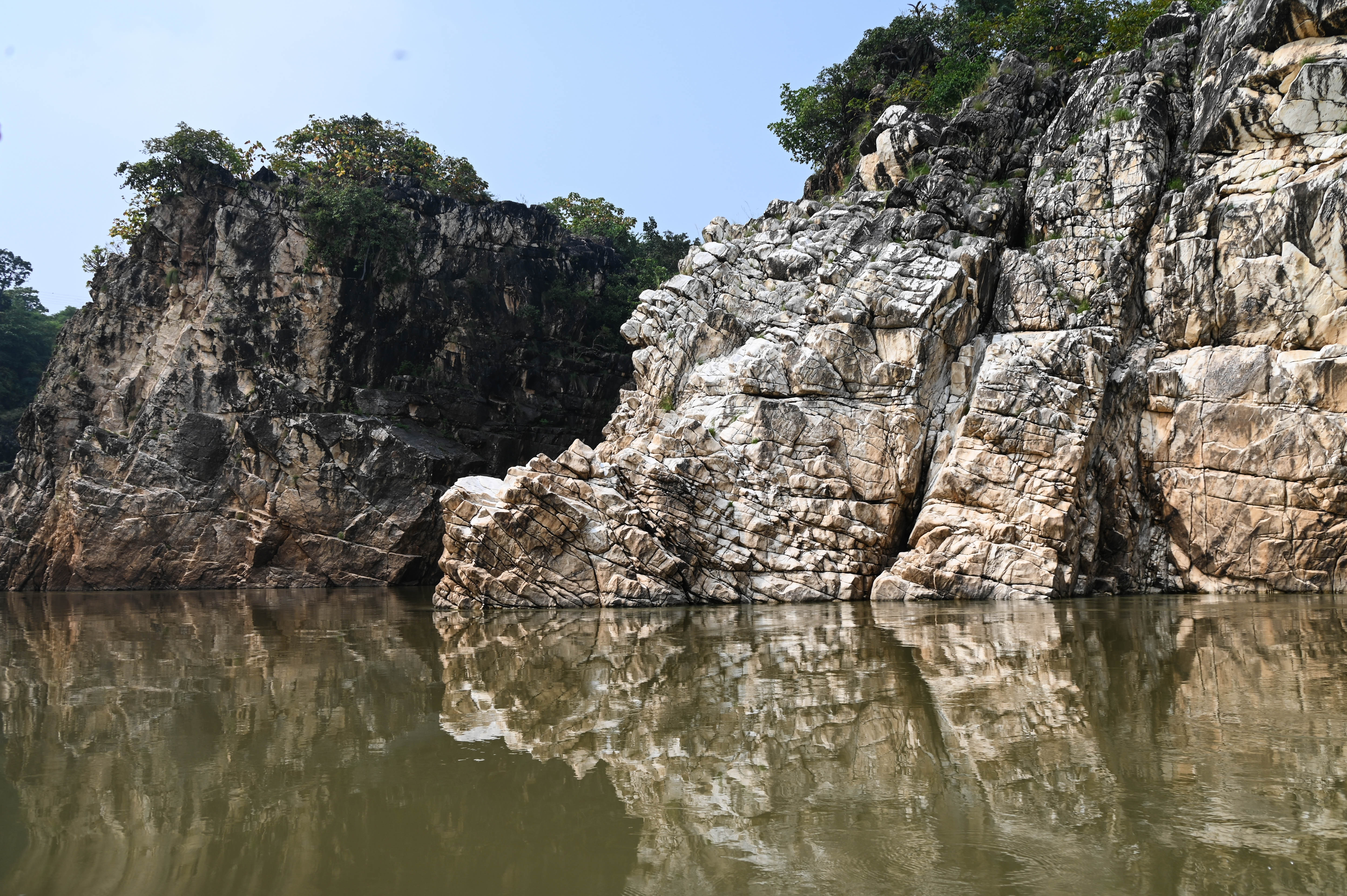
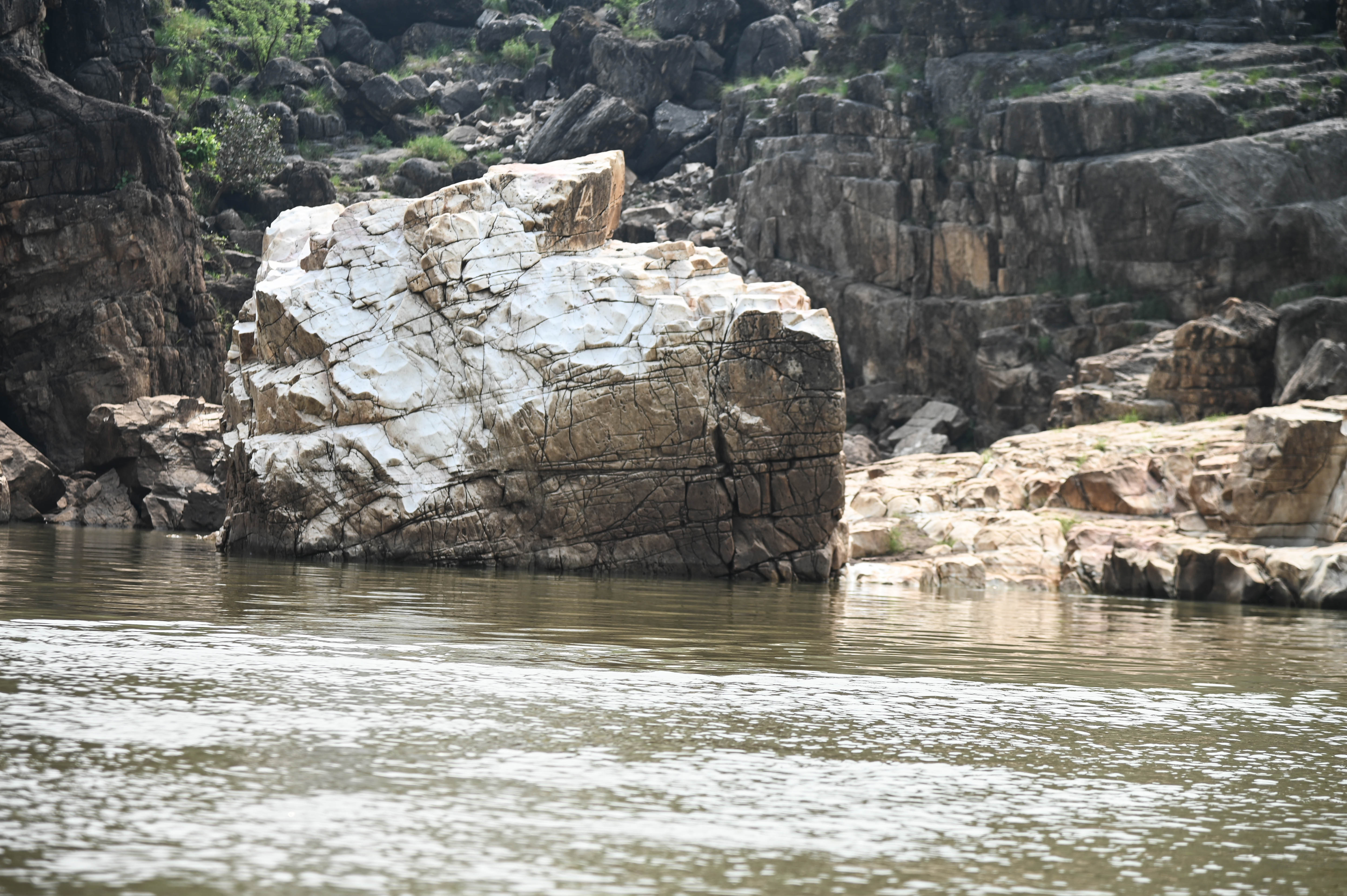
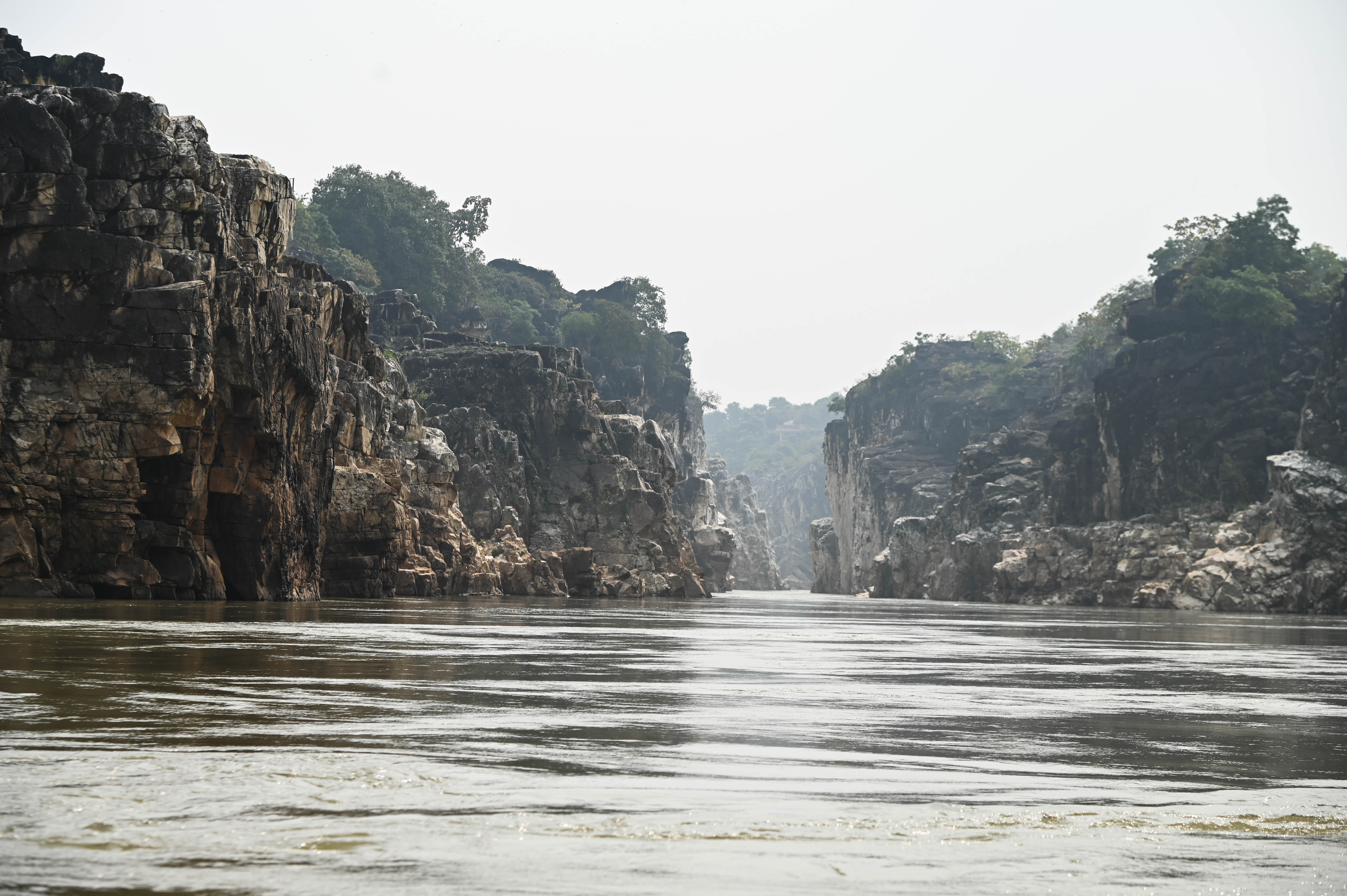
Marble rocks or Bedaghat is a little further away. The access is through small lanes, dotted with shops selling artefacts made of marble ranging from large idols, to carved receptacles and tableware. Bedaghat is a long gorge in which the Narmada flows. The marble is of different colours and the water levels have contributed to changes in their colour and structure. Since the water levels were high, the depth of the gorge was not really in evidence. Boats ply tourists into the gorge, for a limited distance. We went on a boat quite close to the rocks and got a close up of the formations. The boatman keeps a constant and informative humorous dialogue going, to dispel our fears.

We also went to the area where the Balancing Rock is located. Sandeep and Archana were tireless and went to check the garden out. There is more than just the Balancing Rock within the complex.

The album from Jabalpur – https://photos.app.goo.gl/RtzYqFW8KR3dRUS49

This was our last stop before we left for Kanha, the first of the National Parks on our itinerary.

The MP Tour – Part 1

Mandu, Jabalpur, Bhopal

We decided to go on a road trip to Madhya Pradesh. Since we had to return in 3 weeks, the trip was restricted to a few places in the southern area of MP, culminating in the National Parks to the east.

The route was MUMBAI- MANDU-INDORE-BHOPAL-PACHMARI- JABALPUR-KANHA- turn around towards PENCH-TADOBA- MUMBAI.

It was a convoy and our friends Sandeep and Archana accompanied us all the way and back. It was their very first road trip and we couldn’t be happier that they were there! Our trip began on the 6th of October and we took the Mumbai Nasik road to break journey at Dhule. The first day was all about messy roads with diversions on account of construction, potholes and tons of traffic.

It is a wonder that the same highway that connects from Mumbai- Dhule and into MP towards Mandu is riddled with potholes upto the Maharashtra and then the road is miraculously well laid on the MP side.

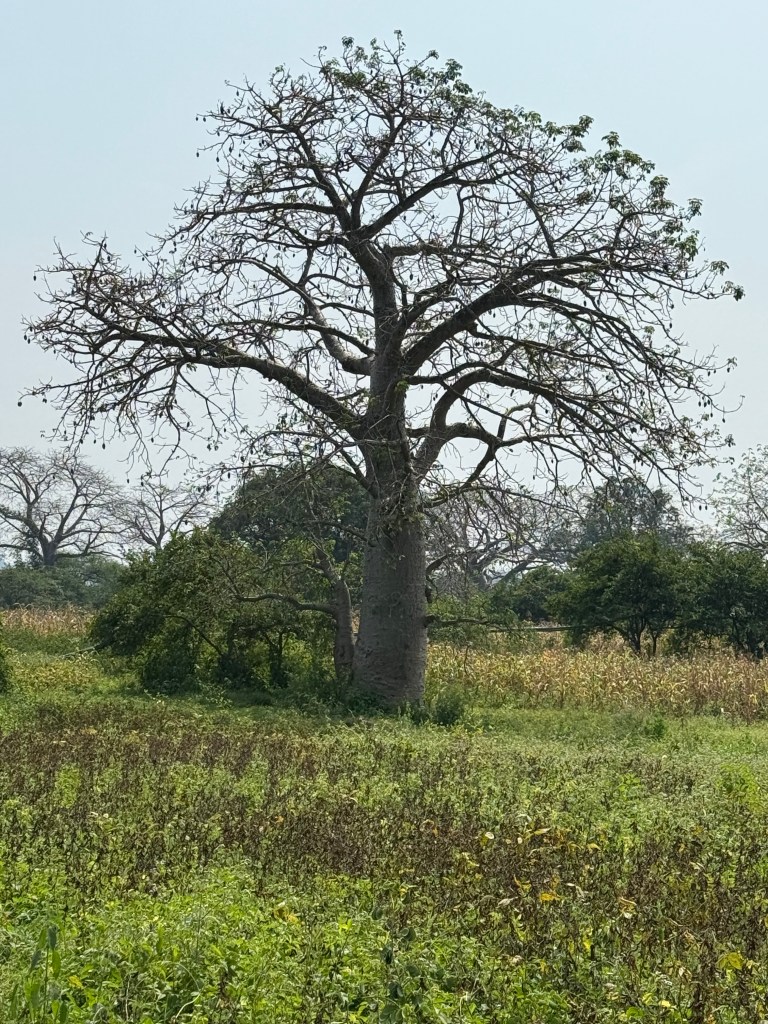
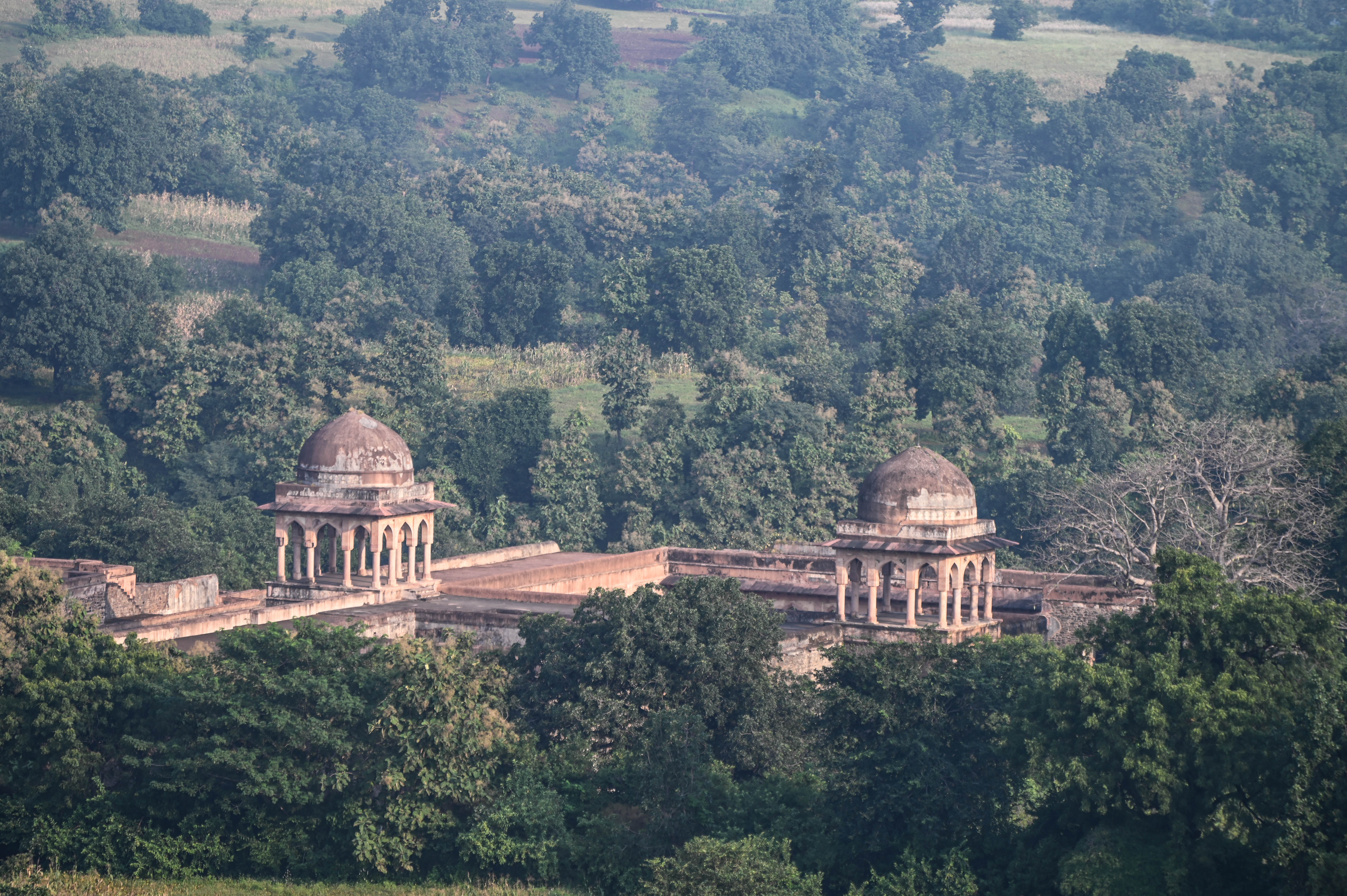
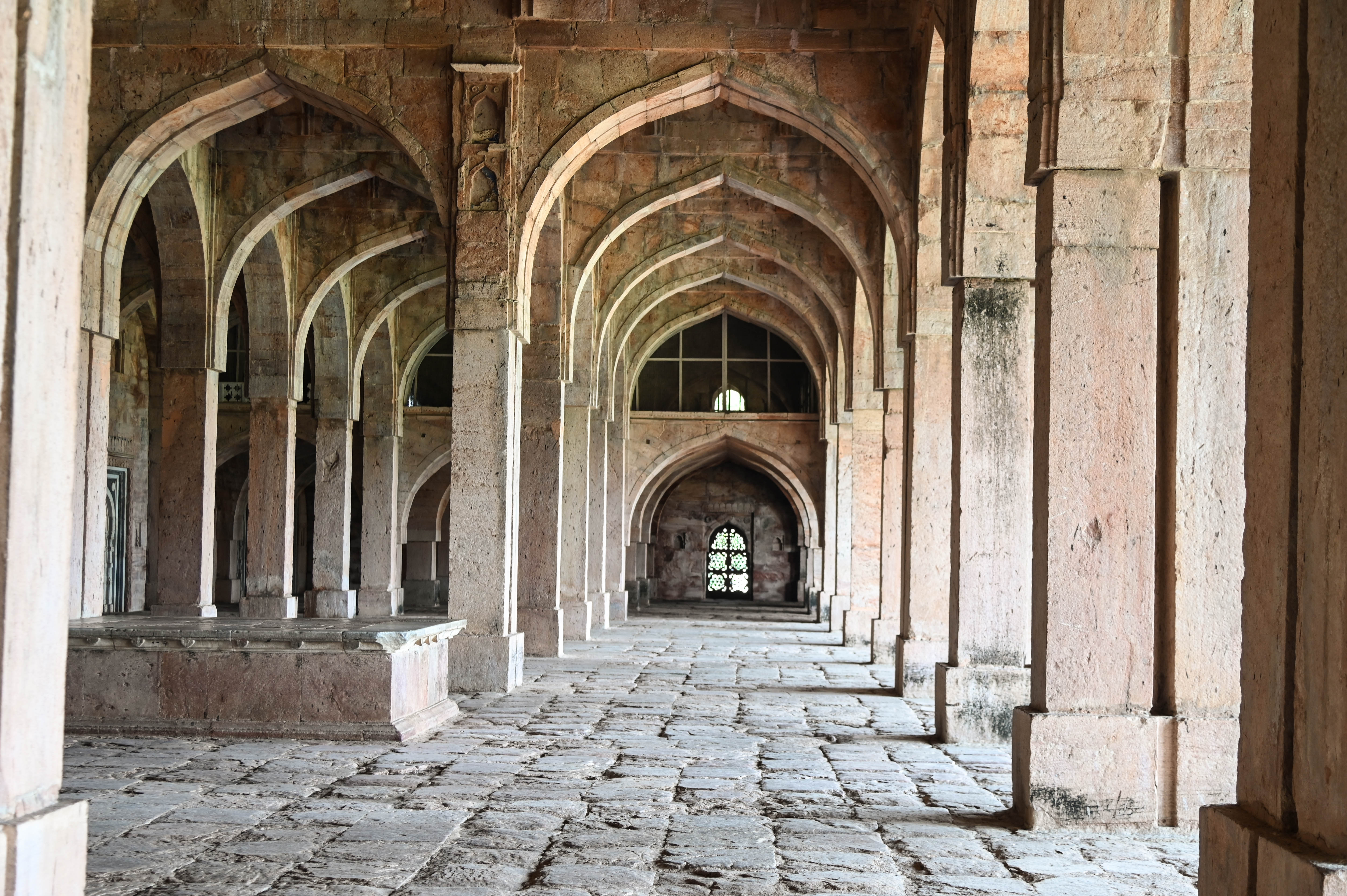
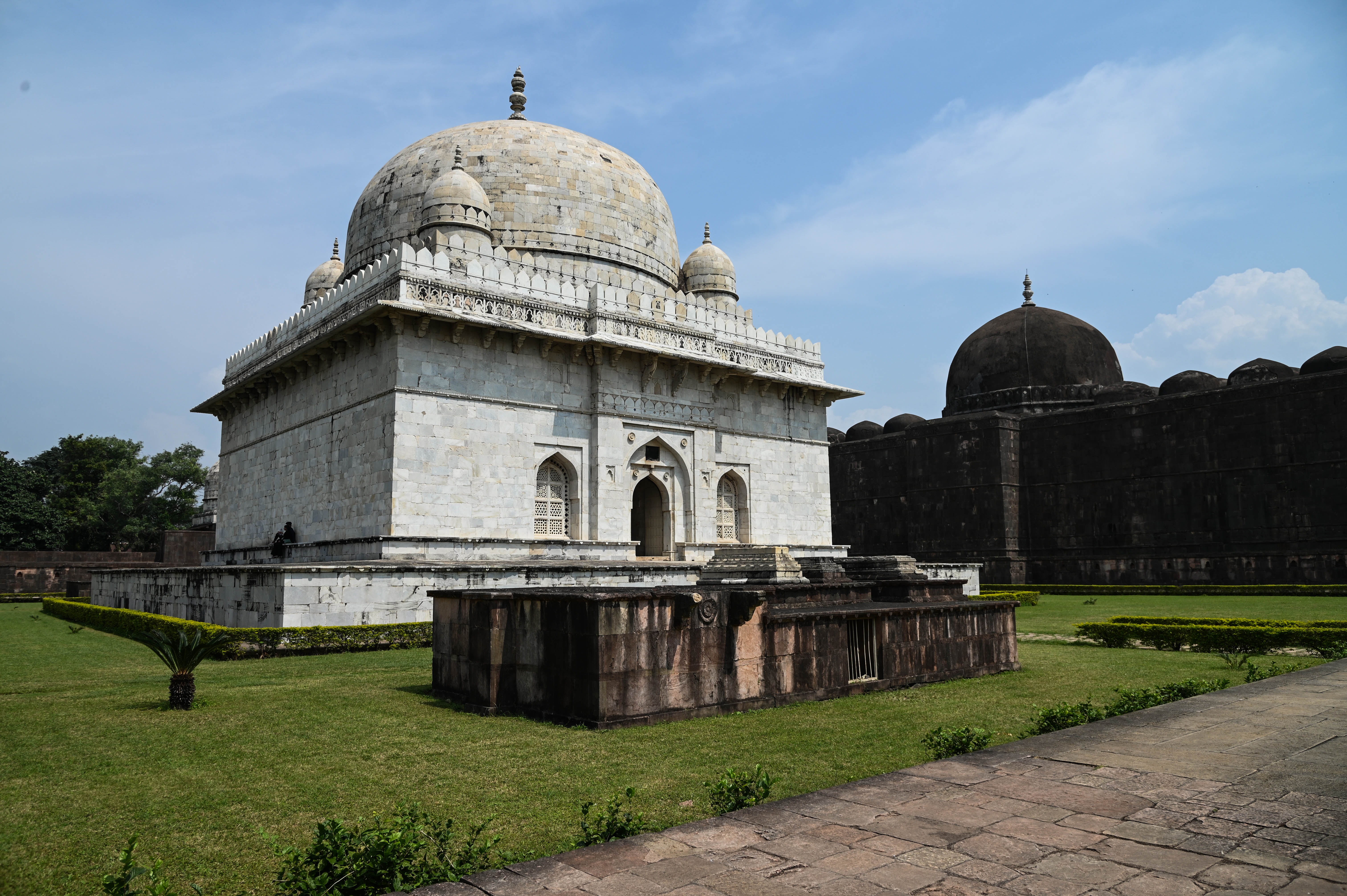
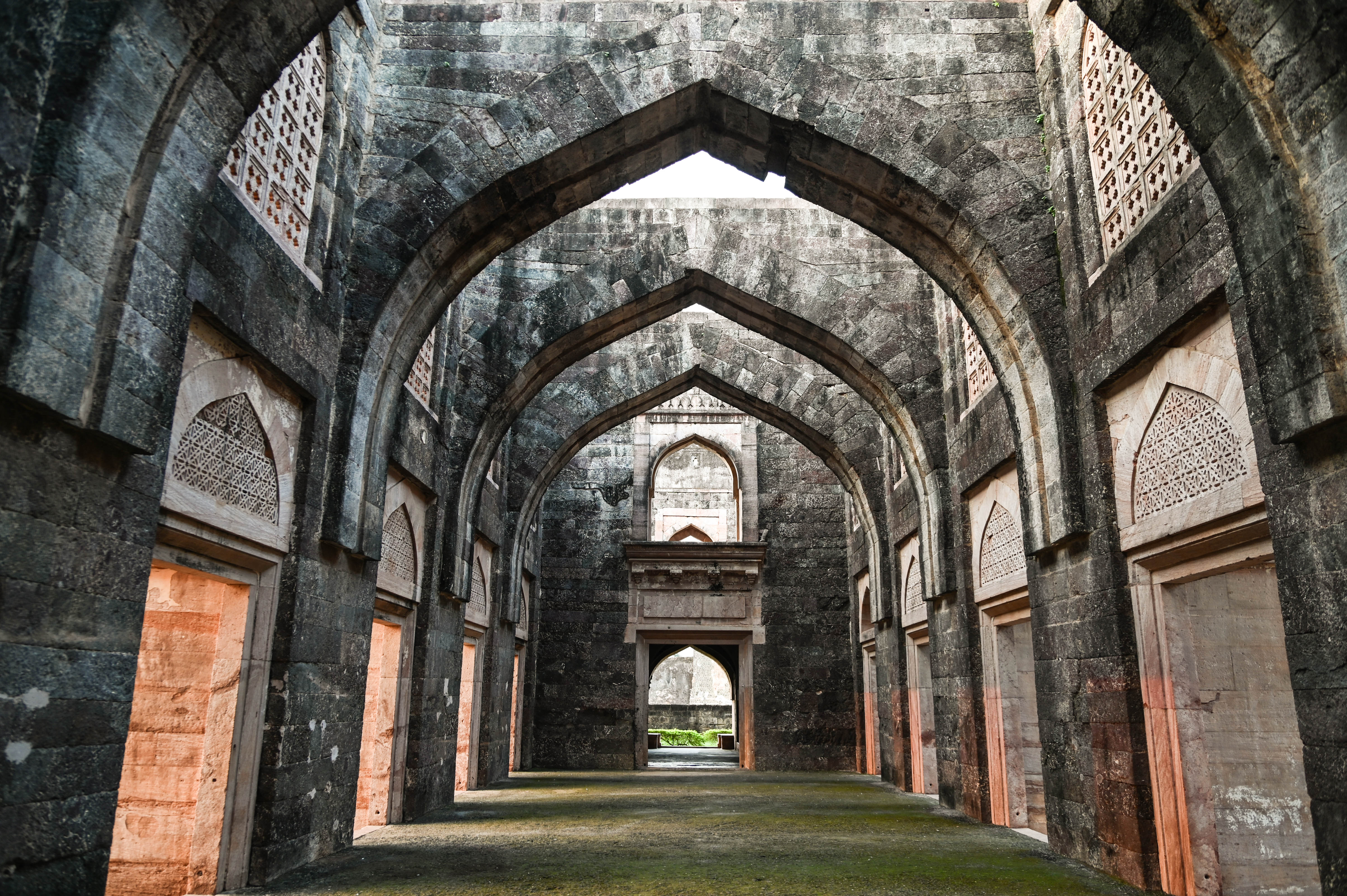
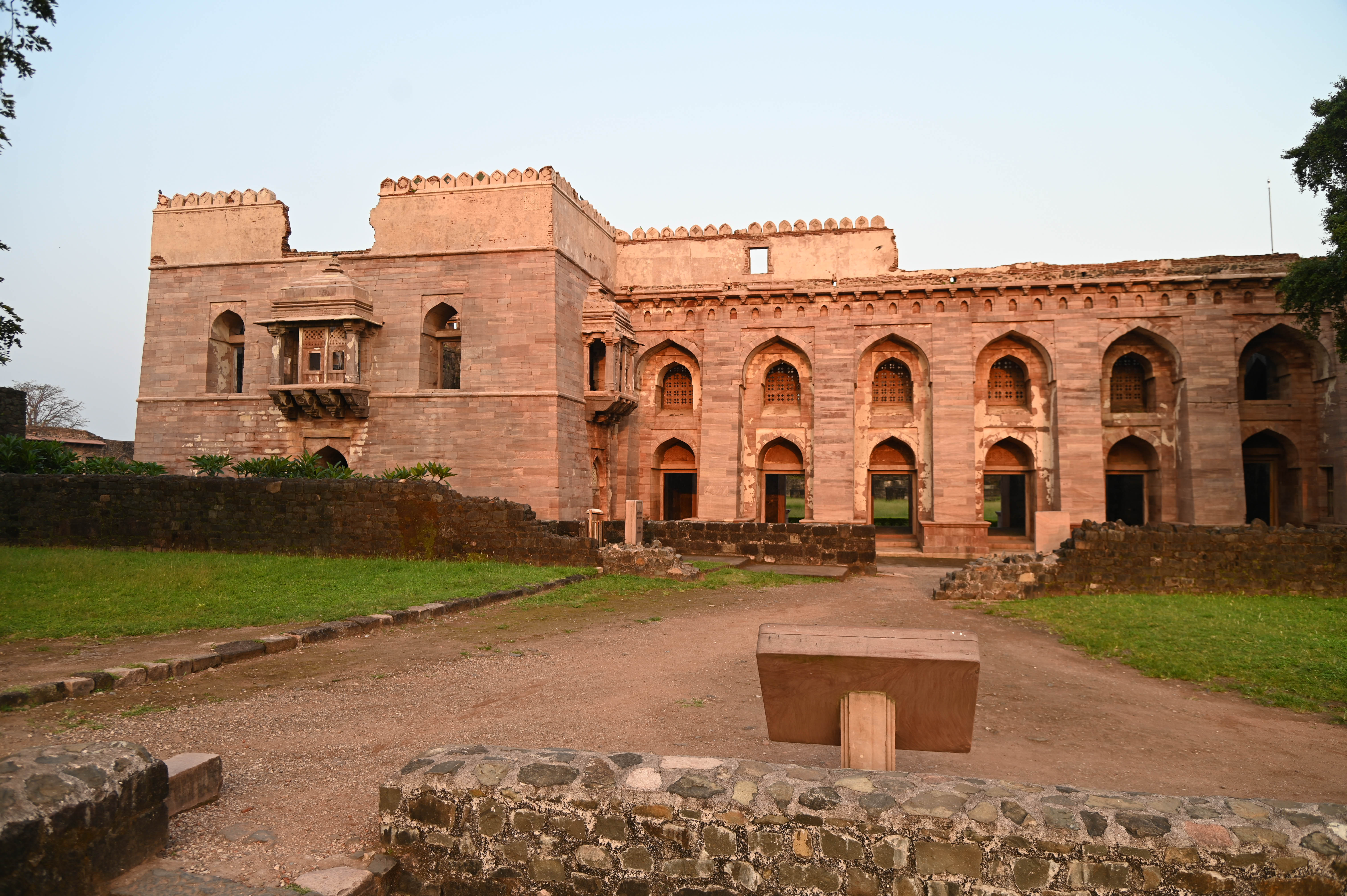
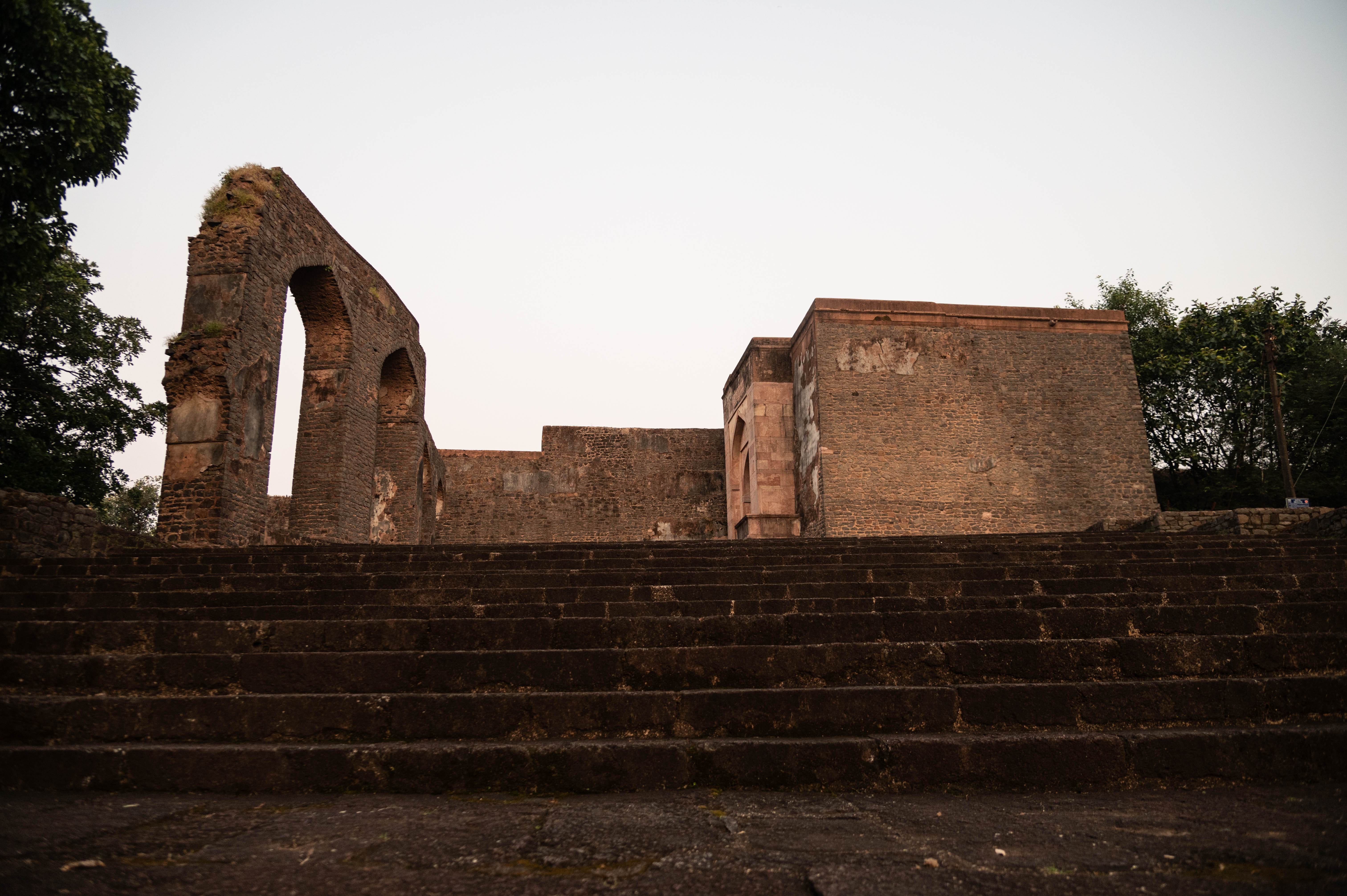
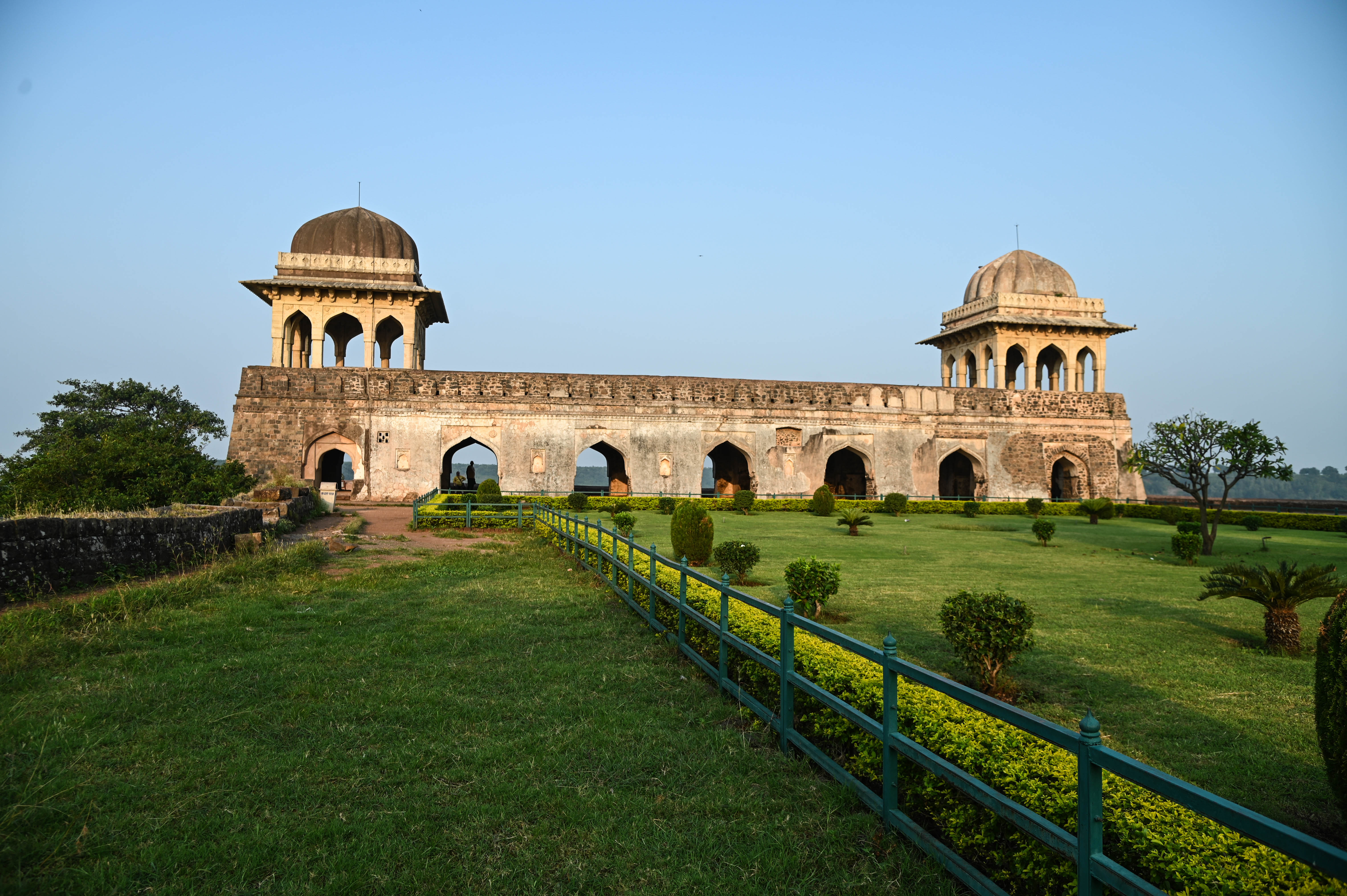
Mandu is a place of historical significance and was an experience. As we enter the small town, we see the skyline dotted with monuments everywhere, interspersed with Baobab trees. These look wonderful and I believe they were brought in by African traders more than 4000 years ago.

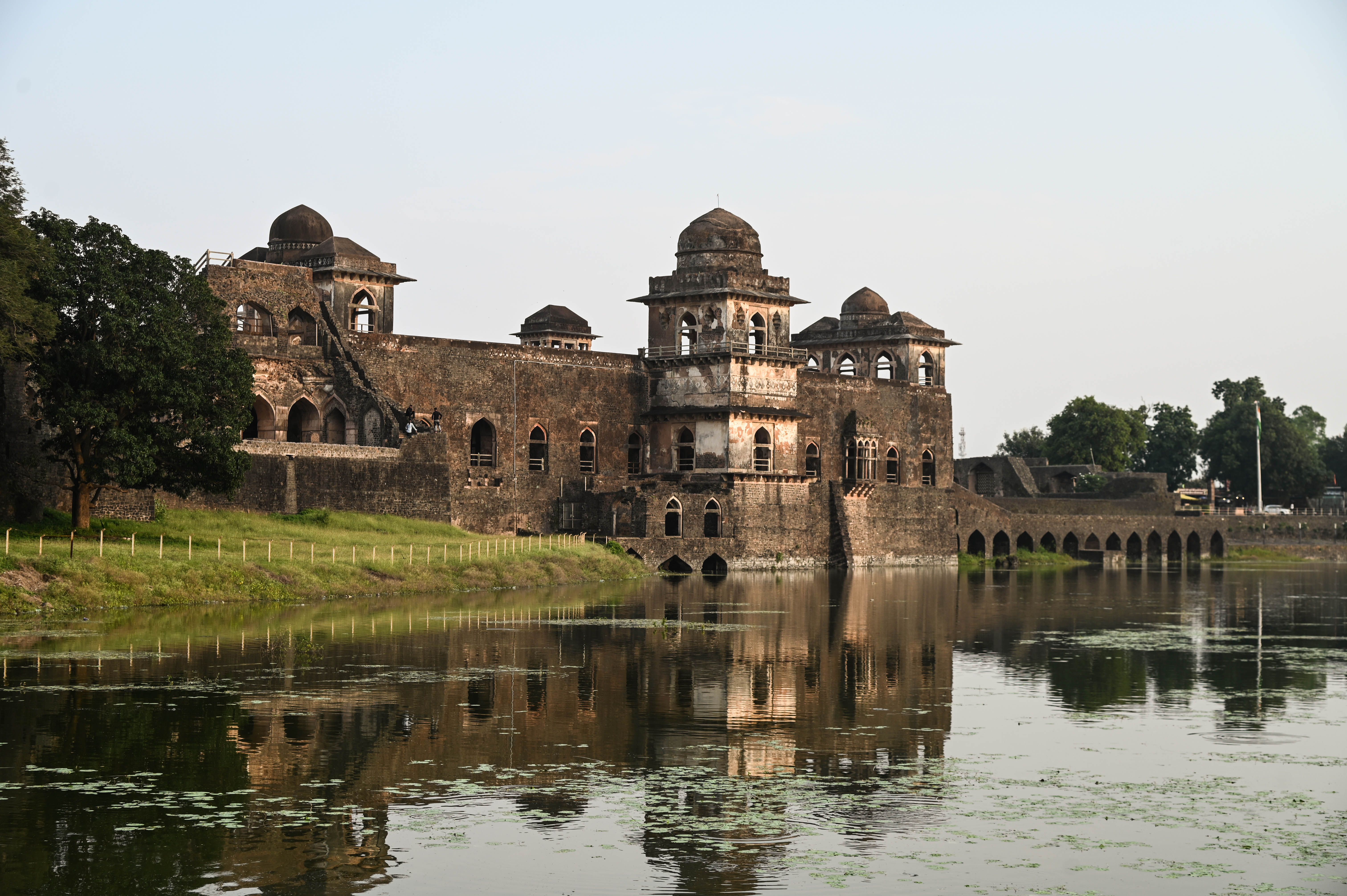
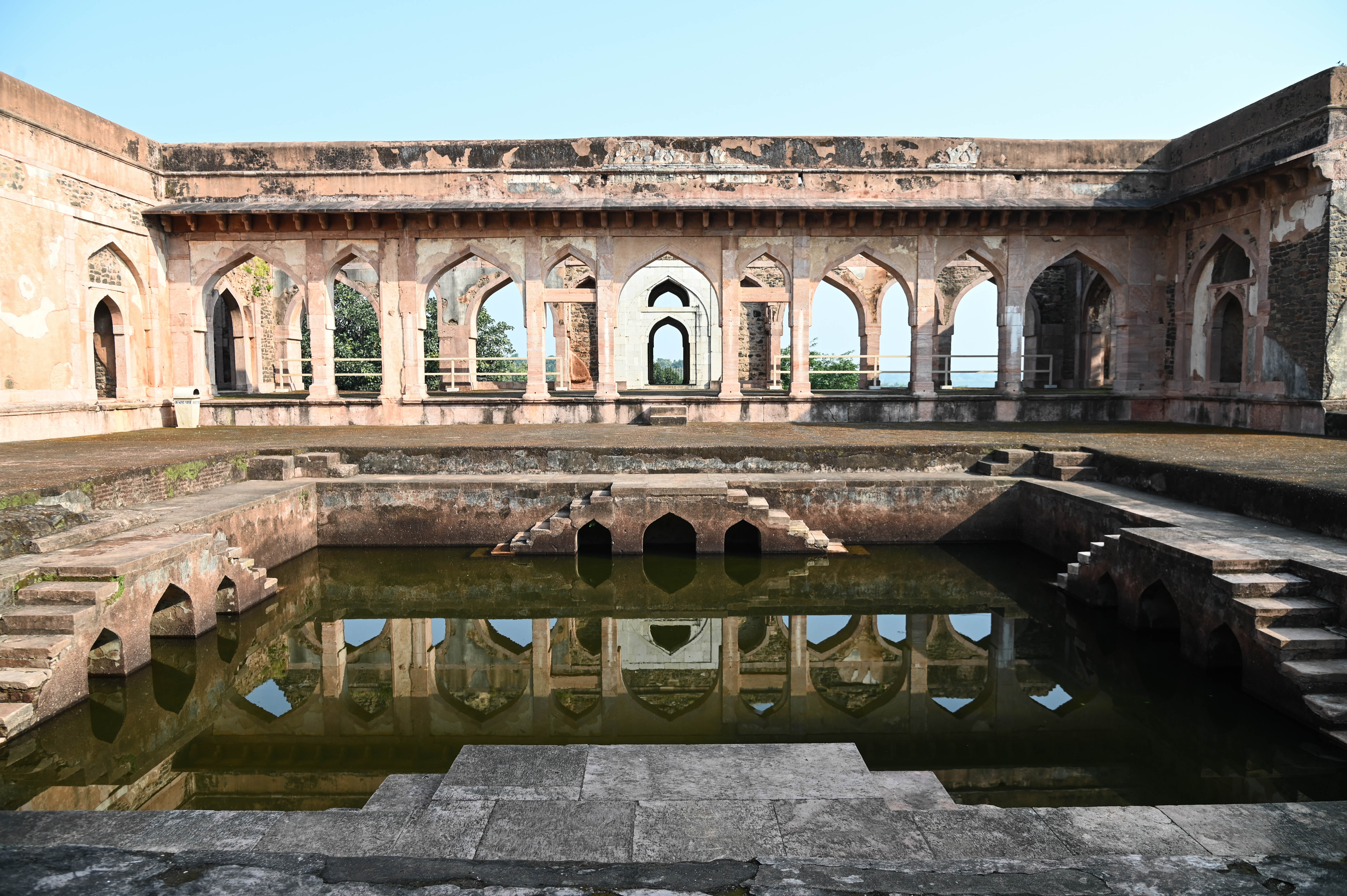
We engaged a guide to help us understand the significance of the monuments, history and heard stories about Raja Bhoj and Rani Roopmati. Mandu was the fortress town built by Raja Bhoj in the 10th century. Mandu has 12 entry gates. Over the next few centuries, Mandu was governed by the Governors of the Malwa region appointed by Mughal rulers. There are several beautiful structures built in Mandu by various rulers and they include Jal Mahal, Champa Baoli, Dai ki Mahal, Neelkanth Palace, Tomb of Darya Khan, Ujala Baoli, Andheri Baoli etc. While the architecture is essentially Islamic, there are Hindu influences in the peripheral structures that surround tombs, or some of the out buildings around Jal Mahal.

The Jal Mahal complex is vast and it is interesting to note that it has rain harvesting, water channels and water purification techniques.

We had booked ourselves at the MP Tourism resort in Mandu. All the rooms overlook a lake and the whole complex has luxury of space. The rooms are large and comfortable and everywhere there is display of tribal Gond art. The plan was to pick up some of this art as we progressed on our trip.
Our album from Mandu is here – https://photos.app.goo.gl/Bpuv9JsYqcs4BP7HA

Our next stop was Indore. We stuck to the state highway despite Google telling us otherwise. It rained as we drove into Indore. The outskirts have small industries and some residential buildings. We were greeted into the city by a lot of half built fly overs and this was a sight throughout our stay in various parts of the city. Indore has been voted the cleanest city. We learnt that segregation happens at home and this is taken forward in various compartments of the tiny garbage trucks that ply all over the city. There did not seem to be any filth lying around, but the chaotic traffic and construction mess damped our expectations of a visibly clean Indore.

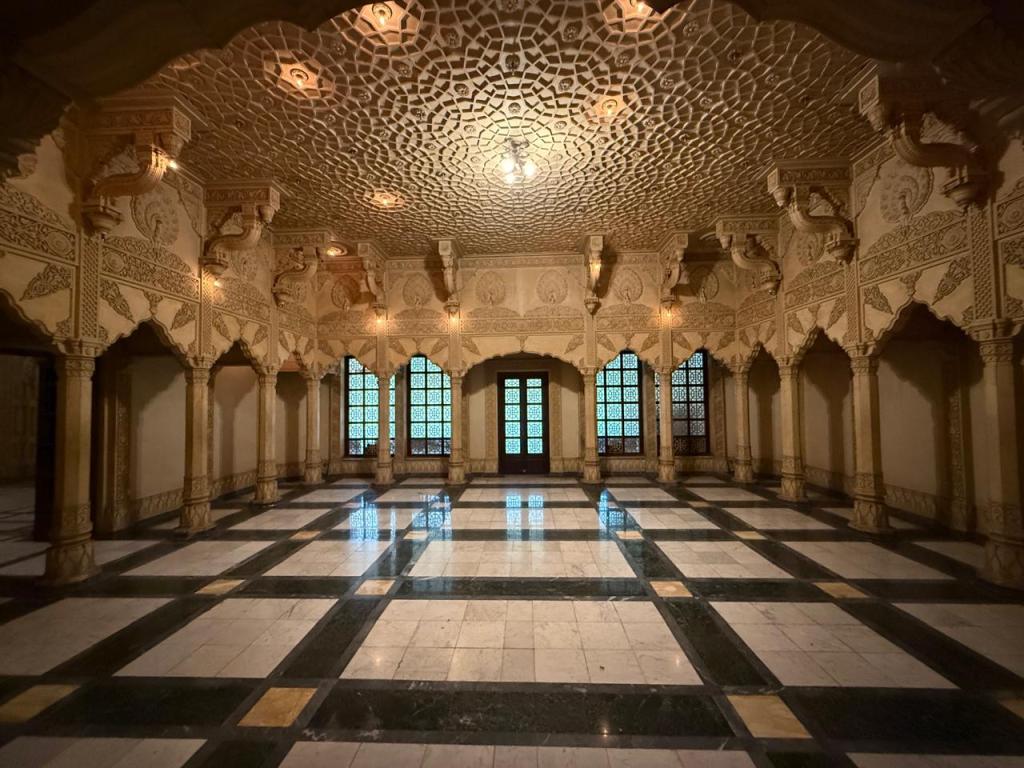
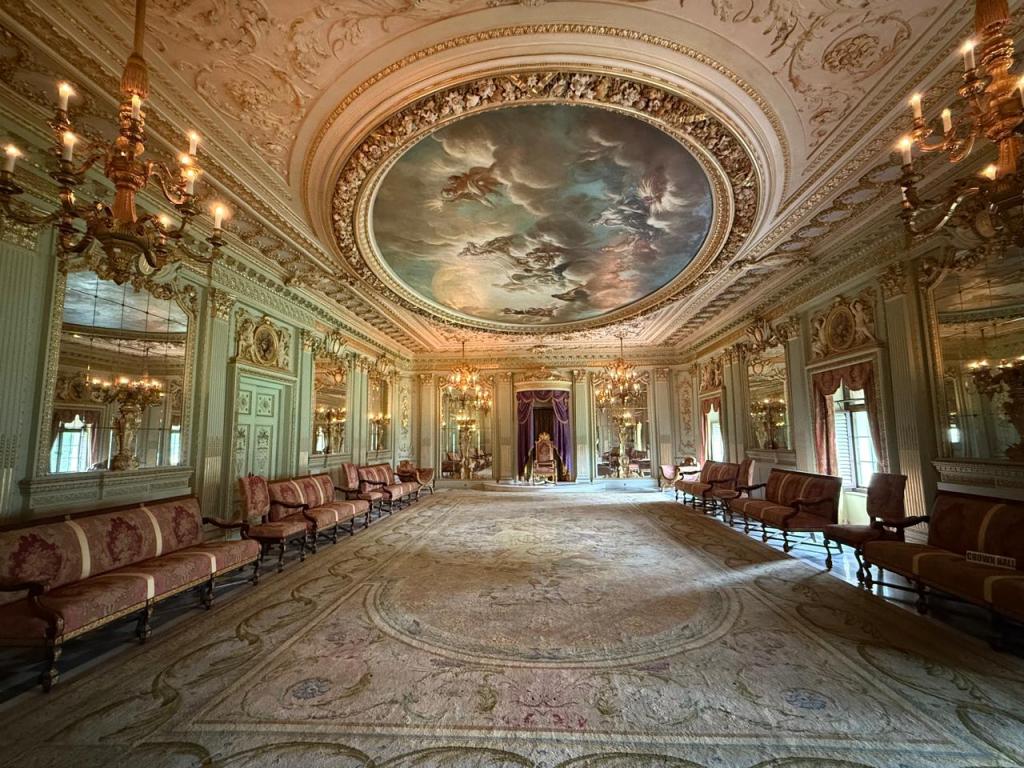
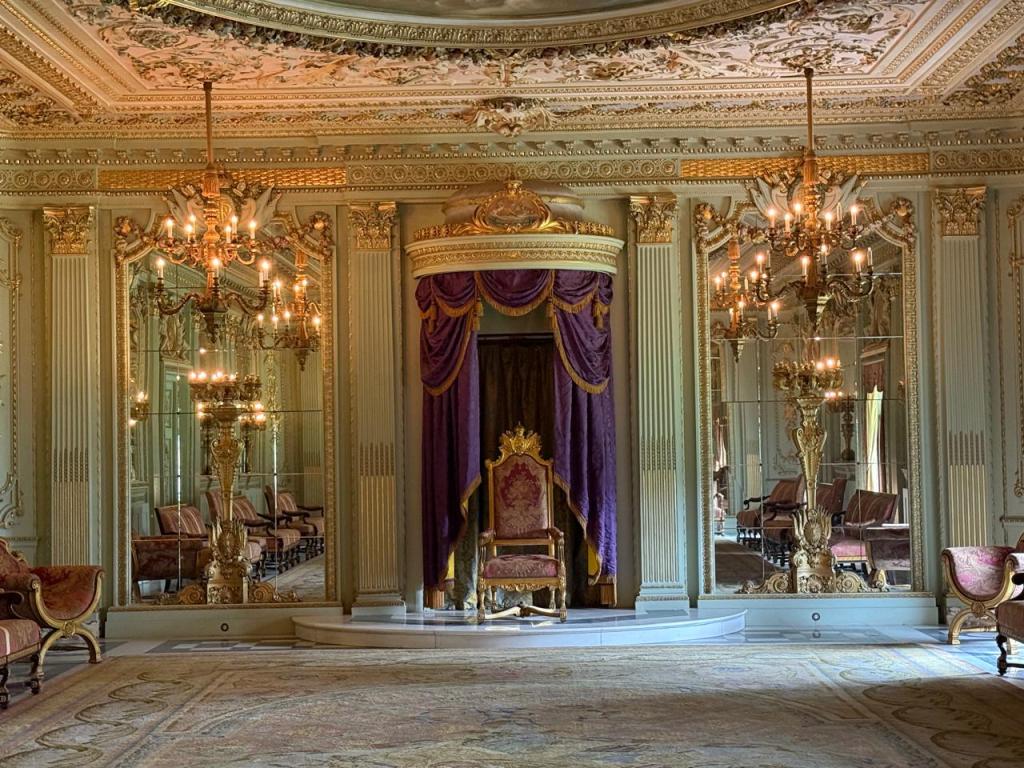
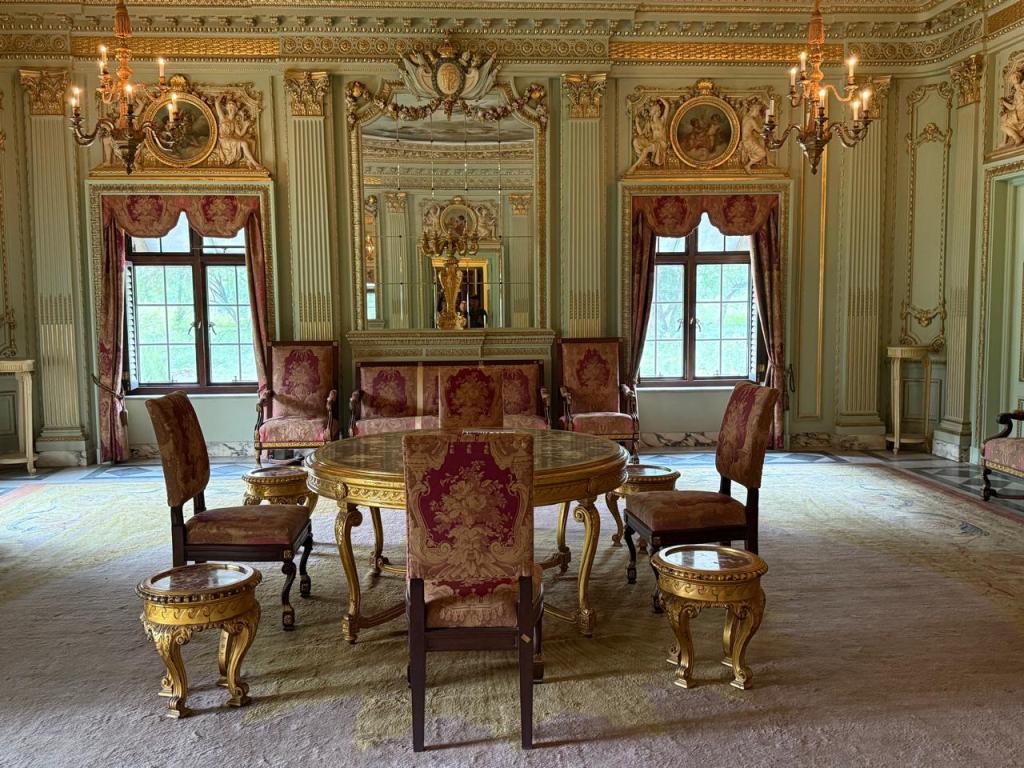
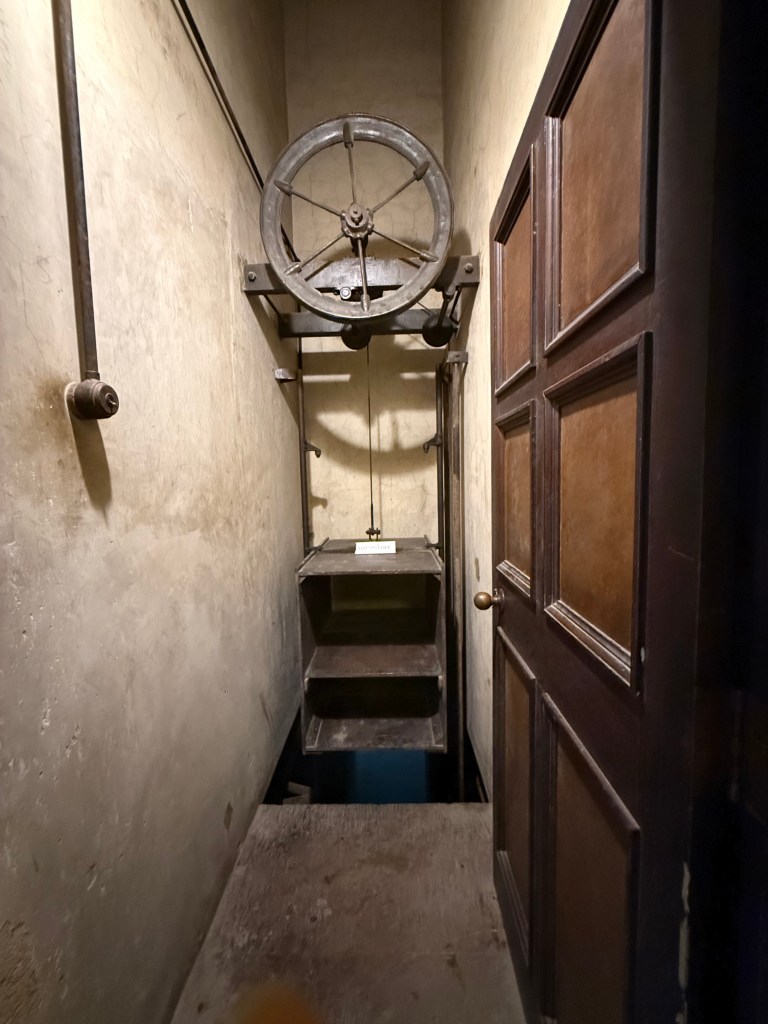
We visited the Lalbaug Palace. This is a sprawling palace owned by the Holkar dynasty and for some reason, built in the Renaissance style. Plenty of panelling, decorative plaster, stone- it is extremely ornate and there are monograms of the Holkar family everywhere. An interesting bit of construction is the ancient dumb waiter that was used to bring food to the dining areas from a very remotely located kitchen. The palace is currently undergoing restoration and many areas are cordoned off.

The album of pictures from the palace are here – https://photos.app.goo.gl/XPg6kQJ43v8i6sEj6

Indore was also about the food. Sarafa and Chappan are two famous locations and we were determined to try some of the local cuisine and street food. Sarafa is a market with a labyrinth very narrow streets. Late into the evening, when the shops shut the down, the market turns into a “khau galli”! Street food from all over India is sold here and even on a week day, it is very crowded. We did not find food that is specific to MP, but the samosas/kachoris taste different and are a must try. Chappan dukkan is exactly what it is called- 56 shops. Again, there is so much variety of street food, but no one could point us to any cuisine that is MP specific. Here, I must mention that we had great Poha for breakfast everywhere in MP and the Sev and raw onion topping with the Poha was just too yummy!

We caught up with friends Pooja and Zakir at Indore and their generous hospitality extended to sending us back with big, big goody bags! We also found great Maheshwari saris and Gond paintings.

Our next stop was Bhopal. This was planned as an overnight stop on our way to Jabalpur. We arrived at the eve of Dasshera and everything was shut. That put paid to a planned visit to Bharat Bhavan.

Our travel story continues in Part 2

The Madhya Pradesh Tour

We are back on the road again! It’s been some time since we completed our last road trip, the Peninsula Tour. Our plans were to drive to Vishakapatnam into Odisha and then on to Chhattisgarh, Madhya Pradesh and back home. We had to shelve those plans for another day.

We have now modified our plans to cover Mandav, Maheshwar, Indore, Ujjain, Bhopal, Bhimbetka, Pachmarhi, Jabalpur, Kanha, Pench, Tadoba before heading back to Mumbai via Aurangabad.

We are joined on this trip by our friends, Sandeep and Archana. More friends will join us at Kanha and Pench; we will introduce them later in another update.

We are eagerly looking forward to not just getting back on the road, but also to seeing parts of MP that we have never been to before.

Watch this space for more updates.

The Peninsula Tour Parts 1 and 2 – Our story

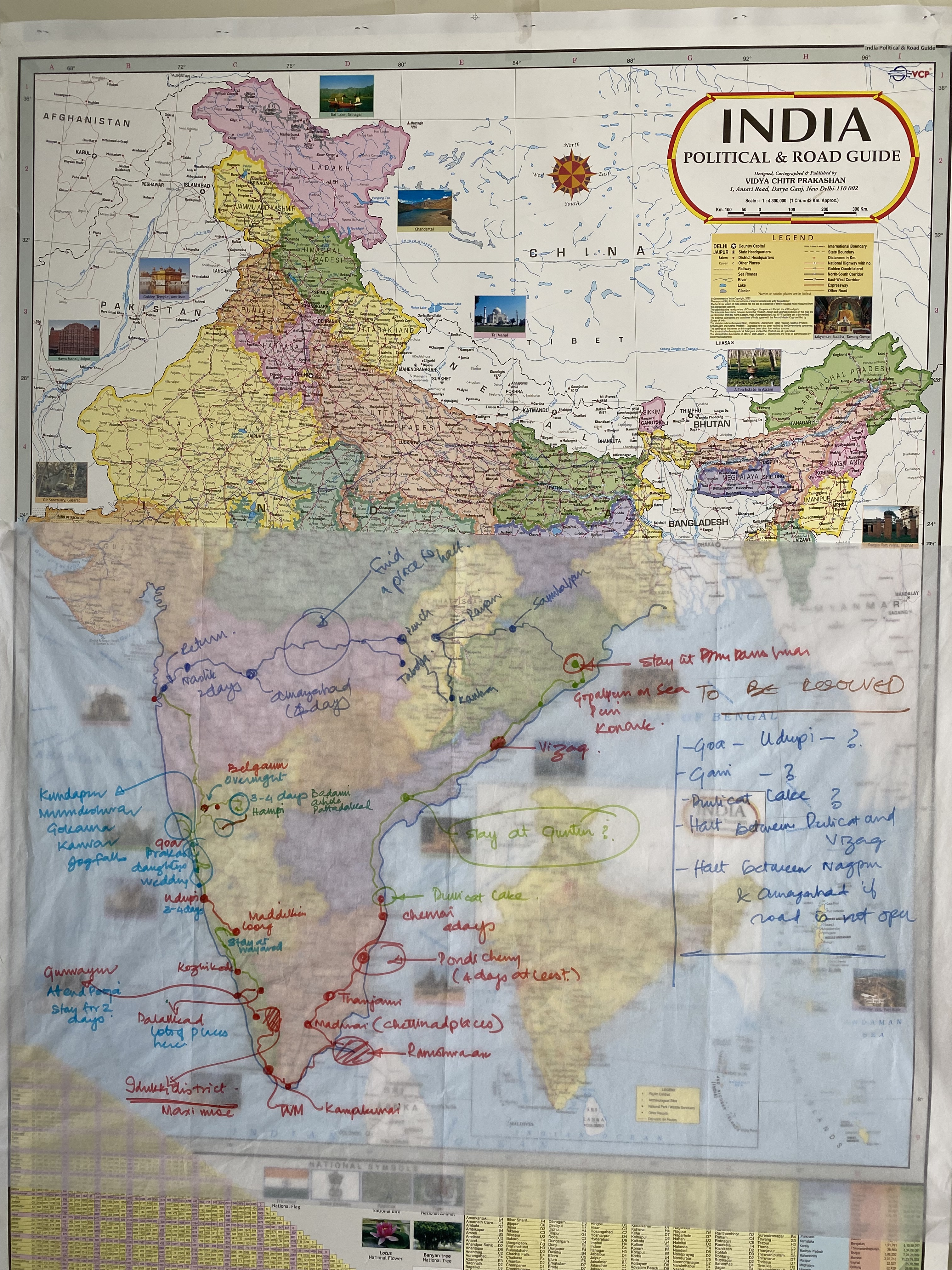
We had been talking about undertaking a road trip across India for a few years now. Finally, after COVID restrictions were removed and a few short trips later, we purchased a map of India that we stuck on the wall of our study. That was the drawing board and the beginning of our ambitious road trip that we christened The Peninsula Tour. It was audacious as it was ambitious. We worked on the principle that we would head down the west coast from Mumbai and climb up the east coast before we turned inland from Orissa into Chhattisgarh and Madhya Pradesh before returning home. We had envisaged that we would need to make short inland trips to visit some ‘must see’ sites.

Once the broad plan was drawn out on the map, we transcribed it into an Excel spreadsheet; where else! The details went in and columns and rows started filling up with information on distances, hours of travel, tentative number of nights we intended to stay, local sights we wanted to visit, potential hotel options etc. It turned out that the trip was going to take us four months on the road; ambitious and audacious as we said earlier!

We shared this itinerary with our friends and family and soon realised everyone considered us to be insane to take this on.

As we prepped for the journey, we went through complete health check ups, got our car serviced and ready, stocked medications for entire duration of the journey and packed for several functions that we would be attending along the way. As one can imagine, our luggage became a potential issue as we had to pack for weddings, temple ceremonies, the cold weather and the warm weather! There were some very interesting lessons that we learnt on this trip that would see us implementing in the near future.

We had a great time and happily drove as per our plan for over a month before a family emergency had us abort the trip to return home. However, the fun of the trip and living out of suitcases and sleeping on a different bed every other night or so had us planning the restart of the trip that we now called the Peninsula Tour Part 2.

Armed with lessons learned from the previous tour, we set about replanning The Peninsula Tour Part 2. We decided to skip Orissa, Chhattisgarh and Madhya Pradesh for next year. Instead, we decided to head to the south eastern coast via Bijapur and Gandikota to Chennai.

The roads, the traffic and the lay byes..

The roads for most of the trip were in good condition with many routes seeing diversions either for highway expansion or new road surfaces. The toll we paid amounted to close to Rs. 2.30 per kilometre, a bit stiff by any standard. Barring Maharashtra, Kerala and Tamil Nadu, large part of the highways of Karnataka and Andhra Pradesh severely lack rest stops for transit breaks. Driving styles varied by state. Maharashtra, especially the outskirts of Pune, Solapur, Kolhapur sees a lot of traffic on the wrong side of the road. To add to that, two wheeler traffic is undisciplined forcing trucks to drive on the extreme right of the road to avoid hitting the two wheelers. Faster vehicles have to find a way between the trucks and bikes. Kerala has good, but narrow roads. The buses in Kerala are most dangerous and will push you off the road if you aren’t cautious. However, surprisingly, vehicles stop to allow people to cross at pedestrian crossings. This is especially so in the Northern parts of Kerala.

The food along the way..

For long trips, the general recommendation is to be conservative when it comes to food, especially for diabetics. We carried a food bag that contained some biscuits, rusk and chocolates. We started each day after a heavy breakfast and ended the day with a very light meal of soup and vegetables at the hotels we stayed in. While we stopped for tea and rest room breaks, our lunches were quite light. We had decided to break this routine at places like Bangalore, Chennai, Trivandrum and Calicut where we stayed or spent time with family and friends. Karaikudi and Calicut were other exceptions given their famous cuisines. The lunches and dinners with family were the breaks we looked forward to eat home cooked food.

The stays..

Going into the trip with a loosely structure plan, we downloaded all the travel apps we could. Barring certain places where we were had to hard be at on specific dates or we knew would be packed due to public holidays, we followed our ‘book a few days in advance’ approach. We had a few misses when it came to hotels we stayed at, but largely our hotels were good experiences. On long trips away from home, especially road trips, it is very important that the hotels are good, rooms clean and beds comfortable. One needs to be able to rest well each night before the long day ahead. The pleasure of sleeping in one’s own bed after a long trip is a pleasure, however.

When friends joined us on the trip..

While we had documented the places we visited in some detail, we had not spent much time talking about  our friends who joined us on different parts of the journey. On Peninsula Tour Part 1, we had friends of ours, all architects, join us at Hampi. Shrinath, Mohan, Bharti and Anupama had been to Hampi in the past, while it was our first time. We were joined by Vijay also an architect based in Hospet. Most of our Hampi tour was like a lesson in History of Architecture! It was a fun 4 days with the gang.

Jayant and Roopal joined us on our journey from Wayanad. It was sad that we had to ditch the duo at Kochi to head back home, but they had their fun continuing as per plan till Trivandrum. Given our inefficient packing, Jayant and Roopal had to carry small bags for the three weeks they were to travel with us!  It  helped that they are both foodies and Kozhikode was where we tried all the local cuisine. Their company, love for nature and love for birds was super.  It was thanks to ‘eagle eye Roopal’ that we were able to spot truly exotic birds.

Ashok and Surendra joined us from Madurai to Trivandrum during Part 2 of the tour. Our friendship is really old(since college) and we spent a lot of time exchanging stories from college with plenty of leg pulling. Surendra’s need for roti, sabji, dal, paneer and jeera rice was hilarious. The stories of disastrous ‘jalfrezi’ and ‘paneer burji?’ must be kept for another day.

This trip has been about travel, exploring new places, off roading, visiting places of historical and geographic interest. It also been about learning, time and money management, making do and spread sheets!

Most importantly, it has been about being with or meeting family and friends, some of them after a long time, spending time with them and getting to know them all over again! We have been overwhelmed by all the love and support we have received. We never knew that we had so many people rooting for us and following our adventure really closely.

We are grateful for this.

We are planning our next trip and we look forward to having all our family and friends be a part of the experience and memories we create.

The Peninsula Drive Part 2 – Bandipur, Kabini, KGudi

Our drive to our final leg of the journey took us to through short stops at Guruvayur, Kozhikode, Wayanad into Karnataka’s famed forest reserves of Bandipur, Kabini and K Gudi.

A nonstop safari fest, 14 in total, over the next 7 days was great fun.

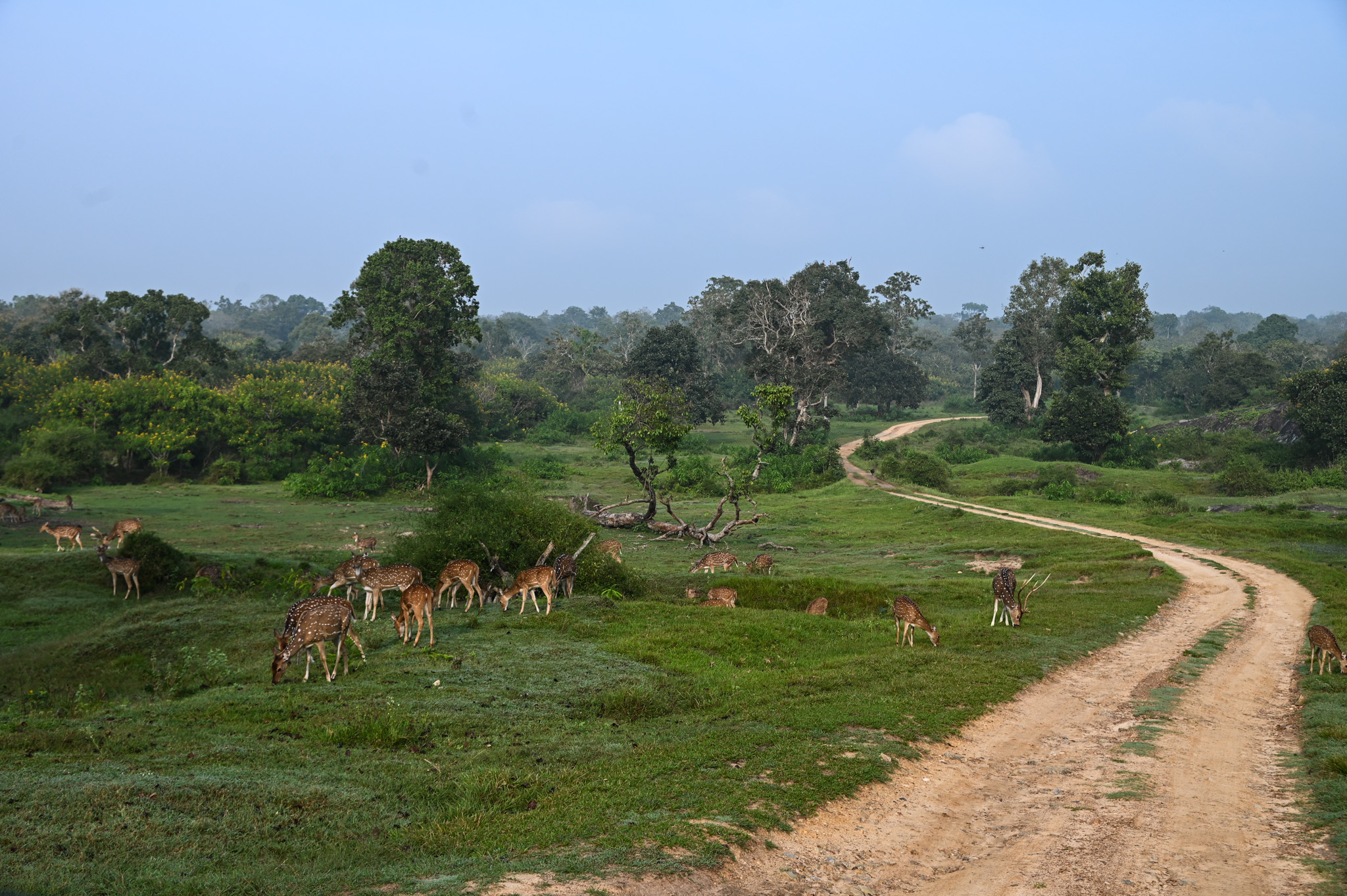
The forests are just sublime. Verdant, hilly in parts, dense vegetation in places and then around the corner is a grassy open plain, filled with deer. 

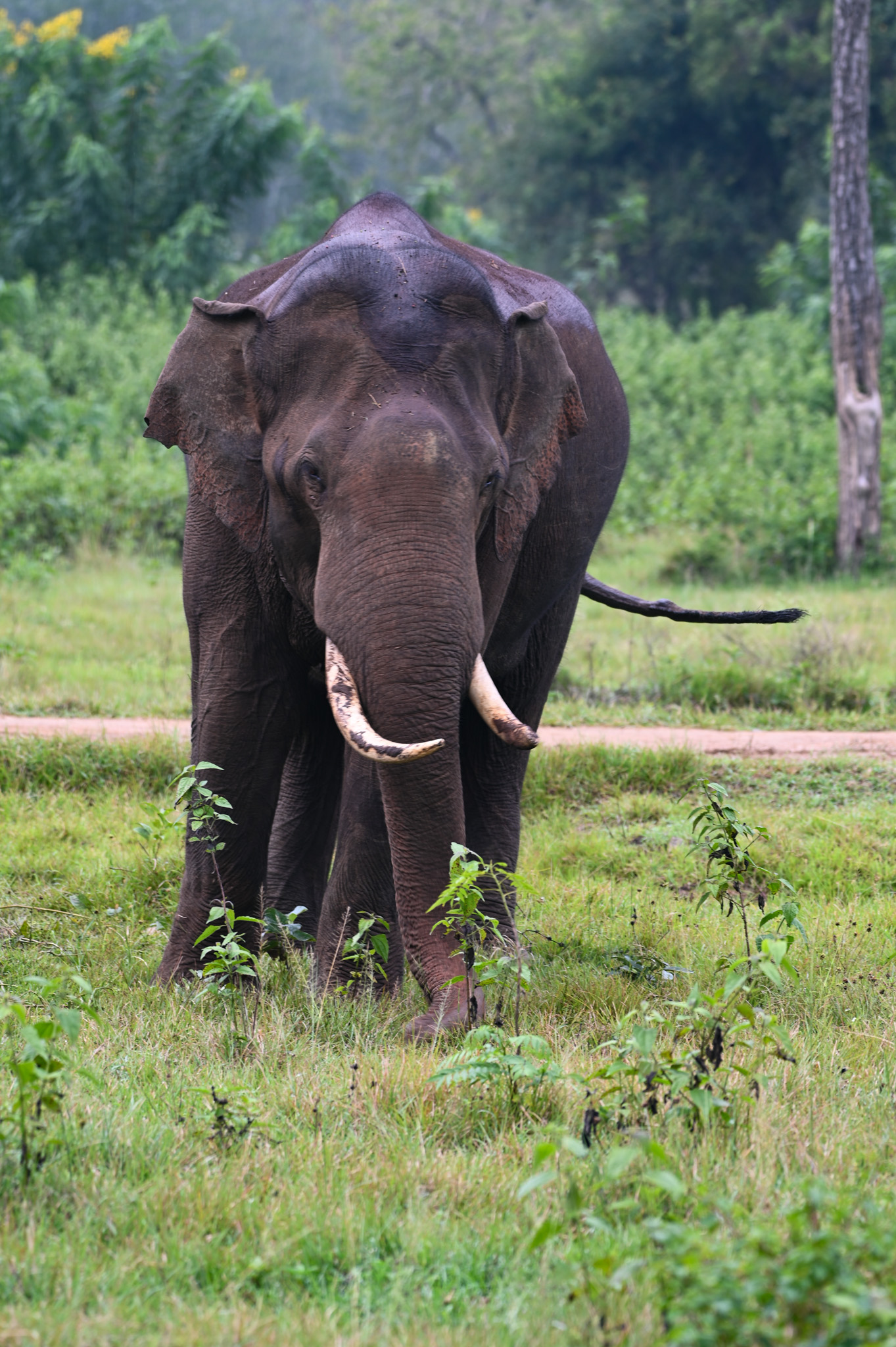
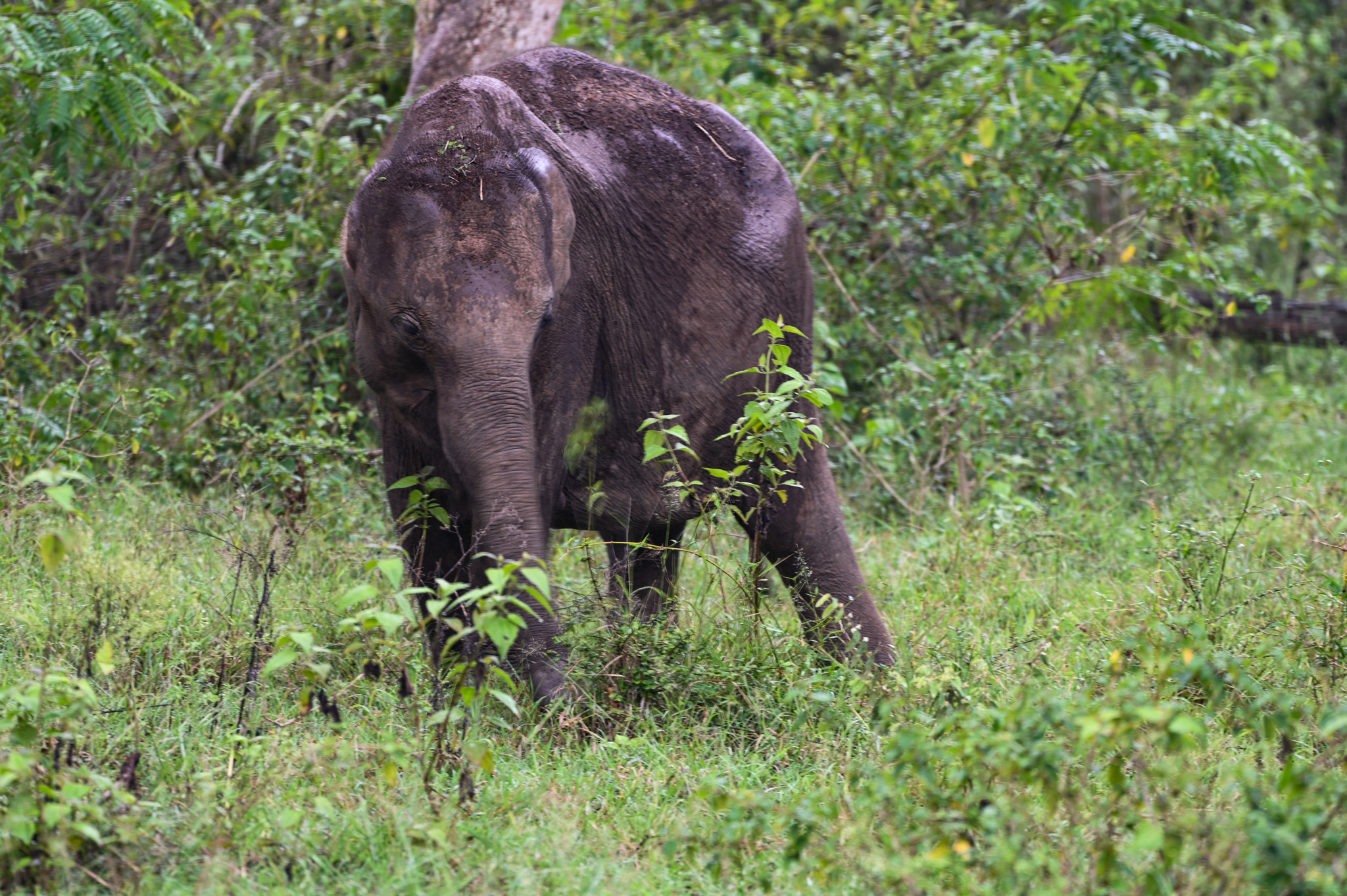
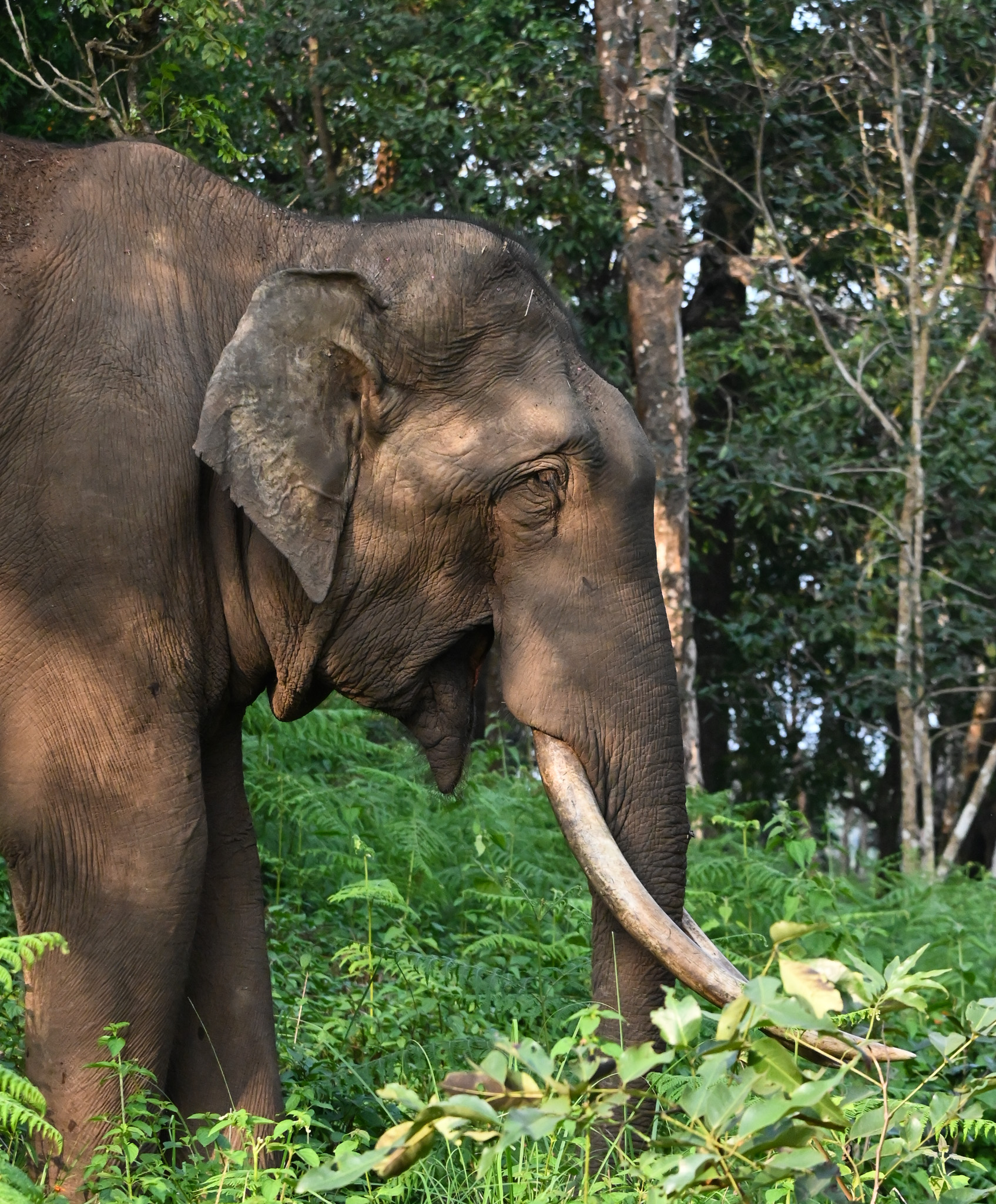
Bandipur was all about the elephants and bears. 

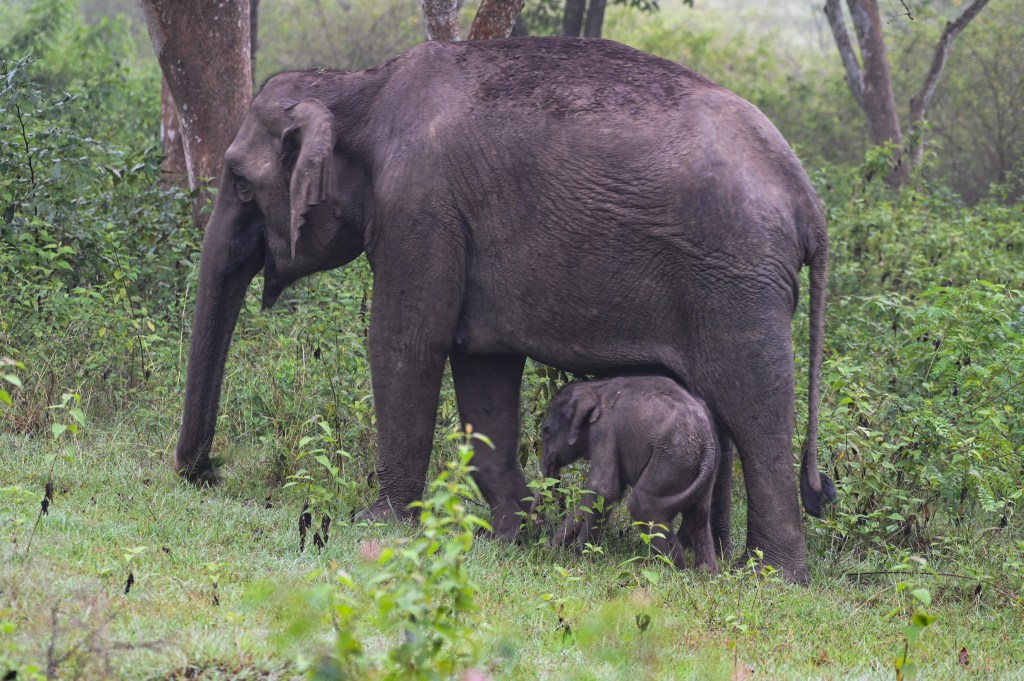
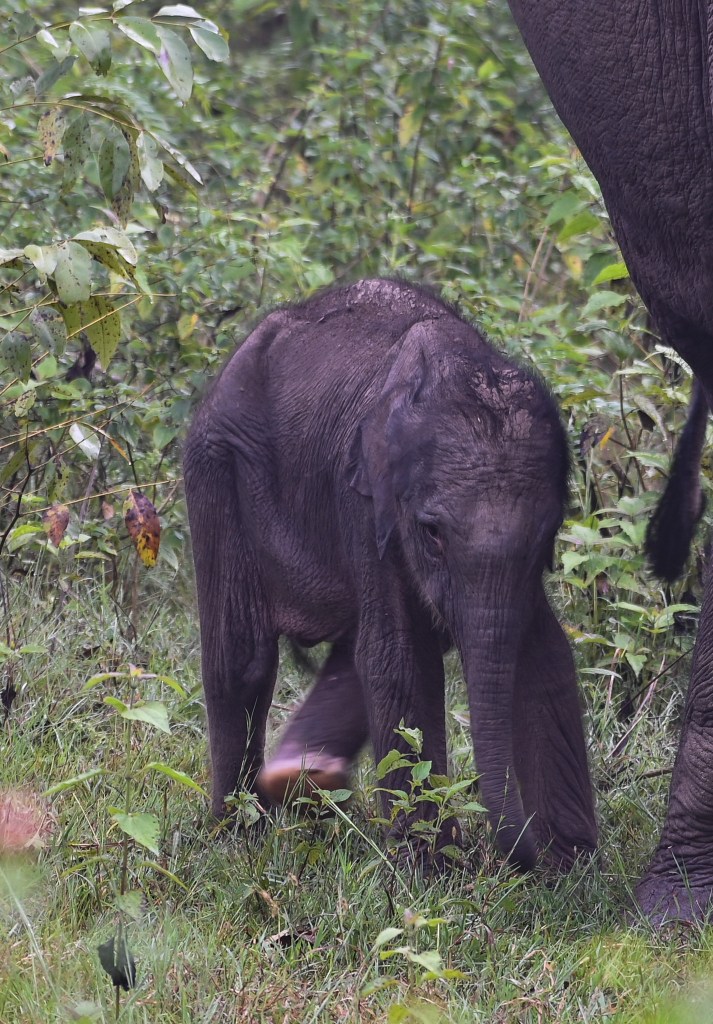
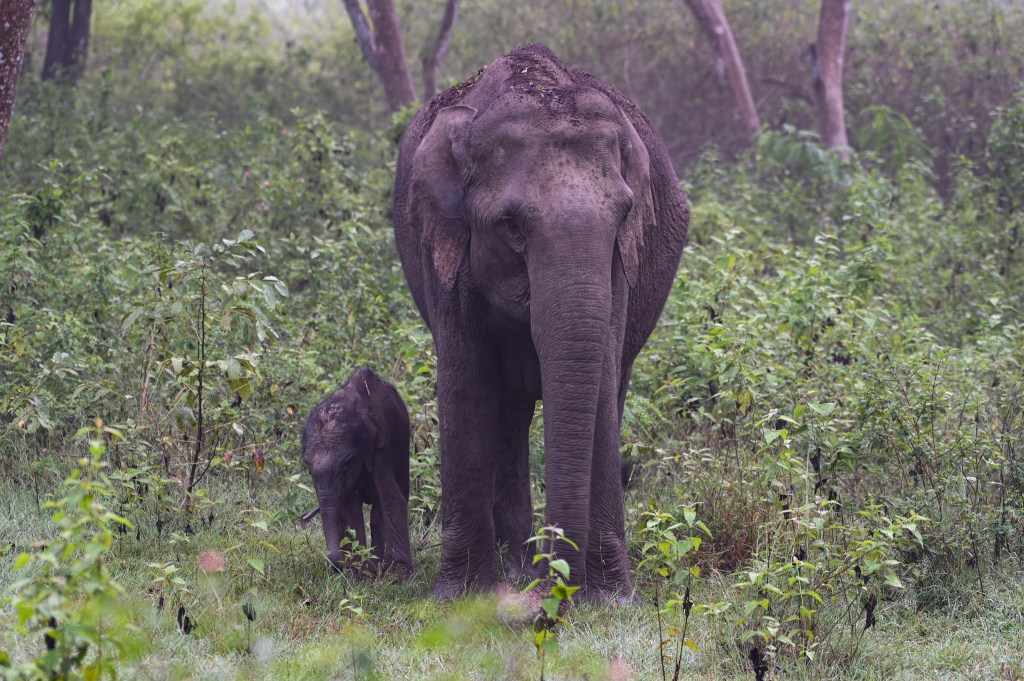
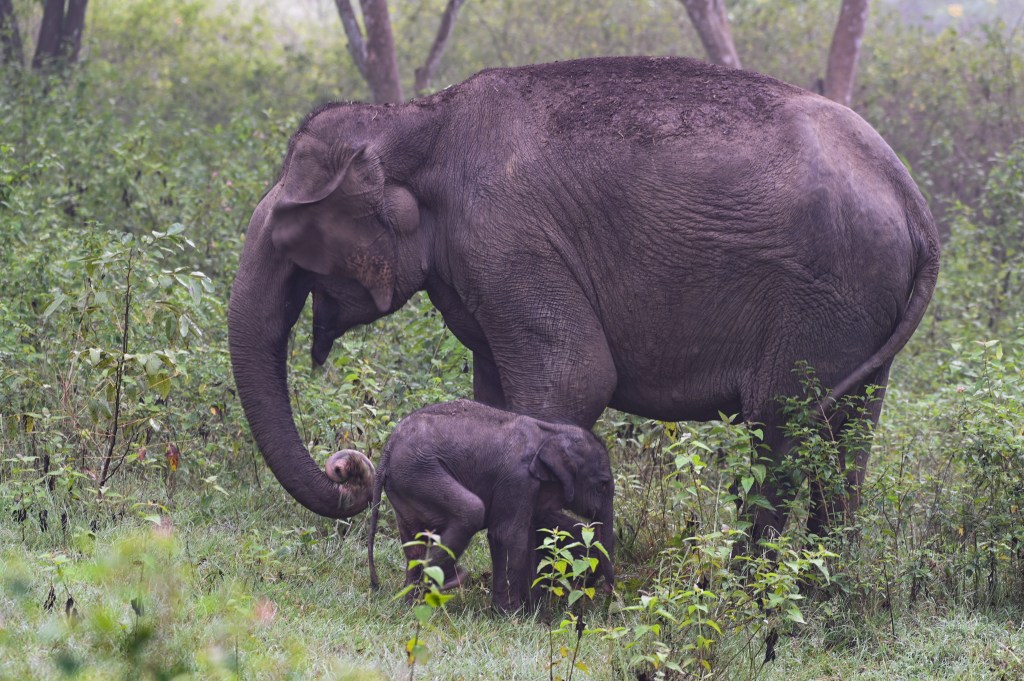
We were fortunate to see a day old elephant calf that could barely stand.  With skin too large for its size, the calf was trying hard to stay up and suckle. Mama elephant was very protective and shielding the calf from our view, while helping it stay up with her trunk and feet. We had a fleeting glimpse of a tiger at dusk while it crossed our path.  

We also had a Tusker and another female elephant charge at us, and we had to hightail it! 

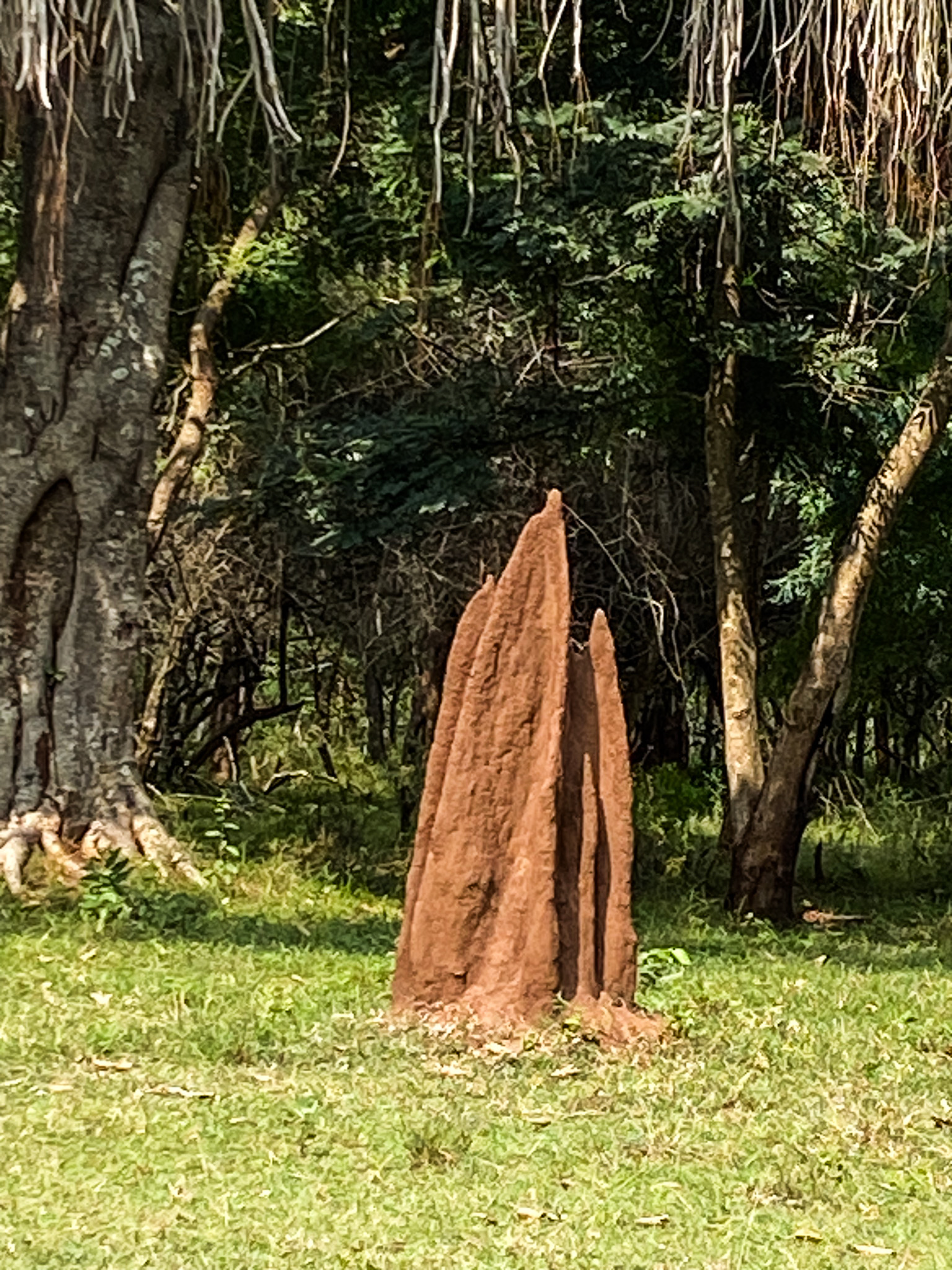
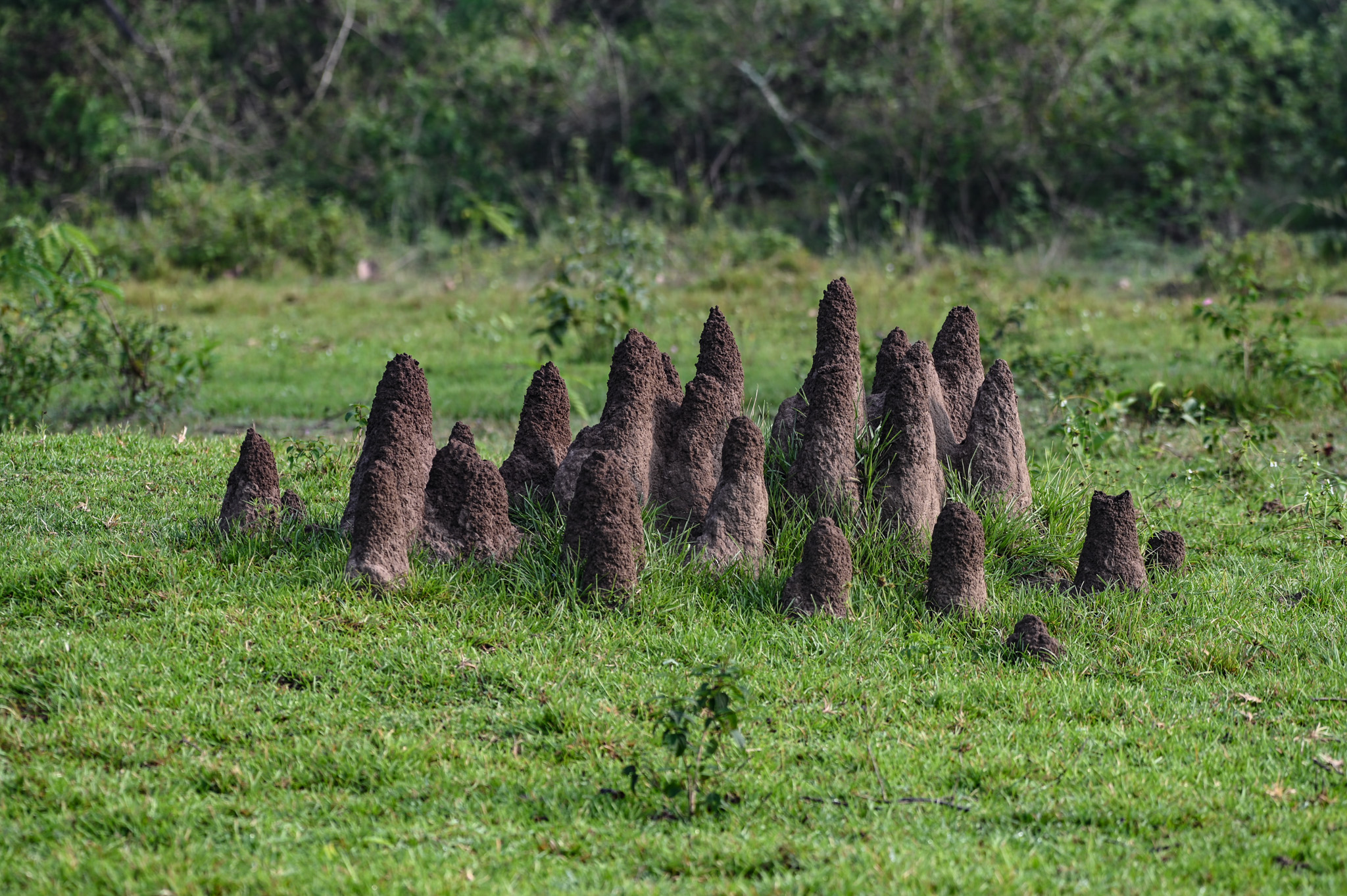
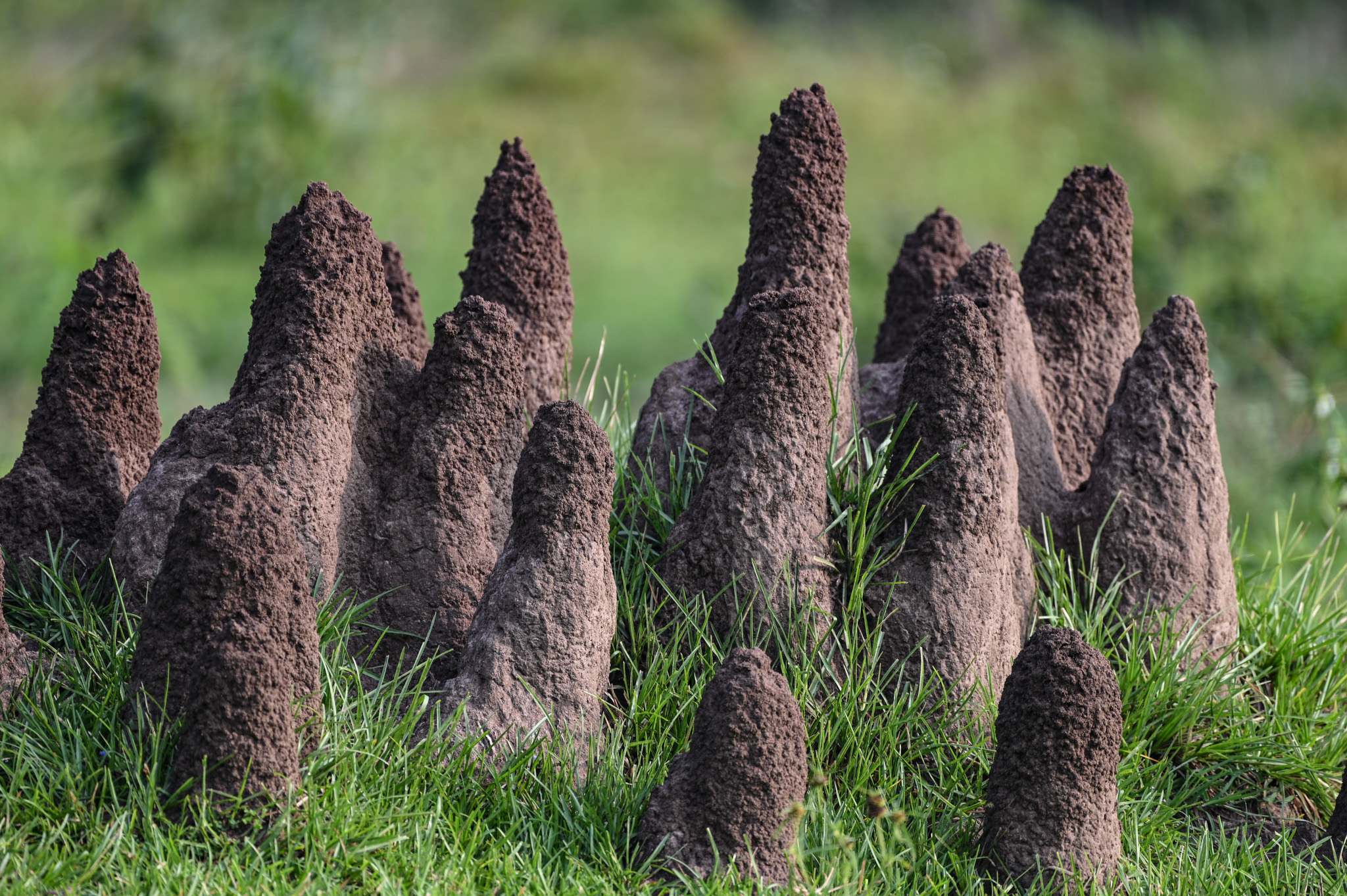
Then, there are very fascinating termite mounds- some of them are tall isolated mounds glowing in the sun, while others are just small stubs about a foot high but in a cluster like a residential colony.

Kabini is a beautiful forest! Winding roads, tall trees, grassy plains, Kabini river meandering within, and so many herds of deer! 

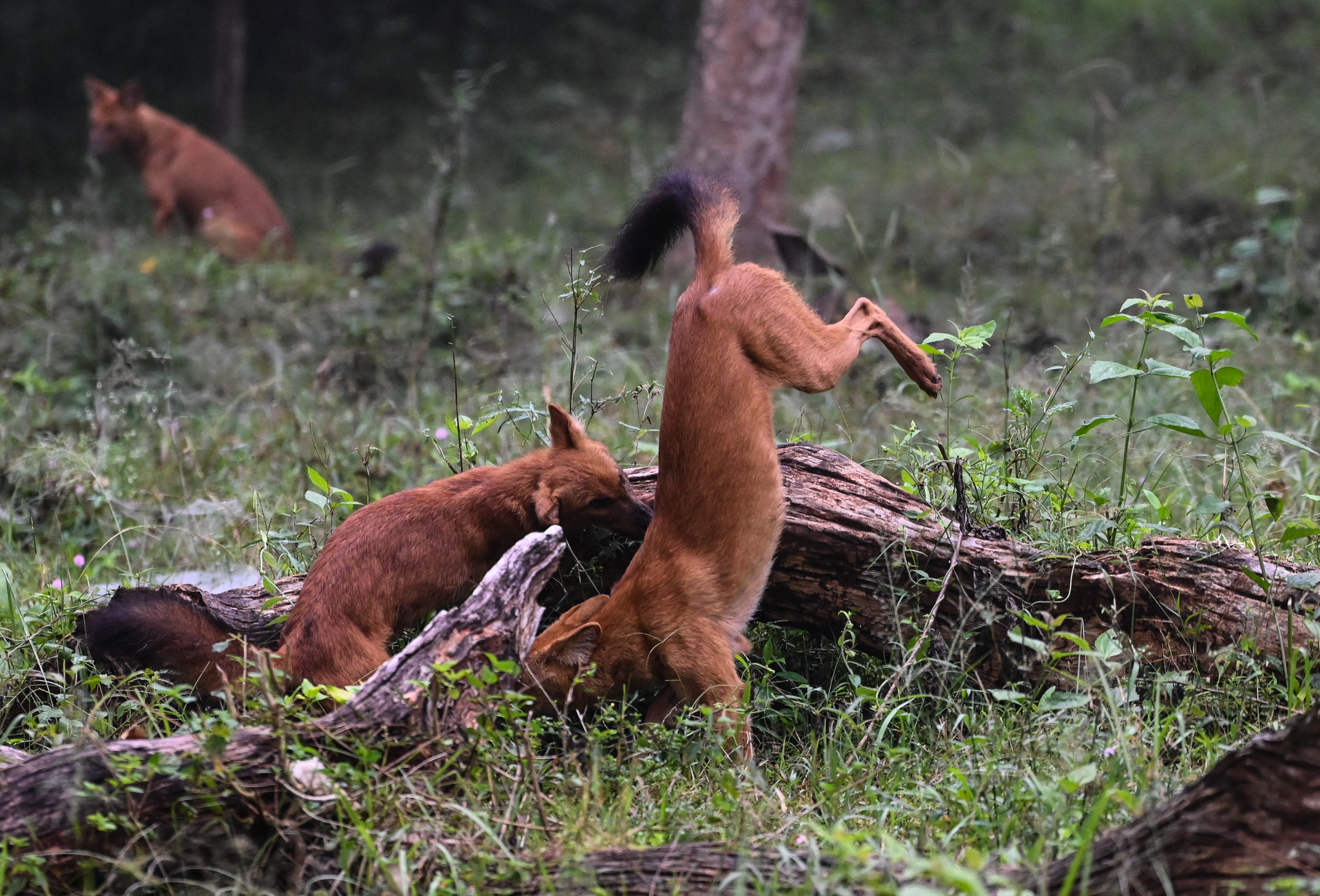
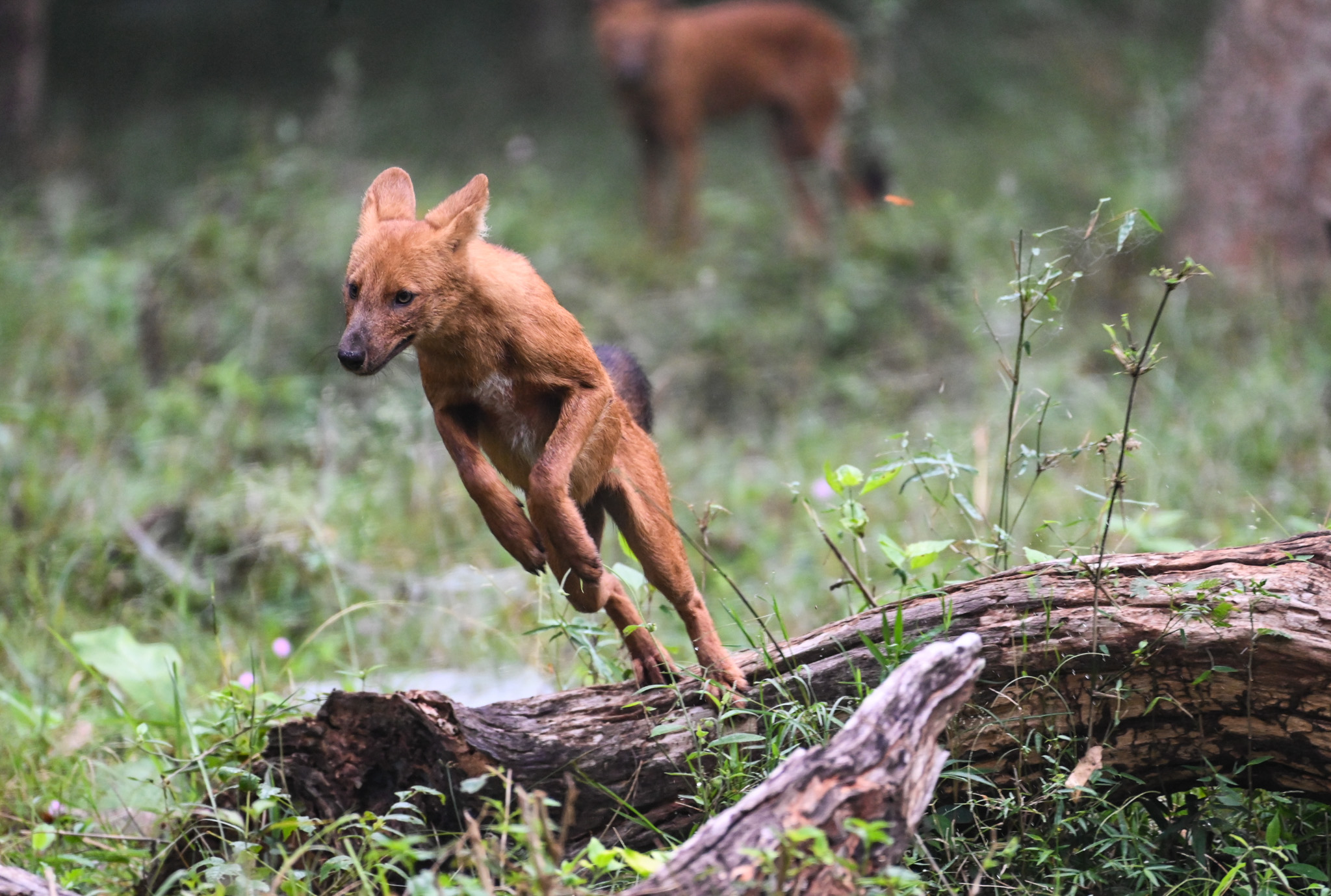
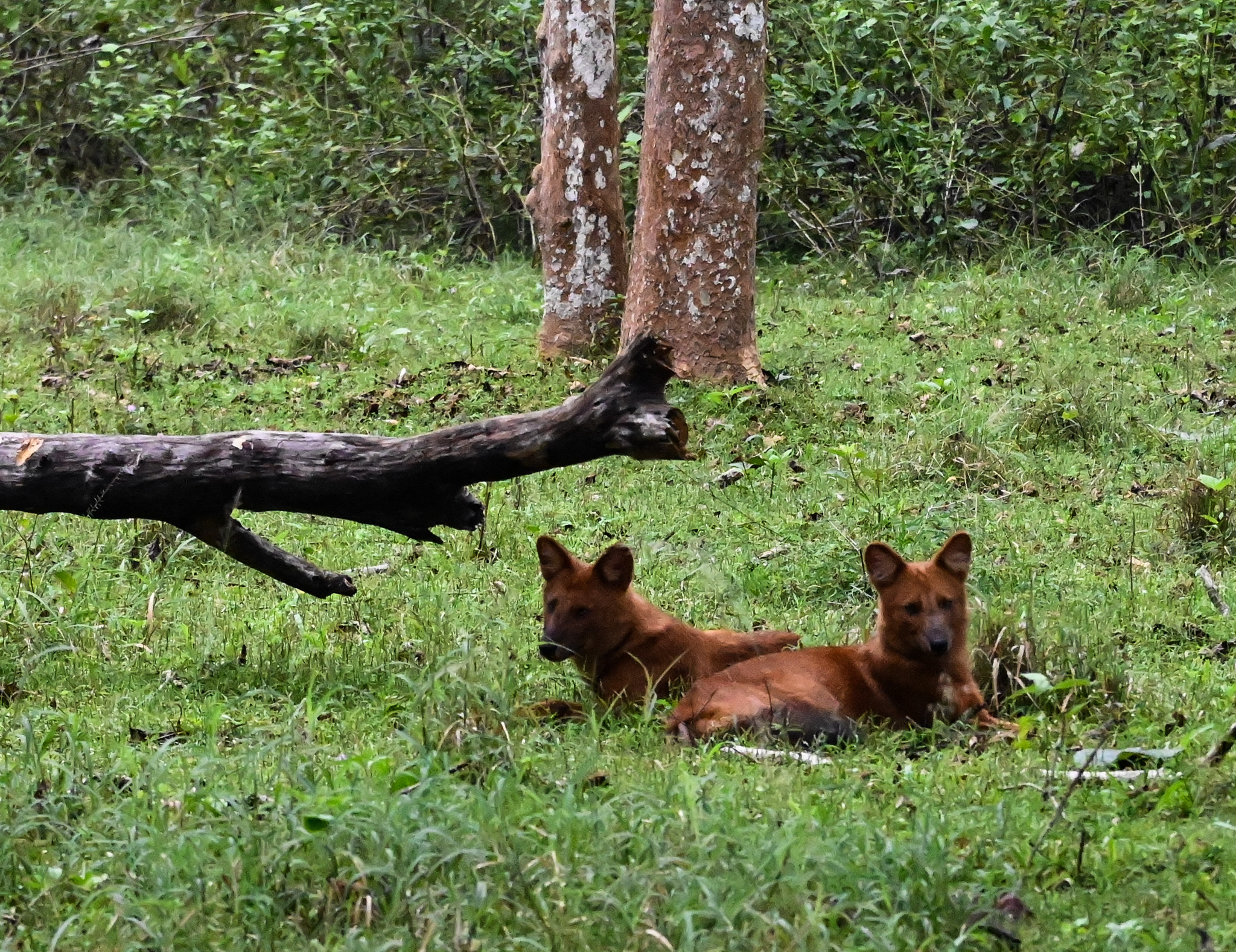
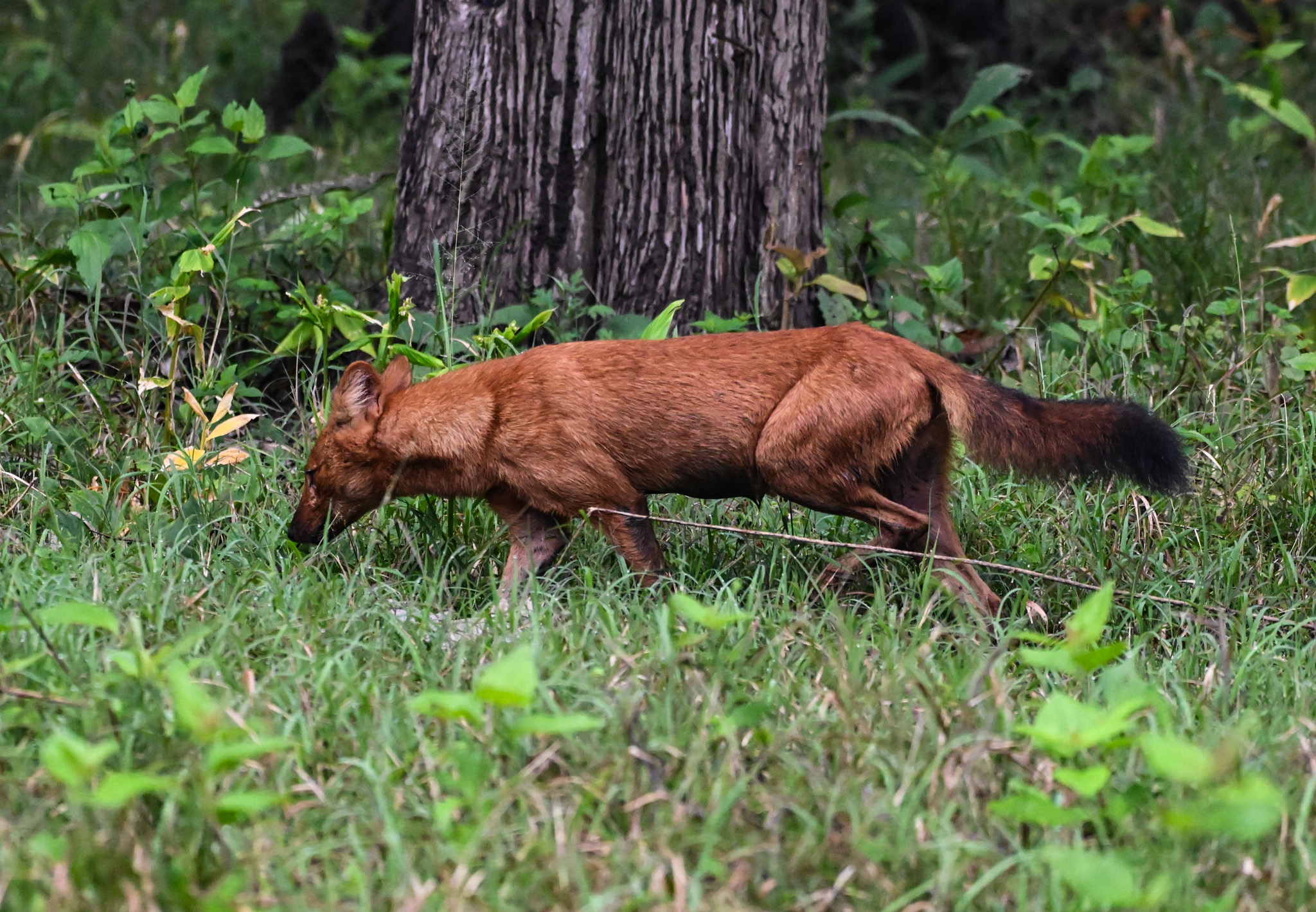
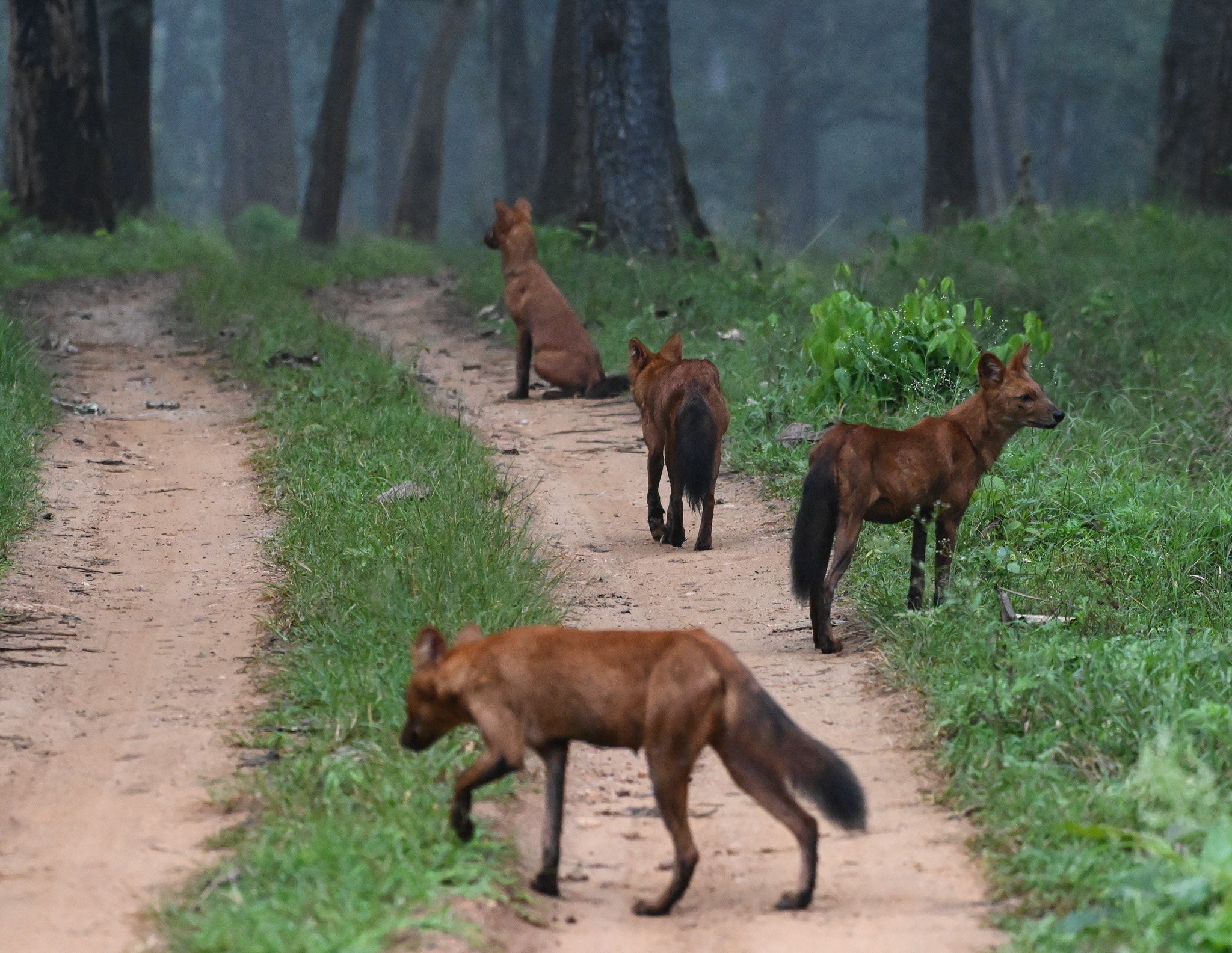
I have never seen as many packs of wild dogs as we did this time. We saw at least six different packs. They were goofy and playful and we did not see any of the aggression of pack hunting!

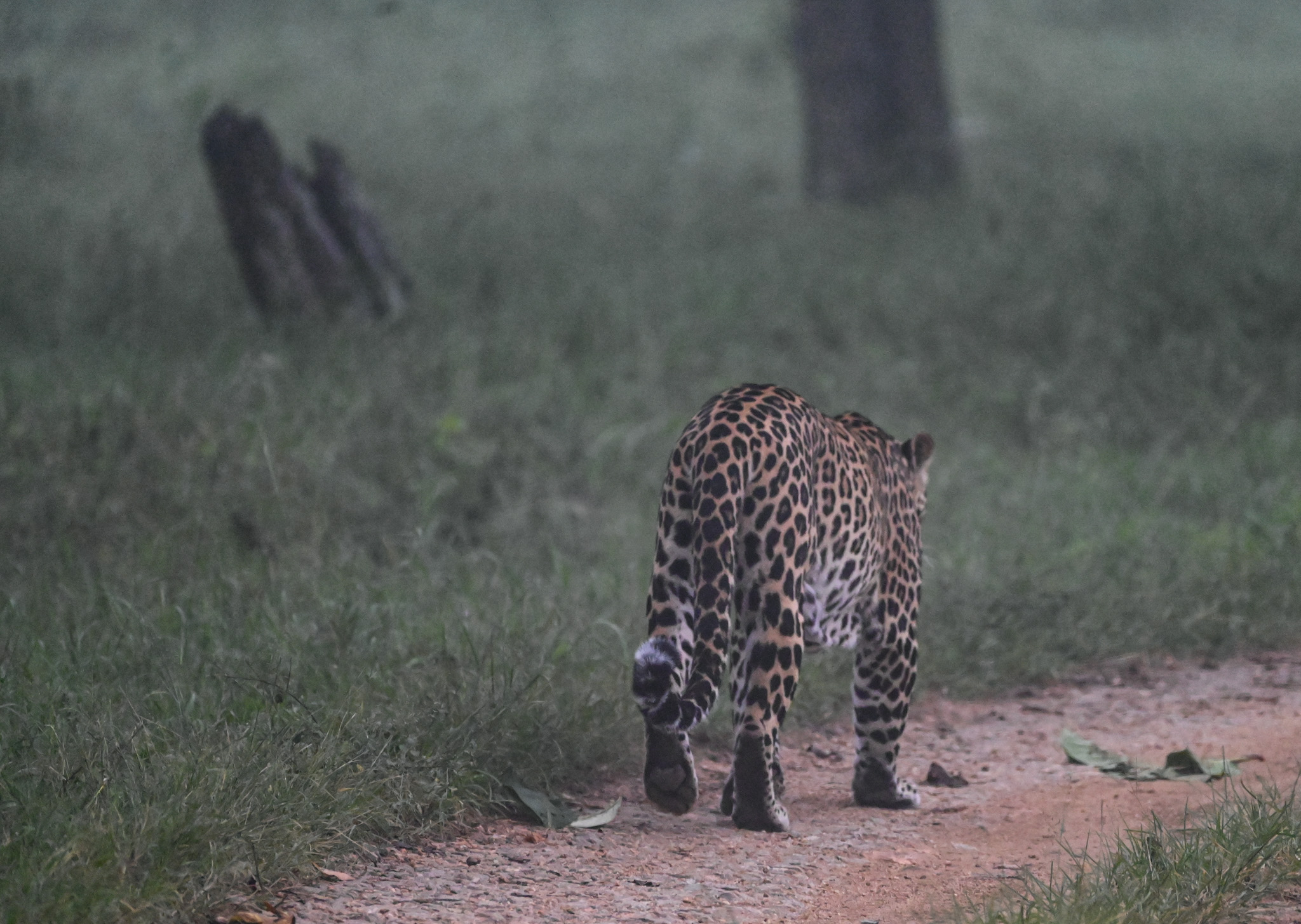
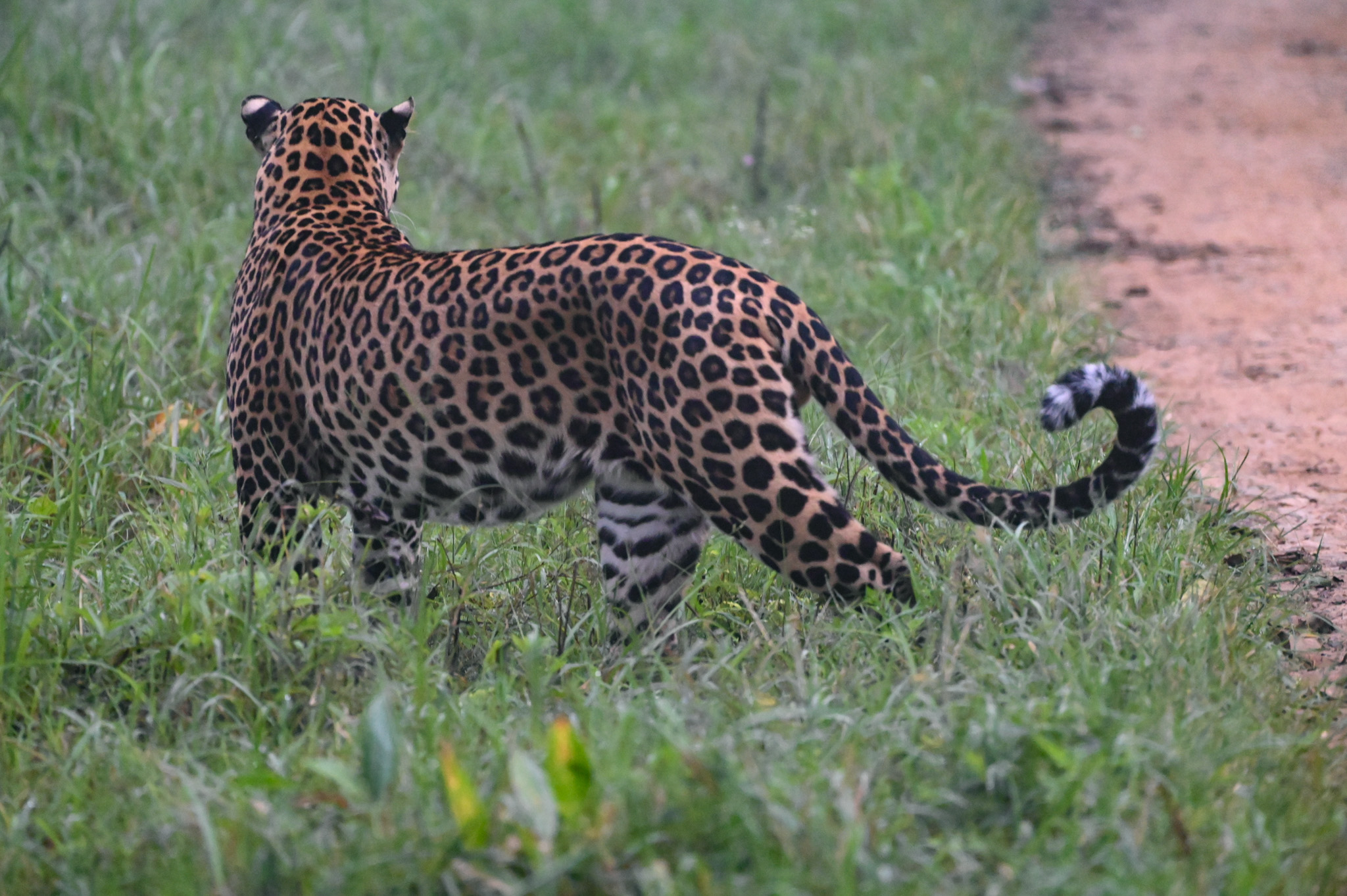
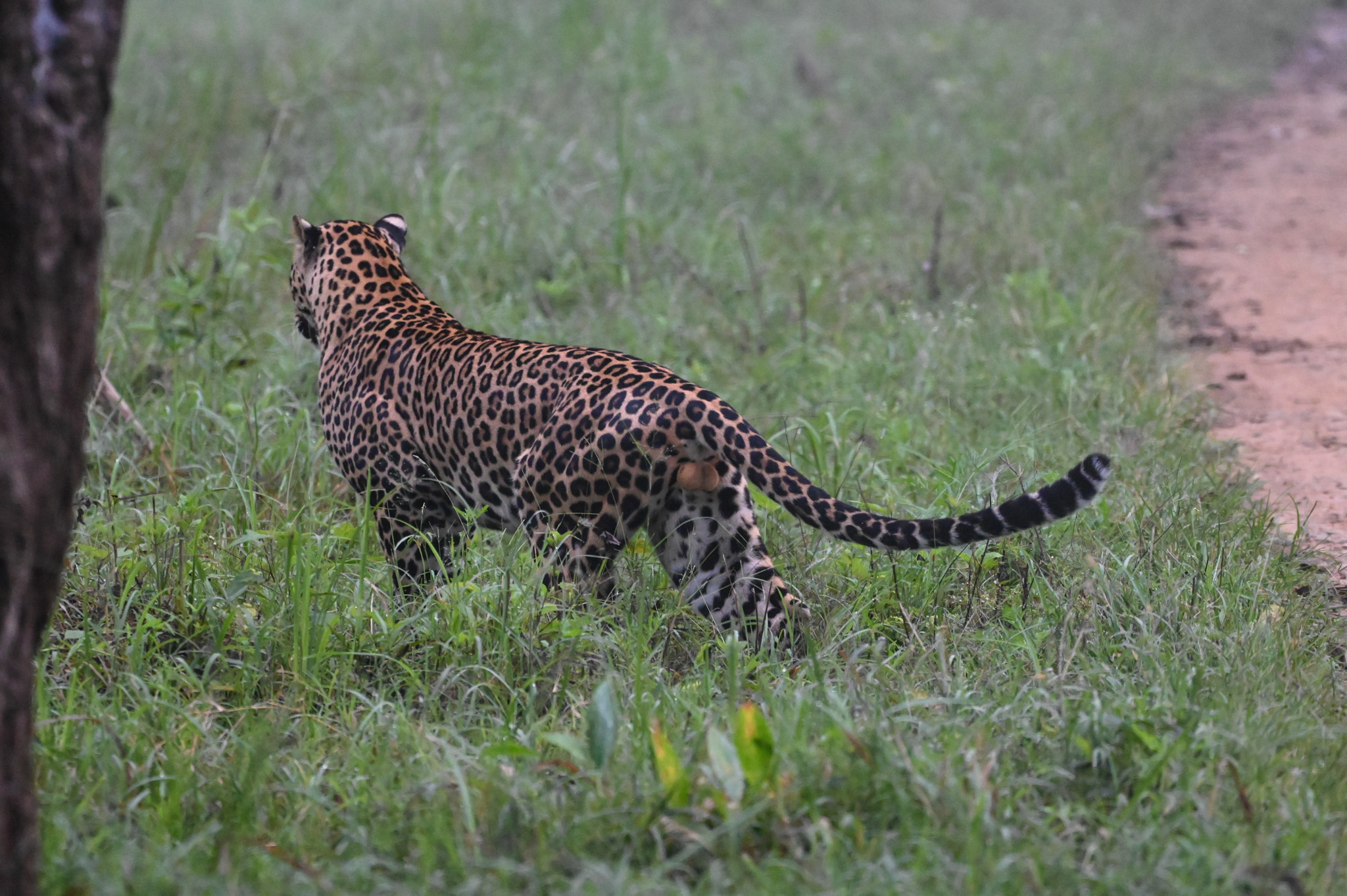
There is an early morning mist and our leopard sighting was under these circumstances. The leopard walked ahead of our jeep and then crouched for a kill and later changed his mind.

There was some great tiger sighting and we spent a good amount of time as a tigress walked around roaring for her cubs! 

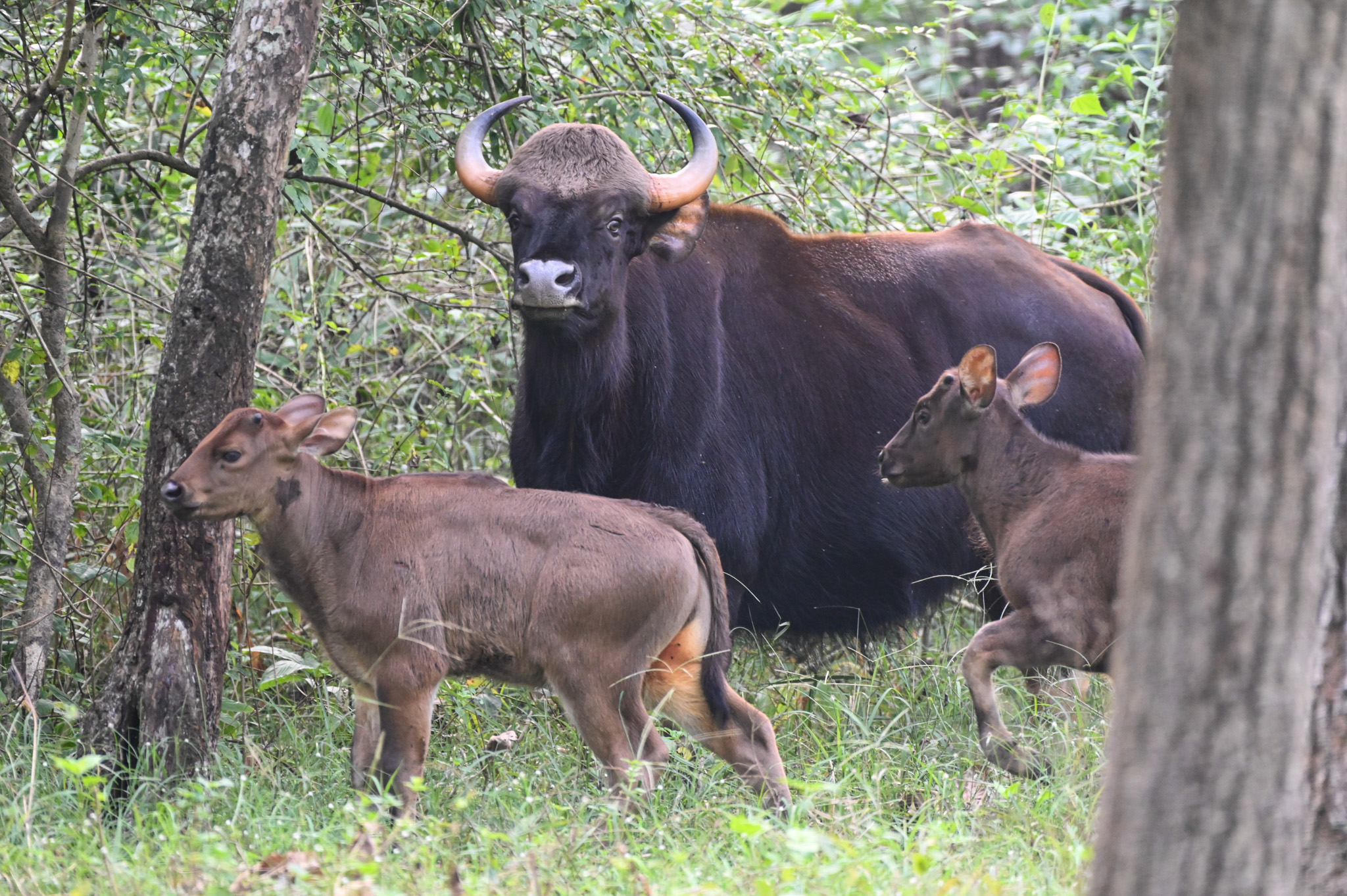
The forest in K Gudi was the thickest of the three and it felt that any chance of an animal sighting would happen only if the animal stepped on the road or was just off it. As it happened, the lone tusker and the Indian Gaurs we saw were just off the road.

We thoroughly enjoyed our week in the forests before heading to Bengaluru for some rest and recreation before heading home to Mumbai.

You can view the pictures at –

https://photos.app.goo.gl/mjF3F4Kc9d3r3dqV7

https://photos.app.goo.gl/5XQNzbDLmmj1LVoN6

https://photos.app.goo.gl/DRZzPxokGPJp7Lzr8

https://photos.app.goo.gl/creitA3R8abmhmkx9

The Peninsula Tour Part 2 – The Kerala Coast

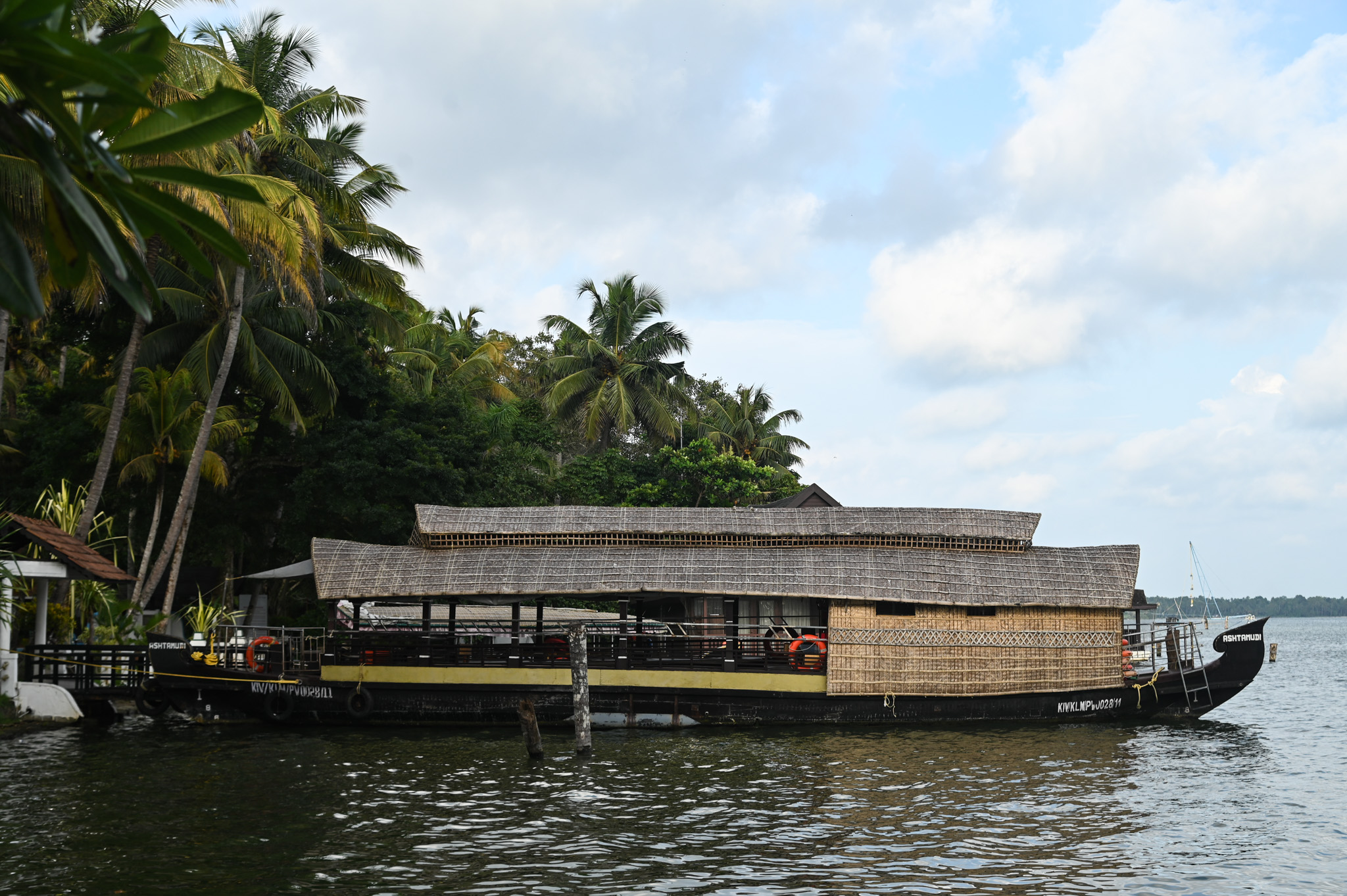
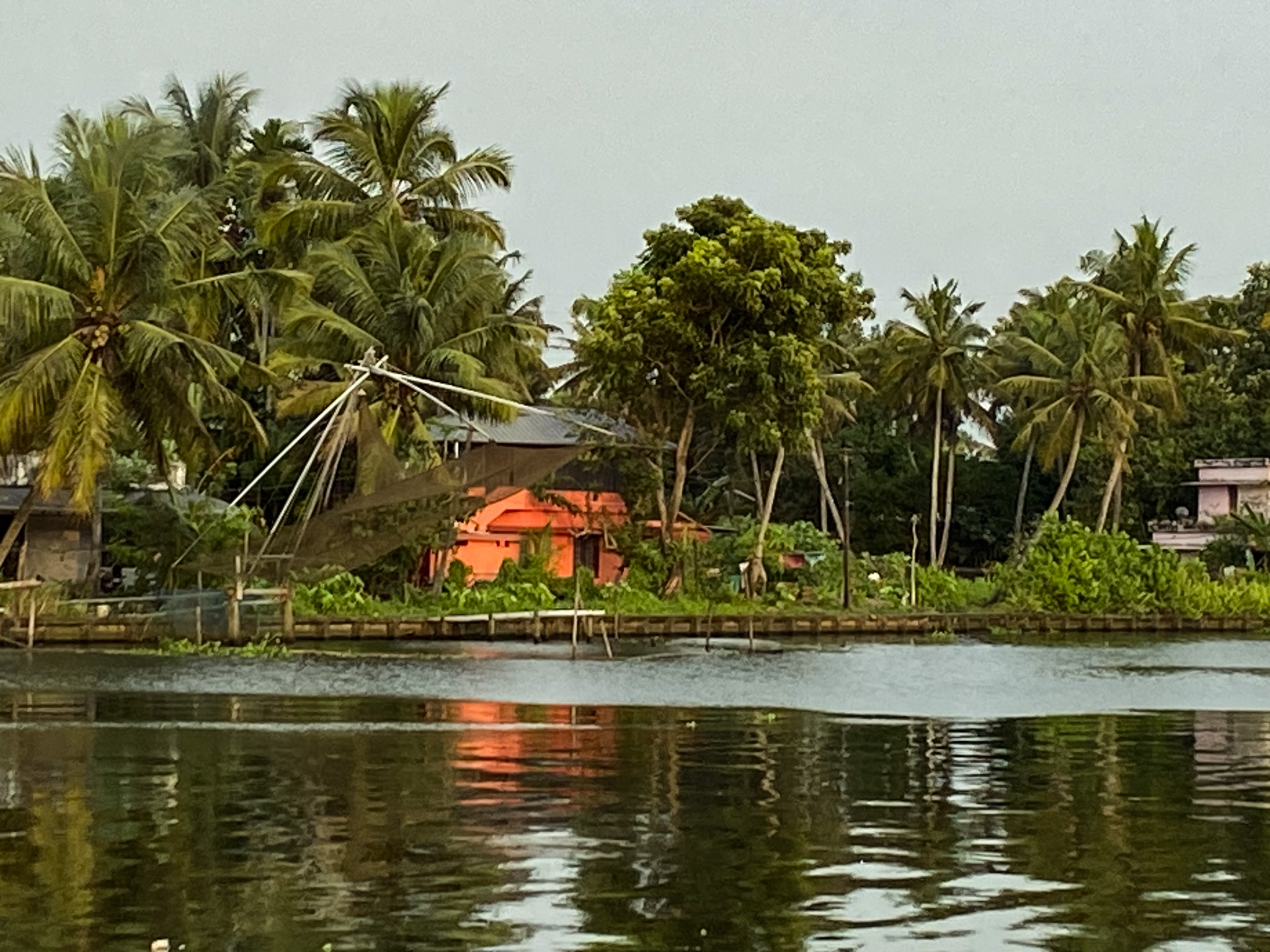
Our journey from Thiruvanthapuram to Kochi included a a couple of days spent at Ashtamudi. You may have experienced or read about the beauty of the backwaters and the beaches of Kerala. We decided to do this slightly differently. We ignored Google Maps attempts to keep us inland on our journey. Instead, we drove very close to the coast almost all the way from Thiruvanthapuram to Kochi. In every way, this was indeed a ‘ Peninsula drive’!

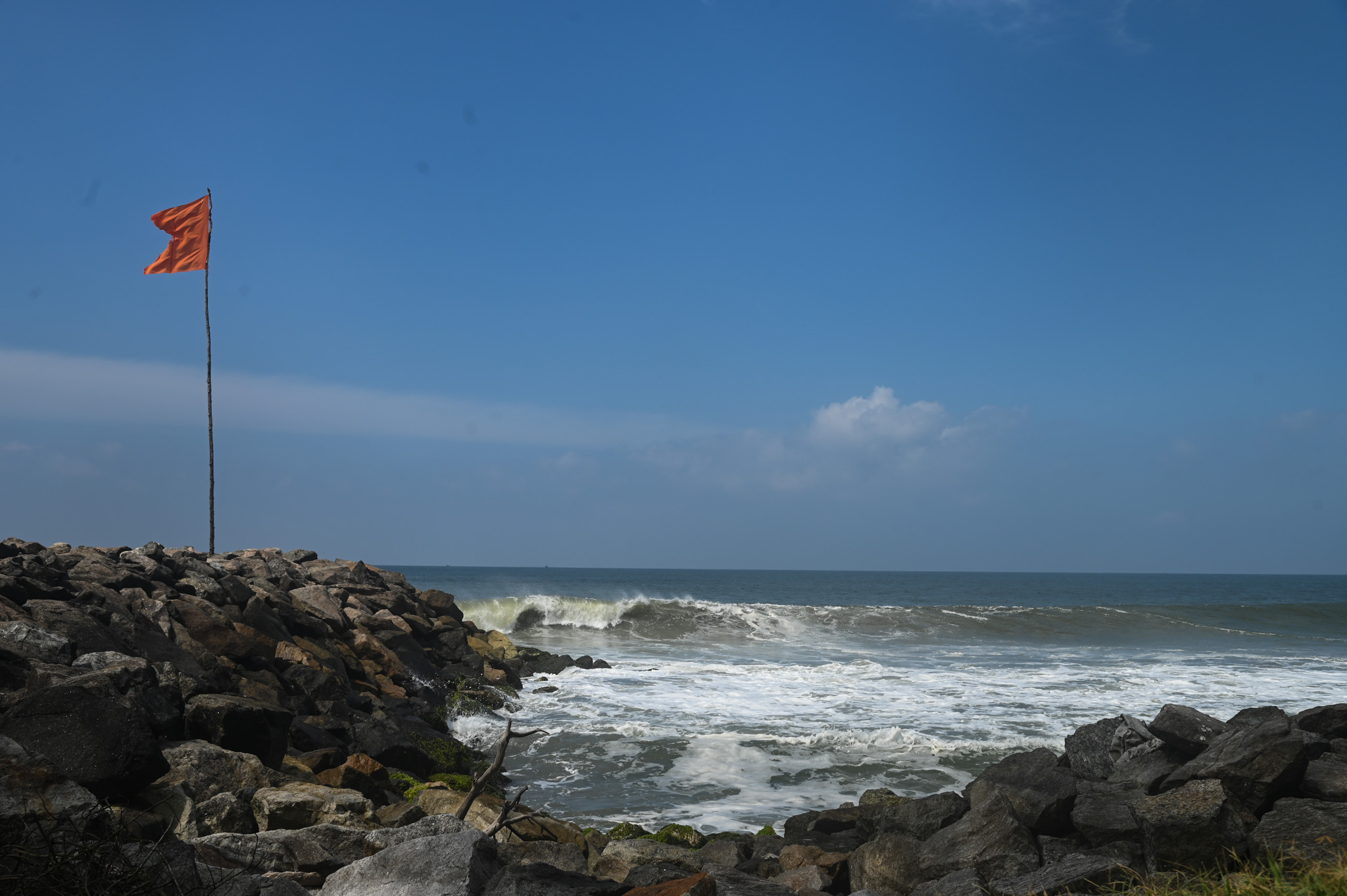
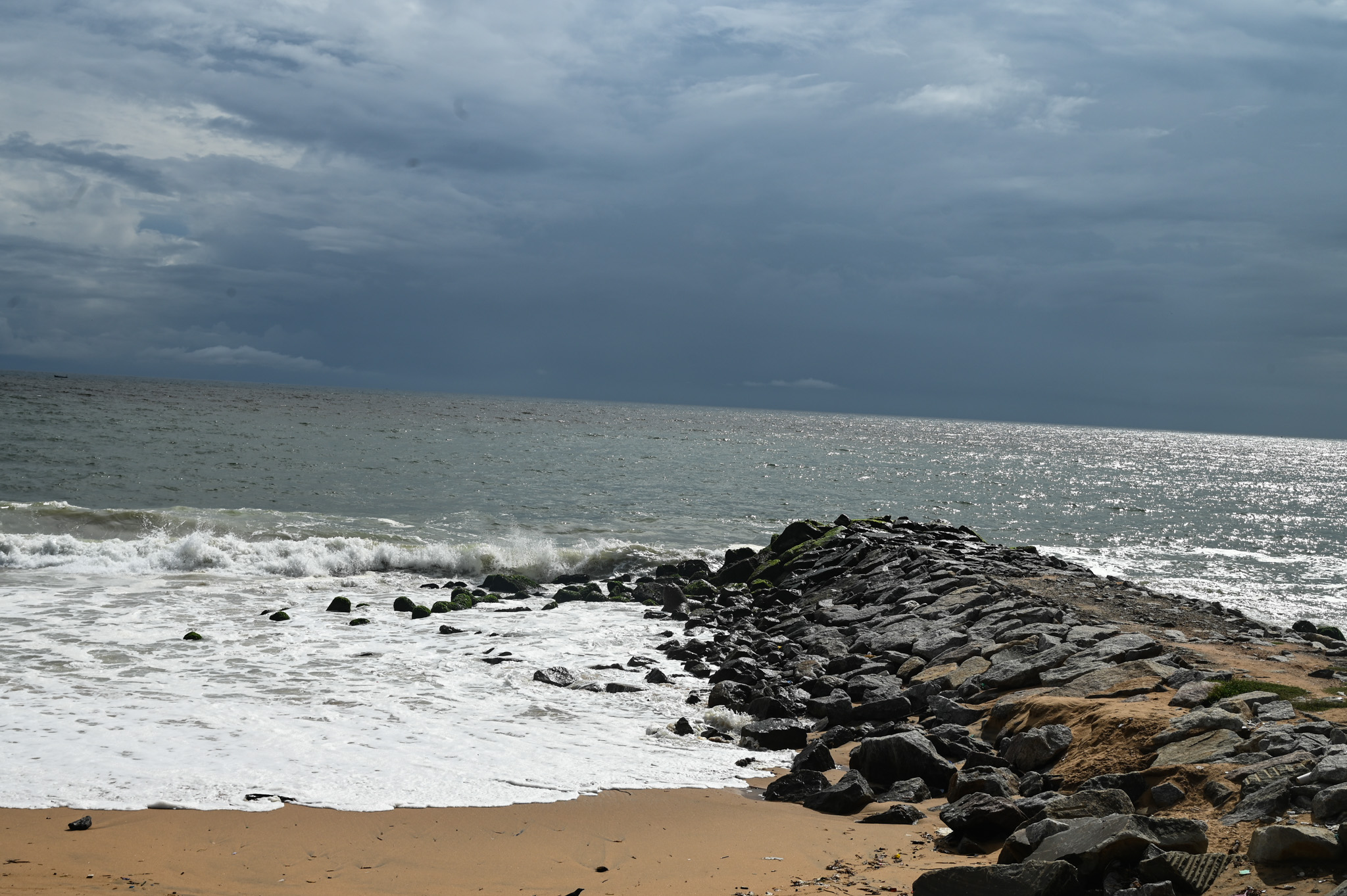
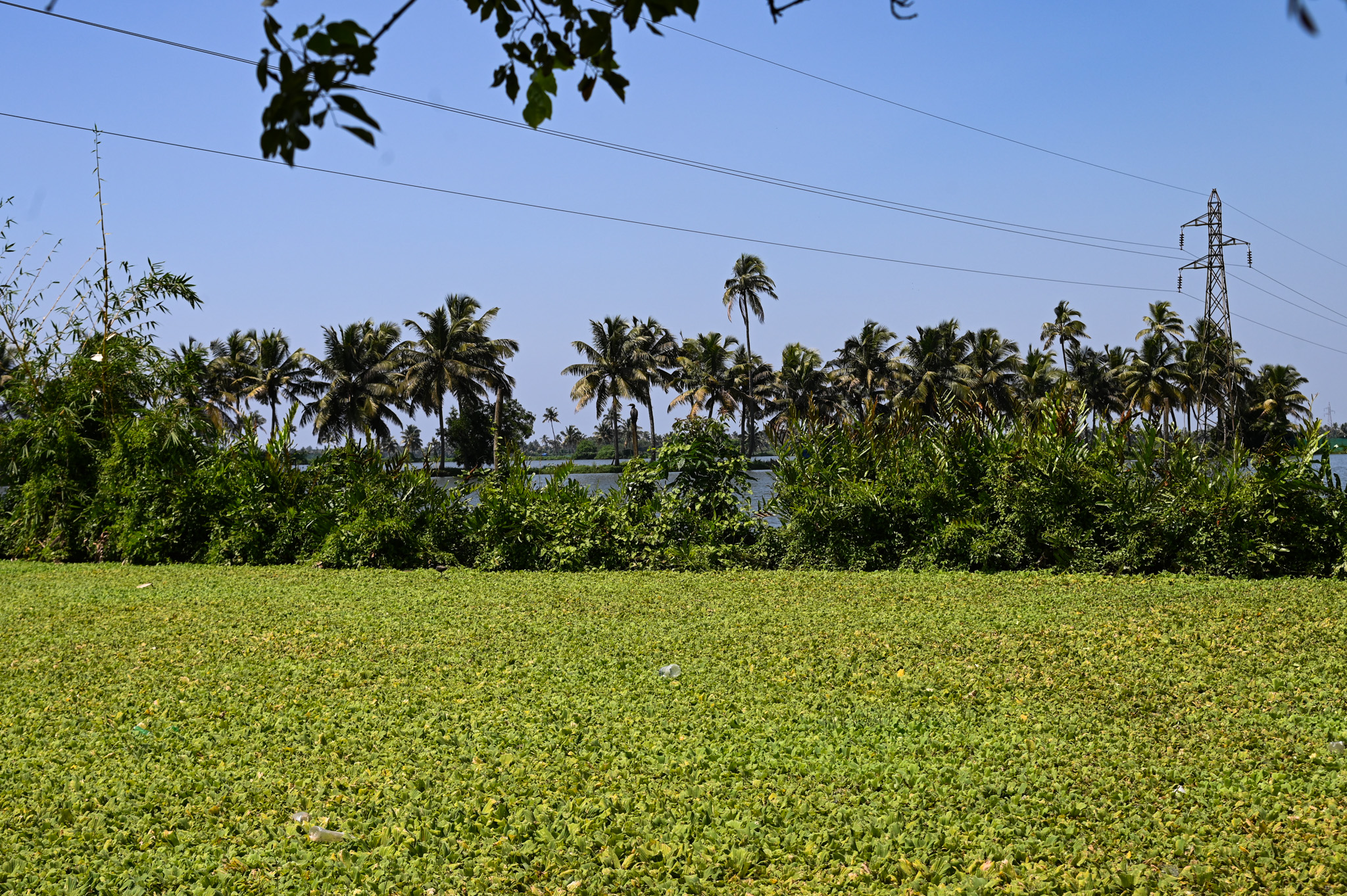
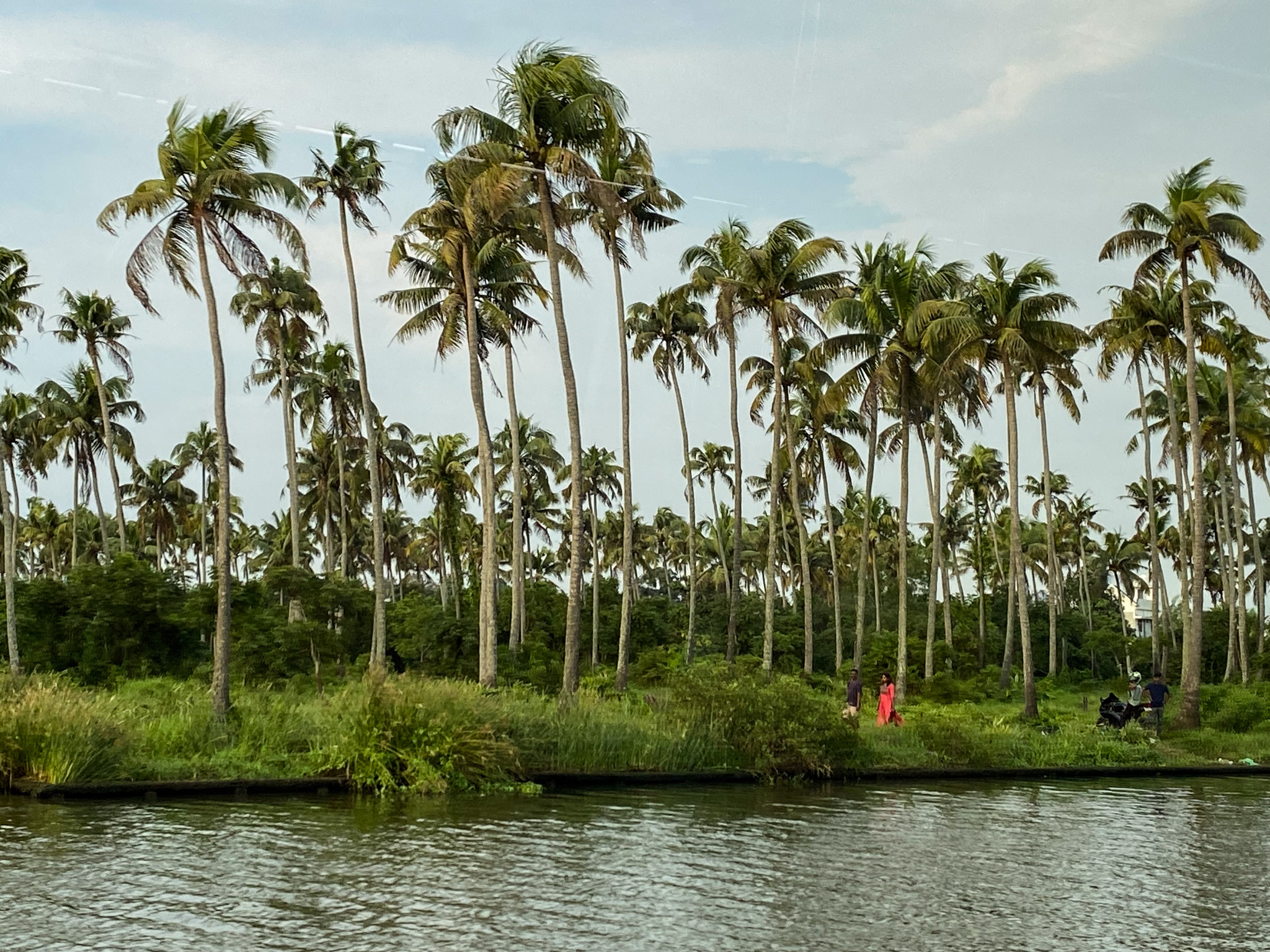
The drive saw us driving through narrow strips of road straddling the sea on one side and the backwaters on the other. At points, we waves crashed into the terrapods and came on to the low wall along the road, at other times, there were small beaches along the way.

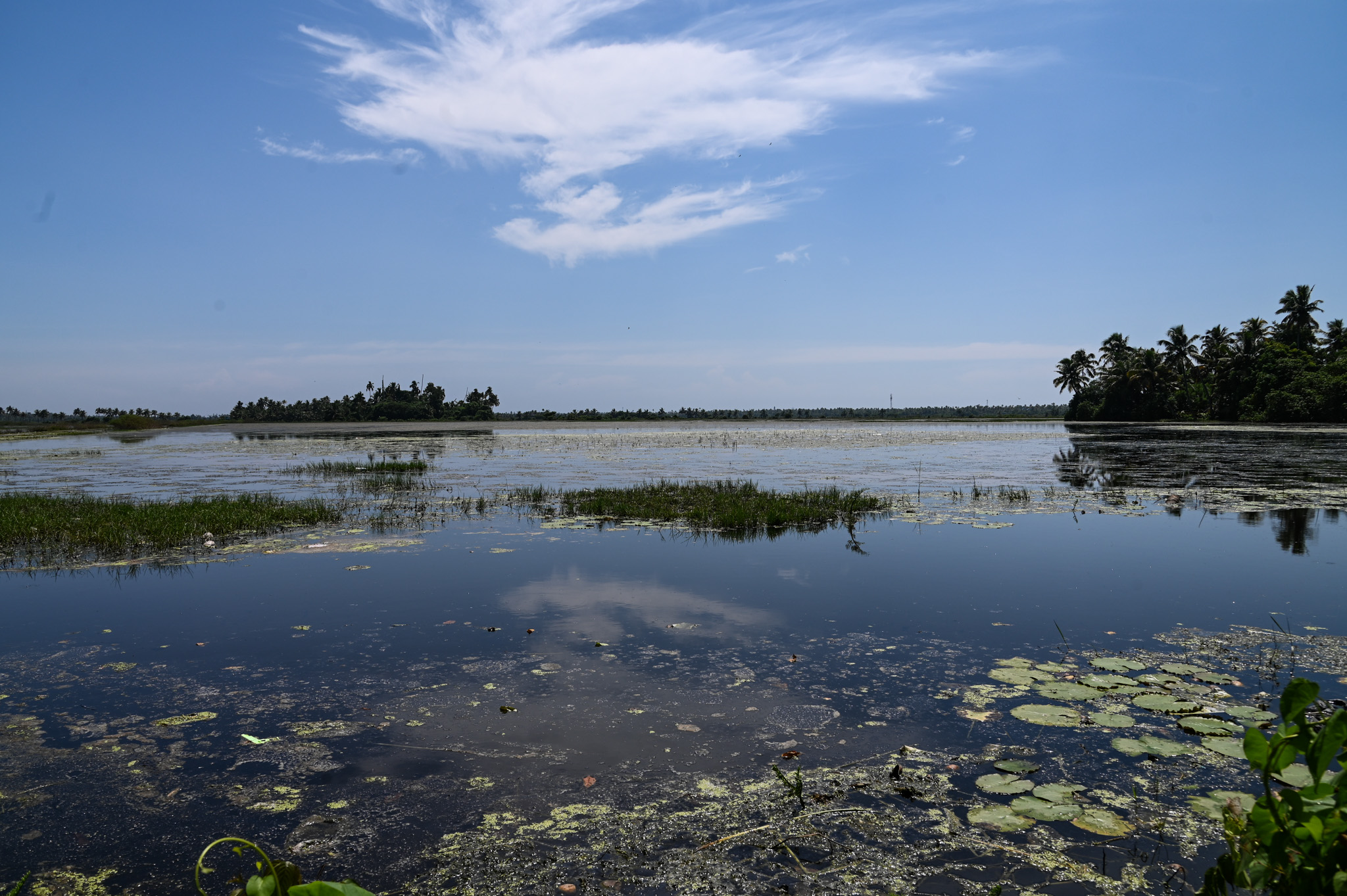
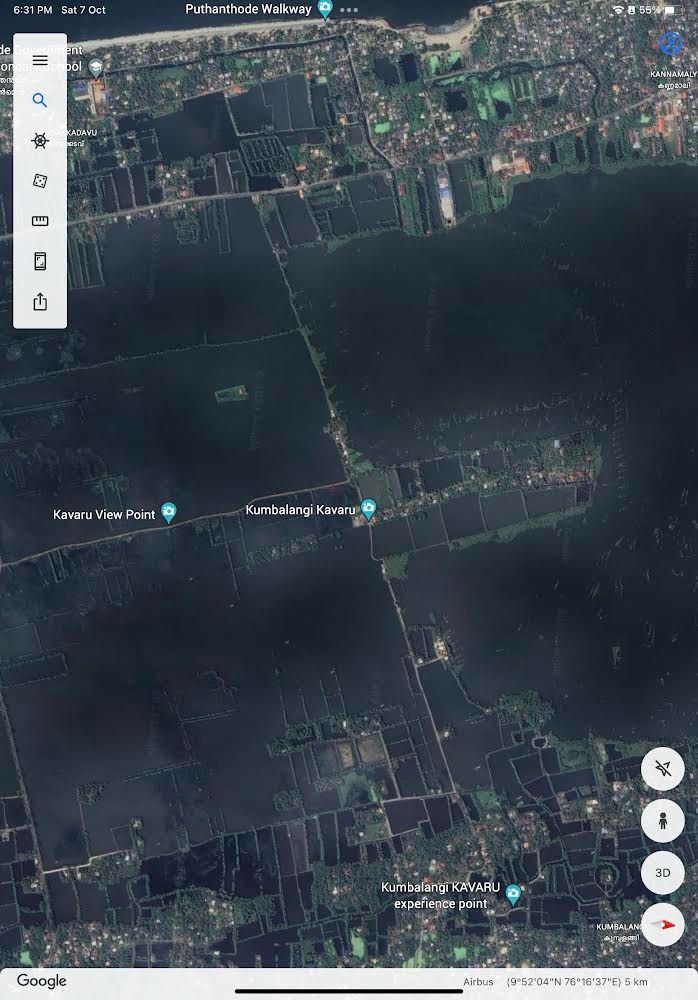
As we drove from Ashtamudi to Kochi, we experienced more of the same; but we were unprepared for what was about to come close to Kochi. We reached a place called Kumbalangi. I think it is the same place where the movie Kumbalangi Nights may have been shot. The water level was at the road level or slightly higher. We could see houses surrounded by water. All the while, the narrow strip of road was surrounded by water for miles. Google earth gives us a birds eye view of this stretch.

Thanks to Pooja and Karthik, we rode the Water Metro in Kochi. It was a superb experience.

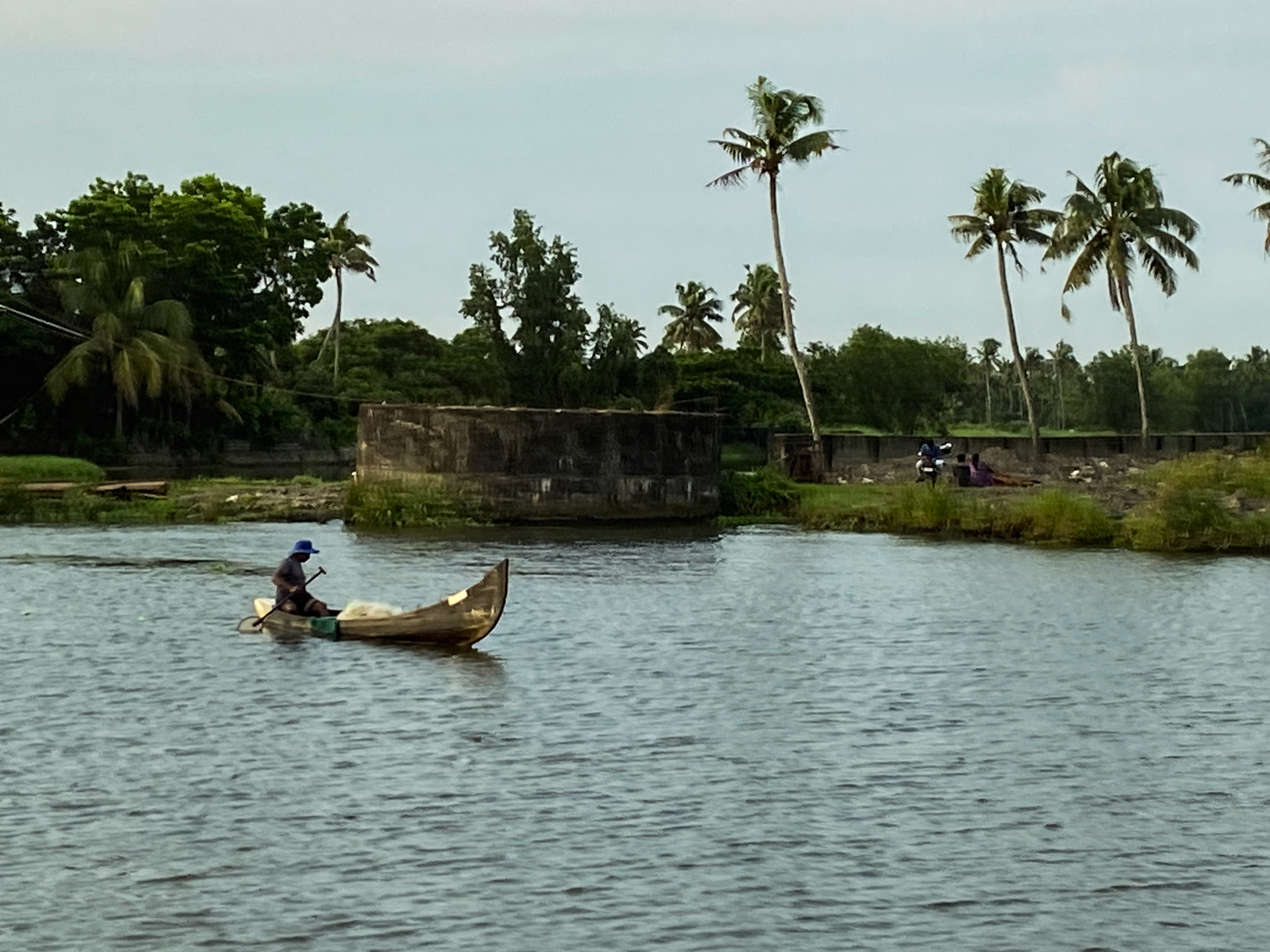
The photo album includes pictures of the navigation and points where we stopped to take in the scenery and create a memory of the drive and the geography of the coast.

You may view more pictures at https://photos.app.goo.gl/U8Dn98hB5BejoRJE7

The Peninsula Tour Part 2 – Thiruvanthapuram

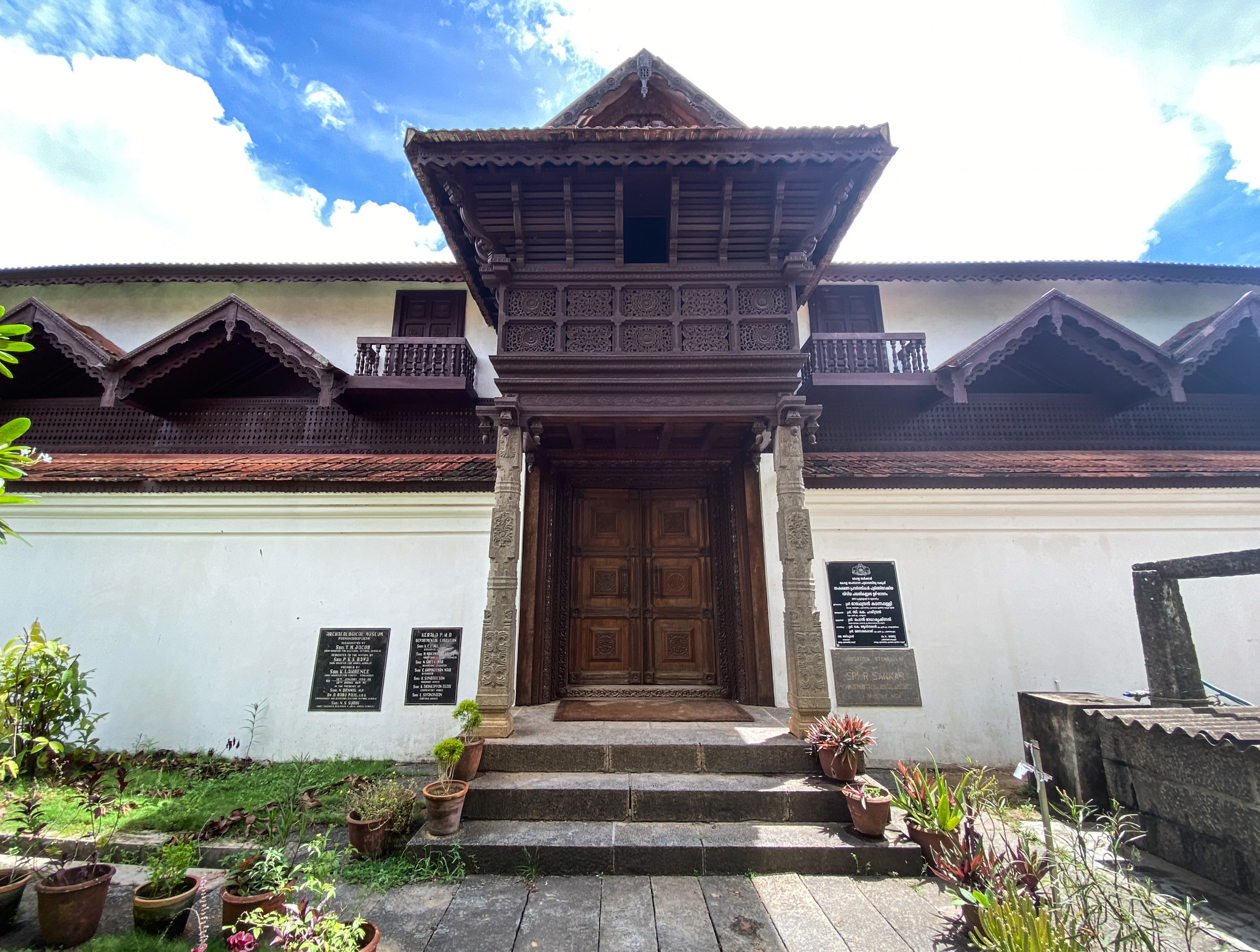
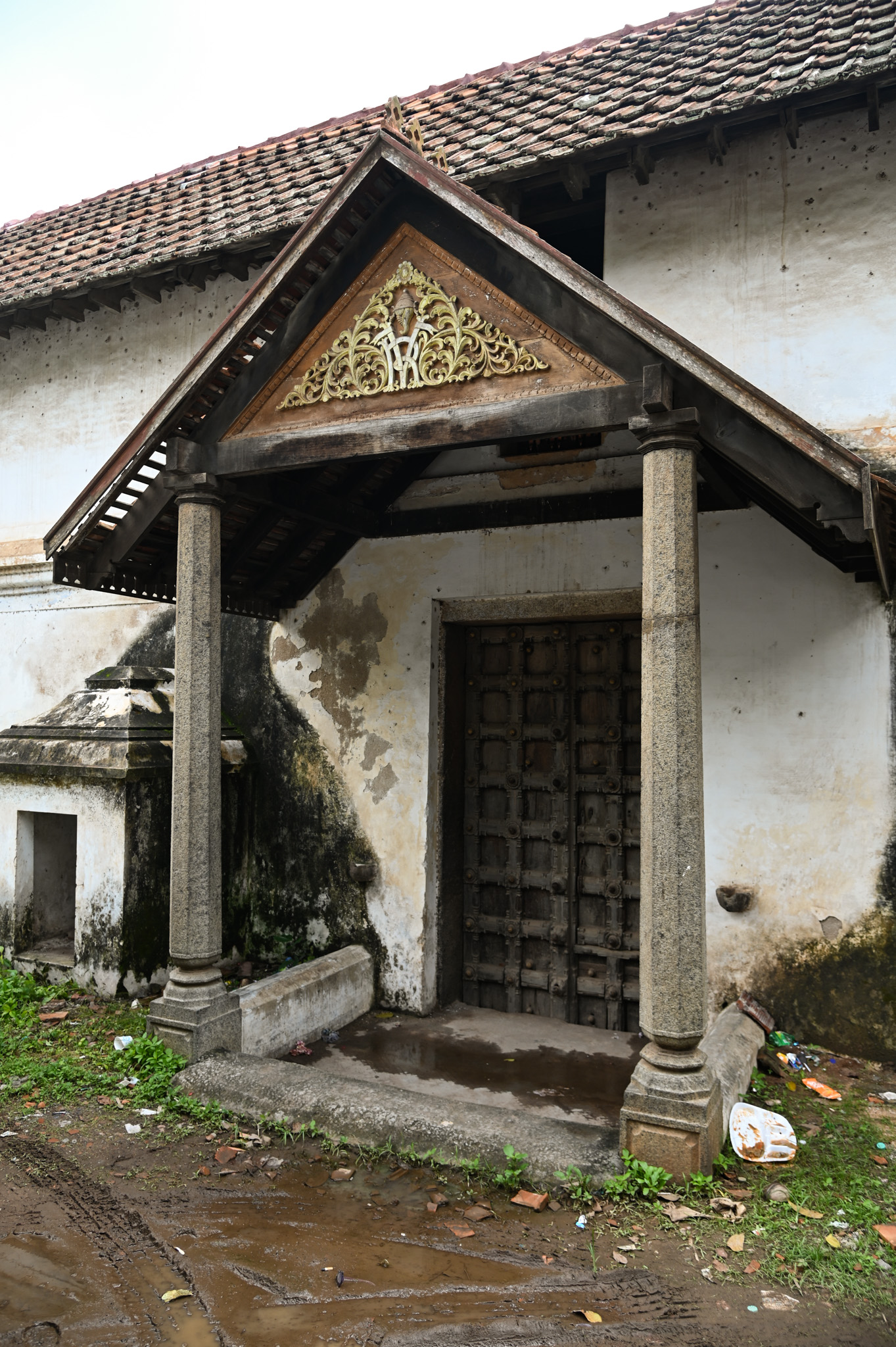
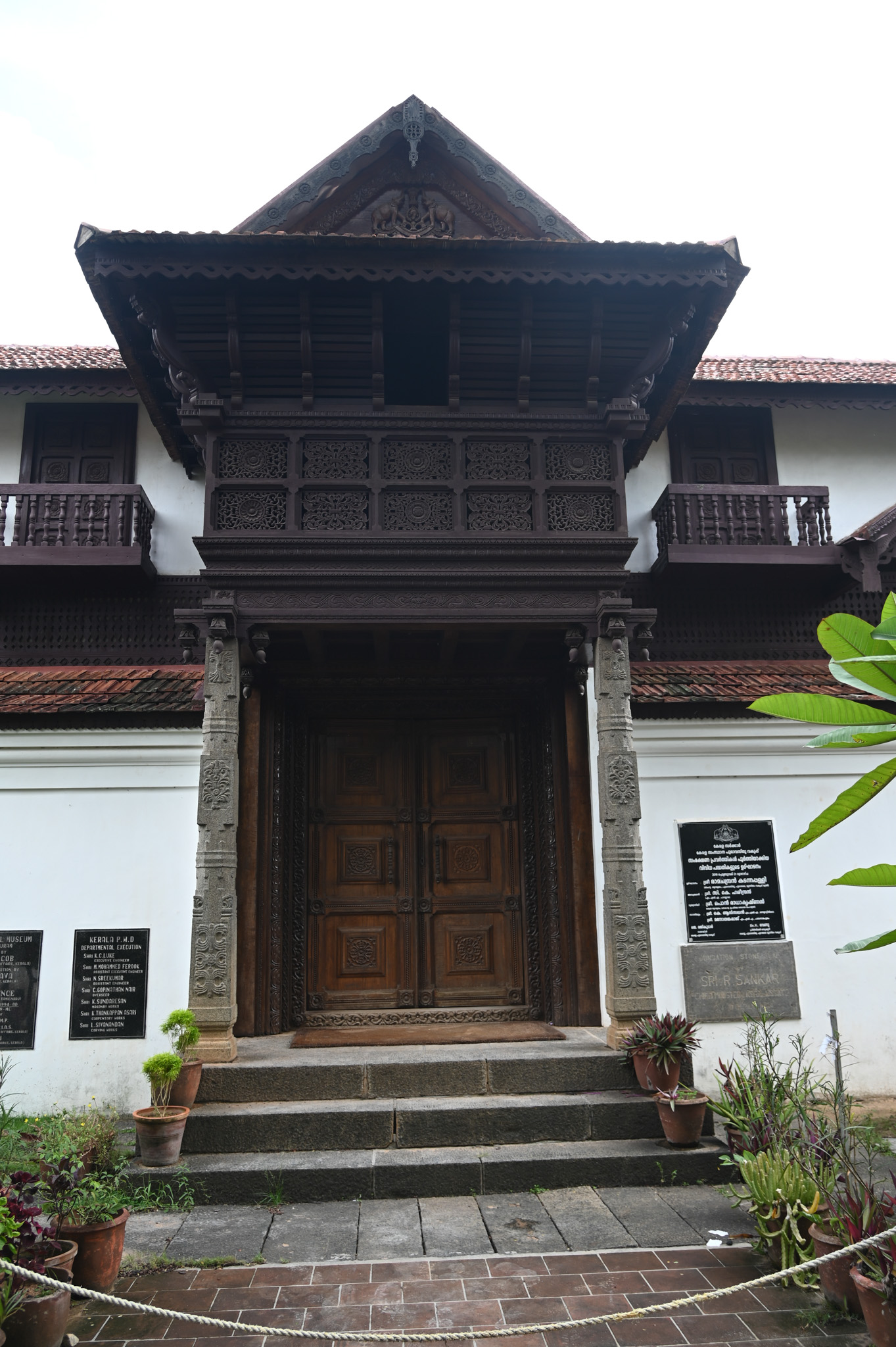
On our way to Thiruvanthapuram or Trivandrum, we took a diversion to see the Padmanabhapuram palace. 

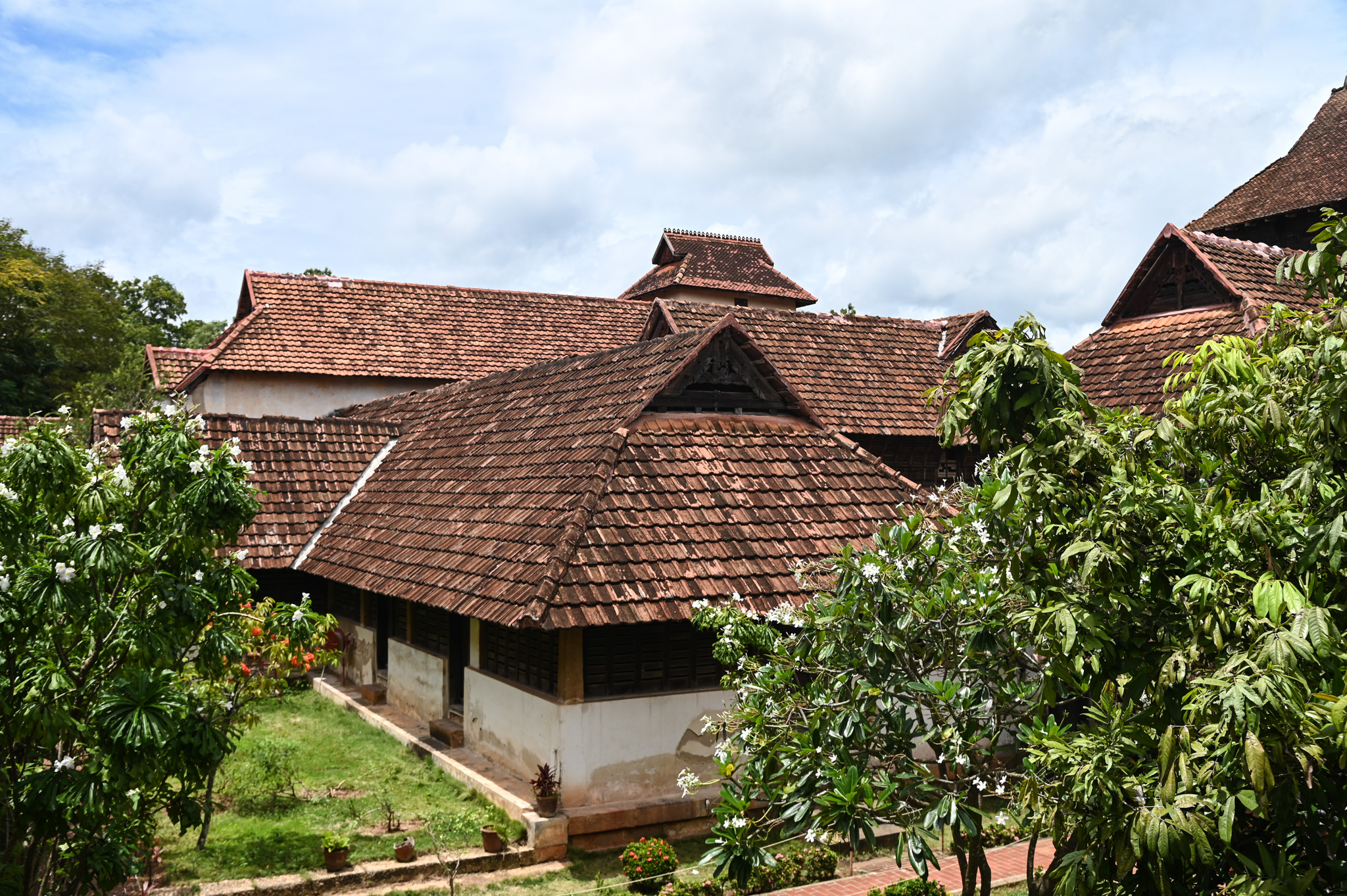
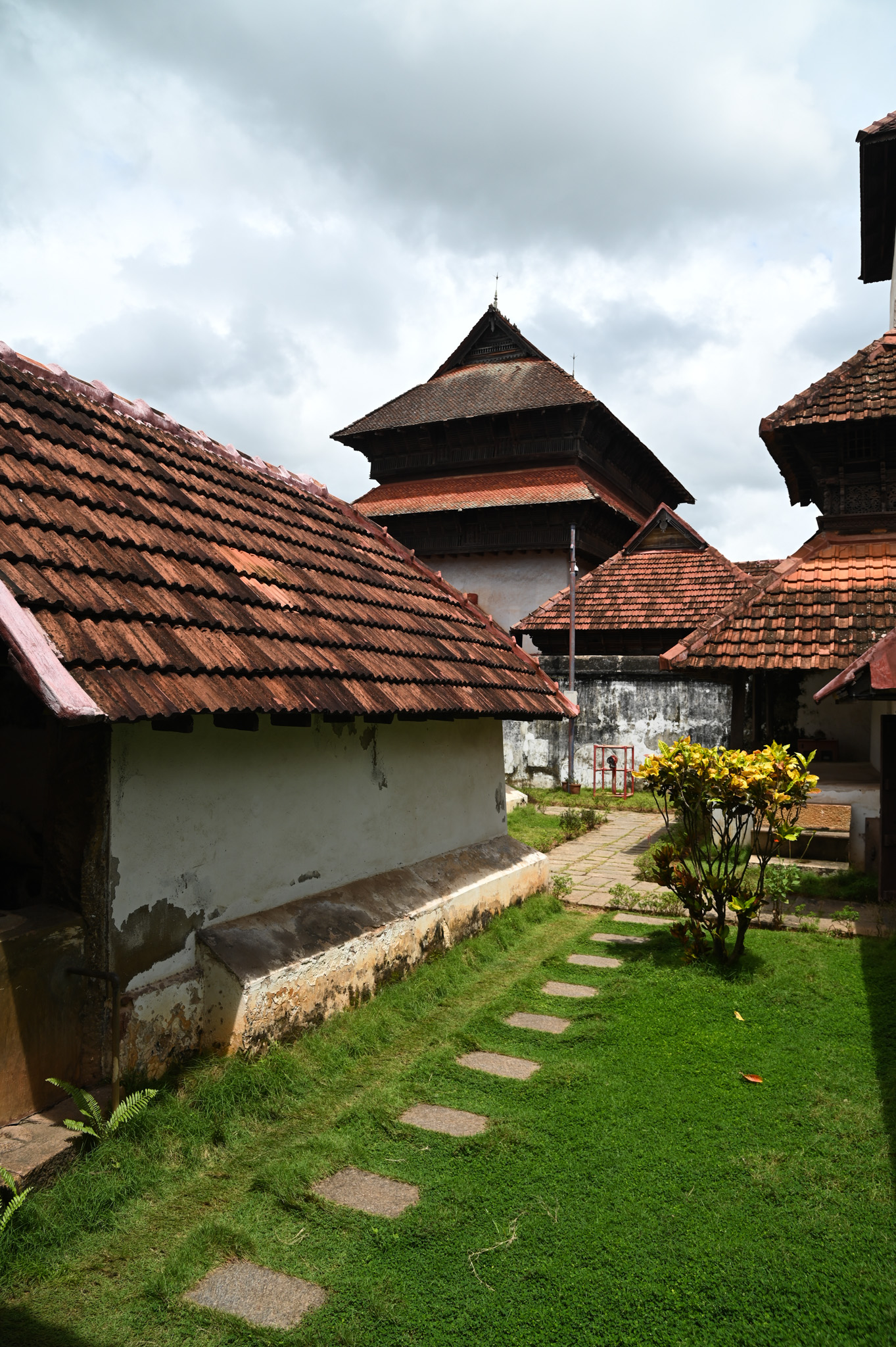
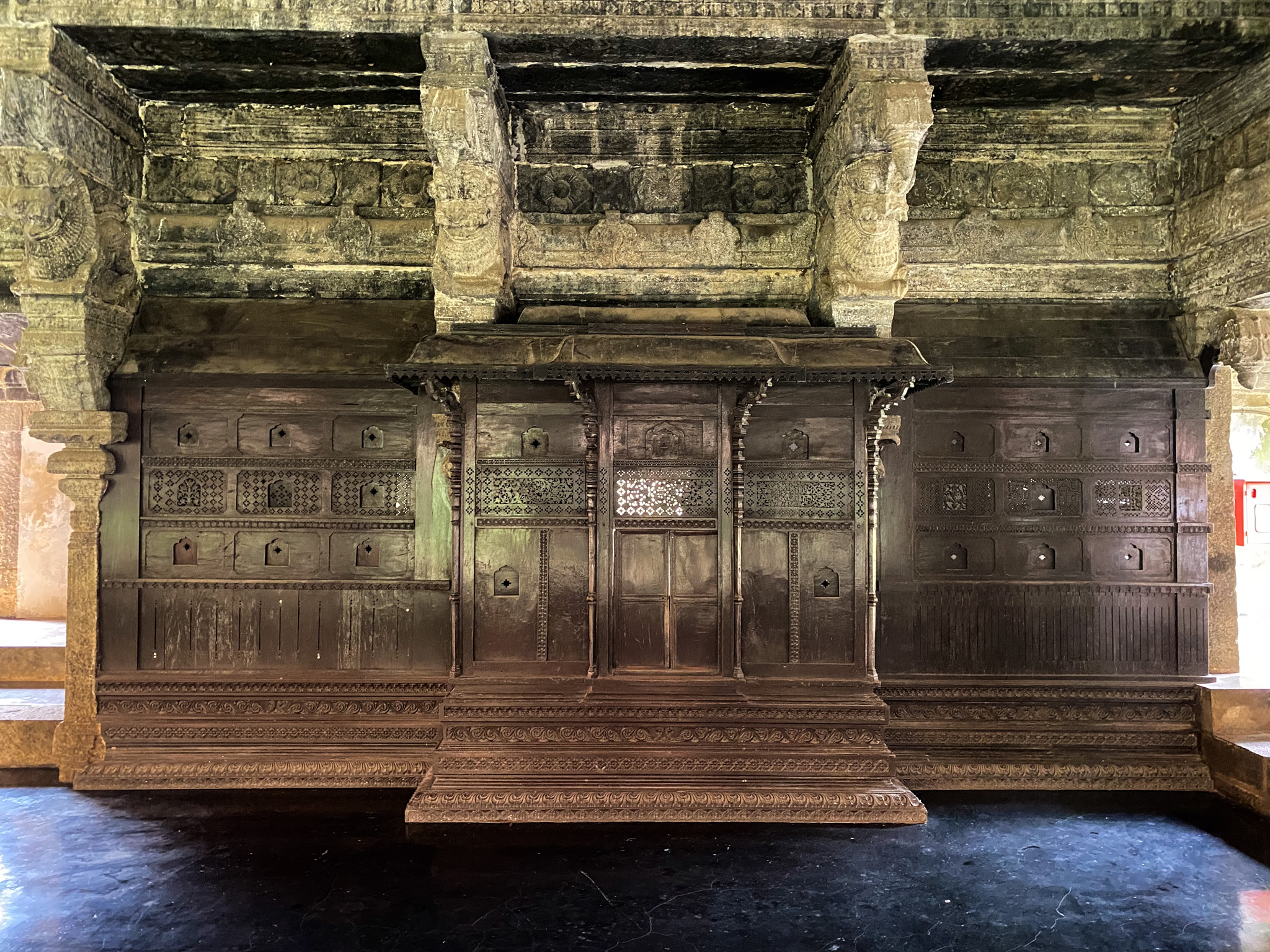
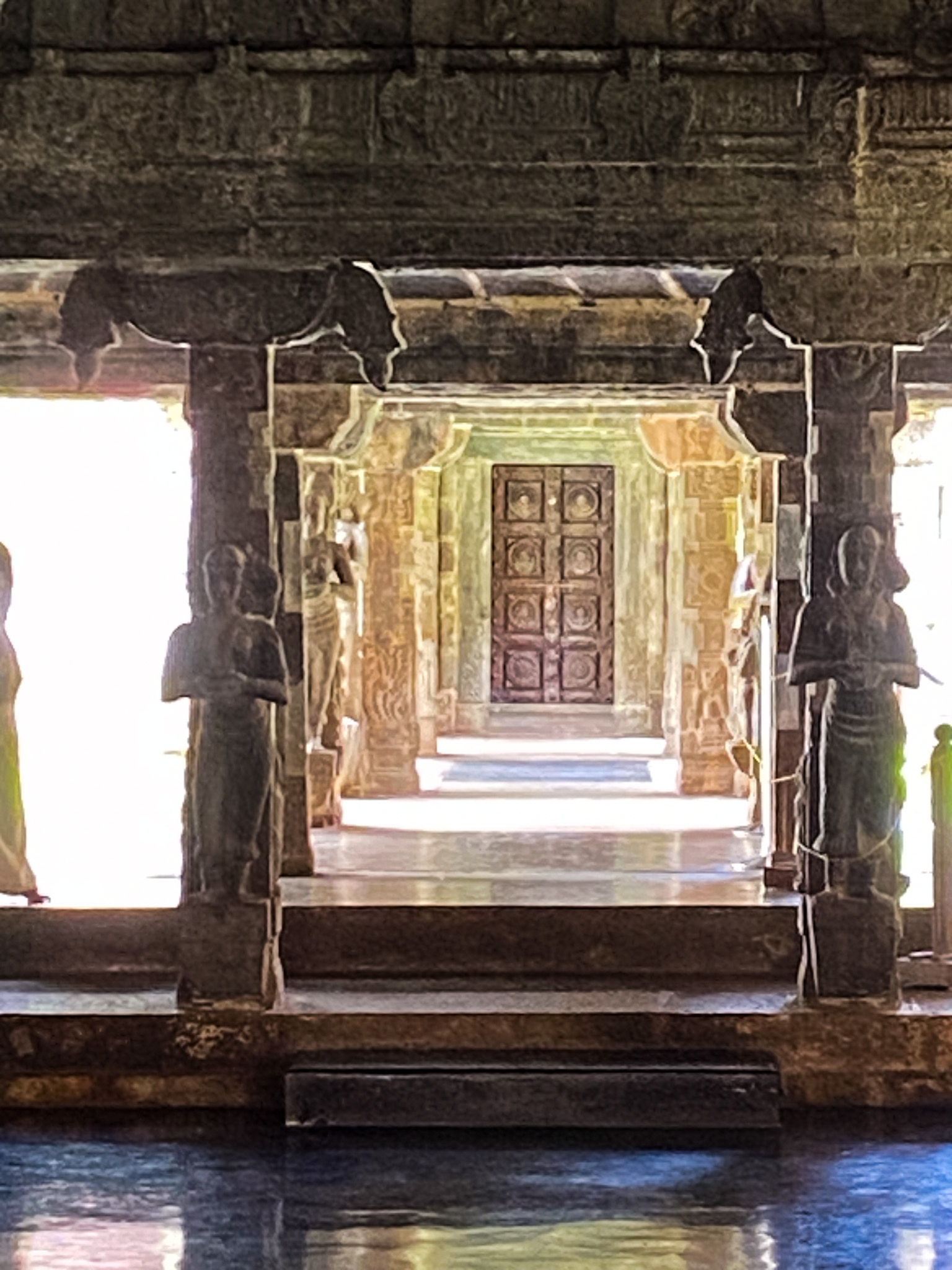
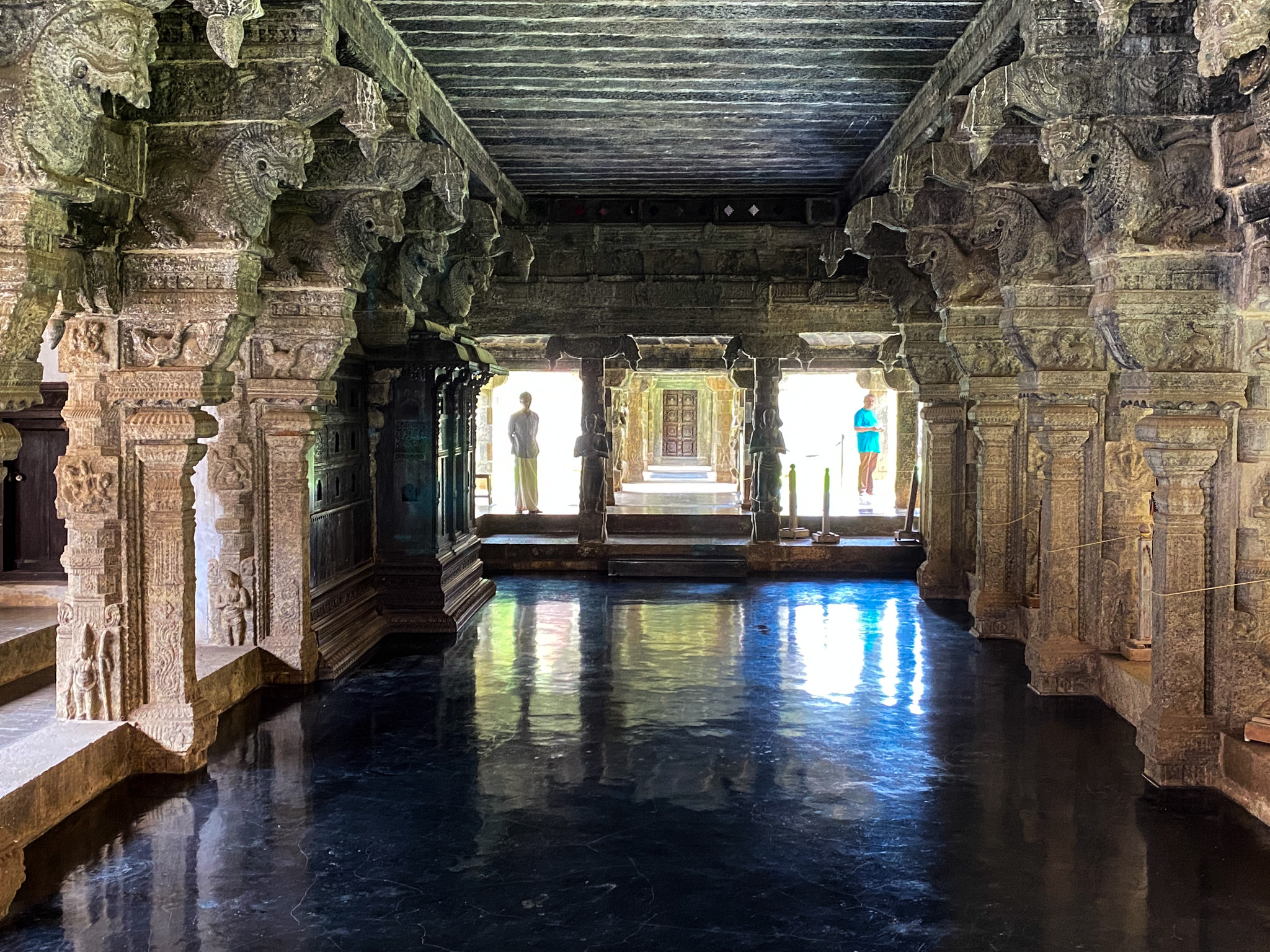
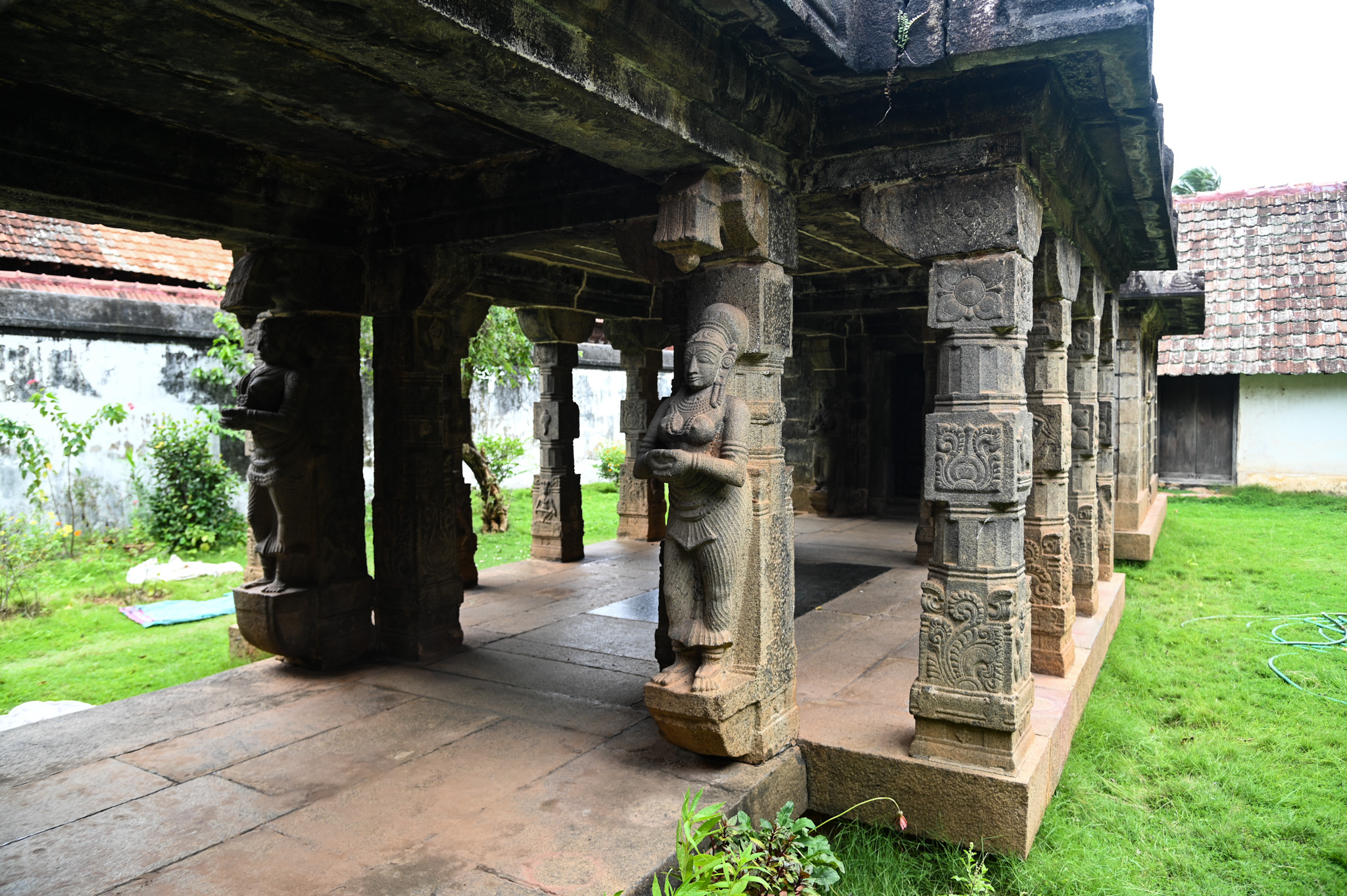
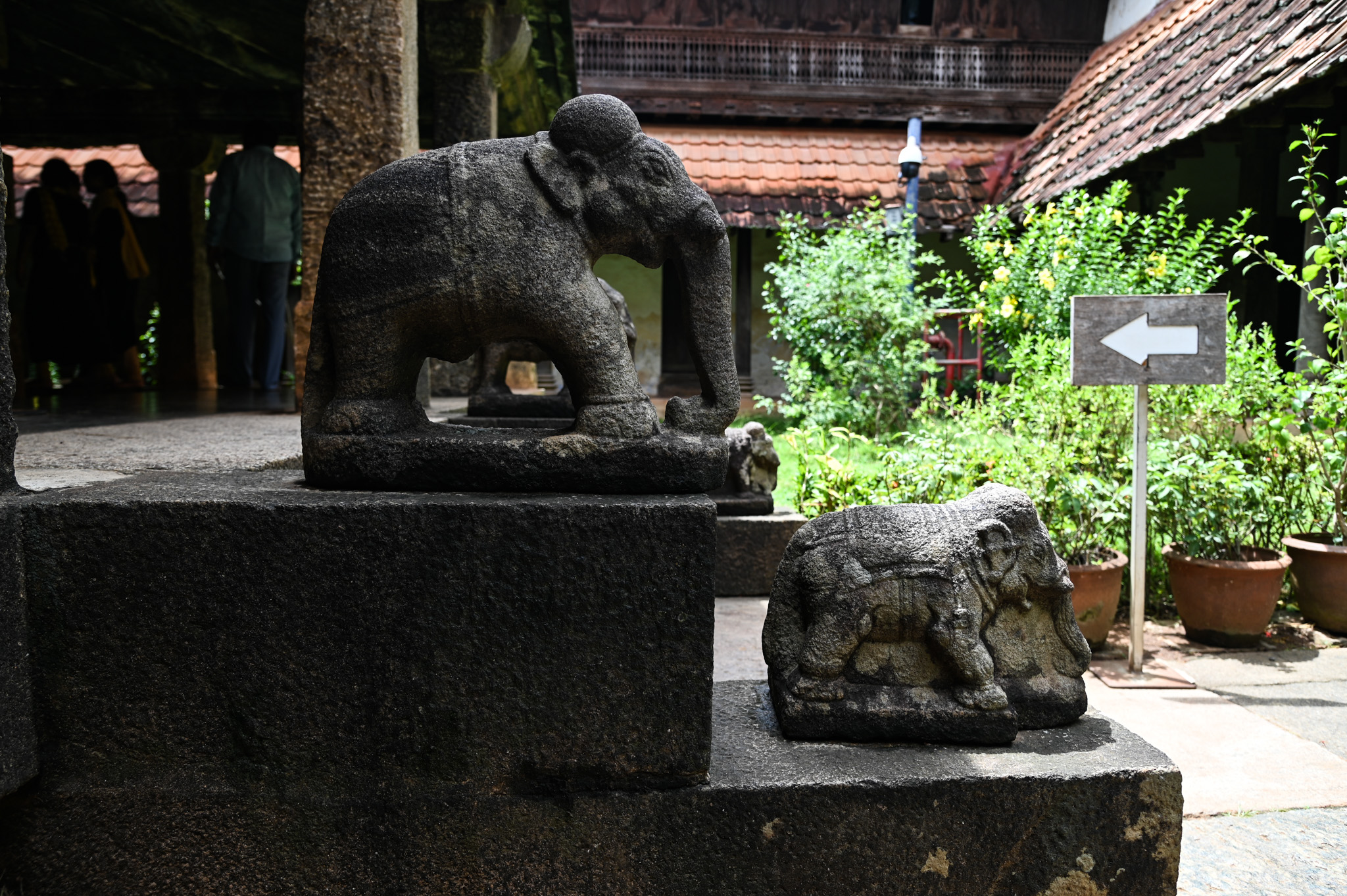
Constructed mainly in the 17 th century, parts of the palace have been added in the subsequent century. The palace complex is one of the best examples of the traditional Kerala style of architecture.

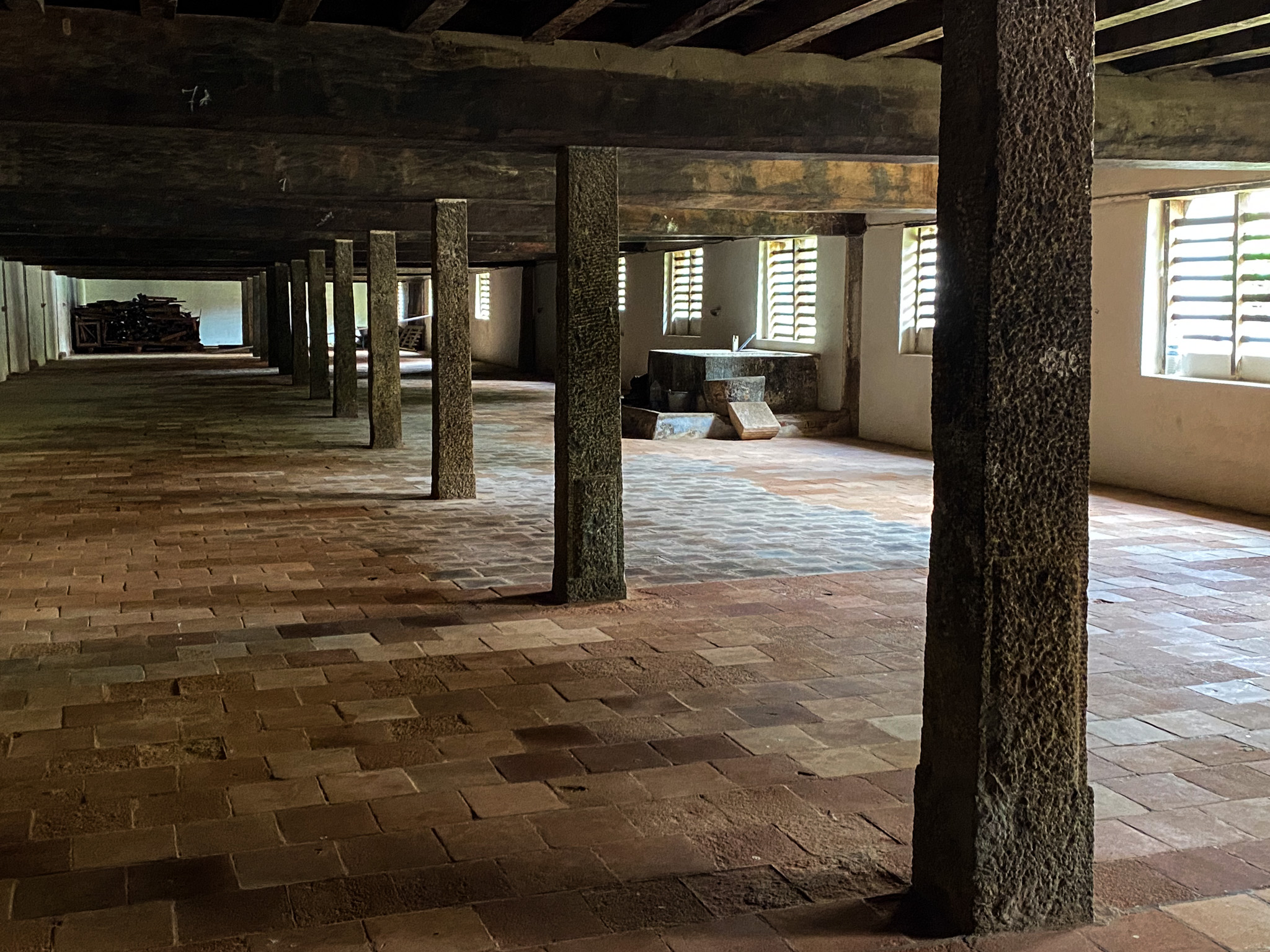
It is a sprawling complex, and visitors are restricted to the lower floors only. The rooms on the ground floor are spaces which were used for public interactions such as ceremonial feasts, dance halls, kitchens etc.

The King’s private chambers are located at the upper levels.

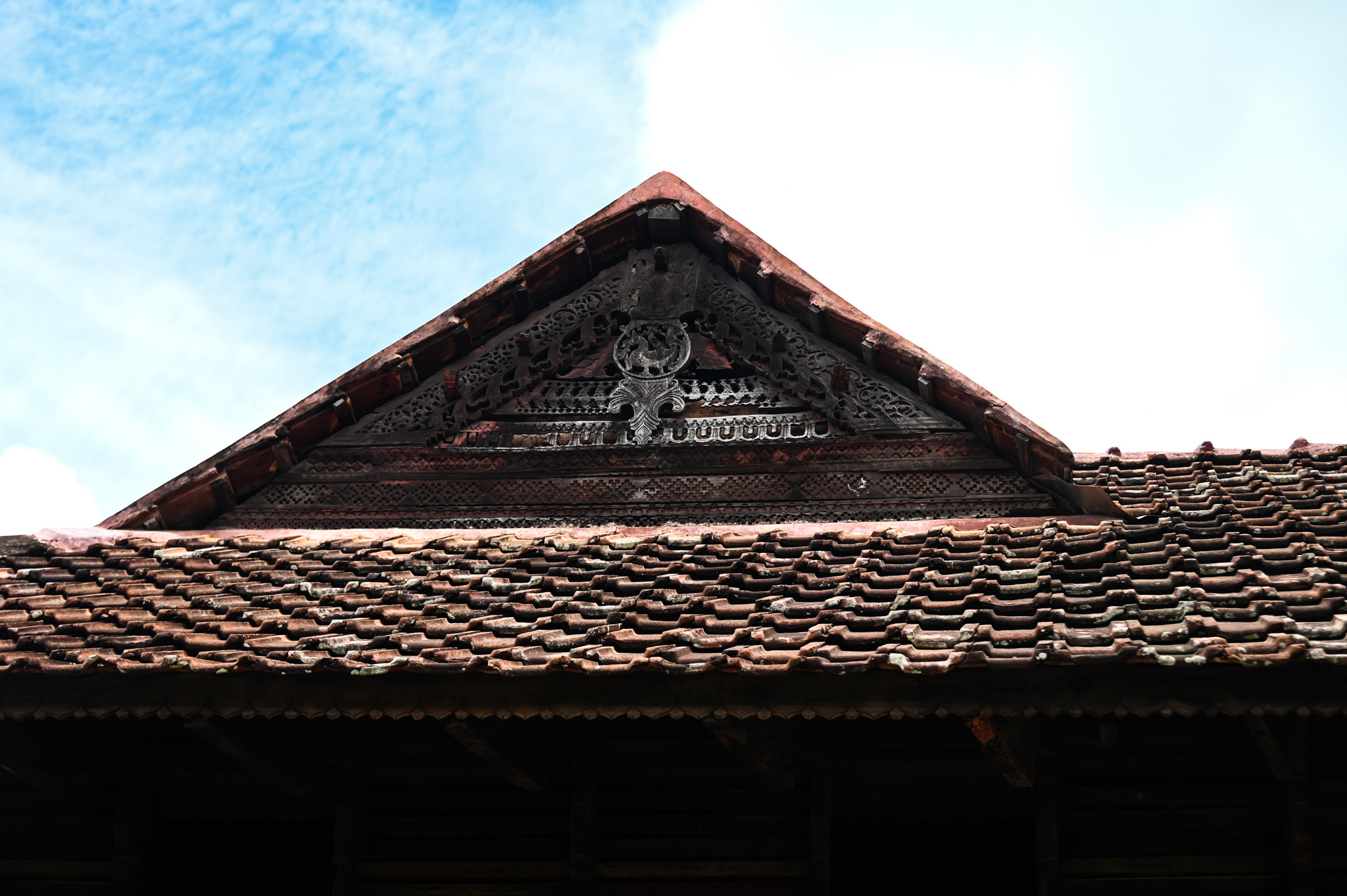
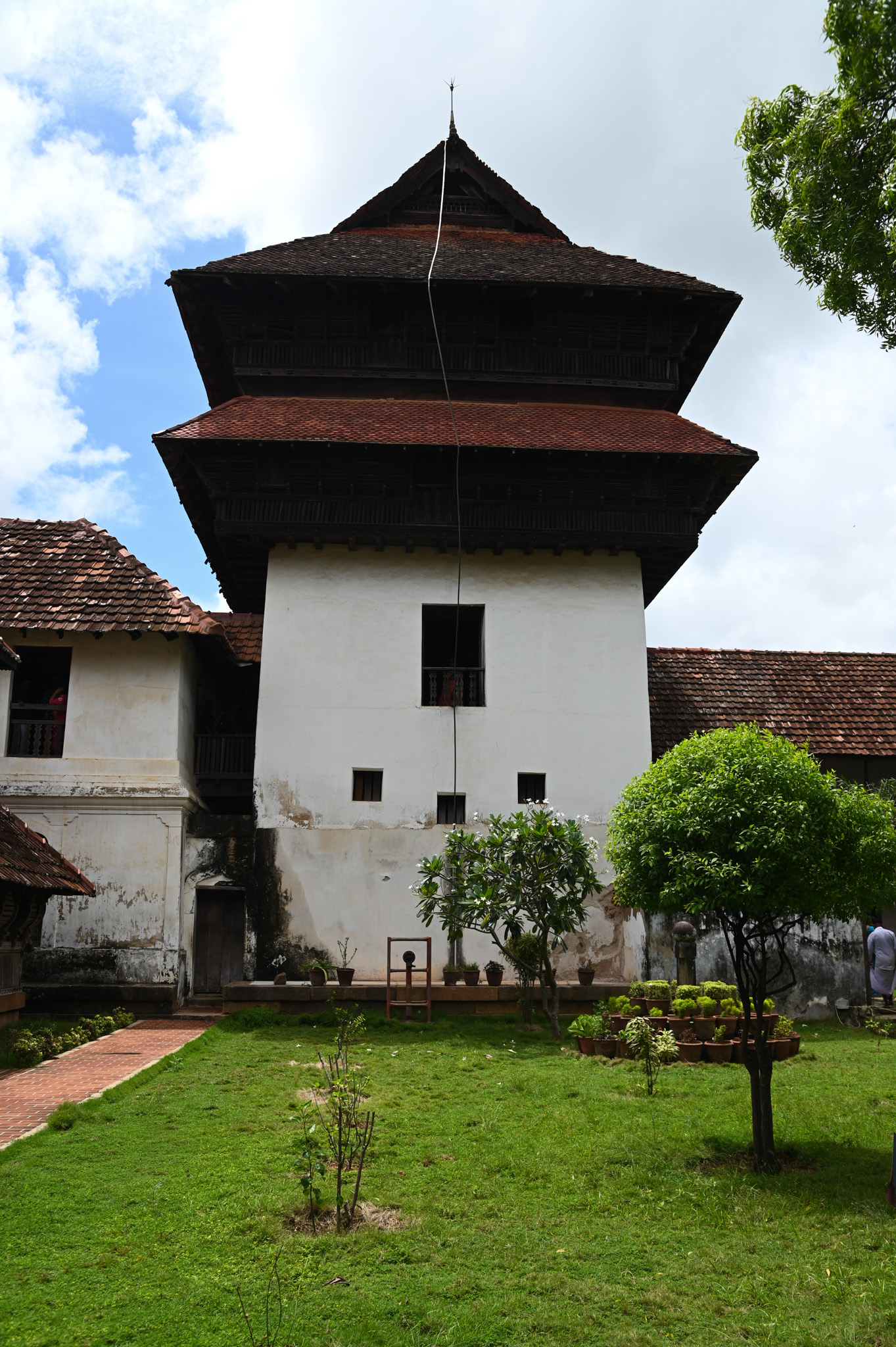
A clock tower  stand out distinctly above the general roof line- the roofs themselves are distinct for each structure and complex in design with numerous gables and deep overhanging eaves. 

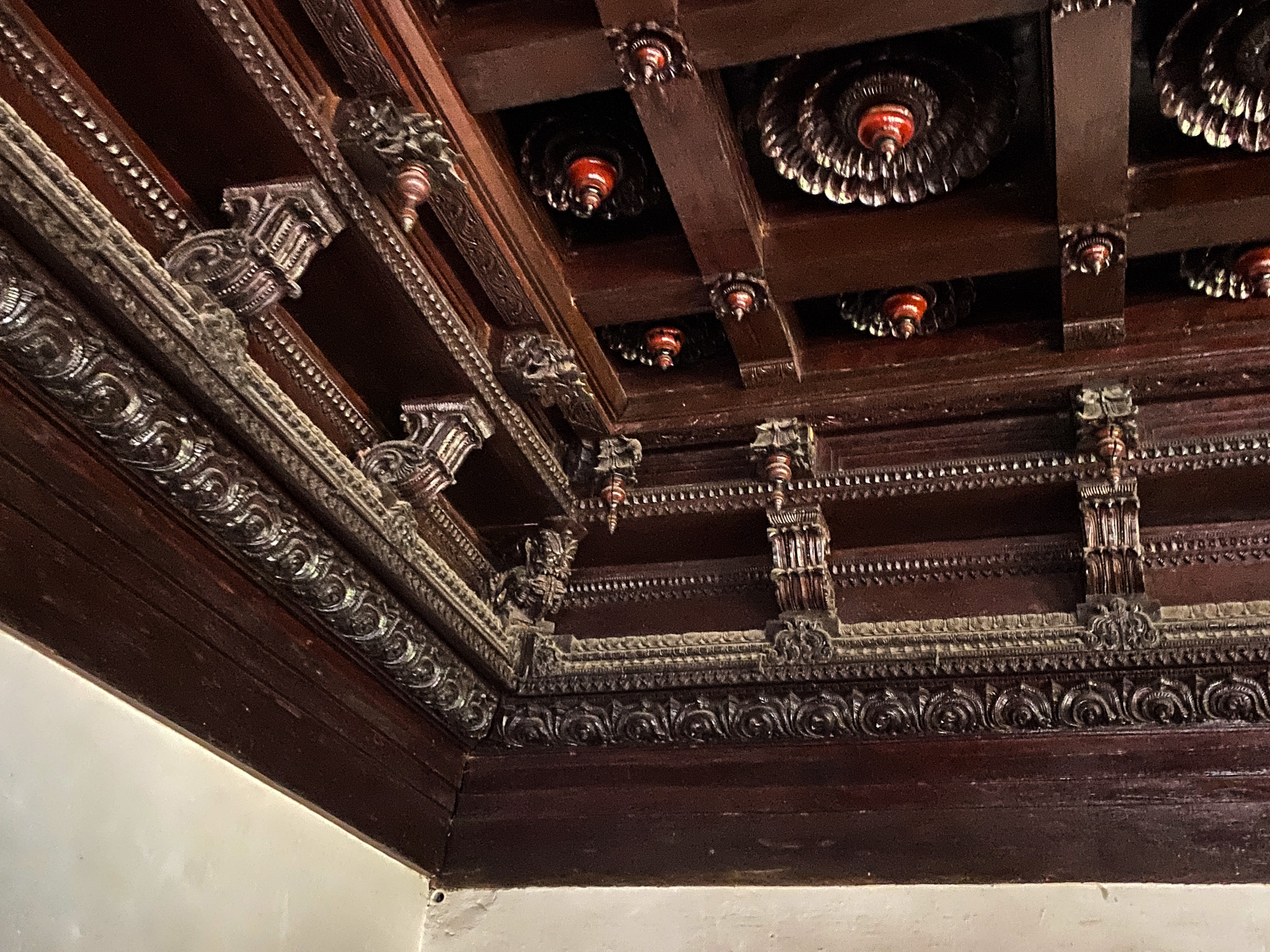
The walls are of laterite with the traditional wooden slats to let in air and light and some of the chambers have ornately carved pillars and ceilings.

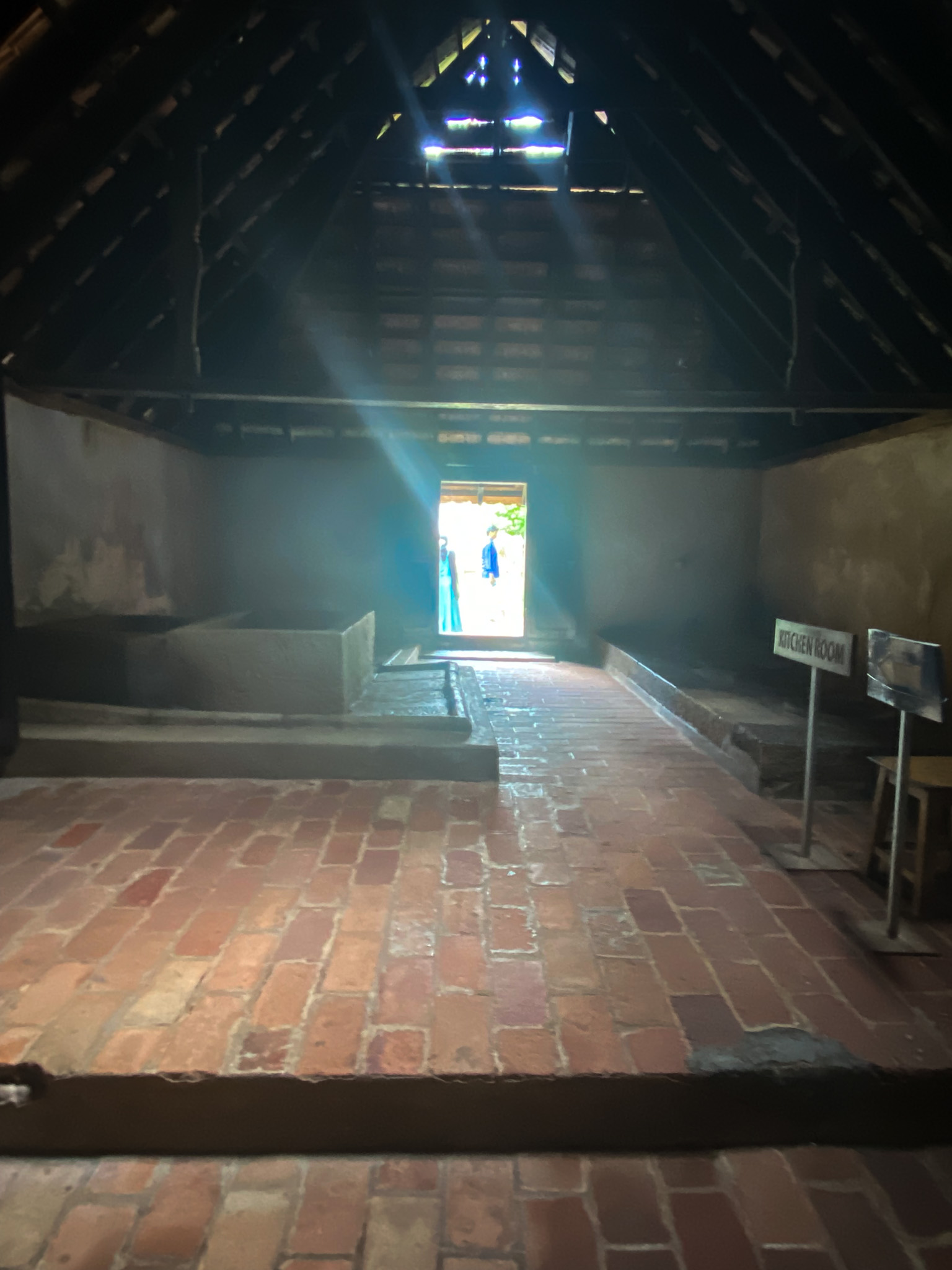
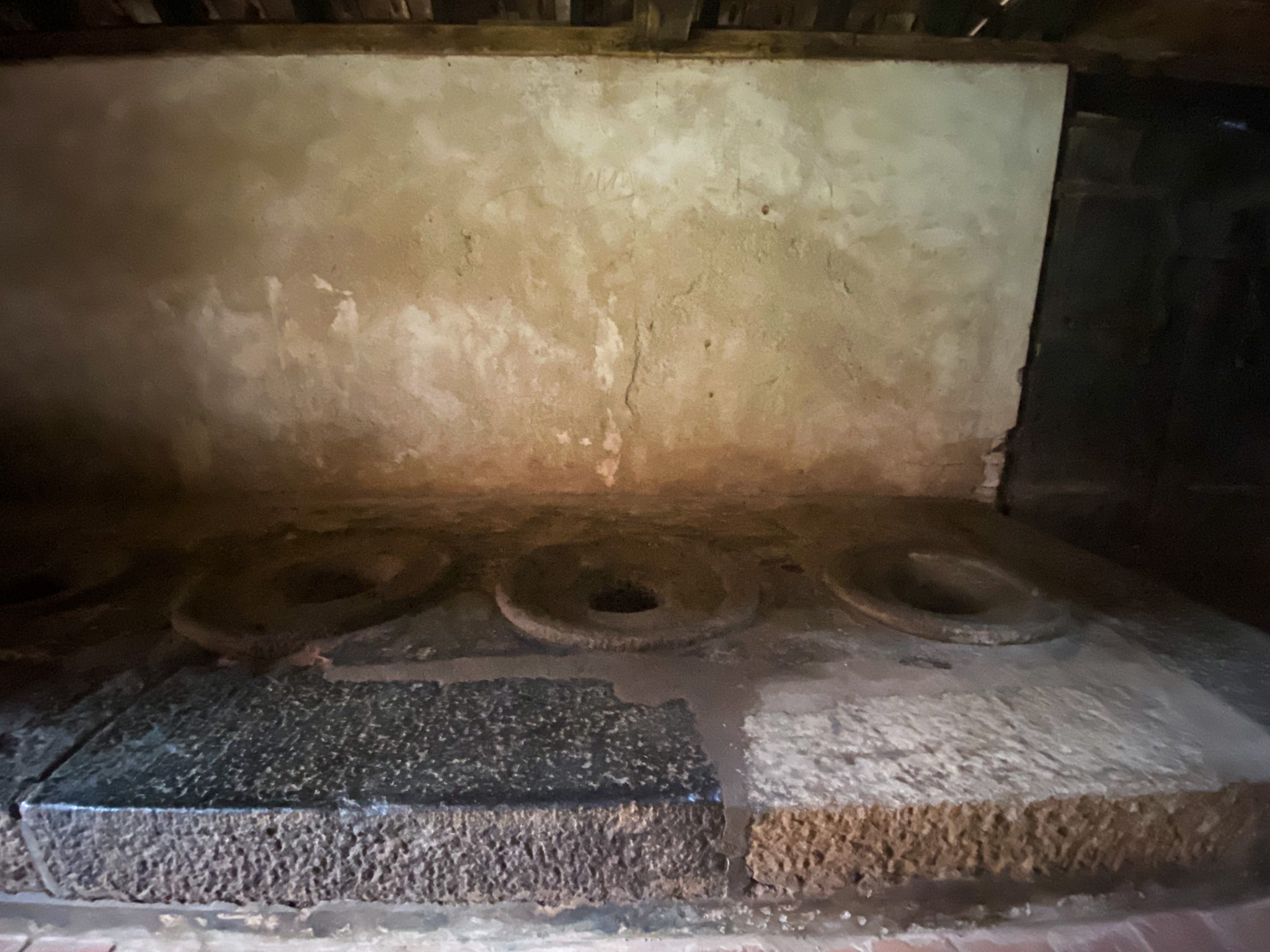
There are built in grinding stones and fireplaces which gives us an idea of how the kitchen functioned and the room itself is strategically placed close to a water source.

We spent a few hours meeting my cousin Vivek’s family and had a sumptuous lunch there. Vinita was a great host and we were very happy to meet Keshav and Ishwar who we had not met in all these years.

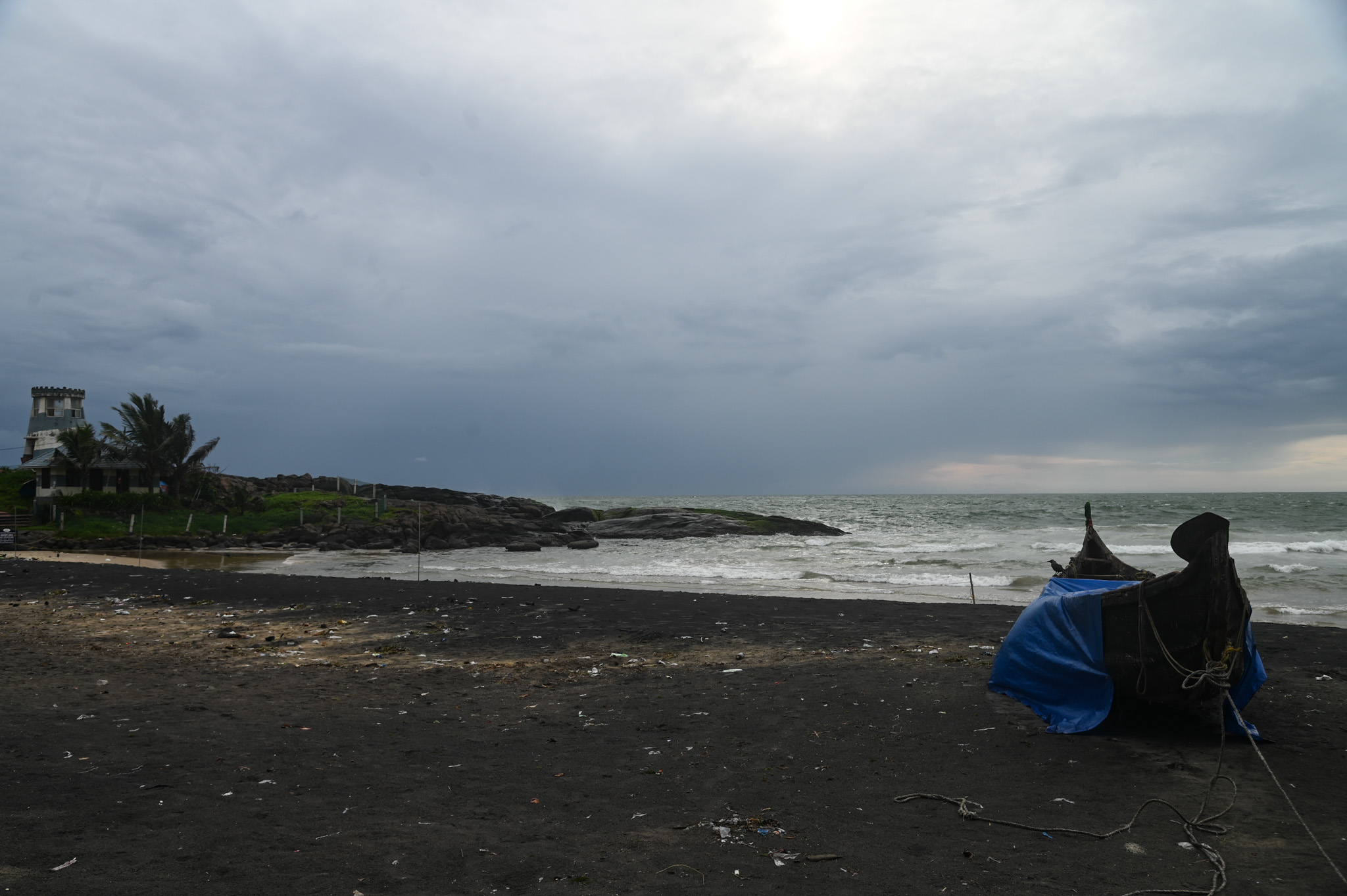
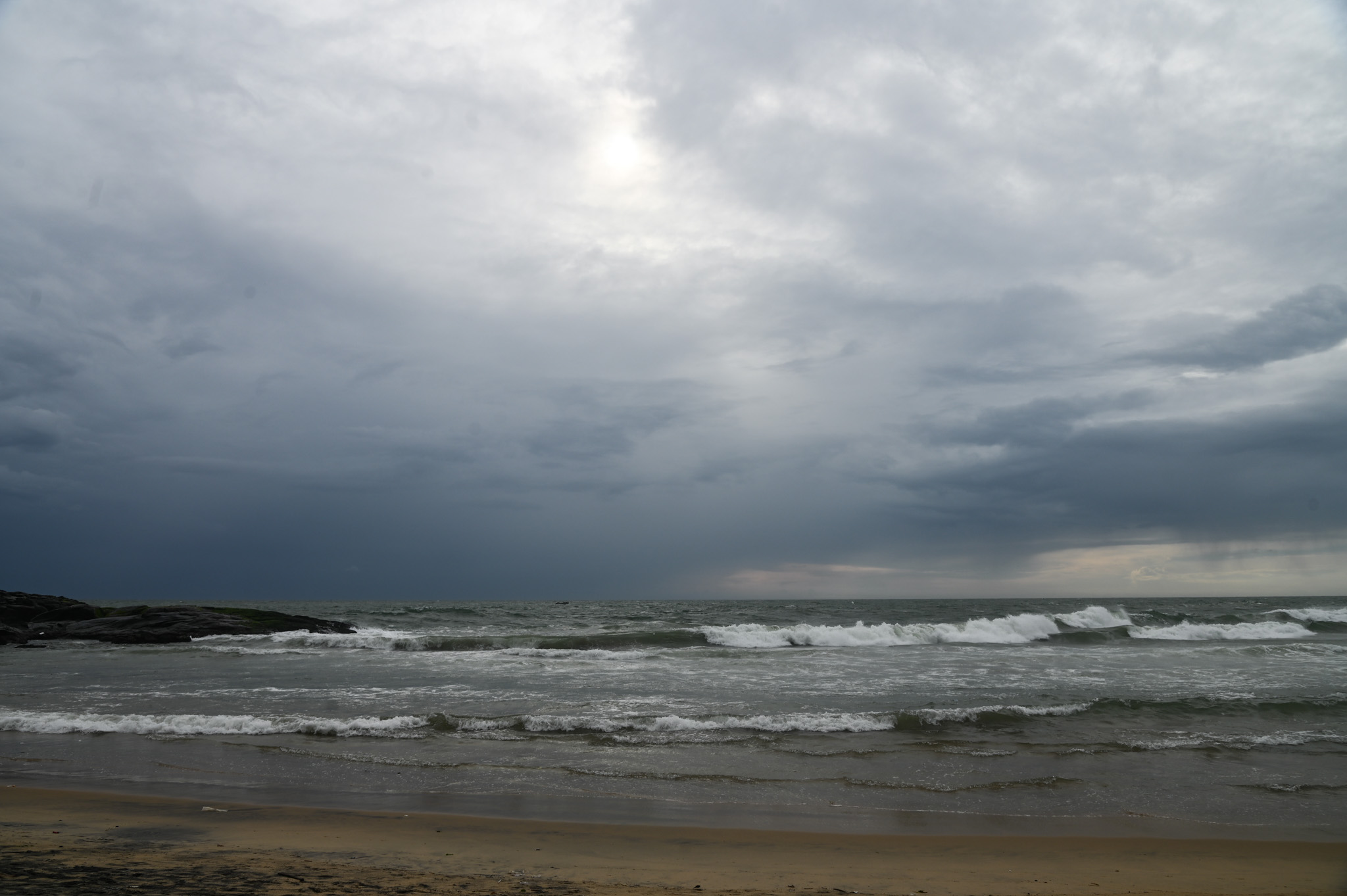
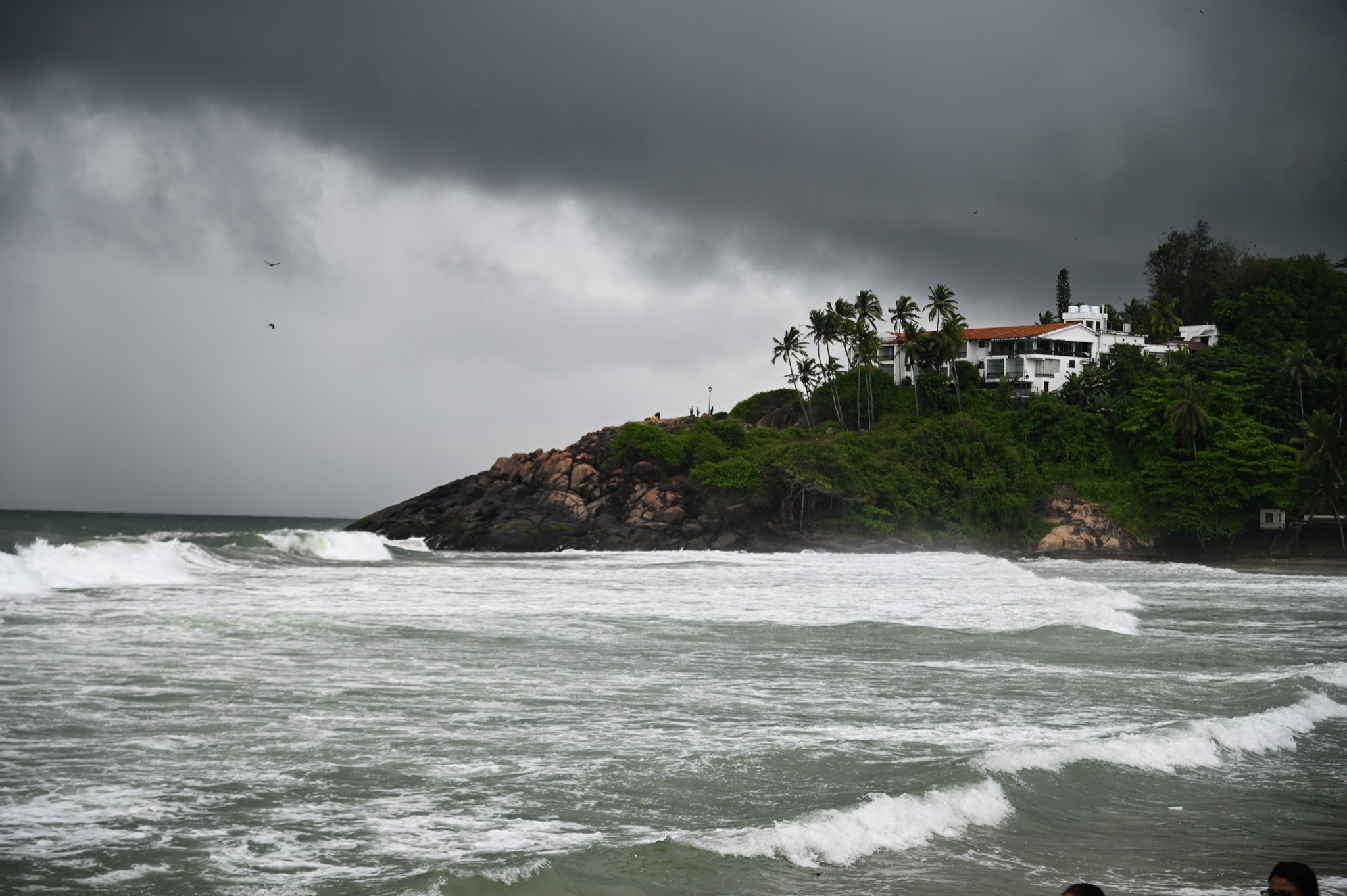
Our visit to Trivandrum also included a trip to Kovalam beach. Another grey, rainy day in Kerala and the beach was practically non existent on account of the high tide! 

This is also where Ashok and Surendra dropped off to return to Pune. We proceed to Ashtamudi lake for some R & R!

For more pictures, please click https://photos.app.goo.gl/cMAwHRdkp31mmWxZ8

The Peninsula Tour Part 2 – Rameswaram and Kanyakumari

There are no pictures of Madurai. After Karaikudi, we drove into Madurai , visited the temple (no mobiles or cameras allowed within) and also rendezvoused with our friends Ashok and Surendra Sharma!

From here we drove to Rameswaram. 

Rameswaram is famous for its Ramanathaswamy temple- the temple has long corridors running between huge colonnades and flanked by high platforms on either side. There are more than 1000 pillars in the outer corridor alone.

Again, there is an embargo on photography and I, sadly, do not have pictures.

Another reason to visit Rameswaram has been ‘Dhanushkodi’!

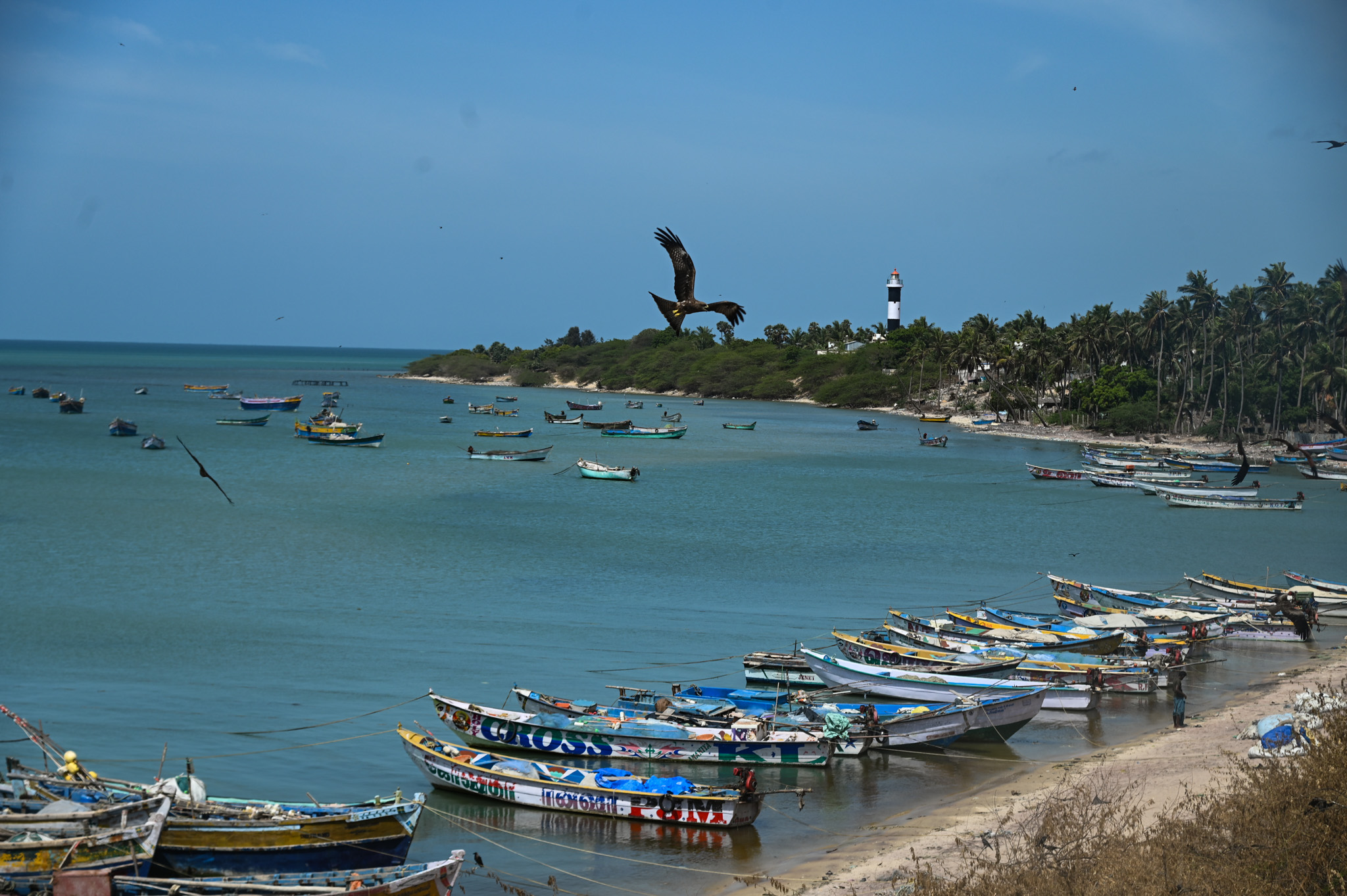
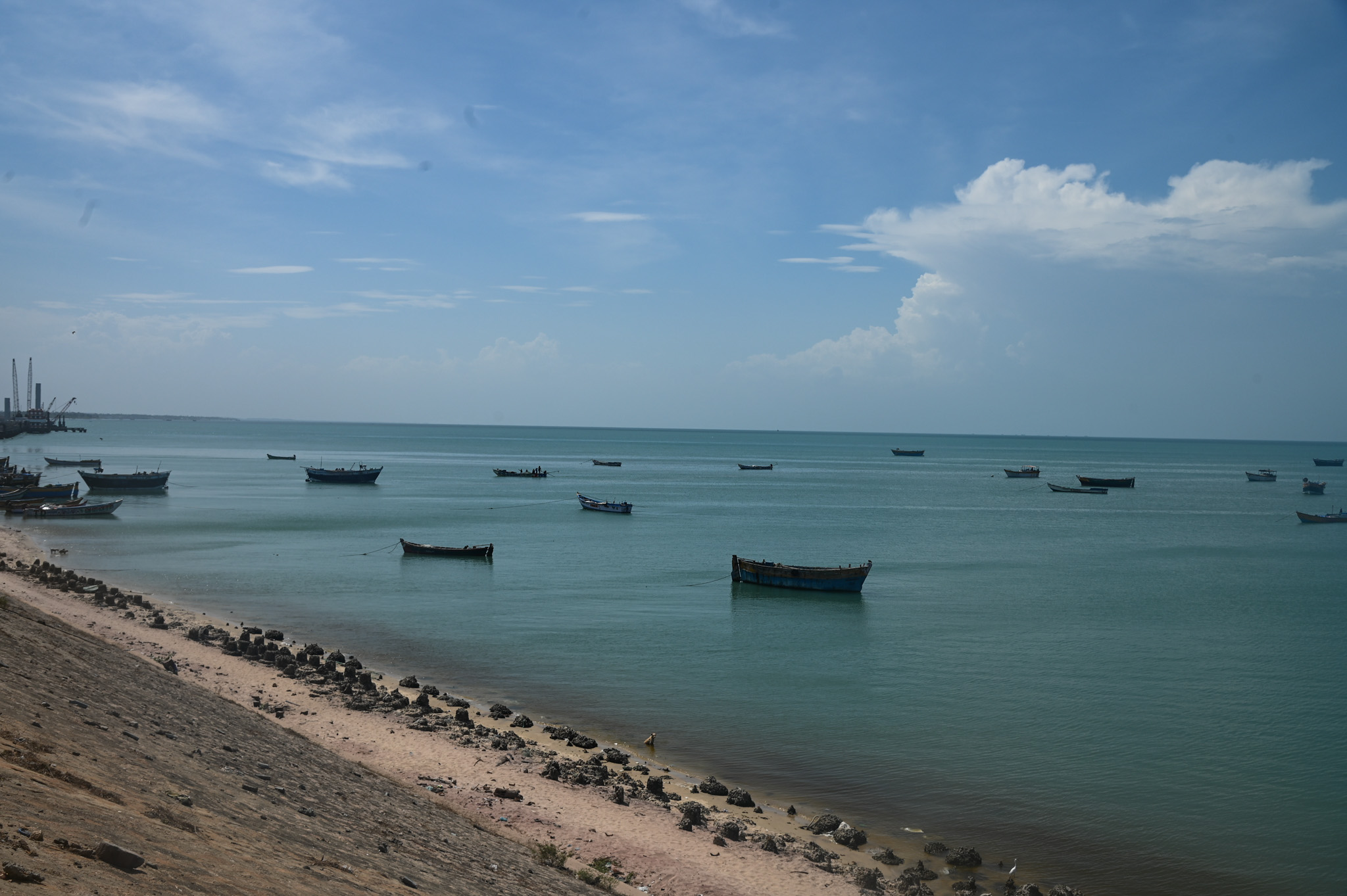
Driving past Pamban bridge,  amazingly blue waters filled with fishing boats and Brahmini kites, one reaches Rameswaram.  And Dhanushkodi is about 20 km from Rameswaram.

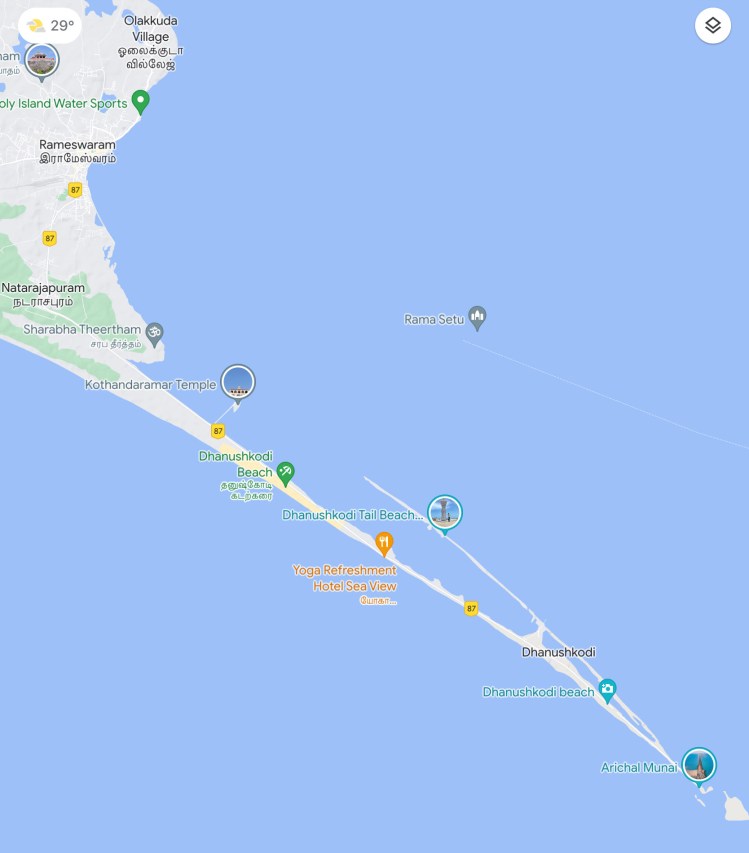
On the map, this is the physical geography of Dhanushkodi. It culminates in the Arichal Munai which is deemed to be the place where the Ram Setu bridge begins. 

As the crow flies, Sri Lanka is another 25 -30 km from this point.

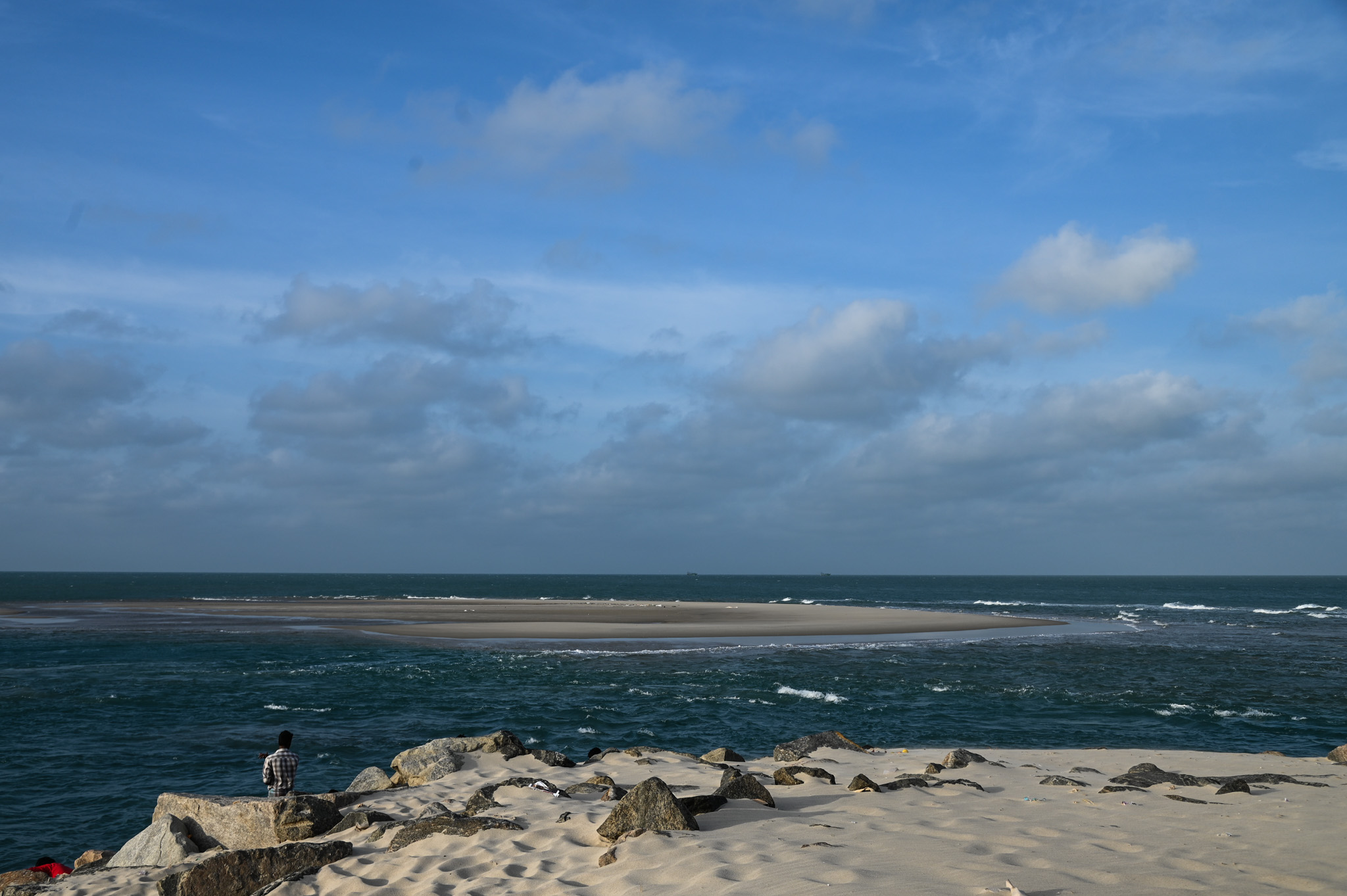
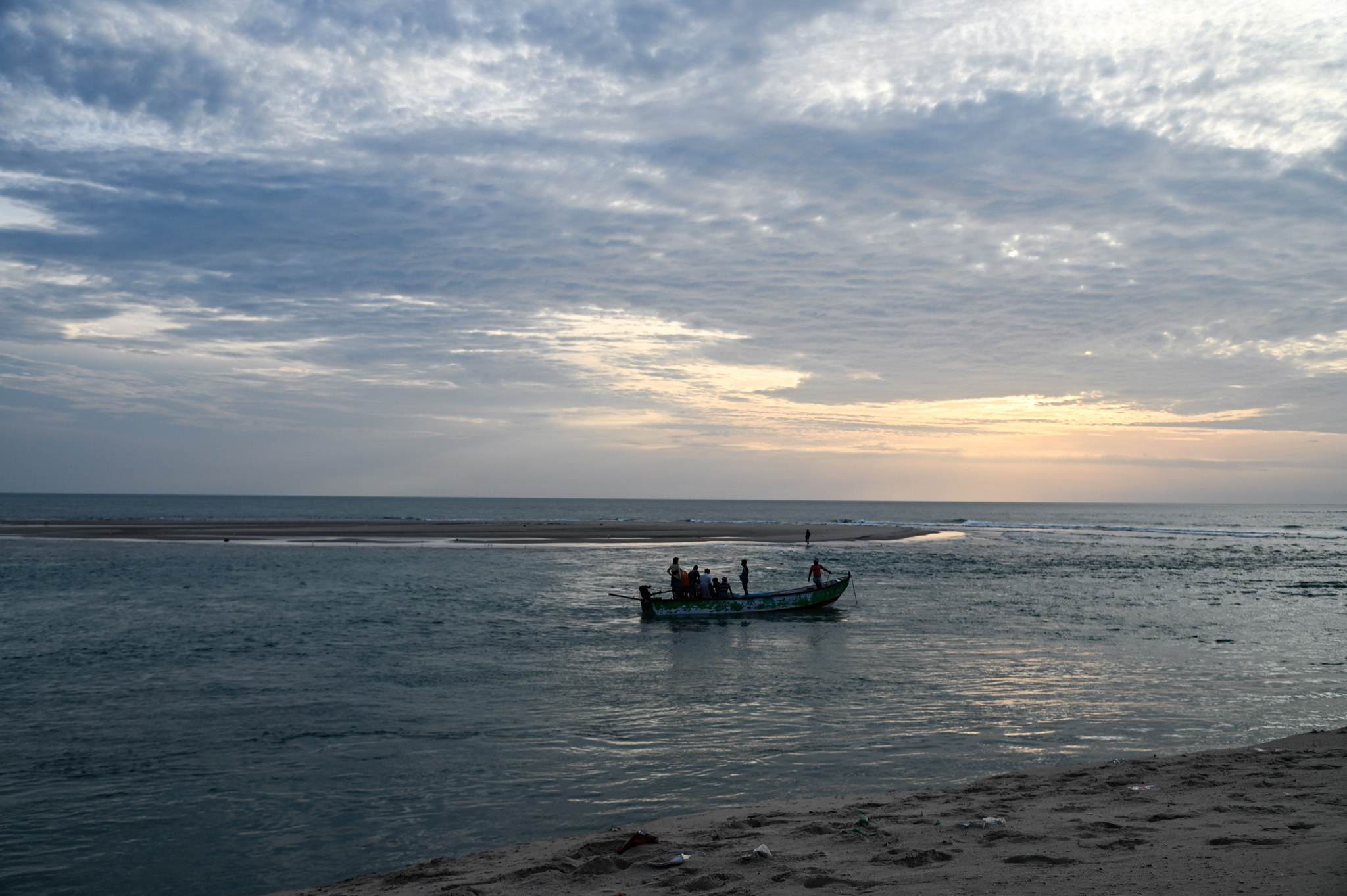
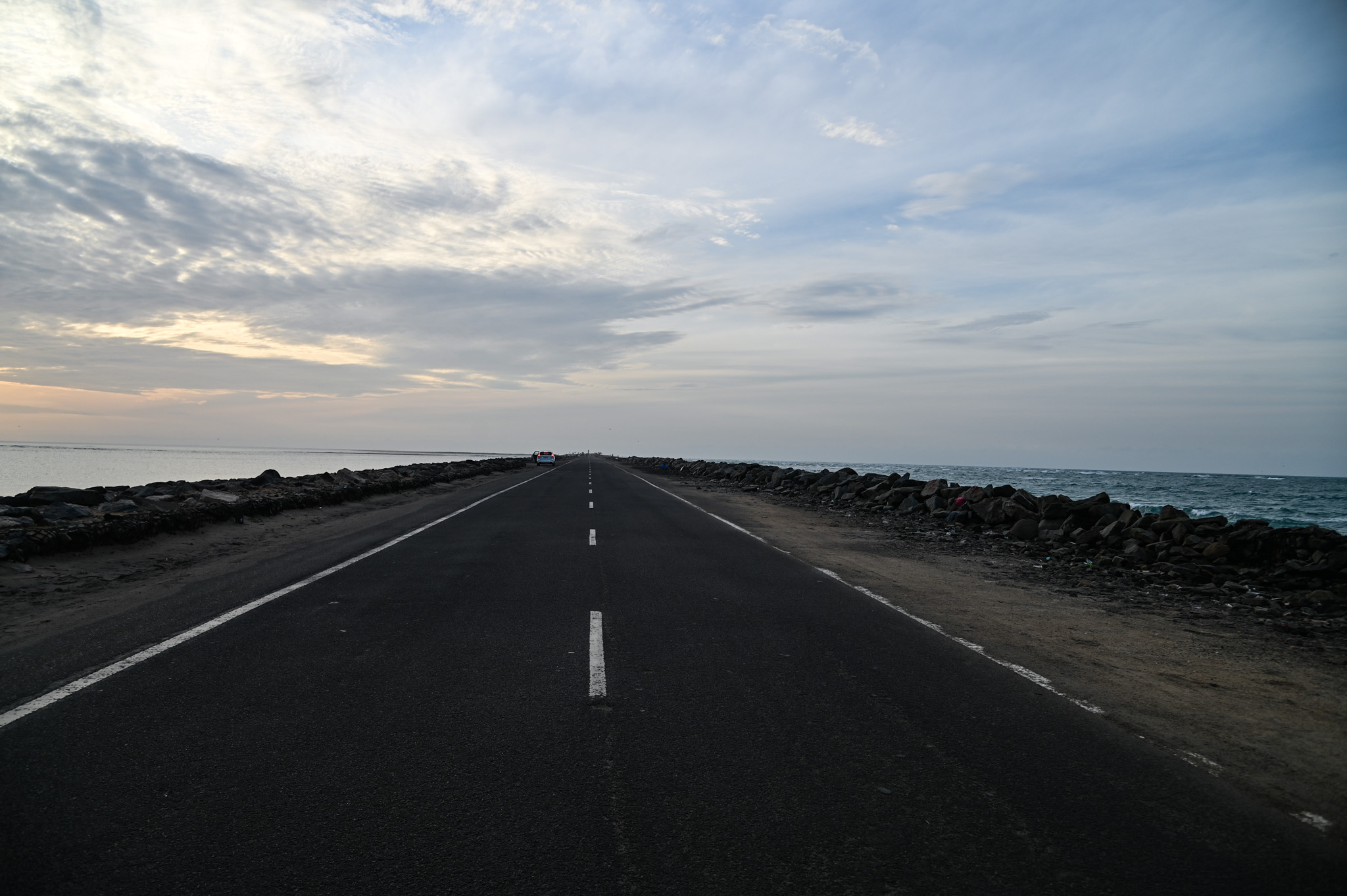
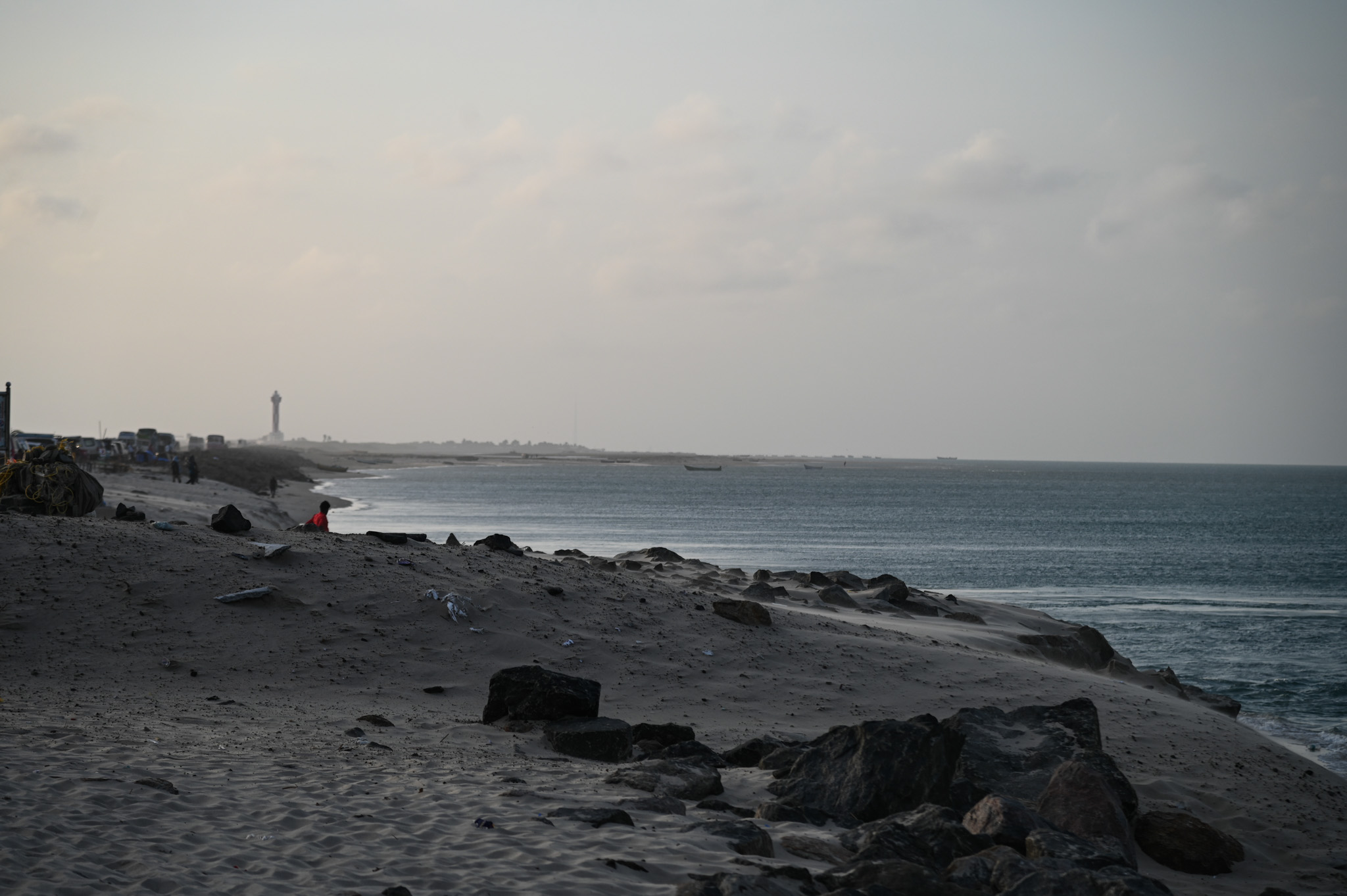
Dhanushkodi offers a stunning view of a long corridor extending into the sea. There is an amazingly blue sea on one side with rough waters, high waves and a long pristine beach. The other side, in absolute contrast is calm with grey, shallow waters, sand banks, moored fishing boats. These scenarios culminate at the tip at Arichal Munai! 

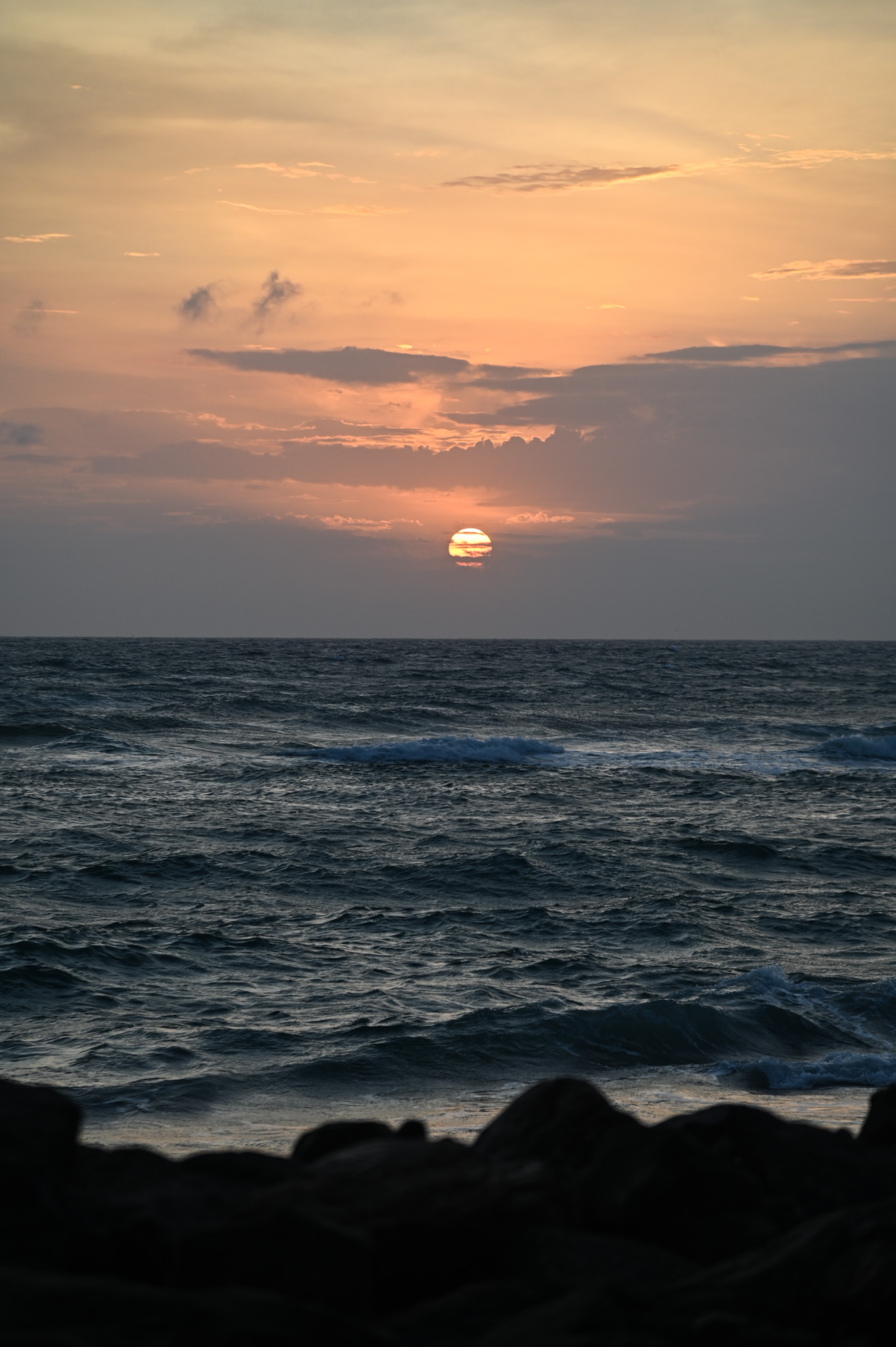
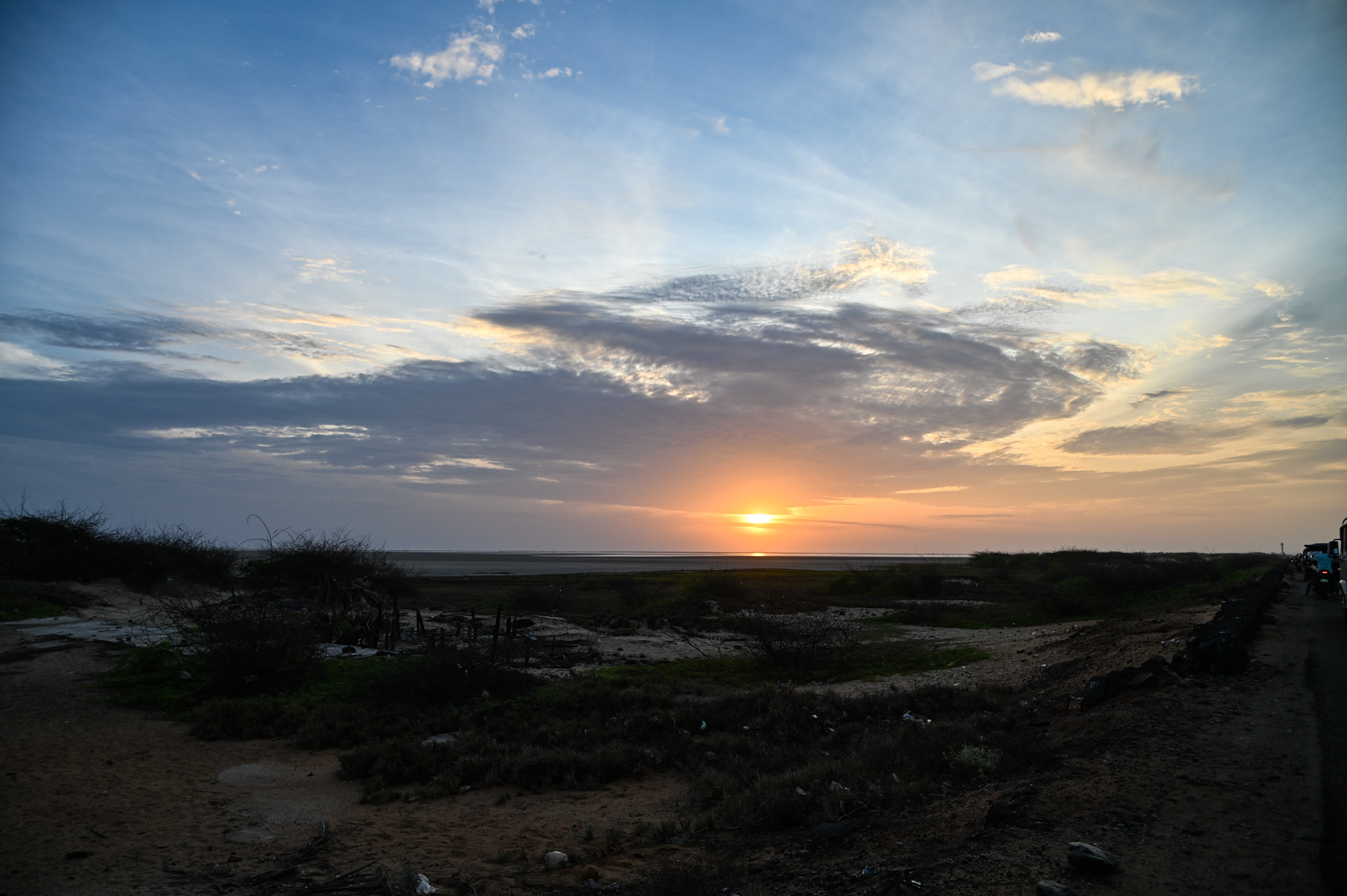
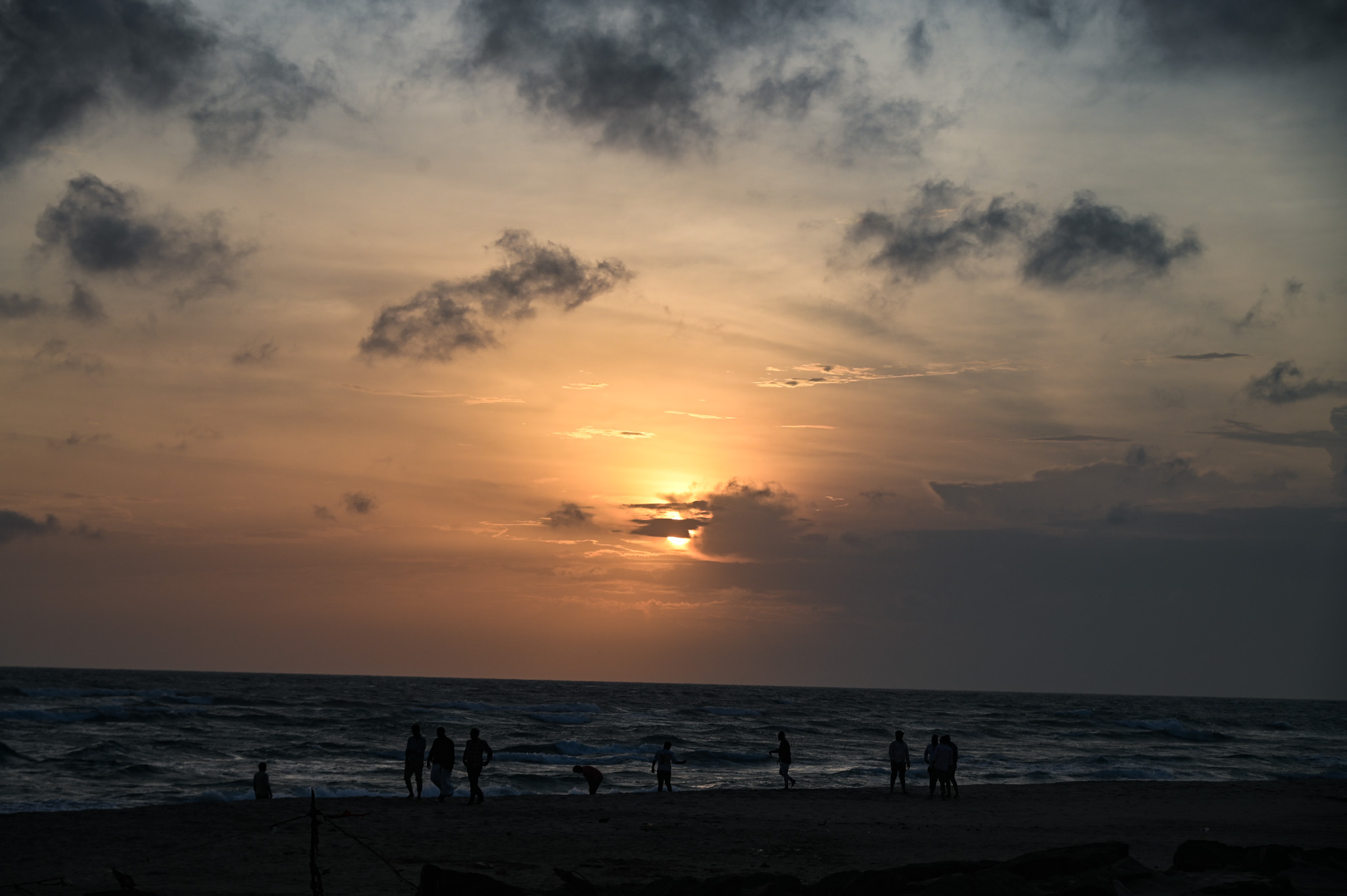
 We were behind schedule for the sunrise, as the area is restricted and access is well after the scheduled sunrise timings. We did catch the sunset. 

I’m enclosing a few snaps of the Vivekananda memorial at Kanyakumari which was our next stop.
We visited the monument and got rained in and did precious little else. 
For more pictures, please click the link here https://photos.app.goo.gl/c5K5K8Vtn8cP2inM6